




London Business School Wins Prestigious Gold Brandon Hall Award in Saudi Arabia
London Business School (LBS) has won a Gold Brandon Hall Group Excellence Award for its Beyond 2030 – Navigating the Next Normal program, designed for senior leaders in Saudi Arabia. The award was awarded in partnership with the Academy for Developing Administrative Leaders (ADAL). LBS is also establishing a new Riyadh Office for executive education in Saudi Arabia.
 2 min

London Business School (LBS) has been awarded a Gold Brandon Hall Group Excellence Award in its Executive Education’s Learning & Development category for Best Use of a Blended Learning Programme.
The award, achieved in partnership with the Academy for Developing Administrative Leaders (ADAL), powered by the Institute of Public Administration, Kingdom of Saudi Arabia, recognizes the Beyond 2030 – Navigating the Next Normal programme. Designed for senior leaders across government and semi-government sectors in Saudi Arabia, the program equips leaders with the strategic mindset and capabilities needed to deliver on the ambitions of Saudi Arabia’s Vision 2030 and beyond.
Professor Florin Vasvari, Executive Dean, Executive Education, Middle East and General Manager of the Riyadh Office at London Business School, said, “We are delighted to be recognized with this Gold Award for our work with ADAL. This program demonstrates how powerful partnerships and innovative blended learning design can enable senior leaders to meet the challenges of today while preparing for the opportunities of tomorrow.”
Helen Kerkentzes, Associate Dean of Executive Education and fellow General Manager of the Riyadh Office, added, “We are proud to support the development of human capital and leadership capabilities that drive progress across multiple sectors. By partnering with ADAL to design and deliver this blended programme, we are helping equip leaders with the skills and insights needed to make a meaningful impact, contributing to the broader ambitions of the Kingdom in a way that aligns with our mission of advancing leadership and talent globally.”
Dr. Abdullah Hafiz, Deputy Director General for Leadership Development and Partnerships at the Institute of Public Administration, said, “This recognition is closely aligned with the Institute of Public Administration’s transformation strategy, in which ADAL plays a pivotal role as the Kingdom’s national hub for leadership development. Our partnership with London Business School exemplifies how strategic global collaborations can translate into innovative programmes that empower leaders, strengthen institutional capability, and ensure sustainable impact in support of Saudi Arabia’s Vision 2030.”
Mr. Abdulrahman Alshehri, Acting CEO and General Manager of Leadership Development & Assessment at ADAL, said, “This award is a testament to the excellence of our collaboration with London Business School and to ADAL’s commitment to delivering high-impact leadership development solutions. The Beyond 2030 programme reflects our focus on equipping government leaders with the skills, vision, and agility to navigate complexity, deliver on national priorities, and contribute to the sustainable success of Vision 2030 and beyond.”
This Gold Award highlights London Business School’s commitment to delivering transformative, high-impact learning journeys that combine academic rigour, global insight, and practical application.
Looking ahead, LBS is deepening its commitment to the region with the establishment of a new Riyadh Office, which will serve as the School’s executive education hub in Saudi Arabia. The office will expand access to world-class learning opportunities, strengthen partnerships with government and business, and support the Kingdom’s vision for leadership and innovation.

KnowBe4’s latest report reveals a shift towards sophisticated, targeted phishing attacks. In the UAE, mobile-focused lures are nearly four times the global rate, highlighting the growing need for stronger cybersecurity defenses.

More women are entering the skilled trades, taking on roles in construction, welding and engineering, attracted by high-paying jobs and growing career opportunities. As companies introduce better benefits, greater flexibility and more inclusive workplaces, women are reshaping traditionally male-dominated industries.
Türkiye recorded a historic USD 51.3 billion in tourism revenue during the first nine months of 2026, up 2.4% year on year, welcoming 49.1 million visitors. Minister Mehmet Nuri Ersoy highlighted the sector’s resilience and plans to expand into new international markets.
Emirates Airline reported a 66% decline in first-half 2026–27 net profit to AED 3.3 billion, as soaring fuel costs and regional air travel disruptions weighed on profitability. Despite the setback, the airline maintained resilient revenues, supported by strong travel demand and cargo operations.
2 min
Emirates airline has posted a 66% drop in its net profit for the first half of 2026-27 on the back of a tumultuous year for air travel across the Gulf region, with profits further eroded by high fuel prices.
The Dubai airline saw its profit after tax drop to 3.3 billion UAE dirhams ($903 million) for the first half of this financial year, after posting a record AED 10.6 billion ($2.9 billion) over the same period last year.
Emirates revenue, including other operating income of AED 56.9 billion, was down 13% compared with AED 65.6 billion last year.
Despite the US-Iran war that resulted in air travel disruptions across the GCC since March, Emirates said the airline maintained its revenue due to “enduring travel demand” across its markets, particularly for Emirates’ premium cabins, and a “solid contribution” from the airline’s cargo business.
Operating costs for the airline, including fuel, dropped by 2% in line with operations. The airline said, despite a 12% reduction in fuel uplift due to lower operations, its fuel costs, before hedging gains, rose by 60% compared with the previous half-year. Fuel remains the largest component of the airline’s operating cost at 34%, the airline said.
Emirates’ EBITDA for H1 was down 41% to AED 11.5 billion, compared to AED 19.7 billion for the same period last year.
Emirates Group
The wider Emirates Group posted a profit after tax of AED 3.6 billion, down 66% from last year. Revenue was down 12% to AED 66.2 billion. The Group closed the first half year of 2026-27 with a cash position of AED 54.1 billion on 30 September 2026, compared to AED 59.6 billion on 31 March 2026.
Emirates said it has been able to tap into its own cash reserves to support business needs, including pre-delivery payments for aircraft and servicing existing debt obligations. The group also paid the remaining AED 2 billion in dividend to its owner, the Investment Corporation of Dubai (ICD), of the AED 3.5 billion declared for the financial year 2025-26.
Dnata, the group’s air and travel services provider posted a net profit of AED 309 million, down 56% from last year, while revenue was down 7% to AED 11 billion, “reflecting reduced volumes” in some of its UAE and UK businesses, Emirates said.
“Customer demand held firm and our cargo operations made a strong contribution, keeping revenue and cash levels healthy even as global jet fuel prices doubled against the same period last year, impacting our costs and profitability,” said Sheikh Ahmed bin Saeed Al Maktoum, Chairman and Chief Executive, Emirates Airline and Group.
He added the group has not hit pause on its planned investment, including a $7 billion retrofit programme across its fleet, and is entering H2 with “measured optimism”.
BNW Developments has established a Sydney presence, joining Arada and Sobha Realty among the growing number of UAE developers pursuing Australian buyers and development opportunities.
Following the successful launch of its Palais Collection, MAISON de SABRÉ has unveiled a new modular handbag system offering more than 720 styling combinations.

Leaving a good job can feel like a risk, but staying may come with its own opportunity cost. As workers become more cautious about changing careers, knowing when to step away, maintain professional connections and leave the door open for a comeback has never been more important.
4 min
Americans are death-gripping their jobs. A lack of options is only part of the reason.
It’s certainly true that opportunities to job hop have waned. The quit rate has been at or below 2% for 14 straight months, according to federal data. We haven’t had a stretch like this in a decade.
But recall that during the “great resignation,” a lot of quitters weren’t leaving for different jobs. Plenty stepped away to travel, start a business or focus on family. And they did it with confidence that they could boomerang back to the same, or similar, roles they left.
Today, that confidence is badly shaken. The disappearing belief that you can return to your previous rung on the career ladder is the other cause of workers’ paralysis.
But some are bold enough to walk away from a plum position, and there is an art to leaving the door open for a career comeback. Some of it is mental, some tactical. If you’re contemplating a break or change, there are strategies to overcome the natural fear you are feeling.
I’ve gone through it myself. I am sweating my way through a version of this concern as I write what is my final “On the Clock” column. I plan to work less and parent more as my wife returns to a full-time office job. After 11 years—and 11 children birthed, adopted or fostered—it’s her turn to come first professionally.
I’m excited for both of us, in no small part because I get to stay at The Wall Street Journal in a different role. I’ll anchor a revamped Careers & Leadership newsletter, coming soon to an email inbox near you. (You can sign up for the newsletter here in advance of the switch.) Still, it isn’t lost on me that the columnist’s role I am leaving is the kind of job that might come along only once in a career.

Many of you have faced something similar.
“There’s the fear of the musical chairs problem, which is really acute in our culture,” says Sabra Meretab, who was chief of staff of Stripe’s payments engineering division when she quit to travel and write a memoir in 2024. “It’s a really legitimate concern that, if I leave, what are the odds that there is still a chair for me when I return?”
In Meretab’s case, there was. She returned to her former company 18 months later.
Weigh the risk of regret
Not everyone will be so lucky. But the thought of picking up where you left off shouldn’t be top of mind. Instead, think of this: The role you’re in could be a once-in-a-career kind of job. What if the thing tempting you to leave is a once-in-a-lifetime opportunity?
“We fear the irreversibility of leaving and the opportunity cost of that, but we completely overlook the irreversibility of staying and the opportunity costs that are associated with that,” Meretab says.
Entering her 30s, she worried that the window to globe-trot as a freewheeling single might be closing. A career sabbatical would be harder to pull off later if she had a partner and children.
She concluded that she would regret missing her shot at adventure more than she would regret forfeiting a great job, even if she couldn’t get it back.
Understand you’re a catch
It’s hubris to think you are irreplaceable. At the same time, high performers don’t grow on trees.
Jawad Mourabet tries to keep this in mind as he runs his fledgling business, Velto Pickleball Club in Brooklyn, after leaving McKinsey & Co. earlier this year. He told me in March that he was giving himself two years to make it work when we spoke for a column about entrepreneurship.

He reports Velto is profitable, so he isn’t thinking about how to get his old job back. But could he, if he needed or wanted to?
“I actually think I’d be in a better position now to become a partner at McKinsey than if I had stayed,” he says.
This self-assurance is the result of a mindset shift. Like many who vied for and landed a competitive position, Mourabet internalized the sense that he was lucky to be there. Over time, though, he came to recognize his value. Maybe McKinsey was lucky to have him.
He reasons that if he was good enough the first time, he’d likely be good enough a second time—possibly even more so, with firsthand experience running a business.
Meanwhile, his pickleball club is a popular destination for some of his former colleagues. That helps keep those relationships warm.
Keep in touch
And networking, post-exit, is key to keeping your options open, says digital sales executive Shannon Leiro. She met regularly with a mentor when she stepped away for two years to start a family. She also monitored industry trends closely and, when she noticed a major shift, determined she couldn’t afford to prolong her hiatus.
“I was like, ‘Oh, my gosh, I better get back in before I become obsolete,’ ” Leiro says.

Chika Uwazie, former chief executive of a technical recruiting startup, thinks she has more runway. She has spent the past few years creating content, including a podcast, newsletter and forthcoming book, “Timeline Grief,” about failing to hit milestones on schedule.
Still, whenever someone reaches out to gauge her interest in returning to the recruiting industry, she makes time for a conversation, even if she doesn’t expect it to go anywhere.
“I always take calls,” Uwazie says. “I think if you’re building your contacts, you can go back. I think the issue is when you are so focused on the new thing that you become disconnected.”
One caution: You don’t want to earn a reputation as someone who leads people on or wastes their time.
But if you are honest about your intentions, peeking back through the door you left open can help ensure it doesn’t slam shut forever.
BNW Developments has established a Sydney presence, joining Arada and Sobha Realty among the growing number of UAE developers pursuing Australian buyers and development opportunities.
Two coming 2027 models – the first of the “Neue Klasse” cars coming to the U.S. early next year – have been revealed.


Apple’s growth engine is showing signs of slowing, as rising costs, weaker services growth and AI competition challenge its profitability. With John Ternus taking the helm, the pressure is on to reignite innovation and sustain investor confidence.
3 min
The Apple growth and profit machine is wavering, and the boost from price increases might not be enough to keep it going at historic rates. That dials up the pressure on Apple’s new chief executive, John Ternus.
The company saved the bad news for its earnings call, an hour after it posted its results for the September quarter, projecting that for the current quarter its high-margin services business will continue to slow and that its widely watched gross profit margin will continue to fall.
Apple AAPL -1.83%decrease; down pointing triangle shares had been flat in post-close trading but declined as much as 4% after the company made the projections, which fell short of Wall Street estimates.
The impact of high memory costs are weighing even more heavily on the company, Ternus and Apple Chief Financial Officer Kevan Parekh said on the company’s earnings call. Apple has stockpiled cheaper components purchased earlier, but those inventories are dwindling.
When Ternus took over as Apple’s third chief executive of the past 29 years on Sept. 1, he inherited sky-high expectations. The men he followed were among the most successful company leaders in American business history. Steve Jobs revolutionized consumer devices multiple times. Tim Cook expanded Jobs’s creation to spectacular heights.
The expectations are reflected in Apple’s huge valuation. Oppenheimer analyst Martin Yang noted that Apple stock trades at 36 times next year’s expected earnings, a premium to the overall market, even though its earnings are only expected to grow 1%, which is slower than its tech peers.
“We see insufficient upside to justify the premium,” Yang wrote in an investor note, adding that Apple needs to boost iPhone sales growth and turn around its slowing services business to make him more bullish.
Investors have bid up Apple shares because it has been a port in the AI storm—a reliable and capital-efficient business that stands apart from rivals which are spending hundreds of billions of dollars racing to the AI frontier.
While others invest in data centers, Apple has been pouring its own cash into buybacks and dividends. But that safety may be challenged if Ternus can’t speed up Apple’s innovation engine.
Apple’s lagging performance in AI was evident when its new “Siri AI” chatbot arrived this past quarter. Its long-maligned assistant was already stale the day it arrived, surpassed by agents such as Instinct and Muse that can complete multistep tasks for consumers, while Siri still sets kitchen timers.
Apple needs to give people reasons to buy its devices as they get more expensive. The company raised prices across the board last quarter to help offset higher costs. Without compelling new features, a big question is whether consumers will slow the frequency of iPhone upgrades.
The new iPhone Duo appears to be a bright spot. Consumers are scooping up the $1,999 foldable smartphone despite mixed reviews—so many that Apple can’t keep up with demand. Shipping dates jumped out to January soon after the device went on sale, a disappointment for the normally reliable Apple supply chain.
Apple said its revenue grew 12% in the September quarter, slightly ahead of Wall Street’s expectations. Its widely tracked gross profit margin, at 47.9%, also came in just ahead of analyst estimates.
Apple will need to find new growth avenues because a reliable engine during the Cook era—the services business—is slowing. Courts and regulators worldwide have limited Apple’s ability to charge developers big fees to distribute apps through its App Store, the biggest component of the company’s services segment.
One of its most lucrative App Store fee generators has been the ChatGPT app from OpenAI. Around the time Apple accused OpenAI of trade-secret theft this past summer, OpenAI began redirecting potential subscribers to pay via its website instead of the App Store, skirting Apple’s tollbooth.
Apple’s valuation has bumped up against a ceiling in recent weeks. Six times it traded above a $5 trillion market capitalization intraday before finally closing above the threshold, which it has already fallen back below.
News Corp, owner of The Wall Street Journal, has a commercial agreement to supply news through Apple services.
BNW Developments has established a Sydney presence, joining Arada and Sobha Realty among the growing number of UAE developers pursuing Australian buyers and development opportunities.

New research suggests that bonuses make employees feel more like a mere cog in a wheel.

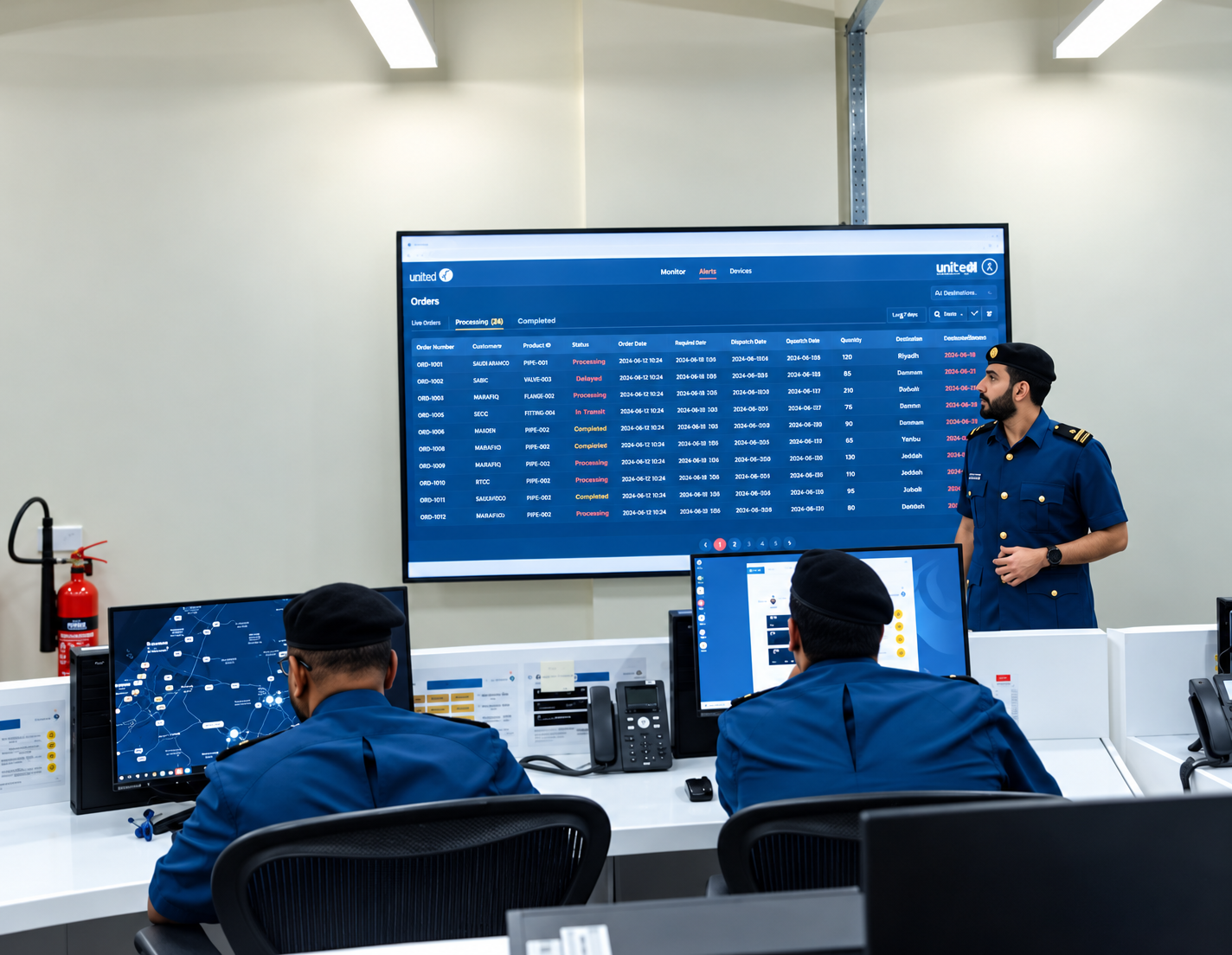

KnowBe4’s latest report reveals a shift towards sophisticated, targeted phishing attacks. In the UAE, mobile-focused lures are nearly four times the global rate, highlighting the growing need for stronger cybersecurity defenses.
2 minKnowBe4, the global leader in digital workforce security, securing both humans and AI agents, today announced the release of its Phishing Threat Trends Report, Vol. 8. The report reveals a fundamental shift in cybercrime tactics: mass, low-effort commodity fraud is in steep decline as threat actors focus on hyper-targeted identity attacks, abusing trusted cloud and AI infrastructure, and bypassing traditional authentication defenses. In the UAE, the shift is only partly visible. Attackers are investing in reconnaissance, but they still rely on file-based malware and mobile lures that are falling away in other markets.
The Phishing Threat Trends Report is based on KnowBe4’s Inbound Email Security data from KnowBe4 Defend, which processes 1.15 billion event signals daily. According to the report, overall phishing volume grew 29.8% year-over-year, with organizations receiving an average of one dangerous email for every 733 emails received. However, the nature of these attacks has changed. Indiscriminate ‘spray and pray’ campaigns saw sharp drops – mobile-focused scams fell 47.3%, 419 (advanced-fee) fraud dropped 31.3%, and missed message lures fell 11.3%. In their place, adversaries are investing heavily in pre-attack research and tailored approaches – spear phishing increased 41.1%, pre-attack scouting increased 33.7%, and company impersonation increased 28%.
Most regions have moved away from file-based payloads, but not the UAE, where malware accounts for 6.7% of dangerous mail, 2.3 times the global average of 2.9%. Attackers are also laying more groundwork, with pre-attack scouting at 4.6% against 2.2% globally. Mobile-focused lures reach 10.0% of dangerous mail, almost four times the global 2.7%, even as this tactic fell 47.3% worldwide. The pattern in the UAE is to research targets first and then deliver a malicious file.
“For years, security advice has focused on a predictable checklist; check the sender address, hover over the link and look for the padlock,” said Jack Chapman, SVP of Threat Intelligence at KnowBe4. “While still foundational, that guidance is becoming less useful by the day. Modern phishing has no need to fool security filters with lookalike domains if attackers can sit directly on trusted ones. Attackers can now borrow legitimate infrastructure, harvest permissions instead of passwords, and react to news headlines at machine speed. Trust signals alone are no longer proof of safety and organizations must rethink where trust belongs as they protect their workforce.”
Key Findings from Phishing Threat Trends Report Vol. 8:
- In Q3 2026, an attack was two times more likely to originate from legitimate infrastructure compared to Q2 2026, with AI platforms as the newest frontier in this trend.
- Threat actors are increasingly hosting fake developer consoles, sign-in prompts, and download hubs directly on native AI platform domains.
- Leveraging generative AI and agentic tools, attackers are now 5.4 times faster at turning breaking news headlines into active phishing lures compared to 2022.
- Commercial toolkits are scaling attacks at volume. Toolkit-driven phishing grew 54% to account for 29.2% of all inbound malicious mail, with just three primary toolkits accounting for 90.2% of all kit-driven phishing.
- Attackers are increasingly bypassing passwords through authentication phishing, device-code logins on platforms like Microsoft Teams, and OAuth consent abuse to hijack sessions and AI agent permissions.
- 90.4% of phishing emails arrive during working days (Monday–Friday), peaking on Monday at 20.6% when inboxes are busiest. Business Email Compromise (BEC) accounts for 51.2% of phish types, with HR, Finance, and Executive Leadership named as the most targeted departments.
BNW Developments has established a Sydney presence, joining Arada and Sobha Realty among the growing number of UAE developers pursuing Australian buyers and development opportunities.

Parts for iPhones to cost more owing to surging demand from AI companies.


More women are entering the skilled trades, taking on roles in construction, welding and engineering, attracted by high-paying jobs and growing career opportunities. As companies introduce better benefits, greater flexibility and more inclusive workplaces, women are reshaping traditionally male-dominated industries.
4 minSammy Cossairt has tried call center work, waiting tables and hoisting concrete. She prefers hoisting concrete.
The 36-year-old tower crane operator in Nashville, Tenn., who works 12-hour shifts, helps lift and move rebar and buckets of concrete from a perch often hundreds of feet in the air. This isn’t what she envisioned when she received a liberal arts associate degree more than a decade ago, but after nearly a decade on the job, she feels at home in her crane.
“I’m out in the sun, making my mark on the world,” said Cossairt, who makes $120,000 a year. “I think more women would love to get in and make men’s money doing this work, if they only knew.”
The skilled trades have long been a boy’s club. But more women are breaking in, drawn by well-paying jobs that are in high demand. To keep them coming, many companies are courting women like Cossairt through new benefits and perks, including paid maternity leave and more flexibility. They are also trying to create a more welcoming work environment while cracking down on off-color jokes and catcalls on male-dominated jobsites.
The federal government tracks female participation in fields such as construction, and installation and repair, which includes jobs such as plumbers, carpenters and auto technicians. As of last year, women made up about 4.4% of those workers. But they have made mostly steady gains, with that figure rising from 2.9% a decade earlier.
At Universal Technical Institute’s campus in Exton, Pa., career services director Katie Yurick said women are enrolling partly because the industry has grown more tech-infused. Automotive technicians can hook up cars to computers for diagnosis, and plenty of in-demand jobs—such as welding and electrical work—can trade as much on brains and attention to detail as brawn.
“These jobs aren’t even dirty jobs anymore,” said Yurick, adding that she has also heard from employers who say they are trying to hire women, believing they possess high maturity levels and are detail-oriented.
UTI’s student body, which spans 17 campuses across the U.S., is now 8% female, quadruple what it was five years ago. In some areas, such as collision repair and auto refinishing, that figure is even higher, at 19%.

“Our industry needs this workforce,” said Maja Ericksen, executive vice president at construction company Mortenson, which in 2024 began offering 12 weeks of paid leave for birth mothers in its skilled workforce. More than 10% of Mortenson’s skilled workforce is now female, up from 7% a decade ago.
“There aren’t too many careers you feel are AI-proof, and being in the skilled trades is one that isn’t going away,” Ericksen said.
Women have broadly outperformed men in the labor market in recent years. This partly reflects booming growth in fields that traditionally employ more women, such as healthcare and social assistance, while women also are making inroads in traditionally male-dominated jobs.
Kym Gardner, 39, a project engineer in Charlotte, N.C., said that as a child, she never thought about working in the field. Her mother was a teacher, her father a computer analyst. “No one really talked about it, it wasn’t considered to be a career,” she said. “The expectation was to go to college.”
But in high school, she grew interested in architecture, found a construction mentorship program and quickly fell in love with seeing buildings rise from the ground up. Now the mother of three children, including a 5-month-old, starts her days on site and works remotely in the afternoons—flexibility she said helps give her peace of mind and ensures she doesn’t have to sacrifice her caregiving duties.
Her company, Turner Construction, is growing fast and needs all the workers it can get, said president Abrar Sheriff. The company hit $29 billion in revenue last year and expects around $35 billion this year, fueled in part by work on data centers. More worker flexibility, including creature comforts such as heated and cooled bathrooms with running water on worksites, or regularly cleaned breakrooms, are part of the pitch.
“We need more people to come into our industry,” Sheriff said.
Elsewhere, construction company Skanska has taken steps such as ensuring female employees have correctly sized gloves, helmets and work boots, rather than forcing them to make do with male-sized gear. Deila Ray, who spent a decade as a pipe welder and now teaches the trade in high school, said she had to shrink her own gloves with fire when she started in the industry.
Skanska this year also started mandating inclusivity for all its team leaders, encouraging them to be more aware of different workers’ needs, said Ayesha Adams, who joined Skanska in 2023 as its inaugural director of culture and engagement.
“You can get people all day, but how do you keep them here?” Adams said.
Some states are trying to make work in the trades more accommodating for women. Both Washington and Illinois, for example, have in the last few years passed laws requiring nursing rooms for mothers on construction sites, as well as refrigerators to store breast milk, flexible break schedules and access to water for cleaning.

Construction companies are also tackling another issue: workplace harassment. At Turner, senior leaders there get on a call within four hours of any incident being reported. In one recent case in Texas, a subcontractor’s entire project crew of around a dozen men were replaced when that company couldn’t identify who had written derogatory graffiti about female employees, said Sheriff, Turner’s president.
Part of the challenge is that it doesn’t take aggressive comments to make a jobsite feel hostile, said Rebecca Heustess, 42, a tile foreman who makes $65,000 a year in Henry, S.D. Even after 20 years in the trades, she said she regularly encounters men who patronize her or ignore her instructions.
Still, she said she has thick skin and that the jobsite culture has slowly improved. She also loves the work.
“When I leave a job, it’s this beautiful shiny sparkly project that I know will be there for years to come,” Heustess said. “It’s super fulfilling.”
BNW Developments has established a Sydney presence, joining Arada and Sobha Realty among the growing number of UAE developers pursuing Australian buyers and development opportunities.
Many of the most-important events have slipped from our collective memories. But their impacts live on.

Türkiye recorded a historic USD 51.3 billion in tourism revenue during the first nine months of 2026, up 2.4% year on year, welcoming 49.1 million visitors. Minister Mehmet Nuri Ersoy highlighted the sector’s resilience and plans to expand into new international markets.
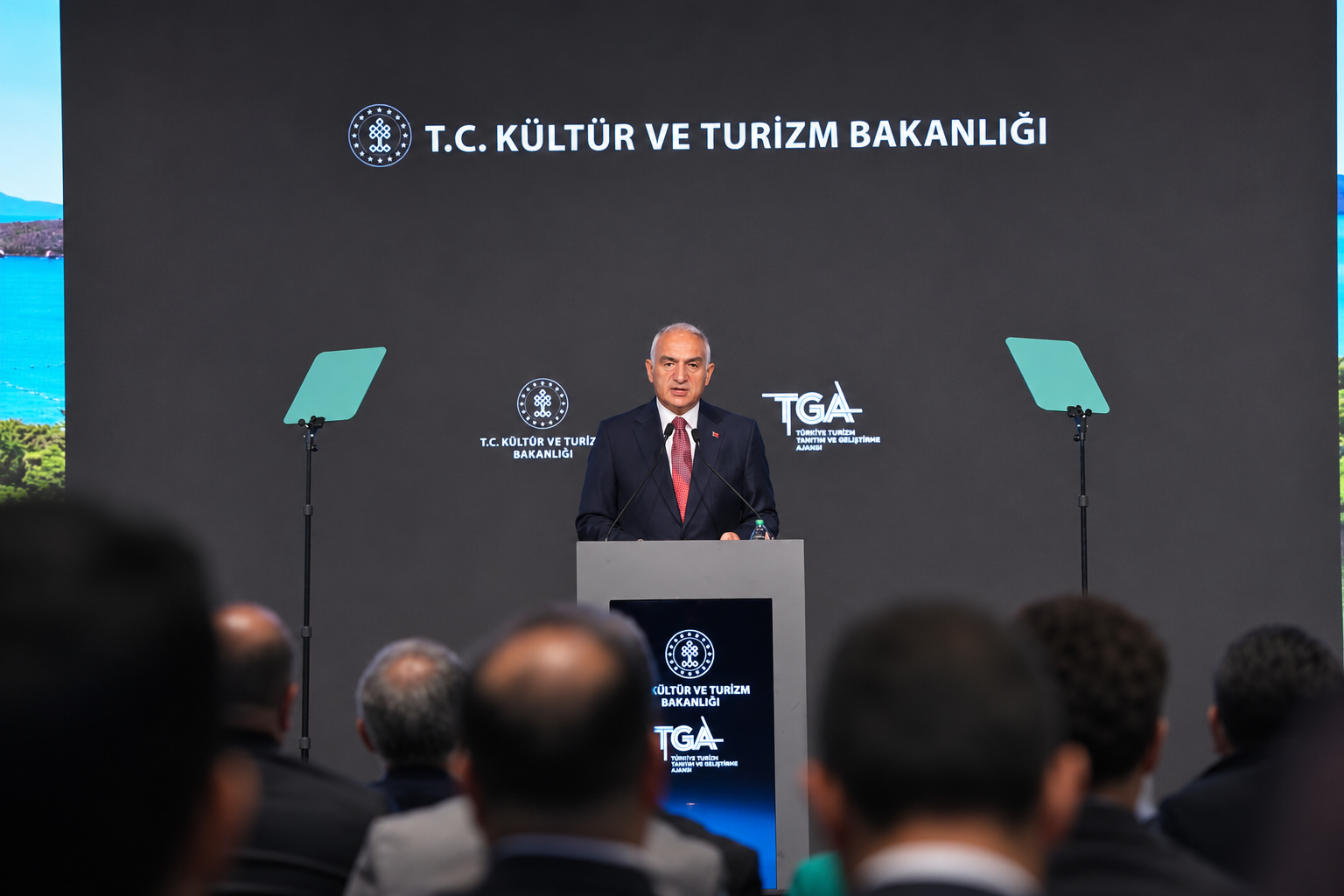
< 1 minTürkiye’s Minister of Culture and Tourism, Mehmet Nuri Ersoy, announced the country’s tourism results for the third quarter and the first nine months of 2026 at a press conference in İstanbul. Tourism revenue reached USD 51.3 billion between January and September, up 2.4% year on year and the highest nine-month figure ever recorded. Third-quarter revenue alone rose 5% to a record USD 25.5 billion.
Minister Ersoy said: “This year, international travel has faced exceptional challenges. Conflicts in our region, airspace restrictions and rising energy and airfare costs have affected travel decisions, airline capacity and tour operator programs alike. Amid these developments, Türkiye has stood out as an island of stability.
“Since 2018, we have taken deliberate steps to make our tourism sector more resilient to crises. By establishing the Türkiye Tourism Promotion and Development Agency (TGA), we made our promotion continuous and systematic; we expanded our source markets and diversified our tourism offers. Achieving the highest third-quarter and nine-month revenues in our history in such a year shows the value of this approach.
“In the period ahead, while protecting our position in our main markets, we will intensify our efforts in high-potential markets, particularly the Americas, Canada, East Asia, Africa and Oceania.”
In the first nine months of the year, the average length of stay rose 0.3% to 10.34 nights, and average spend per night rose 4.6% to USD 107.7. The total number of visitors stood at 49.1 million. The Russian Federation (5.70 million), Germany (5.17 million) and the United Kingdom (3.20 million) remained Türkiye’s three largest source markets.
BNW Developments has established a Sydney presence, joining Arada and Sobha Realty among the growing number of UAE developers pursuing Australian buyers and development opportunities.

Paine Schwartz joins BERO as a new investor as the year-old company seeks to triple sales.


Amazon, Alphabet and Microsoft are expected to spend nearly $580bln on AI this year, with investors looking for stronger returns from their cloud businesses. Google Cloud led growth at 82% last quarter, ahead of Azure at 42% and AWS at 37%, putting pressure on tech giants to prove that rising AI investments are translating into revenue.
2 min
Big Tech heads into a busy earnings week, but the market isn’t in the mood to give AI spending the benefit of the doubt. Meta beat on revenue last week and still sold off after lifting its spending plans again, and the damage quickly spread, with the Nasdaq 100 suffering its worst day since June. Amazon, Alphabet and Microsoft all dragged lower with it, leaving sentiment shaky and every dollar going into AI under the microscope, said Josh Gilbert, etoro Lead Analyst APAC and Middle East.
Wall Street expects Amazon, Alphabet and Microsoft to spend close to USD$580 billion between them this year and more than USD$800 billion in 2027. That’s well beyond the roughly USD$385 billion a year their three cloud businesses are bringing in, and with Amazon’s free cash flow in the red over the past 12 months, the money is going out faster than it’s coming back. The beauty of these three is that they can sell much of that computing power straight back out the door through their cloud businesses, which makes Azure, Google Cloud and AWS the first place investors will look for proof that the spending is paying off.
Google Cloud set the pace last quarter with growth of 82%, well ahead of Azure at 42% and AWS at 37%, so Alphabet faces the highest bar of the three, and with its shares sitting around 20% below their record high despite that growth, it also needs to show AI isn’t eating into the margins of its search business. Amazon needs to show its heavy spending is still lifting AWS growth after its fastest quarter in four years. Microsoft simply hasn’t had enough computing power to keep up with demand for Azure, which is a nice problem to have, and while it has already guided to Azure growth of 44 to 45% this quarter, its guidance for next quarter will show how quickly new capacity can turn that waiting list into revenue.
Nobody expects spending to slow down, so this week comes down to whether cloud growth can keep pace. The hyperscalers that show money coming back in will quickly separate themselves from the rest of the AI trade.
BNW Developments has established a Sydney presence, joining Arada and Sobha Realty among the growing number of UAE developers pursuing Australian buyers and development opportunities.
The sports-car maker delivered 279,449 cars last year, down from 310,718 in 2024.


Surging demand from AI data centres has driven flash memory prices up fivefold over the past year, giving suppliers such as Kioxia greater leverage over Apple. The shift is increasing storage costs for the iPhone maker, putting pressure on profit margins and contributing to higher prices across its product lineup.
3 min
During a ride in a Southern California desert, sales executive Scott Nelson stopped his dirt bike, pulled out a rifle and shot his old iPod.
Nelson sold flash storage to Apple AAPL -0.94%decrease; down pointing triangle and hated feeling like he always got the worst end of the deal. His Japan-based manufacturer, Kioxia, had little leverage. Apple was the world’s biggest buyer of flash—the chips in iPhones that store photos, music and apps—and used its position to squeeze every cent from suppliers. Apple bullied flash makers into opening their books so it could monitor sales, making sure no one else got a better deal.
Kioxia and other flash makers stewed as Apple paid them pennies for flash storage that the iPhone maker resold to customers for dollars. The disparity in bargaining power had galled Nelson, who used Android phones in protest.
Nelson kept the broken pieces of his iPod, the first Apple device to use flash. They sit on his desk and hold a special reverence now that the tables have turned.
In the past year, demand by AI hyperscalers has quintupled prices for flash, according to research firm TechInsights, opening a new era for Kioxia and other suppliers. Two years ago, Apple bought nearly twice the flash storage of Microsoft, Amazon, Meta and Google combined, according to TechInsights estimates. Hyperscalers are now buying double Apple’s share.
Flash memory suppliers and their sales teams privately expressed their glee at Apple’s comeuppance during chitchat at the industry’s largest conference this summer in Santa Clara, Calif. AI deals have given Kioxia sales executives and other flash suppliers new leverage to charge Apple higher prices.
Meta, Microsoft and Amazon signed contracts with Kioxia this year to secure long-term supply by committing to higher prices. The contracts protect Kioxia’s profits if the market turns. The company declined to comment.
Hyperscalers can afford to pay more. Flash storage is a smaller part of building a data center than making an iPhone, and accounting rules allow companies to spread the cost over years.
Apple is expected to spend $25 billion on flash storage this year for about the same amount it bought for $6 billion in 2025, according to estimates by TechInsights. Tim Cook, Apple’s executive chairman, compared escalating memory chip prices to a “100-year flood.”
Yet Apple had ignored analysts’ warnings and was caught off guard, said people familiar with the company’s procurement practices.
Company executives believed they knew the market better than anyone else, the people said. Flash that cost $68 a gigabyte in 2005 had fallen to a nickel by 2023. Now, demand by the AI industry has lifted the price to more than 30 cents a gigabyte, a 550% jump, threatening Apple’s steep profit margins from selling extra storage.
Buyers of the iPhone 17 Pro paid Apple $200 last year for double the storage of its 256-gigabyte base model. The extra storage at the time cost Apple $15 and has since shot up to $66, according to an analysis by The Wall Street Journal.
Storage upgrades for iPhone 17 Pro (2025) versus iPhone 18 Pro (2026)
“Apple has historically driven a very hard bargain with memory suppliers,” said Walt Coon, an analyst at TechInsights. “And there’s no shortage of satisfaction among suppliers now that the balance of power is shifting.”
“We’ve worked with many of our suppliers for decades, and we deeply value their partnership over the years,” Apple said in statement. “We look forward to continuing our important work together.”

Apple recorded an average gross profit of more than 80 cents for every dollar it charged iPhone and iPad buyers for extra storage since it first released those devices through 2025, the Journal found. For Mac computers sold since 2010, it averaged nearly 80 cents.
In recent months, Apple raised prices for nearly all of its products. Prices rose an average of 13% for iPhones, an increase that included older models which typically get a price cut.
Price, change from Fall 2025 to 2026
The question for Apple is whether consumers will react to the higher prices by keeping their iPhones longer or whether they will continue to buy at their usual pace. For flash-storage makers, the question is when—or if—Apple will regain its flash-market leverage.
“It’s been a love-hate relationship between Apple and the flash industry,” said Mark Newman, an analyst with Bernstein Research. Apple has sustained the manufacturers for years, he said, but its power to cap prices, while beneficial to shareholders, left suppliers feeling “screwed.”
Commitment-phobe
In 2001, engineers at Kioxia, then called Toshiba, showed two Apple executives a 1.8-inch-diameter, 5-gigabyte hard drive they had developed but didn’t yet know what to do with.
BNW Developments has established a Sydney presence, joining Arada and Sobha Realty among the growing number of UAE developers pursuing Australian buyers and development opportunities.

Chris Dixon, a partner who led the charge, says he has a ‘very long-term horizon’

The new Valhalla Spider combines a 1,079PS plug-in hybrid powertrain with open-air driving, reaching a top speed of 350 km/h with its optional carbon-fibre hardtop fitted. The supercar features advanced active aerodynamics, Formula 1-inspired engineering and a removable fabric roof, expanding Aston Martin’s Valhalla lineup with a road-and-track-focused driving experience.
4 min

Following the successful introduction of the acclaimed mid-engined hybrid Valhalla Coupe earlier this year, Aston Martin is proud to present the new Valhalla Spider; the ultimate expression of roof-off driving and the fastest open-cockpit Aston Martin ever made.
As Aston Martin’s first mid-engined open-cockpit production supercar, Valhalla Spider’s mission is clear; to increase the opportunities for driver enjoyment while preserving the class-leading dynamic bandwidth that enables Valhalla to achieve the highest levels of accessible performance and engagement on both road & track.
Continued close collaboration with Aston Martin Performance Technologies (AMPT) – the consulting arm of the Aston Martin Aramco Formula 1® Team – on dynamics, aerodynamics and materials have brought an extra dimension of knowledge and skills to the Valhalla Spider’s design and development, allowing Aston Martin to further push the boundaries of supercar engineering and performance – now in roof-off form.
Valhalla Spider employs a comprehensive roof system designed to conserve the clean, flowing lines of Valhalla Coupe and provide optimum solutions for every driving scenario. Fitted with a removable and stowable black fabric roof as standard*, customers can enjoy roof-off driving with the reassurance of full weather protection should conditions change. With the fabric roof in place, drivers can reach speeds of up to a class leading 124mph (200 km/h). An optional carbon fibre hard top offers an alternative solution and allows unrestricted roof-on access to Valhalla Spider’s immense top speed, which is electronically limited to 217mph (350 km/h). A rain cover is also provided for static use.
Underlining the commitment to driving thrills, Valhalla Spider is also capable of achieving Vmax with its roof removed. This makes it the fastest open-cockpit Aston Martin ever.
To maintain maximum performance with the roof off, while optimising occupant comfort, Valhalla Spider features a unique wind deflector. Designed to manage airflow over the open cockpit, this simple yet effective device is quickly clipped into position when the roof panel is removed. The unique design controls air flow off the windscreen header to ensure cooling air flow is pulled down to the snorkel whilst lifting air over the occupants for enhanced comfort. The snorkel has also been optimised for this open top variant – bespoke to Valhalla Spider it has been reprofiled and sits 35mm taller. With the roof on, the wind deflector can be folded into 3 parts and stored inside the new 15-litre sill stowage apertures. Revised active aerodynamics and Electronic Stability Programme (ESP) calibrations identify and adapt to the air flow in both roof-on and roof-off conditions, maintaining consistent vehicle balance, stability and driver confidence.
A new carbon fibre Touring Seat now comes as standard on Valhalla Spider, also enhancing occupant comfort and ease of entry and exit with the roof on. However, the original carbon fibre seat from Valhalla Coupe can be retained at no cost if more dynamic driving support is preferred.
Valhalla Spider shares the same 1079PS and 1100Nm of torque plug-in hybrid powertrain as Valhalla Coupe. Central to this is the 828PS 4.0-litre twin-turbo V8 engine. Unique to Valhalla, it boasts a specific output of 207bhp-per-litre – the highest specific output of any Aston Martin combustion engine. In addition, a trio of e-motors and High-Performance Battery (HPB) contribute a further 251PS making Valhalla a true supercar with hypercar performance.
A pair of electric motors drive the front e-axle, with full Electric Torque Vectoring (E-TV) to enhance both agility and stability. The third motor integrated alongside the 8-speed DCT transmission, assists the V8 combustion engine to drive the rear axle and e-diff. With no mechanical connection between front and rear axles, drive to each individual wheel is continually managed by Aston Martin’s advanced Integrated Vehicle Dynamics Control (IVC) system. The Integrated Vehicle Dynamics Control (IVC) electronics monitor suspension, braking, steering, active aerodynamics and powertrain systems to achieve optimal performance and driver connection in every situation. Working in harmony with Valhalla’s four driver selectable drive modes, IVC continually shapes Valhalla Spiders’ dynamic character by monitoring vehicle behaviour and driver demands. Through precise calibration this immensely complex and sophisticated system delivers an organic, natural feeling driving experience.
Valhalla Spider also features the same advanced and extensive whole-vehicle active aerodynamics as debuted on Valhalla Coupe. Combining moveable aerodynamic surfaces with precise management of underbody airflow, Valhalla Spider continually adjusts front and rear downforce to maximise grip, handling balance and consistency of response, or reduces drag depending on situation and the driving mode selected for optimum aerodynamic efficiency. Having both front and rear active aerodynamic mechanisms allows Valhalla to have excellent control of the downforce distribution between front and rear axles, this is crucial for stability and vehicle performance.
Thanks to this shared foundational hardware and software the technical variance between Valhalla Spider and Coupe is limited to specific changes to active aerodynamics and Electronic Stability Control calibration. Each has been precisely tailored to maintain consistent aerodynamic performance and dynamic behaviour in roof-off and roof-on conditions; maximum downforce in excess of 600kg (with roof fitted).
At Valhalla Spiders’ core is a version of the bespoke carbon fibre tub deployed on Valhalla Coupe. Designed and engineered by AMPT, which applies their highly specialised F1® expertise and technical capabilities beyond the pinnacle of motorsport, Valhalla’s structure is the product of cutting-edge composite technology.
Valhalla’s carbon structure has been created using proprietary technology developed for Aston Martin. The upper and lower sections of the structure are moulded from carbon fibre using a combination of Resin-Transfer-Moulding process (RTM) and F1® derived autoclave technology. The result is a singular, immensely stiff, strong and light passenger cell which delivers outstanding dynamic structural attributes and safety, without compromising driver and passenger ergonomics.
Complementing the open-air driving experience, Valhalla Spider retains its signature carbon fibre dihedral doors, preserving the sense of theatre; now with refined kinematics for smoother operation and a transition to a frameless design. A small increase in the curvature of the door glass top edge also improves entry and exit when the roof is fitted.
Aston Martin CEO, Adrian Hallmark, said of the Valhalla Spider; “Valhalla Coupe broke so much new ground. Our first production mid-engined supercar. Our first plug-in hybrid. The first to feature our bespoke flat-plane crank V8 engine, and the first to use our all-new 8-speed Dual Clutch Transmission (DCT). It also pioneered a fresh design language and achieved a unique blend of exemplary on-road feel and engagement matched by extraordinary on-track capability.
“Valhalla Spider builds on those impressive ‘firsts’, preserving the aesthetic beauty and dynamic bandwidth of Valhalla Coupe while introducing the expanded opportunities for enjoyment and engagement that can only be found in an open-cockpit supercar. High speed or low speed. Rain or shine. Roof on or roof off. Road or track. Valhalla Spider ticks every box.”
Valhalla Spider will make its global debut this weekend at the 2026 Concours at Wynn Las Vegas.
BNW Developments has established a Sydney presence, joining Arada and Sobha Realty among the growing number of UAE developers pursuing Australian buyers and development opportunities.

Americans now think they need at least $1.25 million for retirement, a 20% increase from a year ago, according to a survey by Northwestern Mutual


Microsoft is extending voluntary exit offers to eligible employees in the U.S., Canada, the U.K. and India, providing financial support and career planning resources. The time-limited program follows an earlier buyout initiative in April, which was accepted by more than 30% of eligible employees, according to a person familiar with the matter.
< 1 min
Microsoft MSFT 1.54%increase; is extending voluntary buyout offers to thousands of employees across several countries including the U.S., the company said on Monday.
Around 60,000 employees are eligible for the program, according to a person familiar with the matter. The offer is available to select employees in Canada, India, the U.K. and the U.S.
“The Voluntary Exit Offer reflects an important part of how we’re evolving our approach to change: creating greater flexibility and, where possible, more ways for employees to shape their next chapter,” Amy Coleman, Microsoft’s chief people officer, said in a message sent to employees.
Microsoft said the program was “time-limited” and would provide eligible employees with financial support and career planning resources. Coleman said eligible employees would receive an email link with their offer details in the next few hours.
Microsoft in April announced a voluntary retirement program, which offered around 8,600 employees buyouts, the person familiar with the matter said, and more than 30% accepted the offer. The company expects a far lower percentage to accept the latest buyouts, the person said. Microsoft employed 223,000 employees as of the end of June.
The voluntary retirement program was part of a broader shift by Microsoft to alter its performance system and how it awards bonuses and stock options, according to a memo to employees from Coleman viewed by The Wall Street Journal at the time.
Microsoft earlier this year announced 3,200 job cuts in its Xbox videogames division.
BNW Developments has established a Sydney presence, joining Arada and Sobha Realty among the growing number of UAE developers pursuing Australian buyers and development opportunities.

Interior designer Thomas Hamel on where it goes wrong in so many homes.

Ghana’s 2026–2030 Renewable Energy Master Plan targets 852 MWp of solar and 709 MWp of wind capacity, with total investment projected at $10.8 billion and the potential to create over 353,000 jobs. Alongside Nigeria’s renewable energy financing initiatives, the plan signals growing clean-energy opportunities across West Africa, although implementation and financing remain key challenges.
< 1 min
Kowatek Solar has highlighted Ghana’s updated Renewable Energy Master Plan for 2026–2030 as a sign of growing clean-energy ambition across West Africa, alongside Nigeria’s new renewable energy financing initiatives.
The plan targets 852 megawatt-peak (MWp) of utility-scale solar and 709 MWp of utility-scale wind capacity.
Estimated investment requirements stand at $631 million for solar and $999 million for wind, while total investment across the plan is projected at $10.8 billion, almost double the $5.6 billion allocated under the 2019 plan.
The program could generate more than 353,000 jobs across manufacturing, installation and operations.
Additional targets include 127MW of new hydropower, 440 mini-grids serving rural and island communities, 1.1 million solar lanterns, and expanded biofuel and improved cookstove adoption.
However, implementation remains a key challenge. The previous plan cycle faced shortcomings in coordination and monitoring, weakening data collection, reporting and evaluation.
Progress will therefore depend on effective procurement, project execution and grid connections.
The plan also highlights the need for distinct financing and delivery models for utility-scale projects and rural mini-grids.
While Nigeria’s Distributed Renewable Energy Fund focuses on decentralized energy access, Ghana’s strategy covers utility-scale generation, rural electrification and clean cooking.
For renewable energy companies, opportunities could emerge across both markets, particularly for firms offering hybrid power solutions for commercial and industrial customers, provided projects advance to procurement and implementation.
BNW Developments has established a Sydney presence, joining Arada and Sobha Realty among the growing number of UAE developers pursuing Australian buyers and development opportunities.

Following the devastation of recent flooding, experts are urging government intervention to drive the cessation of building in areas at risk.


Türkiye plans to unveil an updated National Energy Plan on November 5, with stronger targets extending to 2040. With combined wind and solar capacity exceeding 44 GW, the country aims to expand renewable energy, upgrade its power grid and strengthen domestic manufacturing to support its 2053 net-zero emissions goal.
< 1 min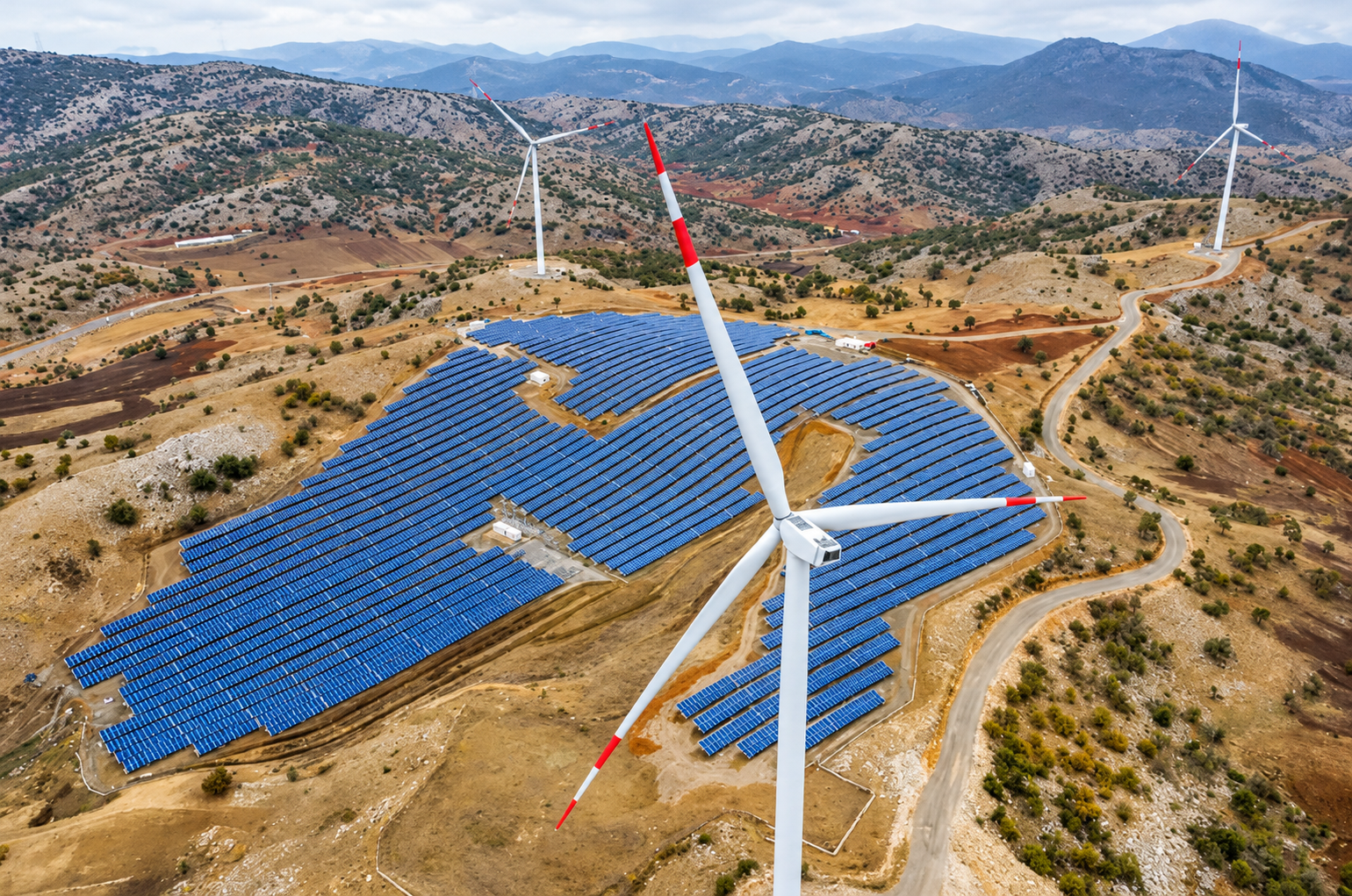
Türkiye plans to announce a revised National Energy Plan on November 5, with stronger targets extending through 2040, a senior energy official said.
Speaking at a panel at the Investment Summit Towards COP31 in Istanbul, Ahmet Ozkaya, Director General of Energy Affairs at the Energy and Natural Resources Ministry, said renewable energy is essential to securing supplies, reducing import bills and achieving Türkiye’s 2053 net-zero emissions goal.
Combined wind and solar installed capacity has exceeded 44 gigawatts, he said, recalling the target announced in 2024 to increase capacity to 120 gigawatts by 2035.
“We anticipate stronger targets, particularly revised targets extending from 2035 to 2040,” Ozkaya said as quoted by Anadolu Agency.
An earlier estimate put transmission and distribution investment needs at $80 billion through 2035, he said, adding that requirements would rise as the planning horizon extends to 2040.
Without grid upgrades, renewable energy ambitions would remain “just numbers and targets,” he warned.
The transition is also supporting domestic manufacturing, with local content approaching 100% in hydropower equipment, nearly 90% in solar and 60%-65% in wind, according to Ozkaya. He said the ministry is working on additional incentives to address competitive pressures facing the sector.
BNW Developments has established a Sydney presence, joining Arada and Sobha Realty among the growing number of UAE developers pursuing Australian buyers and development opportunities.

From candy corn and licensed costumes to pop-up Halloween shops and haunted houses, some of October’s most iconic traditions began as simple ideas from entrepreneurs and small businesses before evolving into major commercial phenomena. In 2025, Halloween grew into a $13.1 billion consumer business, driven in part by these innovations.
6 min
Candy Corn. Haunted houses. Seasonal spectacles that now seem inseparable from October.
Many of Halloween’s biggest mainstays started much more modestly—as ideas from entrepreneurs and small businesses that caught on, spread and eventually became traditions. Along the way, they helped turn Halloween into a $13.1 billion consumer business in 2025.
Here is a look at four of the most popular creations, and how they got their start.
Candy Corn
One of the most inescapable Halloween treats—Candy Corn—wasn’t marketed as a Halloween goody at first. In fact, it was marketed as a whimsical candy version of chicken feed.
It was created back in the 1880s in Philadelphia, which was then a candy-making hub. One popular trend among candy companies was nature: treats inspired by the agricultural world, like pumpkins, leaves and chestnuts.
Among those businesses was Wunderle Candy, owned by a family of German immigrants. (Milton Hershey worked there before he founded his chocolate business.) One Wunderle employee, George Renninger, came up with the idea of a candy shaped like corn kernels—but also took the innovative step of applying different layers of colors to the treats.
The process involved pouring layers of hot liquid sugar into tiny molds by hand. “It was laborious,” says Beth Kimmerle, founder and chief executive of Attribute Analytics and author of three books about candy.
The unusual color scheme gave the candy instant appeal. And, yes, it was marketed as faux chicken feed at the start: “an agricultural-themed novelty and penny candy that appeared throughout the year,” Kimmerle says.

How did the corn get associated with Halloween? At the turn of the last century, another candy company, Goelitz Confectionery, also began selling the treat. Kimmerle says it isn’t clear what kind of arrangement—if any—the two companies had about the rights to the candy. But, in the end, Goelitz usually gets the credit for scaling the candy and branding it as a Halloween product.
As for Wunderle, Kimmerle says, the business wound down in the 1980s, while Goelitz was eventually renamed Jelly Belly in 2001, and acquired by Ferrara Candy in 2023. (Another Ferrara brand, Brach’s, has also been selling candy-corn treats since the 1920s; Ferrara says that it doesn’t have information showing a licensing agreement between the companies.)
Candy Corn has not only become immensely popular in itself, but also has lent its colors and flavors to countless other products. This year, Brach’s launched a limited-edition fragrance, Ode to Candy Corn, which “smells exactly like how candy corn tastes,” according to the company.
Licensed costumes
Dressing up as your favorite fictional figure is a Halloween tradition. Entrepreneur Ben Cooper made it a lot easier for people to get into character—by making licensed costumes a big business.
In the 1930s, Cooper sold costumes for vaudeville, says Rob Caprilozzi, founder of the Horror News Network website, who recently made a documentary about Cooper. In 1937, the entrepreneur—whose company was simply called Ben Cooper Inc.—bought another company, A.S. Fishbach, which had the license to manufacture costumes of Disney characters.
Cooper added more costumes as new Disney movies came out, as well as updating the old ones, Caprilozzi says. In the 1960s, he expanded his line to superheroes—including Spider-Man and Batman—and then turned to “Sesame Street” and “Star Wars” characters in the 1970s.

“At its height, the company controlled 80% of the licensed custom characters,” says Caprilozzi.
And it wasn’t just fictional heroes, either: Cooper had a line of costumes based on U.S. presidents. (The company destroyed its JFK inventory after the assassination, says Caprilozzi.)
One of the selling points of Cooper’s costumes was simplicity. The costumes were just plastic masks and tarps costing a few dollars apiece, and you could toss them out after the big night—no need to hang onto them year-round.
The company lasted until 1992, when it filed for bankruptcy and was then acquired by competitor Rubie’s Costume. (The company, now known as Rubies, didn’t respond to requests for comment.)
Halloween pop-up shops
Joseph Marver didn’t change what we wear for Halloween, the candy we eat or the type of decorations we put up. But he revolutionized where we buy all that stuff.
Marver was running an apparel store called Spirit Women’s Discount Apparel in Castro Valley, Calif. October sales were historically slow, but he noticed sales booming at a costume shop across the street. According to media accounts, the other store changed locations, and Marver in 1983 decided to get into the Halloween business himself. He put his usual wares into storage and turned his store into an emporium for Halloween merchandise.
“I went to a trade show in Chicago, picked up everything I could that had to do with Halloween, and put it in my store, and it was amazing,” Marver told San Francisco Bay Area radio station KQED in July 2024. (He died in 2025.)
“His sales went through the roof,” says Lisa Morton, author of “Trick or Treat: A History of Halloween” and “The Halloween Encyclopedia.”

Marver doubled down on the gambit the following year—renting out a temporary space in a local mall to sell all types of Halloween products for eight to 10 weeks, from costumes to decorations to face paint. At the time, retail leases typically lasted a decade, and it was difficult for newcomers to land a lease, let alone a temporary one, says Barbara Kahn, a professor at the University of Pennsylvania’s Wharton School.
In the interview with KQED, Marver described his initial difficulties. “Some of the people in the strip centers wanted to have the big boxes come in, but then, some of them realized it [was] not going to happen,” he said. So the malls agreed to take on the pop-ups, figuring, “‘Let’s do Halloween. Let’s get something going. Maybe it’ll bring business to the other tenants.’”
Over the next 16 years, Marver grew his business to 60 temporary retail outlets and changed its name to Spirit Halloween. His company spent the rest of the year preparing for the season, handling jobs like sourcing costumes and identifying potential real estate.
In 1999, Spencer Gifts bought the company; Marver stayed on as a consultant, then opened a hotel. Today, Spirit Halloween operates about 1,500 seasonal stores across the U.S. and Canada.
“I didn’t invent temporary sales,” Marver told the Seattle Times in October 2022, “but I feel like I invented temporary Halloween.”
Haunted houses
Walter Knott became famous as the founder of amusement park Knott’s Berry Farm, which has been in operation for about 80 years. But he and his marketing team also invented the large-scale, commercial haunted house.

People had been putting up private, informal haunted houses for years. Charitable organizations also set up the houses to raise funds, says Benjamin Gagne, president of the Haunted Attraction Association and owner of the Thirteenth Hour haunted attraction in Indianapolis.
But Knott’s Scary Farm Halloween event in 1973 was a first, a large-scale commercial setup designed to boost ticket sales during an otherwise slow season, says M. Stang, Ainsworth Visiting Scholar of American Culture at Randolph College in Lynchburg, Va.

Full-page advertisements flooded Orange County and Los Angeles County newspapers, promising entry to the “spookiest, ghouliest place in Southern California” for just $4. The print ads promised “bizarre, spooky antics,” a “fun-tingling plunge through Satan’s sawmill,” and “LIVE MONSTERS,” Stang wrote in a paper about the attraction.
The park also distinguished itself by having people in costumes provide the scares, says Gagne. Previously, amusement parks, including Disney, had what Gagne calls “dark carny rides,” where patrons rode around in carts, and mirrors and lighting created the mood.
The Scary Farm turned into an annual tradition. Knott’s is still running the Halloween attraction—which is open for 26 nights this season.
BNW Developments has established a Sydney presence, joining Arada and Sobha Realty among the growing number of UAE developers pursuing Australian buyers and development opportunities.

Elon Musk is exploring a potential merger between Tesla and SpaceX, a deal that could reshape the future of AI, robotics, autonomous vehicles and space technology. With a combined valuation potentially reaching $3.5 trillion, the move could bring Musk’s vision of an interconnected technology ecosystem closer to reality, although a deal remains uncertain.
5 min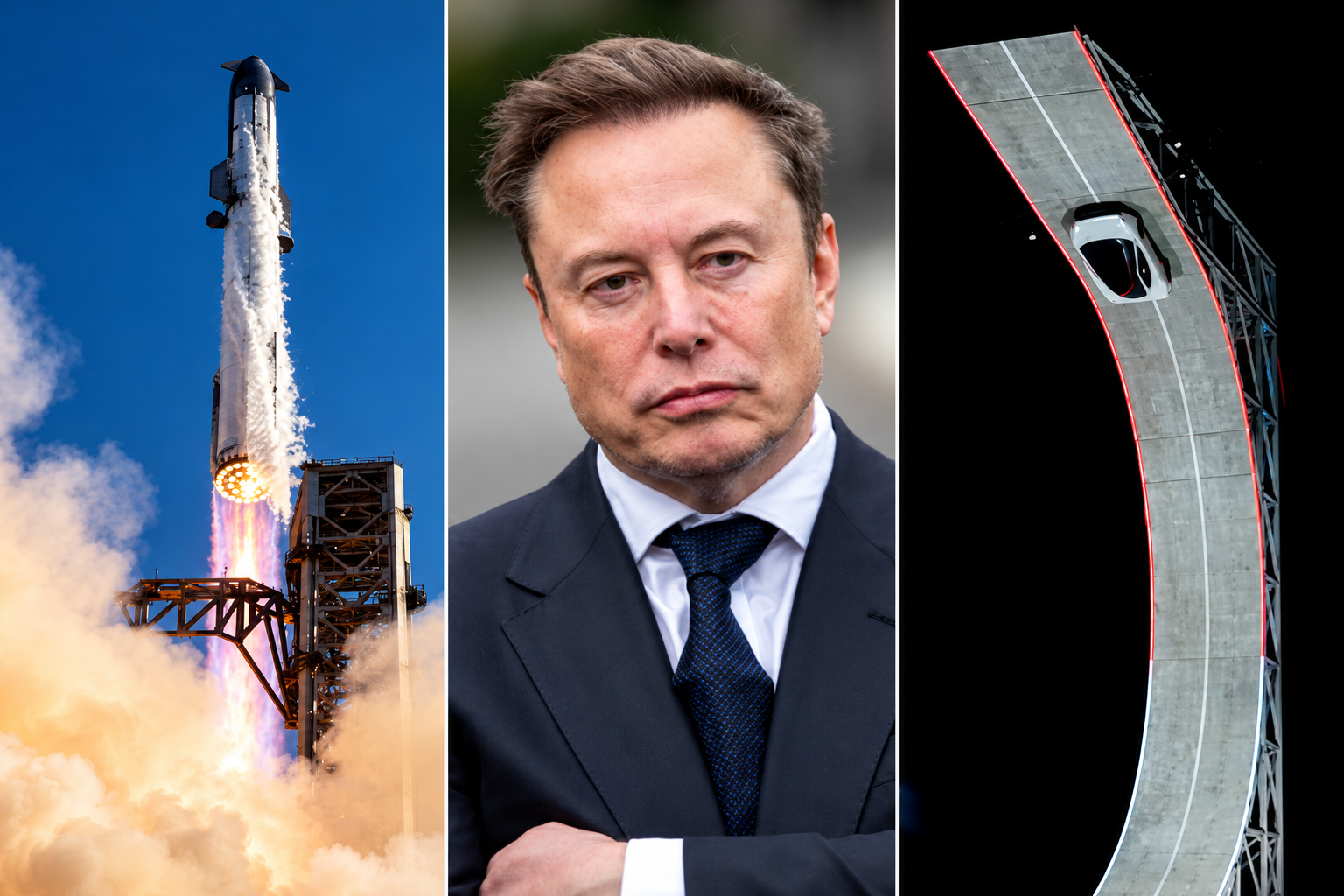
Elon Musk has engineered ties between Tesla TSLA 3.41%increase; up pointing triangle and SpaceX SPCX 7.79%increase; up pointing triangle that are hard to break, and now he wants to fuse them together permanently.
Musk has run both Tesla and SpaceX concurrently over the past two decades, using a schedule that dictated which days he spent focused on each business.
The companies have often shared resources and personnel, signaling their close ties. Last year, SpaceX looked into creating a spacesuit for Tesla’s humanoid robot Optimus, a person familiar with the matter said. Tesla last week showed off its new Roadster, a vehicle featuring SpaceX rocket thrusters that it hopes to soon bring to market.
And in recent months, Musk has repositioned both companies by expanding beyond their core operations toward a shared mission centered on artificial intelligence.
The world’s richest man on Tuesday signaled his interest in tying up SpaceX and Tesla, marking what would be the biggest corporate merger of all time. Because he serves as chief executive of SpaceX and Tesla, Musk said committees of independent directors at both companies are evaluating a possible deal, adding that a transaction might not come to fruition.
The committees will likely evaluate, with lawyers and bankers, how each company would fare in a potential deal and how a deal might best be structured. They then present their conclusions to their respective boards, who typically vote on whether to proceed.
“It’s an odd Kabuki dance where two groups of people are talking and I can’t be in the conversation,” Musk told SpaceX investors on Tuesday in response to an analyst’s question about a potential deal.
For Musk, the merger supports his vision of a world full of autonomous cars, humanoid robots and weekly rocket launches, as well as the data centers and satellites required to keep the whole thing running.
Some investors and analysts said they expect a transaction would be structured as an all-stock deal, with SpaceX potentially paying a modest premium for Tesla shares.
SpaceX, which has a market value of about $2 trillion, said it is seeing sharp growth in revenue across its businesses, which include operating data centers, launching rockets and operating satellite networks such as the internet service Starlink. Tesla is valued at about $1.5 trillion and is expanding its operations beyond its automotive and energy business. Shares in both companies traded higher following the news Tuesday.

Musk’s substantial ownership stakes in both companies, along with voting control at SpaceX, has enabled him to set the deal in motion. Analysts and investors said the deal will probably face regulatory scrutiny internationally, though some see Musk’s close relationship with the Trump administration as an asset to getting approval.
Blurred lines
The companies haven’t said which directors are on the special committees evaluating a potential deal. Several SpaceX and Tesla board members have either personal or business ties to Musk. And like Musk, venture capitalist Ira Ehrenpreis sits on both boards.
In a filing this week, Tesla outlined millions of dollars in business agreements with SpaceX and its subsidiaries last year, including $143 million in car sales to SpaceX, $3.3 million in advertising that it bought on the social-media platform X and $430 million in revenue from the sale of Megapack batteries for SpaceX’s data centers.
The companies also split the cost of resources including the use of Musk’s SpaceX jet and the bill for his personal security, which he runs through a private company.
Employees at both companies routinely move between companies to work on special projects, and some executives have dual roles, including Charles Kuehmann, vice president of materials engineering at both SpaceX and Tesla, and Ashok Elluswamy, the vice president of AI software at Tesla who runs a joint venture with SpaceX called Digital Optimus.
Over the years, Musk has launched new startups within his empire, including brain-implant company Neuralink, underground-tunnel developer the Boring Company and xAI, the AI startup that merged with SpaceX in February.
It is that AI business that Musk thinks can serve a market worth tens of trillions of dollars, justifying the need for a merger.
The business case goes like this: Tesla is developing robotaxis and robots, which it calls “physical AI.” SpaceX is working on the back end of physical AI: the data-center capacity and internet connection required for those robotaxis and robots to operate continuously.

“I don’t see what the value of Tesla is if it’s not merged with SpaceX,” said investment adviser Ross Gerber, a former Tesla bull turned critic invested in both companies. “If they don’t merge, the brains of everything that runs Tesla is owned by another company.”
On top of it all, both companies face constraints on the supply chains they need to make this world a reality, particularly when it comes to chips. To address this, Musk earlier this year announced a joint venture between Tesla, SpaceX and Intel to design and manufacture chips in Texas. “The most epic chip-building exercise by far,” he has said.
Musk at the wheel
For Musk, a merger would also solve two problems: demands on his attention and his lack of control at Tesla.
Tesla for years was Musk’s only public company, a status that came with greater scrutiny. There, Musk reports to a public board, as well as individual investors who make up around 30% of Tesla’s voting power, according to FactSet.
The question of Musk’s attention became a particular focus for investors and the board in recent years after he acquired Twitter in 2022 and launched xAI in 2023, and again in 2025 as he spent time in Washington, D.C., running the Department of Government Efficiency in the early months of President Trump’s second term.
As Tesla’s car business suffered in 2025, Musk threatened to take his AI ambitions outside the company if he wasn’t granted 25% voting control. Last November, Tesla shareholders approved a new pay package for Musk, which created a path for him to vastly expand his stake.
As of Sept. 30, Musk owned a roughly 20% stake in Tesla, according to the company’s proxy filing.
The SpaceX IPO gave Musk a different path. When SpaceX went public in June, the deal’s structure enabled him to have more than 80% voting power at the company—so much that he can’t be fired and decisions can’t be made without his support.
If SpaceX acquires Tesla, he will likely stay in control.
BNW Developments has established a Sydney presence, joining Arada and Sobha Realty among the growing number of UAE developers pursuing Australian buyers and development opportunities.


Netflix faces pressure to sustain double-digit revenue growth as higher prices and rising advertising revenue offset slowing viewing hours. With shares down 25% year to date, investors will be watching its earnings outlook, content strategy and ability to compete in the UAE’s crowded streaming market.
2 min
Netflix’s ability to sustain double-digit revenue growth will be in focus when it reports earnings, as advertising and higher prices support the business while slower growth in viewing hours raises questions about audience engagement, according to Josh Gilbert, Lead Analyst, APAC and Middle East at etoro.
With shares down 25% year to date, investors will be looking for reassurance that Netflix can maintain its growth momentum against a backdrop of pressure on household spending. Revenue growth is expected to slow to 11.7%, compared with 13.3% last quarter and 16.2% in the first quarter.
“Netflix keeps finding new ways to make money, but investors want to understand how much of that growth comes from attracting a larger audience and how much comes from charging more,” said Gilbert. “With the company no longer reporting subscriber numbers and moving its viewing report to an annual release from 2027, there are fewer ways to assess that balance.”
Management has guided to revenue of US$12.86 billion, earnings per share of US$0.82 and an operating margin of 33.2%. Netflix has beaten earnings-per-share expectations in seven of the past eight quarters, although its shares have traded lower one week after each of its last five earnings releases.
“The record shows that beating earnings expectations alone has not been enough,” Gilbert added. “The focus will be on the outlook and whether Netflix can keep growth in double digits heading into next year, particularly with consumers under strain.”
Advertising remains a bright spot, with advertising revenue on track to roughly double to around US$3 billion this year. Live programming, including the NFL Christmas games, also gives Netflix opportunities to attract viewers at a scheduled time and command premium advertising rates.
Engagement presents a more challenging picture. Viewing hours increased by just 2% in the first half, raising questions about whether Netflix is winning a greater share of audiences’ time. Peter Rice’s appointment as chief creative officer, taking effect days after the earnings announcement, adds further attention to the company’s content strategy.
“In the UAE, where Netflix plans range from AED35 to AED71 a month, the platform has to keep earning its place in household budgets,” said Gilbert. “Competition from Shahid and OSN+ makes the strength and relevance of its content particularly important.”
“Netflix has proven it can generate more revenue from its audience. The full-year outlook will help investors decide whether to continue valuing it as a growth company or as a mature streaming business becoming more effective at monetisation.”
BNW Developments has established a Sydney presence, joining Arada and Sobha Realty among the growing number of UAE developers pursuing Australian buyers and development opportunities.