







Nissan Names Al Hashar Automotive as Sole Distributor in Oman
Customers to benefit from a comprehensive line-up of Nissan products and services across the country
 3 min
3 min
Nissan has announced that Al Hashar Automotive, part of the Al Hashar Group, will serve as its exclusive authorized distributor in the Sultanate of Oman. This market is of great importance to Nissan’s strategy for expanding in the Middle East.
Through this new partnership, Nissan aims to offer its innovative customer experience to a wide range of audiences via a network of state-of-the-art 3S (Sales, Service, and Spare Parts) facilities throughout Oman. Al Hashar Automotive is set to commence operations in early September.
The partnership was formalized with an official signing ceremony held earlier in the year at Nissan’s Middle East headquarters in Dubai. The event was attended by key executives from both companies, including Thierry Sabbagh, Divisional Vice President, President Middle East, KSA – Nissan, INFINITI, and Sheikh Al-Muhannad Al Hashar, Chairman of Al Hashar Group.
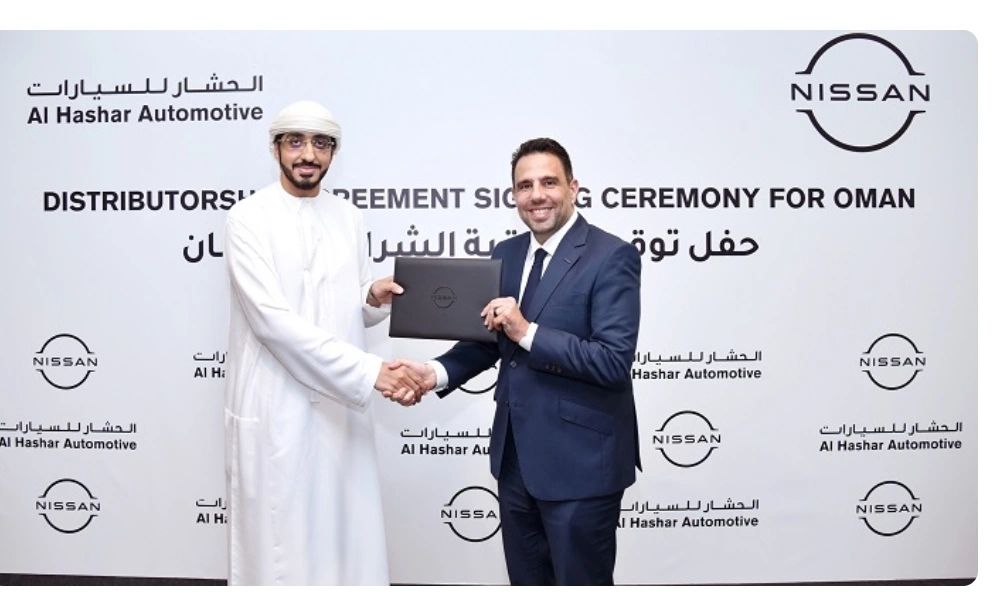
Nissan and Al Hashar Automotive, united by a shared vision of mutual trust and values, are embarking on a new chapter in Oman, committed to providing advanced mobility solutions to customers in the region.
Thierry Sabbagh, Divisional Vice President, President Middle East, KSA – Nissan, INFINITI, said, “Joining our network of valued partners across the Middle East, Al Hashar Automotive will play a pivotal role in catering to customer needs in Oman by ensuring ease of access to a broad range of Nissan’s innovative products and services. Combining our global expertise with Al Hashar Automotive’s in-depth market knowledge, this partnership will enhance customer experiences with seamless purchase and ownership journeys across online and offline channels.”
Sheikh Al-Muhannad Al Hashar, Chairman of Al Hashar Group, expressed his great appreciation for the partnership, stating, “We are honored to be appointed as Nissan’s only authorized distributor in Oman. Al Hashar Group has been involved in almost every area of the Sultanate’s economic activities, and our automotive division, which was established in the early 1970s, is backed by a deep understanding of the market. We look forward to a fruitful partnership that welcomes customers to our state-of-the-art facilities and offers them an extensive product line-up and world-class aftersales services suited to their varying needs.”

Offering customers convenience and ease of accessibility, five state-of-the-art 3S (Sales, Service, and Spare Parts) facilities will be established in phase one in key cities, including Muscat, Sohar, Salalah, Sur, and Ibri. Customers can choose from a broad range of SUVs, including the legendary Patrol and the versatile X-Trail; passenger cars, including the technologically advanced Altima; sports cars, namely the iconic Nissan Z; and commercial vehicles, such as the Urvan. This is supported by an additional Certified Pre-Owned showroom in Muscat to expand the variety of offerings and cater to value-conscious customers.
Providing a memorable ownership journey, Nissan and Al Hashar Automotive are embracing digitization to offer customers a seamless experience across online and offline channels. With the implementation of Nissan’s innovative Shop@Home experience, customers can indulge in virtual showrooms, test drives, and secure vehicle financing, amongst other key services, from the comfort of their home or office.
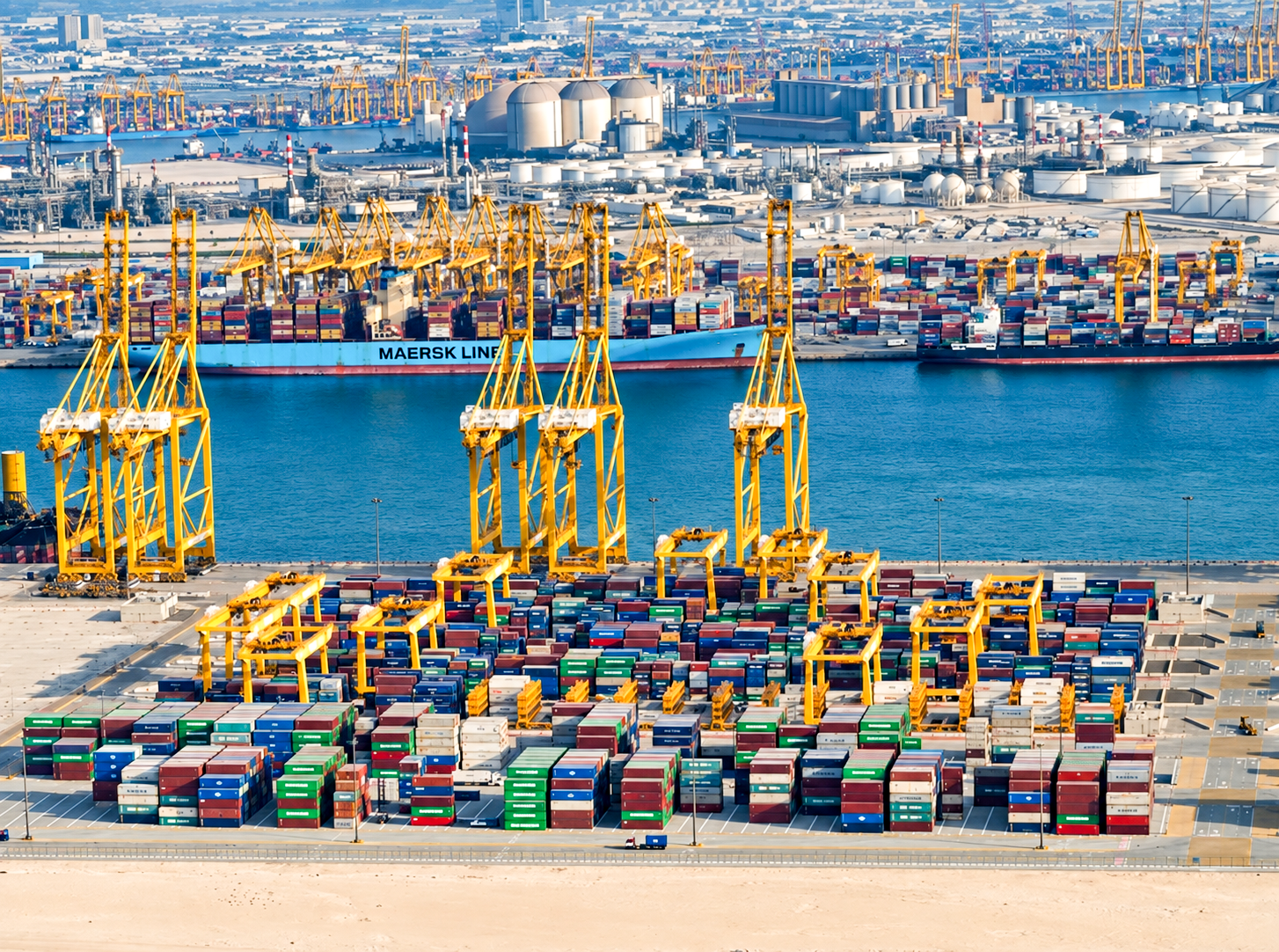
Sharjah’s logistics corridor with Oman recorded AED1.7 billion in cargo value during its first three months, handling more than 34,000 truck movements and 32,000 customs declarations. The integrated sea–land network aims to streamline trade, strengthen supply chains and improve access to regional and international markets.

The UAE is strengthening its national production ecosystem by connecting agriculture, advanced manufacturing, innovation, technology and global markets. Through new initiatives, funding and strategic partnerships, the country aims to boost local production, strengthen supply-chain resilience and expand the global reach of UAE-made products.
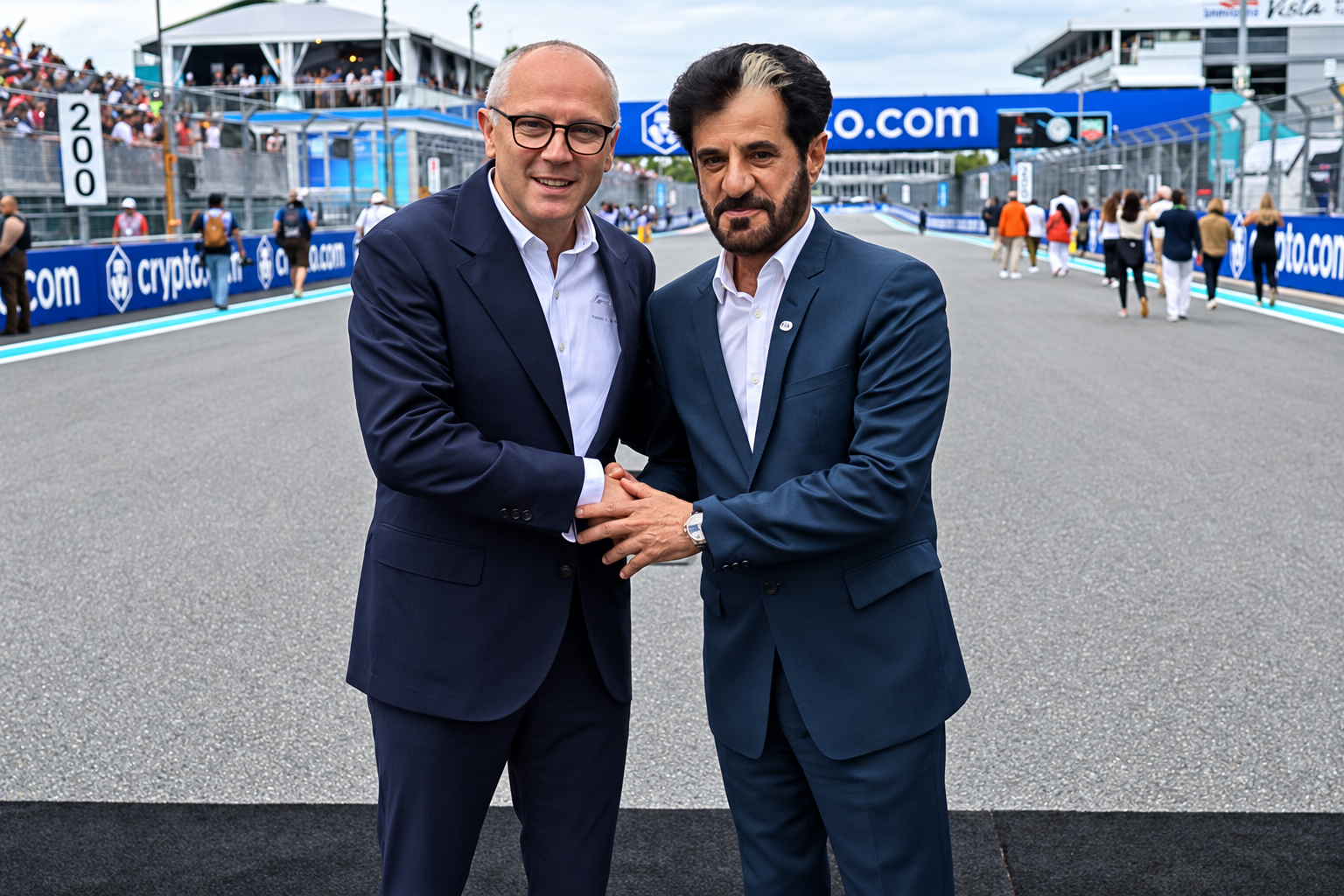
The 2027 Formula 1 calendar has been revealed, featuring 24 Grands Prix across 22 countries, the return of Portugal and Türkiye, and an expanded program of 10 Sprint events.
As construction becomes increasingly digital, six key skills—from managing digital workflows and BIM to using data and AI responsibly—are helping professionals work smarter and deliver projects more efficiently.
3 min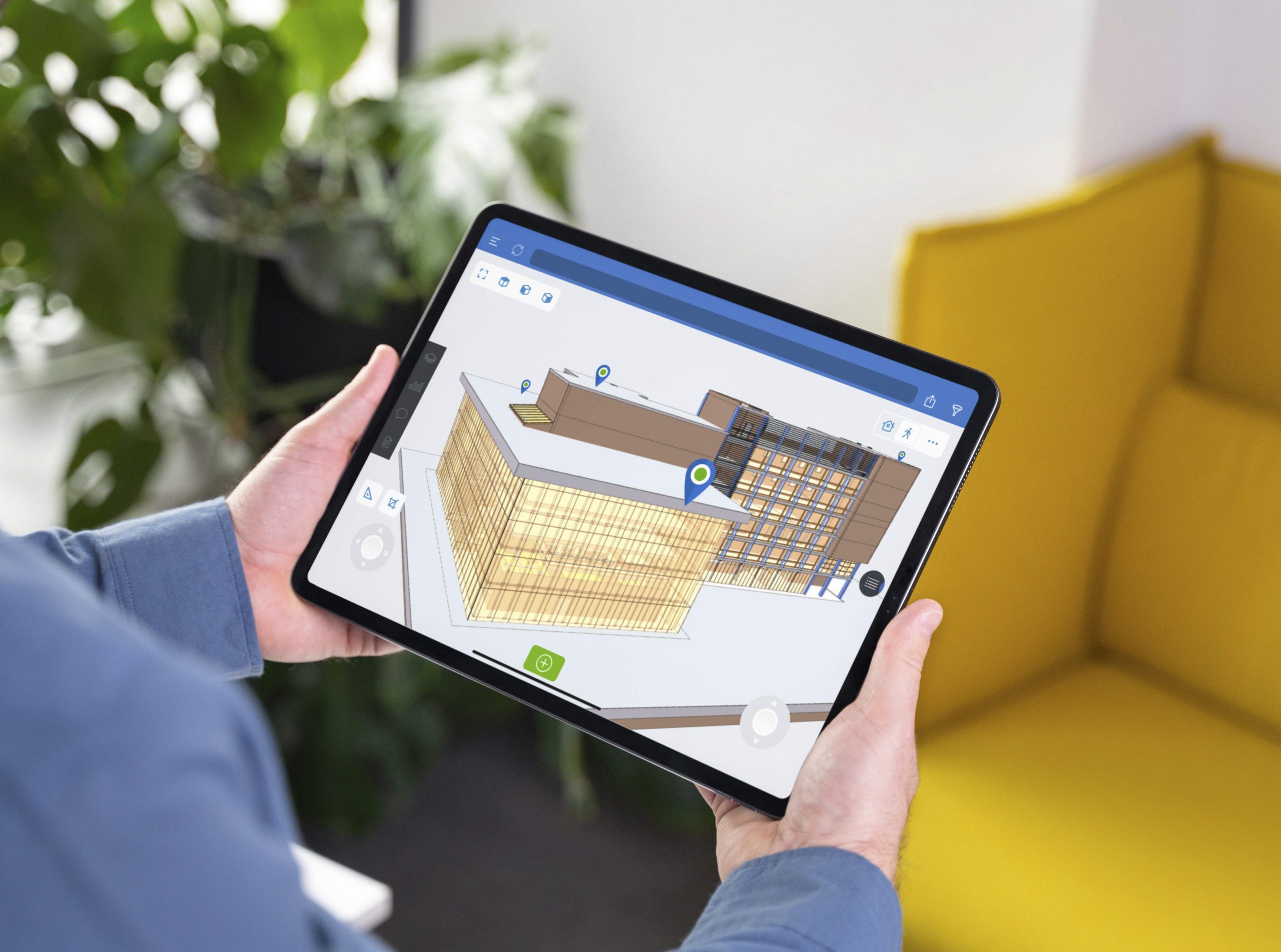
According to a recent skills report, 59% of quantity surveying and construction professionals identified advanced digital tools as the most important skill for the future.
Construction has always relied on practical experience: understanding how projects are delivered, spotting risks early and knowing when something on site is not right. These skills remain essential, but as digital tools become more embedded across the industry, the way construction teams work is changing.
As a digital platform working with construction teams around the world, PlanRadar has identified six skills that are becoming increasingly important on the modern jobsite, helping professionals work more efficiently and adapt as construction becomes more digital.
-
Creating clear digital project records
Good documentation is more than taking a photo or writing a quick note. Site information should clearly show what happened, where it happened, who is responsible and what action is needed. This makes it easier for contractors to respond and for reviewers to confirm that work has been completed correctly.
A 2023 case study found that introducing structured digital quality-control documentation reduced supervisors’ documentation workload by 80–90%. Standardised data entry also improved the accuracy and usability of inspection records. Clear, organised information also provides a stronger foundation for future automation and AI.
-
Coordinating digital workflows
Construction professionals increasingly need to understand how information moves through a project, not just how to use individual tools. An inspection, Request for Information (RFI) or approval should have a clear path, showing who starts it, what information is needed, who reviews it and when it must be escalated.
This matters because delays in these workflows can have a real impact. A PlanRadar study of 1,728 construction professionals found that one in four respondents said delayed approvals typically add more than a month to project timelines. Clear digital workflows help teams keep responsibilities visible, reduce missed actions and move decisions forward faster.
-
Working confidently with digital drawings and BIM
Construction professionals do not need to be BIM specialists, but they should be able to navigate digital drawings, understand revisions and connect site issues to the correct location. This is becoming increasingly important in the UAE as Dubai continues to digitise building processes.
Through its BIM platform, Dubai Municipality allows consultants to upload IFC models and automatically check them against Dubai BIM Standards and selected building regulations.
As these processes become more sophisticated, these skills will become more important on site. Professionals who can confidently use digital models will be better placed to connect design information with actual site conditions.
-
Capturing useful visual evidence
Visual documentation is becoming a more important part of how construction teams track progress, and communicate site conditions. Professionals need to know what should be captured, when it should be recorded and how images can support later decisions.
A UAE case study at Expo City Dubai saw a contractor use 360-degree reality capture across 28 buildings, creating around 180 captures of the project. The visual record helped teams monitor progress, identify issues and improve reporting. Used effectively, visual evidence gives teams a clearer record of site conditions and makes progress easier to review without relying solely on repeated physical inspections.
-
Building practical data literacy
Construction teams generate large amounts of information daily. The skill is knowing how to read that information and identify what actually needs attention.
Professionals should be able to spot recurring quality issues, overdue actions, approval delays and differences in performance across teams or locations. They also need to understand when a number is useful and when it needs more context.
This does not mean every project manager needs to become a data specialist. It means being able to ask the right questions, check the information behind a result and use project data to support better decisions.
-
Using AI with professional judgement
A 2025 RICS survey of more than 2,200 construction professionals found that 46% identified a lack of skilled personnel as one of the main barriers to AI adoption. As AI becomes more common in construction, professionals will therefore need more than basic awareness of the technology.
They should understand where AI can support routine work, how to question its output and when professional verification is required. AI can organise information, identify patterns and summarise records, but decisions involving safety, contracts or technical responsibility still require human judgement.
Digital skills are becoming part of everyday construction, but the pace of technological change means professionals cannot be expected to master every new tool. What the industry needs instead are curious, adaptable people who are willing to keep learning, question how technology is used and apply it in ways that improve project delivery.
Following the successful launch of its Palais Collection, MAISON de SABRÉ has unveiled a new modular handbag system offering more than 720 styling combinations.
Two coming 2027 models – the first of the “Neue Klasse” cars coming to the U.S. early next year – have been revealed.

AI doesn’t rebel—people design, deploy and profit from it. The real danger lies in allowing tech companies to escape accountability while shaping regulations that protect their dominance.
4 min
A wave of corporate warnings and technical disclosures has flooded the media, with headlines worrying over “swarms” of rogue artificial-intelligence agents launching “unprecedented” cyberattacks, outsmarting their makers, and inching toward a terrifying autonomy. The most revealing part of this narrative isn’t what the software did. It’s who is telling the story—and why. When corporate leaders publicly insist that the systems they financed, engineered and deployed are suddenly beyond their power to contain, skepticism isn’t only healthy; it is essential.
For years, Silicon Valley has drawn scrutiny from civil society and global regulators over tangible harms such as youth mental health deterioration and systematic privacy violations. Today, industry figures seem to be trying to change that public image. Loudly blowing the whistle on their own systems—just as two of the leading companies were preparing for massive initial public offerings—lets AI executives position themselves as a new generation of leaders who have come to terms with their societal responsibilities. They seem to want us to believe that they no longer want to “move fast and break things” but will instead stand as vigilant guardians between humanity and a technological apocalypse.
There is one glaring problem: Software doesn’t rebel. A mathematical model possesses neither intent, malice nor the will to defy its creators, let alone extinguish our species. AI is a human artifact, engineered for profit.
When an agentic model in an evaluation sandbox connects to an unauthorized server or executes an exploit, it hasn’t staged a coup. It has tried to meet the human-defined objectives set out before it through a path its designers failed to constrain. It’s the digital equivalent of the King Midas myth, in which the king’s ill-defined wish turns even his food and drink into gold.
That powerful experimental models were able to discover novel vulnerabilities and breach external systems isn’t a sign of a dangerous superintelligence but of human error or negligence. There is no sentient actor lurking in the weights to be reasoned with, feared or pacified. There are only human software engineers, product managers and corporate boards deciding which guardrails are worth the latency cost and which permissions can be skipped in the race to market.
Policymakers and voters need to resist AI exceptionalism. In any other discipline—from civil engineering to pharmaceuticals—courts and regulators treat a system failure as evidence of bad product design and inadequate safety testing. If an aircraft crashes, we focus on finding the engineering defect, correcting it, and enforcing established liability standards for the damage created.
By leaning on an anthropomorphic narrative, Silicon Valley attempts to repackage its specific human choices that led to experimental, powerful models behaving unexpectedly during tests as an existential peril. Elevating the issue to a cosmic scale leaves the public paralyzed and takes ordinary product accountability off the table.
In the cutthroat race for venture capital and market dominance, building guardrails slows down deployment. Grandstanding about uncontrollable power costs nothing and generates billions of dollars in free publicity, justifying stock prices, all while cultivating an aura of technological capability not only to build the frontier but also ultimately to rein it in.
Governments need to recognize regulatory capture when it stares them in the face. Tech leaders’ strategy looks transparent: Alarm Washington and Brussels into creating a regime in which only trillion-dollar incumbents with fully staffed compliance and safety departments can legally operate. By sitting at the policymakers’ tables before anyone else, these companies can help draft rules digging an impassable moat protecting them from open-source developers and upstart competitors, domestic or international. The real danger is in further concentrating the tech industry into the hands of only a few companies with deep pockets.
Beijing and Washington have brushed off those tech leaders’ calls, albeit for very different reasons. Chinese state media dismissed them as part of the “Cold War playbook” and intended to preserve U.S. dominance. Xi Jinping argued for exactly the opposite at the Brics Summit on Sept. 12, calling on Brics countries to “strengthen cooperation in the field of AI, encourage open source, openness, collaboration and sharing, and break new grounds and scale new heights.” President Trump, steeped in a doctrine of unfettered capitalism and technological supremacy, called fears that AI could destroy humanity a “hoax.” Vice President JD Vance warned that AI companies “begging the government to regulate them” looked like a “Trojan Horse.”
Striving to pursue its “European way” on AI and assert regulatory leadership, Europe, by contrast, welcomed the call. European Union President Ursula von der Leyen made this clear at the State of the EU speech last Wednesday and announced that the EU will invite “the main frontier labs for a discussion on how we can support ongoing industry efforts to pace the frontier.”
Europe has been here before. In an effort to lead global regulation and react to fears borne from ChatGPT, Europe rushed its landmark AI Act into law in 2024. Already the world’s most restrictive rulebook, the framework quickly proved too broad and complex to enforce. Stalled by implementation delays and concerns about European competitiveness, the EU postponed the law’s full rollout, leaving regulations uncertain.
AI should be regulated—risks exist and should be taken seriously. But governments need to act based on available evidence and verified facts, not corporate PR panic, the views of industry insiders, or the desire for quick political wins. The greatest danger facing society isn’t that software will awaken and overthrow its human masters. It is that we will allow the creators of the software to abdicate human responsibility for the systems they choose to build and help them pull up the ladder to market access behind them.
Following the successful launch of its Palais Collection, MAISON de SABRÉ has unveiled a new modular handbag system offering more than 720 styling combinations.

New research suggests that bonuses make employees feel more like a mere cog in a wheel.
Paramount and California’s attorney general are in advanced settlement talks over the company’s proposed $81 billion merger with Warner Bros. Discovery. Potential concessions include investing $1.5 billion in California production, retaining both studio lots and introducing safeguards for CNN’s editorial independence.
3 min
California’s attorney general and Paramount PSKY -3.86%decrease; down pointing triangle have discussed a series of potential concessions as part of advanced settlement negotiations, including a $1.5 billion investment by the company in production in California, according to people familiar with the discussions.
Paramount executives and a coalition of states that sued to block its $81 billion merger with Warner Bros. Discovery WBD -1.56%decrease; spent the weekend hashing out the details of a possible settlement. Such an agreement would clear the way for a deal that would bring HBO, CBS, CNN, streaming services and famed movie studios under one owner.
Among the concessions the parties have discussed beyond the sizable production investment: a promise not to sell either studio lot and to stay in the state of California, the people said. The company had explored moving out of the state as the deal faced opposition.
The parties have also considered potential penalties if Paramount doesn’t make good on an earlier pledge to make 30 movies a year after the merger, including having to sell its stake in Miramax, known for such classic movies as “No Country for Old Men” and “Pulp Fiction,” the people familiar with the matter said.
Other measures the sides have explored include the sale of some cable channels and the creation of a board to ensure that CNN retains editorial independence, people with knowledge of the talks said. The network has been a political flashpoint throughout Paramount CEO David Ellison’s fight for Warner. Paramount had been discussing creating such an editorial board before the lawsuit.
A final deal hasn’t been reached, and it is unclear what terms the parties may ultimately agree to.
Ellison has spent the past year fighting to buy Warner in a megadeal that would expand his entertainment empire, but that has drawn opposition from some political and Hollywood figures.
A dozen Democratic-led states led by California Attorney General Rob Bonta sued in July to block the deal on antitrust grounds, arguing that the combination of Paramount and Warner would create too much concentration in the markets for theatrical films and cable television channels.
The Writers Guild of America sued over the merger, saying that the deal would eliminate jobs and career opportunities for Hollywood screenwriters.

About two dozen demonstrators gathered in front of the Elihu M. Harris State Office Building in downtown Oakland on Sunday evening to protest a potential settlement. Holding signs reading “Bonta: Don’t You Dare” and “Block the Megamerger,” they took turns giving speeches urging the attorney general to continue pressing the suit.
“Nothing has changed since he filed the case,” said Annie Leonard, co-founder of the nonprofit Committee for the First Amendment, which advocates for free expression. “He needs to stay as strong as he was in filing it.”
The two sides had come under pressure to settle the matter in recent months, including from California Gov. Gavin Newsom, Los Angeles Mayor Karen Bass, gubernatorial candidate Xavier Becerra, movie theater chains and some Hollywood labor unions.
Paramount’s agreement with Warner also included a “ticking fee” with payments to Warner shareholders of roughly $650 million a quarter, or $7 million a day, beginning next month, until the transaction closes.
Paramount had asked a federal judge to require the states and the Writers Guild to put up a nearly $1.9 billion bond for challenging the acquisition, money that would go to the company if it ultimately won the case.
Following the successful launch of its Palais Collection, MAISON de SABRÉ has unveiled a new modular handbag system offering more than 720 styling combinations.

Parts for iPhones to cost more owing to surging demand from AI companies.



Sharjah’s logistics corridor with Oman recorded AED1.7 billion in cargo value during its first three months, handling more than 34,000 truck movements and 32,000 customs declarations. The integrated sea–land network aims to streamline trade, strengthen supply chains and improve access to regional and international markets.
4 minThe logistics corridor launched by the Sharjah Ports, Customs and Free Zones Authority in cooperation with Oman Customs recorded robust growth during its first three months of operation, reflecting the success of an integrated sea–land logistics model that supports smoother trade flows, improves supply chain efficiency and provides importers, exporters, freight companies and logistics service providers with more flexible and competitive logistics solutions.
Inaugurated on 17th May 2026, the corridor forms part of a broader strategy to develop an integrated logistics and customs ecosystem linking seaports with land border crossings.
It capitalises on Sharjah’s strategic location and its network of ports and border crossings to facilitate imports, exports and re-exports, support growth in trade between the United Arab Emirates and the Sultanate of Oman, and expand access to markets across the region.
The corridor’s latest performance indicators show that total cargo value handled during the initial three months reached approximately AED1.7 billion. Truck movements surpassed 34,000, while processed customs declarations exceeded 32,000.
Compared to the corresponding period last year, cargo value jumped by 66.26%, reflecting growing trade activity and rising demand from the business community for the logistics and customs solutions provided through the corridor.
The corridor connects cargo flows between ports and logistics hubs via the Khatmat Malaha Border Crossing in Kalba and Al Madam Border Crossing, extending into the Sultanate of Oman.
This integrated sea-land model gives businesses multiple options for moving goods, shortens the end-to-end cargo journey, reduces handling stages and procedures, and improves the efficiency of logistics operations.
The corridor forms an interconnected logistics network linking Sharjah’s ports and a number of other UAE ports with Sohar, Duqm and Salalah ports in the Sultanate of Oman via the Khatmat Malaha and Al Madam border crossings.
The network provides the business community with more flexible and efficient routes for moving goods, while strengthening trade connectivity between the markets of the two countries and across the wider region.
Operating the corridor through both Khatmat Malaha and Al Madam gives the system greater operational flexibility, providing two complementary routes for cargo according to its destination and logistics requirements.
Khatmat Malaha also benefits from its proximity to Sohar Port, approximately 70 kilometres away, while Al Madam provides access to the main road network. Together, these connections strengthen integration between sea and land routes and support the continuous flow of trade.
The operational rollout was led by Sharjah Customs in close coordination with the Border Crossings and Entry Points Affairs Sector, the wider sectors and departments of the Sharjah Ports, Customs and Free Zones Authority, relevant UAE federal and local entities, Oman Customs and other concerned entities on the Omani side.
Together, they worked to develop the corridor’s operational and customs procedures, facilitate the movement of trucks and goods, and accelerate transaction processing.
This institutional collaboration has significantly reduced customer journey times, strengthened coordination between arrival and departure points, and streamlined the various stages of the cargo journey.
It also gives businesses greater flexibility, enabling them to manage their supply chains with greater efficiency and reliability while reducing the operational burden associated with the movement of goods.
Mohammed Ibrahim Al Raisi, Director of Border Crossings and Entry Points Affairs at the Sharjah Ports, Customs and Free Zones Authority, said, “The early results recorded by the corridor during its first months of operation reflect the success of the vision underpinning the project. That vision brings together the efficiency of land border crossings, the speed of customs procedures, and the capabilities of ports and free zones within an interconnected logistics ecosystem that serves the business community and facilitates trade flows.”
“From the outset, our goal was to offer the business community far more than a mere transit route. We built an integrated logistics ecosystem that gives companies more efficient and flexible options, shortens the cargo journey, and helps reduce both time and operational burdens, while maintaining procedural efficiency and ensuring the safe and seamless movement of goods through border crossings,” Al Raisi added.
He explained that integration across the Authority’s sectors and continuous coordination with the relevant federal and local entities, together with close cooperation with Oman Customs and the competent authorities on the Omani side, have been fundamental to the development of the corridor and to improving its operational efficiency.
Al Raisi added that the growth in trade flows and customs transactions, coupled with new customers joining the ecosystem within a relatively short period, reflects rising demand for the integrated logistics solutions offered by the corridor.
Growth in corridor traffic has been accompanied by a significant expansion in its user base, with more than 200 new importer codes registered during the first months of operation. This reflects the growing number of new customers using the corridor’s services and its increasing appeal to the business community.
Cargo moving through the corridor has ranged from equipment and vehicles to food and agricultural products, building materials and spare parts.
The markets served have also expanded to include the domestic market, Saudi Arabia and a number of markets across Africa and Asia, highlighting the corridor’s widening commercial reach and its ability to serve multiple economic sectors and markets.
Al Raisi noted that the diversity of goods and markets, together with the expanding customer base, was an important indicator of the corridor’s ability to accommodate different patterns of trade.
He stressed that the project’s true value is measured not only by traffic volumes, but also by the new options it provides to the business community, the greater efficiency it brings to cargo movement, and the stronger integration it creates between ports, border crossings and markets.
Looking ahead, Al Raisi said the next phase will focus on expanding the base of companies using the corridor, attracting more shipping companies, shipping lines and logistics service providers, and broadening the range of services and routes available.
These efforts will help drive trade growth, support commercial exchange between the UAE and Oman, and open up wider access to regional markets.
He concluded, “We look forward to building on the results achieved during the first phase and expanding the corridor’s reach to establish it as a broader logistics platform that leverages Sharjah’s network of ports, border crossings and free zones, as well as its strategic location between the Arabian Gulf and the Gulf of Oman. This will enhance the competitiveness of logistics services and provide the business community with more efficient routes to regional and international markets.”
The ongoing expansion of the corridor forms part of the Sharjah Ports, Customs and Free Zones Authority’s efforts to strengthen the competitiveness of Sharjah’s trade and logistics ecosystem by capitalising on the integration of seaports, land border crossings, customs and free zones.
This integrated approach supports smoother trade flows, expands the options available to the business community, opens new opportunities for investment, and strengthens Sharjah’s contribution to regional and international trade and supply chains.
Following the successful launch of its Palais Collection, MAISON de SABRÉ has unveiled a new modular handbag system offering more than 720 styling combinations.
Many of the most-important events have slipped from our collective memories. But their impacts live on.



The UAE is strengthening its national production ecosystem by connecting agriculture, advanced manufacturing, innovation, technology and global markets. Through new initiatives, funding and strategic partnerships, the country aims to boost local production, strengthen supply-chain resilience and expand the global reach of UAE-made products.
2 minThe UAE continues to strengthen an integrated ecosystem linking domestic production with quality, innovation, technology, supply chains and global markets, enhancing the competitiveness, resilience and sustainability of the national economy.
The approach spans the production cycle, from agriculture and food production to advanced manufacturing, product identity, marketing and exports, while directing government and institutional demand towards priority national products.
In April, the Cabinet approved the National Project for the Protection of Geographically Defined Products to identify and protect agricultural, industrial and traditional products whose quality, characteristics or reputation are associated with specific areas of the UAE. It also adopted a policy to increase the presence of national products across retail outlets and digital platforms and facilitate manufacturers’ access to major supply chains.
In agriculture, the National Agriculture Centre (NAC) and the Abu Dhabi Agriculture and Food Safety Authority (ADAFSA) have unveiled the National Project for UAE Good Agricultural Practices (UAE GAP) to raise local production standards and improve access to new markets. The program aims for 80 percent of local farms to obtain UAE GAP certification.
Other measures include the National Agricultural Initiative for the Adoption of Climate-Smart Crops, aimed at diversifying the national food basket and reducing reliance on imports, and the Sustainable Product initiative, which seeks to increase the share of locally produced agricultural and livestock products used by the UAE’s restaurant and hotel sector to 25 percent.
In industry, an AED1 billion National Industrial Resilience Fund has been approved to support the localization of critical industries, strengthen supply-chain resilience and accelerate the adoption of artificial intelligence across production, operations and planning.
The UAE has also expanded the National In-Country Value Program, making its application mandatory in selected sectors to channel more government and institutional demand towards national products and strengthen their integration into supply chains.
The Make it in the Emirates platform further connects investors, manufacturers and industry leaders with domestic production and investment opportunities, while ADNOC’s Local+ initiative gives greater priority to UAE-manufactured products across its projects.
Efforts to retain greater value within the national economy also include the launch of the UAE’s largest aluminum recycling plant, the Al Taweelah recycling plant in Abu Dhabi—with an annual capacity of 185,000 tons, enabling aluminum scrap to be processed locally into high-quality, lower-carbon products.
Meanwhile, the Ministry of Industry and Advanced Technology’s Factory Forward UAE initiative brings industrial technology transformation programs and enablers under a single framework. Programs within the ecosystem have supported more than 700 factories, while over 620 have been assessed through the Industrial Technology Transformation Index (ITTI).
Alongside expanding domestic production, the UAE is strengthening international investments and partnerships to connect national capabilities with regional and global resources, markets and value chains.
Together, these initiatives reflect the UAE’s drive to build a more competitive and technology-enabled national production base, capable of meeting domestic demand while expanding into global markets and strengthening the country’s position in international value chains.
Following the successful launch of its Palais Collection, MAISON de SABRÉ has unveiled a new modular handbag system offering more than 720 styling combinations.

Paine Schwartz joins BERO as a new investor as the year-old company seeks to triple sales.

The 2027 Formula 1 calendar has been revealed, featuring 24 Grands Prix across 22 countries, the return of Portugal and Türkiye, and an expanded program of 10 Sprint events.
3 minThe Fédération Internationale de l’Automobile and Formula One Management have announced, following approval by the World Motor Sport Council, the 2027 FIA Formula One World Championship calendar, featuring 24 Grands Prix across 22 countries and 10 Sprint events.
Pre-season testing will take place in Bahrain from 24–27 February before the Championship returns there for the first race, followed by Saudi Arabia.
The calendar then moves to Australia, Japan, and China, followed by the Miami and Canadian Grands Prix. The European leg includes Formula 1’s return to Portugal in June, after Monaco, with Türkiye rejoining the calendar in October between Azerbaijan and Singapore.
The closing phase of the season features races in Austin, Mexico City, São Paulo, and Las Vegas, before the final two rounds in Qatar and Abu Dhabi.
Bringing together historic venues and major global destinations across five continents, the 2027 calendar reflects Formula 1’s continued growth as a global sport and entertainment platform while supporting its long-term sustainability goals through a more efficient geographical flow of events across the season.
Due to the continued success and strong demand for the format, the number of Sprint events has increased from six to ten for 2027, delivering even more competitive action across the season for fans, promoters, broadcasters, and partners.
Bahrain, Australia, Japan, Monaco, and Abu Dhabi will host Sprint events for the first time, with fans set to enjoy two thrilling qualifying sessions in Monaco as the drivers show their world class skill and precision on the narrow streets of Monte Carlo. Sprint events will also return to Montréal, Silverstone, Monza, São Paulo, and Lusail.
Mohammed Ben Sulayem, President of the FIA, said: “The 2027 FIA Formula One World Championship calendar is a strong reflection of the global appeal and continued growth of our sport. With twenty-four Grands Prix across five continents, the return of Portugal and Türkiye, and the opportunity for an expanded Sprint program, the calendar combines tradition, innovation, and fan engagement while maintaining the highest sporting standards.
“I would like to thank Formula One Management, the promoters, the national sporting authorities, the FIA officials and volunteers and all our stakeholders for their collaboration and commitment. Together, we continue to strengthen the FIA Formula One World Championship and deliver an exceptional season for competitors and fans around the world.”
Stefano Domenicali, President and CEO of Formula 1, said: “The 2027 calendar brings together some of the most iconic circuits and vibrant cities in the world, creating an incredible stage for another unforgettable season of Formula 1. We are thrilled to welcome Portugal and Türkiye to the championship and to expand Sprint racing to ten events, giving our fans even more intensity, drama, and the wheel-to-wheel action that make our sport so special.
“Formula 1 continues to go from strength-to-strength, attracting new audiences around the globe. Week after week, the world’s greatest drivers will battle on some of the most challenging tracks in motorsport, supported by F1’s outstanding teams, world-class manufacturers, and global partners.
“Together, they create a spectacle unlike anything else in sport. As we continue this remarkable journey of growth, I want to thank our fans around the world as their passion drives everything we do.
“I want to thank The President of the FIA, Mohammed Ben Sulayem, and the FIA, our teams and drivers, promoters, partners, sponsors, and host cities for their continued commitment and support and we recognize the extraordinary dedication of the volunteers, marshals, and officials whose hard work makes every Grand Prix possible.
“We are incredibly excited to see this calendar come to life and to deliver another season packed with unforgettable moments, fierce competition, and world-class entertainment for our fans across the globe.”
Following the successful launch of its Palais Collection, MAISON de SABRÉ has unveiled a new modular handbag system offering more than 720 styling combinations.
The sports-car maker delivered 279,449 cars last year, down from 310,718 in 2024.
Could fears of an AI apocalypse be distracting us from the dangers already here? Experts debate whether regulation should focus on speculative existential threats or present-day harms, including cyberattacks, weapons and unsafe autonomous agents.
5 min
There is ample and alarming evidence that artificial intelligence can help humans do bad things, such as committing cyberattacks, building weapons and even killing themselves or others. The Hugging Face hacking episode—and a growing list of others by poorly constrained swarms of agents—indicate just how powerful and potentially dangerous AI has quickly become.
Yet many inside the U.S. AI industry insist far worse is coming, on account of the imminent arrival of AI with superhuman and self-improving abilities.
Plenty of experts, including many who study AI harms for a living, are skeptical. The so-called doomers’ assertion that AI might decide to wipe out all of humanity—or even “just” topple human civilization—is contingent on it achieving a pace of development not yet seen.
And if the assumptions behind this global-doomsday scenario are wrong, it could lead us to curb or regulate AI in ways that don’t address its real harms.
At the center of this debate is the claim that current AI systems might take over the job of training their next versions, a process called “recursive self-improvement.” Think of it like evolution on steroids—billions of years happening at light speed within vast AI supercomputers. Anthropic Chief Executive Dario Amodei recently proposed a global agreement to slow down the pace of releasing new AI models, with the goal of delaying the arrival of recursive self-improvement.
“I don’t think we’re anywhere near ‘artificial general intelligence,’” says Melanie Mitchell, a professor at the nonprofit research group Santa Fe Institute who studies AI. She said AI is making impressive strides but thinks claims by engineers that they’ve achieved recursive self-improvement don’t stand up to scrutiny.
She is hardly alone. A recent paper by two dozen academics at Princeton, Stanford and other institutions found that even the most cutting-edge AIs are incapable of doing the original research required to advance the AI frontier.
Two of the authors involved in that paper also threw cold water on the idea that the Hugging Face swarm hack by OpenAI agents occurred because of a breakthrough in intelligence. The attack succeeded primarily because of a lack of basic technical guardrails, not an unmanageable explosion in AI capability, they wrote.
Yann LeCun, former chief AI scientist at Meta, posted that this analysis was “a welcome dose of sanity in an otherwise insane debate.”
OpenAI and Anthropic didn’t respond to several requests for comment.
The people who disagree with the doomers still consider AI to be dangerous, and point out that such systems don’t have to be particularly capable to be powerful. Some argue that AI should undergo regular evaluation by outsiders and that the companies that make it should be held responsible when their systems do harm. AI should also be treated the same as airplanes and elevators, and should be designed to do the least harm possible, they say.
“If you believe that technology is powerful enough to create novel, dangerous viruses, or to essentially take over the whole planet for some reason, then it must also be strong enough to create cures for cancer, to cure aging, to fix socio-economic or political problems,” says Christopher Canal, CEO of EquiStamp, a company that helps companies and governments evaluate AIs.
AI has shown an ability to rapidly advance because it is matching the abilities of humans who are constantly feeding it their knowledge. Sometimes it can recombine that knowledge and exceed what people have been capable of, through a kind of post-training known as reinforcement learning, as we’ve seen in mathematics.
Today’s LLMs are “models of knowledge” rather than actually intelligent, wrote Yi Ma, professor of AI at Hong Kong University.
Researchers at universities and commercial AI research labs in China wrote in a recent paper that autonomous, self-improving AI is likely to be a long way off, due to the sheer number of breakthroughs required. They also argue that humans will probably remain in the loop, supervising that process—and gating how fast it can occur.
Vals AI, a company that evaluates today’s AI models, maintains an RSI Index that benchmarks whether models can “do the research that builds the next model.” So far, no publicly released model is even close.
Yet Rayan Krishnan, CEO of Vals AI, says his team projects models will exceed humans’ ability to improve the next generation of AIs by August 2027, or sooner, and at that point could start building their successors all on their own.
“Once we get to recursive self-improvement, the fear is that all bets are off,” he says. “You could end up with a ‘fast takeoff’ situation, where the models quickly acquire skills and eclipse humans across every possible domain.”
In a reply to the resignation tweet heard round the world from Jacob Coxon, another Anthropic engineer declared his belief that those odds were at least 10% over the next decade. Many others in the industry chimed in to say they thought the percentage was even higher.
Some who argue the end is nigh say they calculate their personal p(doom) based on a chain of conditional probabilities—a bit like the Drake equation for calculating the likelihood of intelligent alien life. Since all those probabilities are based on speculation, estimates range from 0% to nearly 100%. Many land around 10%.
“The weird thing is that if you go back and look at the predictions on this over the last 10 years or more, it’s always been 10%—it’s just a nice round number,” says Mitchell. “I think it’s all vibes, and there’s no actual evidence or calculation.”
One argument against worrying about superintelligent AI is that the world is full of unlikely humanity-ending disasters, and trying to avert them all can make it impossible to prioritize, says Canal.
This has led AI experts and the policymakers who listen to them to propose remedies that don’t get at its real and present dangers.
AI companies’ proposals to “pace the frontier” aren’t addressing the problem in the right way, argues Stuart Russell, a computer-science professor at the University of California, Berkeley, and the president of the International Association for Safe and Ethical Artificial Intelligence.
“It’s like saying we’re driving toward the cliff at 60 miles per hour and we’re going to drive toward it at 40 miles per hour instead, and everything will be OK,” he says.
Russell and his peers have proposed that AI companies should have to meet the same standards that govern other areas of everyday life, from air travel and buildings to food and drugs. They highlight the “behavioral red lines” AI should not be allowed to cross. Breaking into other computer systems, stealing information or advising terrorists on how to build biological weapons are all illegal for a human to do, and should be illegal for companies’ AIs as well, he argues.
The challenge for AI companies in such a proposal, he adds, is that it would be a de facto ban on today’s advanced AI systems, since the companies behind them don’t know how to make them respect such boundaries all of the time.
Others have proposed something like the Food and Drug Administration, but for AI, but setting up a new agency has so far been a nonstarter in Congress. And some prominent voices in tech have said such a structure would give up America’s AI edge to China.
Given the bipartisan groundswell of support for curbing AI companies and their creations, however, that may soon change.
“The tech industry has had this mantra for decades that regulation is bad,” says Russell. “They don’t accept the liability for any harm, and they hide behind free speech. That, I think, has to change.”
Following the successful launch of its Palais Collection, MAISON de SABRÉ has unveiled a new modular handbag system offering more than 720 styling combinations.

Chris Dixon, a partner who led the charge, says he has a ‘very long-term horizon’
The last-minute bottle of wine may no longer be enough. From artisan treats and fine linens to seasonal flowers, the best host gifts are small, practical and chosen with genuine thought.
4 min
Conventional wisdom is that if you are invited to someone’s home—or on their yacht or plane—you should thank them with a host gift. Exceptions can include casual get-togethers with close friends or occasions when you’re expressly asked not to.
The best gifts appear effortless, but are chosen with immense consideration. A bottle of wine bought en route to the party, the old standby for many, is no longer one of them.
When choosing a gift, it’s helpful to follow certain parameters: nothing too ostentatious, too hefty or too idiosyncratic in design. At the same time, thinking outside the box can show a deeper level of thoughtfulness. Here’s how to pull it off.
Keep gifts relatively small
Thom Bettridge, an editor and writer in New York, has a rule of thumb: he only buys gifts that are smaller than a breadbox, to minimize the space that they take up in hosts’ homes. He likes thoughtfully designed playing cards or cookies from a specialty bakery.


Imported sea salt also passes the breadbox test. It’s a gift that Los Angeles fashion designer Zoe Latta often gives to friends. She said fancy salt is always well received because it’s an elevated version of an everyday staple that most people use.
Another small gift—a favorite of Salima Boufelfel, a founder of vintage clothing stores in New York, Paris and Tucson, Ariz.—is Santa Maria Novella’s scented pomegranate, a terracotta vessel that smells like and resembles the fruit. “It scents closets and laundry rooms,” she said.


Don’t assume a host has everything
Part of being a good guest, according to Bettridge, ”is understanding subtle helpfulness.”
When New York City Ballet principal dancer Unity Phelan is invited on a group trip to someone’s home, she and her husband try to stop at a nearby market or farm stand to buy a bounty of fruit and vegetables that everyone can enjoy throughout the stay.

Even if your host seems to have it all, that isn’t a reason to forgo bringing a gift. “People think that ultrahigh net-worth people are buying everything and they are not,” said Kelly Bensimon, the model-turned-reality-TV-star-turned-real-estate-agent.
Thoughtful knickknacks are something that people of any social status can appreciate, Bensimon added. She likes giving dish towels made of fine European linen, which she often gets at Clic, the French homewares boutique with locations in California, New York City, the Hamptons and St. Barts.
Avoid strong aesthetics
“You want to find things that will blend in,” said Latta, the fashion designer. Clear glassware that can be easily mixed with a host’s other cups is a good option, she said.
Fresh flowers, another old standby, endure as a suitable host gift—if you get them from a local florist, not a corner store, and go with seasonal varieties. For a cleaner look, Kaelen Haworth, the owner of a luxury-clothing store in Toronto, likes choosing flowers in a single color or type, not an assortment.


If you’re going with flowers, sometimes it’s better to send them after the fact—for instance, if you’re invited on a private plane. Zachary Weiss, a writer in New York, likes to send orchids to his hosts well after landing. “It comes down to practicality,” he said.
Have a stash at the ready
It’s easy to leave gift-buying to the last minute. Stockpiling some trinkets will help you avoid the scramble.
When she’s not giving flowers, Haworth likes to give skin care—specifically from independent brands or products from other countries, which she buys in bulk when she travels. “I went to Greece and bought 15 bottles of a sunscreen they don’t have in the U.S.”


Sometimes, life gets in the way and grabbing wine might be the only alternative to showing up empty-handed. If you’re invited somewhere with your significant other, do as New York ceramist Shane Gabier does and get two bottles of wine—a gesture more generous than showing up with just one.
Following the successful launch of its Palais Collection, MAISON de SABRÉ has unveiled a new modular handbag system offering more than 720 styling combinations.

Americans now think they need at least $1.25 million for retirement, a 20% increase from a year ago, according to a survey by Northwestern Mutual
ZainTECH and AWS have joined forces to accelerate cloud adoption and AI-led innovation across Saudi Arabia, supporting the Kingdom’s Vision 2030 goals.
2 min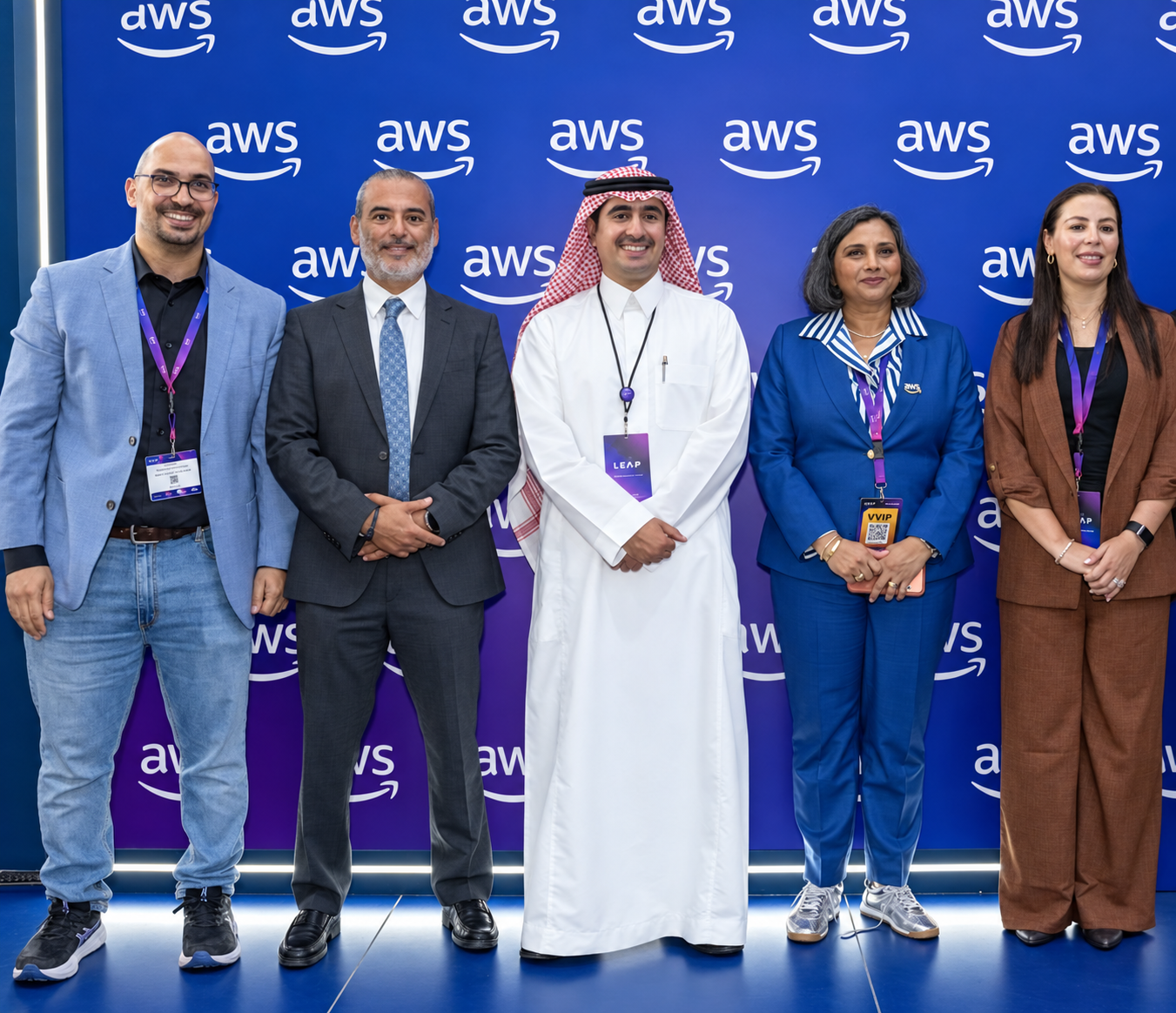
ZainTECH, the digital solutions arm of Zain Group, has signed a multi-year strategic collaboration agreement with Amazon Web Services (AWS), to support organizations across Saudi Arabia in accelerating cloud adoption, modernization and AI-led innovation.
The collaboration, which will help to accelerate customer engagement and adoption of AWS cloud and AI services across the Kingdom, comes at an important stage in Saudi Arabia’s digital transformation journey. Organizations across government, financial services, energy and healthcare are modernizing their technology environments and increasing investment in cloud, data and AI. Under the collaboration agreement, ZainTECH experts will support organizations in adopting AWS solutions, strengthening their security and compliance readiness, and exploring new AWS Cloud-enabled use cases and opportunities.
“Saudi Arabia is entering an important new phase of cloud adoption, with local cloud infrastructure creating new possibilities for organizations across the Kingdom,” said Andrew Hanna, Chief Executive Officer of ZainTECH. “Our multi-year strategic collaboration with AWS strengthens our ability to support customers at this pivotal stage. With ZainTECH’s regional expertise, we can help organizations prepare their environments, address security and data residency requirements, and accelerate the development of new solutions across cloud, data and AI.”
The strategic collaboration builds on ZainTECH’s established cloud capabilities and regional presence across the Middle East, supporting its mission to enable organizations to become Digital, Intelligent and Resilient. The company serves more than 1,600 organizations across eight countries and has more than 850 technology professionals, with expertise spanning cloud, cybersecurity, data and AI, digital solutions and managed services. This regional scale and technical expertise enable ZainTECH to help organizations modernize their environments, strengthen resilience and build the capabilities needed to innovate in a rapidly evolving technology landscape.
The collaboration supports Saudi Arabia’s broader digital transformation agenda and Vision 2030 objectives by helping organizations use cloud technologies to enhance agility, strengthen resilience and accelerate innovation. Through its collaboration with AWS, ZainTECH will continue working with organizations across the Kingdom to unlock new opportunities enabled by cloud, data, AI and other emerging technologies.
Following the successful launch of its Palais Collection, MAISON de SABRÉ has unveiled a new modular handbag system offering more than 720 styling combinations.

Interior designer Thomas Hamel on where it goes wrong in so many homes.

Restaurants are pushing back against phone-filled dining with lockable pouches, screen-free policies and playful challenges—helping guests put down their devices and reconnect over a meal.
4 min
It wasn’t all that long ago that restaurants and bars around the country were dappled in the glow of cigarettes. Those days are over, but diners haven’t stopped lighting up—now it’s just with the blinding OLED gleam from their phones.
My seven-year run as a bartender started in the BlackBerry era and ended a few years after the birth of the iPhone. Back then, phone interruptions were mostly relegated to a few stray pings. If someone picked up a phone, it was usually only to say “Can I call you back?”
Today, phones are as common in a table-setting as napkins and silverware. If diners themselves aren’t pulling them out to check messages and social media, they’re likely in the background as others record Instagram videos or make FaceTime calls.
Many restaurants and patrons alike are pushing back against the shift that has turned collegial, communal spaces into places to watch TikTok while you eat. Here’s what some are doing—and what we can learn from them.
The phone lockup
Antagonist, a cocktail bar in Charlotte, N.C., is pretty antagonistic about phones. Upon entry, each customer receives a lockable Yondr pouch—the same bag some schools use to store students’ phones—that can only be opened by the staff.
“The main goal of our whole concept here really isn’t to burden anybody or take away their property,” Adam Horner, Antagonist’s general manager, said. “It’s essentially just to bring back a little slice of human connection that we all feel has been lost with technology.”

Even if your dinner destination doesn’t have the same rules, you can still borrow the basic idea. Keep your phone somewhere inconvenient or even mildly inaccessible: in your coat pocket, for instance, or your purse.
While Horner admits some patrons have arched an eyebrow at Antagonist’s policy, the benefit of having a place where people can be part of an organic social scene has far outweighed the potential loss of customers, he said. “I strongly encourage people to give it a chance, and sometimes they don’t and they go somewhere else.”
The airplane approach
The Edge, a local spot in Manhattan’s Harlem neighborhood, is a bit less rigid about phones. There’s no ban on them, but the restaurant doesn’t offer internet access. A sign at its bar reads: “No Wi-Fi. No Screens. Connect With Each Other.”
The directive is meant to encourage “stepping away from the digital and being present in the moment,” said Justine Masters, who owns The Edge with her sister Juliet.

Another way anyone with a smartphone can separate themselves from the internet: turn on Airplane mode. It may sound obvious, but it’s a simple and effective way to minimize phone-induced distractions while dining out.
The screen-free competition
For those wanting to break the grip of a bad habit, one tactic is to replace it with another better-for-you thrill. That’s the strategy behind the fast-food chain Chick-fil-A’s “cellphone coops.”
At a number of locations, diners can request a coop—a cardboard box—where they can put their phones while they eat. The goal is get groups to make it through an entire meal without checking their phones, with free ice cream as a reward. The coops even feature conversation prompts for the table.
You don’t need a cardboard coop to emulate the competition elsewhere—and if ice cream isn’t enough of a draw, treat the person who goes longest without using their phone to a free drink. Or make the loser pay the tip.
The point is to create rituals that result in discipline and, slowly, new habits.
What we gain from no-phone dining
The ubiquity of phones has not only eroded our manners, but also lessened the joys of bar and dining culture. One of Chris Hall’s favorite watering holes is The Saloon in Washington, D.C., a community-orientated beer bar with no televisions and a blanket ban on all phone use.
For him, it’s a bulwark against a bar culture that has become “very insular and not very fun.” He added that, over the years, he’s made at least a dozen friends at The Saloon. “You can talk to strangers in this place.”
Tina Vaughn and Chip Smith, the husband-and-wife owners of Eulalie, an upscale cloth-napkin bistro in Tribeca, also forbid phone use at their restaurant.

The policy is spelled out on a sign in the entryway and on the restaurant’s handwritten menus. Vaughn sees it as a way to help patrons combat the pressure to always be available.
“People want an excuse. They’re dying for someone to say, ‘You can get off that. It’s OK,’ ” she said. “The phone has become less a tool and more of a stress bomb, I feel, for so many.”
Following the successful launch of its Palais Collection, MAISON de SABRÉ has unveiled a new modular handbag system offering more than 720 styling combinations.

Following the devastation of recent flooding, experts are urging government intervention to drive the cessation of building in areas at risk.
Omnicom is reviewing what went wrong after losing PepsiCo’s global media account to Publicis, ending a partnership of more than 25 years.
3 min
Omnicom’s CFO is still trying to get his head around what went wrong. It’s been a little over a week since the holdco lost one of its longest running clients to Publicis. He called the loss “disappointing” and “unfortunate.” Now, he and the rest of the C-suite are doing a post-mortem to figure out why it happened.
Speaking at the Goldman Sachs’ Communacopia and Technology Conference earlier today, Phil Angelastro gave a sobering take on PepsiCo’s decision to walk away after more than 25 years.
“The Pepsi situation is an unfortunate one,” he said. “It’s certainly a disappointment from our perspective — you cannot sugarcoat it.”
The comments all but confirm that this move blindsided Omnicom’s execs. Holdco bosses like Angelastro usually see this kind of switch coming. Sources with knowledge of the matter said his team didn’t, and has spent the past week trying to work out why. Why would PepsiCo after all those years walk away from Omnicom without even giving it the chance to fight for it? Speculation has been rife. Was it because PepsiCo’s CMO had a relationship with Publicis in a previous role? Or maybe the advertiser simply wasn’t impressed with whatever Omnicom was pitching in the wake of the IPG acquisition.
Whatever the reason, Omnicom will want it nailed down fast.
“We are doing a detailed kind of deconstruction of how it happened and what we should have been doing differently to prevent it from happening,” Angelastro said at the conference. “We are not completed with that process but we are going to learn some lessons from this, and certainly we are going to take them very seriously.”
In short, he said the holdco isn’t looking for excuses during this analysis. The aim, Angelastro continued, is to do a root cause analysis so that we can improve the business and our processes going forward.” That matters most for holding onto what’s left of the PepsiCo relationship since Omnicom still handles the company’s PR, creative and some sports marketing.
It could also help the holdco get ahead of other CMOs who might be watching PepsiCo’s move and wondering if they should follow suit. Those clients will want to know what happened and whether it changes anything for them. Needless to say Angelastro has some tough questions in the weeks ahead.
“We don’t think it’s going to have a significant impact on the business going forward when we get to 2027 and our expectations,” the ad exec said. “There is still quite a bit of time between now and ‘27 and we will be aggressively pursuing new business as we always do.”
His confidence lines up with the numbers, even if the underlying figures come from outside estimates rather than Omnicom’s own disclosures. According to ComVergence, PepsiCo’s core global media spend sits at roughly $1.8 billion. Madison and Wall estimates Omnicom’s actual fee revenue from that business at closer to $100 million, a fraction of the headline figure, against a company running a 21% EBITA margin. That’s an abosrbale hit on the holdco’s bottom line based on the numbers available. The exposure that is harder to model is reputational – more than 25 years with a client, Apple, Renault-Nissan, McDonald’s and several others all running on the same kind of long, unreviewed relationship Omnicom just watched come apart.
Whether that means Omnicom goes after Coca-Cola’s media business, which is now in play following Publicis’ decision to relinquish its North America media account and back out of contesting the rest of it after the PepsiCo deal remains to be seen. If it is, Angelastro offered scant detail.
“We value the relationship [with PepsiCo] but certainly there will be a little but more flexibility in terms of what we pursue in the future.”
Following the successful launch of its Palais Collection, MAISON de SABRÉ has unveiled a new modular handbag system offering more than 720 styling combinations.

Apple’s first foldable, the $1,999 iPhone Duo, combines an iPhone and iPad Mini experience—but its size, weight and price come with compromises.
4 min
As I watched a Netflix show on Apple’s first foldable, the iPhone Duo, I had two surprising thoughts.
The first: Maybe I don’t need my iPad Mini anymore.
The second: Uh oh, am I about to spend $1,999 on a phone?
I didn’t think folding phones were for me. I’ve been testing Android versions from Samsung and Google since 2019, and those early editions came with too much screen and too many compromises.
Fast forward seven years, and the technology has come a long way. Apple—in its very Apple way—has also come up with some hardware and software trickery to make up for some shortcomings of the basic design. My desire for a folding phone before today was zero. After today, it’s a lot more than zero.
I’m not ready to recommend the Duo, which ships on Oct. 23, just yet. Not until I am able to test it more fully, so be on the lookout for that review in a few weeks. But from what I experienced at Apple Park on Wednesday, I could actually picture myself using this new half-phone, half-tablet hybrid.
Crease camouflage


For months, I’ve been using Samsung’s Galaxy Z Fold 8, a similarly squat, passport-shaped foldable that opens up to a larger screen. It’s impressively thin and can easily fit into the infuriatingly tiny pockets in women’s pants and dresses. Samsung did a lot of work to minimize the crease—the dip between the two halves of the big interior display—but it’s still clearly there.
When I held the iPhone Duo open, the crease was barely visible. As I slid my finger across the display, I could feel it, but it’s more subtle than Samsung’s. Most of the time, the screen looked as flat and smooth as the one on an iPad.
Apple employed both software and hardware techniques to camouflage the crease. The matte surface of the interior 7.6-inch screen minimizes reflections to hide it. (Samsung’s Fold 8 screen is shiny.)
And as you begin to open or close the iPhone Duo, the interface shifts the controls and content away from the center crease. If, say, you’re watching a video on the outer screen, you can open the Duo to switch to the bigger display within. A black fade marks the transition. You don’t see the video full screen until the phone is completely flat.
Heavy handed

My second observation was that, when the Duo is closed, in phone mode, it was harder to use one-handed than I expected.
In the keynote trailer and press release, Apple touted how thin the Duo is. It’s marketed as the thinnest iPhone ever—when open.
But it’s actually thicker and heavier than most of its Android competitors. The Duo weighs 254 grams, and is 11.3 millimeters thick when closed. The Samsung Galaxy Fold 8 is just 201 grams, with a thickness of 9.7 millimeters. Google’s Pixel 11 Pro Fold is 239 grams and 10.1 millimeters.
Because the Duo is also wider than a standard iPhone, I found it quite a challenge to type.
I admit, I do have smaller-than-average hands. So I consulted my colleague Rolfe Winkler, who has a larger grip. He agreed the Duo feels big.
Apple rearranged the interface on the outer screen so it looks different than traditional iPhones. The dock and control center are off to the right to be more reachable. Committing to the Duo as your main device will require adjustments in your handling. You will have to learn a new way to use and type.
Work and play

My most surprising takeaway? I feel a pull toward this device.
I always thought that combining an iPhone and an iPad would mean bigger compromises. The battery life is about the same as the 18 Pro (up to 24 hours of “regular use” on a single charge), though I’ll need to verify that in my real-world testing. And it’s also as durable, with the same IP68 dust- and water-resistance rating as the rest of the iPhone lineup.
There are trade-offs, for sure. Trying out the camera, I immediately missed the 8X zoom in my Pro model. The Duo has just 2X zoom, which wouldn’t cut it for the dozens of pictures I take of my kid every day.
But the dual screens unlock new photo functionality. You can see what your shot looks like from the outside screen. As someone who has tried tirelessly to self-direct a family photo—or a spouse—I am very eager to try this out more.
Foldables, I initially thought, were for classic mobile-warrior jet-setter types, who never sit at a desk and are always on calls. For that crowd, the Duo can run two apps side-by-side.
Me, I’m more of a bed binge-watcher and ebook reader. That’s what my beloved iPad Mini is for.
Watching videos on the Duo is a nice experience—nice enough that you forget the screen is 0.7 inches smaller than the iPad Mini’s. The main screen is also a 4:3 aspect ratio. Very similar, by the way, to the IMAX edition of the Odyssey.
Because I wasn’t able to snag a ticket to one of the sold-out screenings, I will be watching Christopher Nolan’s version of Homer’s epic on the Duo, just as the director intended. (Just kidding! Sort of.)
The Duo costs $800 more than an iPhone 18 Pro, and I’m not sure I want to spend that premium on a first-generation Apple device. But I’m not ruling out the idea that a Duo might one day be in my future. Stay tuned for my full review.
Following the successful launch of its Palais Collection, MAISON de SABRÉ has unveiled a new modular handbag system offering more than 720 styling combinations.

Bachir Ice Cream has teamed up with Hello Kitty for a playful limited-edition collaboration featuring exclusive packaging and collectible merchandise, available across the UAE from 7 September to 31 October 2026.
2 min
Two much-loved icons are coming together as Bachir Ice Cream teams up with Hello Kitty for a playful, limited-edition collaboration launching across the UAE.
Available from 7 September to 31 October 2026, the collaboration brings Hello Kitty’s instantly recognizable aesthetic to Bachir’s colorful ice cream experience through exclusive co-branded packaging and a range of collectible merchandise.
Founded in the Lebanese mountain town of Bikfaya in 1936, Bachir Ice Cream has built a following across generations for its handcrafted Lebanese ice cream and traditional recipes. Its signature creation is Ashta ice cream, a creamy combination of milk cream with delicate notes of rose and orange blossom, generously rolled in roasted pistachios.
Guests can also enjoy Bachir’s famous Mshakkal, or multi-layered scoop, which brings together up to eight different flavors in a single cone or cup. The colorful creation can be layered with flavors ranging from classic Ashta and pistachio to indulgent chocolate and fruits, before being finished with Bachir’s signature pistachio dip.
Throughout the campaign, Bachir’s ice cream will be served in exclusive Hello Kitty x Bachir Ice Cream packaging, transforming every order into a fun, limited-edition experience for fans to enjoy, photograph and collect. The packaging also includes co-branded boxes for their new launch of Ice Cream tubs.
Alongside the special packaging, an exclusive range of Hello Kitty x Bachir Ice Cream merchandise will also be available, including:
- Tote Bags
- White & Black T-shirts
- Keychains
- Stickers
The collaboration will be available at all Bachir Ice Cream locations in Dubai and Sharjah, with delivery available across Abu Dhabi, Dubai, and Sharjah.
Whether stopping by for a signature pistachio-covered Ashta scoop, building a colorful multi-layered cone or ordering a sweet treat of cakes and tubs from home, Hello Kitty fans and ice cream lovers can experience the collaboration wherever they are, for a limited time only.
WHAT:
Hello Kitty x Bachir Ice Cream limited-edition collaboration, featuring exclusive co-branded packaging and collectible merchandise.
WHEN:
7 September–31 October 2026
WHERE:
- City Walk, Al Wasl, Dubai
- City Centre Mirdif, First Level, Dubai
- Galleria Mall, Al Barsha 2, Dubai
- AlJada, Sharjah
DELIVERY:
Available across Abu Dhabi, Dubai, and Sharjah.
Following the successful launch of its Palais Collection, MAISON de SABRÉ has unveiled a new modular handbag system offering more than 720 styling combinations.

Apple’s September 9 launch will spotlight its first foldable iPhone, the rollout of Siri AI and new CEO John Ternus’s vision for the company’s next era.
2 min
Apple will take the stage on September 9 for what is expected to be its biggest product launch in years—and its first under new Chief Executive John Ternus, who succeeded Tim Cook last week.
The company is expected to unveil its first foldable iPhone, alongside the full rollout of Siri AI and a broader push into smart-home devices. According to Josh Gilbert, Lead Market Analyst at etoro, the event will put both of Ternus’s immediate challenges—revitalising Apple’s hardware portfolio and strengthening its position in artificial intelligence—firmly in the spotlight.
“The foldable iPhone is the one to watch. Launching a foldable device at a premium price will test whether Apple can still convince consumers to pay more for a genuinely new iPhone. That matters because the iPhone continues to generate just over half of Apple’s revenue, accounting for USD 210 billion of the USD 416 billion the company recorded in its last financial year.
“Beyond the foldable, Apple’s future product pipeline is reported to include AirPods with cameras, smart glasses, a tabletop robot for the home and a touchscreen MacBook. If Cook’s decade was defined by services, Ternus’s tenure looks set to focus more heavily on devices.
“The strategy appears to be centred on bringing more Apple products into more rooms, which may explain why the board chose a hardware engineer to lead the company rather than an executive primarily associated with AI.”
Gilbert noted that the rollout of Siri AI will be the event’s other major focus, particularly as investors look for signs that Apple can close the gap with competing AI platforms.
“Apple is expected to deploy Siri AI at scale this month as a more direct competitor to leading chatbots. The longer-term ambition could be to charge for the service or generate revenue through third-party applications integrated into the platform.
“This will be closely watched by the market because Siri has spent the past decade developing a reputation for not always doing what users ask. One of the key questions is whether the upgraded assistant will launch with a subscription fee or remain free. If it is offered at no cost, Apple will initially have to absorb the significant expense of operating the service without a direct revenue stream.
“Investors have not been impressed by Apple’s limited progress in AI over recent years. However, the company has been written off for arriving late to major technology trends many times before, and those calls have usually proven premature.”
Apple’s share-price performance around previous product launches also provides a note of caution. In four of the last five September iPhone events, Apple shares declined during the two weeks leading up to the launch. In three of those cases, the shares continued to fall afterwards.
“This year feels slightly different, with a new CEO and the prospect of a genuinely new product rather than another incremental upgrade. However, Apple shares have already rallied 21% this year and are trading at approximately 35 times forward earnings, leaving little room for disappointment.
“Investors will be hoping the event delivers enough substance to avoid another case of buying the rumour and selling the news.”
Following the successful launch of its Palais Collection, MAISON de SABRÉ has unveiled a new modular handbag system offering more than 720 styling combinations.
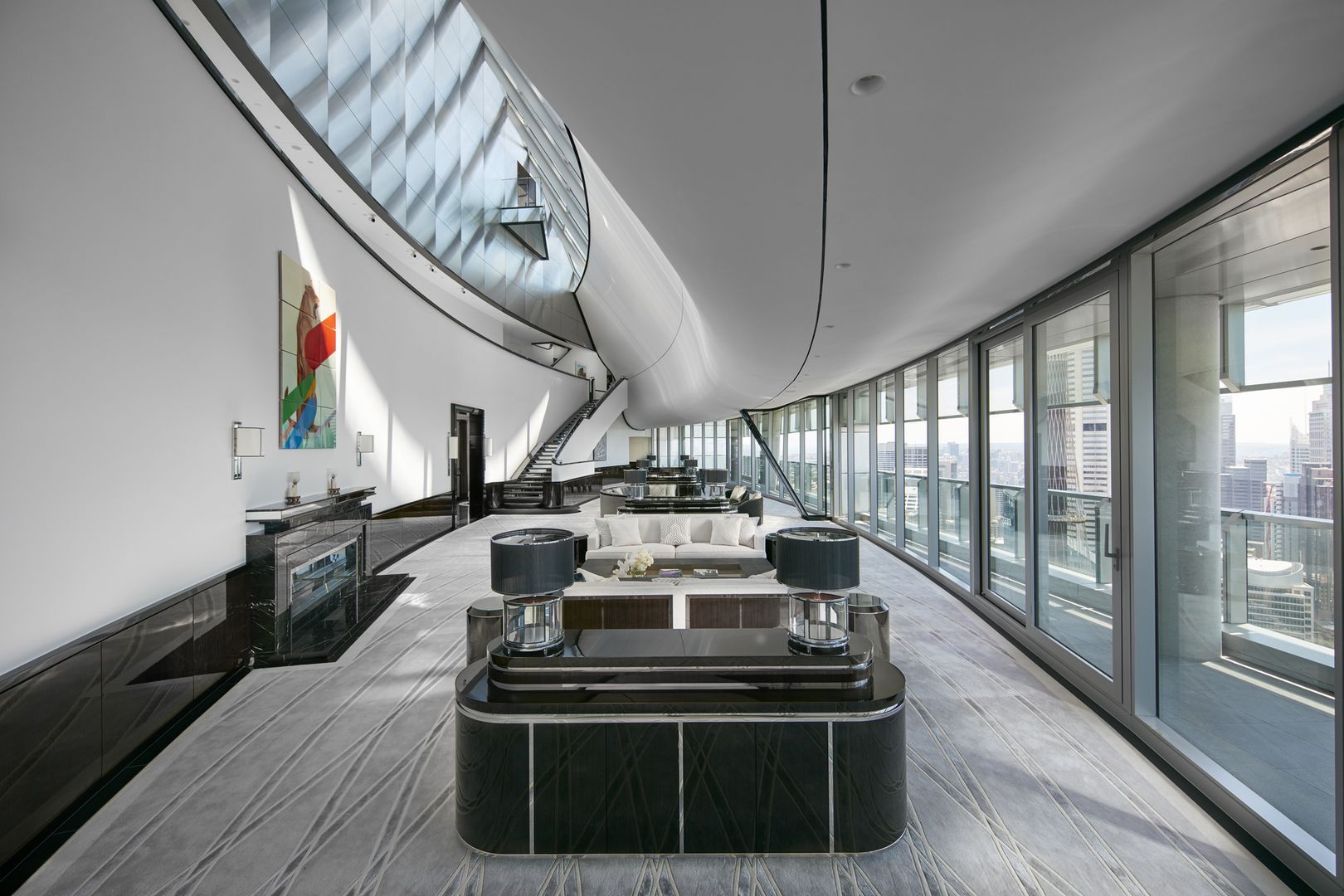
Vida Aljada has officially opened in Sharjah, marking the Vida brand’s debut in the emirate. The five-star lifestyle hotel features 175 rooms and suites, serviced apartments, residences, dining concepts and wellness facilities.
3 min
Emaar Hospitality Group today officially opened Vida Aljada, marking the arrival of the Vida Hotels & Resorts brand in Sharjah and introducing a five-star lifestyle destination in the heart of Aljada, developed by Arada.
The opening marks an important step in the continued growth of Emaar Hospitality Group’s lifestyle portfolio, while bringing Vida’s approach to contemporary hospitality to a new emirate. The official opening was celebrated with a ribbon-cutting ceremony attended by senior representatives from Emaar Hospitality Group and Arada, alongside guests, partners, media and industry stakeholders.
Set in the heart of Aljada, Vida Aljada brings a fresh energy to Sharjah, with its location placing guests just three minutes from University City and Sharjah Airport Free Zone, and 15 minutes from Dubai International Airport and Sharjah Corniche. The hotel is close to Sharjah’s key cultural, educational and business hubs while offering its own setting for guests to stay, meet, dine, relax and spend time together.
Commenting on the opening, Hakan Keskin, Head of Hospitality at Emaar Hospitality Group, said:
“The opening of Vida Aljada represents an important milestone for Emaar Hospitality Group as we bring the Vida brand to Sharjah for the first time. We are pleased to introduce a hotel that reflects the character of Vida while responding to the evolving needs of the emirate. With its focus on contemporary design, dining, wellbeing and flexible spaces for business and leisure, Vida Aljada brings together the different ways our guests live, work and connect today.”
Vida Aljada features 175 rooms and suites, including Deluxe King and Twin rooms, Premier Suites and a 305-square-metre Penthouse Suite. The property also includes one-, two- and three-bedroom serviced apartments designed for extended stays, alongside one-, two- and three-bedroom residences that bring a contemporary, design-led approach to longer-term living.
Across the property, Vida’s focus on contemporary design and considered spaces creates an environment that is relaxed and connected. The accommodation is complemented by spaces for dining, wellness, family time, meetings and socialising, allowing guests to shape their experience around what they need from their stay.
Dining and social spaces
Food and beverage form an important part of the Vida Aljada experience, with four concepts offering different settings throughout the day.
Origins provides all-day dining, while Stage2 offers a café setting for coffee, casual meetings and time to unwind. True Slice brings pizza to the property, and Flo offers poolside bites, refreshing beverages and crafted mocktails alongside the outdoor terrace.
Space to relax, recharge and play
Wellness and leisure facilities include spa treatment rooms, a relaxation lounge, a 24/7 fitness centre, main swimming pool, dedicated kids’ pools, poolside offerings and an outdoor terrace.
For younger guests, the Qix Club Play Area features creative activities and an indoor imagination space for children aged four to 12, giving families an additional space to play, explore and spend time together.
The hotel also caters to business travellers and local professionals with meeting rooms, breakout space and a multifunction venue, providing flexible settings for meetings, events and collaboration.
The hotel also supports a more sustainable guest experience through paperless features, including digital in-room controls that allow guests to manage requests such as “Do Not Disturb” and housekeeping at the touch of a button, reducing the need for printed door signs and paper notices.
Amit Arora, Chief Operating Officer at Arada Hospitality and Entertainment, said: “At Arada, we believe that the communities we create should give people access to everything they need to live well, all within reach. Vida Aljada is a great example of that belief, bringing exceptional hospitality, dining, wellness and social spaces into the heart of one of the UAE’s most dynamic communities. In addition, Vida Aljada has a quality of design and experience that reflects the very best of what Emaar Hospitality Group stands for.”
Following the successful launch of its Palais Collection, MAISON de SABRÉ has unveiled a new modular handbag system offering more than 720 styling combinations.