








OMEGA Launches Speedmaster Moonwatch in Black and White
OMEGA opens 2026 with two new Speedmaster Moonwatch models featuring a striking inverted black-and-white dial, offered in stainless steel or 18K Moonshine™ Gold and powered by the Co-Axial Master Chronometer Calibre 3861.
 < 1 min

OMEGA opens 2026 with two new Speedmaster Moonwatch timepieces, each reinterpreting the classic chronograph look with an inverted dial configuration.
The new models are crafted with the Moonwatch’s essential step dial, which is put together with a double plate. The top plate is polished black, with a varnished and lacquered finish for superior sheen, and includes rhodium-plated subdial frames. Meanwhile, the base layer for the subdials is produced in white, also with a varnished and lacquered finish. The minute track is transferred in white on the main dial, while the subdials feature minute tracks transferred in black. A detail consistent across both versions that enhances the reversed aesthetic and legibility.
In combination with the black and white dial, the new watches include black ceramic bezel rings filled with a tachymeter scale in white enamel. The front features a box-form scratch-resistant sapphire crystal with an anti-reflective treatment. Around the wrist, the watches are distinguished by their polished-brushed bracelets, created in the standard Moonwatch style with OMEGA’s patented comfort release adjustment system.
The two 42 mm choices within the range include:
- A version in stainless steel. All the hands and hour markers are rhodium-plated with white Super-LumiNova.
- A version in 18K Moonshine™ Gold, OMEGA’s own long-lasting yellow gold alloy. The dial includes hour-minute hands, subdial hands, and hour markers all in 18K Moonshine™ Gold with white Super-LumiNova, as well as a central chronograph hand in PVD Moonshine™ Gold.
These Speedmaster Moonwatch professional timepieces are each powered by the OMEGA Co-Axial Master Chronometer Calibre 3861 – the most advanced evolution of the famous Calibre 321 that NASA astronauts trusted on the Moon. This mechanical quality allows the watches to receive a 5-year warranty, along with Master Chronometer certification which guarantees the Swiss industry’s highest standard of precision, performance, and magnetic resistance.

Bosch is investing €200 million into its venture builder unit to accelerate innovation beyond its core business, focusing on areas like software-driven manufacturing, remote health monitoring, and carbon capture. By combining its industrial strength with startup agility and strategic partnerships, the company aims to launch 20 new ventures by 2030 and drive the next phase of technology-led growth.

AWS and OpenAI are expanding their partnership to bring advanced AI models and agents to Amazon Bedrock, combining cutting-edge intelligence with enterprise-grade security, governance, and scalability. With new offerings including OpenAI models, Codex, and Managed Agents on Bedrock, businesses can now build and deploy AI solutions more efficiently within the cloud infrastructure they already trust.

Brands are starting to meet customers where conversations already happen. From Starbucks to Zillow, companies are launching apps inside ChatGPT to drive discovery, engagement, and product guidance in real time. While challenges around visibility, data ownership, and conversions still exist, the shift signals a bigger move—ChatGPT is quickly becoming a new front door for how users interact with brands and make decisions.
New research from eToro suggests the digital investing gap between younger and older UAE investors is narrowing, with both generations increasingly turning to AI, social media, and digital platforms for financial advice while continuing to grow their market exposure despite ongoing volatility.
3 min
There is an age-old debate on the generational divide when it comes to managing money. It often starts with familiar assumptions: the young are impulsive, the old play it too safe; the young are more tech-savvy, the old are not so plugged in.
But eToro shows a more nuanced picture, according to its latest UAE Retail Investor Beat survey data comparing investors aged 18-34 with those aged 35-62.
The survey found that older investors are just as digitally savvy as younger investors. Both groups use social media for financial advice at almost the same rate, as 39% of younger investors and 38% of older investors do so. Trust in AI for investment recommendations is also nearly identical: 76% of younger investors and 75% of older investors have acted on a recommendation by an AI engine. Rather than being concentrated among the youth, social media and AI usage has risen across both age groups from August 2025, the last time the survey was conducted.
A sharper distinction lies in older investors being more likely to seek financial advice from online platforms or brokers (57% vs 52% of younger investors), while younger investors are more likely to consult family, friends, colleagues and industry peers (67% vs 60% of older investors), suggesting a more social and interpersonal approach to decision-making.
Differences in allocations
It may come as a surprise that older investors show higher exposure to crypto (56% vs 53% of younger investors), commodities (61% vs 52%), but also cash (50% vs 46%). Allocations to equities and bonds, both foreign and local, are broadly equal between both age groups. This suggests a more barbelled approach among older investors, who may be pairing higher-risk assets with typically less-volatile ones, rather than simply playing it safe.
In terms of the sectors that UAE investors are currently invested in, the most popular ranking is the same across both age groups – financial services, followed by real estate and energy – but some sectors are more popular among one age group than the other.
Younger investors have a greater preference for technology (36% vs 32% of older investors), healthcare (26% vs 23%) and renewables (26% vs 24%), whereas older investors prefer energy (42% vs 38% of younger investors), financial services (51% vs 48%) and mining (28% vs 26%). This points to a younger investor base backing future-facing sectors linked to innovation and sustainability, while the more mature investors are more likely to support industries that are well established in the UAE.
Josh Gilbert, Market Analyst at eToro added: as they are earlier on in their investment journey, naturally younger investors are more likely to plan to invest in a wider array of sectors in the future to keep diversifying their portfolio. The sector they are most likely to invest in within the next three months is renewables (45%), while for older investors it is communications (40%).
Communications, including social media and telecoms companies, stands out as a point of equal conviction, with 27% of each age group currently invested and another 40% planning to invest in the next three months. While this feels almost instinctive among younger investors, its presence in older investors’ portfolios reflect the trust in the digital, social, and media ecosystems they are turning to for advice.
Investment goals suggest financial independence first, fun on the side.
Likewise, the two groups share the same top three investing goals: to achieve financial independence, to supplement income, and to provide long-term security. However, there are still some divergences. Older investors are much more likely to invest to beat inflation (27% vs 23% of younger investors) and to supplement income (52% vs 44%).
On the other hand, younger investors are more likely to invest for fun (15% vs 11% of older investors), to retire early (19% vs 15%) and to generate capital for a future payment (28% vs 25%). So despite choosing to invest for fun, younger investors are also balancing it out with long-term financial planning.
Still in the wealth-building phase of their investing journey, 59% of younger investors increased contributions to their portfolio over the past three months (vs 55% of older investors), and even more plan for increases in the next three (68% vs 62%). A small minority of each group (9% of younger investors, 8% of older investors) decreased portfolio values in the past three months, against the backdrop of recent geopolitical tensions in the region.
Settling the debate.
The data shows that old assumptions are becoming outdated. The tide has turned. Social media, artificial intelligence and crypto are no longer the territories of young investors alone. Older investors are part of the digital mainstream now.
What stands out is that both groups are leaning into markets right now, with both younger and older investors looking to increase portfolio exposure. In an environment where markets have been anything but straightforward, with geopolitical noise, rate uncertainty and volatility a constant backdrop, it suggests investors are here for the long-term.
Furthermore, younger investors are not simply impulsive, and older investors are not simply cautious. Both are adapting to a more digital, diversified investment landscape, just in different ways.
Settling the debate, then, is recognising that age shapes investment behaviour in more nuanced ways than stereotypes allow.

Parts for iPhones to cost more owing to surging demand from AI companies.
The sports-car maker delivered 279,449 cars last year, down from 310,718 in 2024.



As quantum hardware moves closer to reality, organizations are already tapping into quantum AI to solve complex problems faster. A survey by SAS shows strong interest, but adoption is still slowed by unclear use cases, high costs, and limited talent—pushing businesses to take a cautious, ROI-focused approach.
3 min
As the supply chain to support quantum hardware stabilizes, many experts anticipate that this emerging technology will be popularized and production-ready by the early 2030s. Some assume that means benefitting from quantum now is out of the question.
Enter quantum AI, a powerful approach involving running machine learning algorithms on existing quantum hardware. In practice, applying quantum AI can look like helping organizations accomplish hours-long tasks in minutes, or rendering problems once considered impossible to realize on existing hardware. It can also look like calibrating models to learn efficiently on less data, bolstering stability over time – and much more.
So, with all its potential benefits, what’s holding back organizations from greater investment?
Data and AI leader SAS surveyed more than 500 global leaders across industries on quantum AI. In the first installment of the survey in 2025, high cost of implementation ranked as the number one barrier to adoption, followed by lack of understanding or knowledge. That’s changed in 2026.
What are the top barriers to quantum AI adoption in 2026?
The greatest barriers to quantum AI adoption in 2026 ranked as follows among survey respondents.
- Uncertainty around practical, real-world uses.
- High cost of implementation.
- Lack of trained personnel.
- Lack of knowledge or understanding.
- Limited availability of quantum AI solutions.
- Lack of clear regulatory guidelines.
What is quantum AI, and why do organizations want to use it?
SAS looks at classical and quantum computing as a spectrum: with proven classical computing on one end, and experimental and exponentially more powerful quantum computing on the other. Many industry and business problems fall somewhere in the middle, with a hybrid approach splitting workloads: quantum processing and classical processing each doing what they do best.
“Organizations of all sizes are eager to develop intellectual property – their original, patented approach to quantum AI – so they’ll be ready as the technology comes of age,” said Bill Wisotsky, Principal Quantum Architect at SAS. “Despite continued strong interest, leaders are understandably proceeding with caution, and they don’t want to go all-in on expensive quantum investments they fear may not result in worthwhile use cases and solved problems.
“SAS is working to level the playing field, establishing real-world use cases for today, and ensuring that customers can get a piece of the quantum pie tomorrow.”
How can customers prepare for the quantum economy?
“This survey illuminates what SAS experts were already seeing in the market: that leaders are excited to use quantum, but the barriers to entry have been too high, and that requires a solution,” said Amy Stout, Head of Quantum Product Strategy at SAS. “SAS is excited to give a sneak peek of SAS Quantum Lab, a hands-on playground to learn and innovate for real-world ROI.”
What is SAS Quantum Lab?
Coming in Q4 to SAS Viya customers, SAS Quantum Lab is a launchpad for the quantum AI journey. It’s designed to be a complement to quantum experts on their existing work, and to empower users who may not be quantum physicists, but are ready to explore, test and validate their ideas. It significantly reduces the cost of quantum AI exploration and helps customers avoid false signals, all while exploring this powerful technology efficiently and credibly.
SAS Quantum Lab is currently being designed to include the following:
- The ability to compare, side-by-side, classical, quantum and hybrid results for industry use cases, letting users find the best solutions for their business problems.
- Performance-boosting capabilities, with current testing showing more than 100 times speedup and 99% cost savings.
- A virtual quantum AI tutor to accelerate learning by answering questions, offering sample code and suggesting next steps.
What could be possible with quantum AI?
At the conclusion of the survey, respondents had the option to answer a write-in question: if they were currently working on quantum, what use cases did they hope to achieve, or what business problem would they like to solve? Responses included the following.
- To enhance the accuracy of fraud detection systems in financial serves, enabling more efficient identification of complex transaction patterns.
- To optimize 5G network path traffic in real-time.
- To accelerate molecular simulation and the drug discovery process for new therapeutic candidates.
- For supply chain distribution and to optimize logistics problems.
- To improve machine learning workflows with a focus on predictive modeling for customer behavior.
- To train large language models for natural language processing tasks, reducing the time and resources for model optimization.
“If you’re ready to explore quantum AI, we’re ready to work with you,” added Wisotsky. “Bring your ideas, and our experts will help determine if and how quantum AI can be incorporated in ways that are valuable, safe and sensible.”
Two coming 2027 models – the first of the “Neue Klasse” cars coming to the U.S. early next year – have been revealed.
Many of the most-important events have slipped from our collective memories. But their impacts live on.


OpenAI allowed employees to sell shares worth up to $30 million each, underscoring the unprecedented wealth being created by the AI boom even before companies reach public markets.
3 min
OpenAI allowed employees to sell up to $30 million worth of shares each in a recent financing, making them some of the earliest financial winners of the artificial-intelligence boom.
Last October, more than 600 current and former employees sold their shares in a single stroke, collectively making $6.6 billion. For roughly 75 of them, that meant walking away with the full $30 million, according to people familiar with the matter.
Some of them chose to give away the rest, putting their remaining shares in donor-advised funds—charitable investment accounts that commit money for philanthropic causes while also allowing donors to claim tax deductions for that year.
The sale offers a sneak peek into the flood of money that will soon hit San Francisco and other tech capitals. OpenAI and Anthropic are gearing up for what will likely be some of the largest IPOs in history, allowing their thousands of rank-and-file workers to unload their stock, turning many of them into multimillionaires.
OpenAI required employees to wait two years before they could sell their shares, meaning that the share sale marked the first time many who joined the company after ChatGPT launched were able to cash out.
No other tech boom in history has lavished that magnitude of wealth on such a swath of employees even before a public listing. Hundreds of companies went public in the dot-com boom, but in most cases their workers had to wait for a prolonged period even after the IPO to cash in. For some, the bubble burst before they could do so and they never realized the potential wealth.
The scale of AI pay packages for some highly specialized workers has been unprecedented in modern history. While early employees at Google and Facebook made millions after the companies went public, the scope of wealth creation for some AI specialists—especially non-founders—has reached greater heights.
Last year, Meta offered $300 million pay packages to some top researchers as part of a broader industrywide talent war. OpenAI offers yearly salaries that top $500,000 for some technical roles, according to its website, and is doling out far more stock-based compensation than other tech companies. Last August, it gave some staff members one-time bonuses, some of which were worth millions of dollars, The Wall Street Journal reported.
The newfound wealth is driving up rental prices in San Francisco, and sparking concerns about a growing class divide within the city. Some top AI executives have pledged to provide a large portion of their earnings to charity, alongside rank-and-file employees who didn’t expect to come across such life-changing wealth.
OpenAI is currently the world’s most-valuable tech startup, and employees who were at the company when it first issued shares seven years ago have seen the value of their stock grow more than 100-fold.
By comparison, the Nasdaq composite roughly tripled in the same period.
For most of Silicon Valley’s history, startup employees had to wait for an initial public offering before they could sell their shares. But as companies began staying private longer, some workers found themselves sitting on paper fortunes they couldn’t touch for long stretches of time. That led to the rising popularity of so-called tender offers, whereby employees could sell a slice of their shares to outside investors.
OpenAI has overseen several tender offers in recent years, but previously limited sales to $10 million per employee, frustrating some top researchers and engineers who were eligible to sell far more than that amount. The company said it tripled the cap last fall in response to demand from investors.
Top OpenAI executives have experienced even more of a windfall. President Greg Brockman holds equity worth about $30 billion, he said Monday during court testimony. Chief Executive Sam Altman has said he doesn’t own shares in the company, citing its nonprofit roots, though some investors expect him to receive equity if he prevails in a court battle with Elon Musk over OpenAI’s restructuring from a nonprofit into a for-profit company.
The sports-car maker delivered 279,449 cars last year, down from 310,718 in 2024.

Paine Schwartz joins BERO as a new investor as the year-old company seeks to triple sales.


Bosch is investing €200 million into its venture builder unit to accelerate innovation beyond its core business, focusing on areas like software-driven manufacturing, remote health monitoring, and carbon capture. By combining its industrial strength with startup agility and strategic partnerships, the company aims to launch 20 new ventures by 2030 and drive the next phase of technology-led growth.
3 minInnovations and the development of new business areas have made Bosch the technology leader it is today. To expand its innovation landscape further, the company is investing around 200 million euros in its subsidiary Bosch Business Innovations over the next five years. As a corporate venture builder, the unit develops new business ideas beyond Bosch’s current core business and builds startups from the early stages onward. The aim is to systematically bring these to market maturity and also to develop new leading business models for Bosch.
To this end, Bosch Business Innovations has defined business areas in line with the Bosch strategy in which investments are to be prioritized and in which the market dynamics are an optimal match for Bosch’s competencies and technological expertise. The first of these are software-controlled manufacturing, remote health monitoring, and the capture, use, and storage of greenhouse gases. Further business areas will be added over the next four years, with the goal of having 20 successful startups in operation by 2030.
“Innovative strength and technology leadership are an integral part of Bosch’s history,” says Stefan Hartung, chairman of the board of management of Robert Bosch GmbH. “We have always continued to develop by identifying and investing in new technologies early and decisively – because innovation is our most important currency. We’re now significantly strengthening Bosch Business Innovations with financial resources so that new ideas have a home and the space to develop.”
Axel Deniz, CEO of Bosch Business Innovations, adds: “Our aim is to systematically develop new ideas beyond our current core business. To achieve this, we rely on Bosch’s strengths, in particular its technological expertise and patent power. We combine this structural advantage of a large company with the speed and flexibility of the startup world.”
Bosch Business Innovations accelerates market maturity with partnerships
To bring both worlds together in an optimal way, Bosch Business Innovations relies on a partnership model: it joins with experienced venture studios to build new business ideas from scratch and bring them quickly to market maturity. Bosch thus combines its own strengths – from technological expertise and patent power to industrial scaling – with the deployment speed and venture-building expertise of external partners. This creates a model in which opportunities and risks are deliberately shared and innovations are systematically put into implementation.
The focus is on the founders: Bosch Business Innovations is also open to external entrepreneurs in particular and gives them a crucial head start. They are involved in the company at an early stage, take on responsibility, and play an active role in shaping the startup from the very beginning. In addition, external investors are involved early on so as to tap into additional capital and market access. The approach is supported by specialized partners who contribute market and technology trends and facilitate access to international startup ecosystems.
Growth market for remote health monitoring
In the field of remote health monitoring, Bosch Business Innovations sees a rapidly growing market that has thus far remained fragmented. Bosch already has a strong healthcare ecosystem that includes the Robert Bosch Hospital and numerous hospital partnerships. This is complemented by Bosch’s technological expertise: among other things, the company is the global market leader for MEMS sensors, which are indispensable in remote health monitoring.
In software-controlled manufacturing, Bosch looks to its own industrial strength as well as its expertise in data, software, and AI. Targeted investments in startups are intended to create platform-based business models for software in manufacturing operations.
The third defined investment area is carbon capture, a strategic area of development. Bosch is examining ways in which industrial decarbonization and carbon capture from the ambient air can be translated into business models.
Bosch Business Innovations realigns existing portfolio
Bosch Business Innovations evolved from grow platform GmbH, a wholly owned Bosch subsidiary that developed internal startups within the company. The previous portfolio was restructured by Bosch Business Innovations. The aim is to create viable future prospects within or outside Bosch for all existing teams. For example, Bosch Advanced Ceramics achieved an important milestone at the end of 2025: the ceramic 3D printing specialist was successfully sold to Sintokogio, a leading provider of industrial equipment and manufacturing solutions.
Bosch Business Innovations is thus establishing itself as a further pillar of innovation activity at Bosch. The other pillars include, among others, the extensive research and development activities across the company and the existing venture capital unit, Bosch Ventures.
Paine Schwartz joins BERO as a new investor as the year-old company seeks to triple sales.

New research suggests that bonuses make employees feel more like a mere cog in a wheel.



AWS and OpenAI are expanding their partnership to bring advanced AI models and agents to Amazon Bedrock, combining cutting-edge intelligence with enterprise-grade security, governance, and scalability. With new offerings including OpenAI models, Codex, and Managed Agents on Bedrock, businesses can now build and deploy AI solutions more efficiently within the cloud infrastructure they already trust.
4 minToday, we are announcing a major expansion of our partnership with OpenAI that brings frontier AI to the infrastructure millions of organizations already trust. Enterprises want to build with the most capable AI models and agents available. They also need the security posture, operational maturity, and data governance that production workloads demand. Starting today, we are bringing those together with three new offerings, all in limited preview:
- OpenAI models on Amazon Bedrock: the latest OpenAI models, available through the same Amazon Bedrock APIs and controls customers already use.
- Codex on Amazon Bedrock: OpenAI coding agent on Amazon Bedrock, for enterprise software development at scale.
- Amazon Bedrock Managed Agents, powered by OpenAI: an optimized experience for building production-ready AI agents with OpenAI frontier models on AWS.
Together, these launches give customers the choice and flexibility to use the best models for their use case, on the world’s most broadly-adopted cloud.
OpenAI Models on Amazon Bedrock
Amazon Bedrock is built on the principle that customers should choose the best model for every use case. We are excited to announce that starting today, the latest OpenAI models will be available on Amazon Bedrock. For the first time, AWS customers will be able to access OpenAI frontier models through the services they already use for model access, fine-tuning, and orchestration. This means customers can evaluate and deploy OpenAI models alongside models from Anthropic, Meta, Mistral, Cohere, Amazon, and other leading providers, all through a single, consistent service with unified security, governance, and cost controls.
OpenAI models on Bedrock inherit the full set of enterprise controls customers already depend on: IAM-based access management, AWS PrivateLink connectivity, guardrails, encryption at rest and in transit, comprehensive logging through AWS CloudTrail, and integration with existing compliance frameworks. There is no additional infrastructure to configure and no new security model to learn. Customers can apply OpenAI model usage toward their existing AWS cloud commitments and consolidate AI spend alongside their broader AWS workloads. For organizations already managing significant cloud investments on AWS, this simplifies procurement and financial governance.
Codex on Amazon Bedrock
Codex is quickly becoming one of the best examples of how AI agents can do work inside the enterprise. More than 4 million people use Codex every week to automate coding work, write and refactor code, explain complex systems, generate tests, and accelerate software delivery. With Codex on Amazon Bedrock, enterprise teams can access the OpenAI coding agent within the AWS environments where they already operate at scale. Customers can authenticate using their AWS credentials, process inference through Amazon Bedrock infrastructure, and apply Codex usage toward their AWS cloud commitments. Codex on Bedrock is available through the Bedrock API, starting with the Codex CLI, the Codex desktop app, and Visual Studio Code extension.
Today’s most capable AI agents have shown what frontier reasoning models can do: perform complex, multi-step work with minimal human intervention. OpenAI frontier models and agentic capabilities represent the leading edge of what’s possible. However, production AI applications require more than intelligence, they also require the enterprise infrastructure, security, and operational foundation to run them reliably at scale. Additionally, they require memory that persists across sessions, skills that encode procedures, identity that enforces the right permissions, and compute options that are appropriate for the task. Today, teams build and assemble these components, which can be complex. To address these needs, we’re excited to introduce Amazon Bedrock Managed Agents, powered by OpenAI. Bedrock Managed Agents combines OpenAI frontier models and agentic capabilities with AWS’s global infrastructure, security, and the breadth of services that millions of organizations already depend on. With Bedrock Managed Agents, deploying production-ready OpenAI-powered agents on AWS is fast and straightforward, so you can focus on what your agents should do, not the infrastructure behind them.
Bedrock Managed Agents is optimized for OpenAI models on AWS. It is built with the OpenAI agent harness, which is engineered to unlock the full potential of OpenAI frontier models, delivering faster execution, sharper reasoning, and reliable steering of long-running tasks. Security and governance are built in from the moment you deploy: every agent operates with its own identity, logs every action for auditability, and runs inside your environment with all model inference on Amazon Bedrock. As customers scale to hundreds of thousands of agents across the enterprise, they benefit from the globally scalable AWS infrastructure, and proximity to the data, applications, and services they already rely on.
Box is the leading Intelligent Content Management platform, helping over 115,000 organizations fuel collaboration, manage their entire content lifecycle, secure critical content, and transform business workflows with enterprise AI. “Enterprises are currently looking to deploy agents to deliver solutions that take their organization into the next phase of AI,” said Ben Kus, CTO at Box. “With Amazon Bedrock Managed Agents, powered by OpenAI, developers can build optimized, production-scale AI applications that bring together the strengths and capabilities of OpenAI’s latest models with the scale, security, and infrastructure of AWS. That combination will result in agents that continuously learn what works over time, tailor responses to each user’s specific environment, and operate with the governance and auditability enterprises require, all running on the cloud we already trust.”
Bedrock Managed Agents and Bedrock Agent Core
Bedrock AgentCore is the open platform to build, connect, and optimize agents at scale using any model and framework. Bedrock Managed Agents is optimized for building agentic solutions with OpenAI frontier models and agentic capabilities. If you’re building on Bedrock Managed Agents, AgentCore is a natural complement. AgentCore provides the default compute environment for Bedrock Managed Agents, and as your agent footprint expands across your enterprise, AgentCore and Bedrock Managed Agents will provide additional capabilities such as authorization policy enforcement, agent and agent tool discovery, and observability and evaluation capabilities.
What comes next
This is the beginning of a deeper collaboration between AWS and OpenAI. As OpenAI pushes the frontier of reasoning and agentic capabilities, AWS and OpenAI will continue to bring the latest advances to Amazon Bedrock—so the models and agents you build with today continue to benefit from new breakthroughs as they arrive.
New research suggests that bonuses make employees feel more like a mere cog in a wheel.

Chris Dixon, a partner who led the charge, says he has a ‘very long-term horizon’



Brands are starting to meet customers where conversations already happen. From Starbucks to Zillow, companies are launching apps inside ChatGPT to drive discovery, engagement, and product guidance in real time. While challenges around visibility, data ownership, and conversions still exist, the shift signals a bigger move—ChatGPT is quickly becoming a new front door for how users interact with brands and make decisions.
3 minFor years, companies have been looking to replicate the smooth conversational experience of ChatGPT with artificial-intelligence agents and chatbots on their websites. Now some are finding there might be value in cozying up to ChatGPT itself.
OpenAI in recent weeks has seen a surge in businesses publishing so-called ChatGPT apps, including rollouts from Starbucks, Little Caesars Pizza and Wyndham Hotels last month.
These apps are a way for users to engage with brands directly inside the ChatGPT interface, getting answers and advice on products and services. Often they will take users right up until the point of action, directing them to Little Caesars’s own mobile app or website, for example, when they are ready to place or pay for an order.
OpenAI announced the capability in October 2025 but said it recently streamlined its process for approving apps, one reason for the recent burst.
Brands say the upshot is customer proximity. “We wanted to meet our customers where they are,” said Neelima Sharma, senior vice president of omnichannel and e-commerce technology at Lowe’s, whose ChatGPT app went live in February.
But the business value of some of these apps remains hazy, with brands citing issues with discoverability, data sharing and ownership of the customer relationship as challenges that still need to be worked out.
An OpenAI spokesperson said the company is seeing strong momentum around apps, with hundreds of apps live and new apps launching every day.
“We’re still in the very early days of this ecosystem, and we recognize there’s more work to do to make the experience better for brands and users alike. Over time, we expect ChatGPT to become the primary way that many users interact with the key products and services in their personal and work lives,” the company spokesperson said.
For OpenAI, making ChatGPT a go-to interface for consumer experiences is a critical component as it gears up for a potential initial public offering as soon as this year. The Wall Street Journal reported last week that OpenAI missed targets for new users and revenue, while rival chatbots like Anthropic’s Claude, which has its own nascent version of apps, rose in popularity in recent months. OpenAI Chief Financial Officer Sarah Friar said in a post this week that OpenAI hit its “aggressive plan” in the first quarter.
Several companies say ChatGPT is the chatbot of choice for consumers and they are building apps there first before Claude. They also say they have been working with OpenAI to address some of the challenges.
“Discoverability, I think, is a top one for us,” said Josh Weisberg, head of AI at Zillow. The real-estate tech platform was one of the earliest companies to roll out a ChatGPT app back in October.
Typically, users have to “connect” to an app from OpenAI’s app directory, accessible by clicking the three dots under “more” on the upper left hand corner of the ChatGPT home screen, then later make a point of officially telling ChatGPT to invoke it when they are ready to use it.
OpenAI’s app developer terms don’t guarantee discoverability, but the company said it is experimenting with ways to surface apps more directly within conversations, without explicit invocation.
“Our models are consistently improving in how and when they invoke apps in response to user queries,” the company said.
That experience can be a problem for brands trying to reach more users, said John Campbell, head of innovation and AI at media agency Roast, which advises companies on optimizing their visibility inside of AI chatbots.
“The average person who’s using [ChatGPT] for discovering a product or planning a holiday, they probably don’t know about these apps,” he said.
The other problem, Campbell said, is a lack of compelling use cases inside some of the apps.
“The Starbucks one is basically a little interactive game to find out your ideal drink,” he said. You still have to go to Starbucks’s own app or website to make the purchase.
Starbucks SVP of Digital and Loyalty Paul Riedel said the app is a beta experience and “an opportunity for us to listen, learn, and refine as we go.”
Although it is possible to build the order and purchase capabilities into ChatGPT apps today, some companies don’t want that.
Little Caesars, which rolled out its app in April, said it liked keeping the ultimate transaction on its own platform. That way, it still owns the customer relationship and receives the relevant customer data from the purchase, said Derek Shon, global director of Product Strategy for Little Caesars Enterprises.
Sharing metrics and usage data also has been tricky.
“We’re working with them on the metrics that we would like to see, versus what they’re capable of providing,” said Scott Strickland, chief commercial officer of Wyndham Hotels & Resorts, which launched its app in April.
OpenAI confirmed it would share some stats on usage, but the cadence is slower than what Strickland is used to with other app managers like Apple, he said.
“We haven’t gotten any of those metrics,” Strickland said.
OpenAI said it is hoping to invest more in app analytics over time.
Paine Schwartz joins BERO as a new investor as the year-old company seeks to triple sales.

Americans now think they need at least $1.25 million for retirement, a 20% increase from a year ago, according to a survey by Northwestern Mutual


Anthropic is partnering with Blackstone, Goldman Sachs and other major firms in a $1.5 billion joint venture to accelerate AI adoption across businesses, targeting private equity portfolios with consulting-led integration of advanced AI tools.
< 1 min
Anthropic is creating a joint venture with Blackstone, Goldman Sachs GS -2.21%decrease; red down pointing triangle and a handful of other Wall Street firms that aims to sell artificial-intelligence tools to companies, including those backed by private-equity firms.
The companies’ Monday announcement confirmed a Sunday report from The Wall Street Journal.
The details
The company is expected to act as a consulting arm for Anthropic and help teach businesses—including the private-equity firms’ portfolio companies—how to incorporate AI across their operations.
Anthropic, Blackstone and Hellman & Friedman are anchoring the deal and are each expected to invest roughly $300 million, according to people familiar with the matter.
Goldman Sachs is putting in around $150 million, the people said. General Atlantic, Leonard Green, Apollo Global Management, GIC, and Sequoia Capital are also involved. All told, about $1.5 billion is expected to be committed, the people said.
The context
OpenAI has also been in talks to form a rival joint venture with private-equity firms that spreads adoption of its own AI tools.
Both AI juggernauts are focusing their efforts on selling AI tools to businesses and see those backed by private-equity firms as a prime target, given that many are already focused on improving efficiency and cutting costs. Anthropic is widely seen as the industry leader in the enterprise market, though OpenAI is working hard to catch up.
Anthropic is eyeing a public listing that could take place as soon as this year. The company’s revenue skyrocketed in recent months thanks to the success of its coding tool, Claude Code.
News Corp, owner of the Journal, has a content-licensing partnership with OpenAI.
Parts for iPhones to cost more owing to surging demand from AI companies.

Interior designer Thomas Hamel on where it goes wrong in so many homes.



Red Sea Global is boosting access to The Red Sea destination for Eid Al-Adha with 32 additional flights between May 21–31, enhancing connectivity from Riyadh, Jeddah, Dubai, and Doha to meet rising demand for premium, experience-led travel.
< 1 min
Red Sea Global (RSG) is expanding access to The Red Sea destination for Eid Al-Adha by adding 32 extra flights between May 21–31 to meet rising holiday demand.
The enhanced schedule improves connectivity for both domestic and international travellers, with 46 flights from Riyadh, 18 from Jeddah, and eight each from Dubai and Doha, offering greater flexibility for holidaymakers and last-minute travel plans.
The increased capacity reflects growing interest in experience-led tourism within Saudi Arabia, as visitors seek premium short-haul escapes.
Two coming 2027 models – the first of the “Neue Klasse” cars coming to the U.S. early next year – have been revealed.

Following the devastation of recent flooding, experts are urging government intervention to drive the cessation of building in areas at risk.



Consumer spending in Saudi Arabia rose by 1% to reach SR150.1 billion, driven by a 28% surge in e-commerce, despite a decline in cash withdrawals, signaling a continued shift toward digital payments.
< 1 min
Consumer spending in Saudi Arabia recorded one percent increase, reaching SR150.1 billion during March 2026 compared to SR148 billion in the same month of 2025, an increase of SR2.1 billion.
According to the data released by the Saudi Central Bank (SAMA), sales through points of sale in Saudi Arabia increased by one percent in March 2026, reaching approximately SR66.1 billion compared to the same period in 2025. The data also showed that sales during March were conducted through 997.2 million transactions via 2.4 million devices.
Cash withdrawals from ATMs during March dropped by 11 percent, reaching SR48.6 billion, compared to withdrawals in March 2025. These cash withdrawals were made through 14,500 ATMs belonging to operating banks and the Saudi network, across 125.1 million transactions. The number of issued bank cards reached 66.9 million.
According to the data, e-commerce sales via Mada cards rose to SR35.4 billion during March 2026, a 28 percent increase compared to the same period in 2025. These sales were made through 200.3 million transactions. E-commerce sales include Mada card transactions used for payments and purchases through shopping websites and mobile applications.
Consumer spending in Saudi Arabia encompasses cash withdrawals, point-of-sale (POS) sales, and e-commerce sales via Mada. POS transactions represent consumer spending using debit and credit cards at major shopping centers, retail stores, pharmacies, and other outlets.
Two coming 2027 models – the first of the “Neue Klasse” cars coming to the U.S. early next year – have been revealed.




SAS introduces AI Navigator to help organizations manage AI use, strengthen governance, and align innovation with compliance as adoption accelerates.
3 min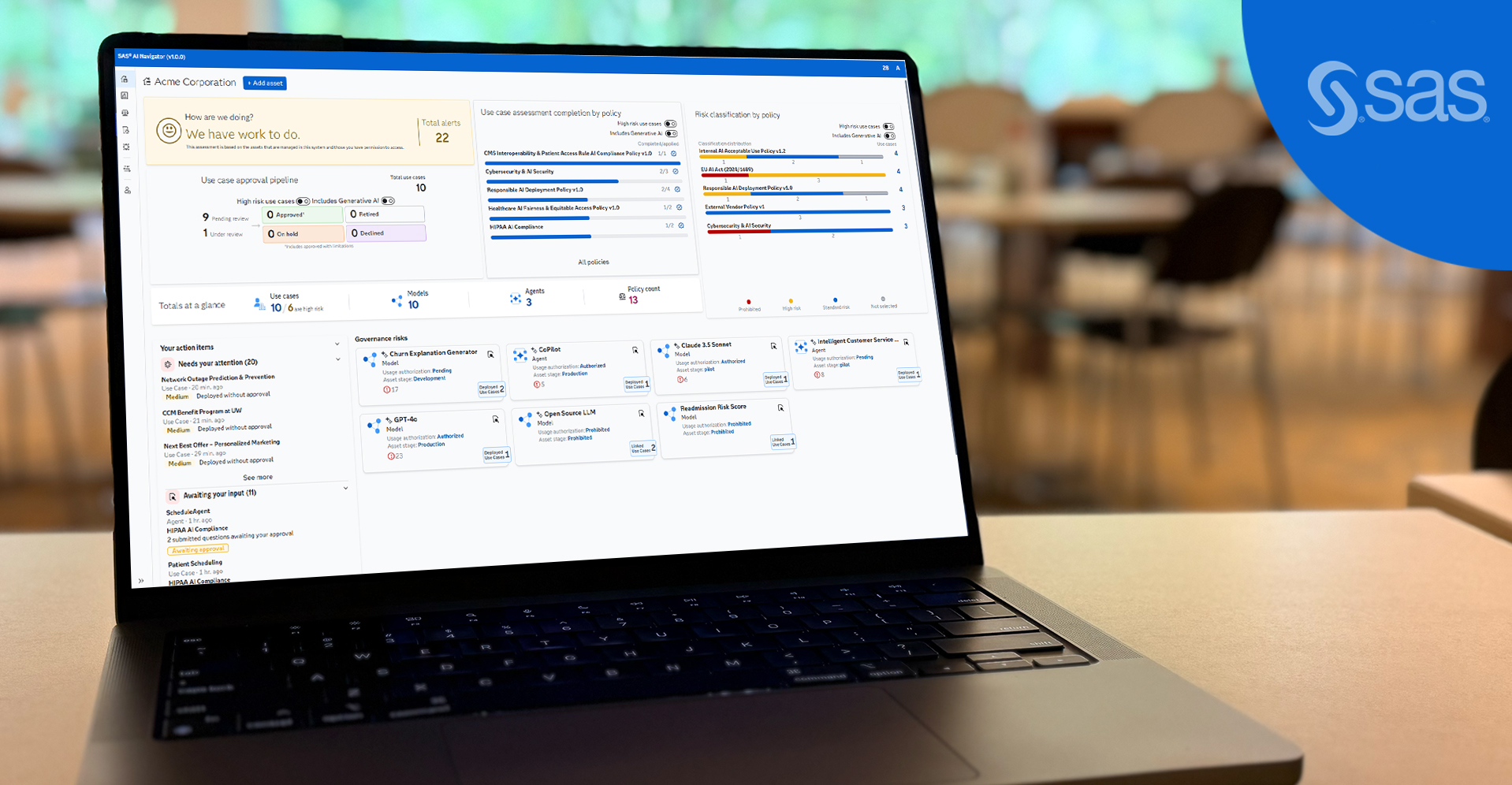
The rush to implement AI leaves organizations struggling to track its use, with the promise of increased productivity leading to overreliance on unproven AI without sufficient trustworthy AI safeguards. To bring order to the chaos, SAS® AI Navigator will soon be available to help AI, data, compliance and risk leaders compile a complete AI inventory and align AI use cases with government regulations and internal policies.
“AI governance is too often thought of as a compliance measure,” said Reggie Townsend, Vice President, SAS AI Ethics, Governance and Social Impact. “It’s a growth driver. Instead of fears of shadow AI putting the organization at risk, AI governance empowers people to push the limits of AI within a structured, transparent and secure environment.”
An AI governance breakthrough solution comes at a critical moment
The use of AI agents and LLMs is outpacing trustworthy AI investments, per a study of trust in AI by SAS and IDC. At the same time, Gartner predicts that by 2030 more than 40% of enterprises will experience security or compliance incidents linked to unauthorized shadow AI.
Into this tumultuous environment comes SAS AI Navigator. Available in Q3 2026 on Microsoft Azure Marketplace, SAS AI Navigator is a Software-as-a-Service (SaaS) solution that enables organizations to inventory and govern AI use cases, which are at the point of business impact. The governance extends to models and agents that power use cases, as well as the policies applied to them. For instance, companies using chatbots to interact with customers would not only be able to govern the underlying agent or model, such as Claude or Microsoft Copilot, but also apply policies to ensure it’s adhering to regulatory expectations.
Organizations don’t need to change how they build AI; SAS AI Navigator offers a unified view of whatever models and tools they already use, including LLMs, AI agents and open source or SAS models. It supports the full journey from experimentation to deployment through retirement, providing a unified view of all governed assets whether built in-house or purchased from third parties. SAS AI Navigator also makes it easy for users to apply internal policies and external regulations and frameworks to AI use cases.
Building on a five-decade legacy of responsible innovation
SAS AI Navigator expands an already well-regarded AI governance portfolio. SAS has 50 years of experience helping customers deploy transformational technologies in a responsible manner – expertise recognized by industry analysts. Chartis Research recently named SAS a category leader in the Chartis RiskTech Quadrant® for AI Governance Solutions, citing the SAS® Viya® platform’s “leading governance capabilities that extend classic machine learning, model risk management, explainability, bias detection, privacy protection and end-to-end monitoring to the broader enterprise AI environment.”
“By combining these capabilities with its deep expertise in regulated industries, SAS is in a position to demonstrate AI as a growth strategy for clients and prospects,” said Michael Versace, Research Director for Governance, Resilience and Compliance at Chartis.
What is AI governance?
AI governance is what organizations do to accelerate innovation, manage risk and ensure AI is trustworthy. It is an all-encompassing strategy that establishes AI oversight, ensures compliance and develops consistent operations and infrastructure within an organization. It begins with an organizational culture centered on human needs, then scales through robust operational tools for transparency, proactive regulatory compliance and consistent, systemic oversight.
Strong AI governance builds trust with customers, regulators and internal stakeholders such as boards of directors and employees. Organizations with robust AI governance frameworks are better positioned to strengthen trust in AI-driven decisions and confidently manage AI risks. Without AI governance, organizations face an increased risk of legal penalties, reputational damage from biased or opaque AI decisions, operational inefficiencies, and lack of stakeholder trust in their brand.
“The biggest risk to any AI governance program isn’t regulation; it’s a tool so complex that no one uses it,” said Townsend. “SAS AI Navigator was designed to make the path to responsible AI irresistible.”
How SAS supports AI governance
With decades of governance experience, SAS supports AI governance with capabilities embedded throughout SAS software and in a comprehensive product portfolio for all areas of governance, risk and compliance. Users can perform model risk management, model interpretability, bias detection and mitigation, data masking and more.
SAS AI Navigator is a standalone SaaS solution that works for SAS’ new or existing customers. It is the latest addition to a growing portfolio of SAS AI governance offerings designed to meet organizations where they are in their AI maturity.
The sports-car maker delivered 279,449 cars last year, down from 310,718 in 2024.



eBay posted stronger-than-expected Q1 results, with earnings of $1.66 per share and revenue of $3.1 billion, alongside GMV surpassing forecasts. Despite solid performance and growth in re-commerce and AI-driven features, the company’s Q2 outlook came in softer, even as it continues to expand through partnerships and strategic moves including its planned acquisition from Etsy.
2 min
Global online marketplace eBay posted better-than-expected profit, sales, and gross merchandise volume for its first quarter.
Shares of the online commerce and auction site initially fell 7% in late Wednesday trading before recovering that ground to be flat. The stock rose 3.4% during regular trading.
eBay surpassed expectations for its major metrics, but offered second-quarter guidance that may have disappointed.
For the current second quarter ending June 30, eBay expects gross merchandise volume of $21.3 billion to $21.7 billion, up 8% to 10% from the year-ago second quarter, but below its GMV of $22.2 billion in the first quarter.
For its first quarter ended March 31, eBay reported adjusted earnings of $1.66 a share, up 21%, on revenue of $3.1 billion, up 19%. That revenue figure includes $2.29 billion in gross profit.
Wall Street was expecting adjusted earnings of $1.25 a share on sales of $3.04 billion, according to FactSet. The gross merchandise volume for the first quarter beat the $21.7 billion expected.
The e-commerce giant reported 136 million active buyers, defined as those who paid for a transaction within the previous 12 months, above the 135.2 million analysts expected.
CEO Jamie Iannone called first-quarter results “a strong start to the year,” noting accelerated gross merchandise volume growth and better-than-expected performance. eBay’s Focus Categories, consumer-to-consumer business, and secondhand and refurbished “recommerce strategic priorities are driving broad-based momentum, and strengthening our position as the marketplace of choice for enthusiasts.”
Iannone said during Wednesday’s conference call that while consumers remain resilient in the U.S., “it’s a different story in Europe,” where consumers are more economically pressured. He said that more eBay customers are embracing pre-owned and refurbished offerings.
First-quarter highlights included eBay Live’s “The 30/30 Collection,” a Pokémon Day auction that showcased 30 years of iconic cards and memorabilia from top sellers; more than 30 million scans of an AI-powered card-scanning pricing feature; and a partnership with Meta Platforms that let users highlight eBay inventory directly on Facebook.
eBay’s Goldin set an all-time first-quarter gross merchandise value record, including a record $16.5 million sale of a PSA 10 Pikachu Illustrator card.
In the first quarter of 2025, eBay reported adjusted earnings of $1.38 a share on sales of $2.59 billion, including $1.89 billion in gross profit.
On Feb. 19, eBay announced it was buying Depop, a secondhand clothing site popular with Gen Z for its “pre-loved fashion,” from online marketplace Etsy for $1.2 billion in cash. Depop has 7 million active buyers and 3 million active sellers, the majority of whom are under 34. Depop acquisition is expected to close by the end of the third quarter, subject to certain closing conditions and regulatory approvals.
A week after that announcement, eBay said it was cutting about 6.5% of its global workforce, or roughly 800 employees, as part of a strategic restructuring.
“We remain committed to disciplined execution of our strategic priorities while continuing to allocate capital thoughtfully to drive long-term value and significant returns for our shareholders,” Chief Financial Officer Peggy Alford said.
eBay expects second-quarter revenue of $2.97 billion to $3.03 billion, which would be up 8% to 10% from the same time last year. It projects adjusted earnings of $1.46 to $1.51 a share.
The company said it returned $639 million to stockholders in the first quarter: $500 million through share buybacks of about 6 million shares and $139 million in cash dividends.
The company’s audit committee declared a second-quarter cash dividend of 31 cents a share, payable on June 12 to shareholders of record as of May 29.
eBay’s stock is up 19.2% this year through Wednesday’s close, and up 52% over the past 12 months.
Paine Schwartz joins BERO as a new investor as the year-old company seeks to triple sales.




Yaqoot has partnered with Huawei to upgrade its Business Support Systems (BSS), enhancing operational efficiency and enabling a more agile, data-driven digital experience. The collaboration will accelerate service development, improve personalization, and support Yaqoot’s broader digital transformation in line with Saudi Vision 2030.
2 min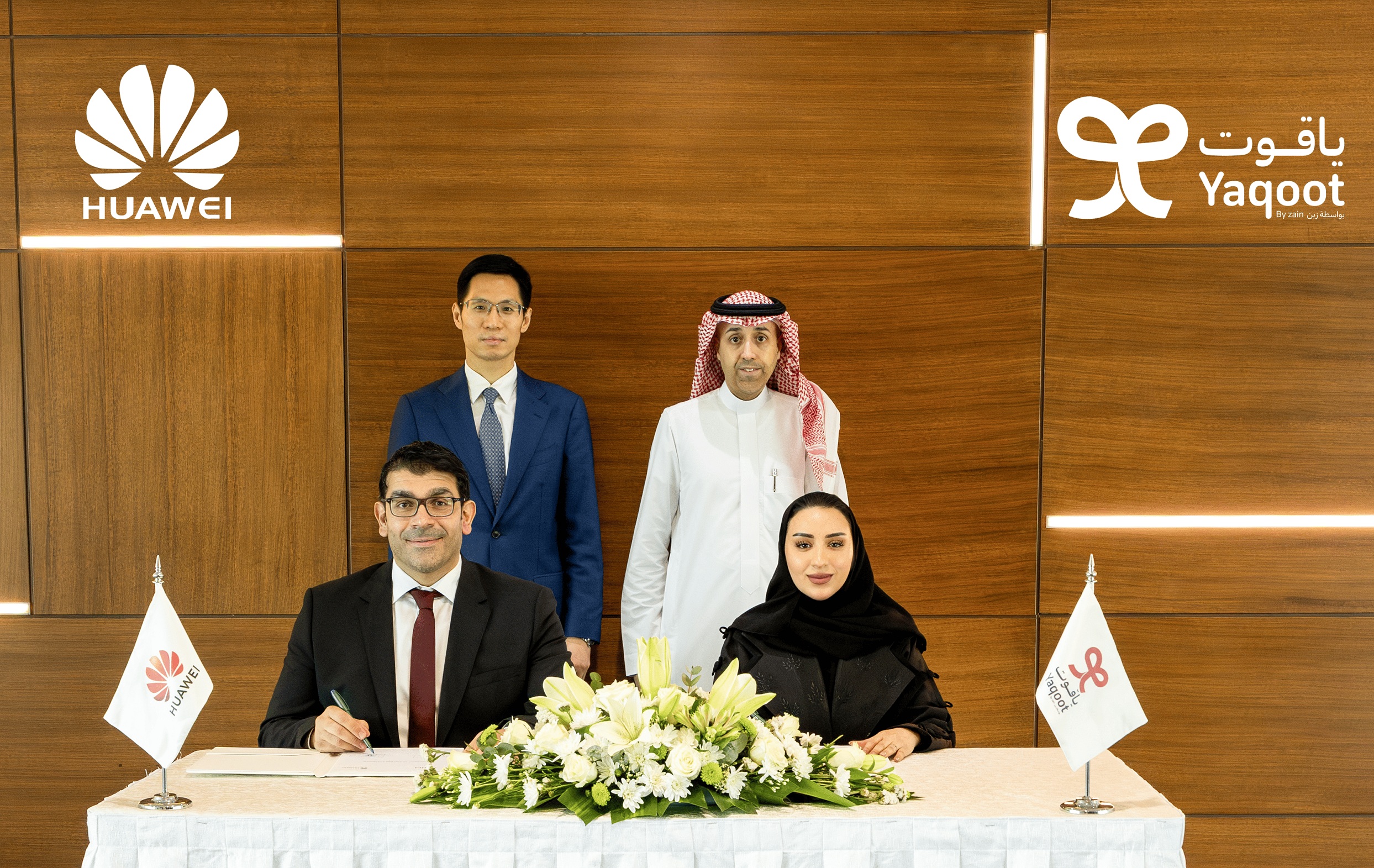
Yaqoot, the digital platform from Zain KSA, a leading digital services provider, has formed a strategic partnership with Huawei, a global technology leader. The collaboration aims to upgrade Yaqoot’s Business Support Systems (BSS), enhancing operational efficiency and enabling a more advanced, integrated digital experience.
This partnership aligns with Yaqoot’s approach to redefine its digital infrastructure on more robust foundations by adopting next-generation BSS solutions. It will support a more agile operating model enabling faster response to evolving market demands.
The collaboration will accelerate the development of digital products and services and reduce time-to-market, introducing greater flexibility and personalized offerings. It will also improve operational efficiency through enhanced automation and streamlined technical frameworks, while supporting advanced analytics for data-driven decision-making and sustained growth.
On the customer experience level, the upgrade will deliver deeper insights into user behavior, unlocking hyper-personalized offerings and enhancing the customer journey across all touchpoints. In parallel, users will gain greater control over their digital services through a seamless, fully integrated experience that supports satisfaction and trust.
Executive Vice President of Strategy and Innovation at Zain KSA, Njoud bint Mohammed AlShehri, said: “This partnership is part of our ongoing commitment to developing an integrated, customer-centric digital experience that is more flexible and easier-to-use. Yaqoot is focused on building a modern digital model that keeps pace with our customers’ evolving expectations through strengthening our innovation capabilities and responsiveness and leveraging the latest technologies. We believe this collaboration will transform how we roll out digital services, accelerating digital transformation in the Kingdom, in line with Saudi Vision 2030.”
Huawei Software Vice President John Zhuang, said: “Huawei boasts profound expertise in the BSS domain, particularly in telecom rating and billing. With services covering over 2.5 billion subscribers worldwide and successful deployment of more than 200 OCS and Billing projects globally. Now, as AI reshapes the industry, intelligent charging and billing positioned as the core pillar for operators’ digital and intelligent transformation. Together with Yaqoot and Zain KSA, we’re pioneering next-gen monetization, jointly create new digital and intelligent industry value.”
Huawei Saudi Zain Account General Manager Marwan Aldaamseh, said: “Our nearly 20-year partnership with Zain KSA reflects a consistent track record of delivering impactful communications technology projects at scale. As we expand into the IT domain, we are focused on execution excellence and measurable outcomes that support Zain and Yaqoot’s digital and intelligent transformation. We are confident that this next phase will further strengthen our strategic partnership and unlock new avenues for growth and innovation.”
Many of the most-important events have slipped from our collective memories. But their impacts live on.



Amazon and Anthropic are deepening their partnership with a long-term commitment exceeding $100 billion in AWS technologies, as Anthropic scales its Claude models on Amazon’s Trainium infrastructure. The collaboration, which already supports over 100,000 customers, includes expanded global deployment, access to Claude via AWS, and continued investment, with Amazon committing $5 billion now and up to $20 billion more, reinforcing their joint push to advance large-scale AI innovation.
4 min
Since 2023, Amazon and Anthropic have worked together to accelerate generative AI adoption across industries, making it easier for customers to build, deploy, and scale AI applications that solve real-world problems. Now, over 100,000 customers run Anthropic Claude models on AWS, making Claude one of the most popular model families on Amazon Bedrock. The two companies are also pushing the boundaries of what is possible with large-scale infrastructure, collaborating on Project Rainier—one of the largest AI compute clusters in the world—and together are opening new horizons with what’s possible in AI research and development.
Expanding on this success, today Amazon and Anthropic are deepening their collaboration with a commitment from Anthropic to spend more than $100 billion over the next ten years on AWS technologies. This encompasses current and future generations of Trainium (Amazon’s custom silicon) and tens of millions of Graviton cores (Amazon’s widely-adopted CPU chip) to provide superior price performance. Anthropic will secure up to 5 gigawatts (GW) of capacity to train and power their advanced AI models, including significant Trainium3 capacity expected to come online this year. The collaboration also includes a meaningful expansion of international inference in Asia and Europe to better serve Claude’s growing international customer base.
Overall, the commitment includes Trainium2, Trainium3, Trainium4, and the ability to purchase future generations of Trainium as they become available. Anthropic is already using AWS Trainium and Graviton to deliver scalable performance and cost efficiency across a broad range of generative AI workloads, allowing Anthropic to accelerate its growth with the scale, cost-efficiency, and security of AWS. Both Trainium and Graviton are used by more than 100,000 customers each, and Amazon Bedrock (Amazon’s high-performance inference service with a leading selection of frontier models) runs most of its inference on Trainium today.
Additionally, AWS customers will be able to access the full Anthropic-native Claude console from within AWS. Claude Platform on AWS lets customers access Anthropic’s Claude Platform through their existing AWS account, with no additional credentials, contracts or billing relationships to manage. Customers can use the same AWS access controls and monitoring they already have in place, making it easier to directly access Anthropic’s native Claude experience. Whether customers choose Claude Platform on AWS or Claude on Amazon Bedrock, AWS and Anthropic are partnering to provide customers the path to Claude that best meets their needs.
Separately, Amazon will invest $5 billion in Anthropic today and up to an additional $20 billion in the future tied to certain commercial milestones. This is in addition to the $8 billion Amazon previously invested in Anthropic.
“Our custom AI silicon offers high performance at significantly lower cost for customers, which is why it’s in such hot demand,” said Andy Jassy, CEO of Amazon. “Anthropic’s commitment to run its large language models on AWS Trainium for the next decade reflects the progress we’ve made together on custom silicon, as we continue delivering the technology and infrastructure our customers need to build with generative AI.”
“Our users tell us Claude is increasingly essential to how they work, and we need to build the infrastructure to keep pace with rapidly growing demand,” said Dario Amodei, CEO and co-founder of Anthropic. “Our collaboration with Amazon will allow us to continue advancing AI research while delivering Claude to our customers, including the more than 100,000 building on AWS.”
Amazon and Anthropic continue to deepen their relationship, driven by a shared commitment to rapid innovation, responsible AI development, and delivering results for customers, which already includes:
- Custom silicon collaboration. Anthropic uses AWS Trainium chips to build, train, and deploy its world-class AI models. Anthropic works closely with Annapurna Labs on developing and optimizing future Trainium chips, providing direct feedback from Claude training workloads to shape next-generation chip design for frontier AI models and benefitting other AWS customers. This has led to a strong engineering relationship that is helping Anthropic accelerate the development of their models with both engineering teams communicating on an almost daily basis on everything from low-level optimization work to high-level architectural decisions for next-generation chips.
- Project Rainier. AWS collaborated with Anthropic to launch Project Rainier, one of the world’s largest AI compute clusters with nearly half a million Trainium2 chips. When it launched, Project Rainier was larger than any AI compute cluster in the world and Anthropic is now actively using it to train and deploy Claude models for customers around the world for their AI-powered applications. Project Rainier is also being used to build and deploy future versions of Claude, and the more compute dedicated to training this frontier model, the smarter and more accurate it becomes. Project Rainier is now a template for deploying at scale the kind of raw computational power that will allow AI to tackle the hardest human challenges and enable breakthroughs across everything from medicine to climate science.
- Empowering builders worldwide. AWS is the best place to run Anthropic’s world-class family of Claude models, including Opus, Sonnet, and Haiku, and over 100,000 organizations of all sizes are running them on Amazon Bedrock to do things that weren’t previously possible. For example, Lyft incorporated Claude, via Amazon Bedrock, to power its customer care AI assistant, delivering fast responses to the most common support issues, and directing customers to a human specialist when more hands-on assistance is required, reducing average customer service resolution time by 87% and resolving thousands of customer requests daily. Pfizer is using Amazon Bedrock with Claude to help scientists search through the approximately 20,000 documents generated per drug development project using voice commands and a chatbot, saving scientists 16,000 annual search hours, while reducing infrastructure costs by 55%. Claude also powers experiences across a range of additional AWS technologies, including Amazon Connect, Kiro, and Amazon Quick, making it easy for developers to experiment, customize, and deploy AI on AWS.
- Primary training and cloud provider. Anthropic continues to choose AWS as its primary training and cloud provider for mission-critical workloads. Amazon developers and engineers also have access to build with Claude models to improve customer experiences across Amazon‘s businesses.
The sports-car maker delivered 279,449 cars last year, down from 310,718 in 2024.




Born Creators Group MENA has appointed Liman Tabsh as Growth Officer for Qatar, supporting its Doha expansion amid rising demand driven by Qatar’s Digital Agenda 2030. She will lead growth by leveraging the group’s integrated model across Adcreators MENA, Social St. MENA, Events Unlimited MENA, and Endspace MENA.
2 min
Born Creators Group MENA, the integrated marketing and communications agency network, today announces the appointment of Liman Tabsh as Growth Officer for Qatar, a strategic move that reinforces the group’s growth ambitions in one of the GCC’s most dynamic markets.
The appointment comes as Born Creators MENA enters a new phase of expansion in Doha, at a time when Qatar’s Digital Agenda 2030 is accelerating demand for integrated marketing capability across the private sector. The group’s integrated model brings four specialist agencies, Adcreators MENA (performance marketing and creative), Social St. MENA (social media and content), Events Unlimited MENA (experiential activations), and Endspace MENA (web, technology, and AI), serving clients across F&B, real estate, retail, hospitality, and financial services.
Liman is a seasoned marketing and communications executive with deep expertise in integrated campaigns, brand communications, and large-scale experiential activations across the GCC. She has led major regional accounts including American Express MENA across the UAE, Qatar, Bahrain, Kuwait, Oman, and Jordan, driving full-funnel acquisition campaigns, product launches, and engagement initiatives. Her experience spans digital strategy, sponsorships, and high-profile partnerships, alongside strong commercial acumen in budgeting, forecasting, and profitability management. Most recently based in Doha, she brings deep knowledge of the Qatari market and proven capability across fintech, hospitality, automotive, real estate, and FMCG.
Commenting on the appointment, Rony Chiha, CEO of Born Creators Group, said: “Liman brings exactly the kind of leadership we need at this stage of our Qatar growth, strategic, commercially sharp, and deeply connected to this market. Her ability to deliver integrated work at scale, across channels and across categories, makes her the right person to drive our next chapter in Doha.”
Liman Tabsh said: “Born Creators’ integrated model is rare in this region. The ability to deliver strategy, content, technology, and experience under one roof gives clients something most agency setups simply can’t: consistency, speed, and better work. I’m excited to bring that to more brands in Qatar.”
Born Creators MENA intends to set a new standard for what an integrated agency can deliver in this market, and to prove that the best work happens when strategy, content, technology, and experience are built together, not bolted on.
Two coming 2027 models – the first of the “Neue Klasse” cars coming to the U.S. early next year – have been revealed.




Johnson Controls has launched Balanced Cooling in the UAE, a new solution designed to tackle low Delta T inefficiencies in district cooling systems. By combining AI diagnostics, real-time monitoring and smart retrofits, the platform helps improve cooling performance, reduce energy use, and eliminate costly surcharges, supporting more efficient and resilient building operations.
2 min
Johnson Controls, a global technology leader energy efficiency, decarbonisation, thermal management and mission-critical performance, has announced the launch of Balanced Cooling, a purpose-built solution for buildings connected to centralised cooling systems in the UAE, designed to resolve low Delta T and improve cooling performance through a more integrated, solution driven approach.
Delta T is the difference between the temperature of chilled water entering and leaving a building cooling system.
When that temperature difference falls below intended levels, the system can’t transfer heat as efficiently as it should. This can happen because of over-pumping, poor hydronic balance or valve misalignment.
As a result, more water must be circulated to deliver the same cooling, which can increase pumping energy, affect system balance and expose building owners to surcharges. Balanced Cooling helps identify and correct this through smart valve retrofits, real-time monitoring, AI diagnostics and intelligent control.
A timely solution for UAE buildings
Balanced Cooling addresses low Delta T at scale. Based on initial customer testing Balanced Cooling delivers outcomes including eliminating related surcharges by up to 100%, reducing pumping energy by up to 40%, and significantly lowering comfort complaints in continuously operating facilities.
“Low Delta T remains one of the most persistent and costly inefficiencies affecting buildings connected to centralized cooling systems in the UAE,” said Tarek Hassan, associate director, Sustainability, MEA, Johnson Controls.
“Balanced Cooling was developed to move beyond isolated fixes by combining system visibility, intelligent diagnostics and targeted corrective action in one integrated solution. The result is a more effective way to reduce pumping energy, manage surcharges and improve cooling performance using existing building infrastructure,” he stated.
Low Delta T can create avoidable cost exposure, system inefficiencies and occupant discomfort for buildings connected to centralized cooling systems in the UAE.
This is particularly relevant as the Dubai Supreme Council of Energy identifies district cooling retrofits as a key part of its Efficient Cooling programme, and DEWA expects district cooling penetration in Dubai to reach 40% by 2030.
According to Johnson Controls, he Balanced Cooling is purpose-built to help building owners and operators address low Delta T more effectively while improving system balance, thermal management and overall operating performance.
Its retrofit-friendly, plug-and-play design supports integration with existing HVAC and BMS systems, making it particularly relevant for occupied residential, hospitality and office buildings where cooling performance must be improved efficiently, precisely and with minimal disruption.
From point fixes to measurable correction
Balanced Cooling helps building owners move beyond reactive adjustments by providing better visibility into system performance and a more targeted path to correction. This supports more stable cooling performance, improved system balance and more efficient operation over time.
Balanced Cooling adds to Johnson Controls’ broader cooling portfolio in the UAE, complementing its advanced chiller solutions, Cooling as a Service (CaaS) offering and digital building controls, said the statement.
Together, these capabilities reinforce Johnson Controls’ leadership in cooling across the region and its ability to help customers improve efficiency, optimize performance and build more resilient, future-ready environments, it added.
Paine Schwartz joins BERO as a new investor as the year-old company seeks to triple sales.