






Qatar’s Historical and Cultural Marvels: A Journey Through Time
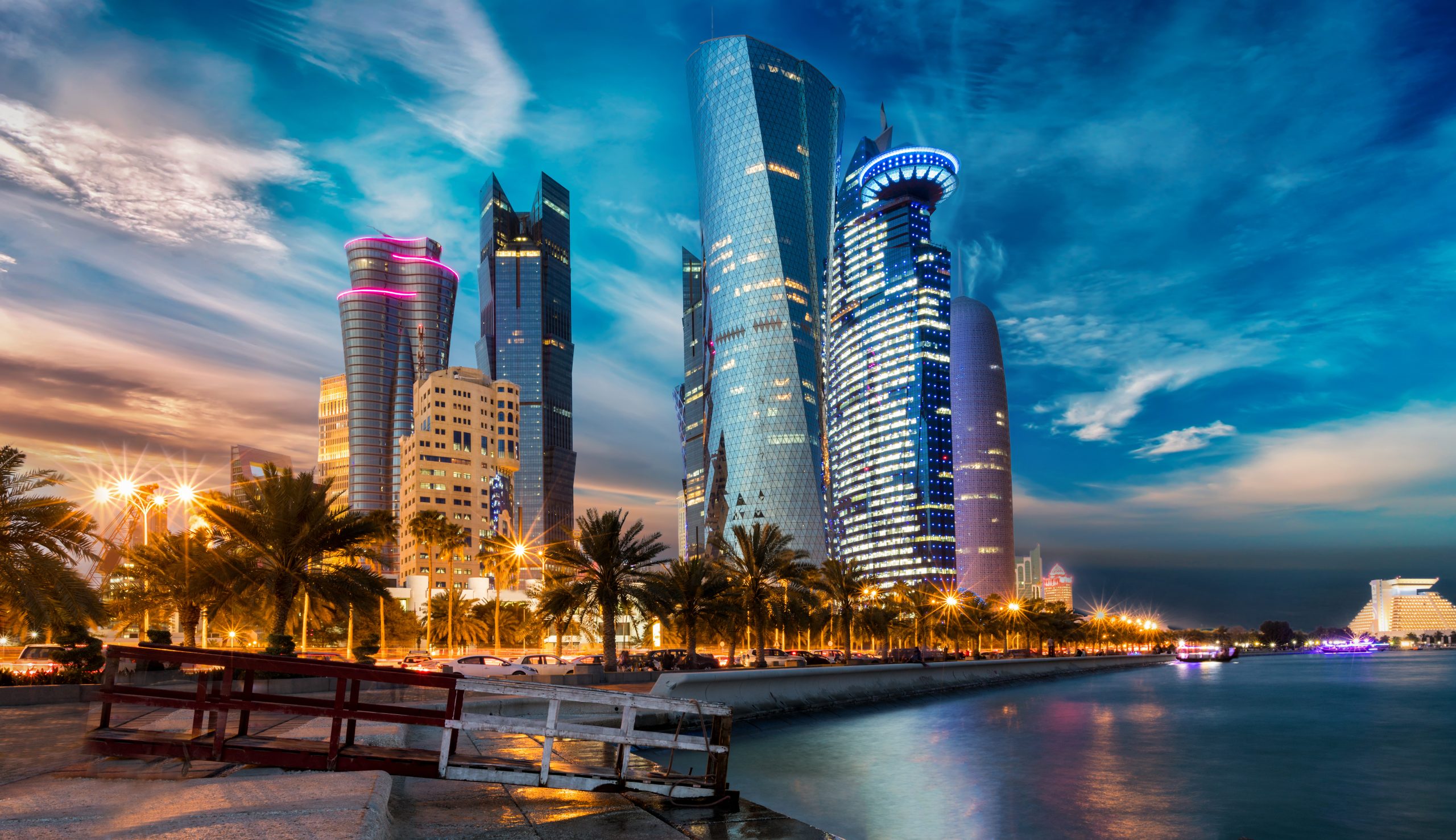
Qatar is a country rich in history and culture, offering a diverse range of attractions that captivate the imagination of travelers from around the world.
 5 min
5 min
From the architectural ingenuity of the Pigeon Towers in the Katara Cultural Village to the strategic might of Al Wajbah Fort, each landmark tells a story of the past and showcases the country’s heritage. This guide takes you on a journey through some of Qatar’s most significant sites, each a testament to the nation’s enduring legacy and cultural vibrancy.
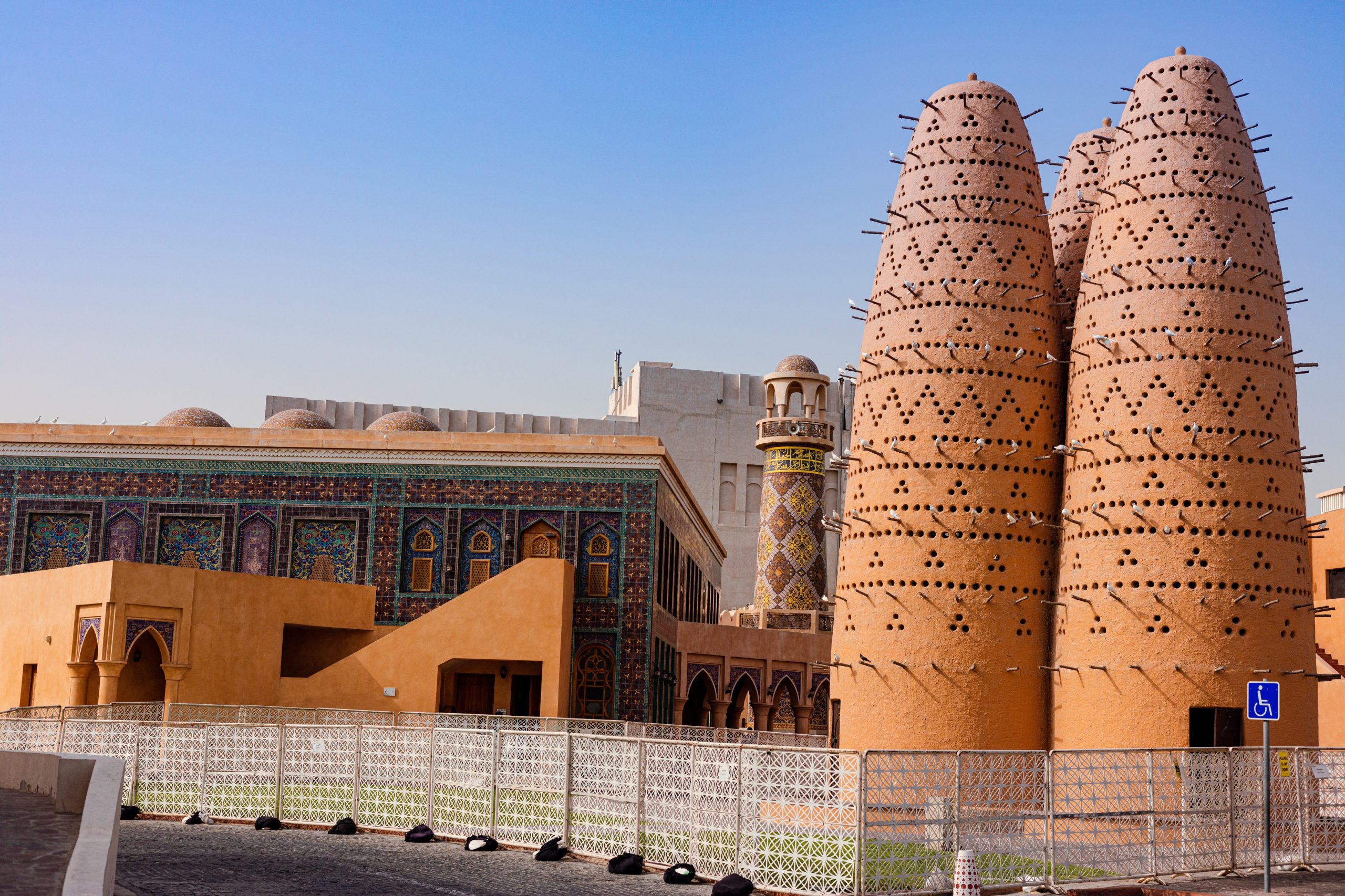
The Pigeon Towers stand out as one of the country’s most fascinating and unique attractions, located within the Katara Cultural Village. These iconic sand-colored pillars, a testament to the brilliance of Islamic architecture, draw both tourists and locals for memorable photographs.
Serving a dual purpose, the towers not only provide a home to thousands of pigeons but are designed to collect their droppings, which local farmers then use as fertilizer. This practice, centuries old, highlights the towers’ historical significance and their enduring contribution to the community.
Al Wajbah Fort
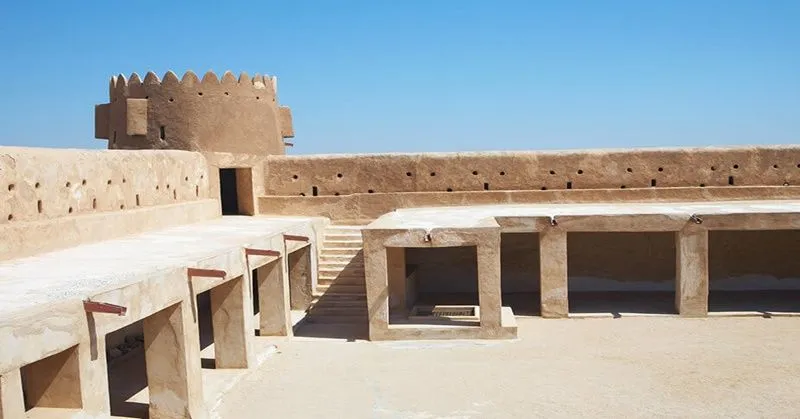
Al Wajbah Fort is one of Qatar’s most valued historical landmarks dating back to the late 18th century. It witnessed central battles between Qatari inhabitants and Ottoman invaders, embedding it deeply in the local consciousness and exploding a profound sense of national pride. The fort, with its robust walls and towering watchtowers, showcases an array of weapons and informative exhibits that narrate its storied past.
Located only 15 kilometers west of Doha, Al Wajbah Fort welcomes visitors free of charge. The striking watchtowers, set against the country’s predominantly flat terrain, serve as a splendid backdrop for photographs that visitors can cherish as memories of their journey to Qatar.
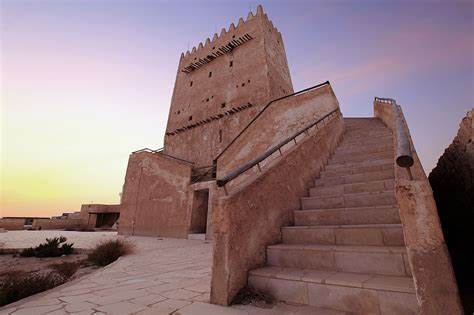
Established back in the late 19th century, the Barzan Towers were constructed with the dual purpose of overseeing the collection of precious rainwater in the valley below and serving as a beacon for astronomical observations, notably to precisely determine the start of Ramadan. The name ‘Barzan’, meaning ‘high place’, appropriately reflects the towers’ towering stature, rising impressively over 16 meters into the sky.
Located just 15 kilometers north of Doha, these towers offer unrestricted public access 24/7, inviting visitors at any time to explore their historical and architectural grandeur. With wide staircases and impressive walls, the site offers unparalleled opportunities for capturing breathtaking views, making it an ideal spot for history enthusiasts.
Al Zubara Fort
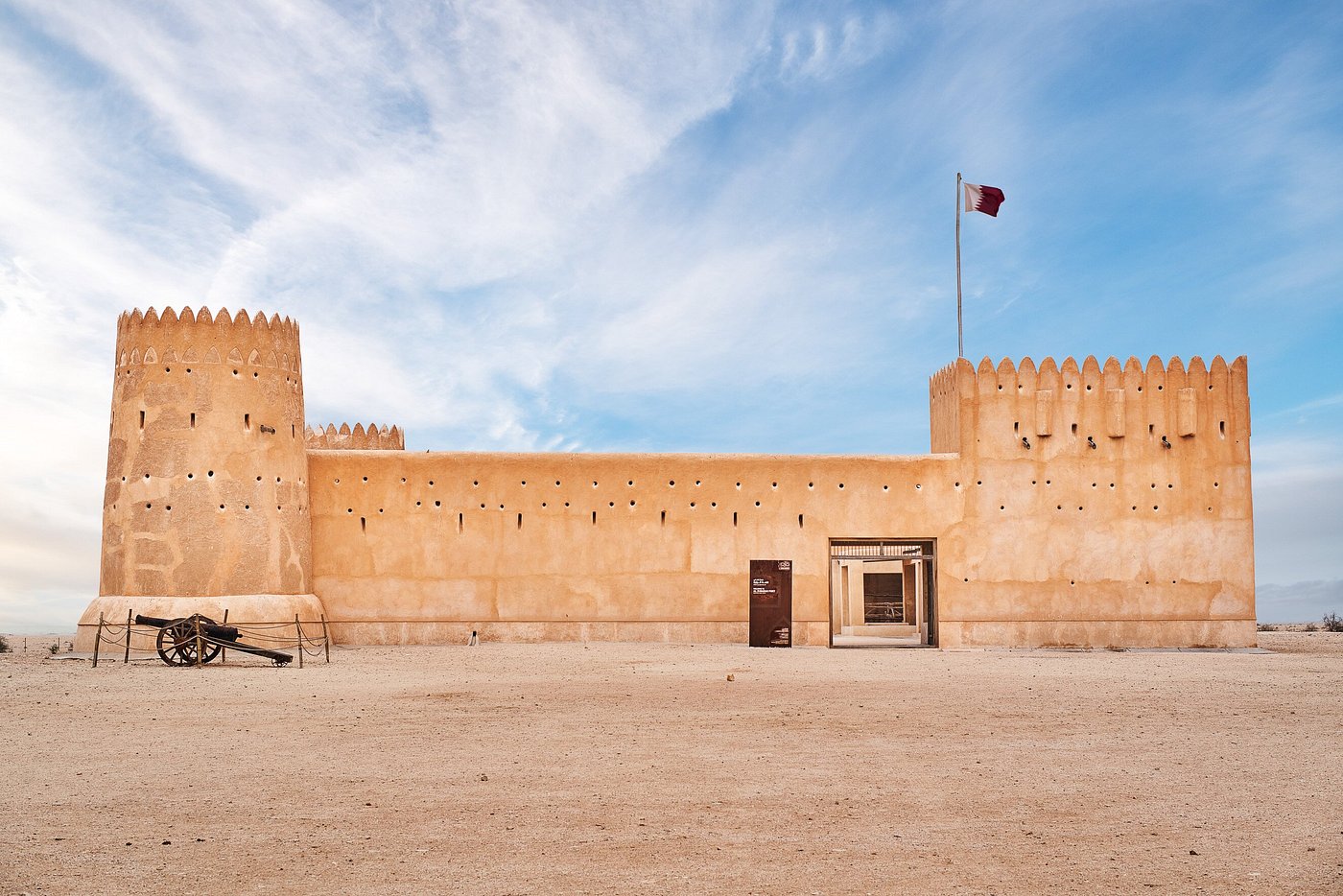
Situated nearby the abandoned town sharing its name, Al Zubara Fort stands prominently with its distinctive architectural features, including three large circular towers and a single rectangular tower. Constructed in 1938 by Sheikh Abdullah bin Jassim Al Thani, the fort initially functioned as a coast guard station. Today, it has been repurposed as a museum, offering regular exhibitions that delve into the region’s rich history.
Roughly 105 kilometers from the capital, the site, comprising the remnants of the once-thriving town and the protective fort, has been recognized as a UNESCO World Heritage Site on the northwestern coast of the Qatar peninsula. It offers a captivating destination for a day trip. Visitors are advised to come prepared with snacks and plenty of water, and to be mindful of the limited shade available for break. To ensure a more comfortable exploration, it’s recommended to avoid the peak heat times of midday and early afternoon.
Al Wakrah Souq & Souq Waqif
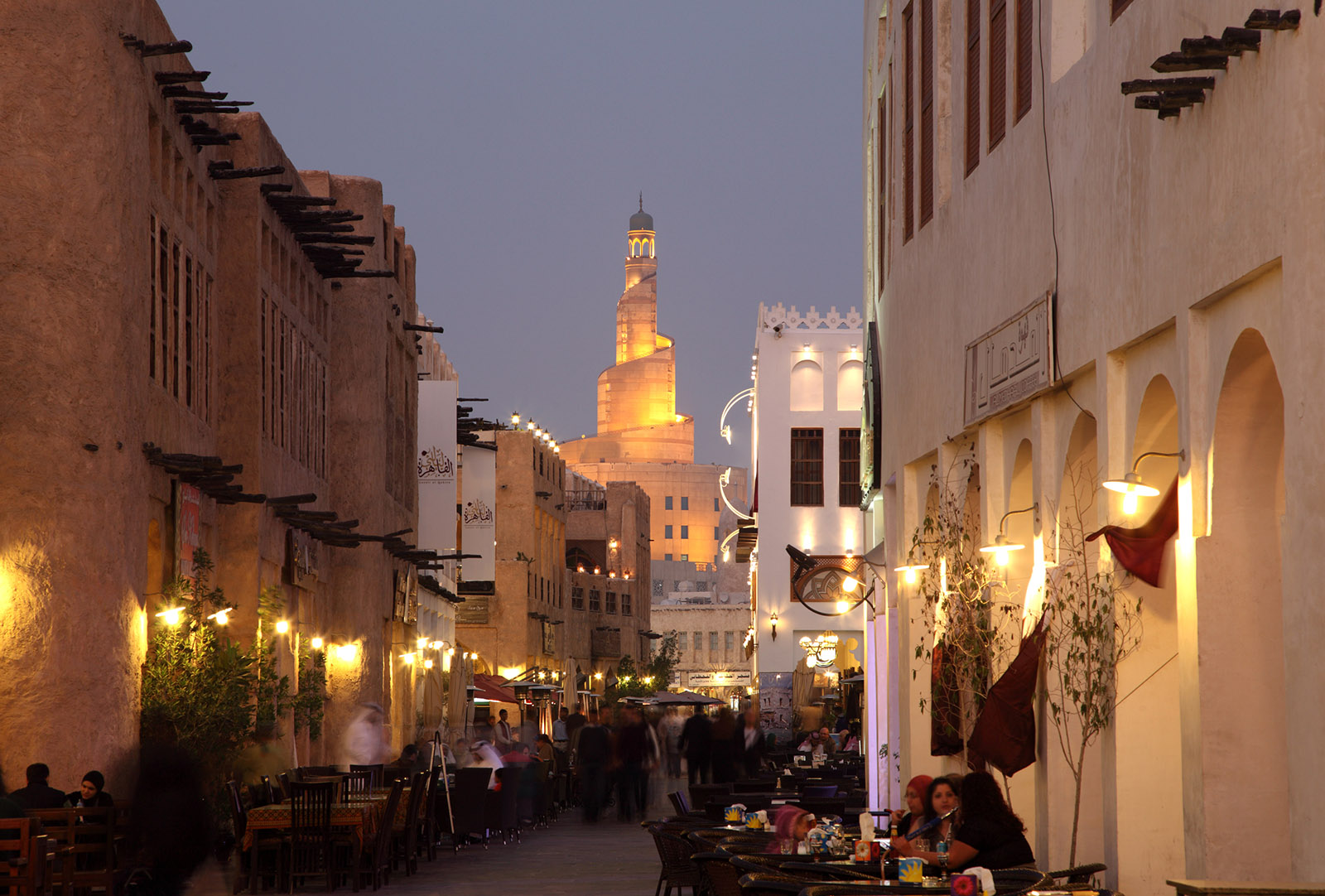
Exploring the vibrant souqs of Doha offers an unparalleled shopping experience. Souq Waqif, nestled by the scenic Corniche waterfront, is renowned for its intricate network of alleyways packed with traditionally dressed vendors. These merchants showcase an assortment of goods, from spices and perfumes to textiles, with some even specializing in live falcons, highly sought after by Qatari royalty and devoted enthusiasts.
Further south from the city’s heart, Al Wakrah Souq, also known as Al Wakrah Heritage Village, celebrates the rich heritage of Qatari culture. Here, visitors can witness the lively trade of fresh fish and camels, offering a unique glimpse into traditional Qatari life and presenting perfect photo opportunities.
Film City – The Mystery Village Of Qatar
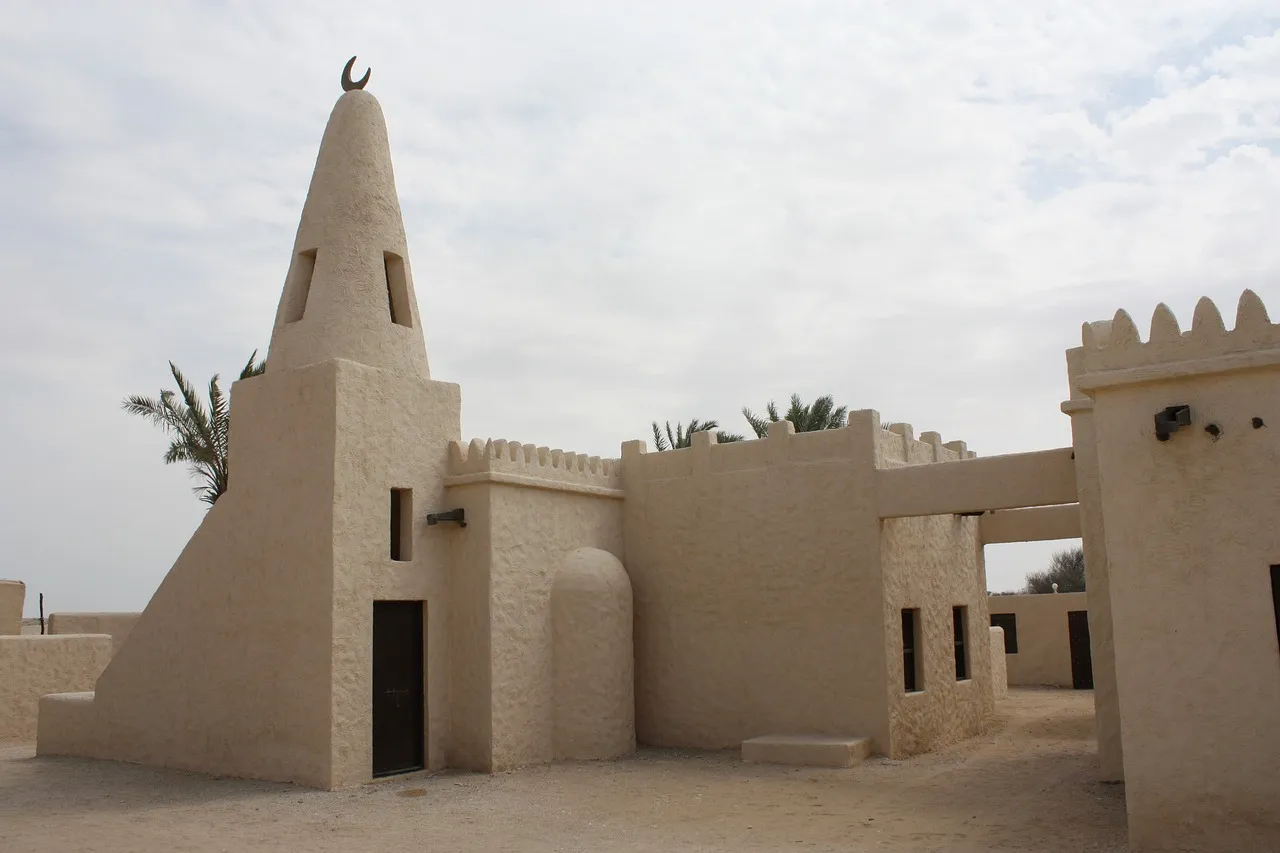
Film City stands out among Qatar’s tourist destinations, masked in mystery and captivating visitors with its tranquil beauty and exceptional desert landscape. This site, significant of ancient Bedouin villages, offers a glimpse into traditional village life in the Gulf region, serving as a remarkable testament to historical lifestyles.
The origins of Film City remain a puzzle; while it is widely thought to have been constructed as a film or television set, the exact reasons for its creation are still a subject of speculation. This uncertainty adds to its allure, attracting curious visitors eager to delve into its mysteries. Over time, Film City has become one of Qatar’s premier tourist spots, celebrated for its unique charm and the intrigue it offers.
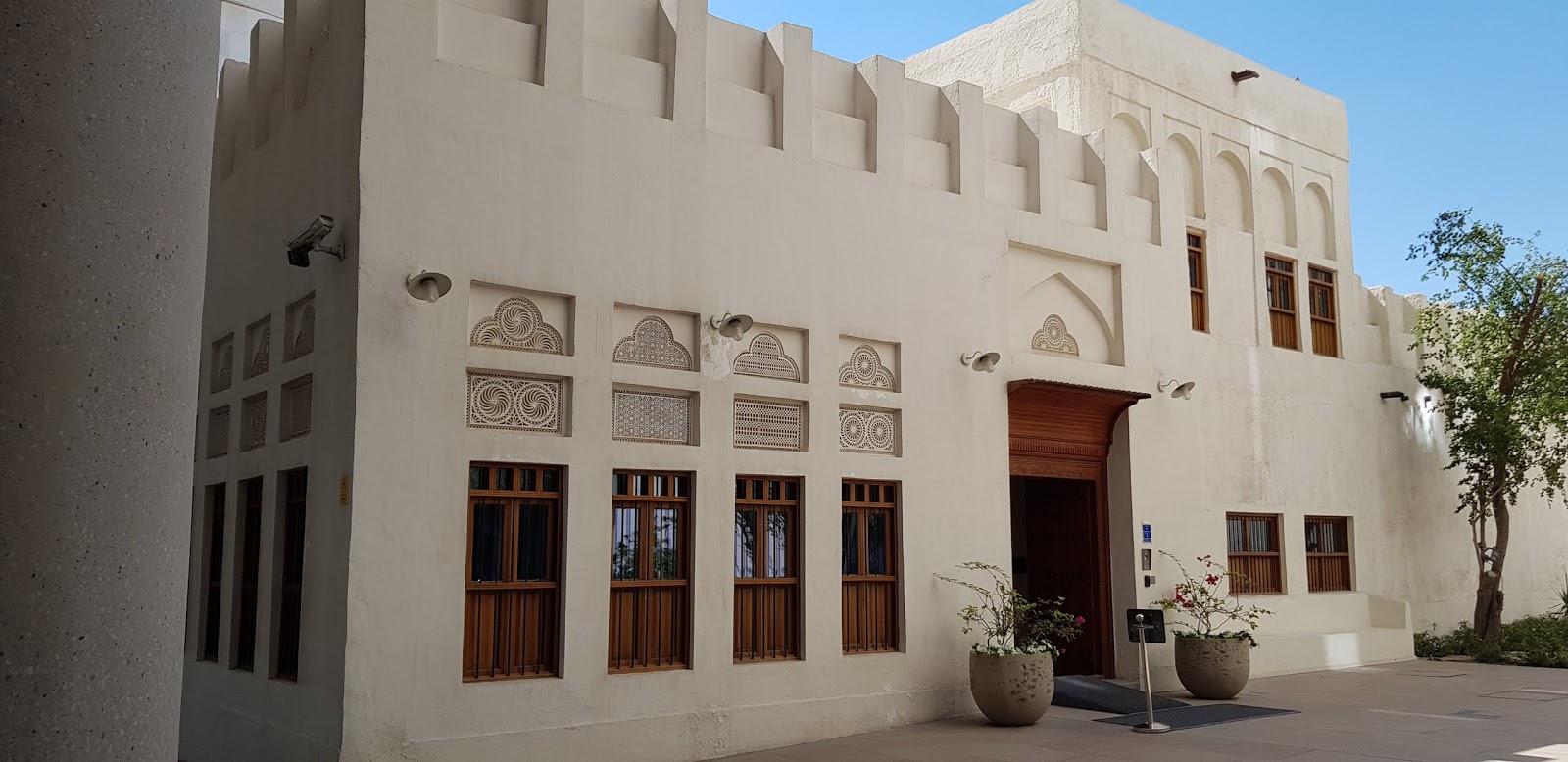
Constructed in 1920, Radwani House stands as an enduring landmark of Qatar’s rich history. Originally inhabited by Aki Akbar Radwani and his descendants for nearly seven decades, it now serves as a premier cultural destination for those visiting Qatar, showcasing a remarkable collection of artifacts.
Following the departure of the Radwani family in 1971, the house fell into neglect until a pivotal archaeological restoration in 2007 breathed new life into the property, opening its doors to the public. Visitors to Radwani House can now embark on a journey through Qatar’s past, exploring the kitchen, courtyard, living room, and more, each area offering a glimpse into the nation’s storied heritage.

Abu Dhabi sovereign investor L’imad, through ADQ, has launched a conditional cash offer to acquire the remaining shares of AD Ports Group at AED 6.25 ($1.70) per share. ADQ currently holds a 75.42% stake in the group.
Meta is betting on a human-first AI future, but growing legal battles and declining public trust are putting Mark Zuckerberg’s vision to the test.
Saudi Arabia ranks among the world’s top 10 countries for private AI investment, according to the World Bank’s World Development Report 2026.

As AI productivity trackers reshape workplace evaluations, employees are learning how to manage calendars, activity levels and AI usage to ensure their contributions are recognized.
4 min
What’s more important than being a good employee right now? Looking like a good employee in the eyes of AI productivity trackers that more managers are using to evaluate their teams.
Employee-monitoring systems are especially popular at tech companies and are also used by other white-collar firms that want to probe how people spend company time. The scary thing: You might not even know you’re being watched because many states don’t require disclosure.
Metrics can include performance data that is undoubtedly relevant, such as sales results. But it also can employ dubious proxies like keyboard strokes and how often your computer screen goes into sleep mode.
We generally accepted, or at least understood, heightened surveillance during the work-from-home era. Back then it seemed reasonable for bosses to keep tabs on employees they couldn’t see.
Yet the oversight has only escalated, and tensions are rising, too.
A group of former Meta Platforms employees alleges in a lawsuit that the company used a “constellation of internal artificial-intelligence systems” when it began laying off about 10% of its workforce in May. Meta says humans make termination calls.
However that case shakes out, a couple of things are clear. Companies eager to gauge which employees are locked in now have sophisticated AI monitoring systems at their disposal. And they believe they have leverage in a tepid labor market.
So while we may chafe at having our worth reduced to numbers on the boss’s productivity dashboard, we have to play the game as it’s being played. Here are some tips, based on conversations with people who make employee monitoring systems—and others who game the systems.
Be meticulous about your calendar
Calendar integration is one way that productivity trackers have gotten more advanced and, ostensibly, fairer.
Let’s say you make an old-fashioned phone call or attend an in-person meeting. Your Outlook or Slack status may switch to “away,” making you appear as inactive as if you were taking an extended coffee break.
Employee monitors like one made by a company called Insightful cross-check your online status with your calendar to see whether there is a valid reason for your apparent inactivity. If that call or meeting is on your schedule, then the system will recognize that you are busy offline. If nothing is on the books, it could look like you’re slacking off.
Hit the activity sweet spot, around 80%
Let’s not go any further without addressing the underlying question: How much downtime is permissible during the workday? After all, people have been scared to let managers see anything non-work-related on their screens since personal computers first arrived in offices.
No one knows this better than Roger Wagner, who is widely credited with creating the first “boss button” in the early 1980s. He designed a keyboard shortcut to instantly display a spreadsheet if the boss walked by your cubicle while you were playing a computer game. Boss buttons have been features of countless diversions since. (I confess to using one built into a March Madness streaming app.)
Wagner, the founder of computer-education company 1010 Technologies, says his original design was a joke—more of a commentary on overbearing managers than a cover for lazy employees. Good bosses understand workers need mental breaks throughout the day, he says.
This matches what I heard from Insightful Chief Executive Ivan Petrovic. He says customers that use his company’s workforce-management platform don’t expect employees to stay on task 100% of the time.
“On average companies are aiming for 60% to 80% of your time being utilized for work during the day,” he says.
Go ahead and exhale. It’s probably OK to watch an occasional YouTube video at your desk.
And if you’re going to artificially inflate your activity level, be careful. Hitting 90% could look suspicious.
Get physical
So don’t leave your mouse jiggler on all day. Choose the right one if you must resort to shenanigans.
There are lots of software applications that mimic the movements of a computer mouse, so you can appear to be working while away from your desk. There are also devices that plug into computer ports and do the same thing.
Corporate cybersecurity systems increasingly block these apps and devices, and productivity trackers claim to be able to detect them. But some workers swear by mouse docks, like one made by Tech8 USA, that keep cursors moving. The company originally made mouse-moving software but now focuses on physical jigglers.
“People are drawn to mechanical solutions because they’re so simple and don’t require software,” says Tech8 Marketing Director Sam Matthews. “As monitoring technology becomes more sophisticated, that distinction has become even more relevant.”
Use AI, but not too much
Another popular metric for employee-monitoring systems is AI usage. Companies want to know who is embracing new tools, and it can be tempting to think more is better.
“There’s a performative aspect where employees overblow their usage of AI so that they appear relevant in the organization,” says Andrea Derler, principal researcher at Visier, which helps companies track and analyze employee work habits.
In a recent Visier survey of 1,000 U.S. workers, 48% admitted to exaggerating their AI usage.
This is already an outdated strategy. Using AI for everything used to score points for experimentation. Now it can seem wasteful because many companies are watching AI token spending more carefully.
Look, productivity theater has always been part of work. Most of us aren’t trying to cheat the system, but expectations are changing so quickly that we need to be savvy about what the latest employee trackers are looking for.
Sometimes it takes a little gamesmanship to get full credit for our contributions.
Following the successful launch of its Palais Collection, MAISON de SABRÉ has unveiled a new modular handbag system offering more than 720 styling combinations.
The sports-car maker delivered 279,449 cars last year, down from 310,718 in 2024.

Lebanese luxury has always been defined by taste, creativity and an uncompromising pursuit of beauty. From fashion and beauty to food, travel and entrepreneurship, these 10 creators are taking Lebanon’s distinctive luxury identity to millions around the world — proving that Lebanese influence extends far beyond its borders.
8 min
Lebanese luxury requires a different frame from any other luxury narrative in the Arab world. It is not the luxury of oil wealth — it predates that by centuries. It is not the luxury of deliberate development — it was never planned. Lebanese luxury grew from something that the country has always had in excess and in spite of everything: taste. The fashion designers who put Lebanese names on the world’s most prestigious red carpets — Elie Saab, Georges Hobeika, Zuhair Murad, Reem Acra — did not build their reputations because Lebanon was a stable or prosperous country when they built them. They built them because Lebanese creative culture has a standard that is non-negotiable and not circumstantial.
The ten creators on this list are the people who carry that standard onto social media — and who have made the Lebanese luxury aesthetic visible to audiences of tens of millions globally. Karen Wazen is on the Business of Fashion 500, the definitive list of the people shaping the global fashion industry, produced by the publication that defines the global fashion conversation. Nour Arida walks the front rows at Paris and Milan Fashion Weeks as an invited editorial presence. Samer Khouzami turned a makeup artist’s chair in Beirut into a cosmetics brand stocked in international luxury retail. Each of them has taken something specifically Lebanese — the visual intelligence, the hospitality, the deeply held conviction that beauty is a serious pursuit — and made it visible at a scale that Lebanon’s creative tradition has always deserved.
| Lebanese luxury does not need a crisis narrative to justify itself. It exists at a standard that predates the crisis and has outlasted every attempt to diminish it. |

1. Karen Wazen – @karenwazen · Fashion Entrepreneur & BoF 500 Member Dubai (born & raised in Beirut)
Karen Wazen Bakhazi is the most globally credentialed Lebanese fashion creator operating today — a member of the Business of Fashion 500, the cover subject of Harper’s Bazaar Arabia and Elle Arabia, a collaborator of Dior, Prada, Cartier, Breitling and Guerlain, and the founder of Karen Wazen Eyewear, which is stocked by Net-a-Porter, Bloomingdale’s and Moda Operandi and has been worn by Sofia Richie, Olivia Culpo and Emily Ratajkowski. She has attended Cannes, the British Fashion Awards, and the major international fashion weeks, representing the Middle East at events where the region has historically been underrepresented.
Born and raised in Beirut, educated at the American University of Beirut, now based in Dubai — her career arc is the Lebanese luxury story in its most complete contemporary form. With more than 8 million Instagram followers and 15 million total social media followers, she is the highest-reach Lebanese luxury creator available to Kanebridge News ME, and the one whose trajectory most precisely embodies what the publication’s Lebanon luxury feature is here to celebrate.

2. Nour Arida – @nouraridaofficial · Fashion Creator & Entrepreneur Dubai/Beirut
Nour Arida occupies the rarest position in the Lebanese luxury landscape: a creator who has achieved genuine recognition from the world’s major fashion houses — present at Milan and Paris Fashion Weeks as an invited editorial presence, not a brand placement — while simultaneously building commercial enterprises of her own in the Gulf. In 2026, her children’s label Generation Peace expanded into premium department stores across the UAE, Qatar and Saudi Arabia with the kind of backing that validates a brand rather than launches one.
With 6.9 million followers and a profile that is recognized internationally as well as regionally, she is operating at the junction of editorial credibility and commercial enterprise that defines the most significant luxury media figures. Her Lebanese identity is central to her brand narrative — she is not a Dubai creator who happens to be Lebanese but a Lebanese creator who operates globally. A Kanebridge News ME Lebanon luxury feature that places her in national context is precisely the editorial recognition that complements her international profile.

3. Nadine Nassib Njeim – @nadine.nassib.njeim · Actress & Former Miss Lebanon Beirut, Lebanon
Nadine Nassib Njeim is a Lebanese actress, former Miss Lebanon, and social media personality with 15.9 million Instagram followers — the largest individual following of any Lebanese creator, maintained from Beirut throughout everything the country has experienced. The decision to stay — to continue working, to continue creating, to continue being publicly visible in a city that has given her audience no shortage of reasons to look away — has given her a connection with the Lebanese public that no creator of her scale could have built from a safer distance.
Her luxury fashion content, event appearances, and lifestyle documentation reach an audience that spans the Lebanese diaspora globally and the broader Arab world. For Kanebridge News ME, she is the highest-reach Lebanese creator available for a collab post, and the one whose rootedness in Beirut makes the Lebanon edition of the publication feel most authentically located.

4. Samer Khouzami – @samerkhouzami · Celebrity Makeup Artist & Brand Founder Beirut/International
Samer Khouzami built a 2.1 million Instagram following as a celebrity makeup artist — and then built a cosmetics company around the skills and aesthetic sensibility that following was built on. His story is the Lebanese creative template: take a craft that Lebanese culture has always practiced at a high level, apply it to social media with the precision and intentionality that the craft demands, build an audience, and then turn that audience into a business that outlasts the platform.
The Lebanese beauty industry has a specific excellence — part French influence, part Mediterranean sensibility, part the competitive intensity of a small country where creative standards are maintained through cultural pride rather than institutional support. Khouzami’s work embodies that excellence and makes it legible to an international audience at a scale that earlier generations of Lebanese beauty professionals never had access to.

5. Lana El Sahely – @larmoiredelana · Fashion Entrepreneur Beirut, Lebanon
Lana El Sahely has built her fashion profile around a visual aesthetic that is specifically and unmistakably hers — a fusion of Middle Eastern and European sensibilities that reflects both her Lebanese heritage and an internationally educated eye. Her account, L’Armoire de Lana, has become a fashion reference for Lebanese and regional audiences who follow it not just for outfit inspiration but for the consistent editorial point of view it maintains from one post to the next.
In a fashion content landscape where originality is increasingly scarce, her distinctive voice has made her one of the most respected Lebanese fashion creators — recognized by her audience and by the fashion industry for a level of editorial consistency that most social media accounts do not sustain. That consistency, maintained through years in which sustaining anything in Lebanon has required real commitment, is the quality that Kanebridge News ME is recognizing.

6. Dana Hourani – @danahourani · Fashion Influencer & Musician Beirut, Lebanon
Dana Hourani’s 870,000-strong Instagram following is built on a content approach that merges fashion and music — two pillars of Lebanese cultural excellence that she inhabits simultaneously. Her minimalist fashion aesthetic and her musical artistry are not separate strands of a content strategy; they are the expression of a single creative sensibility that is particularly and recognizably Lebanese in its refusal to treat beauty and art as separate categories.
For Kanebridge News ME’s Lebanon luxury feature, Hourani represents the cultural dimension of Lebanese luxury that the fashion-forward creators on this list share but that she makes most explicit. Lebanon has always produced artists who dress beautifully, and designers who make music — the creative tradition does not observe the category boundaries that content strategy would impose on it.
7. Anthony Rahayel – @nogarlicnoonions · Lebanese Food & Culture Beirut, Lebanon
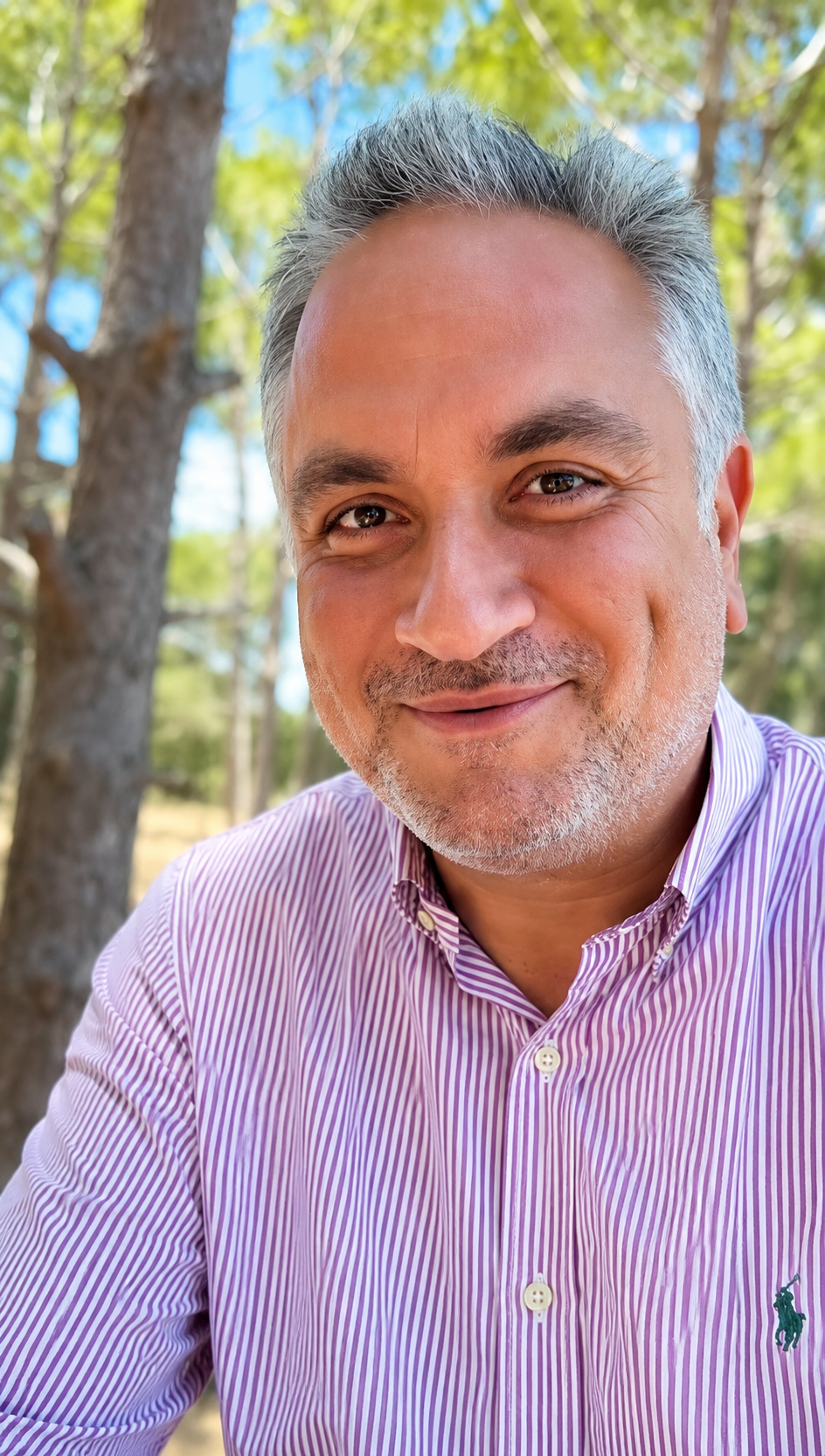
Anthony Rahayel’s No Garlic No Onions is one of the most recognized Lebanese food and culture platforms in the world — an award-winning documentation of Lebanese cuisine, restaurants, producers, chefs and hospitality that has become the definitive international reference for Lebanese food culture. Lebanese food is one of the most beloved and globally distributed culinary traditions on earth, and the restaurants, wine producers and hospitality venues of Beirut and the surrounding regions remain among the finest available anywhere in the Mediterranean.
His documentation of this scene — produced with the precision and cultural seriousness of someone who treats Lebanese food as a heritage to be preserved and celebrated rather than a lifestyle category to be curated — makes him the most important Lebanese luxury food voice operating on social media. For Kanebridge News ME’s Lebanon luxury feature, his inclusion brings a dimension of luxury that fashion and beauty alone cannot: the extraordinary pleasure of eating in Beirut, which has never required wealth to be available but has always represented a form of luxury that no amount of money elsewhere can fully replicate.
8. The Rahal – @the.rahal · Luxury Lifestyle & Travel · Dubai, UAE
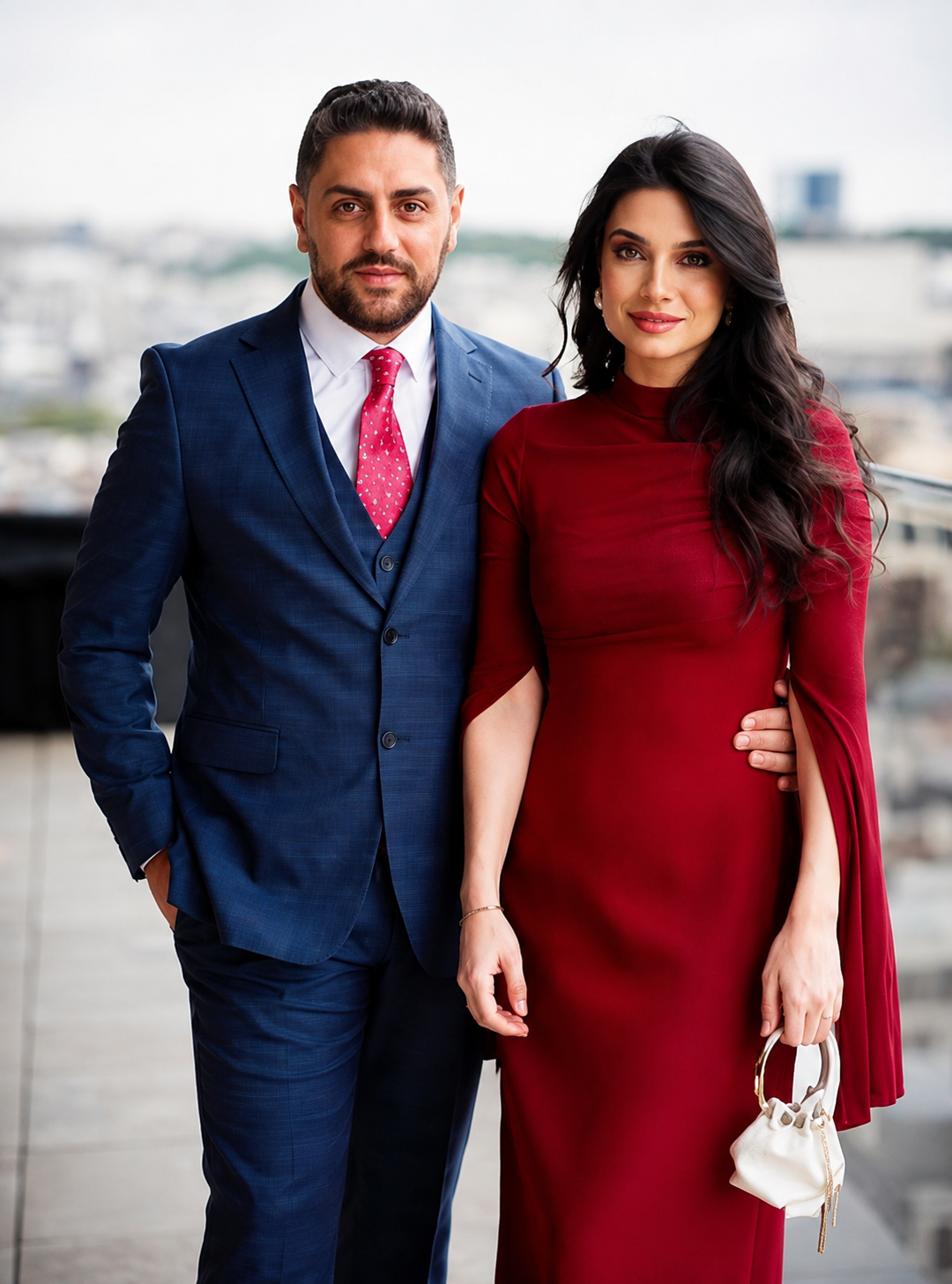
The Rahal, created by Lebanese couple Miled and Melissa, has built a lifestyle platform around travel, fashion, hospitality and the polished experiences that define contemporary luxury in the Gulf. Based in Dubai, their content moves naturally between high-end destinations, fashion and everyday lifestyle, giving their audience an accessible window into the region’s increasingly sophisticated luxury culture. Their work has also earned industry recognition, including a Bronze TikTok Visionary Creator of the Year award.
What makes The Rahal particularly relevant to Kanebridge News ME’s Lebanon luxury feature is the way the platform reflects the modern Lebanese luxury consumer beyond Lebanon itself. Miled and Melissa represent a generation of Lebanese creators whose identity and influence travel with them — connecting Beirut’s instinct for style and hospitality with Dubai’s global luxury ecosystem. Their inclusion brings a distinctly contemporary dimension to the list: luxury not simply as ownership, but as travel, experience, fashion and the ability to move comfortably between cultures.

9. Nadine Wilson Njeim – Fashion, Beauty & Entrepreneurship · Beirut, Lebanon
Nadine Wilson Njeim has occupied a distinctive place in Lebanon’s fashion and lifestyle landscape since being crowned Miss Lebanon in 2007, building a career that has extended across television, acting, business and luxury fashion. Most notably, she founded Designer-24, a fashion rental platform built around access to leading international and Lebanese designers, including Elie Saab, Zuhair Murad, Rami Kadi, Valentino and Dolce & Gabbana.
Her relevance to luxury goes beyond the traditional trajectory of a beauty queen or media personality. Nadine represents a particularly Lebanese understanding of glamor: one shaped by couture, occasion dressing, entrepreneurship and an instinctive relationship with fashion. By turning designer fashion into a business proposition rather than simply displaying it, she positioned herself at the intersection of influence and commerce. For Kanebridge News ME’s Lebanon luxury feature, she represents the evolution of Lebanese glamour from image into enterprise — and the enduring influence of Beirut’s fashion culture across the region.

10. Rim Ammouri – @rim.ammouri · Fashion & Lifestyle · UAE
Rim Ammouri has built an influential digital presence around fashion, beauty, travel and contemporary lifestyle, while also becoming widely recognized as one half of the creator couple Ammar & Rim. Together, Rim and Ammar Al Samarrai have cultivated a substantial audience through a combination of aspirational lifestyle content and the humor, relationships and family moments that make their world feel personal rather than staged. Their combined TikTok community exceeds 4.6 million followers, demonstrating an ability to translate everyday life into large-scale digital influence.
What makes Rim particularly relevant to Kanebridge News ME’s luxury feature is the accessibility she brings to aspiration. Her presence reflects a newer definition of Middle Eastern luxury — less formal, less distant and increasingly shaped by the personalities audiences choose to follow every day. Fashion, travel and elevated experiences sit alongside marriage, motherhood and humor, creating a version of luxury that feels lived rather than simply displayed. Her inclusion represents the generation reshaping how luxury is communicated online: through personality, relatability and a lifestyle audiences can imagine themselves participating in.

Parts for iPhones to cost more owing to surging demand from AI companies.
Two coming 2027 models – the first of the “Neue Klasse” cars coming to the U.S. early next year – have been revealed.


Aston Martin has unveiled Valen, its most powerful front-engined V12 supercar to date, producing 850PS and 1,000Nm of torque from a 5.2-liter twin-turbo V12. Developed through Q by Aston Martin and the brand’s Special Vehicle Operations division, the limited-production model combines a full-carbon fiber body, up to 110kg in weight savings and a 0–60mph time of just 3.0 seconds.
8 min
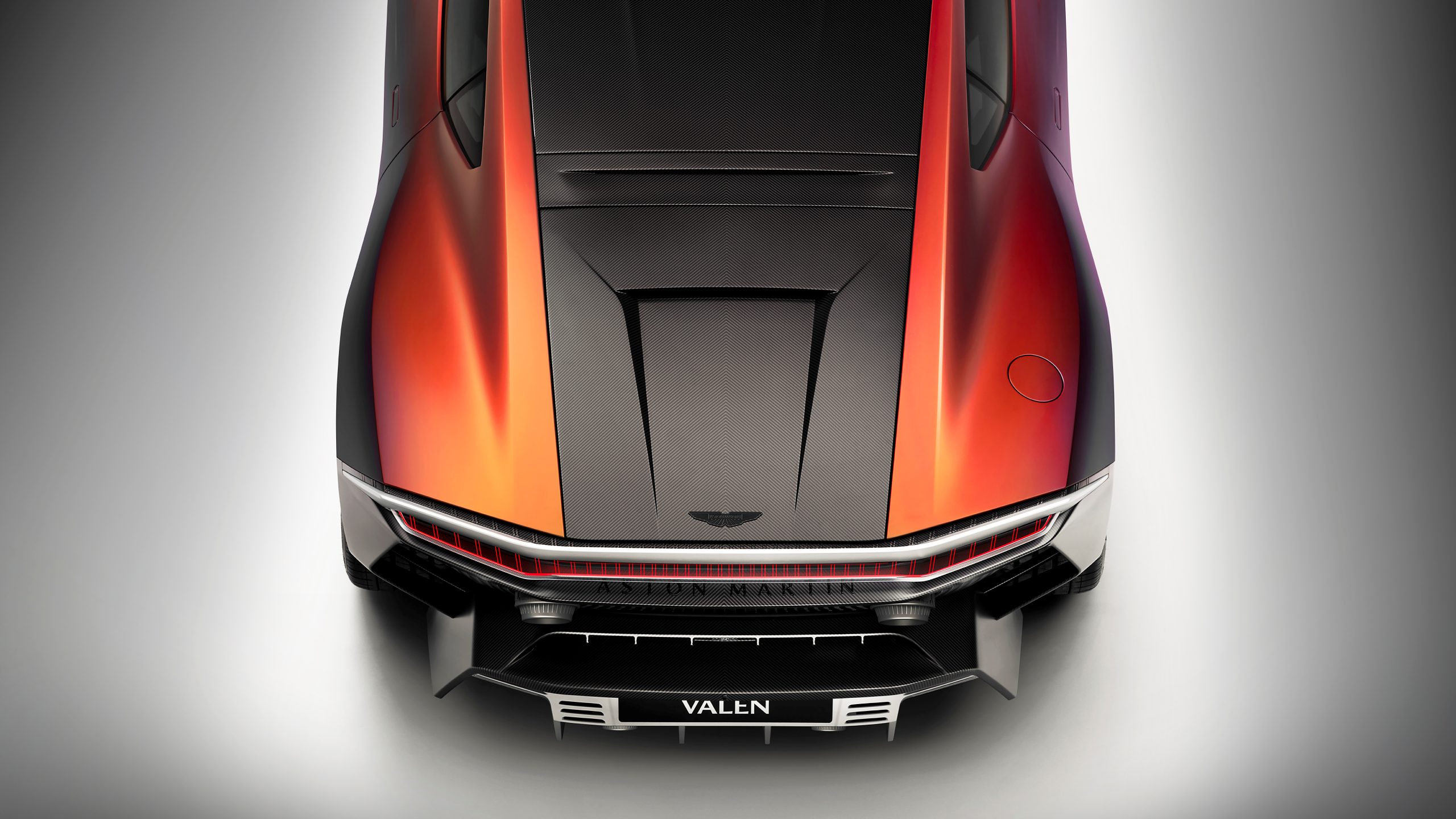


Aston Martin is proud to introduce Valen; the world’s most powerful front-engined car from a manufacturer and the most powerful front-engined V12 supercar in the company’s 113-year history. The latest in an illustrious line of limited production twelve-cylinder specials, Valen explores provocative design themes and extremes of performance in pursuit of maximum visual impact and a truly distinctive driving experience.
Pushing the limits of design and engineering to achieve a supercar of unique drama and capability, Valen is clad in a full-carbon fiber body and powered by the brand’s most powerful version of its 5.2-litre twin-turbocharged V12 engine with 850PS and 1000Nm of torque from just 2500rpm. Combined with targeted hardware and extensive software calibration to steering, suspension and braking systems, Valen delivers a driver-focused configuration to match its raw performance.
Bestowed with an assertive design and character, Valen required a name with equal gravitas and meaning. Derived from the Latin word ‘valens’, with the etymology referencing “strong,” or “powerful”, Valen was the perfect name for Aston Martin’s most powerful front engined V12, continuing the long-standing dynasty of ‘V’ names.
The project, the latest special from Aston Martin’s bespoke service, Q by Aston Martin who previously gave us Valor, Valiant and DBR22 to name a few was realized thanks to the unique scope and expertise of Aston Martin’s newly formed Special Vehicle Operations (SVO) Department.
Aston Martin CEO, Adrian Hallmark said: “The latest in a bloodline of limited production special series models from our bespoke service, Q by Aston Martin, Valen’s world-beating performance required a design to capture the raw motion and unmatched output of our V12 powertrain. With more power, less weight, and a spectacular soundtrack, the dramatic design is backed up by equally dramatic performance.”
ENGINEERING
Reinforcing Valen’s position as the most powerful front-engined supercar, is a sharper-shifting 8-speed ZF transmission, which uses race-proven shift strategies developed for Aston Martin’s Vantage GT4 race program, with crisper and more engaging shifts in all drive modes, which has reduced Valen’s 0-60mph time to just 3.0 seconds*. Top speed is electronically limited to 214mph.
For Aston Martin Director of Vehicle Performance, Simon Newton, shaping Valen’s performance character was especially satisfying: “When your basis for a project is the world’s most powerful front-engined production car you know you’re going to have fun. Valen channels the more overt dynamic purpose of a true sportscar and amplifies that energy and focus to further unleash Valen’s potential. Everything we’ve done to the powertrain and chassis has been driven by the same objective; to intensify the character and capability to deliver a truly thrilling experience that’s accessible to all skill levels, but keen drivers will absolutely relish.”
To bring out the best from the V12 powertrain, Valen adopts a performance drive mode philosophy; Sport, Sport+ and Track modes to create a true feeling of urgency and focus befitting supercar levels of performance and dynamics.
Careful attention has also been paid to Valen’s throttle mapping, which changes according to drive mode. For spirited road driving in Sport and Sport+ modes the throttle pedal uses a shorter map to deliver more throttle earlier in its travel, while Track mode trades that urgency for a longer and more progressive delivery when on-limit precision is the priority.
Valen’s commitment to performance extends to a significant weight saving of up to 110kg over the core V12 platform – a central focus of the program. This is achieved through use of a variety of lightweight motorsport inspired materials including carbon fiber, aluminum, titanium and magnesium. An optional lightweight pack featuring machined-from-solid aluminum suspension arms, knuckles and titanium chassis bolts makes a 16.9kg weight saving alone through meticulous manufacturing and extreme attention to detail.
New lightweight magnesium wheels are fitted as standard, minimizing unsprung mass to further improve steering response and bring added polish to Valen’s wheel control and ride refinement. These wheels are shod with Aston Martin tuned Pirelli P Zero R (275/35 ZR21 front, 325/30 ZR21 rear) and or P Zero Winter 2 tires (275/35 R21 front, 325/30 R21 rear) developed specifically for Valen to ensure an optimal balance between everyday usability and dynamic track capability. These high-performance, bespoke tires deliver superior lateral and longitudinal grip that are tuned to maintain a level of approachability and control to the driver, giving the ultimate bandwidth in performance. Valen also adopts Pirelli’s latest Cyber™ Tyre technology**, the only hardware and software technology able to share real time tire data with the vehicle’s dynamic control systems. Developed in conjunction with Bosch Engineering the system is fully integrated into the car’s digital architecture, allowing the ESP, ABS and traction control systems to continuously adapt their thresholds optimizing control and safety.
A combination of significant hardware changes and targeted software calibration adjustments to the ESP, dampers, steering, cambers and braking system delivers a marked character shift to give Valen a unique dynamic signature. One with the bandwidth to sharpen response, precision and control without sacrificing the necessary compliance and refinement required in a car owners will want to take on proper journeys over long distances.
Focused front and rear lateral stiffness delivers precise response and confident direction changes. Reduced roll and pitch motions to driver inputs increases agility feel over the core V12 platform while preserving a playful handling balance for maximum enjoyment.
Intense development focus has been spent on the steering, tuned to deliver feel, connection and system stiffness through the chassis and software tuning. Steering efforts have been tuned for response, allowing Valen to behave like a shorter and lighter car.
Valen also employs a solid mounted rear subframe together with model-specific springs, helper springs and Bilstein DTX semi-active dampers. Steering calibration maximizes the feeling of agility and exploits the front-end’s limits of grip, but with meticulous care taken to ensure this rotational energy is matched by high levels of traction for a feeling of confident unity and connection front-to-rear.
To ensure all points of contact between car and driver have cohesive feel and response, Valen’s brake booster maintains a firm pedal for exceptional precision and complete driver confidence, allowing precise modulation of the 410mm front and 360mm rear carbon ceramic brakes from high and low speeds.
Through its new lightweight titanium exhaust system, Valen has a soundtrack to match its performance. The system has been developed specifically for Valen and features new micro mufflers ensuring compliance with homologation regulations; while saving weight and enhancing the sound quality that’s such an essential part of enjoying a V12-engined car to the full. It’s a key part of the strategy to ramp-up emotion to create a car of unmistakable visual, dynamic and aural character. Valen’s quad exhaust system evokes the design language of a mid-engine hyper car, molded into the form of a front mid-engined supercar, with four tailpipes split between two upper and two lower. These tailpipe finishers are formed with 3D printed titanium with the focus on light weighting and material craftsmanship. The upper exhaust exits are always open, with the lower exits valved, opening depending on drive mode for the ultimate emotive soundtrack.
Valen’s roar has been carefully tuned to deliver a more performance focused audible experience, reducing lower frequencies while amplifying higher tones. Optimized system dimensions enhance the progression to a dramatic crescendo, while the upper exhaust outlets are tuned akin to organ pipes to generate resonance at higher engine speeds, resulting in a significant increase in character and presence.
DESIGN
Valen presents a re-interpretation of Aston Martin’s iconic front-engined formula. Speaking of the creative impetus behind Valen’s design, Aston Martin EVP & Chief Creative Officer, Marek Reichman said: “Valen gave us the opportunity to explore and express more extreme emotions through a new form language and surface treatment. As such, Valen is a significant departure from what has gone before; sharply sculpted lines to reflect the aggressive dynamics, an attacking stance that emphasizes the front-engine rear-drive layout and a bespoke interior design that creates a more sporting cockpit environment. Valen is a provocative front-engined supercar exuding increased potency and sporting intent, yet still celebrating the elevated luxury, meticulous detailing and unmistakable design signatures expected of a flagship Aston Martin.”
Valen’s dramatic frontal treatment is characterized by deeply recessed slimline headlamp units which are hooded beneath the sharp leading edge of the plunging bonnet line. Together with the more angular treatment of the radiator aperture, bold geometric mesh grille and acutely angled front splitter create a distinctive character
The bonnet itself features a single top vent with perforations at the trailing edge. On each side the traditional side strake has been sharpened and elongated and is now fully incorporated into a large functional vent which extracts air from the wheel arch and guides it down the rounded flanks. The strake feature extends almost the full length of the door before the swollen rear haunches widen to cover the rear wheels.
The lower section of each side is dominated by a stepped sill, which creates a tightly cinched waistline that emphasizes the muscular front and rear fender sections. Sharp saw-tooth vortex generators positioned on the trailing edge of the sills pull highspeed airflow from beneath the car to reducing lift and generate downforce. New side-glass quarter windows add to Valen’s profile and demonstrate commitment to creating a car with a unique identity.
Valen’s rear-design treatment is equally bold. Instead of a fixed rear window and trunk lid both features have been replaced by a solid tailgate. Featuring an aerodynamic wing in its upper section, the tailgate opens onto a sizeable trunk (170 liters) which is available with an optional bespoke luggage set (Touring Pack) to make the most of the available space. A soft, tailored cover can be unfolded to protect the paintwork when lifting cases in and out.
A bespoke full-width light bar sits beneath the large upswept tail, which acts as a Gurney flap to generate downforce while incurring minimal drag and avoiding the need for motorsport-style wings. Below the vivid strip of light is a perforated panel to extract hot air from around the exhaust, which features a pair of high-set tailpipes mounted above the top of the rising rear diffuser and emits a soundtrack befitting of a V12 supercar.
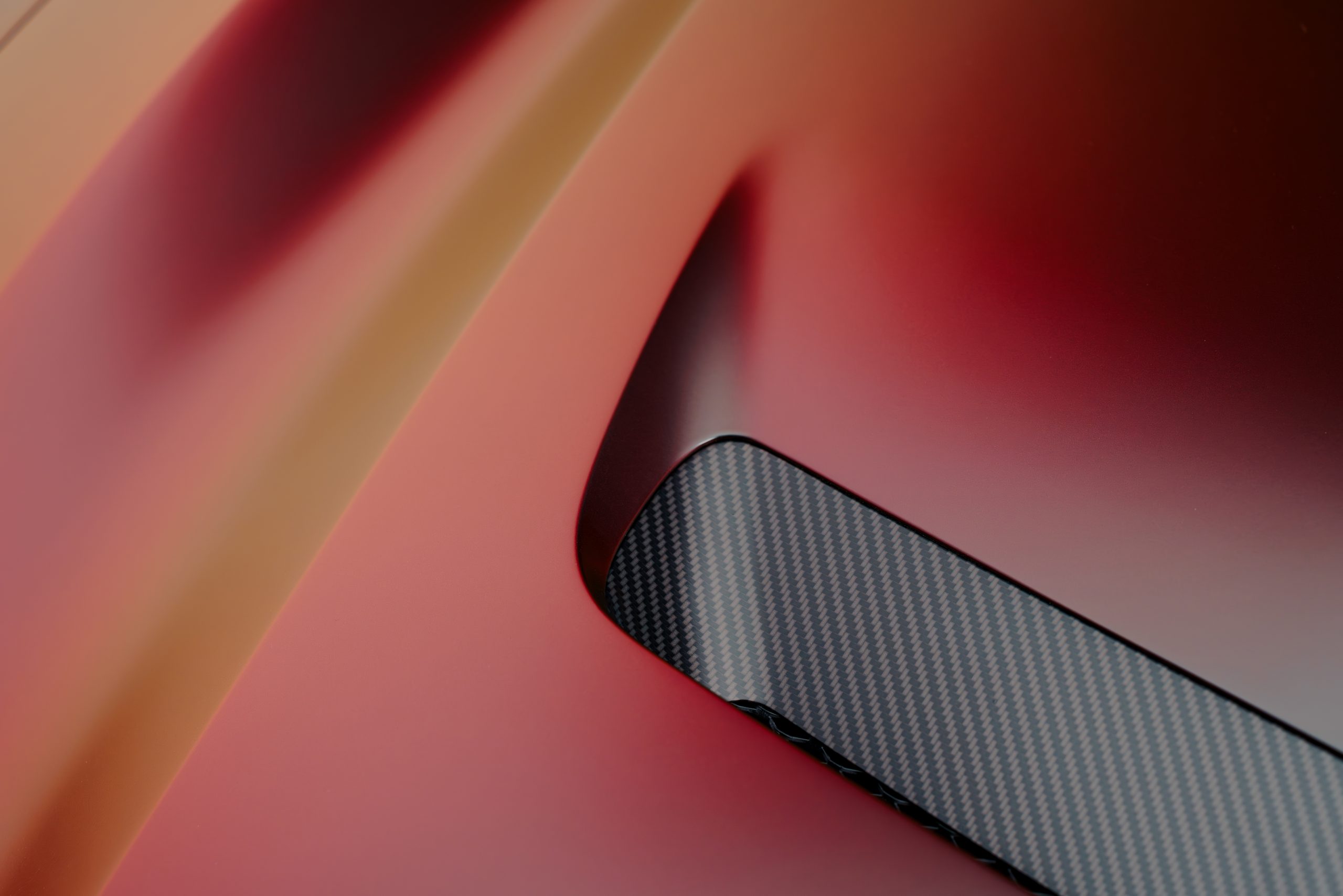
The show car is specified in a Q Ultra developed paint color, Satin Andromeda Red. The satin top-coat accentuates the assertive lines in the design with the color shift from the Andromeda Red remaining highly impactful. Andromeda Red blends deep red, copper and rich golden highlights, which shift dynamically to intense undertones of blue. Innovating timeless color through ultra-luxury pigments, blended through with Chromaflair technology pigments. A commanding range of shifting hues, achievable even in low light environments, bringing new perspectives with an indulgent movement of color.
With a coach-built carbon fiber body, Valen is available with the option of a stunning fully exposed carbon fiber exterior. This exquisite example of material craftsmanship shows meticulous detail with the herringbone in the carbon weave running down the center of the car. In addition, the exposed carbon fiber can be tinted in a variety of colors, in both Satin and Gloss finish, with even the possibility of customers working with the Q by Aston Martin team to curate and develop their own bespoke tint.
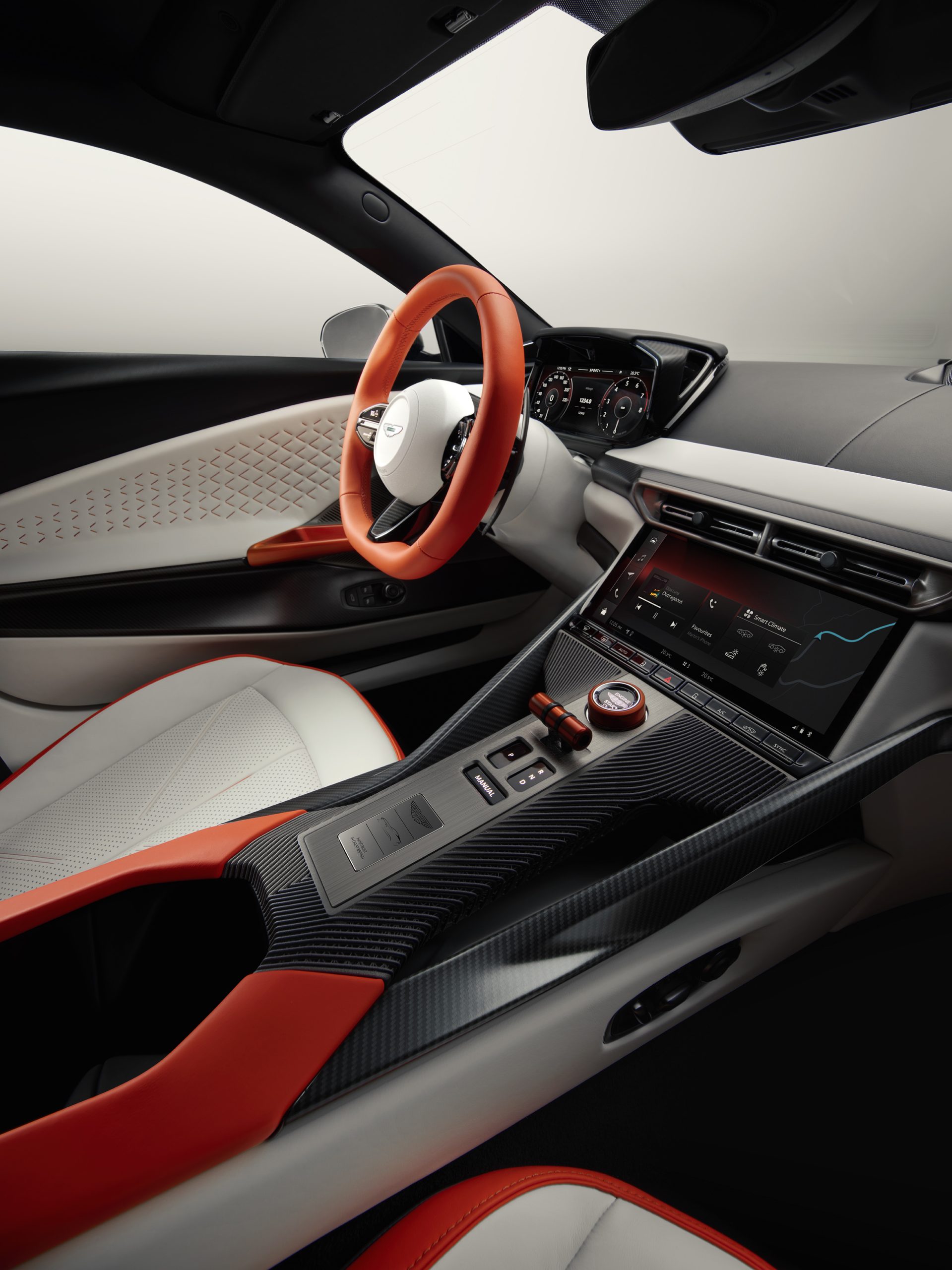
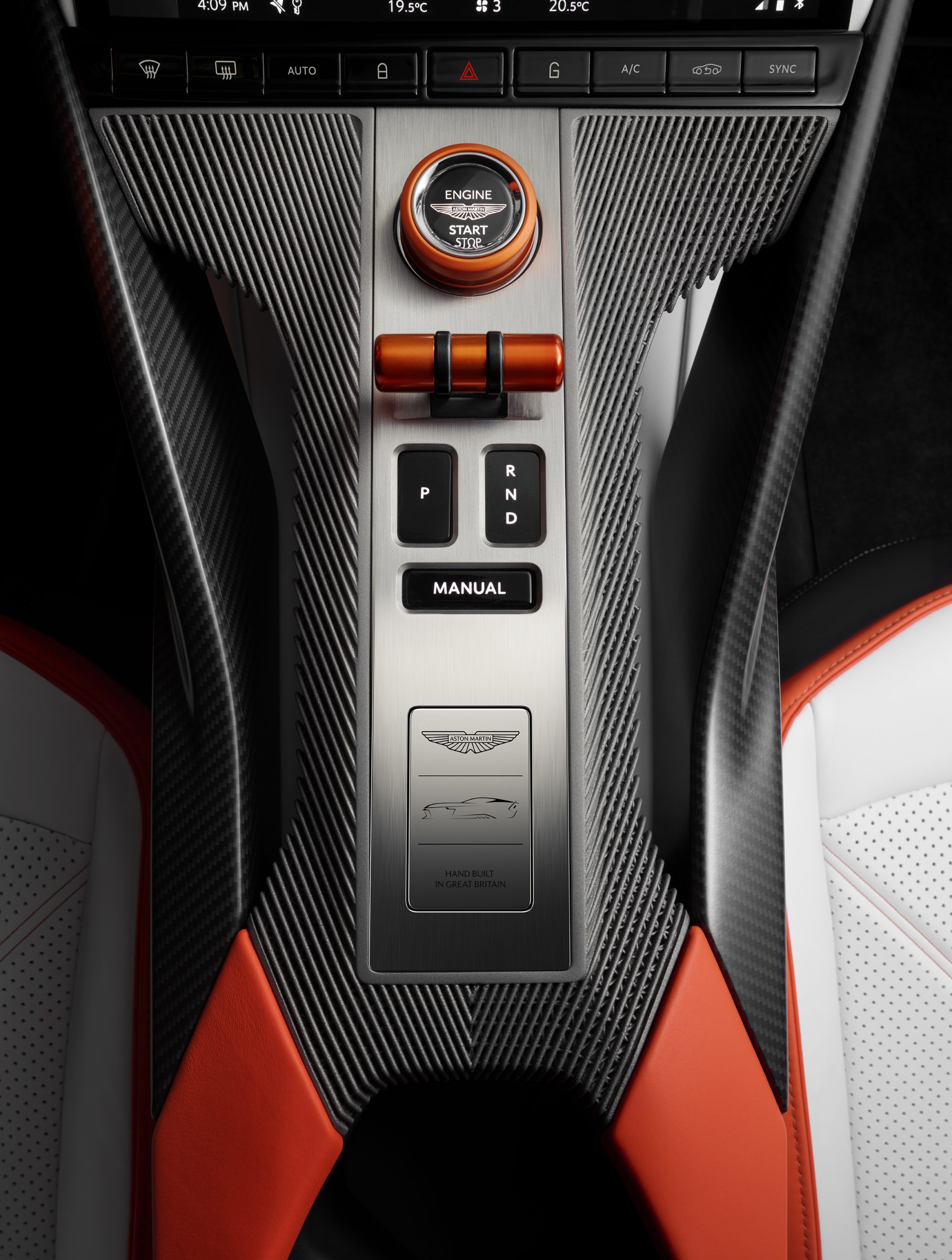
The interior of Valen has been developed around a clear principle of visual lightness, reflecting the significant mass reduction engineered throughout the car. Central to this is a slim center console, enabled by advanced 3D-printed components and incorporating the performance-focused switch pack introduced on Valhalla. Angled towards the driver, the inclined console creates a more focused and controlled cockpit environment, reinforcing the connection between driver and machine.
Valen’s cabin offers a choice of newly developed Sports Plus seats, designed to combine support with long-distance comfort, or lightweight carbon fiber performance seats for a more focused driving experience. Together, these options allow customers to tailor the cockpit to their intended use and needs.
A new hierarchy of interior trim levels simplifies the selection process without limiting scope for individual choice. Customers first choose between a combination of Semi-Aniline Leather and Alcantara or full Semi-Aniline Leather, before choosing from five material splits (Monotone, Duotone, Light Duotone, Tritone and Driver Focused). Using the new upholstery quilting treatment developed for Valen as an example, the areas where this quilting is applied extends incrementally with each trim level, from door panels, doors and seats, to doors, seats and headlining in the top tier specification. The additional choice of a driver-focused option (which highlights the driver’s seat), and an accent pack which adds contrast color detailing ensures a near-limitless choice of combinations.
Elsewhere, 3D-printed elements are used throughout the cabin, echoing the approach with previous limited-edition specials, such as Valkyrie and DBS Zagato. These perforated sections reference the exterior cooling vents, adding visual intrigue and contributing to an increased sense of lightness and simplicity. The center console is also new, with elements taken from the Valhalla. The central touchscreen is reclined at more of an angle to better integrate within the sleek geometry of the pared-back interior design.
Functional items such as the air vents have been changed to further reduce visual clutter and a new palette of anodizing colors has been developed, expanding the scope for embellishment and personalization offered via Q by Aston Martin.
Two coming 2027 models – the first of the “Neue Klasse” cars coming to the U.S. early next year – have been revealed.

Paine Schwartz joins BERO as a new investor as the year-old company seeks to triple sales.

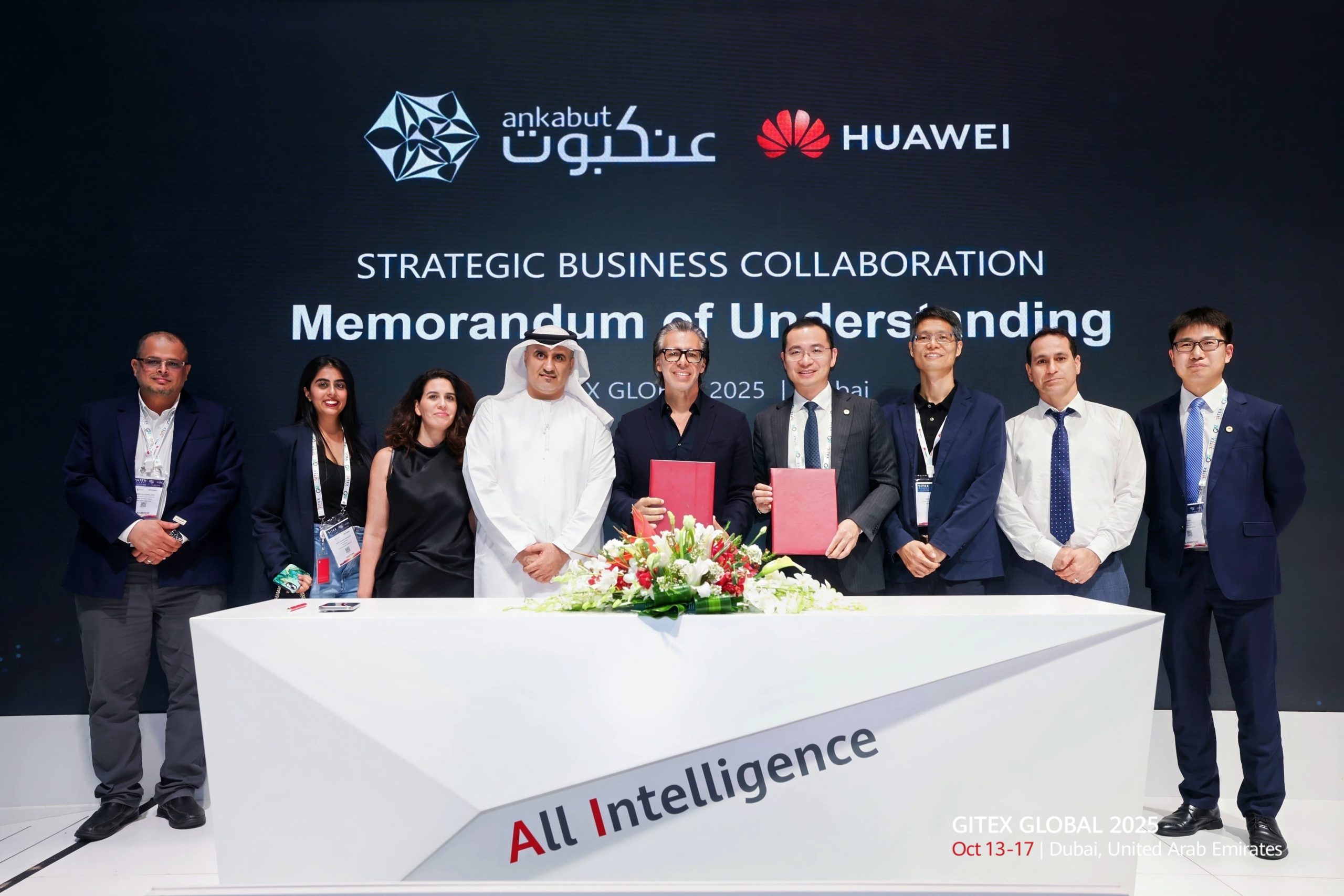
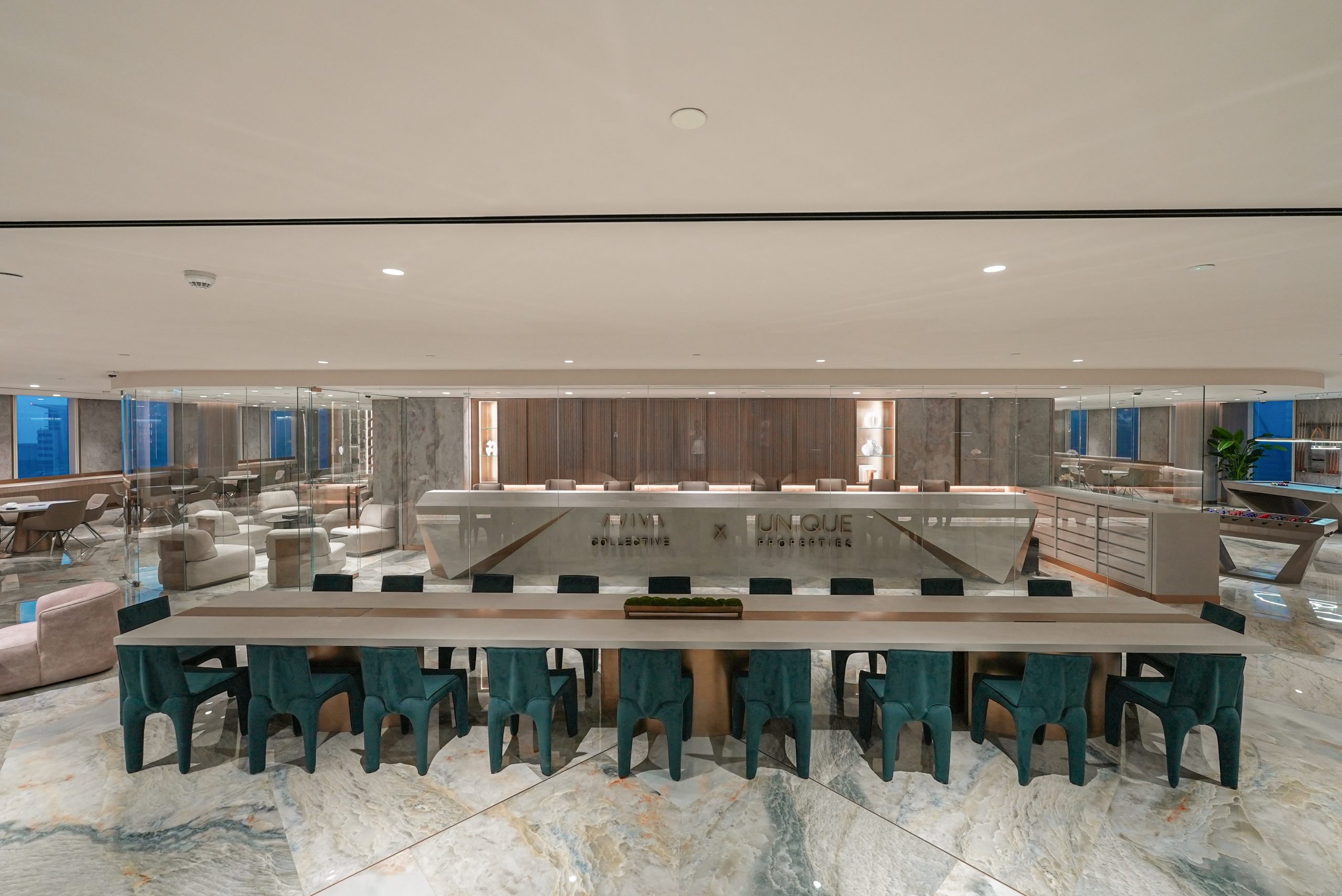
Abu Dhabi sovereign investor L’imad, through ADQ, has launched a conditional cash offer to acquire the remaining shares of AD Ports Group at AED 6.25 ($1.70) per share. ADQ currently holds a 75.42% stake in the group.
< 1 minAbu Dhabi sovereign investor L’imad will make a voluntary conditional cash offer, through its wholly owned unit ADQ, to acquire up to 100% of the issued and paid-up share capital of AD Ports Group.
Remaining shareholders will be offered 6.25 UAE dirhams ($1.70) in cash for each of their shares in AD Ports, with the matter to be presented to the Board of Directors.
L’IMAD, through ADQ, owns 75.42% of the shares of AD Ports Group. Other shareholders include Norway’s Norges Bank Investment Management (1.74%) and the US-based Vanguard Capital Management (0.54%).
Rothschild & Co Middle East Limited is acting as financial adviser for the tender offer, with Emirates NBD Capital and First Abu Dhabi Bank acting as joint lead managers, and EFG Hermes UAE as co-lead manager. Emirates NBD Bank and First Abu Dhabi Bank are also joint-lead receiving banks, with Allen Overy Shearman Sterling acting as legal adviser.
Following the successful launch of its Palais Collection, MAISON de SABRÉ has unveiled a new modular handbag system offering more than 720 styling combinations.

New research suggests that bonuses make employees feel more like a mere cog in a wheel.



Meta is betting on a human-first AI future, but growing legal battles and declining public trust are putting Mark Zuckerberg’s vision to the test.
3 min“Call us optimists. Call us dreamers. Call us whatever the hell you want, but we’re betting on people, and we like those odds. The future is for everyone.”
That ad copy is from the voice-over of a July Meta Platforms META -3.38%.
spot that’s been part of a public-relations blitz to position Meta as the humanist AI company. The message was undercut by the ad’s inclusion of David Bowie’s “Five Years,” a brooding 1972 song about an impending apocalypse. But this week CEO Mark Zuckerberg left no ambiguity, publishing a 6,500-word manifesto—about 10 times the length of this newsletter—with a title that echoed the ad: “The Future is for Everyone.”
That seems to be Meta’s new tagline. In light of sinking public opinion and the company’s thousands of lawsuits from states, school districts, parents, and users, Meta’s public relations have been defensive. This push represents a return to offense, with a chance to distinguish Meta’s approach to AI from other labs like OpenAI, Anthropic, or SpaceX SPCX +9.65%.
“It is surprising that the discourse from many developing AI is so filled with doom,” Zuckerberg wrote. “I do not understand why anyone who believes that AI will eliminate most jobs and much of humanity’s relevance would rush to build that future.”
Zuckerberg frames what sort of future we build with AI as the central issue of our time. “We believe that delivering superintelligence to everyone is the way to answer this question,” he says. “This has the potential to begin a new era of personal empowerment where individuals can use this powerful new capability to reach their full potential, pursue their interests, and improve their lives and the world more than ever before.”
The flood of words belies the situation on the ground in mid-2026. Americans, at least, have a love-hate affair with social media. A November Pew Research Center poll reported that 71% of U.S. adults used Facebook, and 51% used Instagram. Worldwide, 3.6 billion people use at least one Meta app every day.
But in a Reuters/Ipsos poll conducted in July and August, 61% of respondents said they wanted more government oversight of social media, and two-thirds supported laws to keep children under 16 years old off the platforms. When it comes to Meta in particular, in the 2026 Axios Harris 100, an annual poll about corporate reputation, Meta placed 96th out of 100. It’s only above two other social media companies, Chinese ultracheap retailer Temu, and Spirit Airlines, a defunct air carrier. Regarding ethics, Meta came in last, and it was only ahead of TikTok in trust.
The steady drip of headlines in the teen social media trials isn’t helping. Last week, Meta lost a judgment in New Mexico state court that raised their liability in that relatively small jurisdiction to nearly $1 billion dollars. On Wednesday, jury selection began for a federal case with four states suing Meta over addictive product design, and false marketing that said its platforms were safe for teenagers. In July, Meta claimed that the states are asking for a total of $1.4 trillion in damages, in addition to design changes in the apps. This is part of a multidistrict litigation, where thousands of federal trials with social media defendants are coordinated in Judge Yvonne Gonzalez Rogers’ district courthouse in Oakland, Calif.
There is a separate such group of thousands of cases in California state court, mostly with individual plaintiffs. The steady drip of bad headlines from the courts will continue unless Meta decides to settle en masse.
Meanwhile, in the second quarter, Meta booked “$2.40 billion of charges related to legal proceedings,” according to its quarterly filing. That may be just the beginning.
Zuckerberg spent 6,500 words getting his utopian message out, but I can sum it up in two: Trust us. The evidence is that Meta has a long way to go to win back that trust.
New research suggests that bonuses make employees feel more like a mere cog in a wheel.
Many of the most-important events have slipped from our collective memories. But their impacts live on.


Saudi Arabia ranks among the world’s top 10 countries for private AI investment, according to the World Bank’s World Development Report 2026.
4 minSaudi Arabia emerged as one among the world’s top 10 countries for private AI investment, according to the latest World Bank report.
The World Bank Group’s World Development Report 2026, titled “The Promise of Artificial Intelligence,” highlighted Saudi Arabia’s growing position in the global AI landscape. “The Kingdom has become an attractive destination for AI talent and a model for government data integration,” the report pointed out.
This international recognition reflects the support and empowerment of the Kingdom’s leadership through an integrated national approach established by Saudi Vision 2030 to build an economy driven by data, compute, and innovation, and to reinforce the Kingdom’s position in shaping the future of artificial intelligence.
The recently released report is the World Bank’s first comprehensive assessment of the impact of artificial intelligence on developing economies, the opportunities it creates for individuals, firms, and governments, and the requirements needed to maximize its development impact
while managing associated risks.
The report is structured around three key dimensions that shape the impact of artificial intelligence on development: Capabilities, through which AI can broaden access to expertise and support decision-making; concentration, resulting from the production of advanced models, chips, and data centers being concentrated in a limited number of countries and companies; and complements, including infrastructure, data, skills, and institutions.
Through these dimensions, the report outlines a progressive pathway that begins with adopting available tools, moves toward adapting them to local languages, data, institutions, and needs, and ultimately advances toward developing cutting-edge technologies and the infrastructure that enables them.
The report emphasizes that harnessing the benefits of artificial intelligence depends not only on having the largest models, but also on building an interconnected ecosystem encompassing connectivity, compute, data, skills, and institutions. It notes that solutions tailored to local contexts can broaden access to expertise, increase productivity, improve public services, and support economic growth.
Under the Concentration dimension, which examines the concentration of advanced AI infrastructure and related investment, the report noted that Saudi Arabia combines tax incentives with special economic zones to attract investment in data centers and build compute capacity. This national approach links capital attraction with the development of a broader ecosystem encompassing talent, startups, energy, and the infrastructure required to support the growth of AI applications.
This recognition aligns with the rapid growth of the Kingdom’s digital infrastructure. Data center capacity increased from 68 MW in 2021 to 440 MW in 2025, before rising further to 467 MW in the first quarter of 2026, representing an increase of more than 6 percent since the beginning of the year and nearly sevenfold compared with 2021. The 4G and 5G network coverage reached 99 percent by the end of 2025, while average internet speed reached 216 Mbps, providing key enablers for the expansion of cloud services and AI applications.
Under the Capabilities dimension, the report highlighted Saudi Arabia’s ability to attract specialized talent, noting that in 2025 the Kingdom was among the economies with the highest net inflows of AI professionals per 10,000 LinkedIn members, alongside Luxembourg, Australia, and Switzerland. Saudi Arabia also recorded a net inflow of 3.08 among leading AI authors and innovators in the same year, reflecting the growing attractiveness of the Saudi technology ecosystem to highly specialized talent.
This momentum is accompanied by continued growth in the Kingdom’s national talent base. Saudi Arabia’s technology workforce has grown to approximately 426,000, representing cumulative growth of 186.6 percent compared with 2018, when it stood at 150,000. Women’s participation in communications and information technology professions has also risen to 35 percent, broadening the Kingdom’s talent pool and strengthening the diversity of capabilities supporting an economy driven by technology and innovation.
Under the Complements dimension, the report presents Saudi
Arabia’s experience as a model for building public data infrastructure. It highlights a platform operated by the Saudi Data and Artificial Intelligence Authority (SDAIA) that enables data integration across more than 60 government entities while allowing the data to remain within their respective systems. The report presents this experience as a model for structured data exchange, enabling government entities to develop more effective applications while strengthening governance, trust, and data protection.
This progress builds on broader achievements across the digital economy, whose contribution has risen to 16 percent of GDP, while the communications and information technology market reached SR199 billion in 2025.
Saudi Arabia also ranked second globally in the World Bank Group’s 2025 GovTech Maturity Index. The preparation of the report also reflects the Kingdom’s presence in the international dialogue on artificial intelligence policy. The report’s High-Level Advisory Panel included Minister of Communications and Information Technology Abdullah Alswaha. The report team also benefited from consultation sessions involving the Saudi Competitiveness and Business Center and the WBG–Saudi Arabia Knowledge Hub, alongside national government, private-sector, and research entities that contributed their expertise in data, telecommunications, compute, and innovation.
The report’s release carries particular significance following the Cabinet’s approval, during its session chaired by Crown Prince and Prime Minister Mohammed bin Salman, on March 10, 2026, to designate 2026 as the “Year of AI” in Saudi Arabia, underscoring the Kingdom’s national focus on future technologies and their role in advancing development, innovation, and competitiveness.
The findings highlighted in the World Bank report affirm that Saudi Arabia is advancing an integrated approach in the intelligent era, bringing together investment in infrastructure, compute and data, talent development, the regulatory environment, and the expanded application of technology across the economy and public services. This approach reinforces the Kingdom’s position as a global hub for data and artificial intelligence and supports the objectives of Saudi Vision 2030.
Parts for iPhones to cost more owing to surging demand from AI companies.

Chris Dixon, a partner who led the charge, says he has a ‘very long-term horizon’


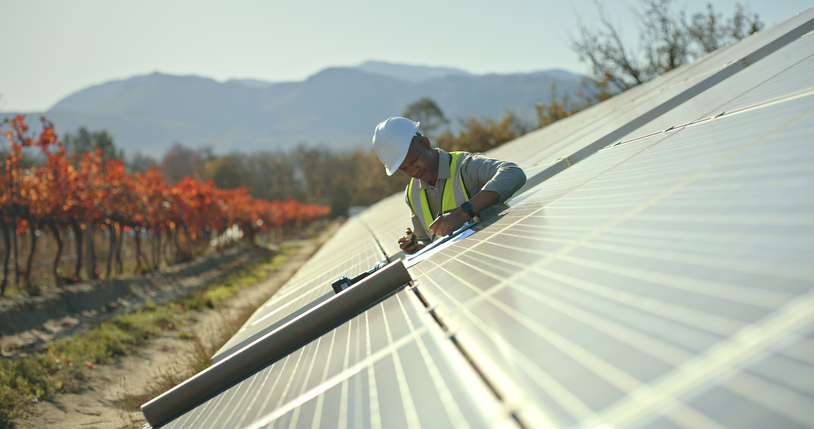
Kyndryl launches Agentic Modernization services-as-software, leveraging AI-powered workflows to help enterprises accelerate and scale continuous technology modernization.
3 min
Kyndryl, a leading provider of mission-critical enterprise technology services, today introduced its Agentic Modernization services-as-software, which is built using the Kyndryl Agentic AI Framework and is scaled through Kyndryl Bridge. Services-as-software is an emerging model for delivering services through software-driven automation, intelligence and scalable digital workflows.
Kyndryl has codified its trusted mission-critical and engineering expertise, together with capabilities from AI ecosystem partners, into pre-defined agentic workflows that help customers unlock business outcomes, de-risk and accelerate their modernization objectives, while maintaining enterprise guardrails and cost visibility throughout their AI adoption journey.
“Modernization is becoming an operating discipline rather than a series of labor-intensive transformation programs that are difficult to scale and disruption-prone,” said Ismail Amla, Senior Vice President, Kyndryl Consult. “As technology innovation accelerates exponentially, organizations need to move toward continuous modernization so they can adapt faster to changing business needs. With Agentic Modernization services-as-software, customers can transform iteratively and seamlessly using proven agentic workflows designed to handle changing business priorities and built on Kyndryl’s deep mission-critical expertise and industrialized through Kyndryl Bridge, enabling faster execution and more predictable outcomes.”
The announcement comes as organizations race to scale AI but are challenged to achieve business value from their investments. Kyndryl’s recent survey of 1,100 business and technology leaders found that while 77% of executives say generative AI has already been scaled across multiple functions of their organization, only 32% report experiencing one of their top desired outcomes. Organizations cannot reliably adopt AI on aging technology estates; modernization is the prerequisite foundation and has become a top priority and a growing area of technology spend.
“Agentic AI is reshaping how enterprises think about modernization, moving the conversation from large, episodic transformation projects to continuous, agent-orchestrated implementations guided by human expertise,” said Bill Latshaw, Research Director, Worldwide Business Consulting Services, IDC. “Kyndryl’s Agentic Modernization services-as-software, with Kyndryl Bridge as the foundation, reflects that shift, combining pre-defined AI workflows and operational expertise, critically with the governance and guardrails needed to enable organizations to modernize with greater speed and consistency by reducing indecision and complexity traps.”
Run on the Foundation of Kyndryl Bridge
Since its launch in 2022, Kyndryl Bridge has become the trusted foundation for managing and modernizing mission-critical and regulated technology environments for more than 1,400 customers. Kyndryl Bridge generates more than 16 million AI insights each month and has demonstrated a reduction in IT incidents by up to 50%.
As organizations adopt AI-powered workflows, Kyndryl Bridge serves as the robust enterprise-grade technology foundation, for deploying and managing mission-critical AI across hybrid IT estates, with well-established controls for cost visibility, security and regulatory requirements. Kyndryl Bridge also provides agentic memory management for customers, helping them preserve and evolve critical institutional knowledge and operational context to support continuous modernization.
Scaling modernization outcomes with services-as-software
Kyndryl’s services-as-software helps customers execute modernization programs of any size or complexity in radically compressed timelines and at significantly lower cost by scaling pre-built agentic workflows — making specialized skills less of a constraint.
This approach also enables customers to adopt new frontier models and tools as they become available, based on their business requirements, cost, performance and governance needs, without locking them into a specific technology stack. As a result, modernization programs can be delivered with greater consistency, repeatability, quality and predictable outcomes for every customer.
Expert-guided, agent-orchestrated continuous modernization
Anchored in Kyndryl’s decades of experience managing and modernizing mission-critical systems, pre-defined enterprise-grade agentic modernization workflows support a broad range of infrastructure, application and business transformation initiatives across distributed and mainframe environments, public, private cloud and network infrastructure, software development and IT operations. These AI workflows orchestrate autonomous AI agents across the modernization lifecycle, helping accelerate activities such as discovery, code analysis, dependency mapping, target-state design, code generation, testing and validation.
Kyndryl’s pre-defined agentic modernization workflows also reduce the effort and costs required to experiment with AI and accelerate modernization by giving customers a proven, reusable foundation for generating consistent, high-quality outcomes at scale.
Parts for iPhones to cost more owing to surging demand from AI companies.

Americans now think they need at least $1.25 million for retirement, a 20% increase from a year ago, according to a survey by Northwestern Mutual


Apple shares came under pressure after Jefferies downgraded the stock to Underperform and cut its price target to $263.66, citing concerns that plans for a highly anticipated all-glass iPhone have been scrapped. Analyst Edison Lee pointed to production challenges, rising memory costs and uncertainty around Apple’s AI strategy, adding to recent concerns over the tech giant’s growth outlook.
2 min
Apple AAPL -1.53% stock was downgraded by a major Wall Street firm on Monday, as an analyst predicted that a radical iPhone redesign has been scrapped.
Jefferies analyst Edison Lee cut his rating on Apple to Underperform—generally graded as a moderate Sell rating—from Hold. He also slashed his price target to $263.66 from $285.56, placing it among the lowest on Wall Street.
The downgrade hinges on the suspected cancellation of Apple’s all-glass iPhone. Although the project was reported to be in development as far back as 2025 and rumored to launch as early as 2027, Apple never commented on the speculation. However, the company quietly filed a patent application for a “six-sided glass enclosure” in 2019.
While Jefferies once viewed the release of an all-glass iPhone as plausible, Lee believes development has come to a halt. According to the analyst, supply-chain checks suggest the project was canceled due to “poor production yield.” This refers to the percentage of defect-free units successfully generated during manufacturing.
Lee views the decision as “a major setback to efforts to bring in higher-priced iPhones amid soaring memory costs.” Had it launched in September 2027 to commemorate the iPhone’s 20th anniversary, the device would have carried an estimated blended retail price of $2,060—higher than the average price of any previous model.
“More importantly, we believe the plan was to extend the all-glass features to future iPhone Pro and Pro Max models, further raising their average selling price and margin,” Lee wrote. He believes an all-glass model would have been a crucial defense against soaring memory costs, warning that Apple otherwise faces lower prices for years to come.
In the same breath, the analyst provided a conservative outlook on both Apple’s AI strategy and component costs for the iPhone 19 Pro Max, which is slated for release in 2027. Other supply-chain checks suggest that Apple is considering an upgrade for the iPhone 19 Pro Max, potentially increasing its memory to 16 gigabytes from 12 gigabytes.
In Lee’s view, the slow rollout of Apple Intelligence makes it difficult for Apple to justify the expense of equipping its phones with more memory. Extra RAM is needed to run complex AI models directly on a device.
Apple shares dropped 1.5% on Monday as the tech-heavy Nasdaq Composite COMP -0.32% index fell 0.3%. Heading into the session, Apple had gained over 15% in 2026, marginally outperforming the index.
The stock’s momentum stalled last month when underwhelming fiscal third-quarter earnings triggered a selloff that erased $359 billion in market capitalization, allowing Nvidia NVDA -2.86% to overtake Apple as the world’s most valuable company.
Lee isn’t the only analyst to sour on Apple stock in recent weeks. KeyBanc analyst Brandon Nispel downgraded shares to Underweight from Sector Weight in July, arguing that Apple’s growth was beginning to stall following a boost in 2025. Sluggish iPhone sales could drag down other hardware categories, Nispel wrote, making the stock look “too expensive” over time.
Even with this recent shift in sentiment, Wall Street hasn’t lost faith in Apple. Of 51 analysts surveyed by FactSet, 32 rate the stock a Buy or the equivalent. Fourteen maintain a Hold rating, while just five—Lee and Nispel included—have issued a negative opinion on the shares.
Paine Schwartz joins BERO as a new investor as the year-old company seeks to triple sales.
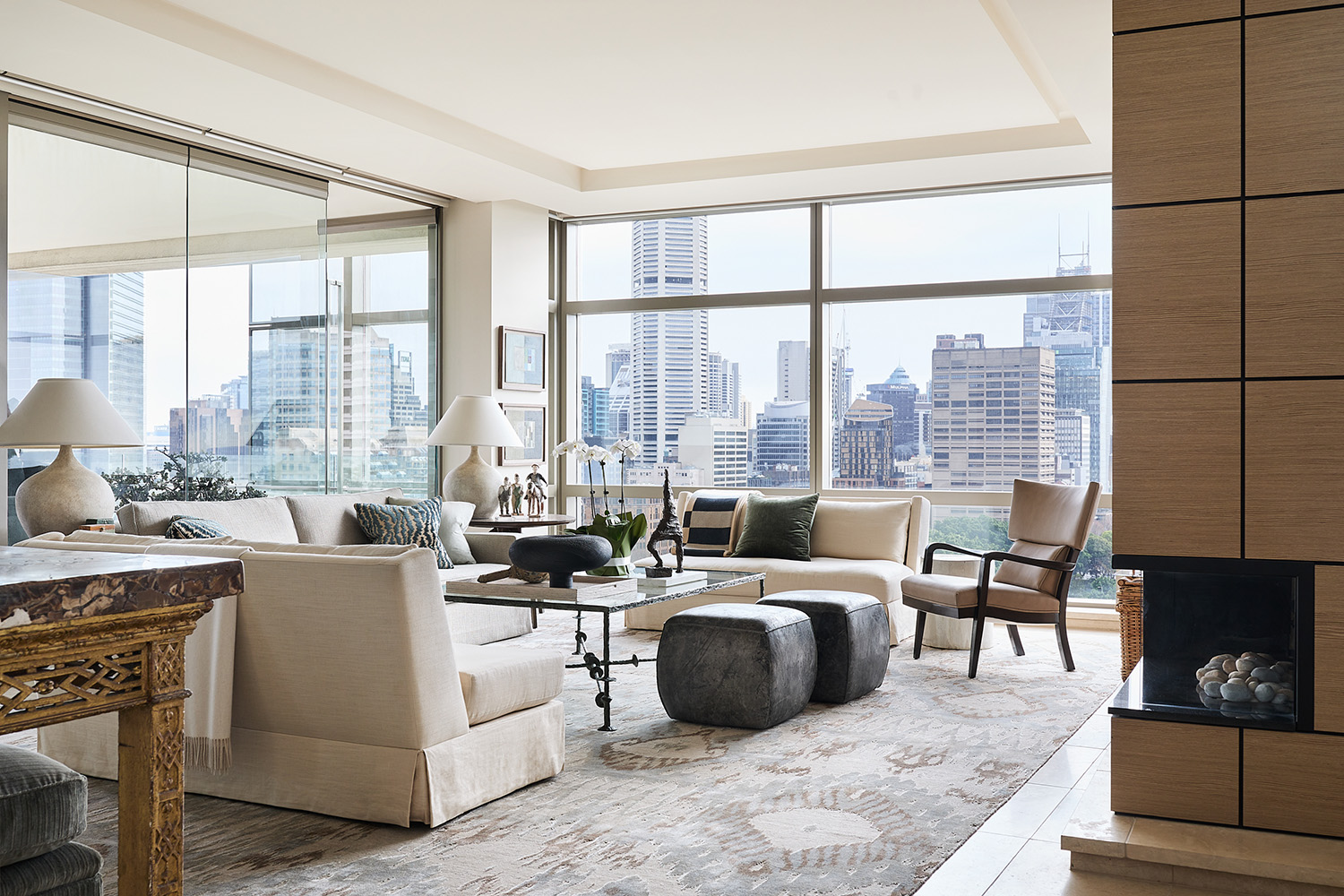
Interior designer Thomas Hamel on where it goes wrong in so many homes.


 < 1 min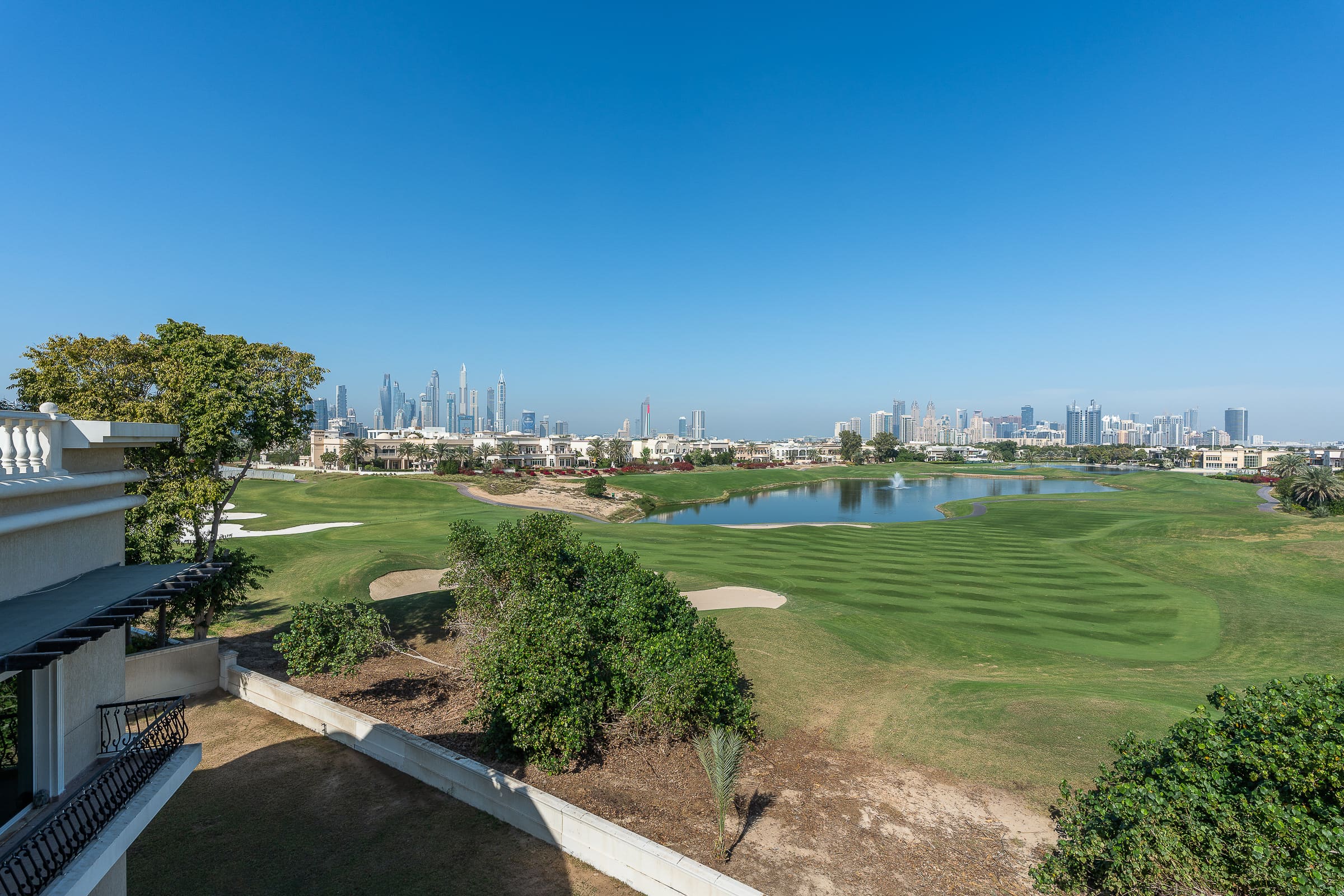
Developers spent Dhs125 billion acquiring land in Dubai across the first seven months of 2026, according to Dubai Land Department data, as companies continued building their inventories of development sites ahead of a new project cycle.
The 7,981 land transactions accounted for approximately 8 per cent of the 99,900 total sales transactions recorded in the period, but a disproportionate 39 per cent of the Dhs321 billion in total real estate sales value — a figure that also includes residential units, villas and buildings. Market activity averaged around 1,140 land transactions a month, worth approximately Dhs17.8 billion.
Me\’aisem 2 recorded the highest land-sale value of any area, with Dhs10.4 billion across 544 transactions, followed by Al Yalayis 5 with Dhs7.14 billion across 907 deals. Al Ruwayyah 1 ranked third by value despite just three major transactions, worth a combined Dhs6.3 billion. Palm Jebel Ali, Umm Suqeim I and Al Yalayis 1 rounded out the next tier, while Palm Jumeirah recorded Dhs2.4 billion across 44 deals.
The concentration of value in a small number of land transactions — as seen in Al Ruwayyah 1\’s three deals worth Dhs6.3 billion — reflects the scale of individual site acquisitions in Dubai\’s primary land market, distinct from the smaller residential resale transactions that make up the bulk of deal volume.
Two coming 2027 models – the first of the “Neue Klasse” cars coming to the U.S. early next year – have been revealed.

Following the devastation of recent flooding, experts are urging government intervention to drive the cessation of building in areas at risk.


 2 min
2 min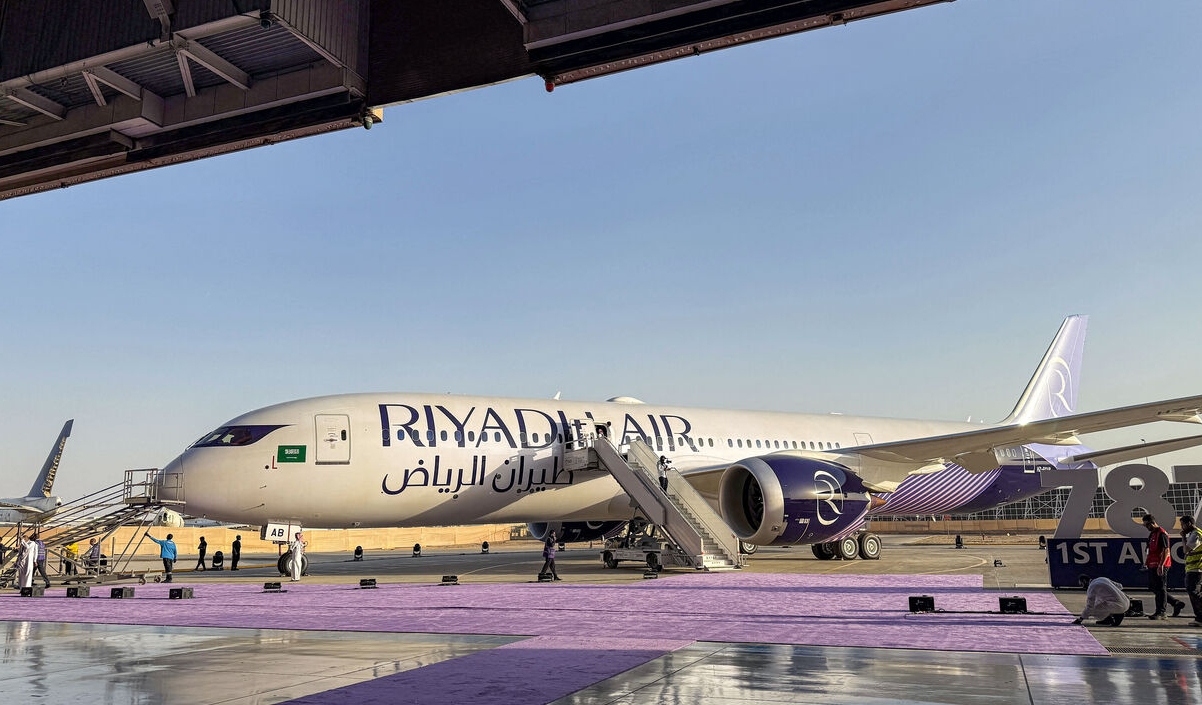
Riyadh Air began daily flights between Riyadh and Mumbai on 4 August, marking the Saudi carrier\’s first route into India and its latest step in a rapid network expansion across South Asia.
The daily Boeing 787-9 service is the first of four new South Asian destinations the carrier is adding this month. Daily flights to Dhaka, Bangladesh — Riyadh Air\’s first connection to Bangladesh — begin 7 August. A daily service to Islamabad follows on 14 August, operating on flight RX0659 departing Riyadh at 13:45 four times a week and flight RX0661 departing at 20:10 three times a week. A service to Lahore is also planned for later in August, with reports varying on the exact start date; a daily service to Manila, the Philippines, is scheduled to begin 9 September.
The additions bring Riyadh Air\’s network to nine destinations, up from six at its commercial launch in October 2025. The carrier has said it intends to reach 22 destinations by March 2027, en route to a stated ambition of serving more than 100 international cities by the end of the decade.
Riyadh Air said the new South Asian routes target some of the largest expatriate and labour markets in Saudi Arabia, alongside business, leisure and visiting-friends-and-relatives traffic, while reinforcing Riyadh\’s position as a connecting hub between Asia, the Middle East and Europe.
The expansion follows Riyadh Air\’s order, firmed at last month\’s Farnborough Airshow, for six additional Airbus A350-1000 aircraft, along with exercised options for 28 more Boeing 787s. The carrier has also recently secured regulatory approval for services to Beijing and Shanghai, and authority to begin operations to the United States.
Riyadh Air is Saudi Arabia\’s second national carrier alongside Saudia, positioned by the government as a flagship of the country\’s tourism and economic diversification push under Vision 2030.
New research suggests that bonuses make employees feel more like a mere cog in a wheel.



Parmigiani Fleurier marks 30 years of independent watchmaking with a limited-edition trilogy of platinum TONDA PF timepieces. Combining refined design with discreet mechanical innovation, the collection reimagines classic complications while celebrating the Maison’s philosophy of understated luxury and exceptional craftsmanship.
3 min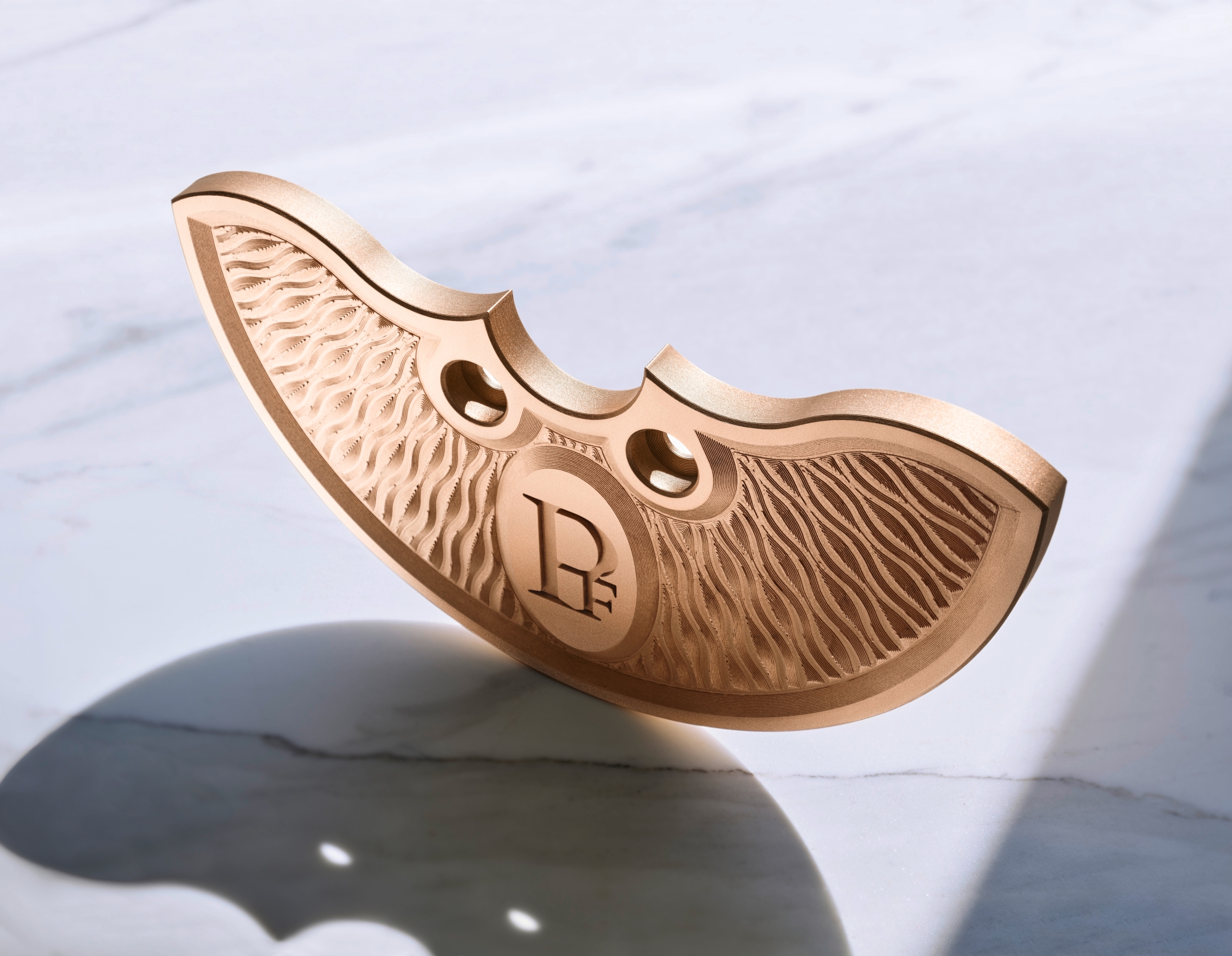
In 2026, Parmigiani Fleurier celebrates thirty years of independent watchmaking through a measured expression of its vision. A trilogy of TONDA PF World Firsts, each crafted in 950 platinum and issued in limited editions of 30 pieces, represents the highest expression of the Maison’s philosophy: a vision of watchmaking where purity of form and mechanical intelligence exist in complete harmony.
This vision is rooted in a profound understanding of the great traditions of horological construction, understood, preserved and reinterpreted through a living continuity.
Through three fundamental expressions of time measurement, the GMT Rattrapante, Minute Rattrapante and Chronographe Mystérieux, Parmigiani Fleurier proposes a new philosophy of complication. Rather than remaining permanently visible, each function appears only when required before returning the dial to its original purity.
This trilogy builds upon the design language introduced with the TONDA PF Micro-Rotor. Defined by purity of line, architectural coherence and a refined relationship with time, that vision has matured into a language of its own.
It embodies the Maison’s vision of private luxury, a watchmaking culture conceived for connoisseurs who understand that true sophistication lies not in what is constantly displayed, but in what reveals itself only at the right moment.
A LANGUAGE OF COMPLEXITY
Conceived as a unified whole, these three creations express a shared horological language through three distinct approaches to complications.
Each reinterprets one of watchmaking’s fundamental functions according to a single principle: absolute clarity. Complexity is never exhibited for its own sake. It exists in service of experience, revealing itself through interaction. One gesture. One response.
GMT Rattrapante
Reading two time zones without compromising the clarity of the first.
A second hour appears only when needed through the emergence of a dedicated hand. Once its purpose has been fulfilled, it instantly aligns once again with the local hour hand, restoring the purity of the dial. Local time remains central, stable and sovereign. The GMT function becomes a discreet companion to travel rather than a permanent display.
Minute Rattrapante
Measuring a short interval without interrupting the reading of civil time.
Whether marking a few minutes of attention or a meaningful moment within the rhythm of everyday life, the dedicated minute hand follows the passage of time before returning to merge seamlessly with the principal hand. Precision is available when required, then quietly disappears, allowing the continuity of time to remain uninterrupted.
Chronographe Mystérieux
Time measured only when required.
At rest, nothing reveals the presence of the chronograph. The watch retains the serene appearance of a classic three-hand TONDA PF. Activated via the monopusher positioned at 7:30, the chronograph unfolds through three intuitive actions: start, stop and reset.
The chronograph hands emerge at the center of the dial to measure seconds, minutes and hours without traditional counters. Once the measurement is complete, they disappear once again, returning the watch to its original clarity. A chronograph conceived to appear, measure and disappear, without ever disturbing the essential.
THE TONDA PF ARCHITECTURE
Within this trilogy, the TONDA PF aesthetic reaches its purest expression. Entirely sandblasted, the dial adopts a deliberately restrained aesthetic centred on light, legibility and presence. Its quiet matte surface absorbs reflections, allowing clarity to emerge naturally.
The case, knurled bezel and integrated bracelet are all crafted from 950 platinum, forming a unified whole in which material does not embellish the design; it defines it.
The fluid continuity of the lines expresses the architectural purity that has become the signature of the TONDA PF collection.
The knurled bezel introduces a subtle vibration, creating a controlled tension within an ensemble of remarkable restraint. Every element has been reduced to its essential purpose before being elevated through exceptional execution. Satin-brushed and polished finishes alternate with precision, favouring coherence over effect.
PLATINUM AT ITS HIGHEST EXPRESSION
Within this trilogy, 950 platinum establishes itself as the natural choice. Among the rarest and most demanding precious metals to master, platinum calls for exceptional expertise. Its density, durability and stability make it a material destined to endure.
Used throughout each watch, platinum gives every creation complete material coherence. The case, bezel, bracelet and dial form a unified whole in which the material does not accentuate the design; it defines it.
Its tone does not seek brilliance. Instead, it reveals depth, permanence and quiet authority. Platinum discloses its character over time through its weight, its enduring presence and the singular quality of its light.
Nearly ten tons of ore are required to produce just thirty grams of platinum, a reality that places every creation within a realm of tangible rarity.
A COMPLETE WORK
With this trilogy, Parmigiani Fleurier presents a synthesis in which purity of form, private luxury and mastery of mechanical arts converge.
Each creation may be appreciated individually according to a personal affinity with its function. Together, they form a harmonious whole conceived for discerning collectors.
Issued in editions of 30 pieces per function, the trilogy is also available, for a select few, as a presentation set bringing together all three creations. It offers the opportunity to experience the Maison’s horological vision in its entirety.
With this trilogy, Parmigiani Fleurier reaffirms a conviction that has guided the Maison since its founding. True innovation does not lie in complexity for its own sake. It lies in mastering complexity so completely that it appears effortless.
This is watchmaking that explores the very foundations of time measurement with restraint, precision and uncompromising standards.
Two coming 2027 models – the first of the “Neue Klasse” cars coming to the U.S. early next year – have been revealed.




A growing number of employers say Gen Z job seekers are bringing their parents into the hiring process, from attending interviews and negotiating offers to questioning performance reviews. Recruiters warn the trend may raise concerns about independence, even as some families see it as support in a challenging job market.
4 min
Steven Clark had the unpleasant task of firing a 24-year-old—twice. Once was in a brief conversation with the new hire, who’d showed up late or not at all four times in his first week at a construction job.
Then Clark had to do it all over again, this time with the guy’s mother.
She called him a few hours later, pleading to give her son another chance. When Clark told her no, things got heated before he ended the call.
“I said, ‘Look, you know, this is between us and your son. He’s the employee,’” says Clark, who is chief operating officer of a Fairbanks, Alaska-based staffing firm.
Gen Zers make up nearly one-fifth of the adult workforce, and bosses and recruiters say it often feels like the nervous parents who hovered over them through childhood and college are right alongside them. What began as the occasional parent ride-along to a job interview coming out of the Covid era is now full-on career “co-piloting,” said Jasmine Escalera, head career coach at résumé templates service Zety.
More parents are calling up hiring managers, applying for jobs on their adult child’s behalf, and even showing up—or lurking just off-screen—on Zoom calls to help navigate difficult conversations or go over benefits packages.
“The first time it happened, I was appalled,” says Clark, who has fielded calls from parents asking why their child didn’t get a job. “Since then it’s become more of a here-we-go-again reaction.”
Human resource professionals have expressed outrage on social media.
“Parents should not be calling employers to check on their application status or ask questions on behalf of their child,” says Lynne Alba, a director of talent acquisition and physician recruitment at a large health system on Long Island, who vented about the phenomenon in a Tik Tok video she reposted on LinkedIn.

At a recent job fair, a mother approached Alba with her daughter’s résumé, explaining that she wanted to work as a nurse. “While I appreciated that she was trying to help, I intentionally shifted my attention to her daughter. No matter what Mom said, I wanted to hear directly from the candidate,” says Alba.
Some parents who step in say it’s a challenging job market for young people, and that they would only intervene in extreme circumstances—social anxiety, a toxic boss, unfair treatment. There’s also a gray area of intervention that some see as an extension of the parental advice and networking help that’s been happening for generations.
Rick Wainschel last year published a post on LinkedIn asking his network to help his daughter, a recent college graduate, find a corporate entry-level position.
Wainschel, a vice president at an automotive marketing technology company, says he doesn’t think his outreach qualifies as helicoptering. “Well, maybe a little,” he said, before quickly adding he was being half tongue-in-cheek. “It was really merely just to help her get a network established. I just think the work world is a challenging place.”
Wainschel’s post, which was OK’d by his daughter on the condition he didn’t embarrass her, didn’t lead to a job but did result in productive conversations, he said. She found a job with a credit union on her own shortly after.
Recruiters and other HR types say aggressive parental involvement signals a lack of independence and raises fears that mom and dad will be checking in regularly if their kid gets hired.
What’s more, they say, such interference rarely, if ever, works.
The phenomenon is becoming so commonplace it made the agenda of human resources organization SHRM’s national conference in June. When James Harrell asked a room of 250 professionals if they ever had a parent calling on behalf of a young employee or coming to an interview, more than half raised their hands.
“The first time it happened to me, I got high up on my soapbox and I shook my fist,” Harrell says. “The 15th time I said, ‘OK, well, I gotta figure out how to do something differently.’”
Harrell helped run an apprenticeship program for high-school students while he was the human capital management chief for the San Antonio Independent School District. To run interference, the district introduced a “signing day” when parents could come and ask questions.
After a Gen Z employee at Nation’s Best Holdings, a chain of hardware and home goods stores, didn’t get an “exceeds expectations” designation on his performance review last year, HR chief Amber Little got a call asking why.

It was one of a number of calls from parents her office has picked up recently about issues ranging from negative feedback to understanding which health insurance plan to choose. Little has even noticed parents are now calling in sick for their adult kids.
“Instead of coaching them, they do it for them,” Little says. When it happens, she adds, “we encourage them to tell their child to come talk to us and we will walk them through it.”
A Zety survey of more than 1,000 Gen Zers found 20% had a parent attend a job interview with them.
“You get a sense it’s all hands on deck for some families,” says Keith Wolf, managing partner of recruiting firm Murray Resources in Houston. His office has received emails from parents seeking jobs for their children, and Wolf says he’s always wondered if the kids even knew.
Paul “PB” Branson, who graduated from the University of Missouri-Columbia in May, bristles at the thought. The 22-year-old says while he understands their anxiety, parents shouldn’t be joining their children’s job interviews or contacting employees on their behalf.
“That trend,” he says, “has really hurt my generation by creating this kind of stereotype that we need our hands held.”
The sports-car maker delivered 279,449 cars last year, down from 310,718 in 2024.



Coursera has announced a $100 million strategic investment in LearnVector, a new AI-native learning company founded by AI pioneer and Coursera co-founder Andrew Ng. The partnership aims to reshape online education through personalized, one-to-one AI-powered learning experiences, with the first LearnVector products expected to launch in early 2027. The investment also reflects Coursera’s broader strategy to use AI to make learning more engaging, effective, and accessible while expanding its global reach.
2 min
Coursera Inc., a leading global online learning platform, today announced a $100 million strategic equity investment in LearnVector Inc., a new AI-native learning company founded and led by Andrew Ng, one of the world’s most influential figures in AI and a co-founder of Coursera. The investment marks an important step in Coursera’s next chapter of growth, a strategy powered by putting AI to work across its platform, and will give the company the potential to fundamentally transform the learning experience and expand the total market for learning.
For most of history, great teaching has been scarce, rationed by cost, geography, and time. LearnVector’s ambition is to make it abundant. Building on Andrew Ng’s pioneering work in agentic AI, LearnVector is creating a fundamentally new learning experience: not a search box or a chatbot that hands you an answer and moves on, but a one-on-one learning experience that adapts to how you learn, practices with you, and stays with you until you’ve mastered the material and can prove it, whether that’s advancing into a new role or reaching genuine command of a subject.
“AI will be the greatest force in accelerating human development, if we do it right. Rather than replace people or make learning obsolete, AI grows the demand for trusted learning,” said Andrew Ng, CEO of LearnVector and co-founder of Coursera. “With LearnVector, we’re putting AI to work for human development, transforming learning from the traditional one-to-many model to one-to-one and opening a limitless set of new opportunities for learners everywhere.”
Coursera believes the investment will accelerate a strategy already underway across its platform, where Coursera is leveraging AI to make learning more personalized, effective, and measurable, strengthening engagement, retention, and conversion in its core business today. The move reflects Coursera’s conviction that AI expands the market for learning rather than replacing it. Building on the greater scale and market reach of Coursera’s recent combination with Udemy, this strategic investment in LearnVector is expected to give Coursera the potential to grow the market itself and impact a far broader audience of learners, turning occasional learning into an everyday habit and addressing the near-limitless, largely underserved demand for learning.
The parties are exploring potential commercial collaborations under which LearnVector intends to pair Ng’s agentic AI with a distinct set of capabilities we believe no other company can match: Coursera’s accredited, trusted content; an enterprise and higher-education ecosystem reaching more than 300 million learners and 12,000 enterprise customers; and unrivaled data on how the world learns. The first LearnVector product experiences are targeted for early 2027. Together, the goal is to deliver a trusted, one-on-one learning experience unique to each learner, the winning formula a chatbot can’t replicate.
“Andrew is one of the world’s foremost experts in AI, and his founding vision for LearnVector is a throughline of Coursera’s own mission, to provide universal access to world-class learning,” said Greg Hart, CEO of Coursera. “This strategic investment reflects our conviction that AI expands the market for learning rather than diminishing it. Combined with the transformative AI work already underway across our platform, Andrew’s expertise and LearnVector’s innovations can act as a force multiplier for our next chapter of growth. Ultimately, AI creates a bigger pie for learning, and our ambition is for Coursera to be the trustworthy, personalized learning path that helps people achieve their goals.”
Coursera’s $100 million strategic investment currently represents a one-third ownership interest in LearnVector on a fully diluted basis.
Many of the most-important events have slipped from our collective memories. But their impacts live on.
Artificial intelligence is making it easier than ever to build a business without building a team. As AI takes over coding, customer support, marketing, administration, and other day-to-day tasks, a growing number of solo founders are scaling startups to millions in revenue with few—or even no—employees. While the trend is lowering barriers to entrepreneurship, it is also reshaping hiring, raising questions about the future of work and how businesses will grow in the AI era.
5 min
Ben Broca launched a company last December that offers AI tools to entrepreneurs. He’s already added 10,000 paying customers and is on track to bring in $10 million in revenue this year.
One thing he hasn’t added: any other employees.
The 40-year-old is part of a class of entrepreneurs who are launching, and then often running, new companies on their own. Artificial intelligence tools answer Broca’s emails, help write and debug code, field requests from customers, sign up new subscribers and grant refunds when issues arise.
Broca relishes his ability to make whatever decisions he wants on his own, often from his sun-drenched Sausalito, Calif., living room. “I think compromises make lukewarm results,” he said.
Once upon a time, running a business of a certain size required a team. AI is turning that assumption upside down, and more aspiring entrepreneurs are going it alone.

An analysis by the payments company Stripe shows there are thousands of solo operators on the company’s platform that are generating over $1 million in revenue, with their ranks doubling between 2023 and 2025. The number of solo operators crossing the $10 million threshold nearly tripled in that same span.
In the past, people without business contacts or particular savvy might not have known how to get their ideas off the ground, said Ernie Tedeschi, Stripe’s chief economist. “Now, AI can be a built-in business partner,” he said.
AI’s ability to handle various administrative tasks makes it potentially useful for launching solo businesses in many fields. But the technology’s ability to also handle key tasks in tech, like coding, make that field a particular hot spot.
Analyzing Census Bureau data, Bank of America Institute economist Taylor Bowley found that among all industries, new business applications in the information sector have seen the biggest percentage increase—nearly 45%—over the past year. At the same time, the rate of information-sector applicants saying they plan to hire workers has experienced the sharpest decline of any measured industry.
This Census dataset doesn’t track solo-operated businesses. But the numbers broadly show—in tech and beyond—that applications are flat among businesses likely to hire workers, but generally rising elsewhere. Economists say that’s a strong sign that solo operators are on the upswing.
“The bar for getting started has never been lower,” said Julian Weisser, who runs a San Francisco-based accelerator for solo founders working in tech. The accelerator—which offers founders seed money and mentorship in exchange for an equity stake—attracted 4,500 applicants for 10 slots made available in its most recent cycle, nearly five times the number it drew when it launched last May.
Going it alone with AI can still be surprisingly expensive. Broca said he was losing money on many customers’ accounts while paying to access Anthropic’s Claude to run his clients’ requests—that AI company, as well as others, charges based on usage. He has since switched to free open-source AI models from China.
Broca said he has raised $30 million from investors and, at the same time, has saved millions in salary since he hasn’t needed a team of software engineers.
Another risk: If it’s easy for one entrepreneur to launch an AI-assisted business, copying them can be easy, too. This creates anxiety for founders like Troy Johnston, who runs an AI-assisted business alone in Orlando, Fla.
“Everybody has the sword and we all have the ability to unsheathe Excalibur now,” said Johnston, 40, who used AI to code an app that helps people get the most out of credit card benefits. The company makes around $3,000 a month in profit, with no employees, and is continuing to grow.

What one-person businesses will mean for the labor market remains to be seen. Polling has shown Americans are worried that AI will replace jobs, and top economists are wrestling with that possibility, too. But AI is also creating lots of new jobs, and the go-it-alone entrepreneurs show how the technology can both open doors and limit employment opportunities.
“If everyone’s hiring less, but you get four times more firms, what does that do to head count?” said Rembrand Koning, an associate professor at Harvard Business School who studies entrepreneurship. He co-authored a recent study that found that among 50,000 startups the researchers examined, those focused on AI tended to operate with 25% fewer employees.
Koning also believes a soft hiring environment that’s left some people mired in long job searches has encouraged more to try their hand at launching businesses.
Some founders cite different motives. “It’s a perfect storm of post-pandemic burnout and a re-evaluation of one’s priorities, and also booming AI and a sense of what’s possible,” said Samir Ahmad, 39, who lives in Breinigsville, Pa.
Two years ago, Ahmad decided to leave the corporate job he had worked at Verizon for almost two decades to start a solo coaching and consulting business. He had been seeing social-media posts touting the ease and virtues of AI, which he used to chart a business plan and help with marketing. “It was like my chief of staff, a second in command,” he said.
The business ultimately petered out within months, though, and Ahmad is now back to a full-time corporate role with a utility company.
For Claire Vo, 41, AI helped her turn a passing impulse into a business. She was working full-time as a tech executive when she tapped AI in late 2023 to help code an app that would help her manage documentation and design for new products, with customers ranging from financial services to healthcare firms.
“I was copying and pasting from ChatGPT,” said Vo, who lives in San Francisco.

She put the app online for $1 a month, and within weeks people downloaded it thousands of times. Nearly three years later, Vo’s company—which she ran solo for nine months before hiring an engineer—now has 100,000 users and is on track to make seven figures in profit this year. AI handles the company’s marketing, sales and customer support.
While AI is a shortcut, Vo said her network and credibility in the industry were key. “I think people over-index on how easy AI is and under-index on how much I did to get to this point,” she said.
Two coming 2027 models – the first of the “Neue Klasse” cars coming to the U.S. early next year – have been revealed.



 2 min
2 min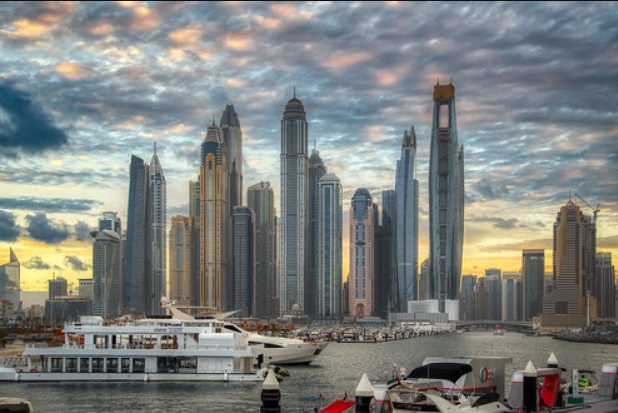
Dubai’s property market has become too large to describe with a single number.
On one side sits the city’s vast off-plan machine: new launches, staged payment plans and buyers committing capital years before handover. On the other is the ready market, where completed apartments and villas can be occupied, leased and valued against a visible trading history.
Both are moving. They are not necessarily moving in the same way.
Gulf Today reported on July 24 that Dubai recorded 87,800 real-estate transactions worth AED291.7 billion during the first half of 2026. Citing analysis released by developer MERED, it said off-plan property represented 71 per cent of transactions, while average property prices increased 9 per cent over the half.
Those figures present the familiar Dubai story: buyers remain prepared to enter early, developers continue to bring major projects to market and confidence in the city’s longer-term growth has not disappeared.
Yet a daily market review published the same day by Wakhan Properties provides a useful counterweight.
Using Dubai Land Department data for transactions registered on July 23, Wakhan reported AED913.72 million in total deal value. Ready property accounted for AED505.13 million, or 55.3 per cent, while off-plan sales contributed AED408.59 million, or 44.7 per cent.
One day does not overturn a half-year trend. It does, however, show why transaction count and transaction value should not be treated as interchangeable.
Off-plan apartments can generate enormous volume because the entry price is lower, payment is spread across construction and developers release inventory in concentrated campaigns. Completed homes can produce fewer transactions but greater value, particularly when larger apartments and villas change hands.
The strongest common thread is the apartment market. Wakhan said apartments generated AED740.11 million across the ready and off-plan segments on July 23, equal to 81 per cent of total value. Villas were a secondary contributor, while commercial property and hotel apartments represented relatively modest shares.
For investors, that concentration matters. A market can be liquid in aggregate while behaving very differently by location, developer, completion status and price bracket.
There is also a discrepancy worth acknowledging. Other recent analyses based on Dubai Land Department records have produced different first-half totals, depending on whether they count all real estate, residential sales only, registrations or completed transactions. Projectory, for example, reported 79,698 residential sales worth AED227.1 billion, while other market summaries have placed total sales closer to 86,000 transactions and AED286 billion.
That does not make the market story less compelling. It makes definitions more important.
The more useful conclusion is that Dubai is not choosing between off-plan and ready property. It is supporting two sizeable markets at once.
Off-plan remains the engine of transaction volume and the clearest expression of confidence in future supply. Ready property provides immediate utility, visible rental evidence and a clearer basis for comparison. In a mature market, buyers need to understand the difference before being impressed by the headline.
The sports-car maker delivered 279,449 cars last year, down from 310,718 in 2024.