








High-Earning Men Are Cutting Back on Their Working Hours
While most U.S. workers are putting in fewer hours, men in the top 10% of earners cut back their time on the job the most, according to a new study

 4 min
4 min
American workers have cut the number of hours they spend in their jobs since 2019, but no group has dialled back its time on the clock more than young, high-earning men whose jobs typically demand long hours.
The top-earning 10% of men in the U.S. labor market logged 77 fewer work hours in 2022, on average, than those in the same earnings group in 2019, according to a new study of federal data by the economics department at Washington University in St. Louis. That translates to 1.5 hours less time on the job each workweek, or a 3% reduction in hours. Over the same three-year period, the top-earning 10% of women cut back time at work by 29 hours, which translates to about half an hour less work each week, or a 1% reduction.
High-earning men in the 25-to-39 age range who could be described as “workaholics” were pulling back, often by choice, says Yongseok Shin, a professor of economics, who co-wrote the paper. Since this group already put in longer hours than the typical U.S. worker—and women at the highest income levels—these high earners had longer work days to trim, Dr. Shin says, and still worked more hours than the average.
The drop in working hours among high-earning men and women helps explain why the U.S. job market is even tighter than what would be expected given the current levels of unemployment and labour force participation, Dr. Shin says.
“These are the people who have that bargaining power,” Dr. Shin says of the leverage many workers have had over their employers in a tight job market. “They have the privilege to decide how many hours they want to work without worrying too much about their economic livelihood.”
The paper published by the National Bureau of Economic Research, which isn’t yet peer reviewed, suggests high earners were more likely to benefit from flexible working arrangements, which could be a factor in reduced work hours.
Before the pandemic, Eli Albrecht, a lawyer in the Washington, D.C., area, says he worked between 80 to 90 hours a week. Now, he says he puts in 60 to 70 hours each week. That’s still more than most men in America, who averaged 40.5 hours a week in 2021, according to federal data.
Mr. Albrecht’s schedule changed when he shared Zoom school duties for two of his young children with his wife. He’s maintained the reduced hours because it’s making his relationship more equitable, he says, and gives him family time.
“I used to feel—and a lot of dads used to feel—that just by providing for the family financially, that was sufficient. And it’s just not,” Mr. Albrecht says.
The downshift documented by Dr. Shin and his colleagues occurred as many professionals have been reassessing their ambitions and the value of working long hours. Emboldened by a strong job market, millions of Americans quit their jobs in search of better hours and more flexibility.
Overall, U.S. employees worked 18 fewer hours a year, on average, in 2022 compared with 2019, with employed men putting in 28 fewer hours last year and employed women cutting their time by nine hours, data from the U.S. Census Bureau’s Current Population Survey show. The average male worker put in 2,006 hours last year, while the average female worker logged 1,758 hours.
Separate data from the Census Bureau suggests that men with families, in particular, are working less. Between 2019 and 2021, married men devoted roughly 13 fewer minutes, on average, to work each day, according to the American Time Use Survey, which hasn’t yet published 2022 figures. They spent more time on socialising and relaxing, as well as household activities, according to men surveyed by the Census Bureau. The amount of time unmarried men spent on work changed little during that same period.
As high-earning workers in the U.S. cut back, low-wage workers increased their hours, according to Dr. Shin’s research. The bottom-earning 10% of working men logged 41 hours more in 2022, on average, than in 2019. Women in the lowest earning group boosted their hours worked by 52 last year compared with 2019.
While women work fewer hours than men, the unpaid labor they perform outside of their jobs has been well documented. Many working mothers take what’s termed a “second shift,” devoting more time outside work hours to child care and housework.
Maryann B. Zaki, a mother of three who has worked at several firms, including in big law, recently launched her own practice in Houston, giving her more control over her hours. She says she’s noticed more men in her field opting for reduced schedules, sometimes working 80% of the hours normally expected—which can range from 40 to more than 80 a week—in exchange for a 20% pay cut. For the average lawyer, that would amount to a salary reduction of tens of thousands of dollars each year; such arrangements were initially offered to aid working mothers.
Responding to new expectations of work-life balance may be particularly vexing for industries already facing staffing shortages, such as those in medicine. Dr. Lotte Dyrbye, the chief well-being officer for the University of Colorado School of Medicine, said she often hears from early-career physicians and other medical professionals who want to work fewer hours to avoid burnout.
These medical workers are deciding that to be in it for the long haul requires a day every week or two to decompress, Dr. Dyrbye says. But as staff cut back their hours, it costs medical organisations money and may compromise access to care.
 Copyright 2020, Dow Jones & Company, Inc. All Rights Reserved Worldwide. LEARN MORE





Greece plans to ban social media for children under 15 starting next year, joining a growing global push to restrict youth access amid concerns over harmful content and addictive algorithms, as governments from Australia to Spain and across Europe move toward stricter regulations on platforms used by minors.

Skyscanner has launched its app in ChatGPT, allowing travelers in the Middle East to search, compare, and book flights through simple, conversational queries—bringing live pricing, flexible options, and a more intuitive trip planning experience into one seamless flow.

Their careers spanned the personal computing, internet and smartphone waves. But some older workers see AI’s arrival as the cue to exit.


Uber expands its AI and infrastructure on AWS to power faster, smarter rides and deliveries at scale. By leveraging Graviton and piloting Trainium, the platform is enhancing real-time matching, improving accuracy, and delivering more personalized experiences for millions of users worldwide.
2 min
Uber, the world’s largest ride-sharing and on-demand delivery company, is expanding its infrastructure and artificial intelligence (AI) capabilities on Amazon Web Services (AWS). Uber is using AWS Graviton instances to support more of its Trip Serving Zones, the real-time infrastructure behind every ride and delivery, and has started pilot training some AI models on Trainium—enabling faster rider and delivery matching, global demand handling, and smarter, more personalized experiences for millions of daily users.
Every time you open Uber and request a ride or delivery, a series of split-second decisions happens behind the scenes. Which driver is closest? What’s the fastest route? How long will it actually take? Getting those answers right instantly—for millions of people at once—requires the right infrastructure for Uber to deliver these capabilities at scale during rush hour and major events.
How Graviton helps power millions of trips in real time
Uber’s Trip Serving Zones are part of the system that makes sure every ride and delivery runs smoothly, which requires making millions of predictions and processing location data in milliseconds.
Now, Uber is expanding its use of AWS compute, storage, and networking to help power real-time operations for Trip Serving Zones. By running more of these workloads on AWS Graviton, Uber can reduce energy consumption while scaling rapidly during demand spikes, both reducing latency and optimizing costs. Graviton’s high performance enables some of the real-time calculations that help match riders with drivers faster—without compromising reliability, availability, or security.
“Uber operates at a scale where milliseconds matter,” said Kamran Zargahi, vice president of engineering at Uber. “Moving more Trip Serving workloads to AWS gives us the flexibility to match riders and drivers faster and handle delivery demand spikes without disruption.”
Improving Uber rides at scale with AWS Trainium chips
Uber has also begun experimenting with AWS Trainium to train some of the AI models that help power its apps. These models analyze data from billions of rides and deliveries to determine which driver or courier to send, calculate arrival times, and recommend the best delivery options to the customer. Training AI at this scale requires enormous computing power—Trainium provides an efficient, cost-effective way to do it. As the models learn from more trips, Uber delivers faster matches, more accurate arrival time estimates, and more personalized recommendations to customers worldwide so they can get where they are going faster and receive their deliveries sooner.
“By starting to pilot some of our AI models on Trainium, we’re building a technology foundation that will make every Uber experience smarter—so we can keep our focus where it belongs: on the people who use Uber every day,” Zargahi said.
“Uber is one of the most demanding real-time applications in the world, and we’re proud to be an important part of the infrastructure powering their global operations,” said Rich Geraffo, vice president and managing director of North America at AWS. “We’re helping Uber deliver the reliability hundreds of millions of people count on today—and the AI-powered experiences that will define ride-sharing and on-demand delivery tomorrow.”

Parts for iPhones to cost more owing to surging demand from AI companies.
Many of the most-important events have slipped from our collective memories. But their impacts live on.


Netflix heads into Q1 earnings with renewed investor focus on fundamentals, following its decision to walk away from the Warner deal and resume share buybacks. With revenue expected to hit $12.16B and advertising emerging as a key growth driver, this quarter will be pivotal in proving the platform can scale profitably beyond subscriptions.
2 min
Netflix enters its first-quarter earnings in a notably different position compared to three months ago, with renewed investor focus on fundamentals following key strategic shifts, according to the latest market commentary from eToro.
Josh Gilbert, Market Analyst at eToro, highlighted that Netflix’s decision to walk away from the Warner Bros. Discovery acquisition in March has removed a major overhang for investors, while the resumption of its share buyback program and recent US price increases have further reshaped sentiment around the stock.
“Netflix is heading into this earnings season with a cleaner narrative,” said Gilbert. “With the Warner deal off the table, investor attention can now return squarely to fundamentals and growth drivers.”
Netflix has guided for Q1 revenue of $12.16 billion, representing approximately 15% year-on-year growth, alongside earnings per share of $0.76. For the full year, the company expects revenue between $50.7 billion and $51.7 billion, with an operating margin of 31.5%, up from 29.5% in 2025.
Gilbert noted that the company’s previous earnings fell short of analyst expectations, particularly around forward guidance, placing added pressure on this quarter’s results.
“With $20 billion earmarked for content spend this year, the market will be looking closely at whether Netflix can sustain growth without eroding profitability,” he added.
A key area of focus for investors this quarter will be Netflix’s advertising business. Following a milestone of more than 325 million subscribers last quarter, the company’s advertising revenue more than doubled in 2025 to approximately $1.5 billion and is expected to double again to $3 billion this year.
“Advertising is quickly becoming a critical second revenue engine for Netflix,” Gilbert explained. “If Q1 results show the ad-supported tier remains on track, it strengthens the case that Netflix can drive higher-margin growth beyond subscriptions.”
With the Warner deal no longer a factor, the buyback program back in motion, and its advertising business scaling rapidly, Gilbert believes Netflix has an opportunity to reinforce its leadership position in the streaming sector.
“This is a pivotal quarter for Netflix to remind the market why it continues to lead the streaming space,” he concluded.

New research suggests that bonuses make employees feel more like a mere cog in a wheel.
The sports-car maker delivered 279,449 cars last year, down from 310,718 in 2024.



We’re trying to fight our smartphone addiction. But with so much time on our hands, and no job calling us, it isn’t easy.
4 min
Steve
I took my iPhone and our decrepit vacuum into my workshop after supper, googled “Kenmore Progressive vacuum noisy” and found what I wanted—a YouTube video showing how to replace the motor bearings.
Then one of my biggest retirement demons possessed me.
It was nearly 11 p.m. when I looked up from my phone. The vacuum sat unfixed on the workbench. I must have been in a trance as I clicked through dozens of clips—fix-it videos, rescue-dog accounts, road-rage incidents, segments of “Justified” episodes.
Here is where I need to make a confession: I led with a similar anecdote in our January 2024 column, in which I vowed to kick the social-media habit.
I did. For a few weeks. Then I fell off the wagon and have oscillated between forswearing online clips and letting them suck me into the phone’s black hole.
I’m part of an epidemic among retirees, I’m convinced. Studies warn us that social media may harm children, and such scrutiny is critical. Addictive sites clearly can plague working adults, too.
But we retirees have a particular vulnerability. We have time on our hands and no external authority telling us to snap out of it.
Let’s have a show of hands: How many retirees have ended a day looking up from the phone, wondering where the time went and feeling the mental equivalent of having finished off a family-size bag of potato chips?
Yeah, that’s what I thought.
On the job, I did my share of surreptitious video-watching and Twitter-scrolling and e-commercing. But deadlines and bosses drew me back into the real world, much as the schoolday and homework and parents broke my TV trance as a kid.
As a retiree, I have little to rely on but self-control, of which I have little when my phone is in hand.
A bender often starts out nobly. I search YouTube for how to fix the dishwasher, or Instagram to check progress on renovations in our favorite park. After offering useful insights, my phone begins serving short, enticing clips—oh, what can it hurt to watch this 8-second video of a bison attacking an RV?—that seem just as innocuous as those first few chips from the family-size bag. Much later comes the familiar bloated self-loathing.
Is the habit any worse than vegging out with the television? Or bingeing on trashy novels? I don’t know. But there’s something uniquely insidious about how the phone is eager to sop up the bounty of time that retirement has granted me.
The internet foils resistance in hydra-headed ways. I deleted my X app, then felt out of touch and signed up to Bluesky. I avoided installing TikTok, but other apps figured out how to dangle similar fare.
Not that my phone is all-consuming. I spend hours happily fixing house issues, meeting friends, volunteering. One reason we bicycle for a few hours most days is to break from unhealthful routines of mind and body.
But as soon as I’m back home, some primordial instinct has me almost subconsciously reaching for my iPhone with no purpose.
I need a mindful strategy to handle this marvelous, insidious technology, now that it’s up to me. My remaining time is too precious.
Karen
“But I’m wedded to my phone,” I told the Apple Genius Bar technician last month when she wanted to keep it for an iOS update overnight. “I can’t leave without it.”
She fixed it on the spot.
My phone is my addiction, especially now that I have lots of unstructured time. I’ve been wrestling, like Steve, to find ways to free myself from the black hole in my pocket.
In the dim morning hours, while drinking my first cup of coffee and after reading the San Francisco Chronicle in print, I do Wordle and send my results to my three sisters, who have typically posted their scores in their earlier time zones.
Which leads me to check the weather, my schedule for the day, and then Facebook. I get sucked in, coming up for air only when Steve wakes up and comes down the stairs several hours later and hopes for a little attention. That’s when I quickly hide my phone, as if it’s a secret bottle of gin.
After dinner, I’ll sit on the couch before going upstairs for the evening. I catch up with friends’ posts, add a few comments, and get updates from experts on quilting sites I belong to.
That then leads to clicking an Instagram reel, and then another and another. I watch a little boy and his dad cooking dinner—irresistible. A young British boy collects eggs and describes the intricacies of chicken breeds in the most delightful way. Which leads to an update from the woman who is working to get out of her abusive marriage. She’s almost free! So I keep going back to root for her.
And it’s an hour later. Time for bed.
I should have only responded to my real friends, put the phone down, and retreated to my sewing room to work on a project—for instance, repairing the bike-seat covers.
I have some tricks to curb my addiction a bit. Late mornings when my phone battery needs a boost, I plug it in upstairs, far from the kitchen where I’m prepping salad. That keeps me from picking it up. But I know it’s up there, calling to me.
As if speaking to me, a psychologist on NPR last week suggested that striving for willpower may not be the answer. “What looks like willpower is often actually good habits and good systems,” she said. “People who succeed aren’t constantly resisting temptation—they’re structuring their lives so temptation doesn’t show up as often.”
I posed a question to my four siblings, three of them retired, on our “Four Sisters and the Brother” WhatsApp site. “What do each of you do to stay off your phone?”
They agreed their phones pose a problem. My brother gave up phone-scrolling for Lent, mostly successfully. Instead, he checks news on his laptop. An older sister turns to sewing her bin of fabric scraps into a quilt top or putting together a jigsaw puzzle to get her dopamine. Or cleaning neglected spots.
My sister who holds greater willpower than any of us, said she limits herself to “X minutes a day,” then turns off her phone. The third sister limits her scrolling to her commute time on the train. On bad days, she says, she convinces herself that “doomscrolling flat on my couch is what helps my back heal.”
As the psychologist on NPR suggested, I need to stop kicking myself for not having willpower and find structure that keeps me off my phone.
One reliable respite has been our long tandem-bike tours, when there’s little time for social-media bingeing and so much dopamine to be had from the scenery and pedaling and chatting with Steve as we move along. We have several tours planned for this spring and summer, when I expect to be firmly on the wagon.
Getting back home, though, I’ll need to face the demon again.

Paine Schwartz joins BERO as a new investor as the year-old company seeks to triple sales.
Two coming 2027 models – the first of the “Neue Klasse” cars coming to the U.S. early next year – have been revealed.



Greece plans to ban social media for children under 15 starting next year, joining a growing global push to restrict youth access amid concerns over harmful content and addictive algorithms, as governments from Australia to Spain and across Europe move toward stricter regulations on platforms used by minors.
2 minGreece plans to ban social media for children under the age of 15 from next year, joining a growing list of countries that are weighing or enforcing restrictions to shield younger users from what they see as potentially harmful content.
Greek Prime Minister Kyriakos Mitsotakis announced the plan in a TikTok video on Wednesday, saying the decision was difficult but necessary as children spent long hours glued to their screens and faced growing pressure to compare themselves to others.
“Greece will be among the first countries to take such an initiative, but I am sure that it won’t be the last,” Mitsotakis said. “Our goal is to push the European Union in this direction.”
The move—part of a broad crackdown to restrict social media access for younger users—comes months after Australia became the first country in the world to enact a ban on social media for under 16s, triggering a lawsuit from Reddit.
Meta Platforms-owned Facebook and Instagram as well as Snapchat, TikTok, X and YouTube were included in the Australian ban, which garnered mixed reactions from parents, teenagers and influencers.
Since then, several governments around the world have considered banning or have introduced legislation to ban social media for certain age groups of minors. Earlier this year, Spanish Prime Minister Pedro Sanchez said Madrid planned to regulate social media access for children under the age of 16 by rolling out age-verification checks.
Elsewhere in Europe, lawmakers across Germany, France, Italy, Austria, Slovenia, the Czech Republic, Bulgaria, Poland, Denmark, Norway, Finland and the U.K. have spoken in favor of restricting social media access for different age groups of youths. In Asia, Indonesia recently began restricting children under 16 from accessing social media, while in the U.S., Florida is enforcing a ban on social-media use under the age of 14.
Bans, or plans to curtail access to platforms, show that social-media companies face growing criticism from governments and regulators that say they aren’t doing enough to protect younger users from potentially harmful content that might pop up on their feeds because of addictive algorithms.
Last month, the European Commission, the executive arm of the European Union, launched an investigation into Snapchat’s compliance with child-protection rules, saying the company might have exposed minors to grooming attempts, recruitment for criminal purposes and information on the sale of drugs or age-restricted products like alcohol and vapes.
Officials also said Snapchat relied on age self-declaration that didn’t effectively prevent children under the age of 13 from accessing its platform. The company said its platform was designed with privacy and safety built in from the start and that it would work closely with the commission throughout the investigation.
The EU has been piloting an age-verification app that it says enables users to prove that they are over 18 when they attempt to access adult content. That app is currently being tested with member states, online platforms and other third parties.
Two coming 2027 models – the first of the “Neue Klasse” cars coming to the U.S. early next year – have been revealed.

Chris Dixon, a partner who led the charge, says he has a ‘very long-term horizon’

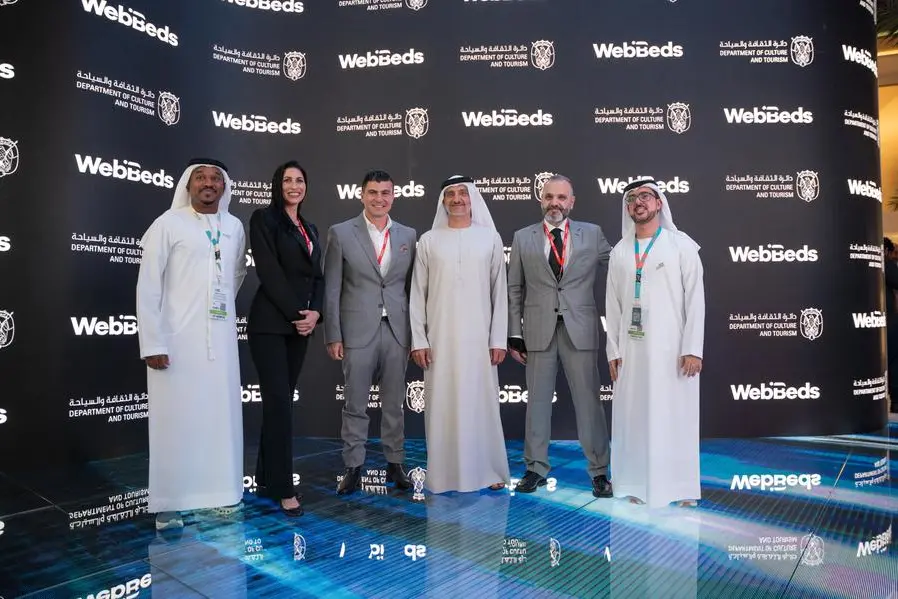

Skyscanner has launched its app in ChatGPT, allowing travelers in the Middle East to search, compare, and book flights through simple, conversational queries—bringing live pricing, flexible options, and a more intuitive trip planning experience into one seamless flow.
2 minSkyscanner, a global leader in travel, has launched the Skyscanner app in ChatGPT, enabling travelers in the Middle East to search and find the best possible options and price choices for flights in ChatGPT. Using the Skyscanner app in ChatGPT will feel like planning a trip in a natural conversation, with live results when you need them.
Travelers simply access and install the Skyscanner App in the ChatGPT App store and then start searching in ChatGPT by saying something simple like, “@skyscanner find me the cheapest flight to New York in December” for global flight options from Skyscanner, which are easily and visually displayed for the user.
From there, users will be able use the Skyscanner app to compare flight options and prices and adjust dates or airports with a quick message. It’s the Skyscanner logic and prices people trust, wrapped into a more intuitive, conversational flow.
Skyscanner is the travel app that 160M travelers rely on a month to find the best and most relevant prices on airlines. It gives travelers clear comparisons and price transparency building strong global brand trust.
“We’ve been at the forefront of cutting-edge flight search, ensuring that travelers have all the right tools to reduce friction and give them more confidence to find the right flight for them. Travelers in the Middle East can now access the Skyscanner app in ChatGPT to search for the best options and flight prices for their trip.” said Piero Sierra, Skyscanner’s Chief AI Officer, who is leading Skyscanner’s AI strategy for travel.
Separately, the company is also using AI to enhance the traveller experience across other points of the traveler journey, to reduce friction and enhance confidence when travelers are searching for their trip.
Artificial intelligence is powering Skyscanner’s car hire and hotel chatbots on its own platform which give conversational experiences to delivering faster, higher quality decisions for travelers. AI is also powering ‘Football Flight finder’ on its site which helps football fans planning their trip to the World Cup find their best flight. From the opening matches to the final whistle, ‘Football Flight finder’ simplifies multi-city travel by showing fans the best-value routes, track fare drops as fixtures are released and makes every leg of the journey easier, so travelers can eat, sleep and play like the pros.
Chief AI Officer Piero Sierra concludes, “We’ll continue evolving travel search beyond form-fills toward dynamic, answer-led experiences. We’ll scale natural language search with explainability, and expand agentic scenarios only where trust and economics work. Success in AI will be defined by better decisions and earned traveler trust.”
Paine Schwartz joins BERO as a new investor as the year-old company seeks to triple sales.

Americans now think they need at least $1.25 million for retirement, a 20% increase from a year ago, according to a survey by Northwestern Mutual



Their careers spanned the personal computing, internet and smartphone waves. But some older workers see AI’s arrival as the cue to exit.
4 min
Luke Michel has already lived through two technology overhauls in his career, first desktop publishing in the 1980s and online publishing later on. But AI? He’s had enough.
So when his employer, the Dana-Farber Cancer Institute, made an early-retirement offer to some staff last year, the 68-year-old content strategist decided to speed up his exit. Before, he had expected to work a couple more years.
“The time and energy you have to devote to learning a whole new vocabulary and a whole new skill set, it wasn’t worth it,” he said.
It isn’t that he’s shunning artificial intelligence—he is learning Spanish with the help of Anthropic’s Claude. But, at this point, he’s less than eager to endure all the ways the technology promises to upend work.
“I just want to use it for my own purposes and not someone else’s,” he said.
After rising for decades and then hovering around 40% in the 2010s, the share of Americans over 55 years old in the workforce has slipped to 37.2%, the lowest level in more than 20 years.
The financial cushion of rising home equity and stock-market returns is driving some of the decline, economists and retirement advisers say.
But for some older professionals, money is only part of the equation.
They say they don’t want to spend the last years of their career going through the tumult of AI adoption, which has brought new tools, new expectations and a lot of uncertainty.
Many people retire when key elements of their work lives are disrupted at once, said Robert Laura , co-founder of the Retirement Coaches Association and an expert on the psychology of retirement.
“Maybe their autonomy is being challenged or changed, their friends are leaving the workplace, or they disagree with the company’s direction,” he said.
“When two or three of these things show up, that’s when people start to opt out.”
“AI is a big one,” he adds. “It disrupts their autonomy, their professionalism.”
Michel, whose work required overseeing and strategizing on website content, has been here before.
When desktop publishing arrived in the 1980s, he was a graphic designer using triangles and rubber cement.
The internet’s arrival changed everything again. Both developments required new skills, and he was energized by the challenge of learning alongside colleagues and peers.
It felt different this time around. “Your battery doesn’t hold a charge as long as it used to,” he said.
He would rather spend his energy volunteering, making art, going to operas and chairing the Council on Aging in North Andover, Mass., where he lives.
In an AARP survey last summer of 5,000 people 50 and over, 25% of those who planned to retire sooner than expected counted work stress and burnout as factors.
About half of those retired said they had left work at least partly because they had the financial security to do so.
In general, older Americans are less likely than younger counterparts to use AI, research shows.
About 30% of people from ages 30 to 49 said they used ChatGPT on the job, nearly double the share of those 50 and older, according to a 2025 Pew Research Center survey of more than 5,000 adults.
Baby boomers and members of Generation X also experienced the sharpest declines in confidence using AI technology, according to a ManpowerGroup survey of more than 13,900 workers in 19 countries.
“We as employers aren’t doing a good enough job saying (to older workers), we value the skills that you already have, so much so that we want to invest in you to help you do your job better,” says Becky Frankiewicz , ManpowerGroup’s chief strategy officer.
Jennifer Kerns’s misgivings about AI contributed to her departure last month from GitHub, where the 60-year-old worked as a program manager.
Coming from a family of artists, she said, it offends her that AI models train on the creative work of people who aren’t compensated for their intellectual property. And she worries about AI’s effect on people’s critical-thinking skills.
So she was dismayed when GitHub, a Microsoft-owned hosting service for software projects, began investing heavily in AI products and expecting employees to incorporate AI into much of their work. In employee-engagement surveys, the company had begun asking them to rate their AI usage on a scale of 1 to 5.
When it came time to write reports and reviews, colleagues would suggest that she use ChatGPT.
“I’d be like, ‘I have no idea how to use that and I have no interest in using AI to write anything for me,’” she said.
It would have been more prudent to work until she was closer to Medicare eligibility, she said. But by waiting until her children were out of college and some of her stock grants had vested, the math worked.
Her first act as a nonworking person: a solo trip to Scotland, where she took a darning workshop and learned how to repair sweaters.
“The opposite of AI,” she said.
Employers already under pressure to cut workers—such as in the tech industry—may welcome some of these retirements, said Gad Levanon , chief economist at Burning Glass Institute, which studies labor-market data.
“The more people retire, the fewer they have to let go,” he said.
Some of the savviest tech users are also balking at sticking around for the AI upheaval. Terry Grimm, who worked in IT for 40 years, retired from his senior software consultant role at 65 last May.
His firm had just been acquired by a bigger firm, which meant learning and integrating the parent company’s AI and other tech tools into his work.
Until then, Grimm expected he might work a couple more years, though he felt that he probably had enough saved to retire.
“I just got to the point where I was spending 40 hours at work and then 20 hours training and studying,” said Grimm, who has since moved with his wife from the Dallas area to a housing development on a golf course in El Dorado, Ark.
“I’m like, ‘I’ll let the younger guys do this.’”
Many of the most-important events have slipped from our collective memories. But their impacts live on.

Interior designer Thomas Hamel on where it goes wrong in so many homes.



Office perks are disappearing as companies tighten costs and lean into AI-driven efficiency, leaving many employees feeling overworked, undervalued, and increasingly disengaged from workplace culture.
4 min
For employees at a Dell Technologies office, mornings used to start with a tiny dose of joy. The office coffee machines doled out free daily espresso shots, a small perk that workers relished.
Then came the buzz kill: Last year the company started charging staffers a fee every time they used the machine.
The cost, while small, felt like what one worker described as the “cherry on top” of a demoralizing work culture beset by layoffs and overwhelming workloads.
“Honestly, it feels like a funeral in the office right now,” said the employee, who pointed out that the coffee was just OK.
Dell said it is committed to supporting the well-being of its workforce.
The coffee squeeze is emblematic of a broader malaise sweeping office life at American companies, which appear to be in a race to find inefficiencies and cut costs. The curtailing of perks, from offsites to travel, is happening against the backdrop of an artificial intelligence push that employees say seems aimed at squeezing more work out of fewer people.
The upshot, many employees say, is that work has been stripped of fun.
“There’s almost nobody who is feeling positive vibes about their job right now,” said Rocco Seyboth, a longtime software marketer outside Seattle. “We’re in the AI dread era.”
Seyboth, 45, said when he started his career, the technology industry still offered plenty to excite him. Companies were growing and bosses were lavishing ever-higher pay and perks. As his career took him from startups to larger companies like Amazon, Seyboth had a realization: Work was rather miserable.
“Everyone I talked to is consumed by AI—either how to use it, how to pretend to use it, how much they hate using it, how it’s going to eliminate their position or their company’s product,” he said.
Middle managers say they’re on the front lines of the war on fun.
Once used to overseeing a handful of people, they now have far bigger teams. The average manager had roughly 12 direct reports last year, according to Gallup, a nearly 50% jump from when the firm first measured the figure in 2013. AI has changed expectations about productivity, too.
Once-reliable career paths—from business school to consulting, for instance—now look shakier.
“All the conveyor belts are broken,” said Suzy Welch, a management professor at New York University’s Stern School of Business, at a recent symposium on purpose and flourishing.
Companies are tightening scrutiny of employee expenses, meaning certain niceties are disappearing, too.
At banking software company Q2 Holdings in Austin, finance chief Jonathan Price told employees the company was taking aim at nonessential expenses that were too often wasteful, part of a larger effort to control costs. The company placed a $100 cap on a single wine-bottle purchase when entertaining clients, in part because employees were spending far more. “We’re not talking about $150 or $200 either,” said Price.
Nonessential expenses fell by over 25% in February compared with a year earlier, he said.
Chief financial officers at large U.S. companies mentioned “efficiency” at least once on 307 conference calls in the latest quarter as of March 26, up from 219 a year earlier and the highest level since at least 2020, according to AlphaSense.
Executives say it’s a delicate balance in gauging what perks, if any, to eliminate. Trimming the wine budget is one thing; touching the office snacks, like bananas or Kind bars, can be a no-go.
“You can cut too far or make people feel less valued in the workplace and they’ll just go work for the competition,” said Ken Bowles, CFO of packaging giant Smurfit Westrock.
Smurfit Westrock has been scrutinizing certain expenses following a 2024 merger, and said it surpassed its goal of $400 million in cost savings in its first full year after the deal.
The company said it asks employees to be sensible. “If someone is entertaining a customer and orders a nicer bottle of wine, that’s probably OK” in the context of the relationship, Bowles said. “But if he’s taking out the GM of a plant or controller and they’ve gone off and ordered Champagne for everybody, then you go, oh look, that’s a conversation.”
Bowles said in offices where the company struggled to retain workers postmerger, it added perks like refreshment fridges, with soft drinks, sparkling water and healthy snacks like fruit and cheese. “People do use them,” Bowles said.
Some companies stepped up perks, like better coffee and food, to encourage people to return to the office following the pandemic. But they’ve since swung back, said Bruce Daisley, a former executive at Twitter and YouTube who advises corporate leaders on culture. It’s leaving many workers with whiplash.
“Culture always outperforms every other variable in terms of what we want from the job,” Daisley said. “We typically join the job for pay, and we leave because the culture’s bad.”
Human-resources executives say they are aware of the concerns of the white-collar workforce.
“There’s fear in the workforce, maybe not feeling fulfilled in the jobs that they have,” said Jacqui Canney, chief people and AI enablement officer at the technology company ServiceNow. She said ServiceNow is training employees for new skills.
Seyboth, the technology employee, left his job at the software company Tango last year, and now regularly hears from former colleagues at a range of companies who are miserable. He now says he is retired from corporate life, freeing him to pursue new interests, like building a pool.
Many of the most-important events have slipped from our collective memories. But their impacts live on.

Following the devastation of recent flooding, experts are urging government intervention to drive the cessation of building in areas at risk.



As the warmer season sets in, Parmigiani Fleurier unveils the TONDA PF Sport Chronograph Silver Verzasca—a refined fusion of high-frequency mechanical precision and understated sporting elegance. Inspired by Switzerland’s Verzasca Valley, the timepiece balances performance and design, featuring a COSC-certified automatic chronograph and a sleek steel case that embodies functional luxury at its finest.
3 min
As the warmer season reshapes the horizon, Parmigiani Fleurier introduces a new interpretation within the TONDA PF Sport collection: the TONDA PF Sport Chronograph Silver Verzasca.
A high-frequency automatic chronograph housed in a 42 mm steel case and powered by the COSC-certified manufacture caliber PF070, this creation brings together mechanical mastery and sporting elegance in a balance that is unmistakably Parmigiani Fleurier.
It bears all the attributes of an instrument conceived for performance. Its 5 Hz frequency ensures exceptionally precise measurement of short intervals. Yet where it might appear as a purely technical device, the TONDA PF Sport Chronograph reveals another dimension: a sports watch defined by discreet elegance, where mechanical intensity meets a refined and perfectly controlled aesthetic.
THE SPIRIT OF VERZASCA: A LANDSCAPE OF MINERAL LIGHT
Its name evokes Switzerland’s Verzasca Valley, a singular landscape where alpine mineral clarity meets light of rare purity. Between rugged relief and a gentle climate, the region reveals a natural harmony that feels almost architectural.
At its heart runs the Verzasca, a river famed for its crystalline waters. Flowing between granite rocks polished by millennia of erosion, it captures and reflects the shifting sunlight with remarkable intensity. A kind of Alpine Riviera: spectacular nature, understated elegance and a culture shaped by life outdoors.
Rather than attempting to reproduce this landscape, the watch translates its balance; an art of living where precision, movement and contemplation meet.
PF070: A HIGH-FREQUENCY MANUFACTURE CHRONOGRAPH
At the heart of the timepiece beats the PF070 caliber: an automatic integrated chronograph developed within the Fleurier manufacture and certified by COSC.
Equipped with a column wheel: the most refined system for chronograph control; it oscillates at 36,000 vibrations per hour (5 Hz) and ensures remarkable chronometric stability together with exceptionally fine time measurement. Its power reserve extends to 65 hours.
Composed of 288 components and 42 jewels, the movement reveals through the sapphire caseback a refined construction: openworked, satin-finished bridges, hand-executed beveling and a skeletonized 22-carat rose gold oscillating weight, alternately polished and sandblasted.
THE DIAL: LIGHT SHAPED BY GEOMETRY
The dial features the Maison’s signature Clou triangulaire guilloché motif. This finely engraved micro-relief captures the light and transforms each movement of the wrist into a subtle play of reflections.
Against the silver-toned surface, Verzasca green accents structure the chronograph counters with clarity and evoke the mineral transparency of alpine waters.
The rhodium-plated 18-carat gold applied indices are set by hand and enhanced with a black luminescent coating to ensure legibility and contrast.
Skeletonized delta-shaped hands for hours and minutes extend the collection’s visual purity, while the chronograph and small seconds-hands introduce a discreet technical accent.
THE CASE: SCULPTED IN STEEL
The 42 mm case, crafted in polished and satin-finished stainless steel, is conceived as a study in proportion and precision. Satin surfaces interact with polished edges in a finely balanced alternation, revealing the tension of the lines and the clarity of the volumes.
The knurled bezel: an immediately recognizable Parmigiani Fleurier signature; captures reflections with rhythmic regularity and introduces a tactile dimension to the watch. Historically associated with functional instruments, this knurling enhances grip and subtly anchors the piece within the world of technical timekeeping.
The case middle naturally integrates the chronograph pushers, while the screw-down crown ensures water resistance to 100 meters.
THE RUBBER STRAP: CRAFT AND PERFORMANCE
The rubber strap reflects a thoughtful exploration of contemporary materials applied to traditional craftsmanship.
Its multi-layer construction draws inspiration from fine saddlery techniques: a rubber base coated with a textile-like surface; reinforced by a structural intermediate layer; and completed by an outer layer that provides depth and refinement.
Between these layers sits a tear-resistant technical membrane: borrowed from high-performance industries; ensuring long-term structural stability and durability.
This construction gives the strap its gently curved profile, allowing it to follow the natural contour of the wrist while offering a level of comfort rarely achieved in this category of sports watches.
DISCREET EXPRESSION OF PERFORMANCE
The TONDA PF Sport Chronograph Silver Verzasca embodies a demanding vision of the sports chronograph: a timekeeping instrument that never relinquishes its aesthetic ambition, and an object of style firmly grounded in mechanical excellence. It is conceived for those who view watchmaking not as ornament, but as a companion present in moments of effort as well as in quieter interludes; equally at ease on a mountain trail as at an exceptional dining table.
In the tradition of Michel Parmigiani, a master restorer of historic clocks before founding the Manufacture, each creation of the Maison is designed to endure and accompany generations.
The sports-car maker delivered 279,449 cars last year, down from 310,718 in 2024.



Four one-off Cullinan commissions draw on the design language of yachting, blending marine craftsmanship with Rolls-Royce’s signature bespoke detailing.
< 1 min
Rolls-Royce has revealed a new series of bespoke Cullinan motor cars inspired by the world of yachting, with four individually commissioned vehicles reflecting the materials, movement and design codes of life at sea.
Presented at Goodwood in the UK, the Cullinan Yachting collection comprises four one-off vehicles themed around the cardinal directions, North, South, East and West, each expressed through distinct exterior finishes and interior detailing.
The commissions lean heavily into maritime influence, a space Rolls-Royce says is closely aligned with its global client base.
Each vehicle features marine-grade teak, hand-painted fascia artwork inspired by the wake of a tender cutting through water, and intricate marquetry compass motifs made from more than 40 individual pieces of wood veneer.
Hand-painted elements have become an increasingly sought-after feature among Rolls-Royce clients, with the brand employing dedicated artisans to develop bespoke interior compositions.
For the Cullinan Yachting series, the painted wake effect required months of experimentation to achieve a natural sense of movement.
Inside, the vehicles are finished in Arctic White and Navy Blue leather, with hand-stitched detailing designed to echo the structure of nautical ropework. A signature Rolls-Royce Starlight
Headliner has also been reimagined, with fibre-optic constellations arranged to reflect Mediterranean wind patterns.
Each car’s exterior colour has been developed to align with its directional theme, ranging from lighter blue tones evoking northern waters to deeper hues referencing warmer southern seas and storm-lit horizons.
Rolls-Royce said the collection reflects a longstanding relationship between the marque and the world of yachting, dating back to its co-founder Charles Rolls, whose family owned a steam yacht and travelled extensively through the Mediterranean.
The release underscores the growing demand for highly personalised vehicles among ultra-high-net-worth buyers, with Rolls-Royce increasingly positioning its cars as part of a broader luxury lifestyle that extends beyond the road.
Many of the most-important events have slipped from our collective memories. But their impacts live on.




A jury in Los Angeles held Meta Platforms and YouTube liable in a $6 million case tied to a young woman’s struggles, marking the first of thousands of similar lawsuits, as plaintiffs argue platform design features caused harm while critics warn the case challenges protections under Section 230 of the Communications Decency Act and oversimplifies the complex link between social media and youth mental health.
3 min
A Los Angeles jury held Meta Platforms and Google’s YouTube liable for a 20-year-old woman’s personal troubles. The schadenfreude will be overwhelming—nail the billionaires! But using a novel product liability theory to shake down companies won’t help young people and isn’t a good way to make law.
The $6 million verdict against the two companies is the first of more than 3,000 lawsuits pending in California courts that seek to hold social-media companies liable for the travails of young people. School districts and more than 40 state Attorneys General have also sued for damages to compensate for social problems allegedly caused by the platforms.
Section 230 of the 1996 Communications Decency Act protects internet platforms from being held liable for harm caused by user-generated content. But plaintiffs are trying to dodge that law by arguing the platforms were negligent in how they designed their sites. They claim that features like so-called infinite scrolling and “like” buttons—not user posts per se—harm children. Whether this theory trumps Section 230 will be the main issue on appeal, and the platforms have a strong case.
Trial lawyers are also trying to copy the Big Tobacco playbook by arguing that company executives concealed knowledge that their sites are addictive and deleterious to kids. “This case is as easy as ABC,” lead trial attorney Mark Lanier told the jury. “Addicting, brains, children,” adding companies “didn’t just build apps, they built traps.”
The reality is that the link between youth mental health and social media is complicated. Take the 20-year-old plaintiff identified by the initials K.G.M. in the Wednesday case. She said she started using YouTube at age six and Instagram when she was nine. Both require users to be at least 13 years old, so she broke platform rules and bypassed controls.
She says her compulsive use of social media made her “feel very depressed” and that unrealistic images she saw on the platforms made her feel insecure about her appearance. But are platforms supposed to prohibit users from posting photos that might make someone feel depressed or insecure? Sorry, Californians, no posting beach photos in December.
She was also exposed to domestic abuse as a young child, which studies show can increase vulnerability to mental illness. Studies show that parenting plays a critical role in mediating and mitigating the impact of social media. Most children who use social media don’t experience severe problems.
There’s no doubt that increasing teen use of social media and smartphones over the last 15 years has coincided with rising levels of depression, anxiety and other mental illnesses. But it’s hard if not impossible to prove that social media caused any given individual’s troubles, let alone apportion liability among the platforms.
It’s also only recently that social scientists and policy makers have honed in on social media’s impact on youth mental health. The evidence presented at trial that executives purposefully designed the platforms to be addictive was weak. The trial lawyers’ best argument is that platforms should have done more to limit compulsive teen use.
But companies aren’t required to design products to prevent abuse or excessive consumption. A jury in New Mexico on Tuesday nonetheless found Meta liable in a separate case brought by the state AG for $375 million for failing to protect young people from online dangers. The temptation to find corporate scapegoats for social ills is great.
Congress for years has debated legislation to protect teens online, including stronger parental controls and privacy settings. But lawmakers have punted because, well, it’s easier to beat up Big Tech. Some Members also demand that any legislation include a right of private action that would let trial attorneys loot the companies.
Which is what these lawsuits are really about. Trial lawyers will now use the L.A. verdict in advertisements to recruit more plaintiffs. They may even use the social-media platforms to advertise. Unemployed? Depressed? Spend your Friday nights scrolling? You could make big money by holding billionaires responsible for your problems.
Trial lawyers and juries may figure that Big Tech companies can afford to pay, but extorting companies is certain to have downstream consequences. Meta and Google are spending hundreds of billions of dollars on artificial intelligence this year, which could have positive social impacts such as accelerating treatments for cancer.
The social-media shakedown is a victory for the plaintiffs bar—not for children or society.
New research suggests that bonuses make employees feel more like a mere cog in a wheel.



Qatari billionaire Sheikh Hamad bin Jassim bin Jaber Al Thani invests in German startup Neura Robotics, joining Amazon and Tether in a €1 billion funding round to back cognitive robotics innovation.
< 1 min
Qatari billionaire Sheikh Hamad bin Jassim bin Jaber Al Thani has invested in Neura Robotics, a German startup that develops cognitive robots.
Al Thani is among the investors who participated in the German firm’s massive funding round, along with Amazon, according to Bloomberg.
Neura’s corporate registry filings reportedly named the former Prime Minister of Qatar as a shareholder via a unit of his holding firm Prime Capital SA.
Prime Capital is a private investment vehicle based in Luxembourg that oversees the billionaire’s international portfolio, which includes real estate and banking.
Neura Robotics raised approximately 1 billion euros ($1.2 billion) in its funding round led by stablecoin issuer Tether Holdings.
New research suggests that bonuses make employees feel more like a mere cog in a wheel.




Rolls-Royce Motor Cars unveils the Coachbuild Collection — a new era of one-of-a-kind, never-to-be-repeated motor cars, with the first fully electric creation set to debut in April 2026.
3 min
In response to global client demand, Rolls-Royce Motor Cars announces the Coachbuild Collection: an entirely new proposition in super-luxury, in which a true coachbuilt motor car and an extraordinary multi-year program of experiences are conceived as one. Each Coachbuild Collection is rare and extravagant, authored entirely by Rolls-Royce and created on a completely new canvas, never to be repeated. Clients with a special affinity for the marque are invited to participate in the program through the global Rolls-Royce Private Office network.
AN UNPRECEDENTED COACHBUILDING LEGACY
Coachbuilding has been central to Rolls-Royce since the marque was founded. In the earliest years, a rolling chassis was delivered to specialist coachbuilders, who would design and construct a body of almost any form to the client’s precise requirements – similar to commissioning a suit on Savile Row or a dress from a Paris couturier. Charles Rolls and Henry Royce introduced one critical constraint: fixed proportions around the radiator ensured every motor car remained unmistakably a Rolls-Royce. That discipline endures today, enabling creative freedom while preserving an identity more than 120 years in the making.
THE WORLD’S MOST DESIGN-LITERATE COLLECTORS
The announcement of landmark coachbuilt motor cars in the Goodwood era – Sweptail in 2017, Boat Tail in 2021, Droptail in 2023 – deepened the affinity that the world’s most influential collectors had long held for Rolls-Royce design. For a significant and growing number among them, admiration evolved into something more.
What distinguished this group was the nature of their ambition. They were not seeking to direct the design process themselves. Instead, they were fascinated by the idea of entrusting Rolls-Royce to create something entirely of its own – to see what would emerge when the marque expressed its design principles with the total freedom of coachbuilding. This dialogue, sustained over years and geographies, became the foundation of the Coachbuild Collection.
THE COACHBUILD COLLECTION PROGRAMME
A Coachbuild Collection begins with a true coachbuilt motor car: a wholly unique body style formed, built and handcrafted by Rolls-Royce’s Coachbuild department. These motor cars will be fully homologated, road-legal, and created to be driven. Each Coachbuild Collection will be strictly limited in number and will never be repeated. Those clients known to have a special affinity for the Rolls-Royce brand, and who the marque believes would be fascinated to be part of such a remarkable project, are invited to participate in the program through the marque’s global Private Office network: unique, creative and social spaces, located in Dubai, Seoul, Shanghai, New York, and at the Home of Rolls-Royce in Goodwood.
Rolls-Royce recognised that the collectors drawn to this proposition are equally collectors of singular experiences, and conceived a program of equal ambition to reflect this. For the first Coachbuild Collection, clients will be granted exclusive access to closed testing facilities, witnessing the motor car’s development across performance and climate extremes. They will travel to locations chosen for their deep connection to this motor car’s story. They will be granted rare access to the innermost design studios within Rolls-Royce. They will be welcomed into the ateliers of master craftspeople from adjacent worlds within super-luxury, whose dedication to perfection mirrors that of Rolls-Royce itself. Clients will also gather in the world’s most desirable destinations for remarkable, curated private events at which the designers behind each Coachbuild Collection will share the inspirations and convictions that shaped it.
THE FIRST COACHBUILD COLLECTION
The design and engineering treatment of a Rolls-Royce Coachbuild Collection – as well as the number of motor cars produced, the features within them, and the experiences that participation unlocks – is not fixed and will be curated to serve the singular vision of each Collection.
The first Rolls-Royce Coachbuild Collection will be a fully electric motor car, reflecting the passion that so many clients have for a fully electric Rolls-Royce. Many of the collectors who inspired the Coachbuild Collections program are existing Spectre owners who celebrate how its electric powertrain elevates the Rolls-Royce experience. For these individuals, the question of how the first Coachbuild Collection should be powered had only one answer. That so many of the world’s most exacting collectors responded this way is the most authentic measure of what Rolls-Royce has achieved with electrification.
“Coachbuild Collection clients seek to experience at the absolute pinnacle of our craft. What we will reveal in April is an extraordinary expression of contemporary Rolls-Royce coachbuilding, extravagant and yet silent.” – Chris Brownridge, Chief Executive, Rolls-Royce Motor Cars.
The inaugural Coachbuild Collection represents a deeply considered first statement – one shaped as much by the convictions of its collectors as by the marque itself. Further details will be announced in April 2026.
Paine Schwartz joins BERO as a new investor as the year-old company seeks to triple sales.




Two coming 2027 models – the first of the “Neue Klasse” cars coming to the U.S. early next year – have been revealed.
2 min
The current BMW i5 electric sedan has an official range of 278 to 310 miles, and it might be closer to 250 to 270 in the real world.
That is why the coming 2027 BMW i3 50 xDrive—the first of the “Neue Klasse” cars coming to the U.S. early next year and just revealed to the world—is such a game changer.
The range is estimated at 440 miles, beating most EVs on the road now, and it is coupled with exciting performance, including zero-to-60 estimated at 3.8 seconds and an impressive 463 horsepower (with 476 pound-feet of torque) from a pair of electric motors, delivering xDrive to all four wheels.
A single-motor version is down the road. The price isn’t out yet, but it is likely to begin between US$55,000 and $65,000.
If sedans aren’t your thing, the electric 3-Series will also be offered as an approximately $60,000 iX3 crossover SUV, which has a similar powertrain and performance.
The twin-motor iX3 50 xDrive has a slightly lower 400 miles of range, due in part to its less-aerodynamic shape compared with the i3. It is also not quite as speedy, getting to 60 mph in 4.7 seconds.
BMW design has been iffy lately, and virtually no one loves the cars with the huge kidney grilles, but the “Neue Klasse” turns the page, and the i3 and iX3 are both strikingly handsome.
The i3 isn’t a particularly lightweight vehicle, at approximately 4,850 pounds, which is why both the i3 and iX3 need a huge 108-kilowatt-hour battery pack.
The drawback could be longer charge times, but up to 400-kilowatt plug ins are available here.
At a DC fast charger, a charge from 10% to 80% should take only 21 minutes.
A 19.2-kilowatt home charger is available. The pack supports standard bidirectional charging, which means it could theoretically provide power to your home during an outage.
A bonus is that the big battery can also supply 3,700 watts for whatever you have in mind, from tailgating to camping.
The cars share basic suspension, but on the sedan an adaptive M-branded suspension is available.
Both BMWs introduce the new Panoramic iDrive, which features an 18-inch touch screen angled at the driver.
Early users say it is incredibly responsive. Inside, the standard trim features Econeer upholstery that is 100% fabricated from recycled PET bottles.
M Design cars upgrade to black Veganza (aka vegan leather). The top trim is BMW Individual with black Merino leather.
It is standard for automakers to introduce their fully loaded models out of the gate, with the more bread-and-butter versions appearing later.
BMW is certainly doing that here, but i3s and iX3s priced below $50,000 are expected fairly soon.
The momentum for electrics has certainly slowed, but cars like these—offering performance, dynamics and features superior to the conventional alternatives—should help EVs get back on track.
Two coming 2027 models – the first of the “Neue Klasse” cars coming to the U.S. early next year – have been revealed.




Tesla records first monthly sales growth in Europe in over a year, but faces rising competition from BYD.
2 min
Tesla TSLA 3.50%increase; notched its first increase in European monthly sales in more than a year, a boost for Elon Musk’s electric-vehicle maker as it faces intense competition from Chinese auto giant BYD to win over customers in the region.
New-car registrations for Tesla models, a reflection of sales, grew nearly 12% on year in February to 17,664 units across the European Union, the U.K., Iceland, Liechtenstein, Norway and Switzerland, according to the European Automobile Manufacturers’ Association, an industry body also known as ACEA. In the EU alone, sales climbed 29% from a year earlier.
The figure shows that Tesla remains a key contender for European drivers in need of electric vehicles despite a monthslong slump in sales. Tesla hadn’t logged an increase in monthly new-car registrations in Europe since December 2024, according to ACEA data.
The group faced customer backlash last year due to Musk’s involvement with the Trump administration: The billionaire had been overseeing the Department of Government Efficiency before leaving the administration in late May.
Meanwhile, competition from Chinese rival BYD, with its lineup of electric and hybrid vehicles, gained intensity in Europe. BYD sales have surged every month since ACEA began including the company in its data last summer, showing it grow to become a fierce competitor of Tesla. BYD recently dethroned Tesla as the world’s biggest EV seller.
BYD’s new-car registrations in Europe nearly tripled last month to 17,954 units, outselling Tesla. Still, despite BYD’s success and Tesla’s recovery, ACEA figures show that domestic carmakers remain the top sellers in Europe in absolute numbers.
Germany’s Volkswagen reported a 2.2% increase in registrations to 256,452 vehicles last month, while sales for Jeep maker Stellantis increased 9.5% to 170,816 units, according to ACEA figures that include both electric and other types of vehicles.
Several carmakers have had to review their lineups and scale back EV production in recent years as they struggled to convince drivers to transition to electric. In February, Stellantis said it would book charges of about $26 billion as part of a shift away from electric vehicles amid weaker-than-expected demand.
The market for battery-electric vehicles in Europe grew nearly 16% last month. Registrations of hybrid-electric cars increased over 10%, while plug-in-hybrid models logged 33% growth.
Many of the most-important events have slipped from our collective memories. But their impacts live on.



AWS services in Bahrain disrupted by drone activity, with customers being moved to alternate regions amid rising regional tensions.
< 1 min
Amazon said its Amazon Web Services region in Bahrain has been “disrupted” amid the current conflict in the Middle East.
The disruption is due to drone activity in the area, an Amazon spokesperson said, following a Reuters inquiry. Reuters is first to report on the disruption.
Amazon said it is helping to migrate customers to alternate AWS regions while it recovers, though it did not provide additional details such as the extent of the damage or how long it anticipates the disruption to last.
“As this situation evolves and, as we have advised before, we request those with workloads in the affected regions continue to migrate to other locations,” Amazon said in a statement Monday night.
AWS is Amazon’s cloud computing unit and critical for the operation of many well-known websites and government operations. It is also the company’s main driver of profits.
The disruption marks the second time since the start of the U.S.-Israeli war on Iran that AWS’ Bahrain region has been struck by drones. Earlier this month AWS reported that facilities in Bahrain and the United Arab Emirates had been affected by power outages and it was working to recover.
Two coming 2027 models – the first of the “Neue Klasse” cars coming to the U.S. early next year – have been revealed.