







How Old Are You Really? Meet Your ‘Biological Age’
Biological age won’t help you live forever, but a ‘credit score for your body’ might prolong your lifespan, some scientists say.
 4 min
4 min
Biological age—a measure of health that can be more or less than your chronological age—might help determine your quality of life as you get older, scientists say.
The idea behind biological age is that your cells and organs have ages that vary from your regular age. Many aging-research scientists believe that knowing your biological age could help you postpone or avoid Alzheimer’s, cancer, cardiovascular disease or other age-related illnesses. Some also believe biological age can better predict an individual’s lifespan.
Other scientists agree that biological age is important but disagree that it can predict your life. They say there is no standard way to measure biological age and many of the tools in development aren’t yet proven. At the centre of the debate are hopes that people can prolong their lives by changing their behaviours; a crop of companies are betting on it.
David Sinclair, professor of genetics and co-director of the Paul F. Glenn Center for Biology of Aging Research at Harvard Medical School, is among the researchers and entrepreneurs promoting the notion of a biological age. He describes it as “like a credit score for your body.”
Dr. Sinclair is 52 chronologically but says he is biologically more like 42. Dr. Sinclair is a co-founder of a new company that is developing a biological-age test.
Some scientists calculate the metric by analyzing biomarkers in blood or saliva; other scientists and engineers do it by comparing individuals with broader aging patterns.
The activities that influence biological age—such as sleep, exercise and diet—are essentially the good habits we already know about. But since everybody’s genes are different, tracking your biological age could help determine which habits are most helpful and how to customize them. For one person, 10,000 steps a day could be optimal, while it is 6,000 for someone else.
People also can attempt to lower their biological age through meditation, yoga or other ways of effectively managing stress. Some, including Dr. Sinclair, use supplements to try to make themselves younger.
Scientists studying aging hope that eventually, individuals will be able to accurately measure their biological age and uncover the steps that influence it to forestall chronic disease and possibly live longer.
Even so, some scientists are sceptical of the process. Some think that even if you do know your biological age, it is a stretch to believe that you could use the concept to help you live longer.
Alex Zhavoronkov, chief executive of Insilico Medicine, which uses artificial intelligence to develop drugs targeting age-related diseases, says biological age is a useful concept for drug development. But he says he doubts that people will be able to use behaviours to live longer, based on studies of lifespan in different countries around the world.
“Extreme optimization of sleep, exercise and diet is unlikely to result in dramatic lifespan increases,” he says.
Growing interest in biological age is fueled by advances in the field of epigenetics, the study of how gene expression is affected by behaviours and the environment.
Dr. Sinclair at Harvard is developing a biological-age test based on chemical changes on DNA found in cells from the side of the cheek taken in a swab you do at home. He plans to launch it with a new company called Tally Health.
Dr. Sinclair has been criticized by other scientists for hyping the results of some of his findings, like the antiaging effects found in the compound resveratrol, claims he rebuts. He says that he doesn’t overstate his research findings and that the resveratrol research was published in leading scientific journals. He has co-founded more than a dozen biotech companies and is invested in most of them, including some that are developing therapeutics that target the biology of aging.
Segterra Inc.’s InsideTracker, a personalized-nutrition company founded by scientists from Harvard, Tufts University and the Massachusetts Institute of Technology, calculates biological age by having users take blood tests and analyzing the samples for markers of conditions like inflammation, heart health and liver or kidney disorder. Those who test as older than their years get recommendations to adjust diet, exercise and supplements.
Many other health startups are offering testing that purports to calculate biological age, sometimes with little scientific backing, and designing supplements aimed at boosting youthfulness.
Stephen Roberts, a winery owner in France, tested himself earlier this year with an at-home blood test by U.K.-based biotech company GlycanAge Ltd. The test was part of an effort by Mr. Roberts to improve his health at age 51.
“I drink. I sometimes smoke and party and eat what I want,” he says, so he expected his biological age to be a lot older than his calendar age.
He says he was shocked when test results reported hisbiological age was 24.
“My first reaction was: ‘This is wrong.’” He says he hasn’t made any changes as a result of the test but plans to test again later this year.
Gordan Lauc, professor of biochemistry and molecular biology at the University of Zagreb, in Croatia, and chief scientific officer of GlycanAge, says the results make sense given Mr. Roberts’s genetics—longevity runs in his family—and lifestyle, which is likely lower-stress than most.
Michael Roizen, an anesthesiologist and chief wellness officer emeritus at the Cleveland Clinic, created one of the first biological age calculators 25 years ago based on a questionnaire. He sold it to digital health company Sharecare Inc., where he receives stock options as a member of its scientific advisory board.
Dr. Roizen now has a book and website due out in the spring, part of a new company he says will be aimed at helping people understand how to live longer.
Exercise, for instance, does more than strengthen your heart, he says. Working out switches on a gene that starts a chain reaction that increases secretion of a protein that improves memory, studies show. Your methods of managing stress can switch on or off the functioning of more than 250 genes, Dr. Roizen says.
“Your choices have a much more profound effect than just changing whether your heart is beating fast or slow,” says Dr. Roizen.
Reprinted by permission of The Wall Street Journal, Copyright 2021 Dow Jones & Company. Inc. All Rights Reserved Worldwide. Original date of publication: May 24, 2022.
Two coming 2027 models – the first of the “Neue Klasse” cars coming to the U.S. early next year – have been revealed.

Tesla records first monthly sales growth in Europe in over a year, but faces rising competition from BYD.

AWS services in Bahrain disrupted by drone activity, with customers being moved to alternate regions amid rising regional tensions.
A jury in Los Angeles held Meta Platforms and YouTube liable in a $6 million case tied to a young woman’s struggles, marking the first of thousands of similar lawsuits, as plaintiffs argue platform design features caused harm while critics warn the case challenges protections under Section 230 of the Communications Decency Act and oversimplifies the complex link between social media and youth mental health.
3 min
A Los Angeles jury held Meta Platforms and Google’s YouTube liable for a 20-year-old woman’s personal troubles. The schadenfreude will be overwhelming—nail the billionaires! But using a novel product liability theory to shake down companies won’t help young people and isn’t a good way to make law.
The $6 million verdict against the two companies is the first of more than 3,000 lawsuits pending in California courts that seek to hold social-media companies liable for the travails of young people. School districts and more than 40 state Attorneys General have also sued for damages to compensate for social problems allegedly caused by the platforms.
Section 230 of the 1996 Communications Decency Act protects internet platforms from being held liable for harm caused by user-generated content. But plaintiffs are trying to dodge that law by arguing the platforms were negligent in how they designed their sites. They claim that features like so-called infinite scrolling and “like” buttons—not user posts per se—harm children. Whether this theory trumps Section 230 will be the main issue on appeal, and the platforms have a strong case.
Trial lawyers are also trying to copy the Big Tobacco playbook by arguing that company executives concealed knowledge that their sites are addictive and deleterious to kids. “This case is as easy as ABC,” lead trial attorney Mark Lanier told the jury. “Addicting, brains, children,” adding companies “didn’t just build apps, they built traps.”
The reality is that the link between youth mental health and social media is complicated. Take the 20-year-old plaintiff identified by the initials K.G.M. in the Wednesday case. She said she started using YouTube at age six and Instagram when she was nine. Both require users to be at least 13 years old, so she broke platform rules and bypassed controls.
She says her compulsive use of social media made her “feel very depressed” and that unrealistic images she saw on the platforms made her feel insecure about her appearance. But are platforms supposed to prohibit users from posting photos that might make someone feel depressed or insecure? Sorry, Californians, no posting beach photos in December.
She was also exposed to domestic abuse as a young child, which studies show can increase vulnerability to mental illness. Studies show that parenting plays a critical role in mediating and mitigating the impact of social media. Most children who use social media don’t experience severe problems.
There’s no doubt that increasing teen use of social media and smartphones over the last 15 years has coincided with rising levels of depression, anxiety and other mental illnesses. But it’s hard if not impossible to prove that social media caused any given individual’s troubles, let alone apportion liability among the platforms.
It’s also only recently that social scientists and policy makers have honed in on social media’s impact on youth mental health. The evidence presented at trial that executives purposefully designed the platforms to be addictive was weak. The trial lawyers’ best argument is that platforms should have done more to limit compulsive teen use.
But companies aren’t required to design products to prevent abuse or excessive consumption. A jury in New Mexico on Tuesday nonetheless found Meta liable in a separate case brought by the state AG for $375 million for failing to protect young people from online dangers. The temptation to find corporate scapegoats for social ills is great.
Congress for years has debated legislation to protect teens online, including stronger parental controls and privacy settings. But lawmakers have punted because, well, it’s easier to beat up Big Tech. Some Members also demand that any legislation include a right of private action that would let trial attorneys loot the companies.
Which is what these lawsuits are really about. Trial lawyers will now use the L.A. verdict in advertisements to recruit more plaintiffs. They may even use the social-media platforms to advertise. Unemployed? Depressed? Spend your Friday nights scrolling? You could make big money by holding billionaires responsible for your problems.
Trial lawyers and juries may figure that Big Tech companies can afford to pay, but extorting companies is certain to have downstream consequences. Meta and Google are spending hundreds of billions of dollars on artificial intelligence this year, which could have positive social impacts such as accelerating treatments for cancer.
The social-media shakedown is a victory for the plaintiffs bar—not for children or society.
Two coming 2027 models – the first of the “Neue Klasse” cars coming to the U.S. early next year – have been revealed.
Many of the most-important events have slipped from our collective memories. But their impacts live on.



Qatari billionaire Sheikh Hamad bin Jassim bin Jaber Al Thani invests in German startup Neura Robotics, joining Amazon and Tether in a €1 billion funding round to back cognitive robotics innovation.
< 1 min
Qatari billionaire Sheikh Hamad bin Jassim bin Jaber Al Thani has invested in Neura Robotics, a German startup that develops cognitive robots.
Al Thani is among the investors who participated in the German firm’s massive funding round, along with Amazon, according to Bloomberg.
Neura’s corporate registry filings reportedly named the former Prime Minister of Qatar as a shareholder via a unit of his holding firm Prime Capital SA.
Prime Capital is a private investment vehicle based in Luxembourg that oversees the billionaire’s international portfolio, which includes real estate and banking.
Neura Robotics raised approximately 1 billion euros ($1.2 billion) in its funding round led by stablecoin issuer Tether Holdings.
Two coming 2027 models – the first of the “Neue Klasse” cars coming to the U.S. early next year – have been revealed.

New research suggests that bonuses make employees feel more like a mere cog in a wheel.


Rolls-Royce Motor Cars unveils the Coachbuild Collection — a new era of one-of-a-kind, never-to-be-repeated motor cars, with the first fully electric creation set to debut in April 2026.
3 min
In response to global client demand, Rolls-Royce Motor Cars announces the Coachbuild Collection: an entirely new proposition in super-luxury, in which a true coachbuilt motor car and an extraordinary multi-year program of experiences are conceived as one. Each Coachbuild Collection is rare and extravagant, authored entirely by Rolls-Royce and created on a completely new canvas, never to be repeated. Clients with a special affinity for the marque are invited to participate in the program through the global Rolls-Royce Private Office network.
AN UNPRECEDENTED COACHBUILDING LEGACY
Coachbuilding has been central to Rolls-Royce since the marque was founded. In the earliest years, a rolling chassis was delivered to specialist coachbuilders, who would design and construct a body of almost any form to the client’s precise requirements – similar to commissioning a suit on Savile Row or a dress from a Paris couturier. Charles Rolls and Henry Royce introduced one critical constraint: fixed proportions around the radiator ensured every motor car remained unmistakably a Rolls-Royce. That discipline endures today, enabling creative freedom while preserving an identity more than 120 years in the making.
THE WORLD’S MOST DESIGN-LITERATE COLLECTORS
The announcement of landmark coachbuilt motor cars in the Goodwood era – Sweptail in 2017, Boat Tail in 2021, Droptail in 2023 – deepened the affinity that the world’s most influential collectors had long held for Rolls-Royce design. For a significant and growing number among them, admiration evolved into something more.
What distinguished this group was the nature of their ambition. They were not seeking to direct the design process themselves. Instead, they were fascinated by the idea of entrusting Rolls-Royce to create something entirely of its own – to see what would emerge when the marque expressed its design principles with the total freedom of coachbuilding. This dialogue, sustained over years and geographies, became the foundation of the Coachbuild Collection.
THE COACHBUILD COLLECTION PROGRAMME
A Coachbuild Collection begins with a true coachbuilt motor car: a wholly unique body style formed, built and handcrafted by Rolls-Royce’s Coachbuild department. These motor cars will be fully homologated, road-legal, and created to be driven. Each Coachbuild Collection will be strictly limited in number and will never be repeated. Those clients known to have a special affinity for the Rolls-Royce brand, and who the marque believes would be fascinated to be part of such a remarkable project, are invited to participate in the program through the marque’s global Private Office network: unique, creative and social spaces, located in Dubai, Seoul, Shanghai, New York, and at the Home of Rolls-Royce in Goodwood.
Rolls-Royce recognised that the collectors drawn to this proposition are equally collectors of singular experiences, and conceived a program of equal ambition to reflect this. For the first Coachbuild Collection, clients will be granted exclusive access to closed testing facilities, witnessing the motor car’s development across performance and climate extremes. They will travel to locations chosen for their deep connection to this motor car’s story. They will be granted rare access to the innermost design studios within Rolls-Royce. They will be welcomed into the ateliers of master craftspeople from adjacent worlds within super-luxury, whose dedication to perfection mirrors that of Rolls-Royce itself. Clients will also gather in the world’s most desirable destinations for remarkable, curated private events at which the designers behind each Coachbuild Collection will share the inspirations and convictions that shaped it.
THE FIRST COACHBUILD COLLECTION
The design and engineering treatment of a Rolls-Royce Coachbuild Collection – as well as the number of motor cars produced, the features within them, and the experiences that participation unlocks – is not fixed and will be curated to serve the singular vision of each Collection.
The first Rolls-Royce Coachbuild Collection will be a fully electric motor car, reflecting the passion that so many clients have for a fully electric Rolls-Royce. Many of the collectors who inspired the Coachbuild Collections program are existing Spectre owners who celebrate how its electric powertrain elevates the Rolls-Royce experience. For these individuals, the question of how the first Coachbuild Collection should be powered had only one answer. That so many of the world’s most exacting collectors responded this way is the most authentic measure of what Rolls-Royce has achieved with electrification.
“Coachbuild Collection clients seek to experience at the absolute pinnacle of our craft. What we will reveal in April is an extraordinary expression of contemporary Rolls-Royce coachbuilding, extravagant and yet silent.” – Chris Brownridge, Chief Executive, Rolls-Royce Motor Cars.
The inaugural Coachbuild Collection represents a deeply considered first statement – one shaped as much by the convictions of its collectors as by the marque itself. Further details will be announced in April 2026.
Two coming 2027 models – the first of the “Neue Klasse” cars coming to the U.S. early next year – have been revealed.

Parts for iPhones to cost more owing to surging demand from AI companies.



Two coming 2027 models – the first of the “Neue Klasse” cars coming to the U.S. early next year – have been revealed.
2 min
The current BMW i5 electric sedan has an official range of 278 to 310 miles, and it might be closer to 250 to 270 in the real world.
That is why the coming 2027 BMW i3 50 xDrive—the first of the “Neue Klasse” cars coming to the U.S. early next year and just revealed to the world—is such a game changer.
The range is estimated at 440 miles, beating most EVs on the road now, and it is coupled with exciting performance, including zero-to-60 estimated at 3.8 seconds and an impressive 463 horsepower (with 476 pound-feet of torque) from a pair of electric motors, delivering xDrive to all four wheels.
A single-motor version is down the road. The price isn’t out yet, but it is likely to begin between US$55,000 and $65,000.
If sedans aren’t your thing, the electric 3-Series will also be offered as an approximately $60,000 iX3 crossover SUV, which has a similar powertrain and performance.
The twin-motor iX3 50 xDrive has a slightly lower 400 miles of range, due in part to its less-aerodynamic shape compared with the i3. It is also not quite as speedy, getting to 60 mph in 4.7 seconds.
BMW design has been iffy lately, and virtually no one loves the cars with the huge kidney grilles, but the “Neue Klasse” turns the page, and the i3 and iX3 are both strikingly handsome.
The i3 isn’t a particularly lightweight vehicle, at approximately 4,850 pounds, which is why both the i3 and iX3 need a huge 108-kilowatt-hour battery pack.
The drawback could be longer charge times, but up to 400-kilowatt plug ins are available here.
At a DC fast charger, a charge from 10% to 80% should take only 21 minutes.
A 19.2-kilowatt home charger is available. The pack supports standard bidirectional charging, which means it could theoretically provide power to your home during an outage.
A bonus is that the big battery can also supply 3,700 watts for whatever you have in mind, from tailgating to camping.
The cars share basic suspension, but on the sedan an adaptive M-branded suspension is available.
Both BMWs introduce the new Panoramic iDrive, which features an 18-inch touch screen angled at the driver.
Early users say it is incredibly responsive. Inside, the standard trim features Econeer upholstery that is 100% fabricated from recycled PET bottles.
M Design cars upgrade to black Veganza (aka vegan leather). The top trim is BMW Individual with black Merino leather.
It is standard for automakers to introduce their fully loaded models out of the gate, with the more bread-and-butter versions appearing later.
BMW is certainly doing that here, but i3s and iX3s priced below $50,000 are expected fairly soon.
The momentum for electrics has certainly slowed, but cars like these—offering performance, dynamics and features superior to the conventional alternatives—should help EVs get back on track.

Paine Schwartz joins BERO as a new investor as the year-old company seeks to triple sales.
The sports-car maker delivered 279,449 cars last year, down from 310,718 in 2024.


Tesla records first monthly sales growth in Europe in over a year, but faces rising competition from BYD.
2 minTesla TSLA 3.50%increase; notched its first increase in European monthly sales in more than a year, a boost for Elon Musk’s electric-vehicle maker as it faces intense competition from Chinese auto giant BYD to win over customers in the region.
New-car registrations for Tesla models, a reflection of sales, grew nearly 12% on year in February to 17,664 units across the European Union, the U.K., Iceland, Liechtenstein, Norway and Switzerland, according to the European Automobile Manufacturers’ Association, an industry body also known as ACEA. In the EU alone, sales climbed 29% from a year earlier.
The figure shows that Tesla remains a key contender for European drivers in need of electric vehicles despite a monthslong slump in sales. Tesla hadn’t logged an increase in monthly new-car registrations in Europe since December 2024, according to ACEA data.
The group faced customer backlash last year due to Musk’s involvement with the Trump administration: The billionaire had been overseeing the Department of Government Efficiency before leaving the administration in late May.
Meanwhile, competition from Chinese rival BYD, with its lineup of electric and hybrid vehicles, gained intensity in Europe. BYD sales have surged every month since ACEA began including the company in its data last summer, showing it grow to become a fierce competitor of Tesla. BYD recently dethroned Tesla as the world’s biggest EV seller.
BYD’s new-car registrations in Europe nearly tripled last month to 17,954 units, outselling Tesla. Still, despite BYD’s success and Tesla’s recovery, ACEA figures show that domestic carmakers remain the top sellers in Europe in absolute numbers.
Germany’s Volkswagen reported a 2.2% increase in registrations to 256,452 vehicles last month, while sales for Jeep maker Stellantis increased 9.5% to 170,816 units, according to ACEA figures that include both electric and other types of vehicles.
Several carmakers have had to review their lineups and scale back EV production in recent years as they struggled to convince drivers to transition to electric. In February, Stellantis said it would book charges of about $26 billion as part of a shift away from electric vehicles amid weaker-than-expected demand.
The market for battery-electric vehicles in Europe grew nearly 16% last month. Registrations of hybrid-electric cars increased over 10%, while plug-in-hybrid models logged 33% growth.
The sports-car maker delivered 279,449 cars last year, down from 310,718 in 2024.

Chris Dixon, a partner who led the charge, says he has a ‘very long-term horizon’


AWS services in Bahrain disrupted by drone activity, with customers being moved to alternate regions amid rising regional tensions.
< 1 minAmazon said its Amazon Web Services region in Bahrain has been “disrupted” amid the current conflict in the Middle East.
The disruption is due to drone activity in the area, an Amazon spokesperson said, following a Reuters inquiry. Reuters is first to report on the disruption.
Amazon said it is helping to migrate customers to alternate AWS regions while it recovers, though it did not provide additional details such as the extent of the damage or how long it anticipates the disruption to last.
“As this situation evolves and, as we have advised before, we request those with workloads in the affected regions continue to migrate to other locations,” Amazon said in a statement Monday night.
AWS is Amazon’s cloud computing unit and critical for the operation of many well-known websites and government operations. It is also the company’s main driver of profits.
The disruption marks the second time since the start of the U.S.-Israeli war on Iran that AWS’ Bahrain region has been struck by drones. Earlier this month AWS reported that facilities in Bahrain and the United Arab Emirates had been affected by power outages and it was working to recover.
New research suggests that bonuses make employees feel more like a mere cog in a wheel.

Americans now think they need at least $1.25 million for retirement, a 20% increase from a year ago, according to a survey by Northwestern Mutual


Jordan and Bulgaria explore stronger agricultural cooperation, focusing on investment opportunities, technology exchange, and sustainable development to advance shared economic interests.
< 1 min
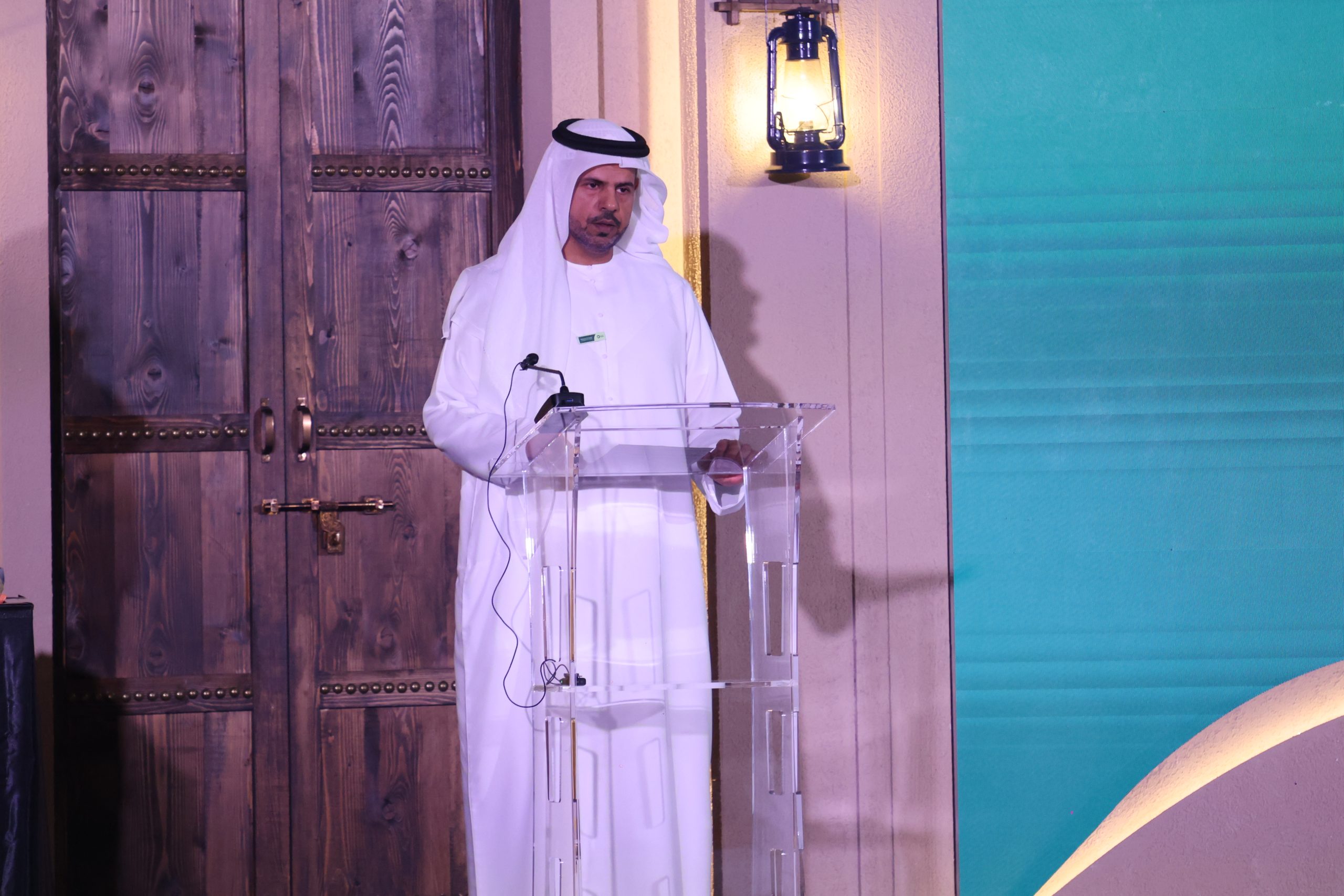
Minister of Agriculture Saeb Khreisat and Bulgarian Ambassador Metin Kazak discussed prospects of cooperation across a range of agricultural fields.
The minister underscored the deep Jordanian-Bulgarian ties and stressed the need to build on these to advance cooperation in the agricultural sector to achieve shared interests, the Jordan News Agency, Petra, reported.
The minister said, Jordan is a “favorable” environment for agricultural investment, urging “expanded” joint investment opportunities between the public and private sectors in both countries.
He highlighted the importance of exchanging agricultural products and cooperating in agricultural production inputs to support sustainable agricultural development.
Khreisat also discussed the possibility of Bulgarian agricultural companies taking part in events and activities held in Jordan, particularly those linked to European partnership frameworks.
The Bulgarian ambassador commended the level of relations with Jordan, and reaffirmed his country’s commitment to expanding cooperation across various sectors, particularly agriculture, through promoting expertise-sharing, technology transfer and joint investment.
The sports-car maker delivered 279,449 cars last year, down from 310,718 in 2024.

Interior designer Thomas Hamel on where it goes wrong in so many homes.



Aimed at easing burdens and supporting supply chain continuity amid current challenges.
< 1 min
Mwani Qatar has activated an exceptional package of facilitations in port tariffs, aimed at supporting the logistics sector and facilitating operational activities in the country.
It announced amendments to certain provisions of the port tariffs, in view of the exceptional circumstances currently impacting supply chains and the resulting operational and logistical challenges.
“This facilitation comes as part of the Ministry of Transport’s strategy to support the private sector and partnerships,” stated Mwani Qatar.
It further added that this initiative comes within the framework of Mwani Qatar commitment to reducing financial burdens on customers, providing suitable and flexible storage options that meet the needs of various sectors, and ensuring the continuity of import, export, and supply chain operations during this critical period.
Mwani Qatar also stated that this decision shall remain in effect throughout the exceptional phase until further notice.
Paine Schwartz joins BERO as a new investor as the year-old company seeks to triple sales.

Following the devastation of recent flooding, experts are urging government intervention to drive the cessation of building in areas at risk.



Saudi Arabia advances power infrastructure ahead of Expo 2030 Riyadh, boosting grid capacity and urban development in the capital.
< 1 min
Saudi Energy, a leading electricity producer in the kingdom, has invited bids for a key power infrastructure project as part of the upcoming Expo 2030 Riyadh.
The tender covers the development of three 132/13.8kV substations, along with associated works to interconnect the facilities with the national electricity grid.
It forms part of the broader infrastructure program aimed at ensuring reliable power supply for the large-scale international event.
The planned substations will support the electricity demand of the Expo site and surrounding developments, strengthening the transmission and distribution network in the host city of Riyadh.
Expo 2030 Riyadh is expected to drive significant infrastructure investments across power, transport, and utilities as the Kingdom prepares to host millions of visitors during the global exhibition. The new substations will play a key role in enhancing grid capacity and operational reliability for the event and future urban growth in the capital.
In another big development, Saudi Energy’s key unit Project Development Company said it has started removing electricity transmission towers on Prince Mohammed bin Salman Road and replacing them with underground cables.
This project comes in support of Sports Boulevard Foundation ‘s goals, a step that contributes to the development of the city’s urban landscape while maintaining the efficiency and sustainability of the energy infrastructure, it added.
Parts for iPhones to cost more owing to surging demand from AI companies.


Formula 1 confirmed that the Bahrain and Saudi Arabian Grands Prix will not take place in April due to the ongoing situation in the Middle East. Safety remains the top priority, with no replacement races scheduled.
2 min
It has been confirmed today that, after careful evaluations, due to the ongoing situation in the Middle East region, the Bahrain and Saudi Arabian Grands Prix will not take place in April.
While several alternatives were considered, it was ultimately decided that no substitutions will be made in April. The FIA Formula 2, FIA Formula 3 and F1 Academy rounds will also not take place during their scheduled times.
The decision has been taken in full consultation with Formula One Group, local promoters and our Member Clubs in the region.
Mohammed Ben Sulayem, FIA President, said: “The FIA will always place the safety and wellbeing of our community and colleagues first. After careful consideration, we have taken this decision with that responsibility firmly in mind.
“We continue to hope for calm, safety and a swift return to stability in the region, and my thoughts remain with all those affected by these recent events.
“Bahrain and Saudi Arabia are incredibly important to the ecosystem of our racing season, and I look forward to returning to both as soon as circumstances allow. My sincere thanks to the promoters, our partners, and our colleagues across the championship for the collaborative and constructive approach that has led to this decision.”
Stefano Domenicali, Formula One Group President and CEO, said: “While this was a difficult decision to take, it is unfortunately the right one at this stage considering the current situation in the Middle East.
“I want to take this opportunity to thank the FIA as well as our incredible promoters for their support and total understanding as they were looking forward to hosting us with their usual energy and passion. We cannot wait to be back with them as soon as the circumstances allow us to do so.”
Sheikh Salman bin Isa Al Khalifa, Chief Executive of the Bahrain International Circuit, said: “We fully support the decision by Formula 1, and we are grateful to them and to the FIA for their support and enduring partnership. We look forward to welcoming fans from all around the world back to Bahrain when F1 returns.
“On behalf of all of us at BIC, I take this opportunity to offer our sincere thanks to all those in the F1 community who have taken the time to send us messages of support.”
HRH Prince Khalid bin Sultan Al-Abdullah Al-Faisal, Chairman of the Saudi Automobile and Motorcycle Federation (SAMF) and Chairman of the Saudi Motorsport Company (SMC), said:
“The Saudi Automobile and Motorcycle Federation respect the decision taken by Formula 1 regarding the 2026 race calendar.
“Fans across the Kingdom were once again looking forward to the Formula 1 STC Saudi Arabian Grand Prix in Jeddah this April, but we understand the considerations behind this decision and remain in close partnership with Formula 1.”
The sports-car maker delivered 279,449 cars last year, down from 310,718 in 2024.




Across the GCC, digital transformation is evolving beyond service modernization to focus on trust, sovereignty, and secure digital infrastructure. As governments expand digital services, experts say the communication layer remains a critical blind spot, with many institutions still relying on channels not designed for high-trust interactions.
3 min
Across the GCC, digital transformation has moved beyond service modernization. It has become a question of national capability. Governments are not only digitizing processes. They are shaping the foundations of future societies through digital identity, sovereign infrastructure, trusted data governance, and seamless citizen services.
But there is a blind spot in many transformation agendas.
While major investments are being made in platforms, portals, and digital access, the communication layer is often still fragmented. Sensitive messages continue to move through channels that were designed for convenience, not trust. That matters, because digital trust is rarely won or lost in the interface. It is won or lost at the moment a citizen, business, or institution receives information that carries legal, financial, or personal consequences.
The GCC is not lacking ambition. It is raising the standard
Across the region, national programs increasingly point in the same direction. Qatar’s TASMU Smart Nation Program, Oman Vision 2040, the UAE Digital Government Strategy 2025, and Saudi Arabia’s Vision 2030 all reflect a broader shift in how public value is being defined. Digital government is no longer just about access or efficiency. It is about resilience, legitimacy, and sovereignty.
That evolution matters. As services become more digital, the threshold for trust also rises. Citizens and organizations do not judge transformation by strategy papers. They judge it by lived experience. Can they trust the message they receive? Can they verify who sent it? Can they act on it with confidence? Can institutions prove what was delivered, when, and to whom?
Those questions may sound operational, but they are strategic. If the answer is unclear, trust in the wider digital ecosystem weakens.
Trust becomes real at the point of delivery
This is where many digital strategies meet their hardest test.
A tax decision, medical result, court update, license renewal, compliance request, or public notice is not just another message. It can trigger deadlines, obligations, payments, or legal exposure. In these moments, communication is no longer a utility. It becomes part of governance itself.
Yet many organizations still rely on e-mail, portal notifications, and one time links for these interactions. These tools may be easy to deploy, but they do not offer the level of assurance that high trust communication requires. They often leave too much to user behavior, internal processes, or after the fact dispute handling.
In effect, institutions are trying to build trusted digital societies on communication rails that were never built for trust.
Secure communication is becoming digital public infrastructure
This is why secure communication should be treated as infrastructure, not as an add on to existing services.
In a GCC context, that means more than cybersecurity. It means creating a communication model that can verify sender identity, protect confidentiality through edge-to-edge encryption, and provide auditable proof of delivery. It means ensuring that sensitive communication remains under domestic jurisdiction and aligned with national digital identity and governance frameworks.
A national Digital Postbox model is one expression of that shift. It creates a trusted channel for official communication between governments, businesses, and individuals, and turns trust from a policy ambition into a technical reality.
This is already visible in Oman, where Oman Post and e-Boks have signed a strategic agreement to launch the country’s official national Digital Postbox. The significance of that move goes beyond one solution or one market. It signals a wider regional recognition that digital trust must be designed into the communication layer itself.
The next phase of digital leadership will be built on trust
The GCC has already shown that it can move quickly on digital transformation. The next challenge is deeper. It is not simply to digitize more services, but to make digital interaction trustworthy by design.
That is where secure communication becomes decisive. It reduces exposure to fraud and impersonation. It strengthens institutional legitimacy. It improves compliance and oversight. Most importantly, it gives citizens and organizations confidence that digital government is not only efficient, but dependable.
The future of digital leadership in the GCC will not be defined by how many services are online. It will be defined by whether the systems behind them can sustain trust at scale.
Secure communication is no longer a supporting feature. It is part of the foundation.
Paine Schwartz joins BERO as a new investor as the year-old company seeks to triple sales.



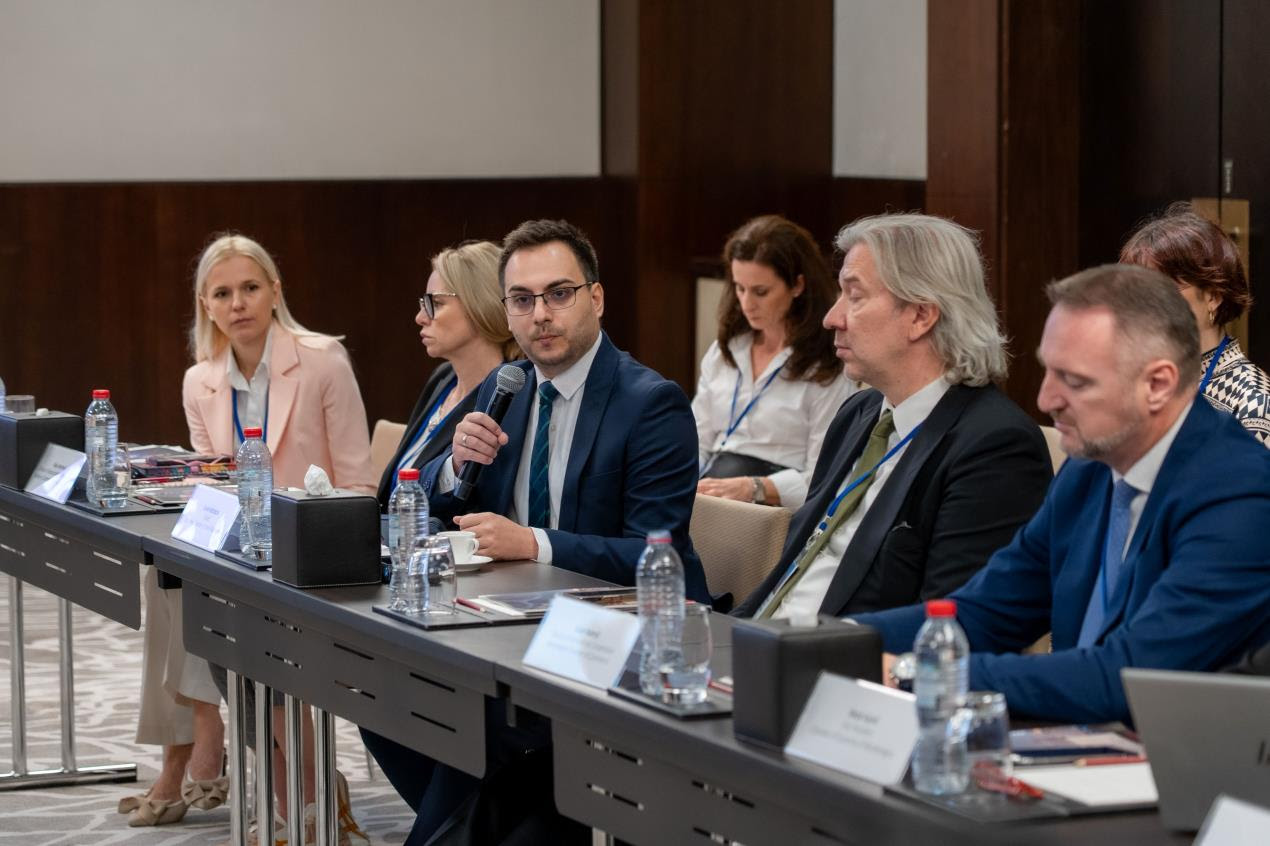
Canada has reversed its decision to shut down TikTok’s local unit, allowing the platform to operate under new data protection and safety conditions.
2 min
Canada stated that it is formally reversing its decision to shut down TikTok’s unit in the country on national-security grounds.
The decision comes about seven weeks after lawyers acting for the federal government and TikTok Technology Canada agreed to a judge-approved settlement. Under the settlement, Canada agreed to revisit its original 2024 decision to ban TikTok. TikTok had sought to quash the government’s order in court.
This also marks another example of Canada resetting ties with China. The court-approved settlement emerged days after Prime Minister Mark Carney visited China, and struck a trade deal with Chinese leader Xi Jinping regarding reduced tariffs on some Chinese-made electric vehicles and Canadian agricultural products.
TikTok’s Canadian operations are controlled by ByteDance, a Chinese technology company. TikTok has different ownership in the U.S., under a deal structured to prevent the app from being banned for national-security concerns.
Canada’s Industry Minister Melanie Joly said TikTok was being allowed to operate in Canada, subject to conditions focused on protecting Canadians’ data and the safety of children.
In a statement, TikTok said it also agreed to third-party oversight regarding its data-protection measures, and increased support for Canadian artists, especially among the country’s French-speaking and indigenous populations.
“We look forward to investing in new and returning programs that support the thriving ecosystem of Canadian creators, artists and small businesses,” said a TikTok spokesperson, adding that 16 million Canadians visit the social-media app every month.
Canada’s reversal was widely anticipated after the settlement agreement was reached in January. The 2024 decision from former Prime Minister Justin Trudeau applied to TikTok’s business operations in the country. Ottawa did not forbid Canadians from downloading the TikTok app or posting content on the digital platform.
Canada said in late 2024 that banning TikTok’s domestic unit was necessary due to “specific national-security risks” flagged by the country’s intelligence service. Canadian officials never elaborated on what that entailed.
Paine Schwartz joins BERO as a new investor as the year-old company seeks to triple sales.
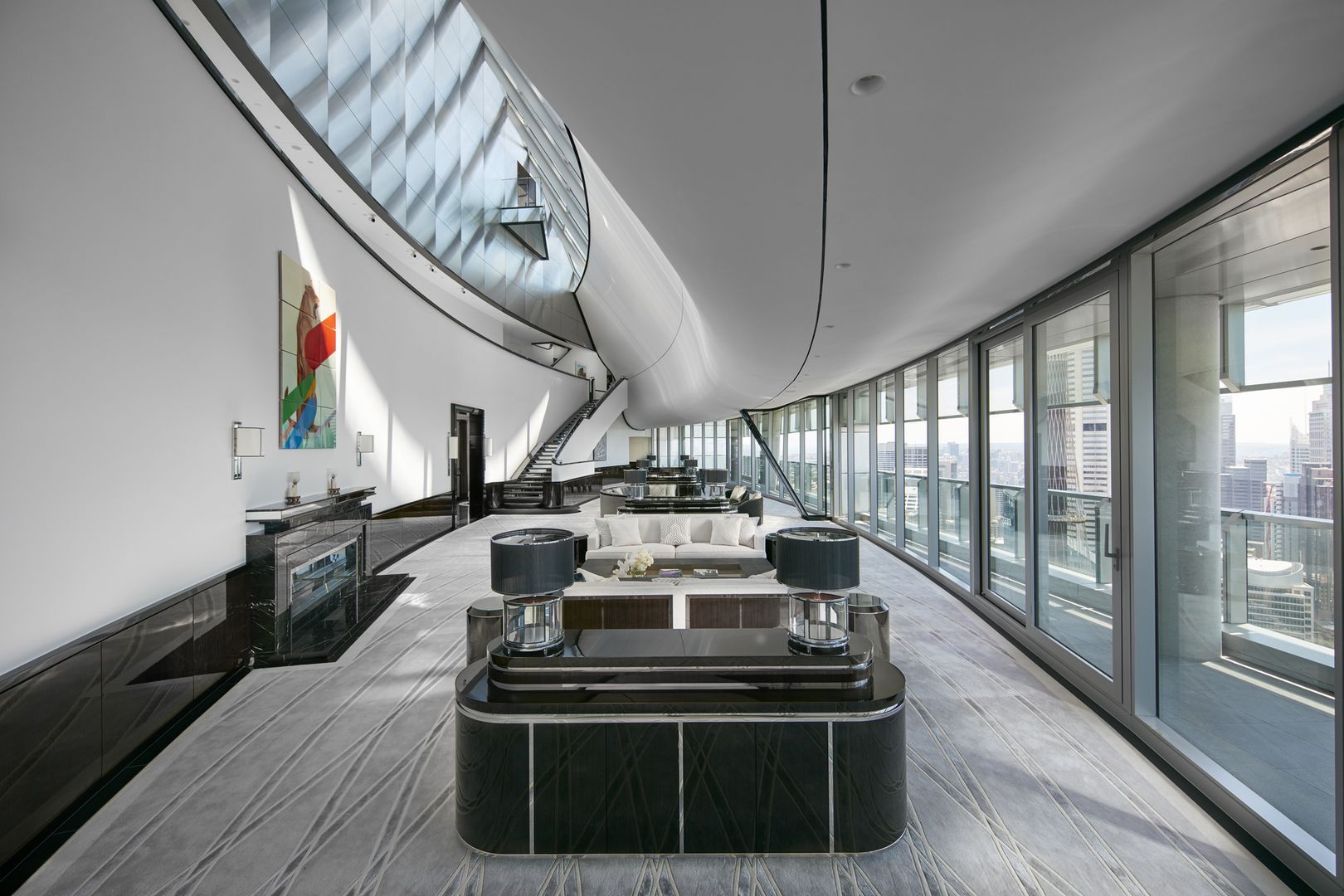



Dubai has issued Law No. (3) of 2026 to strengthen building quality, safety and sustainability across the emirate. The law requires owners to obtain a Quality and Safety Certificate, conduct regular maintenance and ensure structural integrity, with Dubai Municipality overseeing implementation through a unified digital system.
3 min
In his capacity as the Ruler of Dubai, His Highness Sheikh Mohammed bin Rashid Al Maktoum, Vice President and Prime Minister of the UAE, has issued Law No. (3) of 2026 on the quality and safety of buildings in the emirate of Dubai.
Provisions of the Law apply to all buildings across Dubai, including those in private development zones and free zones such as the Dubai International Financial Centre, whether built before or after its enactment.
The Law aims to ensure the quality, safety and sustainability of buildings in Dubai by maintaining structural integrity, ensuring regular maintenance and supporting the safe operation of all systems. It also seeks to enhance occupant comfort, reduce accidents, protect lives and property, and preserve the emirate’s urban identity.
According to the Law, Dubai Municipality is responsible for ensuring building safety and quality by developing a digital management system, maintaining a unified building database, conducting periodic assessments, setting standards for sustainability, and implementing measures and procedures to safeguard buildings, lives, and property. It also oversees maintenance, investigates incidents, applies corrective actions, promotes modern technologies, regulates materials, and manages the digital building portal.
The Law defines the roles of authorities overseeing construction in Dubai, including the Dubai Municipality, along with authorities supervising private developments and free zones such as the Dubai International Financial Centre. It also requires that a Quality and Safety Certificate be issued only after a licensed engineering office or firm conducts a comprehensive inspection and assessment of the building’s structural and technical condition, following the Law’s provisions and related procedures.
According to the Law, the owner of a building, including unit owners under Law No. (6) of 2019 on Joint Property Ownership in Dubai, must obtain a Quality and Safety Certificate after the building’s completion, ensure any defects identified in inspections are corrected, and follow the procedures set by the relevant authority.
Under the Law, building owners must hire a licensed engineering office to assess the building and prepare a technical report for the Quality and Safety Certificate, carry out periodic maintenance for buildings under 20 years old, and fix any defects that threaten structural safety, lives, property, or surrounding buildings. Owners must allow authority inspections, enable repair works, and continue maintenance even after obtaining the certificate. The Law also defines the responsibilities of building management and the engineering office and sets rules for authority inspections to ensure the building meets certification requirements.
The validity of the Quality and Safety Certificate is 10 years for buildings less than 40 years old from the date of their completion certificate, and five years for buildings 40 years or older. The certificate can be renewed for similar periods, with the conditions and procedures for renewal determined by a decision issued by the Chairman of The Executive Council of Dubai (TEC).
According to the Law, in cases where a building is approved for demolition, the rules for vacating tenants set out in Law No. (26) of 2007 on Regulating the Relationship between Landlords and Tenants in Dubai and its amendments apply. Tenants who vacate under this Law have priority to return to the building after reconstruction or completion of maintenance and repairs, at the same rental value agreed in their original lease, unless otherwise agreed by both parties.
Violators of the Law or its decisions face fines from AED100 to AED1,000,000, with repeat offences within two years subject to doubled fines up to AED2,000,000.
Relevant Authorities may also suspend building permits, stop any transactions or approvals related to the building with government or private entities, including the Dubai Land Department, and halt lease certifications for units in the building until the violations are corrected. Imposing fines or administrative measures does not prevent holding the violator accountable under civil or criminal law, and engineering offices or contractors remain responsible for fulfilling their legal obligations.
The Law permits anyone subject to a decision, action, or measure under this Law to submit a written appeal to the Municipality’s Director General or relevant authority within 30 days from being notified. A committee will resolve the appeal within 30 days, and its decision is final.
The Law allows the competent authority to seek help from government bodies, including the police, who must assist promptly.
Building owners, contractors, and engineering offices must comply within one year from the Law’s effective date. The Chairman of The Executive Council of Dubai may extend this deadline if necessary.
The Director General of the Dubai Municipality or relevant authority issues decisions to implement the Law, except those reserved for the Chairman of TEC.
Any provisions in other laws that conflict with this Law are annulled. The Law will be published in the Official Gazette and will take effect 60 days after publication.
Many of the most-important events have slipped from our collective memories. But their impacts live on.



Parmigiani Fleurier unveils Alta Rosa, a new Tonda PF expression where subtle rose tones meet timeless craftsmanship.
3 min
THE ART OF NUANCE AND LIGHT
With Alta Rosa, Parmigiani Fleurier introduces a new expression of the Tonda PF Automatic 36 mm, not as a color variation, but as the continuation of a coherent chromatic and architectural research.
At Parmigiani Fleurier, each new tone is conceived as part of a palette built over time, not a succession of effects, but a disciplined exploration of nuance that gradually defines the Maison’s visual language.
Color is never treated as an applied effect. It is approached with the same care as a caliber: calibrated, contextual, and inseparable from proportion, light and material. Here, time is not conceived as a statement, but as a presence: calm, assured, quietly choreographed.
Alta Rosa belongs to this logic, which underpins every recent interpretation of the Tonda PF collection.
GUILLOCHÉ AS A LANGUAGE OF LIGHT
The rose tone of Alta Rosa is neither decorative nor symbolic. It is conceived as a mineral chromatic field, restrained and composed, designed to evolve according to light rather than dominate it.
The light here is never frontal. It is soft, diffused, almost filtered, as if passing through a veiled atmosphere rather than striking a surface.
From the outset, the Grain d’Orge guilloché of the Tonda PF collection was conceived as a language rather than a motif. A surface designed to receive light, to temper it, and to return it with restraint. In the Tonda PF, guilloché is not ornamentation, but structure; a deliberate way of shaping light so that color, relief and reflection speak together in a coherent horological grammar.
Seen through the sapphire crystal and its anti-reflective treatment, it reveals depth without insistence, enriching the dial while preserving its quiet balance.
What results is not a visual effect, but a sensation, a dial that seems to breathe with the light, revealing its depth only to a patient gaze.
FORM GUIDED BY PROPORTION
Applied 18ct gold rhodium-plated indices and skeletonized deltashaped hands reinforce this philosophy. Reduced to their essential geometry, they ensure legibility while maintaining the dial’s compositional equilibrium.
Housed in a 36 mm stainless steel case, Alta Rosa is defined by proportion rather than presence. Its slim profile and the measured alternation of polished and satin finishes allow light to glide across surfaces rather than fragment them.
On the wrist, this proportion translates into a sense of ease a watch that occupies space without ever imposing itself.
The platinum 950 knurled bezel, emblematic of the Tonda PF collection introduces a discreet precious element, perceptible through touch as much as through sight. A sapphire crystal with
anti-reflective treatment preserves optical clarity, while 100 meters of water resistance ensures everyday usability.
MECHANICAL CONTINUITY
Alta Rosa is powered by the in-house PF770 automatic manufacture caliber, developed and produced within Parmigiani Fleurier’s workshops.
Beating at 28,800 vibrations per hour and offering a 60-hour power reserve, the movement combines reliability with refined finishing. Visible through the sapphire case back, it features Côtes de Genève and hand-beveled bridges.
The skeletonized 22ct rose gold oscillating weight polished and sandblasted subtly echoes the dial’s tonality. Here again, continuity prevails over contrast.
A CONTINUATION OF A COHERENT VISION
Within the Tonda PF collection, Alta Rosa does not represent a stylistic departure. It refines an established language. As with architecture or modern painting, Parmigiani Fleurier approaches
continuity not as repetition, but as coherence, the patient construction of a vocabulary where color, light and proportion evolve together.
The 36 mm format, historically rooted in classical watchmaking, reinforces this approach: a scale chosen for balance and precision, not for trend or gender. With Alta Rosa, this philosophy finds a new tonal expression, emotional yet composed, contemporary yet timeless.
A rose held in suspension. A watch in balance. Time, gently elevated.
Many of the most-important events have slipped from our collective memories. But their impacts live on.


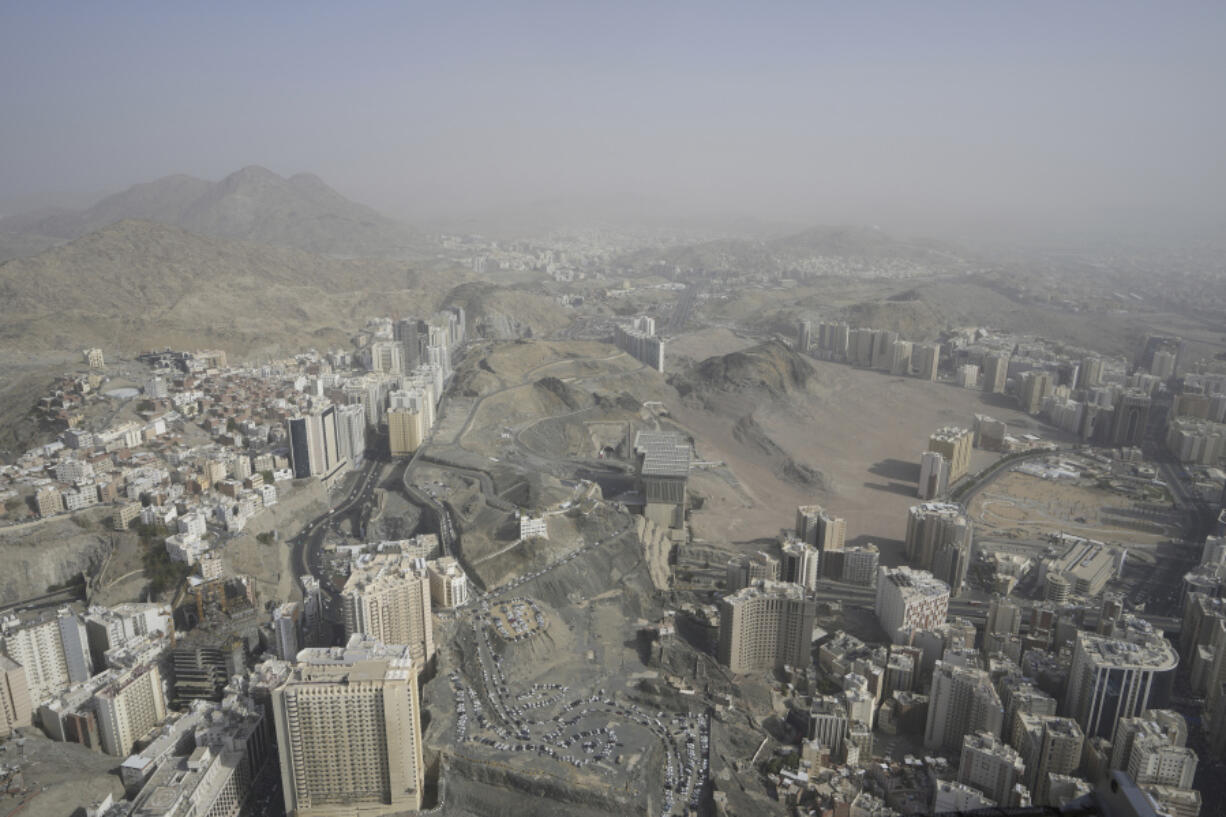

Two days. One global platform. Biotechnology is no longer a distant promise, it’s actively reshaping healthcare, longevity, and the future of life sciences. The Global Biotech Summit brings together the minds, capital, and innovations driving this transformation. From precision medicine and advanced therapies to breakthrough biotech solutions, this is where global leaders connect, learn, and shape what comes next. Be part of the movement defining the next chapter of biotechnology.
2 min
The landscape of global health and life science is set for a seismic shift as the first-ever Global Biotechnology Summit prepares to open its doors on June 10–11, 2026, at the Beach Rotana, Abu Dhabi.
Positioned as a powerful engine for transformation, the Summit represents a defining moment for the biotechnology sector, where visionary science converges with strategic investment and global collaboration. Far beyond a traditional conference, GBS serves as a dynamic platform built to accelerate scientific breakthroughs, cultivate cross-border alliances, and unlock high-impact opportunities across biotechnology, precision medicine, advanced therapeutics, and next-generation health innovation.
“The Global Biotechnology Summit is where we stop talking about the future and start building it. This isn’t just about discovery; it’s about the delivery of hope and health on a global scale.”
Industry Titans: The Confirmed Top Speakers
The Summit proudly announces its first lineup of confirmed industry leaders, representing some of the most influential institutions driving global healthcare transformation:
- Dr. Asma Al Mannaei – Executive Director of the Health Life Sciences Sector, Department of Health – Abu Dhabi
- Albarah El-Khani – Chief Operating Officer, M42 Health
- Yendry Ventura, MD – Chief Executive Officer, ADSCC
- Boyd Chongphaisal – Vice President & General Manager, Gulf, GSK
- Ayman El-Hussein – Managing Director, Siemens Healthineers, UAE
These distinguished leaders will spearhead high-impact discussions on biotechnology advancement, AI integration in healthcare, regulatory evolution, translational research, strategic partnerships, and the commercialization of cutting-edge innovation.
By the Numbers: A Global Gathering of Influence
The Global Biotechnology Summit is expected to convene:
-
- 1,200+ Senior Industry Professionals & Decision-Makers
- 75+ International Speakers & Thought Leaders
- 50+ Sponsors & Exhibitors
- 300+ Global & Regional Brands
- 50+ Media & Supporting Partners
A Platform Where Science Meets Strategy
GBS is built to bridge innovation with investment, research with regulation, and ambition with execution. It will provide a high-level B2B platform for governments, multinational corporations, biotech startups, venture capital firms, academic institutions, and healthcare providers to collaborate and drive tangible outcomes.
From advanced genomics and sustainable biomanufacturing to digital health ecosystems and next-generation therapeutics, the Summit will spotlight the technologies and partnerships redefining the global biotechnology sector.
Organized by Resolute Market Intelligence, the Global Biotechnology Summit (GBS) is poised to emerge as the region’s premier biotechnology gathering with a strong international footprint.
Secure your place today and position yourself at the forefront of global biotechnology innovation, register now at Submit Your Enquiry | Global Biotech Summit 2026
For further information and partnership inquiries, please contact: info@globalbiotechexpo.com,+971 52 226 9761 | +44 203 929 2043
Many of the most-important events have slipped from our collective memories. But their impacts live on.