







Saudi Arabia Highlights Innovation at 44th Exito Tech Summit 2026
Saudi Arabia’s enterprise tech leaders convened at the Digital Transformation Summit KSA 2025, hosted by Exito Media Concepts, to drive AI, data, cybersecurity, and modernization agendas aligned with Vision 2030. From CEO-level AI strategy and ITIL execution frameworks to Zero Trust security and legacy modernization, the summit reinforced the Kingdom’s momentum toward building scalable, secure, and value-driven digital enterprises.
 3 min
3 min


Saudi Arabia’s enterprise technology landscape took center stage as the Digital Transformation Summit KSA 2025 convened the Kingdom’s most influential technology leaders, C-suite executives, and digital innovators for a powerful day of strategic dialogue and collaboration. Hosted by Exito Media Concepts, the summit underscored the Kingdom’s accelerating momentum toward becoming a globally competitive, AI-driven digital economy aligned with Vision 2030.
Bringing together CIOs, CTOs, CFOs, AI leaders, and transformation heads from leading enterprises, the summit served as a high-impact platform where digital ambition met execution. With enterprise AI, data platforms, cybersecurity, legacy modernization, and digital trust dominating the agenda, DTS KSA reinforced its role as a catalyst for strategic enterprise transformation across the Kingdom.
Opening Remarks: Shaping the Kingdom’s Enterprise Tech Future The summit commenced with welcome remarks by Exito Media Concepts, setting the tone for a day focused on leadership accountability in digital transformation. The opening narrative emphasized that in today’s AI-driven economy, technology is no longer a support function, it is the engine of enterprise growth, resilience, and competitive advantage.
Saudi Arabia’s rapid digital adoption, expanding smart city initiatives, and sovereign cloud investments were positioned as clear indicators of the Kingdom’s commitment to building a future-ready digital infrastructure.
Opening Keynote: The CEO’s AI and Digital Growth Blueprint
In the opening keynote, Sameer Joshi, IT Director at SPIMACO, addressed the evolving mandate of CEOs in the age of AI. He highlighted that digital leadership can no longer be delegated; it must be owned at the highest executive level.
The session explored how CEOs must integrate AI enterprise-wide, strengthen data governance frameworks, and foster cultures of innovation aligned with measurable business impact. The discussion reinforced that sustainable digital growth requires leadership alignment, strategic clarity, and governance maturity.
Bridging Strategy and Execution: ITIL and the Enterprise Impact Model
Markus Bause, VP Product at PeopleCert, presented a compelling case for the modern evolution of ITIL as a framework that bridges digital ambition with operational impact. As enterprises adopt AI and data-driven platforms, governance and structured execution have emerged as critical differentiators.
The session demonstrated how ITIL enables scalable AI adoption, strengthens digital trust, and aligns technology initiatives with business outcomes, transforming experimentation into enterprise-wide value.
AI, Agentic Systems, and the Evolution of Workforce Innovation
Nadin Zureikat, Chief Revenue Officer at Elevatus, examined the shift from traditional AI systems to Agentic AI, systems capable of autonomous decision-making and continuous learning. The keynote emphasized how workforce innovation will increasingly depend on intelligent automation, AI-powered talent platforms, and scalable digital capabilities.
Complementing this perspective, Shafi Rasulov of IOMETE explored how AI is fundamentally reshaping enterprise data platforms. From hybrid and sovereign cloud environments to scalable AI-ready architectures, enterprises are rethinking data infrastructure to support advanced analytics and next-generation AI workloads.
Fireside Chat: How the C-Suite Drives ROI in Digital and AI?
One of the summit’s most impactful sessions brought together cross-functional leaders to discuss how organizations can translate digital investments into measurable ROI.
The panel explored common disconnects between CIO, CTO, CFO, and CDO functions and emphasized the importance of unified governance, integrated roadmaps, and shared accountability. The conversation reinforced that scalable transformation requires collaboration between finance, technology, and business strategy leaders.
Modernization as a Strategic Imperative
Legacy systems emerged as a recurring theme throughout the summit. Zahid Farooq of Red Sea Global highlighted how outdated infrastructure can hinder agility, scalability, and innovation. The spotlight session positioned modernization not as a technical upgrade but as a business imperative essential for compliance, cost optimization, and market responsiveness.
Similarly, Mohamed Elkady of OutSystems addressed the rise of AI-powered low-code platforms, empowering enterprises to accelerate development cycles while maintaining governance and architectural integrity.
Cybersecurity in the Age of Quantum Risk
Cyber resilience dominated the afternoon sessions. In the fireside chat titled “From Zero Trust to Quantum Threats,” industry leaders examined the growing complexity of digital risk. The discussion underscored Zero Trust as a foundational framework while also addressing the implications of quantum computing on encryption, infrastructure, and national digital resilience. The consensus was clear, cybersecurity must be embedded into digital transformation strategies from the outset.
The CIO’s Agenda: Enabling Business Value Through Scalable Leadership
The CIO-focused panel highlighted the expanding role of technology leaders as strategic enablers of enterprise growth. Discussions centered around managing tech debt, aligning AI initiatives with real-world business objectives, and redefining IT spend as strategic investment rather than operational expense.
The session reinforced that modern CIOs must balance innovation with governance, ensuring agility without compromising security, compliance, or operational continuity.
Future Forward: AI, Data, and Digital Trust
The closing fireside chat explored the next frontier of AI and digital infrastructure. As enterprises move from proof-of-concept experimentation to production-scale AI deployment, the emphasis has shifted toward high-quality data, secure private AI environments, and trust-by-design frameworks.
Speakers highlighted the importance of embedding ethics, compliance, and cybersecurity into AI architecture from day one, ensuring that innovation is matched with accountability and transparency.
DT50 Felicitation and Closing Reflections
The summit concluded with the prestigious DT50 felicitation, recognizing distinguished technology leaders driving transformative impact across Saudi Arabia’s enterprise ecosystem.
The Takeaway
The Digital Transformation Summit KSA 2025 was more than a conference — it was a strategic convergence of leadership, innovation, and enterprise ambition. Over the course of the day, Saudi Arabia’s technology leaders demonstrated a shared commitment to building scalable, AI-driven, secure, and value-oriented digital enterprises.
As the Kingdom advances toward its Vision 2030 objectives, DTS KSA reaffirmed that the future of enterprise transformation will be defined not just by technology adoption, but by visionary leadership, cross-functional collaboration, and digital trust at scale.

Enterprise AI adoption in Saudi Arabia is accelerating under Vision 2030, with Generative AI enrollments surging 312% year-over-year, according to Coursera’s Job Skills Report 2026. Growth in software, data, cybersecurity, and cloud skills—alongside rising demand for change management and critical thinking—signals a workforce preparing to scale AI responsibly and drive long-term economic diversification.

Dubai’s DAE Capital is nearing a deal to acquire control of Macquarie AirFinance after a competitive bidding round, as soaring jet demand and limited Boeing and Airbus production drive premium valuations in the aircraft leasing market.

Education is no longer just a social imperative — it is a strategic engine of national growth. In an exclusive interview with Professor John Lee Chi-Kin, President of The Education University of Hong Kong (EdUHK) and UNESCO Chair in Regional Education Development and Lifelong Learning, Kanebridge News Middle East explores how Hong Kong’s education-led development model has sustained long-term competitiveness — and what Oman and the UAE can learn as they accelerate their knowledge-economy ambitions.
New research suggests that bonuses make employees feel more like a mere cog in a wheel.
2 min
When it comes to rewarding workers financially, cash isn’t always king.
Companies frequently give employees monetary bonuses, but a new study suggests that paid vacation time is a perk employers should also consider.
The study’s authors say that while they didn’t explicitly look into whether employees prefer time off, the study found that receiving extra vacation time rather than bonus money makes workers feel less like a mere cog in a wheel and more like people who are recognised and valued as individuals with a life beyond work.
It makes them feel more human, in the researchers’ terms.
And that feeling benefits employers as well as employees, says Sanford DeVoe, a professor at the Anderson School of Management at the University of California, Los Angeles, and one of the study’s authors.
Feeling more human is strongly correlated with higher job satisfaction, greater engagement with work, better relationships with colleagues and less inclination to leave a job, he says.
Feeling seen
In one experiment, the researchers asked about 1,500 participants to recall times when they received a monetary bonus or paid time off—all had received both—and how that made them feel.
Participants responded to the question on a 7-point scale, from feeling more like a robot on the low end of the scale to feeling more human on the high end. Monetary bonuses were given an average score of 5.04, compared with 5.4 for paid vacation time.
“While that difference may sound modest numerically, it represents a meaningful psychological shift,” says DeVoe. “It’s the difference between feeling neutral and feeling genuinely seen as a person.”
The authors then sought to better understand why paid vacation time made employees feel more human. In another experiment, about 500 participants were asked to imagine starting a new job where they might be awarded a bonus. Some were told the bonus would be an extra week of vacation, others were told it would be an extra week of pay.
Participants were then asked about their expectations for being able to keep their work and home lives separate in the new job. Those who could hope for a bonus of extra time off expected more separation between their work and personal lives than those whose potential bonus would be extra pay.
They also reported feeling more human on the 7-point scale. This suggested to the researchers that time off makes people feel more human because it creates a clearer psychological distance from work than a monetary bonus.
No interruptions, please
In a third experiment, the researchers further tested the idea that clear boundaries between work and personal lives were driving their results.
Two hundred participants were told to imagine being on a vacation and receiving two texts, including one from their mother. Half were told the second text was from a friend and half were told the second text was from their boss.
The authors then measured how human participants felt after each scenario. The average score for those receiving a text from a friend was 5.4 on the 7-point scale, compared with 4.16 for those receiving a text from the boss.
The difference in the scores “demonstrates that even minimal work intrusions can undo the psychological benefits of time off,” says DeVoe. “It shows that it’s not just time away that matters—it’s whether work actually lets go.”
All of this is important for employers looking to get the most out of their workers, he says. “For managers concerned with sustainable productivity, giving people uninterrupted time away from work can be a powerful lever.”
Many of the most-important events have slipped from our collective memories. But their impacts live on.
The sports-car maker delivered 279,449 cars last year, down from 310,718 in 2024.


Oman’s Energy Ministry is reviewing mining digital services following meetings with companies, with planned upgrades aimed at improving efficiency and transparency under the Tahawul program.
< 1 min
The Ministry of Energy and Minerals, working with the Oman Chamber of Commerce and Industry, has conducted a series of meetings and field visits with mining companies across several governorates to assess operational challenges and the performance of digital services.
Officials said the initiative covered nine visits to OCCI branches, where companies provided feedback on licensing, applications and transaction processing. Issues raised included service timelines, clarity of procedures and access to online platforms.
The ministry said feedback collected during the visits is being reviewed for inclusion in upcoming development plans, with performance indicators to track improvements. Updates to several mining-related digital services are expected to be rolled out in phases.
The discussions also covered the use of the ministry’s digital platforms, including the Taqa investment portal, which supports tendering and licensing processes in the energy and minerals sectors, as well as other systems supporting supplier registration, emissions reporting and data management.
The initiative forms part of wider government efforts under the Tahawul programme to improve efficiency, transparency and private sector engagement in Oman’s mining sector.

Parts for iPhones to cost more owing to surging demand from AI companies.

New research suggests that bonuses make employees feel more like a mere cog in a wheel.


Abu Dhabi and Baku sign Twin City Agreement to boost cooperation in mobility, urban planning and sustainable development, strengthening UAE–Azerbaijan ties.
2 min
The Department of Municipalities and Transport (DMT) and the Baku City Executive Power have signed a Twin City Agreement to deepen cooperation across urban planning, mobility, public transport and green infrastructure initiatives.
The partnership was signed during an official trip to Baku by Mohamed Ali Al Shorafa, Chairman of DMT, and Eldar Azizov, Head of Baku City Executive Power, building on a shared vision announced during the official visit of President Ilham Aliyev to Abu Dhabi earlier this year. The agreement sets out a commitment by both sides to enhance quality of life and advance sustainability-led urban development.
The signing followed high-level engagements with Azerbaijan’s Ministry of Digital Development and Transport and the AYNA Transport Authority, as well as technical site visits to key infrastructure projects in the capital. Together, they showcased the city’s rapid progress in delivering an ambitious, data-driven mobility transformation program.
Under the Twin City framework, both cities will collaborate on mobility transformation, digital twin and traffic operations, and other aspects of urban planning. It also encourages participation in exhibitions and events, benchmark studies between relevant institutions, and knowledge exchange in various aspects of city management.
The accord establishes clear governance mechanisms with shared key performance indicators, enabling each city to track progress and scale successful initiatives across their respective urban environments.
Commenting on the successful visit, Mohamed Ali Al Shorafa said, “It was a pleasure to visit Baku and reaffirm the strong ties the UAE has with Azerbaijan. This partnership reflects the close friendship between our countries and our shared vision for shaping livable, future-ready cities. Through this agreement, we will leverage collective expertise to drive meaningful long-term progress. In similar global partnerships, we have demonstrated that collaboration accelerates innovation and enhances quality of life.”
During a detailed technical walkthrough of the ‘28 May’ transport hub, named in honor of the country’s Independence Day, the DMT delegation was given the opportunity to examine passenger flows, wayfinding, and universal accessibility.
Furthermore, the group assessed White City, a flagship project within Baku’s Master Plan 2040, to understand how land-use policy and redevelopment align with mobility infrastructure.
Officials also toured Baku’s UNESCO World Heritage Old City to explore best practices in preserving urban environments and pedestrian prioritization.
Abu Dhabi has established other strategic alliances with Shenzhen, where a twinning agreement was signed in January 2024, and Brisbane, where a Sister City relationship has been in place for more than 15 years. These enduring connections demonstrate the Emirate’s ongoing commitment to working with world-class municipalities and city authorities to implement pioneering approaches to elevating livability standards.
The twinning relationship builds on the Comprehensive Economic Partnership (CEPA) and Comprehensive Strategic Partnership between the UAE and Azerbaijan, announced during President Ilham Aliyev’s official visit to Abu Dhabi in February this year.
The UAE accounts for 50 percent of Azerbaijan’s trade with the GCC, with the CEPA agreement expected to contribute $680 million to the nation’s GDP and $300 million to the Azerbaijani economy by 2031.
New research suggests that bonuses make employees feel more like a mere cog in a wheel.

Paine Schwartz joins BERO as a new investor as the year-old company seeks to triple sales.

Enterprise AI adoption in Saudi Arabia is accelerating under Vision 2030, with Generative AI enrollments surging 312% year-over-year, according to Coursera’s Job Skills Report 2026. Growth in software, data, cybersecurity, and cloud skills—alongside rising demand for change management and critical thinking—signals a workforce preparing to scale AI responsibly and drive long-term economic diversification.
3 minAs Saudi Arabia advances its Vision 2030 ambitions to diversify its economy and lead in emerging technologies, new data from Coursera, a leading global online learning platform, shows enterprises are accelerating investments in advanced AI capabilities while strengthening the technical and human skills required to scale transformation responsibly.
Drawing on insights from six million enterprise learners across nearly 7,000 institutions, the Job Skills Report 2026 analyzes skill trends across three in-demand career areas that are driving value and innovation—Data, IT, and Software & Product Development. The report also examines GenAI skills that are becoming essential across job roles.
GenAI adoption accelerates across roles
Enterprise GenAI enrollments in Saudi Arabia grew 312% year-over-year, while enrollments in Professional Certificates across all career areas increased 117%, reflecting strong demand for applied, industry-recognized credentials that validate job-ready skills. The Job Skills Report 2026 also indicates that AI proficiency is expanding beyond traditional technical roles, with professionals layering role-specific AI capabilities on top of foundational skills. This highlights that AI adoption is designed to augment, not replace, human expertise.
This acceleration aligns with broader economic priorities. With GenAI projected to contribute approximately $42 billion to the Kingdom’s economy, workforce readiness is emerging as a critical enabler of sustainable growth and diversification. Enterprises are embedding AI literacy across functions while building the governance and execution capabilities required to translate ambition into measurable impact.
Foundational tech skills form the digital backbone
As AI adoption scales, Saudi organizations are strengthening their technical foundations. Software Development enrollments rose 138%, while Data Analysis increased 106% and SQL grew 97%. Continued growth in Network Security (91%) and Cloud Computing (56%) reflects sustained investment in securing and optimizing the Kingdom’s expanding digital infrastructure.
These trends align with projections from the World Economic Forum’s Future of Jobs Report 2025, which identifies AI and Big Data, Networks and Cybersecurity, and technological literacy among the fastest-growing skill areas by 2030. Together, the findings signal a workforce preparing not only to adopt new technologies, but to build, secure, and operationalize them at scale
Human and strategic skills rise in the AI era
Demand for uniquely human and leadership capabilities is accelerating as organizations navigate rapid technological change. Coursera data reveals Change Management enrollments grew by 115% among Saudi enterprise learners, with a 107% increase in Critical Thinking. At the same time, organizations are strengthening strategic execution skills, with Business Management enrollments rising by 190% and Product Management increasing by 150%.
The rise of these ‘human-in-the-loop’ skills underscores a clear dynamic: while AI enhances productivity, human judgment, adaptability, and strategic oversight remain central to responsible deployment and long-term competitiveness. This demonstrates the importance of pairing deep technical expertise with cognitive and leadership capabilities to navigate ongoing disruption.
“Our data shows Saudi enterprises are rapidly advancing AI capabilities while investing in the foundations required to support Vision 2030,” said Kais Zribi, General Manager for the Middle East and Africa at Coursera. “The significant growth in Generative AI, alongside broader technical and human skills, reflects a deliberate shift toward building resilient organizations that can execute large-scale transformation and translate national ambition into sustained economic value.”
Among learners worldwide who are specifically pursuing GenAI skills, Content Creation is the fastest-growing skill, complemented by Image Analysis (#4) and Multimodal Prompts (#8), signifying AI’s expanding influence across business functions. The report also spotlights continued progress toward a more inclusive AI workforce, with female participation in enterprise GenAI enrollments rising globally from 36% in 2024 to 41% in 2025, and growing engagement in technical learning across Data, IT, and Software & Product Development.
Coursera’s Job Skills Report 2026 provides invaluable insights for businesses, governments and educational institutions looking to understand the fastest-growing skills shaping the future of work.
Parts for iPhones to cost more owing to surging demand from AI companies.

Chris Dixon, a partner who led the charge, says he has a ‘very long-term horizon’



Dubai’s DAE Capital is nearing a deal to acquire control of Macquarie AirFinance after a competitive bidding round, as soaring jet demand and limited Boeing and Airbus production drive premium valuations in the aircraft leasing market.
< 1 minDubai-based aircraft lessor DAE Capital is closing in on a deal to buy control of leasing platform Macquarie AirFinance, two industry sources said. The two firms did not immediately respond to a request for comment.
Reuters reported that DAE was among the final contenders for the Macquarie aircraft leasing assets, alongside Saudi Arabia’s AviLease and Qatar’s Lesha Bank.
A sale follows a competitive round of bidding as demand for aircraft soars with commercial planesmakers Boeing and Airbus unable to produce enough jets to keep up with demand from airlines. That has created an opportunity for owners of lessors to sell at premium multiples.
In 2017, Dubai Aerospace Enterprise (DAE) acquired Dublin-based AWAS, the world’s tenth biggest aircraft lessor.
Paine Schwartz joins BERO as a new investor as the year-old company seeks to triple sales.

Americans now think they need at least $1.25 million for retirement, a 20% increase from a year ago, according to a survey by Northwestern Mutual


Education is no longer just a social imperative — it is a strategic engine of national growth. In an exclusive interview with Professor John Lee Chi-Kin, President of The Education University of Hong Kong (EdUHK) and UNESCO Chair in Regional Education Development and Lifelong Learning, Kanebridge News Middle East explores how Hong Kong’s education-led development model has sustained long-term competitiveness — and what Oman and the UAE can learn as they accelerate their knowledge-economy ambitions.
6 minIn an era defined by digital disruption, economic diversification, and rapid technological change, education is no longer a social service alone—it is a national growth strategy. The experience of Hong Kong and broader Asia illustrates how aligning education systems with economic transitions can sustain long-term competitiveness and resilience. As Oman and the UAE accelerate their knowledge-economy ambitions, the question is not whether to reform education, but how to strategically align it with national development goals while preserving cultural identity and ethical purpose.
Hong Kong’s trajectory offers a compelling case study of how education-led development can evolve alongside economic transformation—moving from manufacturing to finance, and now to innovation-driven digital economies. Its approach underscores a broader lesson: sustainable growth depends not only on producing skills for today’s market, but on cultivating adaptable, ethical talent capable of navigating tomorrow’s uncertainties.
Kanebridge News Middle East speaks exclusively with Professor John Lee Chi-Kin, President of The Education University of Hong Kong (EdUHK)and UNESCO Chair in Regional Education Development and Lifelong Learning.
From Hong Kong’s experience, what role has education-led development played in sustaining long-term economic growth?
Hong Kong’s trajectory shows that sustained growth can come through continuously aligning education with each stage of economic transition. In the manufacturing era, for example, the system prioritised skilled workers; as the city evolved into an international financial and services hub, universities cultivated a work force for professions; and now, in the digital era, the focus has shifted again towards ethical innovators who can harness technology responsibly. This adaptability has been central to sustaining growth and resilience and it is based on the recognition of identifying key knowledge skills and values over time.
At the institutional level, teacher education and values formation are treated as strategic levers rather than administrative functions. EdUHK’s mission embeds lifelong learning, research, and community impact into teaching, ensuring graduates are not only technically competent but also socially responsible. Recent reforms—such as restructuring degrees to broaden competencies—demonstrate how education can simultaneously meet evolving social and economic demands and nurture character, producing talent that sustains competitiveness beyond short-term skills.

What key lessons can Oman and the UAE draw from Asia’s approach to aligning education systems with national development goals?
Asia’s experience shows that education has been prioritised as a strategic pillar of development, not merely a response to labour market gaps. Long-term reforms integrate science, innovation, and values education, creating stability even during economic shocks.
A second lesson is the professionalisation of teacher education. Institutions like EdUHK invest in rigorous preparation, research-informed practice, and community engagement, ensuring classrooms produce both academic excellence and responsible citizens.
Finally, curriculum innovation must be fused with ethics. Asian universities are embedding AI literacy and digital skills while ensuring that innovation remains human-centred. EdUHK’s Education Futures agenda illustrates how future skills can be integrated without losing moral purpose—an approach that holds relevance not only for the Middle East but also education systems worldwide.
How has industry–academia collaboration contributed to Hong Kong’s competitiveness, and how can this be replicated in the Gulf?
Hong Kong’s universities cultivate direct links with classrooms and employers through dialogue, internships and co-designed curricula. EdUHK convenes employers and alumni to align programmes with sector needs, expand work-based learning and update postgraduate offerings in fields such as AI in education, governance and environmental stewardship. These platforms help translate research into practice and keep talent development responsive, which strengthens competitiveness.
The collaborative approach extends to joint research funding and capacity building with overseas partners, showing how shared projects can build ecosystems rather than one off exchanges. When partnerships are embedded in teaching, research and student development, they generate reciprocal impact instead of symbolic agreements.
In the Gulf, universities are already advancing promising forms of collaboration. UAEU’s Science and Innovation Park, for instance, connects academia with industry through start-ups and joint projects, while other institutions have convened forums that bring government, employers, and educators together to co-design solutions. Programmes are also being updated to align with emerging technologies and shifting employment patterns. These efforts show that collaboration is not only possible but actively underway, offering valuable opportunities for shared learning across regions.
Rather than suggesting replication, we see opportunities for mutual learning. Hong Kong’s experience underscores the value of institutionalising regular forums, co-funded research calls, and structured work placements, while Gulf universities are pioneering interdisciplinary platforms that Hong Kong can also learn from. By sharing practices and adapting them to local contexts, both regions can strengthen competitiveness while maintaining academic standards and social values.
How important is lifelong learning and reskilling in future-proofing economies like Oman and the UAE?
Lifelong learning is indispensable for economies undergoing diversification and digitalisation. The challenge is not only producing graduates but ensuring citizens remain adaptable across careers as industries evolve. EdUHK’s mission explicitly commits to lifelong learning, with research and professional development designed to strengthen workforce resilience.
At the system level, reskilling cushions societies against volatility. When policy, teacher development, and curriculum coherence align, individuals can unlearn outdated knowledge and acquire new competencies without destabilising institutions. This is especially critical in the AI era, where continuous upskilling must be paired with ethical reflection.
As UNESCO Chair in Regional Education Development and Lifelong Learning, I have the privilege of accessing global insights and applying these to local and regional contexts. This role reinforces the importance of lifelong learning as a universal priority—ensuring that education systems not only prepare graduates for their first careers but also sustain their capacity to adapt, reskill, and contribute meaningfully throughout life.
Equally important is inclusion. Lifelong learning must extend beyond elite groups through open resources and community engagement supporting skills programmes for all members of the community.
What balance should policymakers strike between global education models and local cultural contexts?
Reform works best when global practices are adapted rather than imported. Asian experience shows that cultural narratives and civic identity can improve teaching and encourage people to embrace learning.
Respect for teacher professionalism and moral education has been paired with modern research and technology integration, producing systems that are globally competitive yet locally grounded.
Universities also play a bridging role. EdUHK’s vision stresses collaboration across regions while maintaining ethical responsibility and social care as core values. That institutional stance helps translate global insights into curricula that honour local values, histories and community needs.
Overall, the balance is to benchmark globally while remaining culturally sensitive to local values. This means building programmes that meet international standards, while embedding values education and local priorities so graduates are both globally competent and locally committed.

How can universities act as drivers of innovation and entrepreneurship, beyond traditional teaching roles?
Universities drive innovation when they organise around interdisciplinary research, policy engagement and talent incubation. EdUHK has created interdisciplinary academies that connect educational development with applied policy and future-oriented research, moving ideas from scholarship to application.
Entrepreneurial mindsets are cultivated through programme redesign and recognition of invention, showing that even education-focused institutions can contribute to wider innovation ecosystems. Translational projects in AI, pedagogy, and governance illustrate how targeted research can generate applied solutions.
Finally, universities extend impact through capacity-building partnerships abroad, multiplying know-how and creating markets for innovation. Sustained, reciprocal collaborations generate human capital and applied solutions that endure beyond individual cohorts.
How can education systems better prepare students for AI, digital transformation and knowledge-based economies?
Preparation begins with structured AI literacy for both educators and students, supported by responsible-use frameworks. EdUHK’s 6-P approach—covering planning, prompting, previewing producing, peer-reviewing, and reflective portfolio building—ensures AI enhances inquiry and creativity while keeping human judgement central.
Systems should also foster partnerships linking AI research with classroom practice. EdUHK convenes forums and collaborates globally to accelerate diffusion of evidence-informed practice.
Curriculum renewal must integrate technical fluency with ethics and civic purpose. By embedding computational thinking, interdisciplinary study, and wellbeing safeguards, education systems can produce graduates who thrive in knowledge economies while remaining socially responsible.
Looking ahead, what strategic education priorities should Oman & the UAE focus on over the next decade?
Looking ahead, education systems across the region – including Oman and the UAE – can prioritise three interconnected areas.
First, learner-centred teacher education reform. The most resilient systems are those that invest deeply in teachers—through rigorous preparation, continuous professional development, and clear career pathways. When teachers are treated as partners in reform, they become the bridge aligning pedagogy, technology, and values.
Second, industry–university ecosystems. Stronger collaboration between academia and employers—through joint research grants, recurring forums, and credit-bearing work-integrated learning—creates innovation pipelines that diversify economies and keep talent development responsive to real-world needs.
Third, AI readiness with ethics. As digital transformation accelerates, classroom frameworks must embed responsible use and reflective learning. Supporting educators through professional training and cross-border exchanges ensures technology enhances equity rather than widening gaps.
These priorities are part of a global agenda for future-proofing education. By aligning them with national strategies, economies in the Middle East and beyond can ensure reforms serve long-term development goals while preparing citizens to thrive in knowledge-driven societies.
Paine Schwartz joins BERO as a new investor as the year-old company seeks to triple sales.

Interior designer Thomas Hamel on where it goes wrong in so many homes.

With the 2026 Winter Olympics underway, Kaspersky warns fans to watch out for scams involving fake tickets, counterfeit merchandise and bogus streaming sites. Experts urge fans to buy only from official platforms, avoid suspicious deals and verify sources before entering payment details.
2 min
The 2026 Winter Olympic Games are in full swing, captivating sports fans worldwide. However, the Games also serve as an opportunity for scammers to strike with different kinds of cyber fraud. Kaspersky has identified some of the key scams targeting fans right now – these are centered on fake tickets, merchandise and streaming access.
Ticket fraud
Fake ticket schemes rank among the most damaging scams hitting sports fans. With sports venues drawing huge crowds, attackers push bogus “tickets” through phishing sites that mimic official sellers to harvest payment info. Official sources stress that tickets are sold exclusively through the authorized Olympics platform, and third-party brokers or resale sites (outside any official resale channel) are fraudulent.
Bogus merchandise traps
Fans rushing to buy authentic sports competition items – clothes, souvenirs or event-specific collectibles – are prime targets. Attackers launch multiple counterfeit online shops that may use official logos, post convincing photos and fabricate glowing reviews to appear legitimate. Victims pay, then get nothing – or have their card details stolen for later fraud.
Fake streaming offers
Attackers create deceptive websites imitating broadcasters, promising “cheap,” “exclusive,” or even “free” ways to catch winter competition events live – from snowboard cross to curling finals. Users pay input card details expecting instant access, only to lose their money and expose financial data for theft or redirects to more scams when they hit “play.”
“While global competitions bring together people from different countries for the ultimate sports festival, they also draw fraudsters eager to cash in on the hype. Whether through phony ticket portals, imitation merchandise sites or bogus streaming links, these schemes are designed to look completely genuine. The best defense for sports fans is to pause, double-check every source and stick strictly to official, trusted channels before entering any personal or payment information,” notes Anton Yatsenko, web content expert at Kaspersky.
Here are the key ways to protect yourself during sports competitions:
- Purchase tickets exclusively from official channels. Skip any third-party sellers and always confirm via the official competition website.
- Stick to legitimate streaming services and trusted broadcasters. Verify HTTPS security, check reviews and never submit payment info on unverified or pop-up sites.
- Be cautious with merchandise vendors, avoid deals on “exclusive” or heavily discounted competition-branded items from unknown shops – they often deliver fakes, nothing at all or steal your details. Buy only from confirmed official stores or partner retailers.
- Don’t click on unsolicited emails, social media posts, texts or ads offering free tickets, cheap streams, special giveaways, or “urgent” competition updates.
- Rely on a trusted security tool like Kaspersky Premium, which actively blocks dangerous websites, phishing attempts, malicious ads and card-skimming scripts in real time to safeguard your information.
Paine Schwartz joins BERO as a new investor as the year-old company seeks to triple sales.

Following the devastation of recent flooding, experts are urging government intervention to drive the cessation of building in areas at risk.
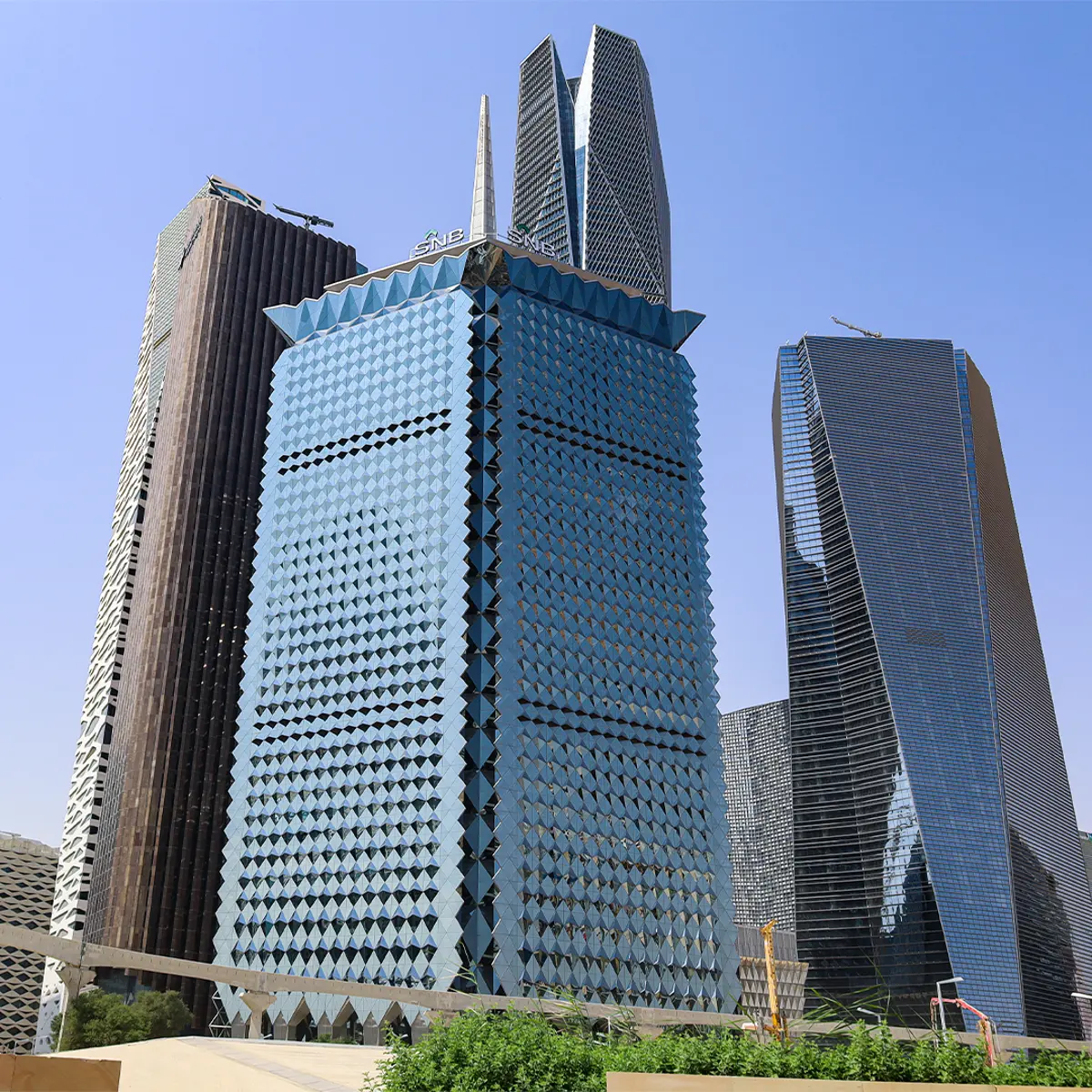


Saudi Modon has signed six agreements worth SAR1.03bn ($274m) to boost industrial growth in Sudair. The investments span pipe manufacturing, pharmaceuticals, engineering industries and logistics — strengthening supply chains and advancing Saudi Arabia’s National Industrial Strategy.
2 min
Saudi Authority for Industrial Cities and Technology Zones (Modon) signed six industrial, investment and logistics agreements with the total investments worth over SAR1.03 billion ($274 million).
The deal, inked with leading players in the industrial and logistics sectors, will cover localization of pipe manufacturing, boosting national supply chain readiness as well as downstream industries and will involve total area spanning over 671,000 sq m.
These agreements are aimed at supporting sustainable industrial growth and enhancing local content in line with the objectives of the National Industrial Strategy.
The signings took place in the presence of Bandar Alkhorayef, the Minister of Industry and Mineral Resources and Chairman of the Board of Directors of Modon, during his visit to Sudair Industrial and Business City.
Among the new agreements, Modon has signed an industrial contract with Jindal Saw and Buhur Altavision, investing over SAR562 million across 540,000 sq m for the localization of pipe manufacturing, bolstering downstream industries as well as national supply chain readiness.
It also signed a pharmaceutical contract with STADA Saudi Arabia investing SAR366 million across 23,000 sq m to localize human-use pharmaceutical production, supporting the Kingdom’s pharmaceutical security goals.
Supporting specialized industries, an industrial contract was signed with Mubadara Engineering Company, investing SAR50 million across more than 100,000 sq m for the local production of vessels for liquefied and compressed gases.
Safety Science Medical Company also signed a SAR40 million agreement over 8,400 square meters to localize pharmaceutical manufacturing, enhancing local industry integration.
In human capacity development, Modon partnered with Al Majmaah Chamber of Commerce to invest SAR15.9 million in a state-of-the-art training center aimed at developing specialized national competencies for the industrial sector.
The agreements concluded with a Memorandum of Understanding (MoU) with AGEX Company to provide shared logistics transportation services in Sudair Industrial and Business City, improving service quality for investors and contributing to a more efficient industrial ecosystem.
Parts for iPhones to cost more owing to surging demand from AI companies.



Solidrange closes a $2.4M Seed round led by Sharaka Capital to accelerate its AI-powered GRC and cybersecurity awareness platforms. The Saudi-based startup will use the funding to expand regionally, advance product development, and strengthen institutional cyber resilience in alignment with Vision 2030.
2 min
Solidrange, the Saudi-based cybersecurity startup specializing in AI-powered Governance, Risk, and Compliance (GRC) automation and cybersecurity awareness solutions, has announced the successful closure of a USD 2.4 million Seed funding round. The round was led by Sharaka Capital, with participation from Sadu Capital, SEEDRA Ventures, and Tali Ventures, the investment arm of stc (Saudi Telecom Company).
The funding will support Solidrange’s next growth phase, including accelerating its regional expansion, advancing product and technical development, and expanding the use of artificial intelligence across its platforms. Solidrange’s solutions directly support the Kingdom’s national cybersecurity objectives and align closely with Saudi Vision 2030, strengthening institutional resilience, compliance maturity, and human-centric cyber defense capabilities.
Founded in 2023 and headquartered in Riyadh, Solidrange is led by Jamal M. Labani, CEO and Co-Founder, and has rapidly established itself as one of Saudi Arabia’s emerging cybersecurity champions. The company currently serves more than 50 enterprise customers, including key government entities, publicly listed companies, and organizations across the public and private sectors.
Abdulelah Al-Owayyid from Sharaka Capital said “Solidrange has demonstrated outstanding execution in building innovative enterprise-grade platforms that address some of the most critical challenges organizations face today, particularly in governance, risk, compliance, and cybersecurity awareness. This investment will help the company accelerate growth, expand its offerings, and advance its strategic roadmap in a way that meaningfully contributes to Saudi Arabia’s cybersecurity ecosystem.”
Solidrange’s growth reflects increasing demand across the Kingdom for locally built, regulation-ready cybersecurity solutions that reduce operational complexity while strengthening organizational readiness. The company has also deployed its platforms to support several regulatory and oversight bodies in Saudi Arabia, underscoring the trust placed in its technology and its alignment with national frameworks and compliance requirements.
Jamal M. Labani, CEO and Co-Founder of Solidrange, commented “This investment is a strong endorsement of our vision and leadership to modernize governance, risk, and compliance practices through Saudi-built platforms that meet global standards. As cyber threats increasingly exploit human behavior and operational gaps, our focus on AI-driven automation and human risk management enables organizations to strengthen resilience while simplifying compliance. We are proud to support Saudi Arabia’s Vision 2030 ambitions by helping institutions build sustainable, future-ready cybersecurity foundations and empower locally developed content to compete internationally.”
Solidrange’s suite of advanced platforms includes two flagship platforms designed to address both systemic and human-driven cybersecurity risks with the highest standards of protection and compliance in line with regulatory requirements in KSA.
Its EasyCompliance platform is comprehensive GRC automation platform that automates and streamlines governance, risk, and compliance management processes, simplifies internal audits, strengthens policy and control management, and connects all departments through a unified workflow, thereby enhancing transparency, accountability, and efficiency at optimal cost.
Additionally, its Awareness10 platform is an integrated AI-powered cybersecurity awareness solution that combines interactive training with phishing attack simulations to assess employee readiness against cyber threats, test response behavior, identify human vulnerabilities, and deliver targeted and practical mitigation strategies.
With cyber resilience now a national priority across the GCC, Solidrange aims to become the leading regional provider of GRC and cybersecurity awareness solutions, enabling organizations of all sizes to reduce human-driven cyber risk, simplify compliance, and ensure seamless business continuity in an increasingly complex threat environment.
Parts for iPhones to cost more owing to surging demand from AI companies.




Phantom Arabesque, commissioned by Private Office Dubai, reinterprets traditional mashrabiya latticework through a newly patented five-year laser-engraving process — extending the language of contemporary craft while honoring Middle Eastern heritage.
3 min- First-ever laser-engraved Rolls-Royce bonnet: a technique five years in the making
- One-of-one commission by Private Office Dubai honors Middle East’s cultural legacy
- Inspired by mashrabiya latticework, a feature of traditional Arabian architecture
- Gallery marquetry artwork mirrors geometric mashrabiya patterns
- Mashrabiya design recurs as hand-painted, embroidered and illuminated motifs
Rolls-Royce Motor Cars continuously seeks to extend the vocabulary of contemporary craft, developing new techniques and materials to interpret time-honored forms that resonate across generations and cultures. Phantom Arabesque speaks to that ambition, exploring Middle Eastern architectural heritage through a newly patented laser-engraving technique, developed at the Home of Rolls-Royce.
Curated by Rolls-Royce Motor Cars Private Office Dubai, one of five invitation-only commissioning hubs in key global luxury destinations around the world, this one-of-one Phantom Extended celebrates the forms and geometry of traditional mashrabiya latticework – a defining feature of traditional houses, palaces and courtyards throughout the Middle East. The mashrabiya pattern is reinterpreted in various ways: as the first laser-engraved bonnet ever created for a Rolls-Royce, as an intricate Blackwood and Bolivar marquetry Gallery artwork, and as a suite of Bespoke motifs subtly placed throughout the motor car.
ARCHITECTURAL INSPIRATION
In an architectural setting, mashrabiya is built using intricately carved wooden screens that create privacy, allowing those inside to look out without being seen. The latticework also encourages airflow, providing natural cooling for the building’s interior. Decorative, functional and perfectly attuned to the region’s climate, these geometric forms are a hallmark of regional craftsmanship and architectural identity.
“Mashrabiya is one of the Middle East’s best-known and most enduring design languages. For Phantom Arabesque, we were inspired not only by its beauty but also by the privacy, light and airflow it creates. Our aim was to interpret these qualities in ways that feel both culturally rooted and unmistakably Rolls-Royce,” Michelle Lusby, Bespoke Lead Designer, Private Office Dubai
LASER ENGRAVING: A NEW CRAFT FORM BY ROLLS-ROYCE
Phantom Arabesque is the first Rolls-Royce in history to be graced with a fully laser-engraved bonnet. This newly patented technique is the result of a five-year development programme led by the marque’s Exterior Surface Centre. It draws inspiration from the Italian sgraffito technique – the artistic practice of revealing contrasting layers of colour by precisely removing upper surfaces. Five years of experimentation, testing and calibration were required to perfect a process capable of delivering the depth, clarity and consistency demanded by Rolls-Royce artisans.
To achieve the effect, the bonnet is first painted in a darker colour, then sealed beneath multiple layers of clear coat before a lighter top layer is applied. The geometric mashrabiya pattern is then engraved to a depth of just 145–190 microns into the uppermost surface, revealing the darker tone beneath. The result is a richly textured, three-dimensional surface that catches the light and invites exploration: a pattern intended to be discovered by both the eye and the hand.
Each of the engraved areas is meticulously hand-sanded to ensure an even, sculptural finish. By integrating the pattern within the paint itself rather than applying it on top, this method achieves an exceptional level of refinement and durability, while variations in laser velocity and intensity create subtle visual shifts as light moves across the surface. The project brought together the full expertise of the Exterior Surface Centre, with every team contributing to the development of this new craft form.
“Laser engraving allows us to create a surface that is both technically precise and visually alive. Developing this patented process required years of experimentation by the entire team. Phantom Arabesque is the first expression of a technique that opens entirely new creative possibilities for future clients,” Tobias Sicheneder, General Manager, Exterior Surface Centre
Phantom Arabesque is presented in a Bespoke two-tone finish, with the main body in Diamond Black and the upper surfaces in contrasting Silver. The same colour is used for the single hand-painted Short Coachline, which is elevated with a mashrabiya motif. The exterior is further enhanced with an illuminated Pantheon grille, set within a Dark Chrome surround and complemented by an uplit Spirit of Ecstasy figurine, as well as 22-inch part-polished alloy wheels.
INTERIOR: A STUDY IN COOL RESTRAINT
Phantom Arabesque’s interior centrepiece is presented within the Gallery, which runs the full width of the front fascia. An intricate Bespoke marquetry artwork crafted from Blackwood and Black Bolivar wood echoes the mashrabiya design cues and is subtly elevated with an offset clock presented in a complementary dark colourway.
The interior suite is finished in serene Selby Grey and Black leathers with Black seat piping and carpets, elevated by contrasting Black mashrabiya motifs embroidered on the front and rear headrests. Mesmerising Starlight Doors are trimmed with Selby Grey piping and Black contrast stitching. Illuminated treadplates bearing a cross-section of the bonnet engraving motif complete this landmark commission.
Rolls-Royce Phantom Arabesque was delivered to the commissioning client from the Middle East, taking its prominent place within their collection.
The sports-car maker delivered 279,449 cars last year, down from 310,718 in 2024.




Parmigiani Fleurier introduces the TONDA PF Micro-Rotor in Agave Blue, a refined expression of contemporary Haute Horlogerie rooted in restraint and balance. Available in stainless steel and rose gold, the new models unite architectural clarity, subtle colour, and quiet mechanical sophistication.
2 min


Launched in 2021, the TONDA PF collection marked a defining moment for Parmigiani Fleurier and immediately established itself as a refined expression of contemporary Haute Horlogerie.
Praised for its sophistication and understatement, the collection articulated a clear vision of private luxury: discreet, personal and enduring.
The TONDA PF language is defined by architectural clarity: balanced volumes, controlled proportions and a disciplined reduction to the essential. Nothing is ornamental. Nothing is superfluous. This rigour allows the collection to remain contemporary without chasing novelty, echoing the evolution of modern elegance itself.
Today, the TONDA PF Micro-Rotor is introduced in Agave Blue through two distinct models: one crafted in stainless steel, the other in rose gold. Two interpretations. One philosophy.
AGAVE BLUE A COLOUR SHAPED BY NUANCE
Agave Blue is a tone that resists immediacy. Situated between mineral blue, vegetal green and soft grey, it is drawn from nature and refined through observation rather than effect.
Responsive to light and movement, the color reveals subtle shifts throughout the day, never static, never decorative. Like a carefully chosen fabric or a resolved interior palette, it reveals its depth gradually, rewarding attention over time.
At Parmigiani Fleurier, color is treated as a material layered, calibrated and precise. Agave Blue becomes part of a broader chromatic language, patiently developed, where each shade reinforces the collection’s identity.
STEEL AND ROSE GOLD – TWO EXPRESSIONS, ONE LANGUAGE
The Agave Blue dial finds two distinct material expressions. In stainless steel, the watch conveys clarity and restraint, emphasizing its architectural precision and contemporary purity. In rose gold, warmth and tactility are introduced, enriching the watch’s presence while preserving its essential balance. The distinction is not one of hierarchy, but of sensibility; two temperaments articulated through material, united by the same design discipline.
A RECOGNIZABLE DESIGN IDENTITY
Part of the TONDA PF’s appeal lies in its immediate legibility to the trained eye. The hand-guilloché dial, engraved with the signature Grain d’Orge motif, interacts delicately with light. The finely knurled bezel provides a tactile counterpoint, while applied indices and the discreet PF medallion on the crown complete a coherent visual grammar. These elements are not decorative signatures, but markers of identity; quietly distinctive, never ostentatious.
THE MICRO-ROTOR SILENT MECHANICAL INTELLIGENCE
One of the foundation pieces of the collection, the TONDA PF Micro-Rotor has progressively evolved towards greater formal purity. Originally conceived with a date display, it was later revisited without it allowing the dial to express its proportions, textures and chromatic depth with complete clarity.
At its heart, the micro-rotor seamlessly integrated into the movement enables exceptional slenderness while preserving automatic autonomy. Mechanical sophistication is resolved internally, maintaining the purity of the dial and the fluidity of the case. Despite its refined profile, the watch retains the confidence and resilience expected of a contemporary luxury sports timepiece combining elegance, ergonomics and everyday ease.
A CULTIVATED FORM OF PRIVATE LUXURY
The TONDA PF Micro-Rotor Agave Blue is not designed for a broad audience, but for individuals who understand that contemporary luxury lies in discernment: in objects that are internally coherent, culturally grounded, and capable of accompanying life without losing their identity.
With the TONDA PF Micro-Rotor Agave Blue, Parmigiani Fleurier continues to refine a singular vision of contemporary Haute Horlogerie one where purism enhances sophistication, color articulates identity, and watchmaking remains inseparable from culture.
The sports-car maker delivered 279,449 cars last year, down from 310,718 in 2024.



A Kaspersky global survey shows that 92% of people in the UAE believe digitalization will reshape family life over the next decade, with AI, virtual experiences, and smart technologies becoming central to how families connect. Respondents expect AI bedtime stories, digital pets, virtual celebrations, VR vacations, and even home robots to increasingly shape shared family activities.
2 min
According to a global survey conducted by Kaspersky’s market research center, an overwhelming 92% of people in the United Arab Emirates believe that digitalization will fundamentally reshape shared family activities over the next decade. From everyday routines to major milestones, technology is expected to play an increasingly central role in how families connect.
More than half of respondents (53%) expect AI-powered bedtime stories to become a normal part of daily life. At the same time, with 33% of UAE families anticipating that children may choose digital pets over real ones, it seems that ‘man’s best friend’ just received its first upgrade.
This shift extends beyond the home. Some 65% predict that family celebrations will migrate to video calls as the norm rather than the exception, while 41% can imagine family vacations taking place entirely in virtual reality. Nearly half (48%) also foresee home robots evolving from household tools into fully-fledged members of the family.
Calls for vigilance
While acknowledging AI’s potential to enrich family life, Kaspersky has also urged vigilance in response to its findings. The research, conducted in November 2025, surveyed 3,000 people across 15 countries, including the UAE and Saudi Arabia.
The company advises parents to choose services with strong privacy policies that avoid unnecessary storage or misuse of children’s data and voice interactions, while enhancing control through digital parenting assistants such as Kaspersky Safe Kids to manage content access and balance screen time.
Kaspersky also recommends that parents immediately change default passwords, regularly update device firmware, and segment their home networks. For added protection, Kaspersky Premium with a Smart Home Monitor provides 24/7 scanning of users’ home Wi-Fi networks, displaying a full list of connected devices—including device type, Operating System, and IP address—and issuing alerts whenever a new or unknown device connects.
“The accelerating pace of technology is not fragmenting the family but redefining its shared spaces,” said Seifallah Jedidi, Head of Consumer Channel for META at Kaspersky. “The future, as seen by the global majority, is one where digital and physical experiences blend to create new forms of togetherness, from a grandparent joining a birthday party via hologram to a child caring for a digital pet with a sibling across the globe.”
“The challenge and opportunity lie in building secure digital environments with intention, ensuring they are safe, respectful, and ultimately, tools that bring us closer,” he added.
Parts for iPhones to cost more owing to surging demand from AI companies.




From AI-driven automation and smart factories to industrial IoT and robotics, Saudi Arabia is redefining manufacturing under Vision 2030—bringing cybersecurity, supply chain resilience, data governance, and workforce readiness to the forefront. These priorities take center stage at the 31st Edition of the Saudi Manufacturing Show 2026, where industry leaders will explore real-world case studies, advanced technologies, and strategies shaping the Kingdom’s manufacturing future.
3 min
Saudi Arabia’s manufacturing sector is entering a pivotal phase of transformation, driven by rapid advancements in smart factory technologies, AI-led automation, industrial IoT, robotics, and data-driven operations—all aligned with the Kingdom’s Vision 2030 goals. These innovations are reshaping how factories produce, optimize, and scale, reflecting Saudi Arabia’s ambition to build a globally competitive, technologically advanced, and future-ready industrial ecosystem. Simultaneously, this accelerated shift brings new priorities to the forefront, including cybersecurity for interconnected factories, strong data governance, resilient supply chains, and a highly skilled workforce capable of operating next-generation manufacturing systems.
Case Study: Advancing Smart Manufacturing in Saudi Arabia
A major Saudi-based manufacturing enterprise implemented a strategic Industry 4.0 transformation to improve operational efficiency, reduce downtime, and enhance supply chain resilience in alignment with Vision 2030 industrial objectives. Facing increasing global competition and legacy production constraints, the organization introduced a phased smart manufacturing roadmap across its facilities.
IoT-enabled sensors and industrial data platforms were deployed across production lines, providing real time visibility into equipment performance, energy usage, inventory flow, and quality metrics. AI-driven predictive maintenance significantly reduced unplanned downtime and improved asset utilization, while automation and robotics standardized repetitive tasks and accelerated production cycles.
A hybrid cloud and edge computing architecture supported low-latency shop-floor data processing and improved coordination between engineering, operations, and quality teams. Industrial cybersecurity controls were strengthened, alongside a workforce upskilling initiative focused on automation, digital maintenance, and smart manufacturing analytics.
This transformation reflects the rapid advancement of Saudi Arabia’s manufacturing sector—progress that will be highlighted at the 31st Edition of the Future Industry Summit – Saudi Arabia 2026, where leaders will gather to explore advanced technologies and shape the future of manufacturing across the Kingdom.
Event Overview:
The 31st Edition of the Saudi Manufacturing Show 2026 will bring together leading industry visionaries, manufacturing innovators, and technology strategists to explore the Kingdom’s rapidly evolving industrial landscape. With focused discussions on smart factories, AI-driven automation, industrial IoT, robotics integration, supply chain digitization, and next-generation production excellence, the conference will deliver actionable insights and real-world strategies to accelerate manufacturing transformation across Saudi Arabia.
- Date: 12th February 2026
- Time: 9:00 AM – 5:00 PM
- Location: Riyadh Marriott Hotel, Riyadh, Saudi Arabia
Strategic Partners:
- The Saudi Manufacturing Show 2026 is proud to have the support of Invest Saudi as its Strategic Partner, reinforcing the event’s mission to advance industrial growth, attract global innovation, and strengthen the Kingdom’s position as a leading hub for manufacturing excellence under Vision 2030.
- The event is also supported by the Saudi Arabia Centre for the Fourth Industrial Revolution (C4IR Saudi Arabia) as a Strategic Partner, underscoring a shared commitment to accelerating Industry 4.0 adoption, fostering advanced manufacturing technologies, and driving digital transformation across the Kingdom’s industrial ecosystem in line with Vision 2030.
Meet the Visionaries:
This edition of the Saudi Manufacturing Show will feature some of the Kingdom’s most influential industrial and technology leaders, who will share their expertise on smart manufacturing, supply chain transformation, advanced production technologies, and the future of Saudi Arabia’s industrial ecosystem. Below are a few of the distinguished speakers joining us at the 31st Edition of the Saudi Manufacturing Show 2026 — along with many more renowned experts, policymakers, and industry innovators:
- Khalid AlKhousan: General Manager of Metallic Industries Development, Ministry of Industry and Mineral Resources Kingdom of Saudi Arabia
- Howard Wu: Executive Director of International Investments, Innovation & Manufacturing, Oxagon NEOM Kingdom of Saudi Arabia
- Khaled Al-Hajeri: Vice President – Building Materials, National Industrial Development Center (NIDC) Kingdom of Saudi Arabia
- Musaed AlShammari: Cyber Operations Director, Ministry of Communications & Information Technology Kingdom of Saudi Arabia
- Ahmed Ghazal: Vice President of Engineering & Projects, Saudi Aramco Base Oil Company (Luberef) Kingdom of Saudi Arabia
Key Topics to Be Covered:
- Industry 4.0 Integration: AI, robotics & automation for next-gen manufacturing.
- Sustainable Manufacturing: Clean energy adoption & green production models.
- Industrial Workforce Development: Enabling job creation & advanced skills.
- AI-Driven Smart Factories: Real-time insights, process optimization & efficiency.
- Digital Sustainability: Reducing waste, improving energy use through tech.
- AI in Warehousing & Procurement: Practical automation for operations.
- Smart Factory Cybersecurity: Securing interconnected industrial systems.
- Big Data & IoT: Enhancing visibility & operational control.
- Digital Twins: Predictive simulation for performance optimization.
- Predictive Maintenance: Reducing downtime with AI-driven insights.
- Autonomous Robotics: Automating complex, high-precision tasks.
- AI in Supply Chain Optimization: Improving agility & responsiveness.
Register here.
Many of the most-important events have slipped from our collective memories. But their impacts live on.




Web Summit Qatar continues to build momentum on Day 3, drawing more than 30,000 founders, investors, policymakers, and tech leaders to Doha for four days of innovation, networking, and global collaboration. With sessions spanning AI, fintech, health, government, energy, and startup growth, the summit reinforces its position as the Middle East’s leading platform for ideas, investment, and future-shaping technology.
2 min
Web Summit Qatar has firmly established itself as the Middle East’s premier technology and innovation event, and Day 3 kicks off with energy and momentum. Now in its third edition, the summit has attracted more than 30,000 attendees — founders, investors, policymakers, technologists and industry leaders — to Doha Exhibition and Convention Center (DECC) for four days of cutting-edge content, networking and collaboration.
What to Expect on Day 3
After two days packed with high-impact sessions on AI, startup growth and emerging technologies, Day 3 brings another diverse lineup of talks, workshops and discussions drawn from Web Summit Qatar’s 14 content tracks. These include everything from AI and fintech to health innovation, government tech and sports tech — each designed to help delegates explore future trends and practical applications across industries.
The official schedule for February 3 features a mix of keynotes and breakout sessions focused on real-world tech challenges and opportunities. Topics range from startup culture and market entry strategies to aviation innovation — all contributing to Web Summit’s goal of connecting people, ideas and capital.
Tracks Driving the Conversation
Web Summit Qatar’s content is organized into 14 specialized tracks that reflect the biggest themes in tech and innovation today. These include, among others:
- AI Summit – Exploring how artificial intelligence is reshaping products, industries and societies
- Fintech Summit – Dialogue on digital payments, regulation and financial innovation
- New Energy Summit – Insights into energy transitions and sustainability
- Startup University – Practical guidance on fundraising, scaling and longevity
- Health Summit – Advances in health tech and care delivery
- Sport Summit – The evolving intersection of tech, performance and elite athletics
- Government Summit – Policy, innovation and public sector transformation
- Growth Summit – Leadership, resilience and strategic expansion
Each track amplifies conversations that matter — from shaping future economies to improving quality of life through technology.
A Global Stage for Ideas and Impact
Web Summit Qatar is more than a conference — it’s a global platform for partnerships and investment, bringing together more than 1,600 startups, 400+ speakers and hundreds of investors and international media. The summit supports founders and innovators on the path from concept to scaling success, while also spotlighting Qatar’s ambition to become a regional hub for innovation and entrepreneurship.
Looking Ahead
As the summit heads into its final day, delegates can expect continued opportunities for networking, deal-making, and deep dives into the technologies shaping the future — from advanced AI systems to digital government frameworks and beyond.
Whether you’re here to learn, launch, invest or connect, Day 3 of Web Summit Qatar solidifies its reputation as a must-attend event for global innovators and visionaries.
Many of the most-important events have slipped from our collective memories. But their impacts live on.



GrowCarbon has launched a real-time, AI-powered environmental intelligence platform in the Middle East, enabling cities and developers to continuously measure trees, air quality, and carbon performance without relying on manual field surveys.
< 1 min
Many of the most-important events have slipped from our collective memories. But their impacts live on.