








The Luxury Tower Built for New York’s Elite Still Sits Half Empty
Related Companies has struggled to unload its most expensive units at 35 Hudson Yards. Now the developer is offering deep discounts.

 8 min
8 min
When the Related Companies set out to build Hudson Yards, a roughly 28-acre mega-project on Manhattan’s far west side, its goal was lofty: The developer wanted to turn a windswept railyard into the next hot destination for the global elite. That meant building and marketing a brand new neighbourhood with office towers, luxury stores, restaurants and high-end amenities.
The project’s condominium towers—15 and 35 Hudson Yards—were designed to lure moneyed buyers further west than ever before, and set a new benchmark for pricing outside of traditional high-end enclaves, with executives at Related promoting the neighbourhood as “the new Park Avenue.”
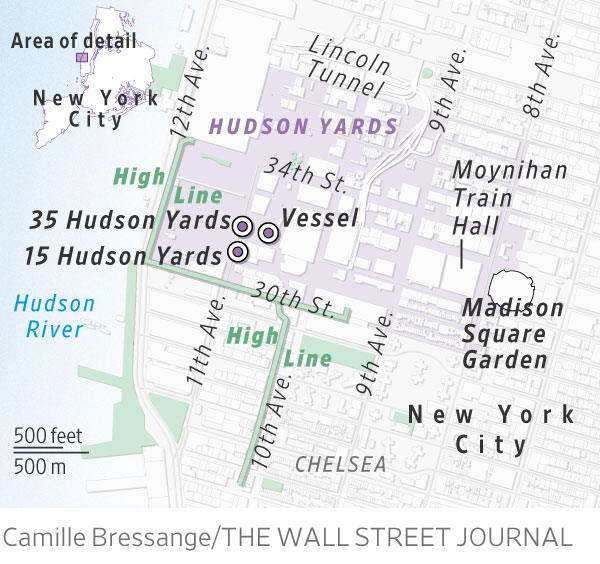
Now, roughly a decade after Related broke ground on Hudson Yards, it has struggled to make that vision a reality. At the luxury glass-and-limestone tower 35 Hudson Yards, approximately 50% of the units were still unsold as of the last week of June, more than four years after sales launched, according to an analysis by The Wall Street Journal based on sales recorded with the city’s Department of Finance. Related is slashing prices and offering incentives at the condominium, such as covering buyers’ taxes and closing costs, local agents said.
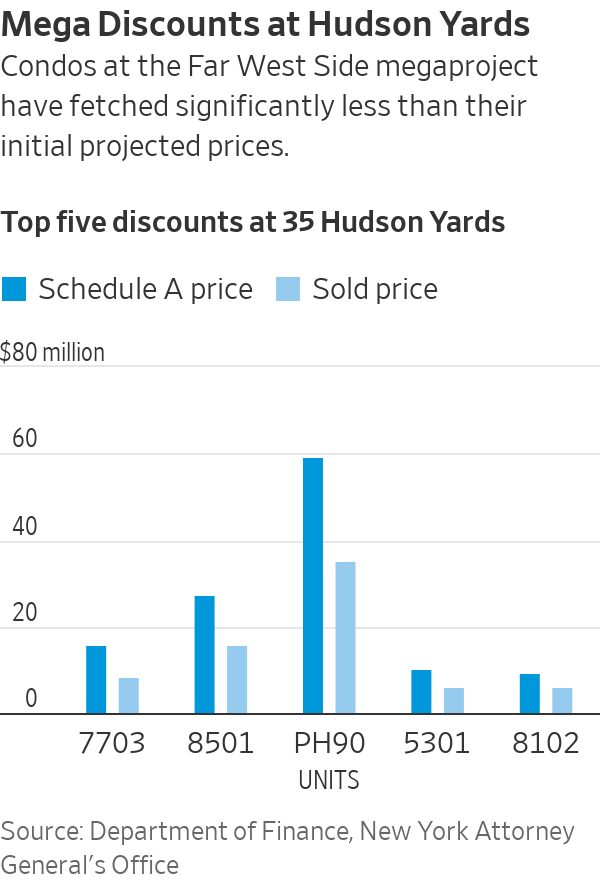
Recorded sales at 35 Hudson as of late June had closed for an average of 30% less than the original prices filed with the New York state Attorney General’s office, and active listings were discounted by up to 50%, the analysis shows. At least four large units at the building have sold for more than 40% off, records show. A four-bedroom apartment recently traded for $8.5 million, about 46% less than its projected asking price of $15.725 million, records show.
Related’s Sherry Tobak, who heads sales for the two condominiums alongside new development marketing firm Corcoran Sunshine, said the developer had been forced to reassess its expectations at 35 Hudson Yards.
“When we first opened the job, we thought we’d be able to get a higher price,” she said. “The message [from the market] was that we were overreaching a little bit.”
While many developers across the city are cutting prices amid higher interest rates, the discounts being offered at 35 Hudson Yards are bigger than developer concessions in other areas of Manhattan, according to appraiser Jonathan Miller of Miller Samuel.
“The actual housing market is not seeing anywhere near that kind of discount,” Miller said. Related disputed that characterisation, saying the building is performing in line with “its competitive set.”
Priced slightly lower than 35 Hudson, 15 Hudson Yards originally fared better, and is about 90% sold after almost seven years of marketing. Still, some 15 Hudson homeowners are listing their units for less than they paid as they look to resell in a shifting market.
In all, Related still has more than a billion dollars worth of condos left to sell at Hudson Yards, based on the initial pricing, the Journal analysis shows.
The Hudson Yards condos were always going to be a tough sell for Related, which secured the rights to develop the massive railyard site through a roughly $1 billion lease deal with the Metropolitan Transportation Authority in 2010. The far-west location—between 10th Avenue and the West Side Highway—was untested for luxury housing, and required creating an entirely new neighbourhood out of whole cloth. Retail at Hudson Yards now includes high-end stores such as Cartier, Coach and Dior and restaurants including chef José Andrés’ Mercado Little Spain. The project’s more than 10 million square feet of office space is home to tenants such as L’Oréal and Facebook parent company Meta.
To help sell the new neighbourhood it created, Related promised safety—the developer works with a private security firm to police Hudson Yards.
The reception to the new Hudson Yards neighbourhood has been mixed. While some flock there for the shopping, restaurants and tourist destinations like the Edge observatory, others have described the glass skyscrapers as soulless, with little authentic personality.
“It’s a very dramatic area that’s sprung out of nothing,” said Manhattan real-estate agent Donna Olshan. “It’s high-rise buildings, commercial real estate and a mall. It has less of a residential feeling.”
A number of suicides at the Vessel, a tourist attraction that sits at the centre of Hudson Yards, have generated negative press coverage and resulted in the closure of the walkable sculpture. A spokeswoman for Related said the company is evaluating solutions that would allow it to reopen the Vessel.
The first Hudson Yards condo tower, 15 Hudson Yards, was designed to have a downtown feel, said Tobak. Designed by Diller Scofidio + Renfro and Rockwell Group, the 88-story, 285-unit building resembles four interconnecting arcs of glass. The property has about 40,000 square feet of amenities, including a fitness centre, a pool and an open-air terrace wrapped in a 60-foot glass screen wall. Sales launched at the project in September 2016. Initial pricing filed with the attorney general’s office started at $1.92 million for a one-bedroom unit and rose to $32 million for a four-bedroom penthouse.
By contrast, 35 Hudson Yards was designed for a more uptown audience, and is “a little more classic,” Tobak said. Indeed, Related’s own founder and chairman, Stephen Ross, relocated there from another of the company’s projects, the former Time Warner Center at Columbus Circle. Designed by Skidmore Owings & Merrill, 35 Hudson Yards is 92 stories with 143 units. The building has interiors by Tony Ingrao, who also designed Ross’s Time Warner Center penthouse, and comes with amenities such as a private gym and access to the offerings of the Equinox Hotel, which is also in the building. Initial pricing filed with the attorney general started at $5 million for a two-bedroom unit and rose to $59 million apiece for a pair of penthouses.
When 15 Hudson Yards launched sales, it benefited from an upswing in the New York condo market. By the end of the first year of sales, Related had signed contracts for more than $500 million worth of apartments, nearly a third of its projected sellout for the whole tower, property records show. Foreign buyers, particularly from Asia, were a strong component of the buyer pool, thanks to marketing and trade shows Related did there, Tobak said. A large number of those buyers have since rented their units out, according to StreetEasy.
Today, about 30 units remain unsold, recorded sales show, with the building’s higher-priced apartments making up the majority of the leftover inventory. Tobak noted that that number is closer to 25 if signed contracts are factored in.

Some buyers who purchased early on are now struggling to unload their units in the current market. Ann Cutbill Lenane, a Douglas Elliman real-estate agent who has sold multiple units at Hudson Yards, signed a contract in 2017 to buy a $4.84 million condo for herself at 15 Hudson Yards. Now, with her children out of the house and a need to downsize, she has accepted that she’s unlikely to find a buyer willing to match that price on a resale. She has the unit listed for $4.495 million and said she expects to sell for a loss, especially since Related is currently listing units at a discount, undercutting the price she paid.
She said she feels embarrassed to be a real-estate agent losing money on a piece of property. Still, “I can’t beat myself up,” she said. “You always take a risk when you step into a new product. That’s just the nature of the beast.”
Tobak said that buyers who purchased at the height of the market at 15 Hudson Yards are now facing inevitable market realities, but recommended that they try to wait out the current cycle. “If you hold on for a little while, you’re going to make money,” she said.
When 35 Hudson Yards launched sales in March 2019, it debuted at a higher price point than 15 Hudson in a much less favourable market. “By the time 35 came up, the bloom was off the rose,” said Olshan.
Related signed contracts on about 15 of the 143 units at 35 Hudson in the first year, records show. Then, its efforts were further hampered by the pandemic, which temporarily shut down sales offices across the city. To generate activity, Related temporarily rented units at the building with an option to buy, Tobak said.
Still, Related has struggled to build the momentum needed to meet sales targets at 35 Hudson. Agents said one factor is Related’s proposal to bring a casino to Hudson Yards, which potential buyers worry could draw large crowds and make the area feel tacky. “I’m sure whatever gets built is going to be very tasteful,” said Dan Gotlieb of Digs Realty Group, who has done business at 35 Hudson. “But it’s just an uncertainty right now that’s probably also contributing to the sluggish sales.”
In response to criticism of the casino plan, Related said in a statement: “If we are fortunate enough to be one of the successful bidders for a gaming license, we will deliver a world-class resort with amenities, restaurants, retail and entertainment that will even further elevate the offerings at Hudson Yards and make the experience for the neighbourhood, residents and office tenants even greater than it is today.”
Of the 35 Hudson units currently listed on StreetEasy, many are asking significantly less than the initial pricing. A five-bedroom, roughly 4,600-square-foot unit is asking $13.85 million, 49% less than its original $27 million offering-plan price, records show. A four-bedroom, roughly 3,800-square-foot unit is asking $9.995 million, 43% less than its original projected price.
Olshan likened 35 Hudson to “a big Broadway show that just never took off.”
Real-estate agents with recent deals at 35 Hudson said they have been pleasantly surprised by Related’s level of negotiability. Alex Carini of the Carini Group said his firm recently helped a Brazilian family purchase a $9.95 million condo at the tower, a 37.5% discount from the offering-plan pricing. Related also covered the client’s closing costs, he said. In this market, he said, sellers often give a discount or cover closing costs, but rarely both.
Gotlieb said his clients, onetime renters at 15 Hudson, sat on the sidelines for years as they waited for prices to fall at 35 Hudson. “They wanted a certain kind of product and they weren’t willing to pay $10 million for it,” he said. Ultimately, they secured a four-bedroom, roughly 3,400-square-foot unit for $8.5 million, nearly 46% off the offering plan price, records show.
Retired corporate attorney Grace Kim, 50, said she felt she had “room to negotiate” when she purchased a three-bedroom apartment for her family at 35 Hudson last year.
“Mortgage rates were so high,” Kim said. “Everyone was kind of afraid to jump into the buyer’s market.”
Kim declined to comment on what she paid, but a Related spokesperson said that her unit type typically ranges in price from $6 million to $7.5 million. It is not clear what the apartment was originally priced at.
Kim said she feels comfortable with the investment, given that she plans on living there long term. “I feel like the market is going to come back eventually,” she said.
In the luxury segment of the Manhattan market—the top 10% of deals—the number of closed sales fell 39.6% in the second quarter from the same period of last year, according to a recent report prepared by Miller for Douglas Elliman. The median sales price held relatively steady, ticking up by 3.9% to $6.7 million, during that same period.
Tobak remains optimistic. She said she sees foot traffic picking up at 35 Hudson and has sent contracts out on multiple units in the past few weeks. Factoring in contracts signed, the building is closer to 60% sold, she said. Still, the developer has “less wiggle room than before” in terms of profitability.
“We’re at a decent point,” she said. “Are we making a ton of money? I don’t know.”
 Copyright 2020, Dow Jones & Company, Inc. All Rights Reserved Worldwide. LEARN MORE





Born Creators Group MENA has appointed Liman Tabsh as Growth Officer for Qatar, supporting its Doha expansion amid rising demand driven by Qatar’s Digital Agenda 2030. She will lead growth by leveraging the group’s integrated model across Adcreators MENA, Social St. MENA, Events Unlimited MENA, and Endspace MENA.

Johnson Controls has launched Balanced Cooling in the UAE, a new solution designed to tackle low Delta T inefficiencies in district cooling systems. By combining AI diagnostics, real-time monitoring and smart retrofits, the platform helps improve cooling performance, reduce energy use, and eliminate costly surcharges, supporting more efficient and resilient building operations.

Salesforce has launched Headless 360 in the Middle East, enabling full access to its platform through AI-driven APIs without relying on traditional user interfaces. The move empowers enterprises to deploy AI agents at scale with greater flexibility, while maintaining unified data, governance, and security across systems.
eBay posted stronger-than-expected Q1 results, with earnings of $1.66 per share and revenue of $3.1 billion, alongside GMV surpassing forecasts. Despite solid performance and growth in re-commerce and AI-driven features, the company’s Q2 outlook came in softer, even as it continues to expand through partnerships and strategic moves including its planned acquisition from Etsy.
2 min
Global online marketplace eBay posted better-than-expected profit, sales, and gross merchandise volume for its first quarter.
Shares of the online commerce and auction site initially fell 7% in late Wednesday trading before recovering that ground to be flat. The stock rose 3.4% during regular trading.
eBay surpassed expectations for its major metrics, but offered second-quarter guidance that may have disappointed.
For the current second quarter ending June 30, eBay expects gross merchandise volume of $21.3 billion to $21.7 billion, up 8% to 10% from the year-ago second quarter, but below its GMV of $22.2 billion in the first quarter.
For its first quarter ended March 31, eBay reported adjusted earnings of $1.66 a share, up 21%, on revenue of $3.1 billion, up 19%. That revenue figure includes $2.29 billion in gross profit.
Wall Street was expecting adjusted earnings of $1.25 a share on sales of $3.04 billion, according to FactSet. The gross merchandise volume for the first quarter beat the $21.7 billion expected.
The e-commerce giant reported 136 million active buyers, defined as those who paid for a transaction within the previous 12 months, above the 135.2 million analysts expected.
CEO Jamie Iannone called first-quarter results “a strong start to the year,” noting accelerated gross merchandise volume growth and better-than-expected performance. eBay’s Focus Categories, consumer-to-consumer business, and secondhand and refurbished “recommerce strategic priorities are driving broad-based momentum, and strengthening our position as the marketplace of choice for enthusiasts.”
Iannone said during Wednesday’s conference call that while consumers remain resilient in the U.S., “it’s a different story in Europe,” where consumers are more economically pressured. He said that more eBay customers are embracing pre-owned and refurbished offerings.
First-quarter highlights included eBay Live’s “The 30/30 Collection,” a Pokémon Day auction that showcased 30 years of iconic cards and memorabilia from top sellers; more than 30 million scans of an AI-powered card-scanning pricing feature; and a partnership with Meta Platforms that let users highlight eBay inventory directly on Facebook.
eBay’s Goldin set an all-time first-quarter gross merchandise value record, including a record $16.5 million sale of a PSA 10 Pikachu Illustrator card.
In the first quarter of 2025, eBay reported adjusted earnings of $1.38 a share on sales of $2.59 billion, including $1.89 billion in gross profit.
On Feb. 19, eBay announced it was buying Depop, a secondhand clothing site popular with Gen Z for its “pre-loved fashion,” from online marketplace Etsy for $1.2 billion in cash. Depop has 7 million active buyers and 3 million active sellers, the majority of whom are under 34. Depop acquisition is expected to close by the end of the third quarter, subject to certain closing conditions and regulatory approvals.
A week after that announcement, eBay said it was cutting about 6.5% of its global workforce, or roughly 800 employees, as part of a strategic restructuring.
“We remain committed to disciplined execution of our strategic priorities while continuing to allocate capital thoughtfully to drive long-term value and significant returns for our shareholders,” Chief Financial Officer Peggy Alford said.
eBay expects second-quarter revenue of $2.97 billion to $3.03 billion, which would be up 8% to 10% from the same time last year. It projects adjusted earnings of $1.46 to $1.51 a share.
The company said it returned $639 million to stockholders in the first quarter: $500 million through share buybacks of about 6 million shares and $139 million in cash dividends.
The company’s audit committee declared a second-quarter cash dividend of 31 cents a share, payable on June 12 to shareholders of record as of May 29.
eBay’s stock is up 19.2% this year through Wednesday’s close, and up 52% over the past 12 months.

New research suggests that bonuses make employees feel more like a mere cog in a wheel.

Paine Schwartz joins BERO as a new investor as the year-old company seeks to triple sales.



Yaqoot has partnered with Huawei to upgrade its Business Support Systems (BSS), enhancing operational efficiency and enabling a more agile, data-driven digital experience. The collaboration will accelerate service development, improve personalization, and support Yaqoot’s broader digital transformation in line with Saudi Vision 2030.
2 min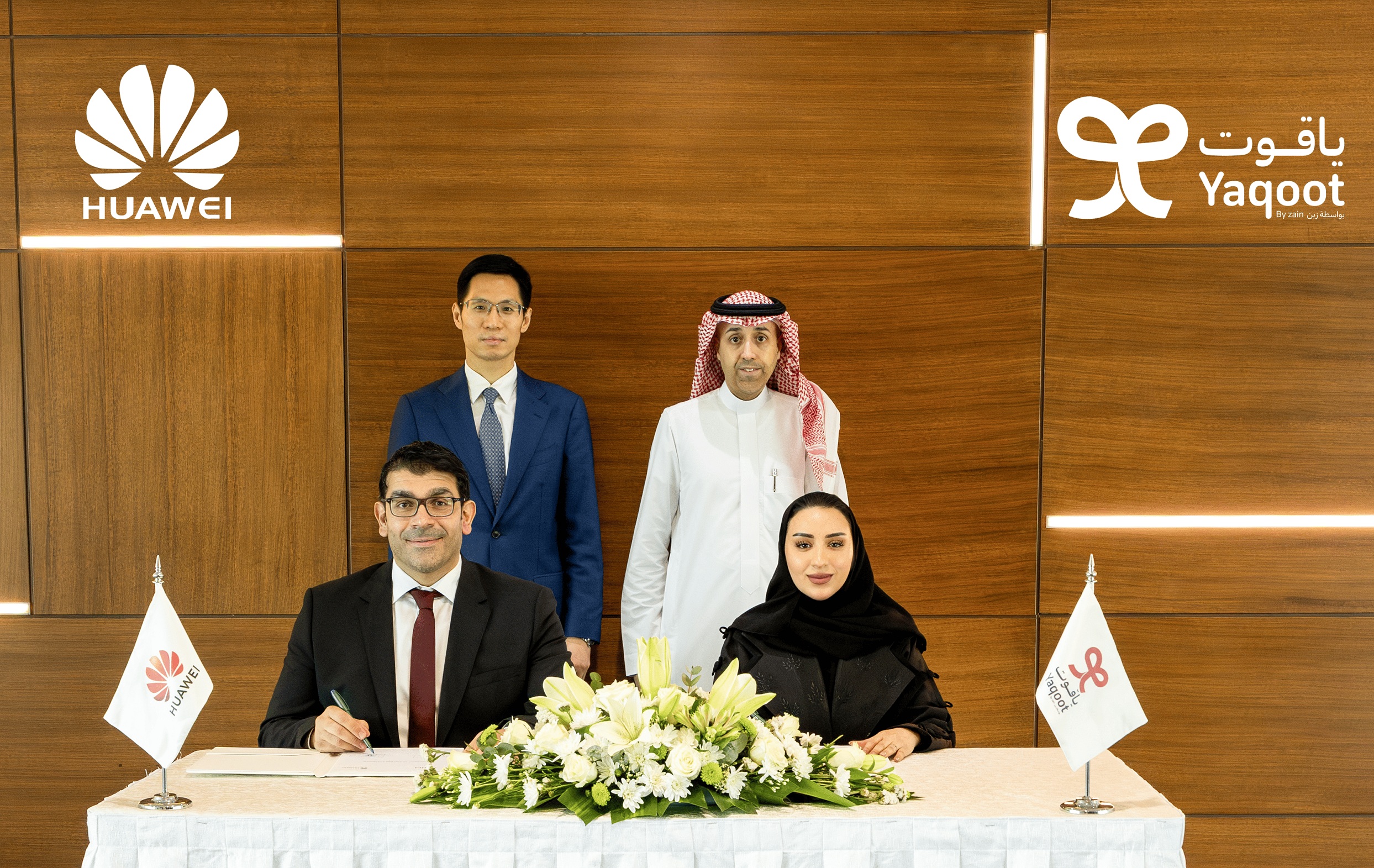
Yaqoot, the digital platform from Zain KSA, a leading digital services provider, has formed a strategic partnership with Huawei, a global technology leader. The collaboration aims to upgrade Yaqoot’s Business Support Systems (BSS), enhancing operational efficiency and enabling a more advanced, integrated digital experience.
This partnership aligns with Yaqoot’s approach to redefine its digital infrastructure on more robust foundations by adopting next-generation BSS solutions. It will support a more agile operating model enabling faster response to evolving market demands.
The collaboration will accelerate the development of digital products and services and reduce time-to-market, introducing greater flexibility and personalized offerings. It will also improve operational efficiency through enhanced automation and streamlined technical frameworks, while supporting advanced analytics for data-driven decision-making and sustained growth.
On the customer experience level, the upgrade will deliver deeper insights into user behavior, unlocking hyper-personalized offerings and enhancing the customer journey across all touchpoints. In parallel, users will gain greater control over their digital services through a seamless, fully integrated experience that supports satisfaction and trust.
Executive Vice President of Strategy and Innovation at Zain KSA, Njoud bint Mohammed AlShehri, said: “This partnership is part of our ongoing commitment to developing an integrated, customer-centric digital experience that is more flexible and easier-to-use. Yaqoot is focused on building a modern digital model that keeps pace with our customers’ evolving expectations through strengthening our innovation capabilities and responsiveness and leveraging the latest technologies. We believe this collaboration will transform how we roll out digital services, accelerating digital transformation in the Kingdom, in line with Saudi Vision 2030.”
Huawei Software Vice President John Zhuang, said: “Huawei boasts profound expertise in the BSS domain, particularly in telecom rating and billing. With services covering over 2.5 billion subscribers worldwide and successful deployment of more than 200 OCS and Billing projects globally. Now, as AI reshapes the industry, intelligent charging and billing positioned as the core pillar for operators’ digital and intelligent transformation. Together with Yaqoot and Zain KSA, we’re pioneering next-gen monetization, jointly create new digital and intelligent industry value.”
Huawei Saudi Zain Account General Manager Marwan Aldaamseh, said: “Our nearly 20-year partnership with Zain KSA reflects a consistent track record of delivering impactful communications technology projects at scale. As we expand into the IT domain, we are focused on execution excellence and measurable outcomes that support Zain and Yaqoot’s digital and intelligent transformation. We are confident that this next phase will further strengthen our strategic partnership and unlock new avenues for growth and innovation.”
Paine Schwartz joins BERO as a new investor as the year-old company seeks to triple sales.
Two coming 2027 models – the first of the “Neue Klasse” cars coming to the U.S. early next year – have been revealed.



Amazon and Anthropic are deepening their partnership with a long-term commitment exceeding $100 billion in AWS technologies, as Anthropic scales its Claude models on Amazon’s Trainium infrastructure. The collaboration, which already supports over 100,000 customers, includes expanded global deployment, access to Claude via AWS, and continued investment, with Amazon committing $5 billion now and up to $20 billion more, reinforcing their joint push to advance large-scale AI innovation.
4 min
Since 2023, Amazon and Anthropic have worked together to accelerate generative AI adoption across industries, making it easier for customers to build, deploy, and scale AI applications that solve real-world problems. Now, over 100,000 customers run Anthropic Claude models on AWS, making Claude one of the most popular model families on Amazon Bedrock. The two companies are also pushing the boundaries of what is possible with large-scale infrastructure, collaborating on Project Rainier—one of the largest AI compute clusters in the world—and together are opening new horizons with what’s possible in AI research and development.
Expanding on this success, today Amazon and Anthropic are deepening their collaboration with a commitment from Anthropic to spend more than $100 billion over the next ten years on AWS technologies. This encompasses current and future generations of Trainium (Amazon’s custom silicon) and tens of millions of Graviton cores (Amazon’s widely-adopted CPU chip) to provide superior price performance. Anthropic will secure up to 5 gigawatts (GW) of capacity to train and power their advanced AI models, including significant Trainium3 capacity expected to come online this year. The collaboration also includes a meaningful expansion of international inference in Asia and Europe to better serve Claude’s growing international customer base.
Overall, the commitment includes Trainium2, Trainium3, Trainium4, and the ability to purchase future generations of Trainium as they become available. Anthropic is already using AWS Trainium and Graviton to deliver scalable performance and cost efficiency across a broad range of generative AI workloads, allowing Anthropic to accelerate its growth with the scale, cost-efficiency, and security of AWS. Both Trainium and Graviton are used by more than 100,000 customers each, and Amazon Bedrock (Amazon’s high-performance inference service with a leading selection of frontier models) runs most of its inference on Trainium today.
Additionally, AWS customers will be able to access the full Anthropic-native Claude console from within AWS. Claude Platform on AWS lets customers access Anthropic’s Claude Platform through their existing AWS account, with no additional credentials, contracts or billing relationships to manage. Customers can use the same AWS access controls and monitoring they already have in place, making it easier to directly access Anthropic’s native Claude experience. Whether customers choose Claude Platform on AWS or Claude on Amazon Bedrock, AWS and Anthropic are partnering to provide customers the path to Claude that best meets their needs.
Separately, Amazon will invest $5 billion in Anthropic today and up to an additional $20 billion in the future tied to certain commercial milestones. This is in addition to the $8 billion Amazon previously invested in Anthropic.
“Our custom AI silicon offers high performance at significantly lower cost for customers, which is why it’s in such hot demand,” said Andy Jassy, CEO of Amazon. “Anthropic’s commitment to run its large language models on AWS Trainium for the next decade reflects the progress we’ve made together on custom silicon, as we continue delivering the technology and infrastructure our customers need to build with generative AI.”
“Our users tell us Claude is increasingly essential to how they work, and we need to build the infrastructure to keep pace with rapidly growing demand,” said Dario Amodei, CEO and co-founder of Anthropic. “Our collaboration with Amazon will allow us to continue advancing AI research while delivering Claude to our customers, including the more than 100,000 building on AWS.”
Amazon and Anthropic continue to deepen their relationship, driven by a shared commitment to rapid innovation, responsible AI development, and delivering results for customers, which already includes:
- Custom silicon collaboration. Anthropic uses AWS Trainium chips to build, train, and deploy its world-class AI models. Anthropic works closely with Annapurna Labs on developing and optimizing future Trainium chips, providing direct feedback from Claude training workloads to shape next-generation chip design for frontier AI models and benefitting other AWS customers. This has led to a strong engineering relationship that is helping Anthropic accelerate the development of their models with both engineering teams communicating on an almost daily basis on everything from low-level optimization work to high-level architectural decisions for next-generation chips.
- Project Rainier. AWS collaborated with Anthropic to launch Project Rainier, one of the world’s largest AI compute clusters with nearly half a million Trainium2 chips. When it launched, Project Rainier was larger than any AI compute cluster in the world and Anthropic is now actively using it to train and deploy Claude models for customers around the world for their AI-powered applications. Project Rainier is also being used to build and deploy future versions of Claude, and the more compute dedicated to training this frontier model, the smarter and more accurate it becomes. Project Rainier is now a template for deploying at scale the kind of raw computational power that will allow AI to tackle the hardest human challenges and enable breakthroughs across everything from medicine to climate science.
- Empowering builders worldwide. AWS is the best place to run Anthropic’s world-class family of Claude models, including Opus, Sonnet, and Haiku, and over 100,000 organizations of all sizes are running them on Amazon Bedrock to do things that weren’t previously possible. For example, Lyft incorporated Claude, via Amazon Bedrock, to power its customer care AI assistant, delivering fast responses to the most common support issues, and directing customers to a human specialist when more hands-on assistance is required, reducing average customer service resolution time by 87% and resolving thousands of customer requests daily. Pfizer is using Amazon Bedrock with Claude to help scientists search through the approximately 20,000 documents generated per drug development project using voice commands and a chatbot, saving scientists 16,000 annual search hours, while reducing infrastructure costs by 55%. Claude also powers experiences across a range of additional AWS technologies, including Amazon Connect, Kiro, and Amazon Quick, making it easy for developers to experiment, customize, and deploy AI on AWS.
- Primary training and cloud provider. Anthropic continues to choose AWS as its primary training and cloud provider for mission-critical workloads. Amazon developers and engineers also have access to build with Claude models to improve customer experiences across Amazon‘s businesses.
Paine Schwartz joins BERO as a new investor as the year-old company seeks to triple sales.
Many of the most-important events have slipped from our collective memories. But their impacts live on.



Born Creators Group MENA has appointed Liman Tabsh as Growth Officer for Qatar, supporting its Doha expansion amid rising demand driven by Qatar’s Digital Agenda 2030. She will lead growth by leveraging the group’s integrated model across Adcreators MENA, Social St. MENA, Events Unlimited MENA, and Endspace MENA.
2 minBorn Creators Group MENA, the integrated marketing and communications agency network, today announces the appointment of Liman Tabsh as Growth Officer for Qatar, a strategic move that reinforces the group’s growth ambitions in one of the GCC’s most dynamic markets.
The appointment comes as Born Creators MENA enters a new phase of expansion in Doha, at a time when Qatar’s Digital Agenda 2030 is accelerating demand for integrated marketing capability across the private sector. The group’s integrated model brings four specialist agencies, Adcreators MENA (performance marketing and creative), Social St. MENA (social media and content), Events Unlimited MENA (experiential activations), and Endspace MENA (web, technology, and AI), serving clients across F&B, real estate, retail, hospitality, and financial services.
Liman is a seasoned marketing and communications executive with deep expertise in integrated campaigns, brand communications, and large-scale experiential activations across the GCC. She has led major regional accounts including American Express MENA across the UAE, Qatar, Bahrain, Kuwait, Oman, and Jordan, driving full-funnel acquisition campaigns, product launches, and engagement initiatives. Her experience spans digital strategy, sponsorships, and high-profile partnerships, alongside strong commercial acumen in budgeting, forecasting, and profitability management. Most recently based in Doha, she brings deep knowledge of the Qatari market and proven capability across fintech, hospitality, automotive, real estate, and FMCG.
Commenting on the appointment, Rony Chiha, CEO of Born Creators Group, said: “Liman brings exactly the kind of leadership we need at this stage of our Qatar growth, strategic, commercially sharp, and deeply connected to this market. Her ability to deliver integrated work at scale, across channels and across categories, makes her the right person to drive our next chapter in Doha.”
Liman Tabsh said: “Born Creators’ integrated model is rare in this region. The ability to deliver strategy, content, technology, and experience under one roof gives clients something most agency setups simply can’t: consistency, speed, and better work. I’m excited to bring that to more brands in Qatar.”
Born Creators MENA intends to set a new standard for what an integrated agency can deliver in this market, and to prove that the best work happens when strategy, content, technology, and experience are built together, not bolted on.
The sports-car maker delivered 279,449 cars last year, down from 310,718 in 2024.

Parts for iPhones to cost more owing to surging demand from AI companies.


Johnson Controls has launched Balanced Cooling in the UAE, a new solution designed to tackle low Delta T inefficiencies in district cooling systems. By combining AI diagnostics, real-time monitoring and smart retrofits, the platform helps improve cooling performance, reduce energy use, and eliminate costly surcharges, supporting more efficient and resilient building operations.
2 minJohnson Controls, a global technology leader energy efficiency, decarbonisation, thermal management and mission-critical performance, has announced the launch of Balanced Cooling, a purpose-built solution for buildings connected to centralised cooling systems in the UAE, designed to resolve low Delta T and improve cooling performance through a more integrated, solution driven approach.
Delta T is the difference between the temperature of chilled water entering and leaving a building cooling system.
When that temperature difference falls below intended levels, the system can’t transfer heat as efficiently as it should. This can happen because of over-pumping, poor hydronic balance or valve misalignment.
As a result, more water must be circulated to deliver the same cooling, which can increase pumping energy, affect system balance and expose building owners to surcharges. Balanced Cooling helps identify and correct this through smart valve retrofits, real-time monitoring, AI diagnostics and intelligent control.
A timely solution for UAE buildings
Balanced Cooling addresses low Delta T at scale. Based on initial customer testing Balanced Cooling delivers outcomes including eliminating related surcharges by up to 100%, reducing pumping energy by up to 40%, and significantly lowering comfort complaints in continuously operating facilities.
“Low Delta T remains one of the most persistent and costly inefficiencies affecting buildings connected to centralized cooling systems in the UAE,” said Tarek Hassan, associate director, Sustainability, MEA, Johnson Controls.
“Balanced Cooling was developed to move beyond isolated fixes by combining system visibility, intelligent diagnostics and targeted corrective action in one integrated solution. The result is a more effective way to reduce pumping energy, manage surcharges and improve cooling performance using existing building infrastructure,” he stated.
Low Delta T can create avoidable cost exposure, system inefficiencies and occupant discomfort for buildings connected to centralized cooling systems in the UAE.
This is particularly relevant as the Dubai Supreme Council of Energy identifies district cooling retrofits as a key part of its Efficient Cooling programme, and DEWA expects district cooling penetration in Dubai to reach 40% by 2030.
According to Johnson Controls, he Balanced Cooling is purpose-built to help building owners and operators address low Delta T more effectively while improving system balance, thermal management and overall operating performance.
Its retrofit-friendly, plug-and-play design supports integration with existing HVAC and BMS systems, making it particularly relevant for occupied residential, hospitality and office buildings where cooling performance must be improved efficiently, precisely and with minimal disruption.
From point fixes to measurable correction
Balanced Cooling helps building owners move beyond reactive adjustments by providing better visibility into system performance and a more targeted path to correction. This supports more stable cooling performance, improved system balance and more efficient operation over time.
Balanced Cooling adds to Johnson Controls’ broader cooling portfolio in the UAE, complementing its advanced chiller solutions, Cooling as a Service (CaaS) offering and digital building controls, said the statement.
Together, these capabilities reinforce Johnson Controls’ leadership in cooling across the region and its ability to help customers improve efficiency, optimize performance and build more resilient, future-ready environments, it added.
Paine Schwartz joins BERO as a new investor as the year-old company seeks to triple sales.

Chris Dixon, a partner who led the charge, says he has a ‘very long-term horizon’



Salesforce has launched Headless 360 in the Middle East, enabling full access to its platform through AI-driven APIs without relying on traditional user interfaces. The move empowers enterprises to deploy AI agents at scale with greater flexibility, while maintaining unified data, governance, and security across systems.
2 minSalesforce, the world’s #1 AI CRM, announced the launch of Salesforce Headless 360 in the Middle East, a new set of platform capabilities designed to make every function of Salesforce accessible to AI agents, developers, and enterprise systems without requiring interaction through a user interface.
The launch marks a fundamental shift in how the Salesforce platform is accessed and deployed. Where enterprise software has historically required human navigation through consoles and dashboards, Headless 360 exposes the full depth of Salesforce capabilities as Application Programming Interfaces (APIs), Model Context Protocol (MCP) tools, and Command Line Interface (CLI) commands, enabling AI agents to call on data, workflows, and business logic directly and in real time.
For Middle East organisations at the forefront of AI adoption, Headless 360 delivers three core capabilities. More than 60 new MCP tools and 30 preconfigured coding skills give development teams and their AI coding agents complete, live access to the entire Salesforce platform within the tools they already use, including Claude Code, Cursor, and Codex. The Agentforce Experience Layer introduces a new UI service that separates what an agent does from how it appears, enabling rich interactive components to render natively across Slack, mobile, and any client that supports MCP applications. A new suite of governance and testing tools, including Testing Center, Custom Scoring Evals, Agent Script, and the Agent Fabric control plane, gives enterprises the control and observability needed to run AI agents reliably at scale.
Underpinning all three capabilities is the same trusted data, workflow, and compliance infrastructure already embedded in Salesforce, meaning organisations across the region can deploy agents that inherit existing permissions, business rules, and integrations without rebuilding from scratch.
Mohammed AlKhothani, Area Vice President, Salesforce Middle East, said: “The Middle East is home to some of the most ambitious digital transformation programmes in the world, and organisations here are deploying it at scale. Headless 360 gives those organisations the platform foundation they need to move with confidence. Agents are only as capable as the platform they run on, and Salesforce brings together the data, the workflows, the trust layer, and the engagement layer that no other vendor provides in one integrated system.”
AgentExchange, Salesforce’s unified marketplace, brings together more than 10,000 Salesforce applications, 2,600 Slack applications, and 1,000 Agentforce agents, tools, and MCP servers from partners including Google, DocuSign, and Notion, all of which are discoverable through AI-guided search and can be activated in a single step.
Salesforce Headless 360 capabilities are generally available now, with additional features including the Testing Center and Salesforce Catalog scheduled for release in mid-2026.
The sports-car maker delivered 279,449 cars last year, down from 310,718 in 2024.

Americans now think they need at least $1.25 million for retirement, a 20% increase from a year ago, according to a survey by Northwestern Mutual



Inspired by its historic 1965 Monte Carlo Rally victory, MINI introduces the MINI 1965 Victory Edition—a modern tribute that blends iconic design with high-performance engineering. Featuring bold retro detailing, a powerful 231 hp engine, and signature motorsport accents, the edition celebrates MINI’s racing legacy while delivering a dynamic and stylish driving experience.
2 min
No other city has motorsport so deeply rooted in its history than Monte Carlo. MINI has endured tremendous success within the principality, particularly in 1965, when the legendary Mini Cooper S, driven by Timo Mäkinen and co-driver Paul Easter took victory at the 1965 Monte Carlo Rally. At the time, the car was praised for its innovative technology, elegant performance, and agility under extreme weather conditions which MINI has been able to replicate and modernize in the form of the new MINI 1965 Victory Edition. This new edition creates a stylish statement and maintains typical MINI craftmanship, following the foundations laid MINIs illustrious rally history.
The MINI 1965 Victory Edition is offered for MINI John Cooper Works model. The MINI John Cooper Works has an impressive 231 hp and a maximum torque of 380 Nm. It sprints from a standstill to 100 km/h in just 6.1 seconds.
Exterior: a perfect blend of vintage and modern design.
In homage to the legendary motorsports colors of the 1960s, the 1965 Victory Edition impresses in Chili Red exterior paintwork, which is accentuated by a white trim stripe extending from bonnet to the roof and rear, enhancing the vehicle´s sportiness even further. As an exclusive trademark of the edition, a white “52” graphic adorns both sides of the vehicle – a reference to the number of the original car displayed from 1965.
The roof is offered as a panoramic roof, or in Glaced which provides an athletic and elegant contrast to the Chili Red body. The subtle “1965” sticker on the C-pillar catches the eye and gracefully emphasizes the historic year of victory. The 18-inch alloy wheels in the JCW Lap Spoke 2-tone Design or the JCW Mastery Spoke black for the all-electric MINI John Cooper Works not only give the vehicle a dynamic appearance but also ensure optimum performance and safe handling on a wide variety of road surfaces. Based on rally sport, floating hubs and JCW valve painted in the specific color scheme and set additional sporty accents.
Interior: sportiness and comfort combined.
On entering the vehicle, the striking door sill showcases white “1965”- writing on a red and black background immediately catch the eye and bestow the cockpit with an exclusive look. In addition, each model of the edition features a dedication on the inside of the door reflecting information about the bygone rally.
The interior is based on the traditional JCW color palette and the familiar JCW-Trim. Finished in aracy anthracite and red, this combination creates an elegant blend while also providing a sportive contrast to the vehicle’s exterior paintwork. The edition-specific details have been carefully selected to create a harmonious overall effect. The 6 O´clock spoke of the sports steering wheel and the storage box in the center of the console feature the “1965”-lettering and thus become a subtle but impactful reference to the rich tradition of MINI motorsports history. The racing number of the victorious Cooper S from 1965 adorns the key cap of the exclusive edition, making it a daily symbol of this historical success.
Paine Schwartz joins BERO as a new investor as the year-old company seeks to triple sales.

Interior designer Thomas Hamel on where it goes wrong in so many homes.



Amazon Web Services has launched Amazon Bio Discovery, an AI-powered platform that helps scientists design, test, and refine drug candidates faster by combining advanced biological models, AI agents, and integrated lab partnerships into a seamless research loop.
4 min
|
AWS announced Amazon Bio Discovery, a new AI-powered application designed to help scientists design and test novel drugs more quickly and confidently. Amazon Bio Discovery gives scientists direct access to a broad catalog of specialized AI models called biological foundation models (bioFMs) that are trained on vast biological datasets. These models generate and evaluate potential drug molecules, known as candidates, helping scientists accelerate antibody therapies during the early stages of drug discovery. But access alone is not enough. With Amazon Bio Discovery, scientists can converse naturally in their preferred terminology with an AI agent—a smart assistant that automates complex tasks—to select the right models for their research goals, optimize the inputs, and evaluate candidates for experimentation. Scientists can also train models on their prior experimental data to make more accurate predictions. Furthermore, they can easily send candidates to physical labs for synthesis and testing—with results routing back to the application for rapid iteration, creating a lab-in-the-loop experimentation cycle. Breaking down barriers to AI adoption in drug discoveryOver the last several years, progress in generative AI has created an explosion of new machine learning models ranging from predicting the physical structure of proteins to evaluating candidates based on their chemical properties. While these models show promise, they require coding skills and the ability to manage computing infrastructure. Selecting models alone is challenging because there are dozens of such models, and it’s difficult to benchmark them against each other. As a result, many scientists struggle to use AI models independently, and computational biologists—the experts who have specialized AI skills that could help them—are in short supply. Taking candidates from computational design to physical synthesis is also complicated. Data lives in disconnected systems, and scientists must manage multiple lab partners and manually coordinate timelines and pricing. Amazon Bio Discovery addresses these challenges with three key capabilities: a benchmarked library of AI models and analysis packages, an AI agent that helps researchers design experiments, and integrated lab partners that test the most promising antibody candidates and route results back to the scientists. This feedback loop improves the next round of design. “AI agents make powerful scientific capabilities accessible to all drug researchers, not just those with computational expertise,” said Rajiv Chopra, vice president of AWS Healthcare AI and Life Sciences. “These AI systems can help scientists design drug molecules, coordinate testing, learn from results, and get smarter with each experiment. This combination of cutting-edge AI and the robust, secure infrastructure AWS has built for regulated industries allows scientists to accelerate antibody discovery in ways that weren’t possible before.” Amazon Bio Discovery is built on the same foundation that the pharmaceutical industry already trusts. Today, 19 of the top 20 global pharmaceutical companies use AWS to power their most sensitive research workloads. Amazon Bio Discovery brings enterprise-grade scale, performance, privacy, and security to researchers across all pharmaceutical, biotech, and academic research organizations. It provides complete data isolation and gives customers ownership over all their proprietary data and intellectual property. |
Improve AI models with scientists’ prior experimental dataFine-tuning AI models with proprietary experimental data produces smarter predictions, better candidates, and fewer experiment iterations. However, this requires dedicated machine learning teams and expensive infrastructure, making it out of reach for most scientists. Amazon Bio Discovery changes this by enabling scientists to securely feed prior experimental data from their organization’s lab results into the application. They can use their own lab data to train custom models with just a few clicks—no need to build complex training pipelines or write custom code. All fine-tuned models remain private and accessible only to the user or their organization. For organizations that have already built their own in-house models, computational biologists can easily deploy and host those models within Amazon Bio Discovery. Together, these features help both scientists and computational biologists collaborate more efficiently, creating a continuous improvement cycle that accelerates research over time. |
Close the drug discovery loop with built-in lab partnersOnce scientists identify top antibody candidates, they can send them directly to Amazon Bio Discovery’s integrated network of laboratory partners who physically synthesize and test molecules. Partners including Twist Bioscience, Ginkgo Bioworks—with A-Alpha Bio coming soon—provide services with transparent pricing and turnaround times. Tests measure essential information that helps scientists decide which candidates can proceed to further development. Lab results flow back into the organization’s application environment, keeping all data connected and improving the next design cycle. One application replaces manual handoffs and disconnected systems, closing the experimental loop. |
Designing novel antibodies with Memorial Sloan Kettering Cancer CenterNai-Kong Cheung M.D., Ph.D., Enid A. Haupt Chair in Pediatric Oncology at Memorial Sloan Kettering Cancer Center (MSK), faced a familiar challenge. The process of identifying a promising approach to attack cancer cells and developing an antibody drug candidate using traditional design methods takes too long. In partnership with MSK, the Amazon Bio Discovery team worked with Cheung to tackle this challenge. Using Amazon Bio Discovery’s agent to orchestrate multiple models, they designed nearly 300,000 novel antibody molecules. From there, they sent the 100,000 top candidates to Twist Bioscience for testing. What typically takes up to a year using traditional design methods took weeks from designing the candidates to sending them for lab testing. “We’re glad to be able to join forces with Amazon Bio Discovery to develop the next generation of antibodies that will potentially speed up the process to help patients worldwide,” said Cheung. “As researchers, we spent 20 years just to prove that the first generation of antibody worked, and then we spent another 13 years getting it into the human form before getting FDA approval. This path has been very inefficient. Patients come here with a clock. We need results sooner.” In addition to MSK, Bayer, the Broad Institute, Fred Hutch Cancer Center, and Voyager Therapeutics are among early adopters using Amazon Bio Discover |
Parts for iPhones to cost more owing to surging demand from AI companies.

Following the devastation of recent flooding, experts are urging government intervention to drive the cessation of building in areas at risk.



Parmigiani Fleurier unveils the TONDA PF Chronographe Mystérieux, a world-first chronograph that disappears when not in use—redefining timekeeping through a clean, full-dial display and a groundbreaking triple-clutch mechanism that reveals complexity only on demand.
4 min
For five years, Parmigiani Fleurier has asserted a distinctive signature, cultivating a form of watchmaking in which complication recedes behind the essential. It expresses a vision of private luxury, where the object fully reveals itself through the intimate relationship it forms with its wearer.
With the TONDA PF Chronographe Mystérieux, the Maison introduces a new chronograph architecture, a world first that redefines both the reading and the use of one of horology’s most codified complications. It is a chronograph without sub-dials, offering a display across the full dial and a function revealed only on demand. At rest, nothing betrays its presence, and the watch retains the purity of a three-hand TONDA PF.
This development is based on unprecedented structure bringing together five coaxial hands at the centre of the dial. When activated, three hands deploy to measure hours, minutes and seconds, while two others ensure the continuity of civil time. The result is an innovative display configuration in watchmaking, developed over several years.
This timepiece, the third World Premiere in four years, follows a coherent trajectory. It reflects a mechanical approach conceived to accompany the wearer, never to impose itself upon them.
INVENTION THROUGH RESTORATION
For more than thirty years, Parmigiani Fleurier has cultivated a form of watchmaking shaped by a dual ambition: to understand the masterpieces of the past and to extend their underlying principles.
Michel Parmigiani devoted much of his life to restoring the most complex timepieces in horological history. To dismantle, analyse and rebuild is to grasp mechanisms in their depth, their constraints as much as their brilliance.
This culture has never been conservative. It has opened new fields of possibility.
Since 2022, the Maison has expressed a distinctive signature through complications revealed on demand.
TONDA PF GMT Rattrapante.
TONDA PF Minute Rattrapante.
And today, TONDA PF Chronographe Mystérieux.
Its triple clutch construction, comprising one vertical clutch and two horizontal clutches, positions it among the most complex chronographs developed in contemporary production.
Three World Premieres in four years, where mechanics serve the experience and the experience respects the hierarchy of time.
THE HIERARCHY OF TIME
How can a function as complex as a chronograph be integrated without altering the balance of the dial? Traditionally, this complication fragments the reading and imposes its presence. Here, the hierarchy of time is preserved. Lived time remains central, and the function appears only when it is required.
Such an approach could not rely on existing architecture. The caliber PF053 was developed specifically for this timepiece, based on a principle that allows the complete disappearance of chronograph indications at rest.
Designing an integrated chronograph is already an exercise in considerable complexity. Rethinking it through the logic of appearance requires an even deeper level of mastery, encompassing inertia, synchronization, mechanical memory and energy management.
At Parmigiani Fleurier, invention is part of a continuous evolution.
TIME, READ IN FULL
At rest, the watch presents itself as a three-hand TONDA PF. Visual silence. Balance. Clarity. The dial reveals nothing and respects the hierarchy of civil time.
The mono-pusher integrated into the caseband at 7.30 orchestrates the entire sequence. A single command. A single gesture coordinating three perfectly synchronized phases.
First press: deployment
The three rhodium-plated chronograph hands perform an instantaneous flyback. They position at 12 o’clock, start immediately and synchronize perfectly. From indicating civil time, they transform into chronograph measurement hands. At the same time, the rose gold hour and minute hands of civil time appear. The dual display organizes itself seamlessly.Measurement unfolds across the full dial, freed from traditional sub-dials. The chronograph no longer exists at the periphery. It occupies the space entirely.
Second press: stop
The reading of measured time becomes immediately legible. The rhodium-plated hours, minutes and seconds hands indicate the measured time in relation to the rose gold civil time hands, without fragmentation or visual hierarchy.
Third press: withdrawal
The final gesture is not limited to a return to 12 o’clock. The rhodium-plated hands align precisely with the rose gold hands of current time, while the seconds hand resumes its natural motion. The complication disappears and the dial regains its original purity. A single hand performs the dual function of civil seconds and chronograph seconds. The complexity remains invisible. At Parmigiani Fleurier, discretion is not an aesthetic position. It is the result of mastery. This transition between appearance, presence and withdrawal defines the essence of the experience
THE TONDA PF SIGNATURE
The dial follows the aesthetic codes of the TONDA PF collection. It is rendered in a Mineral Blue tone, whose nuances shift between mineral depth and aquatic reflections, revealing a subtle presence as the light evolves.
Its hand-crafted Grain d’Orge guilloché captures and diffuses light with precision, giving the dial a constant, living vibration. The knurled platinum bezel, a signature of the Maison, interacts with the purity of the dial, while the integrated bracelet extends the case architecture in a fluid and natural continuity.
Each element contributes to a shared pursuit of balance, where the richness of the finishes reveals itself in the detail without ever compromising legibility. This mastery of form and function gives the piece a rare presence, that of a chronograph whose elegance asserts itself with quiet clarity, within a register where very few references belong.
CALIBRE PF053: THE ARCHITECTURE OF DISAPPEARANCE
This integrated column-wheel chronograph movement comprises 362 components. It operates at 28,800 vibrations per hour (4 Hz), offering a power reserve of 60 hours and a thickness of 6.8 mm.
Its construction is based on a triple clutch architecture, comprising one vertical clutch and two horizontal clutches, made necessary by the superimposition and transformation of hand functions.
The calibre was developed as an autonomous structure, conceived from the outset around a principle of disappearance. Each interaction requires instantaneous precision and absolute coordination.
It is finished according to the Maison’s standards, with a 22-carat rose gold oscillating weight alternating sandblasted and polished surfaces, and openworked bridges with satin-finishing and bevelled edges.
Structural rigor is in constant dialogue with artisanal execution.
THE KINEMATICS OF COMPLEXITY
Very few manufacturers today can rethink a chronograph at this level. The TONDA PF Chronographe Mystérieux does not present a variation. It introduces a new way of conceiving this complication.
On its thirtieth anniversary, Parmigiani Fleurier affirms a clear position. Horological innovation is measured by the ability to simplify the experience without renouncing complexity.
This timepiece does not reveal itself immediately. It is discovered through gestures, through rhythm and through the attention it receives.
Complexity becomes masterful when it is no longer perceived.
The sports-car maker delivered 279,449 cars last year, down from 310,718 in 2024.




Ento Capital is advancing a $500M digital energy infrastructure platform through its Entocore Fund, backed by strategic partners including Masirah Energy Gateway, targeting the fast-growing intersection of energy and data infrastructure as global demand for AI and compute accelerates, with data center investment projected to hit $1.1 trillion by 2029.
3 min
Ento Capital, a DIFC-based investment banking firm regulated by the Dubai Financial Services Authority (DFSA), announced that it is advancing its digital energy infrastructure platform through its Entocore Infrastructure Fund, supported by strategic investors. The platform is designed to develop and scale energy-backed digital infrastructure investments across multiple markets.
The platform is being developed at a time when global energy systems are undergoing significant transformation. A substantial portion of energy produced today remains underutilised, while demand across developing markets continues to grow rapidly. This dynamic is driving increased focus on efficiency and the conversion of energy into productive infrastructure, creating a compelling investment opportunity.
The platform is being developed in parallel with accelerating global demand for artificial intelligence and data infrastructure, placing increasing pressure on energy systems and compute capacity. Data centre investment is projected to reach approximately $1.1 trillion by 2029, reflecting the scale of infrastructure required to support this growth. This dynamic is driving the need for integrated energy and digital infrastructure solutions.
“This is a moment to build, not just participate. As demand for compute and energy infrastructure accelerates globally, scalable and well-structured platforms will define the next phase of growth. Through this platform, we are focused on deploying capital efficiently and supporting the long-term expansion of energy-backed digital infrastructure,” said Hayssam El Masri, Senior Executive Officer of Ento Capital.
The platform is supported by strategic investors, including Masirah Energy Gateway (MEG), an Oman-based energy infrastructure company focused on large-scale infrastructure development, participating through an asset contribution into the Fund and aligning its assets with the platform’s strategy. MEG has also entered into a memorandum of understanding in relation to large-scale renewable energy and infrastructure projects.
“Our participation through an asset contribution reflects our commitment to aligning strategic infrastructure assets with scalable investment platforms. Combined with our engagement under the memorandum of understanding with the relevant authorities to develop large-scale energy infrastructure, this positions us to support the integration of energy capacity into broader energy and digital infrastructure ecosystems across the region.” said Yvo de Zwart, Chief Executive Officer, Masirah Energy Gateway.
“The convergence of energy and digital infrastructure requires both technical expertise and disciplined execution. We are pleased to support this platform by providing energy origination, offtake facilitation and technical advisory across asset development, optimiZation, and long-term operational performance. We are actively developing an offtake pipeline, with strong engagement and positive feedback from compute and energy clients, highlighting growing demand for scalable, energy-backed digital infrastructure,” said Mohamed El-Masri, Founder & CEO of PermianChain.
The platform targets a significant opportunity at the intersection of energy and digital infrastructure, as rising compute demand places increasing pressure on global power systems. Data centers already account for approximately 4% of global electricity consumption, a figure expected to increase materially in the coming years. At the same time, the sector faces a substantial investment gap, with global energy and infrastructure requirements running into trillions of dollars.
The Entocore Infrastructure Fund is structured to deliver attractive risk-adjusted returns through scalable infrastructure investments, combining stable yield characteristics with long-term growth potential. The strategy focuses on expanding energy-backed digital infrastructure, where value is driven by efficient capital deployment and capacity growth. In this context, infrastructure platforms operating at scale have demonstrated the ability to generate up to 5x returns on invested capital over time.
The Entocore Infrastructure Fund operates under a DIFC-based Qualified Investor Fund (QIF) structure, regulated by the Dubai Financial Services Authority (DFSA), providing institutional-grade governance and cross-border investment capabilities. Through this platform, Ento Capital is focused on building a scalable investment strategy at the intersection of energy and digital infrastructure, supporting long-term growth across key global markets.
Parts for iPhones to cost more owing to surging demand from AI companies.



Yango Ride has integrated with ChatGPT, enabling users to plan trips directly within the chat across the UAE and 25+ countries, with real-time pricing, ETAs, and route comparisons; the move reflects growing demand for seamless, AI-powered services as ride-hailing usage rises and users shift toward conversational interfaces for everyday tasks.
2 min
Yango Ride, the ride-hailing service from global tech company Yango Group, has launched an official app in ChatGPT, enabling users to plan routes and rides directly within the conversation. The rollout is a global update covering more than 25 countries where Yango operates, spanning regions from the Middle East and South Asia to Africa and Latin America.
With the ChatGPT integration, users can view the exact price for a selected route with no hidden fees, compare travel times across alternative routing options, and check both the trip’s estimated time of arrival (ETA) and the vehicle’s arrival time. The integration also helps users identify optimal pickup points to reduce waiting time. Once the user is ready to proceed, the fare estimate opens in the Yango app or in the web version, where the booking can be completed securely.
The launch comes as both demand for ride-hailing and the way users access services continue to evolve in the UAE. According to Dubai’s Roads and Transport Authority (RTA), shared services, including on-demand ride-hailing, have grown from 7.5% to 9% of the city’s total transport usage between 2024 and 2025. At the same time, users are increasingly turning to conversational interfaces to manage everyday tasks.
Against this backdrop, integrating ride-hailing into ChatGPT addresses a clear shift in user expectations: the integration allows frequent travelers, tourists, and business users to plan their day without switching apps. By bringing ride‑hailing directly into an AI conversation, Yango Ride provides a frictionless experience that fits naturally into daily workflows and travel routines.
The Yango Ride integration is available in the ChatGPT web interface and in mobile apps on both Android and iOS. Powered by live traffic data and smart routing technology, it provides accurate, real-time trip planning and dynamically updated estimates as road conditions change.
Yango Group plans to expand its presence in ChatGPT further and extend the integration to include its services beyond ride-hailing, such as delivery, public transport options, and food delivery.
Parts for iPhones to cost more owing to surging demand from AI companies.




Uber expands its AI and infrastructure on AWS to power faster, smarter rides and deliveries at scale. By leveraging Graviton and piloting Trainium, the platform is enhancing real-time matching, improving accuracy, and delivering more personalized experiences for millions of users worldwide.
2 min
Uber, the world’s largest ride-sharing and on-demand delivery company, is expanding its infrastructure and artificial intelligence (AI) capabilities on Amazon Web Services (AWS). Uber is using AWS Graviton instances to support more of its Trip Serving Zones, the real-time infrastructure behind every ride and delivery, and has started pilot training some AI models on Trainium—enabling faster rider and delivery matching, global demand handling, and smarter, more personalized experiences for millions of daily users.
Every time you open Uber and request a ride or delivery, a series of split-second decisions happens behind the scenes. Which driver is closest? What’s the fastest route? How long will it actually take? Getting those answers right instantly—for millions of people at once—requires the right infrastructure for Uber to deliver these capabilities at scale during rush hour and major events.
How Graviton helps power millions of trips in real time
Uber’s Trip Serving Zones are part of the system that makes sure every ride and delivery runs smoothly, which requires making millions of predictions and processing location data in milliseconds.
Now, Uber is expanding its use of AWS compute, storage, and networking to help power real-time operations for Trip Serving Zones. By running more of these workloads on AWS Graviton, Uber can reduce energy consumption while scaling rapidly during demand spikes, both reducing latency and optimizing costs. Graviton’s high performance enables some of the real-time calculations that help match riders with drivers faster—without compromising reliability, availability, or security.
“Uber operates at a scale where milliseconds matter,” said Kamran Zargahi, vice president of engineering at Uber. “Moving more Trip Serving workloads to AWS gives us the flexibility to match riders and drivers faster and handle delivery demand spikes without disruption.”
Improving Uber rides at scale with AWS Trainium chips
Uber has also begun experimenting with AWS Trainium to train some of the AI models that help power its apps. These models analyze data from billions of rides and deliveries to determine which driver or courier to send, calculate arrival times, and recommend the best delivery options to the customer. Training AI at this scale requires enormous computing power—Trainium provides an efficient, cost-effective way to do it. As the models learn from more trips, Uber delivers faster matches, more accurate arrival time estimates, and more personalized recommendations to customers worldwide so they can get where they are going faster and receive their deliveries sooner.
“By starting to pilot some of our AI models on Trainium, we’re building a technology foundation that will make every Uber experience smarter—so we can keep our focus where it belongs: on the people who use Uber every day,” Zargahi said.
“Uber is one of the most demanding real-time applications in the world, and we’re proud to be an important part of the infrastructure powering their global operations,” said Rich Geraffo, vice president and managing director of North America at AWS. “We’re helping Uber deliver the reliability hundreds of millions of people count on today—and the AI-powered experiences that will define ride-sharing and on-demand delivery tomorrow.”
Parts for iPhones to cost more owing to surging demand from AI companies.




Netflix heads into Q1 earnings with renewed investor focus on fundamentals, following its decision to walk away from the Warner deal and resume share buybacks. With revenue expected to hit $12.16B and advertising emerging as a key growth driver, this quarter will be pivotal in proving the platform can scale profitably beyond subscriptions.
2 min
Netflix enters its first-quarter earnings in a notably different position compared to three months ago, with renewed investor focus on fundamentals following key strategic shifts, according to the latest market commentary from eToro.
Josh Gilbert, Market Analyst at eToro, highlighted that Netflix’s decision to walk away from the Warner Bros. Discovery acquisition in March has removed a major overhang for investors, while the resumption of its share buyback program and recent US price increases have further reshaped sentiment around the stock.
“Netflix is heading into this earnings season with a cleaner narrative,” said Gilbert. “With the Warner deal off the table, investor attention can now return squarely to fundamentals and growth drivers.”
Netflix has guided for Q1 revenue of $12.16 billion, representing approximately 15% year-on-year growth, alongside earnings per share of $0.76. For the full year, the company expects revenue between $50.7 billion and $51.7 billion, with an operating margin of 31.5%, up from 29.5% in 2025.
Gilbert noted that the company’s previous earnings fell short of analyst expectations, particularly around forward guidance, placing added pressure on this quarter’s results.
“With $20 billion earmarked for content spend this year, the market will be looking closely at whether Netflix can sustain growth without eroding profitability,” he added.
A key area of focus for investors this quarter will be Netflix’s advertising business. Following a milestone of more than 325 million subscribers last quarter, the company’s advertising revenue more than doubled in 2025 to approximately $1.5 billion and is expected to double again to $3 billion this year.
“Advertising is quickly becoming a critical second revenue engine for Netflix,” Gilbert explained. “If Q1 results show the ad-supported tier remains on track, it strengthens the case that Netflix can drive higher-margin growth beyond subscriptions.”
With the Warner deal no longer a factor, the buyback program back in motion, and its advertising business scaling rapidly, Gilbert believes Netflix has an opportunity to reinforce its leadership position in the streaming sector.
“This is a pivotal quarter for Netflix to remind the market why it continues to lead the streaming space,” he concluded.
Many of the most-important events have slipped from our collective memories. But their impacts live on.



We’re trying to fight our smartphone addiction. But with so much time on our hands, and no job calling us, it isn’t easy.
4 min
Steve
I took my iPhone and our decrepit vacuum into my workshop after supper, googled “Kenmore Progressive vacuum noisy” and found what I wanted—a YouTube video showing how to replace the motor bearings.
Then one of my biggest retirement demons possessed me.
It was nearly 11 p.m. when I looked up from my phone. The vacuum sat unfixed on the workbench. I must have been in a trance as I clicked through dozens of clips—fix-it videos, rescue-dog accounts, road-rage incidents, segments of “Justified” episodes.
Here is where I need to make a confession: I led with a similar anecdote in our January 2024 column, in which I vowed to kick the social-media habit.
I did. For a few weeks. Then I fell off the wagon and have oscillated between forswearing online clips and letting them suck me into the phone’s black hole.
I’m part of an epidemic among retirees, I’m convinced. Studies warn us that social media may harm children, and such scrutiny is critical. Addictive sites clearly can plague working adults, too.
But we retirees have a particular vulnerability. We have time on our hands and no external authority telling us to snap out of it.
Let’s have a show of hands: How many retirees have ended a day looking up from the phone, wondering where the time went and feeling the mental equivalent of having finished off a family-size bag of potato chips?
Yeah, that’s what I thought.
On the job, I did my share of surreptitious video-watching and Twitter-scrolling and e-commercing. But deadlines and bosses drew me back into the real world, much as the schoolday and homework and parents broke my TV trance as a kid.
As a retiree, I have little to rely on but self-control, of which I have little when my phone is in hand.
A bender often starts out nobly. I search YouTube for how to fix the dishwasher, or Instagram to check progress on renovations in our favorite park. After offering useful insights, my phone begins serving short, enticing clips—oh, what can it hurt to watch this 8-second video of a bison attacking an RV?—that seem just as innocuous as those first few chips from the family-size bag. Much later comes the familiar bloated self-loathing.
Is the habit any worse than vegging out with the television? Or bingeing on trashy novels? I don’t know. But there’s something uniquely insidious about how the phone is eager to sop up the bounty of time that retirement has granted me.
The internet foils resistance in hydra-headed ways. I deleted my X app, then felt out of touch and signed up to Bluesky. I avoided installing TikTok, but other apps figured out how to dangle similar fare.
Not that my phone is all-consuming. I spend hours happily fixing house issues, meeting friends, volunteering. One reason we bicycle for a few hours most days is to break from unhealthful routines of mind and body.
But as soon as I’m back home, some primordial instinct has me almost subconsciously reaching for my iPhone with no purpose.
I need a mindful strategy to handle this marvelous, insidious technology, now that it’s up to me. My remaining time is too precious.
Karen
“But I’m wedded to my phone,” I told the Apple Genius Bar technician last month when she wanted to keep it for an iOS update overnight. “I can’t leave without it.”
She fixed it on the spot.
My phone is my addiction, especially now that I have lots of unstructured time. I’ve been wrestling, like Steve, to find ways to free myself from the black hole in my pocket.
In the dim morning hours, while drinking my first cup of coffee and after reading the San Francisco Chronicle in print, I do Wordle and send my results to my three sisters, who have typically posted their scores in their earlier time zones.
Which leads me to check the weather, my schedule for the day, and then Facebook. I get sucked in, coming up for air only when Steve wakes up and comes down the stairs several hours later and hopes for a little attention. That’s when I quickly hide my phone, as if it’s a secret bottle of gin.
After dinner, I’ll sit on the couch before going upstairs for the evening. I catch up with friends’ posts, add a few comments, and get updates from experts on quilting sites I belong to.
That then leads to clicking an Instagram reel, and then another and another. I watch a little boy and his dad cooking dinner—irresistible. A young British boy collects eggs and describes the intricacies of chicken breeds in the most delightful way. Which leads to an update from the woman who is working to get out of her abusive marriage. She’s almost free! So I keep going back to root for her.
And it’s an hour later. Time for bed.
I should have only responded to my real friends, put the phone down, and retreated to my sewing room to work on a project—for instance, repairing the bike-seat covers.
I have some tricks to curb my addiction a bit. Late mornings when my phone battery needs a boost, I plug it in upstairs, far from the kitchen where I’m prepping salad. That keeps me from picking it up. But I know it’s up there, calling to me.
As if speaking to me, a psychologist on NPR last week suggested that striving for willpower may not be the answer. “What looks like willpower is often actually good habits and good systems,” she said. “People who succeed aren’t constantly resisting temptation—they’re structuring their lives so temptation doesn’t show up as often.”
I posed a question to my four siblings, three of them retired, on our “Four Sisters and the Brother” WhatsApp site. “What do each of you do to stay off your phone?”
They agreed their phones pose a problem. My brother gave up phone-scrolling for Lent, mostly successfully. Instead, he checks news on his laptop. An older sister turns to sewing her bin of fabric scraps into a quilt top or putting together a jigsaw puzzle to get her dopamine. Or cleaning neglected spots.
My sister who holds greater willpower than any of us, said she limits herself to “X minutes a day,” then turns off her phone. The third sister limits her scrolling to her commute time on the train. On bad days, she says, she convinces herself that “doomscrolling flat on my couch is what helps my back heal.”
As the psychologist on NPR suggested, I need to stop kicking myself for not having willpower and find structure that keeps me off my phone.
One reliable respite has been our long tandem-bike tours, when there’s little time for social-media bingeing and so much dopamine to be had from the scenery and pedaling and chatting with Steve as we move along. We have several tours planned for this spring and summer, when I expect to be firmly on the wagon.
Getting back home, though, I’ll need to face the demon again.
The sports-car maker delivered 279,449 cars last year, down from 310,718 in 2024.




Greece plans to ban social media for children under 15 starting next year, joining a growing global push to restrict youth access amid concerns over harmful content and addictive algorithms, as governments from Australia to Spain and across Europe move toward stricter regulations on platforms used by minors.
2 min
Greece plans to ban social media for children under the age of 15 from next year, joining a growing list of countries that are weighing or enforcing restrictions to shield younger users from what they see as potentially harmful content.
Greek Prime Minister Kyriakos Mitsotakis announced the plan in a TikTok video on Wednesday, saying the decision was difficult but necessary as children spent long hours glued to their screens and faced growing pressure to compare themselves to others.
“Greece will be among the first countries to take such an initiative, but I am sure that it won’t be the last,” Mitsotakis said. “Our goal is to push the European Union in this direction.”
The move—part of a broad crackdown to restrict social media access for younger users—comes months after Australia became the first country in the world to enact a ban on social media for under 16s, triggering a lawsuit from Reddit.
Meta Platforms-owned Facebook and Instagram as well as Snapchat, TikTok, X and YouTube were included in the Australian ban, which garnered mixed reactions from parents, teenagers and influencers.
Since then, several governments around the world have considered banning or have introduced legislation to ban social media for certain age groups of minors. Earlier this year, Spanish Prime Minister Pedro Sanchez said Madrid planned to regulate social media access for children under the age of 16 by rolling out age-verification checks.
Elsewhere in Europe, lawmakers across Germany, France, Italy, Austria, Slovenia, the Czech Republic, Bulgaria, Poland, Denmark, Norway, Finland and the U.K. have spoken in favor of restricting social media access for different age groups of youths. In Asia, Indonesia recently began restricting children under 16 from accessing social media, while in the U.S., Florida is enforcing a ban on social-media use under the age of 14.
Bans, or plans to curtail access to platforms, show that social-media companies face growing criticism from governments and regulators that say they aren’t doing enough to protect younger users from potentially harmful content that might pop up on their feeds because of addictive algorithms.
Last month, the European Commission, the executive arm of the European Union, launched an investigation into Snapchat’s compliance with child-protection rules, saying the company might have exposed minors to grooming attempts, recruitment for criminal purposes and information on the sale of drugs or age-restricted products like alcohol and vapes.
Officials also said Snapchat relied on age self-declaration that didn’t effectively prevent children under the age of 13 from accessing its platform. The company said its platform was designed with privacy and safety built in from the start and that it would work closely with the commission throughout the investigation.
The EU has been piloting an age-verification app that it says enables users to prove that they are over 18 when they attempt to access adult content. That app is currently being tested with member states, online platforms and other third parties.
Many of the most-important events have slipped from our collective memories. But their impacts live on.