







Apple Tops Brand Finance Global 500 as the World’s Most Valuable Brand for 2025
UAE Companies Excel in Global 500 2025: e& Reaches USD 15.3 Billion, ADNOC Ranked 105, and Emirates Climbs to 280
 4 min
4 min
Apple is once again the world’s most valuable brand. Brand Finance, the world’s leading brand valuation consultancy, values Apple’s brand at USD574.5 billion for 2025, keeping it ahead of its closest rival, Microsoft, valued at USD461 billion. Except for 2023, when Apple briefly trailed Amazon by a margin of just 1%, it has held the top spot as the world’s most valuable brand since 2021.
According to Brand Finance’s Global 500 2025 research, 3 out of the 5 most valuable brands in the world are technology brands:
1. Apple: brand value of USD574.5 billion, up 11% from 2024
2. Microsoft: brand value of USD461.1 billion, up 35%
3. Google: brand value of USD413.0 billion, up 24%
4. Amazon: brand value of USD356.4 billion, up 15%
5. Walmart: brand value of USD137.2 billion, up 42%

Brand Finance also analyzed what brands have grown the most since 2020. While technology is clearly a high-growth sector over the longer term, the depth of Brand Finance data and research provides a revealing and nuanced view. The analysis includes TikTok – although Brand Finance began valuing the brand in 2022, its 79% growth in 4 years puts it in the same league as the other high-growth brands.
1. TikTok/Douyin: brand value of USD105.8 billion, up from USD59.0 billion (in 2022)
2. DraftKings: brand value of USD5.1 billion, up from USD18 million in 2020
3. Fanduel: brand value of USD7.0 billion, up from USD56 million in 2020
4. NVIDIA: brand value of USD87.9 billion, up from USD4.7 billion in 2020
5. AMD: brand value of USD11.0 billion, up from USD1.4 billion in 2020
6. Pinduoduo: brand value of USD13.0 billion, up from USD2.5 billion in 2020
7. BYD: brand value of USD14.0 billion, up from USD3.1 billion in 2020
8. Apple: brand value of USD574.5 billion, up from USD140.5 billion in 2020
9. TSMC: brand value of USD34.2 billion, up from US8.6 billion in 2020
10. Microsoft: brand value of USD461.1 billion, up from USD117.1 billion in 2020
11. Lilly: brand value of USD8.0 billion, up from USD2.1 billion in 2020

American gambling brands DraftKings and Fanduel are cashing in as U.S. legislators and courts legalize online gambling and overturn old laws preventing betting. Semiconductor brands NVIDIA, AMD, and TSMC advance new technologies, while tech giants Apple and Microsoft lead from the front, continuing to innovate from their dominant positions in an evolving and growing market. E-Commerce brand Pinduoduo is following in Apple and Microsoft’s footsteps, investing in an ecosystem that merges social networking with online shopping. Electric vehicle maker BYD and pharmaceutical brand Lilly are meeting the modern demands of evolving consumers.
David Haigh, Chairman and CEO of Brand Finance, commented: “Our analysis of what brands have grown the most since 2020 reveals that technology companies do not have a monopoly on sustained brand growth. This longer-term view also reinforces another important global trend: how Chinese brands like TikTok, Pinduoduo, and BYD are leading the charge by creating value, and challenging established brand leaders. As China continues to refine its brand-building strategies and focus on quality, we expect to see more Chinese companies enter the global marketplace in 2025.”
Although these brands grew in different ways, generally speaking, their paths over the past five years have been organic and linear. None of the ten brands with the biggest value growth belong to the sector that has added the most value since 2020: Media, up 125%, encapsulating the transformation of media brands from news source to indispensable tools used daily around the world.
Google, the world’s third most valuable brand, saw its brand value increase by 24% to USD413 billion. Ongoing investments in AI have enhanced Google’s reputation for innovation while strengthening its consumer appeal and trust.
Amazon, with a 15% increase in brand value to USD356.4 billion, continues to integrate AI across its operations, from personalised recommendations to advanced logistics. These efforts have solidified its reputation as a customer-focused brand, driving sustained growth.
For the second consecutive year, WeChat is the world’s strongest brand, with a Brand Strength Index (BSI) score of 95.2 out of 100 and an AAA+ brand strength rating. WeChat’s comprehensive ecosystem and seamless integration capability continue to propel the Chinese brand as a global leader.
e& is the fastest growing brand value in the world this year, posting an eight-fold increase in brand value to USD15.3 billion. This is the final stage of a 3-year group rebrand, staged to transition brand equity from Etisalat to e& as a platform for international growth. The like for like brand value growth is 13% versus the combined value of the brands in 2024. Nvidia has the highest organic growth – 98% – and is the second fastest growing brand value for 2025.
Global economic growth is expected to remain stagnant at 2.8% in 2025, mirroring 2024 and falling short of the 3.2% pre-pandemic average, according to United Nations forecasts. In contrast, the world’s 500 most valuable brands are thriving, with their total value rising 10% year-on-year, from USD8.6 trillion in 2024 to nearly USD9.5 trillion in 2025, according to Brand Finance data.
Apple leads the way among 193 American brands featured in the ranking, collectively contributing over half of the total. China and Germany follow as the second and third most valuable countries, with 69 and 27 brands respectively, accounting for 15% and 6% of the total brand value. Across sectors, banking leads with 79 brands contributing 13%, followed by retail with 45 brands at 11%. Media ranks third, with 23 brands representing 10%.
Brand Finance is launching the Global 500 at Davos on the 21st of January 2025 in partnership with Infosys, the fastest growing IT Services brand over the last 5 years.

Recent research by Kaspersky shows AI has become a go-to digital companion during the holidays, especially for Gen Z and millennials—helping with shopping, planning, and even emotional support. However, experts warn that overtrusting AI can put personal data at risk, highlighting the need for caution, privacy awareness, and strong cybersecurity tools as AI use continues to rise.

At BRIDGE Summit 2025 in Abu Dhabi, iQIYI and the BRIDGE Alliance signed a strategic MoU to advance global collaboration in content creation and media technology. The partnership will focus on joint IP development, co-production, virtual production, and media tech R&D, strengthening ties between China and the MENA region.

Experts at Kaspersky warn that rapid advances in AI are reshaping cybersecurity in 2026, boosting both defense capabilities and cyber risks. From more convincing deepfakes and AI-powered scams to the growing misuse of open models, the line between real and fake content is increasingly blurred—making awareness, training, and AI-driven security tools more critical than ever.
Huawei Cloud hosted the Saudi Arabia Partner Day, Recruitment & Appreciation Gala in Riyadh, bringing together more than 150 partners from across the Kingdom. The event highlighted Huawei Cloud’s growing ecosystem, long-term commitment to partner enablement, and its role in supporting Saudi Arabia’s digital transformation through innovation, collaboration, and shared success.
2 min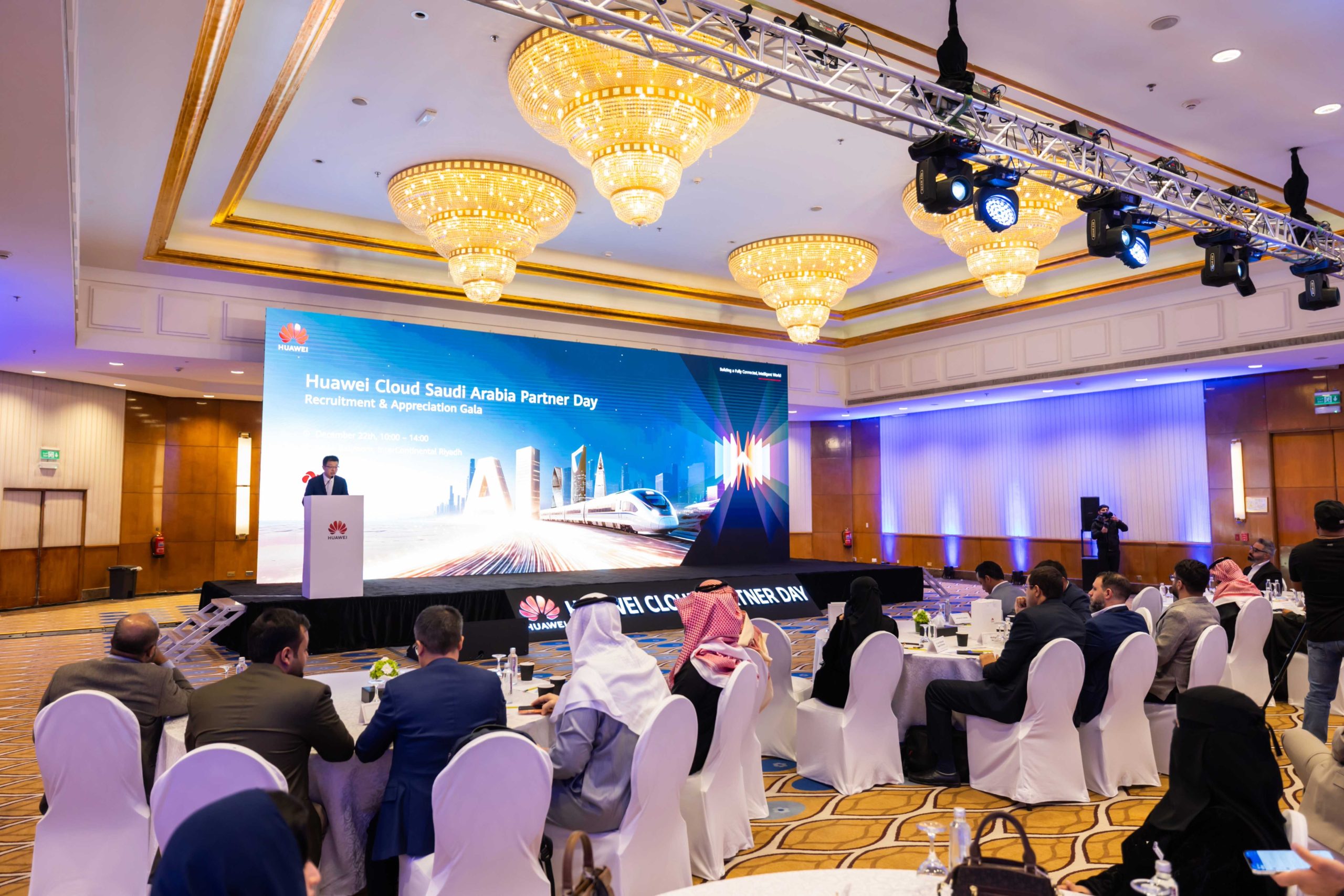
Huawei Cloud hosted the Saudi Arabia Partner Day, Recruitment & Appreciation Gala at the InterContinental Riyadh, bringing together more than 150 partners from across the Kingdom. The event highlighted Huawei Cloud’s instrumental role in building one of Saudi Arabia’s fastest-growing cloud ecosystems, directly contributing to the Kingdom’s ambitious digital transformation across industries.
The event reaffirmed Huawei Cloud’s long-term commitment to its local partners, focusing on enablement, innovation, and shared growth. Participants reflected on a year of significant ecosystem development and aligned on future opportunities to drive measurable impact for customers in Saudi Arabia.
“Our partners are the cornerstone of Huawei Cloud’s success in Saudi Arabia,” said Lawrence Liu, CEO of Huawei Cloud Saudi Arabia. “By deeply investing in our community, empowering partners with right policies, cutting-edge solutions, and strong incentives, we are jointly building a sustainable cloud future that delivers real value to customers and supports the Kingdom’s transformative journey.”
Discussions throughout the event centered on strengthening the partner network and fostering long-term success. Huawei Cloud shared key updates on its ecosystem strategy in Saudi Arabia, detailing continued investment, partner-focused policies, and scalable cloud solutions designed to enable partners to grow profitably and build sustainable businesses. Yong Hu, Director of Partner Development at Huawei Cloud Saudi Arabia, elaborated on the ecosystem’s evolution over the past year, highlighting how close collaboration with partners drives differentiation, supports innovation, and creates measurable customer impact across industries.
The maturity and success of the ecosystem were reflected in partner success stories. Points Information Technology demonstrated a live avatar empowered by Huawei AI solution unlocked new market opportunities and sustainable growth, while Raqmeyat shared its experience in executing effective digital marketing strategies to accelerate demand generation and business expansion. Ejada Systems Company, MDS for Computer Systems, BTC (Baud Telecom Company) and NAS Solutions also shared their journeys, underscoring the breadth and diversity of Huawei Cloud’s partner landscape in Saudi Arabia.
Partner excellence was a key highlight of the gathering, with Huawei Cloud recognizing more than 15 partners for their exceptional performance and contributions to the ecosystem. Among the recognitions, BTC (Baud Telecom Company) was named Outstanding Growth Partner, while MDS for Computer Systems and Ejada Systems Company received the Outstanding Revenue Partner award, highlighting their significant contributions to development growth and customer success.
With a rapidly expanding partner network and a clear focus on innovation, enablement, and shared success, Huawei Cloud continues to reinforce its role as a trusted cloud partner in Saudi Arabia,

Chris Dixon, a partner who led the charge, says he has a ‘very long-term horizon’

Americans now think they need at least $1.25 million for retirement, a 20% increase from a year ago, according to a survey by Northwestern Mutual



New research by Kaspersky shows that while Telegram remains a key platform for cybercriminal activity, rising takedowns and stricter enforcement are making it increasingly unstable for illicit operations. As blocks accelerate, underground groups are beginning to migrate to alternative platforms, signaling a shift in the cybercrime ecosystem.
2 min
Modern messengers, such as WhatsApp, Telegram, Signal and others, are often used for illicit purposes. Kaspersky Digital Footprint Intelligence has conducted an in-depth monitoring of over 800 blocked cybercriminal Telegram channels between 2021 and 2024. While a range of illegal activities continues to be hosted on the platform, its environment has become noticeably more challenging for sustained underground operations.
Telegram’s bot framework and other built-in features make for a low-effort ecosystem for the underworld. A single bot can simultaneously manage queries, process cryptocurrency payments, and instantly deliver stolen bank cards, info-stealer logs, phishing kits, or DDoS attacks to hundreds of buyers per day, often without operator involvement. Unlimited, non-expiring file storage eliminates the need for external hosting when distributing multi-gigabyte database dumps or stolen corporate documents. This frictionless automation naturally favors high-volume, low-price, low-skill offerings, such as leaked bank cards or other data, hosting malware, etc. High-value, trust-dependent deals (for instance, zero-day vulnerability information) still remain on reputation-gated dark-web forums.
Kaspersky researchers found two clear trends related to illegal activities on Telegram. The average lifespan of shadow channels has increased, with the proportion of channels surviving over nine months more than tripling in 2023-2024 compared to 2021–2022. At the same time, Telegram’s blocking activity has risen significantly. Monthly takedown figures recorded since October 2024 – even at their lowest – are comparable to the peak levels seen throughout 2023, and the overall pace has continued to accelerate in 2025. This impedes malicious activities.
Other disadvantages of Telegram for cybercriminals include the lack of default end-to-end (E2E) encryption for chats, the inability to use their own servers for communication (due to the messenger’s centralized infrastructure), and closed server-side code, which makes it impossible to verify its functionality.
As a result, several established underground communities, including the nearly 9,000-member BFRepo group and the Angel Drainer malware-as-a-service operation, have already begun shifting primary activity to other platforms or proprietary messengers, citing repeated disruptions of their activities on Telegram.
“Fraudsters find Telegram a convenient tool for many malicious activities, but the risk-reward balance is clearly shifting. Channels are managing to stay online longer than a couple of years ago, yet the dramatically higher volume of blocks means operators can no longer count on long-term stability. When a storefront or service disappears overnight – and sometimes reappears only to be removed again weeks later – building a reliable business becomes much harder. We’re starting to see the early stages of migration as a direct consequence,” comments Vladislav Belousov, Digital Footprint Analyst at Kaspersky.
To help users and organizations stay protected, Kaspersky recommends the following practical measures:
- Report clearly illicit channels and bots to accelerate community-driven moderation.
- Use multiple sources of Threat Intelligence information (with coverage of surface, deep and dark web resources) to be notified about recent underground activities and stay aware of actual TTPs used by threat actors.
Chris Dixon, a partner who led the charge, says he has a ‘very long-term horizon’

Interior designer Thomas Hamel on where it goes wrong in so many homes.


Vodafone has renewed its partnership with TOD, giving customers in Egypt seamless access to the TotalEnergies CAF Africa Cup of Nations and year-round premium sports and entertainment. Powered by Vodafone’s 5G network, the collaboration reinforces both brands’ focus on innovation and high-quality digital experiences.
< 1 min
Vodafone has announced the renewal of its partnership with TOD, strengthening its commitment to delivering premium sports and entertainment experiences to customers across Egypt.
Through this renewed collaboration, Vodafone customers will enjoy access to the TotalEnergies CAF Africa Cup of Nations (AFCON) on TOD, supported by Vodafone’s 5G network, offering wide coverage and a seamless streaming experience.
Beyond AFCON, the partnership provides Vodafone RED customers with year-round access to premium sports and entertainment from TOD, including exclusive live sports and a rich library of Arabic, Turkish and Western content.
The renewed partnership reflects both companies’ shared focus on innovation, connectivity, and delivering high-quality digital experiences tailored to the needs of today’s viewers.
Chris Dixon, a partner who led the charge, says he has a ‘very long-term horizon’

Following the devastation of recent flooding, experts are urging government intervention to drive the cessation of building in areas at risk.



Recent research by Kaspersky shows AI has become a go-to digital companion during the holidays, especially for Gen Z and millennials—helping with shopping, planning, and even emotional support. However, experts warn that overtrusting AI can put personal data at risk, highlighting the need for caution, privacy awareness, and strong cybersecurity tools as AI use continues to rise.
3 minRecent research from Kaspersky has illuminated a significant shift in AI usage during the holiday season. Far from being just a reliable shopping or planning assistant, artificial intelligence has emerged as a multifaceted digital companion capable of delivering emotional support – a phenomenon particularly pronounced among the Gen Z and millennial group. However, Kaspersky experts warn that placing too much trust in AI can threaten data security.
In the run-up to the Christmas holidays, Kaspersky conducted a survey* to find out how people leverage AI-powered tools to make the most of their free time and streamline holiday preparations, and to highlight the potential cyber threats related to it. It turns out that AI’s popularity in the 2025/2026 holiday is rather high, with 92% of survey participants in the UAE indicating they plan to incorporate AI into their holiday activities. The younger generation demonstrates the strongest enthusiasm for AI usage, with 86% of respondents aged 18-34 expressing intentions to resort to artificial intelligence during the holiday period.
According to the survey, more than a half of AI users plans to utilize the tools during the holidays to search for recipes (45%) or restaurants and accommodation (59%), underscoring AI’s ongoing significance in simplifying research processes and reducing search-related time commitments.
However, AI as an idea generator also gets a great response from the audience. The survey uncovered that 48% of users seek AI assistance for brainstorming gift ideas, ways to celebrate or tips on Christmas decoration. 51% of respondents plan to trust AI to generate ideas on how to spend their free time. During the holidays 46% of respondents regards AI as a shopping assistant, which can help them to create shopping lists, find the best deals or analyze reviews.
Modern AI tools enable holiday shoppers to find offers that perfectly match individual preferences and budget constraints with just a few clicks. However, the reliability of chatbot-generated information remains a significant concern. It’s highly recommended for shoppers to check all links provided by AI before clicking on them, as they may contain malicious or phishing content. To mitigate this risk, cybersecurity experts recommend employing a security solution empowered with AI-based phishing detection tools.
Beyond its capacity to tackle diverse challenges and generate new ideas, AI assumed a new role: serving as a virtual companion capable of offering emotional assistance. 39% of those who use AI during holidays consider talking to it when they feel unhappy. Zoomers and millennials show the biggest interest in AI-powered support among all ages.
“As LLM models rapidly evolve, their potential for engaging in meaningful dialogue with users grows as well. However, it’s important to bear in mind that they learn to answer from data, most of which is sourced from the Internet, meaning they are prone to regurgitate the error and biases from the text used for training. It’s highly recommended to approach AI suggestions with a healthy dose of skepticism and try to avoid oversharing,” comments Vladislav Tushkanov, Group Manager at Kaspersky AI Technology Research Center.
While communication with AI services may seem personal and private, it’s important to remember that most chatbots are owned by commercial companies with their own data collection and processing policies. Here are several security tips that can help to enhance data privacy:
- Before starting any conversation, review the privacy policy of the AI tool you’re using. Check whether you can opt out of using your chats for such purposes as model training or marketing to minimize the amount of data collected.
- Try to avoid sharing deeply personal, identifying, or financial information with AI chatbots. Treat your messages as you would a public social post – never assume absolute confidentiality.
- Stick to AI services from reputable companies with strong privacy and security track records. Avoid using anonymous or unknown bots that could be designed to harvest data. Malicious or fake AI bots may attempt to extract personal information to commit fraud, phishing, or blackmail. To protect your data, use a security solution such as Kaspersky Premium that prevents clicking on unreliable links.
Chris Dixon, a partner who led the charge, says he has a ‘very long-term horizon’



At BRIDGE Summit 2025 in Abu Dhabi, iQIYI and the BRIDGE Alliance signed a strategic MoU to advance global collaboration in content creation and media technology. The partnership will focus on joint IP development, co-production, virtual production, and media tech R&D, strengthening ties between China and the MENA region.
2 minDuring the BRIDGE Summit 2025 held in Abu Dhabi, iQIYI and the BRIDGE Alliance officially announced the establishment of a comprehensive strategic partnership. A Memorandum of Understanding (MoU) was signed by H.E. Dr. Jamal Mohammed Obaid Al Kaabi, Vice Chairman of the BRIDGE Alliance, and Xianghua Yang, President of iQIYI’s Movie & Overseas Business Group.
The signing was followed by in-depth discussions on future collaboration, marking a new chapter of structured cooperation between China’s leading online entertainment platform and one of the Middle East and North Africa’s most ambitious media hub initiatives.
The partnership is founded on a shared vision. The BRIDGE Alliance is dedicated to advancing inclusivity, diversity, and impact across the media, content, and entertainment sectors by fostering international cooperation and innovation. iQIYI, one of China’s most influential digital entertainment brands, brings extensive expertise in long-form content, technology R&D, and diversified business models. Together, the two organizations aim to integrate content and technology strengths with platform and hub capabilities to explore the future of media technology.
Under the MoU, collaboration will focus on:
- Joint IP Development and Operation
- Co-production and Global Distribution of Film and TV Content
- Virtual Production and VR Technology Applications
- Media Technology R&D and Industry Exchange
H.E. Dr. Jamal Mohammed Al Kaabi stated: “We welcome iQIYI as a partner of the BRIDGE Alliance. iQIYI’s leadership in content innovation and advanced technology integration makes it a natural collaborator as we build a globally connected media ecosystem.”
Xianghua Yang added: “This partnership represents a key step in expanding iQIYI’s international presence, particularly in strengthening ties with the MENA region. We look forward to delivering innovative entertainment experiences and contributing to the growth of the regional media technology ecosystem.”
The partnership aims to establish a benchmark for full-cycle collaboration from research and development through to real-world application, while enhancing cultural exchange and driving innovation through the power of media.
Chris Dixon, a partner who led the charge, says he has a ‘very long-term horizon’




Experts at Kaspersky warn that rapid advances in AI are reshaping cybersecurity in 2026, boosting both defense capabilities and cyber risks. From more convincing deepfakes and AI-powered scams to the growing misuse of open models, the line between real and fake content is increasingly blurred—making awareness, training, and AI-driven security tools more critical than ever.
3 minKaspersky experts outline how the rapid development of AI is reshaping the cybersecurity landscape in 2026, both for individual users and for businesses. Large language models (LLMs) are influencing defensive capabilities while simultaneously expanding opportunities for threat actors.
Deepfakes are becoming a mainstream technology, and awareness will continue to grow. Companies are increasingly discussing the risks of synthetic content and training employees to reduce the likelihood of falling victim to it. As the volume of deepfakes grows, so does the range of formats in which they appear. At the same time, awareness is rising not only within organizations but also among regular users: end consumers encounter fake content more often and better understand the nature of such threats. As a result, deepfakes are becoming a stable element of the security agenda, requiring a systematic approach to training and internal policies.
Deepfake quality will improve through better audio and a lowering barrier to entry. The visual quality of deepfakes is already high, while realistic audio remains the main area for future growth. At the same time, content generation tools are becoming easier to use: even non-experts can now create a mid-quality deepfake in just a few clicks. As a result, the average quality continues to rise, creation becomes accessible to a far broader audience, and these capabilities will inevitably continue to be leveraged by cybercriminals.
Online deepfakes will continue to evolve but remain tools for advanced users. Real-time face and voice swapping technologies are improving, but their setup still requires more advanced technical skills. Wide adoption is unlikely, yet the risks in targeted scenarios will grow: increasing realism and the ability to manipulate video through virtual cameras make such attacks more convincing.
Efforts to develop a reliable system for labeling AI-generated content will continue. There are still no unified criteria for reliably identifying synthetic content, and current labels are easy to bypass or remove, especially when working with open-source models. For this reason, new technical and regulatory initiatives aimed at addressing the problem are likely to emerge.
Open-weight models will approach top closed models in many cybersecurity-related tasks, which create more opportunities for misuse. Closed models still offer stricter control mechanisms and safeguards, limiting abuse. However, open-source systems are rapidly catching up in functionality and circulate without comparable restrictions. This blurs the difference between proprietary models and open-source models both of which can be used efficiently for undesired or malicious purposes.
The line between legitimate and fraudulent AI-generated content will become increasingly blurred. AI can already produce well-crafted scam emails, convincing visual identities, and high-quality phishing pages. At the same time, major brands are adopting synthetic materials in advertising, making AI-generated content look familiar and visually “normal.” As a result, distinguishing real from fake will become even more challenging, both for users and for automated detection systems.
AI will become a cross-chain tool in cyberattacks and be used across most stages of the kill chain. Threat actors already employ LLMs to write code, build infrastructure, and automate operational tasks. Further advances will reinforce this trend: AI will increasingly support multiple stages of an attack, from preparation and communication to assembling malicious components, probing for vulnerabilities and deploying tools. Attackers will also work to hide signs of AI involvement, making such operations harder to analyze.
“While AI tools are being used in cyberattacks, they are also become a more common tool in security analysis and influence how SOC teams work. Agent-based systems will be able to continuously scan infrastructure, identify vulnerabilities, and gather contextual information for investigations, reducing the amount of manual routine work. As a result, specialists will shift from manually searching for data to making decisions based on already-prepared context. In parallel, security tools will transition to natural-language interfaces, enabling prompts instead of complex technical queries,” adds Vladislav Tushkanov, Research Development Group Manager at Kaspersky.
Chris Dixon, a partner who led the charge, says he has a ‘very long-term horizon’



OMEGA has been named the Official Timekeeper of TGL presented by SoFi, supporting the league’s signature 40-second shot clock as part of a multi-year partnership. The collaboration reinforces TGL’s fast-paced, tech-driven team golf format as the league returns for Season 2 on December 28, marking its U.S. network debut on ABC.
2 min
TGL presented by SoFi, the primetime team golf league, announced OMEGA as its Official Timekeeper. As part of the multiyear partnership, OMEGA is supporting TGL’s signature 40-second shot clock, which helps create the fast-paced, competitive action that has drawn fans to the league’s new format for team golf. TGL’s second season returns Sunday, Dec. 28, on ABC in the U.S., marking the league’s broadcast network debut. Season 2 opens with a rematch of last season’s Finals between New York Golf Club and defending champion Atlanta Drive GC.
“Golf is a strong part of OMEGA’s sporting DNA, and we’re excited to grow our support of the game alongside TGL,” said Raynald Aeschlimann, president and CEO, OMEGA. “The unique format very much appeals to our pioneering spirit, and we love how the competition emphasizes our brand values of team dynamics, precision, power, time and technology.”
“Having a global luxury brand like OMEGA join as our Official Timekeeper is evidence of the broad appeal of TGL, which this season will reach more than 150 countries and territories around the world, and has resonated with younger fans in part due to the fast pace of TGL’s matches,” said Jason Langwell, chief revenue officer, TMRW Sports.
In addition to serving as the Official Timekeeper of TGL and sponsoring TGL’s shot clock during matches, OMEGA’s partnership includes digital and social content integrations. The collaboration also features the presence of OMEGA clocks at SoFi Center, TGL’s purpose-built venue in Palm Beach Gardens, Fla., where fans are welcomed throughout the season as part of TGL’s premium hospitality experience.
TGL’s rosters include two OMEGA ambassadors with Boston Common Golf’s Rory McIlroy and The Bay Golf Club’s Wyndham Clark. Boston Common Golf’s first Season 2 match is Friday, Jan. 2, at 7 p.m. ET on ESPN2 (vs. LA), and The Bay Golf Club makes its Season 2 debut on Tuesday, Jan. 6, at 5 p.m. ET on ESPN (vs. ATL).
TGL presented by SoFi Media Hub:
The Media Hub offers media members a wide selection of downloadable assets, including player and team images, league and team logos, explainer content, match highlights, overviews of holes, statistics, and more. Media can register for access and apply for match credentials at TGLMediaHub.com.
Chris Dixon, a partner who led the charge, says he has a ‘very long-term horizon’


Kaspersky warns of a new macOS malware campaign abusing ChatGPT’s chat-sharing feature. Fake Google ads lure users into running a Terminal command that installs the AMOS infostealer.
2 min
Kaspersky Threat Research has identified a new malware campaign that uses paid Google search ads and shared conversations on the official ChatGPT website to trick Mac users into running a command that installs the AMOS (Atomic macOS Stealer) info stealer and a persistent backdoor on their devices.
In the campaign, attackers buy sponsored search ads for queries such as “chatgpt atlas” and direct users to a page that appears to be an installation guide for “ChatGPT Atlas for macOS” hosted at chatgpt.com. In reality, the page is a shared ChatGPT conversation generated through prompt engineering and then sanitized so that only the step-by-step “installation” instructions remain. The guide instructs users to copy a single line of code, open Terminal on macOS, paste the command, and grant all requested permissions.
Kaspersky researchers analysis shows that the command downloads and executes a script from the external domain atlas-extension[.]com. The script repeatedly prompts the user for their system password and validates the password by attempting to run system commands. Once the correct password is supplied, the script downloads the AMOS info stealer, uses the stolen credentials to install it, and launches the malware. The infection flow represents a variation of the so-called ClickFix technique, in which users are persuaded to manually execute shell commands that retrieve and run code from remote servers.
After installation, AMOS collects data that can be monetized or reused in later intrusions. The malware targets passwords, cookies, and other information from popular browsers, data from cryptocurrency wallets such as Electrum, Coinomi, and Exodus, and information from applications including Telegram Desktop and OpenVPN Connect. It also searches for files with TXT, PDF, and DOCX extensions in the Desktop, Documents, and Downloads folders, as well as files stored by the Notes application, then exfiltrates this data to attacker-controlled infrastructure. In parallel, the attack installs a backdoor that is configured to start automatically on reboot, gives remote access to the compromised system, and duplicates much of AMOS’s data-collection logic.
The campaign reflects a broader trend in which info stealers have become one of 2025’s fastest-growing threats, with attackers actively experimenting with AI-related themes, fake AI tools, and AI-generated content to increase the credibility of their lures. Recent waves have included fake AI browser sidebars and fraudulent clients for popular models; the Atlas-themed activity extends this pattern by abusing a legitimate AI platform’s built-in content-sharing feature.
“What makes this case effective is not a sophisticated exploit, but the way social engineering is wrapped in a familiar AI context,” said Vladimir Gursky, Malware Analyst at Kaspersky. “A sponsored link leads to a well-formatted page on a trusted domain, and the ‘installation guide’ is just a single Terminal command. For many users, that combination of trust and simplicity is enough to bypass their usual caution, yet the result is full compromise of the system and long-term access for the attacker.”
Kaspersky recommends that users:
- Treat any unsolicited “guide” that asks them to run Terminal or PowerShell commands with caution, especially when it involves copying and pasting a one-line script from a website, document, or chat.
- Close pages or delete messages that ask for such actions if the instructions are unclear, and seek advice from a knowledgeable source before proceeding.
- Consider pasting any suspicious commands into a separate AI or security tool to understand what the code does before executing it.
- Install and maintain reputable security software on all devices, including macOS and Linux systems, such as Kaspersky Premium, to detect and block infostealers and related payloads.
Chris Dixon, a partner who led the charge, says he has a ‘very long-term horizon’


Mintiply Capital is leading an AED 1.2 billion investment opportunity across the GCC’s fast-growing F&B and e-commerce sector. A diversified, omnichannel ecosystem built for scale, growth, and long-term value.
2 min
Mintiply Capital, an investment banking advisory firm specialized in managing and structuring investment transactions, is set to lead an AED 1.2 billion investment opportunity for one of the GCC’s fastest-growing food and beverage groups.
The firm is currently advising on the strategic exit process for this diversified F&B group, providing guidance across the full transaction lifecycle, from valuation and deal structuring to investor onboarding and regulatory coordination. Mintiply Capital is supporting the positioning of the asset for acquisition by presenting the opportunity to qualified regional and international investors, ensuring a seamless transition of ownership and helping maximize value for all stakeholders.
The opportunity encompasses a diversified F&B and e-commerce ecosystem featuring multiple verticals across supermarkets, cafés, bakeries, catering, and digital food delivery. With more than 10 years of existence, the group rapidly expanded, evolving from a niche retail concept into a multi-brand network of multiple stores, multiple concept cafés, and an integrated online delivery platform.
“This initiative represents a landmark opportunity for investors to participate in a truly integrated F&B and e-commerce ecosystem in the GCC,” said Noel Hatem, Chief Operating Officer at Mintiply Capital. Hatem added: “Beyond strong financial returns, this project offers regional investors access to a high-growth, diversified business with proven scalability, a robust operational model, and the potential to shape the future of the F&B and e-commerce landscape in the region.”
“The market is evolving rapidly, and we are offering a structured, high-potential investment that combines strong fundamentals with clear growth and scalability across the region,” Hatem concluded.
Built on a model that combines premium quality with competitive pricing, the group has successfully positioned itself between high-end gourmet retailers and value-driven supermarkets capturing a broad consumer base and doubling its market alpha in just two years. Its product portfolio is complemented by a growing range of branded and private-label offerings.
The ecosystem also includes a fast-scaling e-commerce platform that has become a cornerstone of its customer engagement strategy, enabling consistent growth across both physical and digital channels.
As part of this transaction, Mintiply Capital is also advising on the structuring process of the acquisition framework for incoming investors, providing guidance on the design of the investment vehicle, guiding on regulatory compliance across jurisdictions, and conducting operational, financial, and commercial due diligence. Mintiply Capital is also advising on the development of a comprehensive deal structure that enables new investors to seamlessly acquire the group’s full ecosystem.
With Gulf’s M&A activity expected to surpass $115 billion in 2025, the appetite for strategic acquisitions across the UAE and Saudi Arabia has never been stronger. According to the EY MENA M&A Insights 9M 2025 report, M&A activity in the region rose 23% in the first nine months of the year, with 649 deals. Strong investor interest and an improving economic environment fueled the growth, with cross-border transactions driving 54% of deal volume and 76% of deal value, which is the highest level in five years.
By curating this opportunity, Mintiply Capital reinforces its commitment to connecting global capital with regional success stories identifying high-performing businesses ready for strategic ownership transitions and long-term growth acceleration.
Chris Dixon, a partner who led the charge, says he has a ‘very long-term horizon’


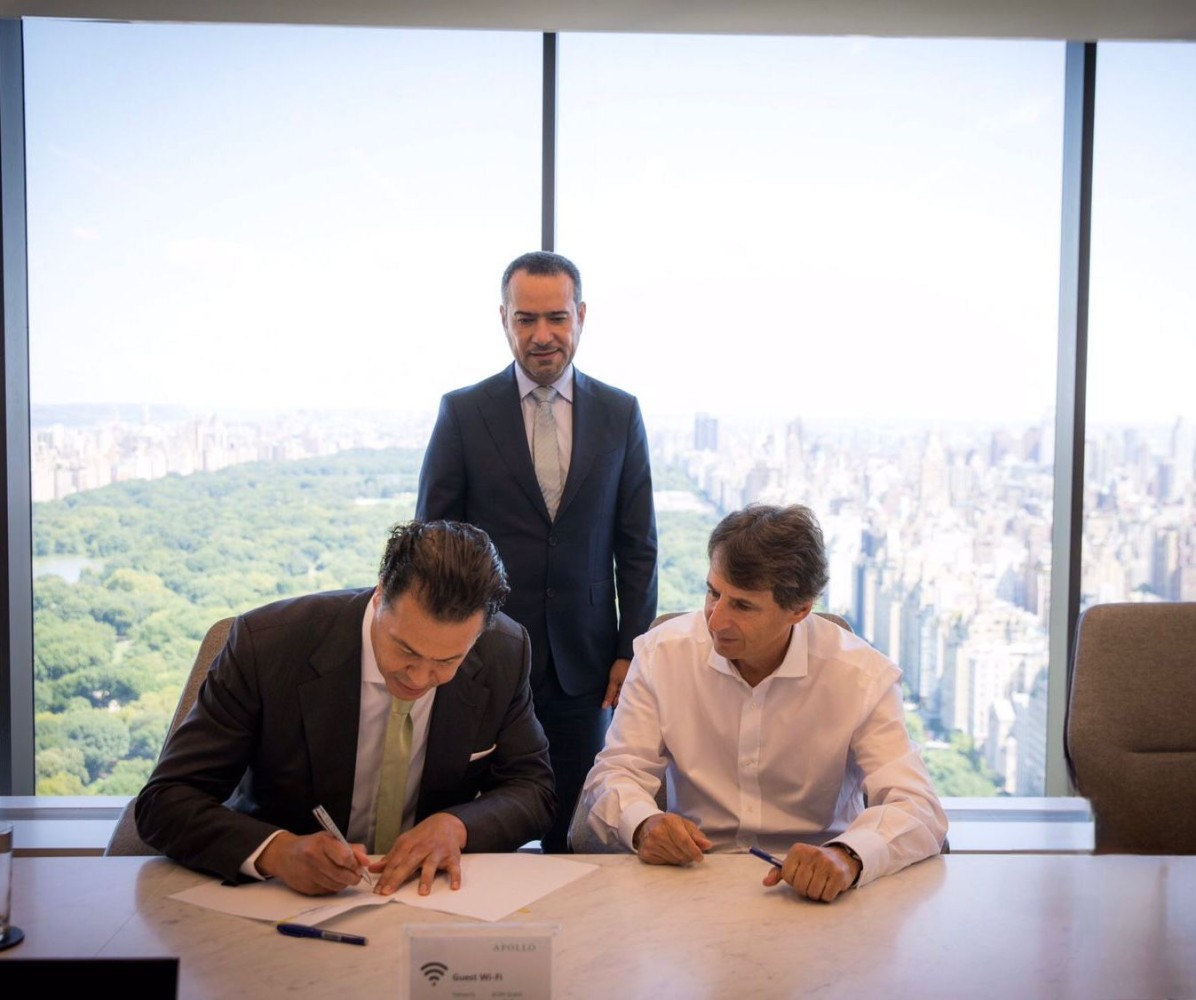
Riyadh Air and Huawei sign a strategic MoU to shape the future of smart, digitally enabled aviation. A partnership set to elevate the travel experience through AI, cloud, and next-generation digital ecosystems—starting with China and expanding globally.
2 min
Riyadh Air and Huawei have signed a Memorandum of Understanding (MoU) which brings together the former’s global growth vision and the latter’s technological expertise to elevate how guests discover, book and experience travel with the Kingdom’s new national carrier.
The partners have already explored new opportunities in smart aviation and digital innovation, and this MoU marks the next significant step in the airline’s ambition to become one of the world’s most digitally advanced carriers.
A Phased Approach to Digital Excellence
Riyadh Air and Huawei will adopt a phased approach to developing the airline’s next-generation digital ecosystem, beginning with a focus on China and other key international markets. With key milestones achieved, Huawei will now support Riyadh Air’s broader digital transformation, leveraging its expertise in cloud, AI, mobility services, and integrated digital ecosystems.
20% of smartphone users in China use Huawei devices (according to TechInsights), giving Riyadh Air the opportunity to leverage Huawei’s technology and local reach to build a full, market-specific digital ecosystem, tailored to China’s unique social media and market environment, delivering seamless, personalized and data-driven travel experiences.
As the partnership evolves, collaboration will expand into areas of digital innovation, including marketing, loyalty, cloud services and advanced technologies, with a focus on co-creating future-focused digital solutions that enrich the travel experience and shape a new era of smart, connected aviation.
China at the Core of Growth Strategy
The focus on the Chinese market reflects its importance to Riyadh Air’s network strategy to reach over 100 global destinations.
“China market is an important part of Riyadh Air’s global expansion and essential to Saudi Arabia’s tourism growth,” said Vincent Coste, Chief Commercial Officer of Riyadh Air. “As the Kingdom raises its target to 150 million tourists by 2030 our partnership with Huawei strengthens our ability to deliver the digital, seamless and personalized journey Chinese guests travelers expect.”
Coste added that Riyadh Air, as the Kingdom’s new national carrier, aims to serve as a bridge enhancing airline connectivity between Saudi Arabia and China. Huawei devices have more than 730 million monthly active users globally, who will be introduced to the benefits of Riyadh Air’s digital lifestyle ecosystem, Sfeer.
Looking Ahead
Peak Yin, CEO KSA, HUAWEI Consumer Business Group (CBG) said: “We have found a true partner in Riyadh Air, a digital-native, future-focused national carrier. Huawei is committed to supporting Riyadh Air with our best global technologies to co-create world-class digital experiences for travelers from China – and around the world.”
“This partnership is designed as a seamless and continuously evolving collaboration, enabling us to innovate together, elevating every stage of the travel experience and pushing the boundaries of what technology can bring to the aviation industry – and its guests,” Yin added.
With a goal of connecting to 100 destinations by 2030, Riyadh Air sees strong digital partnerships as essential. By combining its global ambitions with Huawei’s technological expertise, the airline is set to shape the travel experience, enhance connectivity, and help shape the future of smart, digitally enabled air travel.
Chris Dixon, a partner who led the charge, says he has a ‘very long-term horizon’




Certified™ by Great Place To Work® for the second consecutive year, with 83% of employees saying AJEX is a great place to work and a Trust Index score of 81% — up from last year. A true reflection of a people-first culture built on trust, inclusion, and growth.
2 min
AJEX, the Saudi-headquartered partner of DHL eCommerce, is proud to announce it has been Certified™ by Great Place To Work®, the global authority on workplace culture, employee experience, for the second consecutive year. Based entirely on AJEX employee feedback, results for 2025 revealed that 83% of employees described AJEX as a Great Place To Work, and an overall 81% Trust Index score, up from 72% last year.
Operational since 2021, AJEX has established itself as a leading player in the Middle East’s logistics sector, expanding its network, products, and services, including e-commerce and cold chain solutions, to cater to the region’s fastest growing sectors. Central to its success is the company’s award-winning culture, built on trust, transparency, and a deep commitment to nurturing its people.
AJEX offers clear career pathways, continuous learning opportunities, and leadership accessibility for its 2,000-strong workforce, creating an environment where employees feel heard, valued, and supported. This people-first mindset has shaped a workplace where diverse perspectives thrive and where teams are empowered to innovate and contribute to the company’s growth. Reflecting its commitment to meaningful representation, the AJEX workforce includes 32% Saudi nationals, 38 nationalities, and 17% female employees, demonstrating the company’s ongoing focus on Saudization, gender equity, and an inclusive, diverse culture.
“We are delighted to have received this prestigious recognition from a Great Place To Work at AJEX for the second year in row. This achievement is a testament to our employees’ commitment, openness, and belief in AJEX, and reflects the continued dedication of our leadership in creating a workplace where people feel valued, supported, and empowered,” said Khalid Aldosari, Chief Shared Services Officer, AJEX.
“Great Place To Work Certification is a highly coveted achievement that requires consistent and intentional dedication to the overall employee experience,” added Sarah Lewis-Kulin, the Vice President of Global Recognition at Great Place To Work. She emphasizes that Certification is the sole official recognition earned by the real-time feedback of employees regarding their company culture. “By successfully earning this recognition, it is evident that AJEX stands out as one of the top companies to work for, providing a great workplace environment for its employees.”
Chris Dixon, a partner who led the charge, says he has a ‘very long-term horizon’



Jetour takes center stage at Liwa International Festival 2026, celebrating adventure, culture, and community in the heart of Al Dhafra’s golden dunes.
2 min
Jetour, in exclusive partnership with Elite Group Holding in the UAE, has officially kicked off the Liwa International Festival 2026 with a dynamic brand presence designed to celebrate adventure, culture, and community. As the festival opens its doors for a 23-day celebration in the Al Dhafra region, Jetour stands front and center, welcoming visitors with interactive displays, premium experiences, and thrilling off-road moments that embody the spirit of Travel+.
Recognized as one of the UAE’s most anticipated annual events, the Liwa International Festival welcomes thousands of visitors for an unforgettable celebration of heritage, motorsport, and entertainment. Set against the dramatic backdrop of Al Dhafra’s golden dunes, the festival features an extraordinary line-up of cultural showcases, high-energy competitions, nightly performances, and family-friendly attractions, all paying homage to the UAE’s deep connection to its desert traditions.
For the 2026 edition, Jetour will elevate the festival experience with a comprehensive presence across multiple zones, showcasing the brand’s innovation, exploration, and community engagement. Attendees can enjoy interactive test drives alongside lifestyle-driven hospitality experiences, with Jetour’s showcase crafted to highlight the versatility, capability, and premium comfort of its SUV line-up.
At the heart of the activation was the Jetour VIP Camp. During the first week, from December 12th to 14th, guests experienced a range of immersive cultural activities, including Arabic Tanoora performances, oud sessions, falconry, henna artistry, and traditional Dalla service. Additional weekends bring a world-music DJ fusion with international drummers and performers from December 19th to 21st, followed by an Eastern-inspired program from December 26th to 28th featuring a Dragon show, Chinese calligraphy, Bian Lian performances, tea tasting, and more. Throughout the entire festival, the VIP Camp will boast a Majlis, outdoor cinema, refreshments, giant board games, neon installations, volleyball, and a photobooth, creating an elevated retreat for families and adventure-seekers.
In the Corporate Area, Jetour presents a fully branded showroom-style display active from December 12th to January 3rd, featuring flagship SUVs including the G700, T2 i-DM 4WD, T2 Luxury Plus, T1, and Dashing. As the festival reaches its peak, Jetour will also command attention at Tal Moreeb from December 31st to January 3rd, where the imposing G700 takes center stage beside the grandstand culminating with a spectacular New Year’s Eve show and fireworks.
“Our participation at this year’s Liwa Festival reflects Jetour’s passion for connecting with communities through truly immersive experiences,” said Haroon Hayat, Group CFO of Elite Group Holding. “Moments like this remind us that personal achievements are only possible when backed by the dedication of an exceptional team. We are proud to bring Jetour’s adventurous DNA to one of the UAE’s most celebrated cultural gatherings.”
Jetour, under the exclusive distributorship of Elite Group Holding, continues to redefine the UAE’s SUV landscape with its Travel+ philosophy, delivering innovation, intelligent design, and powerful performance tailored for modern lifestyles. With a growing presence across the Emirates, Jetour’s premium SUV line-up is crafted for drivers who value capability, comfort, and discovery across both city roads and rugged terrain.
As Liwa International Festival 2026 begins its annual celebration of heritage and adventure, Jetour is ready to take attendees on a journey of excitement and discovery that captures the true essence of Travel+.
Jetour: The Spirit of Travel+
Jetour is a premium SUV brand built on the Travel+ philosophy – a mindset that combines innovation, performance, and smart design to suit the evolving needs of global drivers. Under the exclusive distributorship of Elite Group Holding, Jetour UAE offers a robust lineup of adventure-ready SUVs – tailored for families, explorers, and anyone who demands more from their vehicle.
Chris Dixon, a partner who led the charge, says he has a ‘very long-term horizon’

Alexandre de Betak and his wife are focusing on their most personal project yet.


As the GCC accelerates toward future-ready economies, Almasar Alshamil Education is closing the skills gap by building a seamless pathway from early intervention to industry-aligned higher education. Supporting 28,000 learners across Saudi Arabia and the UAE, Almasar equips students with the resilience, skills, and adaptability needed for tomorrow’s jobs—directly advancing Saudi Vision 2030’s Human Capability Development Program.
3 min
As the GCC works to build resilient, future-ready economies, the question of how to prepare learners for rapidly changing job markets is more urgent than ever. According to the World Economic Forum’s Future of Jobs Report 2025, more than one in five jobs globally will be affected by 2030, driven by technological change, automation, demographic shifts and the green transition.
Almasar Alshamil Education, the leading provider of specialized education and the largest provider of private higher education in the UAE, is addressing this challenge head-on, equipping ca. 28,000 students with the skills, resilience and adaptability needed for the jobs of tomorrow through its two pillars: Special Needs Education and Care (SEC) and Higher Education.
Together, these two pillars position Almasar Education as the only education provider in the region to link early intervention with industry-aligned higher education. In doing so, Almasar Education is building a pathway from childhood to career that strengthens Saudi Arabia’s Vision 2030 Human Capability Development Program.
Supporting approximately 8,000 beneficiaries in Saudi Arabia
Through the Human Development Company (HDC), Almasar Education operates 39 special education and care centers, 14 special education and care schools and three clinics across Saudi Arabia, serving approximately 8,000 children and young adults with special educational needs. By providing early screening, therapy and assistive technologies, HDC strengthens literacy, numeracy and self-regulation. At the same time, this work is helping to build and professionalize the Kingdom’s SEC sector, creating demand for thousands of skilled specialists and driving the localization of EdTech solutions tailored to this space. These services improve individual outcomes while widening the Kingdom’s future workforce by allowing more young people to progress into mainstream education, vocational training and ultimately employment.
Operating Higher Education programs that prepare graduates for the workplace
Almasar Education leads the private higher education in the UAE through its two major institutions: Middlesex University Dubai, the largest private university in Dubai, and NEMA Holding, Abu Dhabi’s largest tertiary education group, operating Abu Dhabi University and Liwa University.
Almasar Education adopts an integrated and industry-focused approach to higher education, equipping individuals with both academic expertise and the practical competencies required to successfully enter the workforce after they graduate. The organization measures success by outcomes, aiming for each student to leave with a degree that opens doors in global markets and with the confidence to adapt when the job changes around them. Adapting to today’s requirements, programs in artificial intelligence, business analytics, cybersecurity and fintech are developed in partnership with leading employers and reinforced through live projects, internships and industry-led research.
Recent collaborations highlight this practical approach. Middlesex University Dubai became the first in the UAE to have its MBA in AI and Business Analytics recognized by the Institute of Analytics, a global benchmark for data professionals. Partnerships with Alibaba Cloud and Dubai Police give students hands-on training in cloud platforms, digital forensics and AI-driven investigation tools, turning classrooms into gateways to real-world careers of the future.
Majed Al Mutairi, Chief Executive Officer of Almasar Alshamil Education said, “The skills gap is no longer a future scenario. With the Fourth Industrial Revolution continuing to transform economies and labor markets, education systems must adapt to meet future requirements. In Saudi Arabia, this is central to the Saudi Vision 2030 Human Capital Development Program, which seeks to equip young people with the skills needed to thrive in a modern, digitally driven economy. Too often, traditional curricula are out of step with these evolving demands, and we must work to close that gap.
“Almasar Education plays a role at both ends of the skills pipeline, building strong early foundations through our SEC institutions while advancing higher education that responds to the demands of tomorrow’s industries. Through these efforts, every learner, regardless of background or ability, is equipped to contribute to and share in the region’s future,” he concluded.
As Saudi Arabia accelerates its national transformation, Almasar Education is responding with immediate action, ensuring SEC facilities and residential centers echo today’s requirements, offering enhanced independence, social integration and the opportunity for personal growth.
Alongside within higher education, it is launching programs in high-demand fields such as AI and fintech across the universities it operates and expanding industry partnerships to give homegrown talent a direct pathway into the workforce. These steps highlight the urgency of closing the gap before it widens further, driven by Almasar Education’s commitment to developing a skilled, inclusive and future-ready workforce that will power the Kingdom and the region’s next generation of growth.
Chris Dixon, a partner who led the charge, says he has a ‘very long-term horizon’

Sydney’s prestige market is looking up, here’s three of the best on the market right now.


Kyndryl’s latest Readiness Report reveals that UAE businesses are seeing early returns from AI investments, but face growing pressure to modernize infrastructure, reskill workforces, and manage risk. While 93% of leaders expect AI to transform jobs within a year, challenges around scalability, skills gaps, cybersecurity, and data sovereignty continue to shape enterprise and cloud strategies across the country.
2 min
Kyndryl, a leading provider of mission-critical enterprise services, today released the United Arab Emirates findings from its second annual Readiness Report. The data reveals a moment of both momentum and reflection — as businesses in the UAE report growing returns from AI investments while facing mounting pressure to modernize infrastructure, scale innovation efforts, reskill workforces, and manage risk in an increasingly fragmented regulatory landscape.
“The UAE has set out one of the most ambitious AI agendas in the world, from its drive to build an AI-powered government to the transformation of key industries and the development of an AI-ready workforce,” said Raoul Van Engelshoven, Managing Director, Kyndryl UAE. “The findings of the Kyndryl Readiness Report reflect this momentum, showing how organizations across the UAE are accelerating their adoption of AI to match the nation’s vision.”
Last year’s report revealed a critical gap between perception and preparedness: while the majority of business leaders in the Middle East, including the UAE, believed their IT infrastructure was best-in-class, fewer felt it was ready for future disruption. While there has been momentum – that tension remains. This year:
- ROI pressure rising, but AI stuck in experimentation phase: 70% of UAE organizations report feeling more pressure to prove ROI on AI investments compared to last year. However, 66% say their innovation often stalls after the proof-of-concept, and 67% agree that there are foundational issues in their technology stack.
- Confidence continues to outweigh capability: While UAE organizations are eager to innovate, foundational challenges persist. 91% say they struggle to keep up with the pace of technological advancements, 26% cite the complexity of their technology environments as a barrier to scaling tech investments, and 24% struggle to align business and technology teams.
- AI driving workforce transformation, but skills gaps remain: 93% in the UAE say AI will “completely” transform jobs at their organizations within 12 months. Yet, 30% are concerned about how to upskill and reskill employees whose jobs are replaced by AI, 41% worry about the lack of core cognitive skills and 40% cite gaps in technical skills needed to harness AI’s potential.
- Cyber resilience top of mind: With 86% of the UAE organizations having experienced a cyber-related outage in the past year, cybersecurity has become a top priority. Yet, only 38% are implementing robust cybersecurity measures, and 35% are upgrading their IT infrastructure to mitigate business risks and strengthen resilience.
- Policy and compliance shaping infrastructure decisions: As UAE organizations scale their technology investments, 27% cite regulatory or compliance concerns as a barrier, underscoring the influence of policy on infrastructure strategy and innovation readiness.
Cloud is under pressure as geopolitical and regulatory disruption drive change
Many UAE organizations are revisiting their cloud infrastructure, prompted by new regulations and growing concerns about data sovereignty. 86% of UAE Business leaders express concerns about the geopolitical risks associated with storing and managing data in global cloud environments, and 68% have adjusted their cloud strategies in response – by investing in data repatriation, reassessing vendors, and shifting toward private cloud models.
Chris Dixon, a partner who led the charge, says he has a ‘very long-term horizon’



His Highness Sheikh Hamdan bin Zayed Al Nahyan and His Highness Sheikh Hazza bin Zayed Al Nahyan attended the opening of Liwa International Festival 2026 in Abu Dhabi’s Al Dhafra Region, a flagship winter event featuring heritage, sports, entertainment, and family experiences until 3 January 2026.
2 min
Chris Dixon, a partner who led the charge, says he has a ‘very long-term horizon’

Self-tracking has moved beyond professional athletes and data geeks.