


China’s EV Juggernaut Is a Warning for the West | Kanebridge News
En
Share Button

China’s EV Juggernaut Is a Warning for the West

Competitive pressure and creativity have made Chinese-designed and -built electric cars formidable competitors

By GREG IP
Thu, Jun 8, 2023Grey Clock 4 min

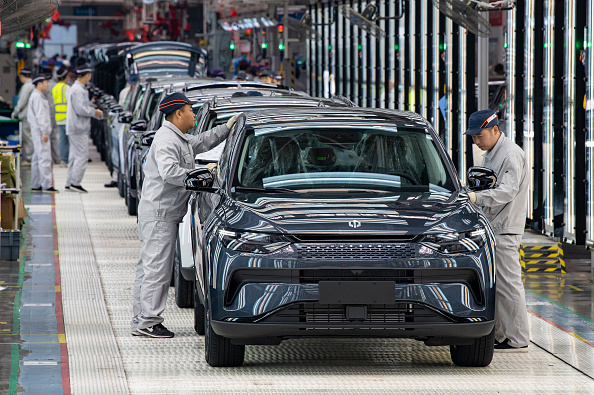
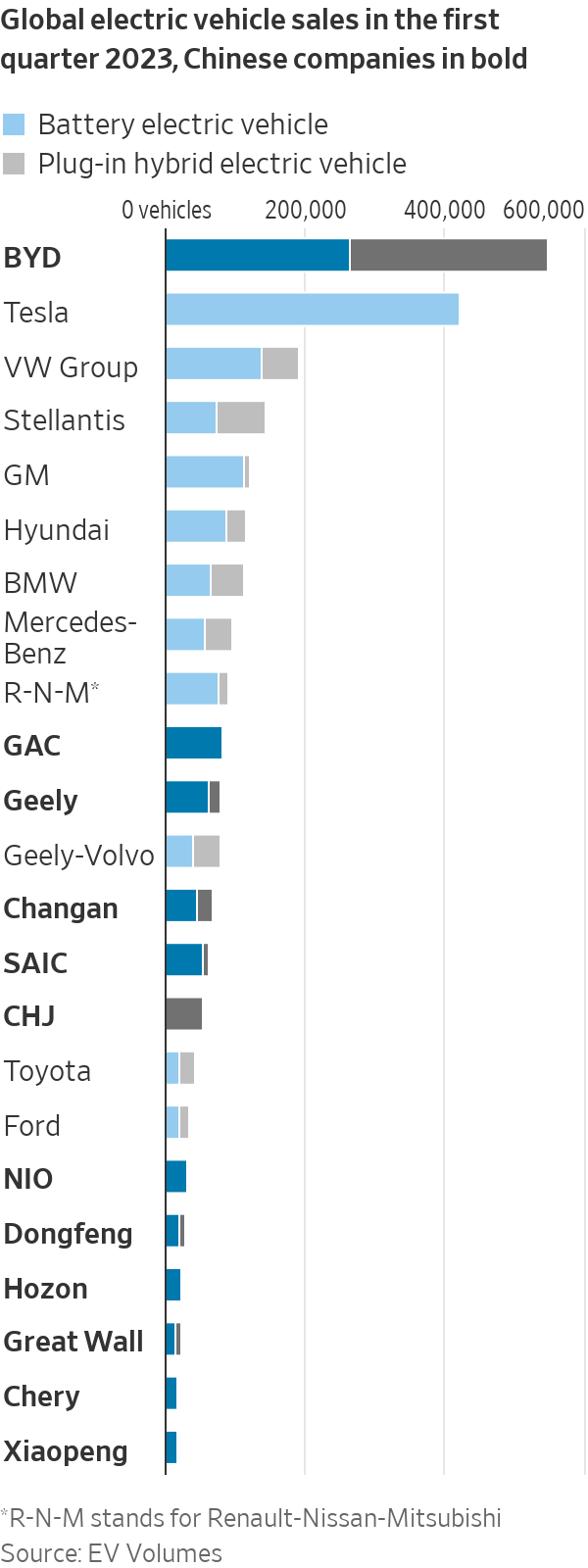
China rocked the auto world twice this year. First, its electric vehicles stunned Western rivals at the Shanghai auto show with their quality, features and price. Then came reports that in the first quarter of 2023 it dethroned Japan as the world’s largest auto exporter.

How is China in contention to lead the world’s most lucrative and prestigious consumer goods market, one long dominated by American, European, Japanese and South Korean nameplates? The answer is a unique combination of industrial policy, protectionism and homegrown competitive dynamism. Western policy makers and business leaders are better prepared for the first two than the third.

Start with industrial policy—the use of government resources to help favoured sectors. China has practiced industrial policy for decades. While it’s finding increased favour even in the U.S., the concept remains controversial. Governments have a poor record of identifying winning technologies and often end up subsidising inferior and wasteful capacity, including in China.
But in the case of EVs, Chinese industrial policy had a couple of things going for it. First, governments around the world saw climate change as an enduring threat that would require decade-long interventions to transition away from fossil fuels. China bet correctly that in transportation, the transition would favour electric vehicles.
In 2009, China started handing out generous subsidies to buyers of EVs. Public procurement of taxis and buses was targeted to electric vehicles, rechargers were subsidised, and provincial governments stumped up capital for lithium mining and refining for EV batteries. In 2020 NIO, at the time an aspiring challenger to Tesla, avoided bankruptcy thanks to a government-led bailout.

While industrial policy guaranteed a demand for EVs, protectionism ensured those EVs would be made in China, by Chinese companies. To qualify for subsidies, cars had to be domestically made, although foreign brands did qualify. They also had to have batteries made by Chinese companies, giving Chinese national champions like Contemporary Amperex Technology and BYD an advantage over then-market leaders from Japan and South Korea.

To sell in China, foreign automakers had to abide by conditions intended to upgrade the local industry’s skills. State-owned Guangzhou Automobile Group developed the manufacturing know-how necessary to become a player in EVs thanks to joint ventures with Toyota and Honda, said Gregor Sebastian, an analyst at Germany’s Mercator Institute for China Studies.

Despite all that government support, sales of EVs remained weak until 2019, when China let Tesla open a wholly owned factory in Shanghai. “It took this catalyst…to boost interest and increase the level of competitiveness of the local Chinese makers,” said Tu Le, managing director of Sino Auto Insights, a research service specialising in the Chinese auto industry.

Back in 2011 Pony Ma, the founder of Tencent, explained what set Chinese capitalism apart from its American counterpart. “In America, when you bring an idea to market you usually have several months before competition pops up, allowing you to capture significant market share,” he said, according to Fast Company, a technology magazine. “In China, you can have hundreds of competitors within the first hours of going live. Ideas are not important in China—execution is.”

Thanks to that competition and focus on execution, the EV industry went from a niche industrial-policy project to a sprawling ecosystem of predominantly private companies. Much of this happened below the Western radar while China was cut off from the world because of Covid-19 restrictions.

When Western auto executives flew in for April’s Shanghai auto show, “they saw a sea of green plates, a sea of Chinese brands,” said Le, referring to the green license plates assigned to clean-energy vehicles in China. “They hear the sounds of the door closing, sit inside and look at the quality of the materials, the fabric or the plastic on the console, that’s the other holy s— moment—they’ve caught up to us.”

Manufacturers of gasoline cars are product-oriented, whereas EV manufacturers, like tech companies, are user-oriented, Le said. Chinese EVs feature at least two, often three, display screens, one suitable for watching movies from the back seat, multiple lidars (laser-based sensors) for driver assistance, and even a microphone for karaoke (quickly copied by Tesla). Meanwhile, Chinese suppliers such as CATL have gone from laggard to leader.

Chinese dominance of EVs isn’t preordained. The low barriers to entry exploited by Chinese brands also open the door to future non-Chinese competitors. Nor does China’s success in EVs necessarily translate to other sectors where industrial policy matters less and creativity, privacy and deeply woven technological capability—such as software, cloud computing and semiconductors—matter more.

Still, the threat to Western auto market share posed by Chinese EVs is one for which Western policy makers have no obvious answer. “You can shut off your own market and to a certain extent that will shield production for your domestic needs,” said Sebastian. “The question really is, what are you going to do for the global south, countries that are still very happily trading with China?”

Western companies themselves are likely to respond by deepening their presence in China—not to sell cars, but for proximity to the most sophisticated customers and suppliers. Jörg Wuttke, the past president of the European Union Chamber of Commerce in China, calls China a “fitness centre.” Even as conditions there become steadily more difficult, Western multinationals “have to be there. It keeps you fit.”


Related Stories

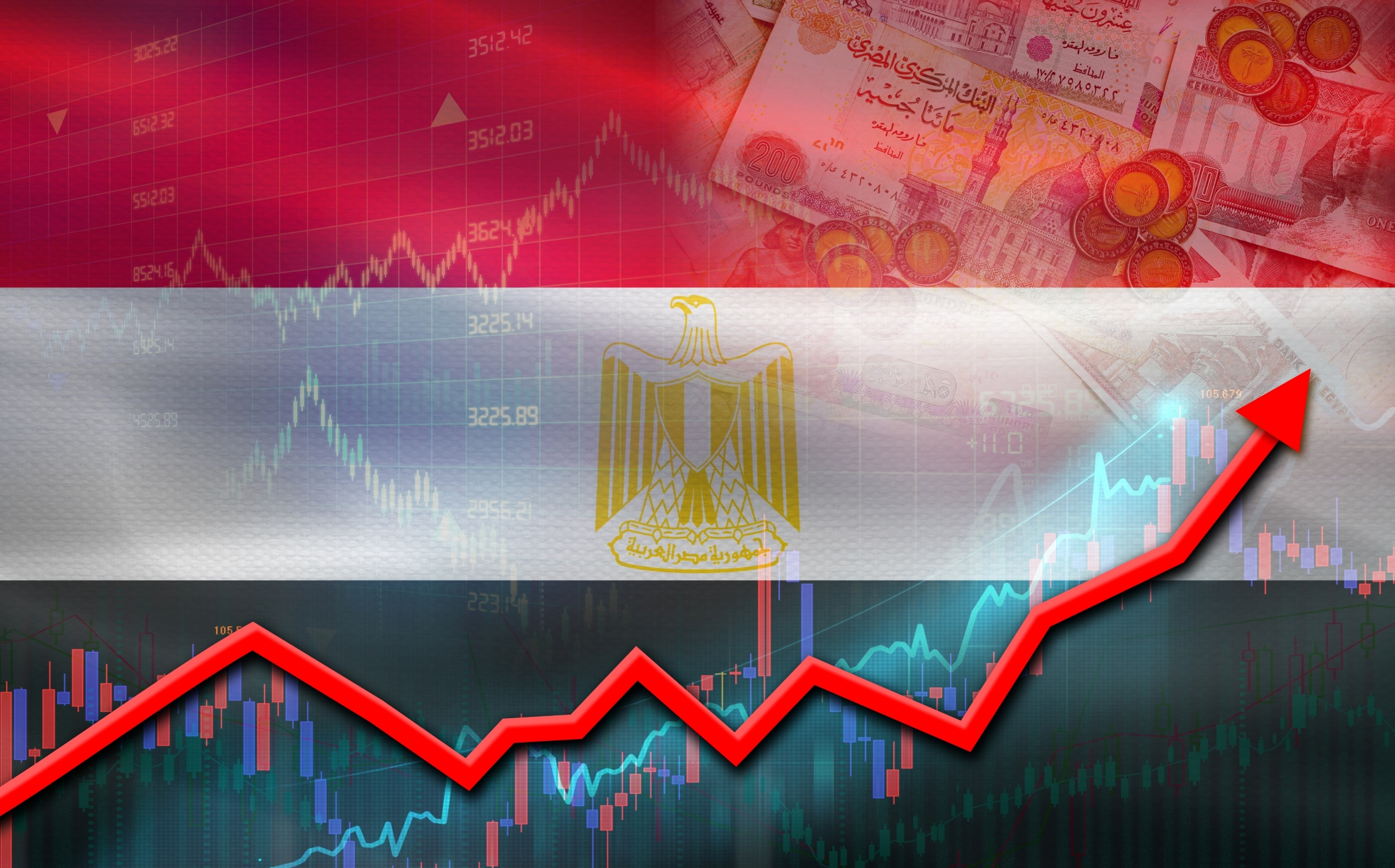
MENA equity markets saw sharp contrasts in 2025: Dubai and Abu Dhabi outperformed as safe havens, Saudi Arabia’s TASI lagged with a 12% drop, and Egypt’s EGX 30 surged over 30% amid economic stabilization. With oil prices down and diversification accelerating, the region is shifting toward non-oil growth, AI investment, and stronger structural reforms.

The World Bank’s latest Gulf Economic Update forecasts UAE economic growth at 4.8% in 2025, driven by strong diversification and rapid digital transformation. With the UAE and Saudi Arabia emerging as regional AI leaders, the GCC is strengthening its position for innovation, competitiveness, and long-term economic stability.

A business led by two of the president’s sons will invest in American Bitcoin, a new mining company controlled by Hut 8.

Related Stories
Money
Off-Plan Maintains 70% Market Share While Tenant Renewals Strengthen to 59%
Lifestyle
TOD Expands into Morocco Ahead of a Landmark Year for Football
Money
Financial Sector Faced AI, Blockchain and Organized Crime Threats in 2025
Off-Plan Maintains 70% Market Share While Tenant Renewals Strengthen to 59%

Dubai’s property market remained steady, with prices up 2.5% and AED 46B in sales driven mostly by off-plan activity. Buyer demand at betterhomes rose 3%, while leasing saw 45,771 contracts, with renewals climbing to 59% as tenants stayed put heading into 2026. Strong sales momentum, stable rentals, and community-led demand set a balanced foundation for the new year.

Fri, Dec 12, 2025 2 min

Dubai’s residential market held steady in November, with both sales and leasing activity reflecting confidence and consistency as the city moves toward 2026, according to betterhomes.

Off-Plan Drives 70% of Transactions as Prices Rise 2.5%

On the sales side, average prices rose 2.5% month-on-month to AED 1,950 per sqft, continuing the upward trend seen across Q4. The market remained steady as Dubai recorded 17,812 sales transactions worth AED 46 billion, only marking a seasonal 2.9% dip in volume. Off-plan remained the dominant driver with 12,429 transactions, while the secondary market recorded 5,383 sales, maintaining healthy absorption across established communities.

Developer activity was led by Emaar across both off-plan and title-deed sales. At betterhomes, buyer demand rose 3% month-on-month, underscoring resilient demand despite year-end pacing. Sales interest continued to center around established apartment hubs including JVC, Business Bay and JVT, along with villa communities such as Jumeirah Golf Estate, Dubai Land and Mohammed Bin Rashid City.

“November showed strength without the noise,” said Louis Harding, CEO at betterhomes. “With prices up 2.5%, AED 46 billion transacted, and buyer leads growing 3%, the sales market is moving with confidence driven by real demand and well-positioned projects.”

Renewals Climb to 59% as Tenant Mobility Eases

In leasing, the city recorded 45,771 rental transactions in November. Renewals strengthened to 59% of all leases (26,763 contracts), while new contracts totaled 18,873, reflecting a continued preference among tenants to stay put as the year closes. At betterhomes, enquiry levels followed the usual year-end rhythm, with activity moderating as residents delayed moves until early 2026.

Rental growth was community-specific: Dubai Festival City villas rose 4.5%, while Dubai Hills Estate saw a 2% uplift, supported by strong family demand.

Payment terms remained flexible, with 4-cheque agreements representing 34% of leases and single-cheque agreements 27%. Demand continued to cluster around established apartment communities such as JVC, Business Bay and Dubai Silicon Oasis, and villa hubs including Dubai Hills Estate, Damac Hills 2 and The Valley.

“The leasing market moved with clarity and consistency in November,” said Rupert Simmonds, Director of Leasing at betterhomes. “With renewals making up nearly 60% of all activity and strong interest across our core communities, tenants are prioritizing neighborhoods that support everyday living as we head into the new year.”

Outlook: A Stable Platform for 2026

Across both sales and leasing, betterhomes expects November’s steady performance to support a balanced start to 2026, underpinned by population growth, liquidity, and sustained developer and tenant engagement across Dubai’s key communities.

MOST POPULAR

Chris Dixon, a partner who led the charge, says he has a ‘very long-term horizon’

Americans now think they need at least $1.25 million for retirement, a 20% increase from a year ago, according to a survey by Northwestern Mutual

Financial Sector Faced AI, Blockchain and Organized Crime Threats in 2025

From AI-scaled malware to NFC fraud and massive supply-chain breaches, Kaspersky’s 2025 Security Bulletin shows how the financial sector fought through one of its most complex cyber threat years yet. With ransomware up 35% and over 1.3 million banking trojan attacks detected, 2026 is expected to bring deepfake scams, WhatsApp trojans, regional stealers, and adaptive “agentic” AI malware.

Thu, Dec 11, 2025 4 min

2025 Kaspersky Security Bulletin provides a review of the major cybersecurity trends of the year and offers a look towards the future of cybersecurity, focusing on the financial sector in its first part. According to the report, in 2025, the financial sector navigated a rapidly evolving cyber landscape, with malware spreading through messaging apps, AI-assisted attacks, supply chain compromises, and NFC-based fraud.

Based on Kaspersky Security Network statistics for the year (from November 2024 to October 2025), 8.15% of users in the finance sector faced online threats and 15.81% faced local (on-device) threats. 1,338,357 banking trojan attacks were detected by the company’s solutions. 12.8% of B2B finance sector companies faced ransomware this year – that marks a 35.7% increase in unique users in 2025 compared to the same period of 2024.

The company’s experts highlight the following cybersecurity trends and cases shaping the financial sector in 2025:

Large-scale supply chain attacks: the financial sector faced a series of unprecedented supply chain attacks, which are incidents that exploit vulnerabilities in third-party providers to reach their primary targets. The breaches demonstrated how vulnerabilities in third-party providers can cascade through national payment networks, affecting even central systems.

Organized crime converging with cybercrime: organized crime is increasingly combining physical and digital methods, creating more sophisticated and coordinated attacks. Financial institutions faced threats that blend social engineering, insider manipulation, and technical exploitation.

Old malware, new channels: cybercriminals increasingly exploit popular messaging apps to spread malware, shifting from email phishing to social channels. Banking trojans are being rewritten to use messaging platforms as a new distribution vector, enabling large-scale infections.

AI scales malware to new heights: this year, AI-enabled malware has increasingly incorporated automated propagation and evasion techniques, allowing attacks to spread faster and reach a larger number of targets. This automation also shortens the time between malware creation and deployment.

Mobile banking attacks and NFC fraud: Android malware using ATS (Automated Transfer System) techniques automate fraudulent transactions, altering transfer amounts and recipients in real time without the user noticing. NFC-based attacks have also emerged as a key trend, enabling both physical fraud in crowded places and remote fraud via social engineering and fake apps mimicking trusted banks.

Blockchain-Based C2 Infrastructure is on the rise: crimeware attackers increasingly embed malware commands in blockchain smart contracts, targeting Web3 to steal cryptocurrencies. This method ensures persistence and makes the infrastructure extremely difficult to remove. Using blockchain for C2 operations allows attackers to maintain control even if conventional servers are shut down, highlighting a new level of resilience in cyberattacks.

Ransomware presence: these types of attacks remained a persistent threat for the financial sector with 12.8% of B2B finance organizations affected in November 2024 through October 2025.

Disappearance of certain malware families: some malware families are likely to disappear, as their activity depends directly on the operations of specific criminal groups.

“In 2025, financial cyber threats evolved into a complex landscape, with attacks hitting businesses and end users alike. Criminal groups increasingly combined digital tools, insider access, AI and blockchain to scale operations, forcing organizations to secure not only their systems but also the human networks that support them,” said Fabio Assolini, Head of the Americas & Europe units at Kaspersky GReAT.

Kaspersky predictions for what finance cybersecurity might face in 2026 include:

Banking Trojans will be rewritten for WhatsApp distribution: criminal groups will increasingly rewrite and scale banking trojans distribution and abuse messaging apps like WhatsApp to target corporate and government organizations that still rely on desktop-based online banking. These environments are where Windows-based banking trojans thrive.

Growth of deepfake/AI services for social engineering: the trade in realistic deepfakes and AI-powered campaigns is expected to expand even more, fueling scams around job interviews and offers, driving underground demand for tools that fully bypass Know Your Customer (KYC) verification.

Appearance of regional info stealers: as Lumma, Redline and other stealers are still active, we expect to see the appearance of regional info stealers, targeting specific countries or regions, expanding the use of malware-as-a-service model.

More attacks on NFC payments: as a key technology used in payments, we’ll see more tools, more malware and attacks directed against NFC payments, in all types.

The advent of Agentic AI malware: agentic AI malware is characterized by its ability to dynamically alter behavior mid-execution. Unlike conventional malware that relies on pre-defined instructions, agentic variants are designed to assess their environment, analyze their impact, and adapt their tactics on the fly. This means that a single piece of malware could exhibit a range of behaviors, from initial infiltration to data exfiltration or system disruption, all in response to the specific defenses and vulnerabilities it encounters.

Classic fraud will obtain new delivery: fraud will remain a major threat to end users, but its delivery methods will keep evolving. As new services and messaging platforms emerge, attackers will continue to adapt their tactics to the channels where their target audience is most active.

The persistence of ‘out of box’, pre-infected devices: the threat of counterfeit smart devices sold already infected with trojans (such as Triada) will continue to evolve. These trojans often come with extensive capabilities, including the ability to steal banking credentials, and affect not only “gray” Android smartphones but also other smart devices such as TVs.

Kaspersky experts recommend the following to keep safe:

  • Monitor accounts and transactions regularly for suspicious activity.
  • Download apps only from official stores and verify developer authenticity.
  • Disable NFC when not in use, and utilize wallets that block unauthorized communication.
  • Protect your financial transactions by adopting Kaspersky Premium with the Safe Money feature, which verifies the authenticity of known online payment systems and banking websites.

Financial organizations can embrace an ecosystem-based cybersecurity strategy that unites people, processes, and technology:

  • Assess the entire infrastructure, fix vulnerabilities, and consider external specialists for fresh perspectives that reveal concealed risks.
  • Deploy integrated platforms to monitor and control all attack vectors with rapid detection and swift response across the organization. Solutions from the Kaspersky Next product line can help with this goal, as they provide real-time protection, threat visibility, investigation, and EDR/XDR capabilities scalable to organizations of any size and in any industry.
  • Stay current with the threat landscape using Kaspersky threat intelligence and analytics, run regular awareness training to build a human firewall that recognizes threats and enforces security policies.
MOST POPULAR

Chris Dixon, a partner who led the charge, says he has a ‘very long-term horizon’

Interior designer Thomas Hamel on where it goes wrong in so many homes.

Qadi Secures Pre-Seed Funding to Build the Middle East’s First Sovereign Regulatory Compliance Platform for the AI Era

Qadi, the Middle East’s first sovereign regulatory compliance platform, has emerged from stealth with a pre-seed round led by Incubayt. By transforming local laws and policies into AI agents, Qadi aims to automate legal and compliance workflows across MENAT, delivering faster decisions, deeper regulatory alignment, and trusted data sovereignty for law firms and financial institutions.

Mon, Dec 8, 2025 2 min

Qadi, the Middle East’s first sovereign regulatory compliance platform, today emerged from stealth and announced its pre-seed funding round, led by Incubayt. Qadi’s platform turns local laws, regulations and policies into AI agents that can make compliance determinations, with the goal of transforming how the region’s law firms and institutions manage legal and compliance workflows enabling them to move faster and unlock growth.

Built for the legal and regulatory systems of MENAT, Qadi combines regional legal expertise, regulatory insight and data sovereignty in a single platform. Qadi deconstructs local laws, regulations and internal policies and encodes their rules into AI agents that take actions, and integrates compliance checks proactively into business workflows.

Qadi’s mission is to give the region a regulatory platform that legal and compliance teams can trust. It protects the confidentiality of institutional data and policies while unlocking the speed and intelligence of next-generation AI agents.

Within Qadi, AI agents convert fragmented legal and compliance tasks into end-to-end workflows. One set of agents can take first-pass responsibility for contracts, reviewing Non-disclosure Agreements (NDAs) and Master Service Agreement (MSAs), checking them against local requirements and internal playbooks, routing them to the right approvers, and notifying sales and go-to-market teams when deals are ready to move. Another set of agents can focus on scanning media assets against regional financial promotions and advertising rules.

Mohamad El Charif, Founder at Qadi, said: “Qadi is doing something distinct. We aren’t just building a copilot; we’re building the engine for compliance automation. By bridging the gap between strategic legal advisory and AI, Qadi is positioning itself as the backbone of the next generation of legal services in the region.”

The funding will drive the expansion of Qadi’s team of AI and Legal Engineers and support the rollout of its platform to select law firms and financial institutions across the GCC.

Sami Khoreibi, Investor and Founder of Incubayt, commented: “Around the world, regulatory AI is moving from experiments to core infrastructure but in this region, it has to be sovereign and deeply tuned to local rules. Qadi is taking the right approach of starting with local laws, regulations and policies, encoding them as agents, and deploying them inside the institution’s own environment. That combination of agentic automation, regulatory depth and data sovereignty is exactly what our most sophisticated clients are asking for.”

As the Middle East continues to modernize its legal and regulatory regimes and attract global capital, Qadi aims to provide the regulatory operating layer for the region’s law firms and institutions, embedding regulatory intelligence directly into operational workflows for instant, scalable decision-making.

MOST POPULAR

Chris Dixon, a partner who led the charge, says he has a ‘very long-term horizon’

Following the devastation of recent flooding, experts are urging government intervention to drive the cessation of building in areas at risk.

Shifting Sands: How MENA Markets Evolved in 2025

MENA equity markets saw sharp contrasts in 2025: Dubai and Abu Dhabi outperformed as safe havens, Saudi Arabia’s TASI lagged with a 12% drop, and Egypt’s EGX 30 surged over 30% amid economic stabilization. With oil prices down and diversification accelerating, the region is shifting toward non-oil growth, AI investment, and stronger structural reforms.

Fri, Dec 5, 2025 2 min

2025 proved a year of contrasts for MENA equity markets. In the UAE, the Dubai Financial Market (DFM) and Abu Dhabi Securities Exchange (ADX) steadily outperformed many regional peers, as investors gravitated toward more diversified economies less sensitive to oil-price swings. DFMMI (Dubai’s main index) registered a strong run mid-year. By contrast, the Tadawul All Share Index (TASI) in Saudi Arabia struggled, the region’s worst-performing major index in 2025, with a ~12% drop. At the same time, EGX 30 in Egypt delivered impressive gains: the index rose over 30% year-on-year, reflecting renewed investor confidence. 

Underlying this among markets was a challenging global environment: oil prices dropped roughly 15 % year-to-date, exerting pressure on oil-dependent economies across the Gulf. That decline weighed on fiscal revenues and investor sentiment, particularly for energy-heavy markets.

Against that backdrop, Dubai (and to some extent Abu Dhabi) emerged as financial safe havens. With a diversified economic base, lower oil breakeven point, robust real estate and services sectors, and strong earnings across non-oil corporates, the UAE began to cement its status as a global financial hub. Analysts have highlighted growing flows into UAE equities as investors rotate away from oil-centric listings toward more stable, diversified equities. 

Meanwhile in Saudi Arabia, 2025 saw a strategic turn: under renewed Western engagement, Riyadh via some of its sovereign-backed entities, accelerated investments in artificial intelligence, digital infrastructure and high-tech. The shift away from pure oil and real estate based growth reflects a longer-term push to diversify and future-proof the economy. 

In Egypt, the story was of gradual stabilization. After years of economic strain, real GDP grew about an average of 5% QoQ in the first 3 quarters of the year 2025, thanks to structural reforms, manufacturing expansion, and supportive investments. Inflation, which had surged to historic highs, has moderated significantly. Urban consumer inflation eased to manageable levels, bringing some relief to households, while non-oil private-sector activity reached a five-year high in late 2025. 

Together, these developments reflect a broader rebalancing across MENA: markets increasingly favor diversified growth, non-oil investments, and structural reform. As 2025 closes, it seems the region is recalibrating — with Dubai and Abu Dhabi rising as financial safe-havens, Riyadh betting on AI for the next era, and Cairo cautiously emerging from economic turbulence.

MOST POPULAR

Chris Dixon, a partner who led the charge, says he has a ‘very long-term horizon’

The Victorian capital’s top-grossing transactions.

World Bank report forecasts UAE economy to grow by 4.8%

The World Bank’s latest Gulf Economic Update forecasts UAE economic growth at 4.8% in 2025, driven by strong diversification and rapid digital transformation. With the UAE and Saudi Arabia emerging as regional AI leaders, the GCC is strengthening its position for innovation, competitiveness, and long-term economic stability.

Fri, Dec 5, 2025 2 min

The latest edition of the Gulf Economic Update (GEU)- Fall 2025, issued today by the World Bank, forecasts that the UAE economy will grow by 4.8 percent.

The report, titled “The Gulf’s Digital Transformation: A Powerful Engine for Economic Diversification,” confirmed that the UAE continues to achieve strong and broad-based growth, with balance across oil and non-oil sectors.

Real GDP is expected to grow by 4.8 percent in 2025, and the country is a leader in diversifying its export base.

The report also projected economic growth of 3.8 percent for Saudi Arabia, 3.5 percent for Bahrain, 3.1 percent for Oman, 2.8 percent for Qatar, and 2.7 percent for Kuwait.

The report highlights three main pillars: the evolution of economic diversification indicators over the past decade, tracking macroeconomic developments, and focusing on digital transformation.

The report examined the results of economic diversification efforts in GCC countries over the past decade, indicating moderate progress, with some promising indicators emerging in recent years.

It also highlighted the rapid digital transformation in the Gulf and the acceleration of artificial intelligence adoption, noting that all GCC countries boast advanced telecommunications networks, with more than 90 percent 5G coverage and affordable high-speed internet.

Large investments in data centers and high-performance computing are strengthening AI readiness, with the UAE and Saudi Arabia emerging as leaders regionally and internationally.

This progress is supported by enabling ecosystems, including facilities and financing for projects and innovation, as well as government adoption of generative AI applications.

Safaa El Tayeb El Kogali, World Bank Division Director for the Gulf Cooperation Council, said that diversification and digital transformation are no longer a luxury, but a necessity for achieving long-term economic stability and prosperity.

She added that the digital leap achieved by GCC countries is remarkable, noting that strong infrastructure, growing computing power, and increasing AI-related skills and competencies enhance the region’s position for leadership and innovation, provided environmental and labor-market challenges are addressed proactively.

The report also indicated that women’s participation in STEM fields in the Gulf exceeds the global average, enhancing the region’s digital competitiveness.

It recommended supporting small and medium-sized enterprises (SMEs) in adopting AI to enhance innovation, and implementing training programs to upskill the workforce and mitigate labor-market gaps, in order to maximize the benefits of diversification and digital transformation.

MOST POPULAR

Chris Dixon, a partner who led the charge, says he has a ‘very long-term horizon’

An influx of people could calm future volatility.

The Trump Family Advances Its All-Out Crypto Blitz, This Time With Bitcoin Mining

A business led by two of the president’s sons will invest in American Bitcoin, a new mining company controlled by Hut 8.

By VICKY GE HUANG
Thu, Dec 4, 2025 3 min

The president’s two oldest sons are investing in a bitcoin-mining company, adding to the Trump family’s expanding portfolio of cryptocurrency businesses.

Eric Trump and Donald Trump Jr.’s American Data Centers will merge with and take a 20% stake in American Bitcoin, a mining operation majority-owned by Hut 8 , the publicly traded crypto-infrastructure company. Together, they aim to create the world’s largest miner of the digital currency, with designs on building its own “bitcoin reserve.”

In a matter of months, the Trumps started a decentralized-finance, or DeFi, project called World Liberty Financial , said their social-media company would invest in bitcoin and other digital assets, launched meme coins to capitalize on the popularity of the president and his wife and announced plans to issue a World Liberty dollar-backed stablecoin . And in his return to the White House, President Trump has said he aims to make the U.S. the “crypto capital of the world.”

The digital networks that comprise the cryptocurrency markets have offered the Trumps an ideal complement to their other family business: real estate, Eric Trump told The Wall Street Journal.

“We are a hard-asset family. I’m a hard-asset guy,” said Eric Trump, who will serve as American Bitcoin’s chief strategy officer. “My entire life has been spent building things, and I don’t think there is ever a better hedge against all of that than the true digital assets.”

American Data Centers was launched in February by Eric Trump, his brother Donald Jr. and Dominari , a small investment firm that recently appointed the Trump brothers as advisers.

As part of the deal, Hut 8 will shift nearly 61,000 of its specialized bitcoin-mining machines to American Bitcoin in exchange for an 80% ownership in the new entity. The companies said no cash changed hands in the deal.

Eric Trump said American Bitcoin, which aims to go public, will remain a separate venture from the Trump Organization, the family real-estate empire he runs. But World Liberty, the DeFi platform Eric Trump called his “whole heart and soul” might collaborate with the bitcoin-mining operation in the future, he said.

American Bitcoin’s executives said their plans to mine and stockpile bitcoin for their own reserve are unrelated to the U.S. strategic crypto reserve that President Trump established earlier this month with an executive order.

Bitcoin, the world’s most-popular digital asset, is created by computer servers that solve complex equations, unlocking, or “mining” new tokens.

The business of mining new bitcoin has grown more challenging as new companies have sprung up to capitalize on rising prices and the number of unmined tokens has dwindled. Bitcoin’s pseudonymous creator, Satoshi Nakamoto , capped the digital currency’s supply at 21 million, and more than 90% of those tokens have already been released. Critics also raised concerns about the environmental impact of bitcoin mining , pointing to the massive amounts of energy required to run mining operations.

Some critics also said they were concerned that the Trumps’ recent investments in crypto pose conflicts of interest, given Donald Trump’s return to the White House.

“At least in the last term, it was all golf courses and hotels, whereas now he’s getting into crypto, which could have a systemic effect on the economy,” said Richard Painter , a former ethics attorney for President George W. Bush . “This is an area where conflicts of interest, whether the Trump family or anybody else, could have devastating consequences.”

Hut 8, based in Miami, will host American Bitcoin’s mining machines at its data centers and include the new company’s results in its financial statements.

Asher Genoot , Hut 8’s chief executive, said the company’s ability to secure cheap energy, build low-cost data centers and mine bitcoin at a low cost will help differentiate American Bitcoin from competitors. Hut 8 owns 11 data centers.

“There is still 100-plus years of bitcoin mining left, and bitcoin continues to appreciate,” Genoot said. “Being the lowest-cost bitcoin miner is how you will continue to manage through that volatility and being able to be at scale.”

Eric Trump said American Bitcoin and other U.S.-based miners will benefit from the recent decline in energy prices.

“That is what puts bitcoiners in this country,” he said. “It is going to put them ahead of everybody because we actually have a government that wants to see low-cost energy.”

Mike Ho, chief strategy officer of Hut 8, will serve as executive chairman of American Bitcoin. Matt Prusak, former chief commercial officer of Hut 8, will become the company’s CEO.

Venture-capital investors Justin Mateen , co-founder of Tinder, and Michael Broukhim , co-founder of FabFitFun, an e-commerce startup, will join Hut 8’s Ho and Genoot as the board of directors for American Bitcoin.

MOST POPULAR

Chris Dixon, a partner who led the charge, says he has a ‘very long-term horizon’

Sydney city skyline with inner suburbs of Glebe and Pyrmont, Australia, aerial photography

Predicted increases in value signals strength in local property market.

Binance Launches ‘Binance Junior’ Crypto Savings Account for Kids and Teens

Binance launches Binance Junior, a parent-controlled crypto savings app for ages 6–17, helping families build long-term wealth and teach financial literacy in a safe, monitored environment.

Thu, Dec 4, 2025 2 min

Binance today announced the launch of Binance Junior, a new parent-controlled app and sub-account for kids and teens, ages 6-17, that offers parents a family-centric platform to build crypto wealth and savings, helping prepare their children for a digital financial future. Binance Junior allows parents to open and manage crypto savings accounts on behalf of their children, enabling young users to save and earn crypto in the account through Binance Flexible Simple Earn, while restricting trading activities to ensure safety. 

Parents can fund the Binance Junior account via their master account or through on-chain transfers. By offering controlled early exposure to savings and digital assets, Binance Junior empowers parents to invest in their children’s financial future and nurture positive saving habits. As crypto becomes increasingly integrated with mainstream finance, this new product aims to provide young users with a strong foundation in personal finance and digital asset education, promoting long-term financial literacy and readiness for the evolving economic landscape.

“As parents who love our children, we not only nurture them in their early development but long-term growth with responsibility and wisdom—helping their ability to face real life challenges independently where financial health and literacy are key to preparing them for the future, especially as money is evolving,” said Binance co-CEO Yi He. “Today, parents can take the first steps to prepare for their children’s financial future and equip them for the future financial landscape. Binance Junior is a family finance initiative that helps parents build crypto wealth and savings for their children and encourages them to teach and practice healthy financial habits for the next generation into adulthood.”

Designed for both crypto-native parents and those new to digital assets, Binance Junior helps them begin their digital finance journey as a family in a secure environment with parental control and monitoring via a simplified interface, with safety measures in place. Binance Junior users aged 13 and above can initiate transfers on their app, with a higher age criteria where required by local regulations, and with daily limits applied. Trading is not permitted and transfers to non-parental adult users are also restricted. Parents will be notified of every transaction from their Junior account and have the ability to disable their child’s Junior account at any time, immediately halting all transfers. 

As part of Binance’s continued mission to educate people about the world of digital assets, while preparing the next generation for financial health and wealth under its broader family finance initiative, it has released a self-published book, “ABC’s of Crypto.”

The “ABC’s of Crypto” is an educational book designed as a children’s book for anyone who is interested in learning about crypto and illustrating how crypto can be “as easy as ABC.” The book breaks down fundamental terms in crypto, from security and blockchain technology to types of coins, in a fun and easy-to-understand way—encouraging families to learn together in their digital finance journey. 

MOST POPULAR

Chris Dixon, a partner who led the charge, says he has a ‘very long-term horizon’

5 MOST EXPENSIVE PROPERTIES OF 2021

The largest single-dwelling sales of the calendar year.

SUPPLY SQUEEZE IS RESHAPING BITCOIN MARKET

A historic Bitcoin supply squeeze is unfolding as institutions, long-term holders, and lost coins shrink the liquid supply to record lows — fueling unprecedented scarcity in the market.

Thu, Dec 4, 2025 2 min

The amount of Bitcoin available to be bought or sold today is far smaller than most people realize, and an industry expert says this is creating a historic supply squeeze that is fundamentally reshaping the market. 

This shift is being driven by a combination of institutional adoption, long-term holding strategies, and a significant portion of the asset being permanently lost, creating unprecedented scarcity for the world’s leading digital asset.

Abdumalik Mirakhmedov, Founder and Executive President of GDA, one of the world’s leading bitcoin mining companies, says: “There can only ever be 21 million coins, and almost 20 million have already been created.

“Big investors are taking millions of Bitcoins out of circulation, while millions more are sitting unused or have been lost over time. This growing shortage could turn out to be one of the most important supply squeezes in Bitcoin’s history, shaping the future of the network.”

Dubai-based Mirakhmedov, who will be among the speakers at Bitcoin MENA in Abu Dhabi next week, points to analysis suggesting that, allowing for coins held by long-term investors and an estimated 18% lost forever in inaccessible wallets, the liquid supply may be as low as six million coins.

“Producing more Bitcoin, or manipulating it, to meet growing demand is not possible,” he declares. “Unlike fiat currencies and physical commodities, there is no central authority, and after the cap is reached, no new supply will ever enter the market.

“This fixed supply structure gives Bitcoin its appeal as ‘digital gold’. It also paves the way for extreme scarcity, especially when most of the remaining Bitcoin is being secured up by long-term holders and institutional investors.”

Mirakhmedov says the structural shift in the Bitcoin market, once dominated by retail traders, is being accelerated by several key developments:

  • The rise of spot Bitcoin ETFs: In the U.S. and other regions, these funds must hold physical Bitcoin in secure custody, locking vast quantities away from the active market.
  • Institutional and government adoption: Corporate treasuries, major banks offering custody, and even national governments like El Salvador are accumulating Bitcoin as a reserve asset, further reducing liquid supply.
  • Lost coins: Millions of Bitcoin, often from the network’s early days, are considered permanently lost due to lost private keys or discarded hardware.

“Banks, pension funds, insurance companies, sovereign wealth funds, and other asset managers are taking a bigger role in Bitcoin,” says Mirakhmedov. “They often plan to hold it for decades, and once Bitcoin is in their hands, it almost never comes back onto the market.

“With dormant coins, institutional holdings, ETFs, government reserves, and long-term retail owners, the amount of Bitcoin you can actually buy is shrinking quickly. This isn’t just market cycles or sentiment – it’s a real, structural change in how Bitcoin is used, held, and valued.

“Bitcoin is shifting from a speculative investment to a store of value. Each coin that gets locked away makes this trend stronger. The supply squeeze isn’t coming, it’s already happening.”

Mirakhmedov will take part in a panel discussion on the role of Bitcoin mining in the global energy transition at Bitcoin MENA on 8th December at ADNEC Center Abu Dhabi. He will be joined on the Proof of Work Stage (12:00 pm-12:30 pm) by Daniel Jonsson COE of mgmt Digital Infrastructure Fund, and Ali Alnuaimi, Founder of Shafra.

MOST POPULAR

Chris Dixon, a partner who led the charge, says he has a ‘very long-term horizon’

The market is forced to confront the impact of COVID lockdowns.

Emirati Stocks Dominate 2025 With Record Returns

As the UAE celebrates its National Day, its financial markets shine just as bright. From soaring real estate leaders to standout performers in banking and AI, local champions continue to attract strong investor confidence and drive the nation’s economic momentum forward. With companies like Union Properties, Amlak Finance, ADIB, and Presight AI leading the way, 2025 has highlighted the UAE’s strength, resilience, and ambition — proving once again why investors see it as a core global market.

Thu, Dec 4, 2025 3 min

As the UAE celebrates its National Day, it is an opportune moment to recognize the companies that have played a pivotal role in driving the country’s financial markets forward throughout the year. Emirati and UAE-listed stocks have continued to attract rising levels of foreign investment, underpinned by the nation’s rapid economic growth, ambitious long-term innovation strategy, and its reputation as a safe haven amid global market volatility.

“One of the defining features of the UAE market this year has been the strength and resilience of local champions across key sectors such as real estate, banking and technology,” commented Farhan Badami, Business Development Manager at eToro. “As the country continues to invest in innovation, infrastructure and business-friendly reforms, we are seeing both local and international investors increasingly view the UAE as a core market in their portfolios, rather than a satellite exposure.”

Union Properties Leads the DFM with a Standout 91% Return

While names such as Emaar and Aldar have dominated the UAE property narrative in recent years, Union Properties — one of Dubai’s oldest developers — has emerged as one of the Dubai Financial Market’s top performers. Delivering an impressive 91% return for investors this year, the company has been buoyed by renewed optimism in Dubai’s real estate sector, strong demand for residential projects, and progress in strengthening its balance sheet. Investor confidence has improved significantly as Dubai’s real estate cycle continues to benefit from population growth, new long-term visa pathways and strong interest from overseas buyers.

Amlak Finance Capitalizes on Dubai’s Real Estate Boom

Amlak Finance has also been among the strongest performers on the DFM, posting gains of over 80% this year. As a leading Sharia-compliant mortgage finance provider, Amlak sits at the core of Dubai’s dynamic real estate and financing ecosystem. The surge in property transactions has naturally driven a rise in mortgage activity, reflected in the company’s strong third-quarter earnings. For investors seeking exposure to the UAE’s property boom without directly investing in real estate, Amlak has become a standout name and is expected to remain a key player heading into 2026.

ADIB Outperforms on the ADX as Banking Sector Shows Strength

In the finance sector, Abu Dhabi Islamic Bank (ADIB) has been the best-performing stock on the Abu Dhabi Securities Exchange this year, with shares rising more than 44% in 2025. Strong demand across both retail and corporate banking has fueled solid earnings growth. Notably, four of the top ten performers on the ADX this year are from the banking sector, underscoring the industry’s role as a key pillar of Abu Dhabi’s economy. As one of the UAE’s most prominent Sharia-compliant institutions, ADIB remains widely regarded as a dependable performer during periods of regional uncertainty.

Presight AI Highlights the UAE’s Push into Advanced Technology

The UAE’s commitment to global technological leadership has been reinforced by the performance of Presight AI, which brought a modern and innovative element to the local market this year. Shares have climbed 42%, driven by the company’s role in Abu Dhabi’s strategic expansion into artificial intelligence, data analytics and advanced digital infrastructure. With governments and businesses across the region increasing their investment in AI and data solutions, Presight is seen as a key proxy for the UAE’s broader ambitions in the fast-growing technology sector.

UAE Investors Remain Strongly Focused on Local Opportunities

The strength and diversity of these top-performing stocks align with insights from the latest Retail Investor Beat survey, which shows that UAE investors continue to demonstrate one of the strongest preferences globally for backing local companies. This year’s market leadership — spanning real estate, banking and technology — reflects the sectors UAE investors favour most.

As the nation marks its National Day, the performance of these standout companies highlights the confidence, ambition, and economic momentum defining the UAE’s continued growth story.

MOST POPULAR

Chris Dixon, a partner who led the charge, says he has a ‘very long-term horizon’

5 Luxury Brisbane Apartments

Inside the Queensland capital’s most elevated residences.

Mastercard Gateway attained SAMA certificate for the new E-commerce Payments Interface

Mastercard Gateway earns SAMA certification to power secure, locally routed ecommerce payments—boosting Saudi Arabia’s rapidly growing digital economy.

Tue, Dec 2, 2025 2 min

Mastercard Gateway is now certified to facilitate online transactions through SAMA’s New E-commerce Payments Interface. 

This certification will enable Mastercard Gateway to process ecommerce transactions through the New E-commerce Payments Interface locally and securely, providing local routing, tokenization, fraud prevention, and direct integration with the national payment scheme (mada).

At a time when global ecommerce is experiencing considerable growth, the Mastercard Gateway will deliver low-latency, ecommerce processing for merchants and acquirers operating within the Kingdom. The new E-commerce Payments Interface is geared towards bolstering the Kingdom’s payment infrastructure and advancing the rapidly evolving ecommerce sector.  

Crucially, this certification will contribute to the digital transformation and economic diversification in Saudi Arabia, consolidating Mastercard Gateway in the Kingdom and wider region as one of the essential tools for digital commerce innovation.

“Mastercard is committed to powering economies and empowering people, and we understand the importance of robust infrastructure, secure technology, smart integration and collaboration, in the quest for a thriving digital economy. With this certification, we are pleased to play our part in realizing the immense potential of ecommerce in the Kingdom,” said Saud Swar, Country Manager, Saudi Arabia, Bahrain, Jordan and other Levant, Mastercard.

Mastercard Gateway’s integration with the new E-commerce Payment Interface will accelerate digital payments growth and support merchants in fulfilling their potential by lowering barriers to entry, thereby supporting achievement of Vision 2030.  

Mastercard Gateway is a single touchpoint that powers payment and digital acceptance solutions across new and existing markets and channels locally and globally. Merchants benefit from support for more than 35 payment methods, while customers enjoy advanced protection from cybercrime through tokenization, biometric recognition and 3D Secure authentication. 

Building on the momentum of Mastercard Gateway’s on-soil launch in October 2024, this latest announcement underscores the company’s deepening commitment to Saudi Arabia’s digital economy. Backed by a global network exceeding 250 acquirers, it provides over half a million merchants with access to ongoing innovation and more than 150 million acceptance locations. In 2024, Mastercard Gateway processed more than 1 billion transactions in Saudi Arabia, across all payment methods, supporting the growth of digital commerce in the market.   

MOST POPULAR

Chris Dixon, a partner who led the charge, says he has a ‘very long-term horizon’

What this ‘median’ 7-figure price tag scores across Australia.

Egypt’s GDP grew by 5.3% in first quarter of 2025/2026

Egypt’s economy strengthens as Q1 GDP growth accelerates to 5.3%, driven by renewed reforms and major investment inflows—setting the stage for a more resilient 2025/26 outlook.

Fri, Nov 28, 2025 < 1 min

Egypt’s GDP grew by 5.3% in the first quarter of its 2025/26 fiscal year compared with 3.5% in the same period a year earlier, the planning ministry said, boosted by the government’s economic and structural reforms.

Planning Minister Rania Al-Mashat said Egypt was targeting economic growth of around 5% for the fiscal year to the end of June 2026, up from a previous target of 4.5%.

The Arab world’s most populous country has been struggling with the aftermath of a sharp currency devaluation, soaring inflation and the economic fallout from the war in Gaza.

Growth slowed to 2.4% in 2023/24 but the government has since accelerated economic reforms under an $8 billion program with the International Monetary Fund and secured $24 billion in investment from the United Arab Emirates’ sovereign wealth fund, including a major land deal on the Mediterranean coast.

MOST POPULAR

Chris Dixon, a partner who led the charge, says he has a ‘very long-term horizon’

FIVE PERTH PROPERTIES UNDER $750K

What a quarter-million dollars gets you in the western capital.

eToro enables crypto deposits in the UAE, rewarding users with 1% back in local stocks

eToro enables crypto deposits in the UAE, allowing users to transfer digital assets from external wallets and convert them to USD—earning 1% back in UAE-listed stocks on every eligible conversion.

Thu, Nov 27, 2025 2 min

eToro, the trading and investing platform, announced today that it has enabled crypto deposits in the UAE. This milestone makes eToro one of the few trading and investing platforms in the UAE to allow users to transfer in cryptoassets from other exchanges, brokers, or blockchain wallets. Alongside this new feature, eToro unveiled a new benefit giving UAE-based users 1% back in UAE-listed stocks when they convert their crypto deposits to USD.

Doron Rosenlum, EVP, Business Solutions at eToro said: “Launching crypto-to-USD conversions alongside our new eToro Wallet gives investors in the UAE greater flexibility in how they manage their digital assets. Many younger users began investing through crypto, and are now looking for simple, seamless ways to diversify into other asset classes. As a multi-asset platform, we are well-equipped to support them in building a diversified investment portfolio.”

Eligible eToro users can now transfer bitcoin (BTC), ethereum (ETH), XRP, USDC, Chainlink (LINK), Aave (AAVE), Uniswap (UNI), Polygon (POL), and Fetch.ai (FET) from external wallets or exchanges to their eToro Crypto Wallet. They can then convert their holdings to USD, and use the funds to invest it in any instruments on eToro’s investment platform.

When transferring eligible cryptoassets to their eToro Crypto Wallet and converting them to USD, users will be rewarded with 1% back on the conversion in their chosen stock from a selection of leading ADX- and DFM-listed equities, which will be added to their trading portfolio.

George Naddaf, Managing Director of eToro MENA said: “We are proud to be one of the few platforms in the UAE and globally to enable crypto deposits. Together with the stock-back reward, this will give UAE investors more ways to connect their crypto investments to opportunities in the local market – especially as our retail investor survey shows that over 90% of UAE-based investors are confident in the long-term performance of local companies – as well as global markets.”

MOST POPULAR

Chris Dixon, a partner who led the charge, says he has a ‘very long-term horizon’

Alexandre de Betak and his wife are focusing on their most personal project yet.

GCC countries attract $523.4bln in foreign investment

GCC foreign investment surges as inbound FDI hits $523.4B in 2023, non-oil exports rise, and market capitalization reaches $4.2T in 2024, reflecting strong diversification, fiscal stability, and growing global confidence in the region.

Mon, Nov 24, 2025 2 min

The data issued by the Statistical Center for the Cooperation Council for the Arab States of the Gulf (GCC- Stat) indicates that the GCC countries have witnessed a steady rise in foreign investment.

In 2023, inbound foreign direct investment (excluding intra-GCC investments) reached about US$523.4 billion, representing roughly 80 percent of the total foreign direct investment stock, confirming the growing international confidence in the Gulf business environment.

Foreign direct investment inflows accounted for about 5 percent of total global flows in 2023.

The volume of intra-GCC investments also increased from US$88.2 billion in 2015 to US$130.3 billion in 2023, which is equivalent to 20 percent of the total foreign investment stock in the region. This is attributed to the development of infrastructure and technology, as well as the adoption of modern legislation that has enhanced the region’s attractiveness as a global investment hub.

The GCC’s external merchandise trade recorded slight growth of 1.1 percent in 2024, despite the decline in average oil prices from 82.5 dollars per barrel in 2023 to 80.5 dollars in 2024.

Non-oil exports recorded a significant increase, which reflects progress in diversifying the export base. Re-export activities also witnessed continued growth, thanks to the region’s advanced logistical hubs.

The GCC’s public revenues amounted to around US$670.2 billion in 2024, marking an annual increase of 2 percent. Public spending reached 659.3 billion dollars, reflecting the Gulf governments’ commitment to advancing fiscal consolidation and directing expenditures toward development, infrastructure, and social protection.

The data indicate an increase in the contribution of non-oil revenues to total public income, due to the implementation of indirect taxes such as value-added tax (VAT) and excise taxes, alongside improved efficiency in revenue collection through digital transformation in public financial management.

These measures contributed to containing public debt and reducing its servicing burden on government budgets. On the other hand, Gulf capital market indicators showed positive performance in 2024, with market capitalis`ation rising to around US$4.2 trillion, despite global market uncertainty due to tighter monetary policies in the United States.

The positive performance was supported by improved corporate profits, lower inflation levels, and the continued flow of institutional investments into key sectors.

MOST POPULAR

Chris Dixon, a partner who led the charge, says he has a ‘very long-term horizon’

Sydney’s prestige market is looking up, here’s three of the best on the market right now.

Bitcoin on thin ice after sinking in flight from risk

Bitcoin sinks toward $80K, wiping out 2025 gains as crypto markets face renewed volatility, forced sell-offs, and mounting pressure on treasury firms.

Mon, Nov 24, 2025 2 min

Bitcoin dropped to a seven-month low, closing in on the $80,000 level below which some analysts say much heavier losses are likely for the world’s largest cryptocurrency.

Bitcoin fell to $80,553, and ether hit a four-month low, as cryptocurrencies led a broad flight from riskier assets, spurred by investor worries over lofty tech valuations and uncertainty over near-term U.S. interest rate cuts.

Cryptocurrencies are often viewed as a barometer of risk appetite and their slide highlights how fragile the mood in markets has turned in recent days, with high-flying artificial intelligence stocks tumbling and volatility spiking.

Bitcoin is down 12% for the week. Its slide follows a stellar run this year that propelled it to a record high above $120,000 in October, buoyed by favorable regulatory changes towards crypto assets globally.

But analysts say the market remains scarred by a record single-day slump last month that saw more than $19 billion of positions liquidated.

As it plunged through $100,000 last week and headed for $80,000 on Friday, some analysts said bitcoin was reaching levels that corporate and institutional investors on average paid for their tokens, and where they might have to sell to prevent losses.

Bitcoin has erased all its year-to-date gains and is now down 12% for the year, while ether has lost close to 19%.

“If it’s telling a story about risk sentiment as a whole, then things could start to get really, really ugly, and that’s the concern now,” Tony Sycamore, a market analyst at IG, said of the fall in bitcoin.

CRYPTO TREASURIES

The plunge on Friday will compound problems for so-called crypto treasury companies, which have been big buyers of bitcoin and other cryptocurrencies this year.

These companies hold the crypto on their balance sheets in the hope the price rises. Standard Chartered has estimated that a drop below $90,000 for bitcoin could leave half of these companies’ holdings “underwater” – a term which typically refers to holding assets worth less than what was paid for them.

Analysts say the companies could be forced to raise new funds or sell down their crypto holdings, putting further downward pressure on prices.

Listed companies collectively hold 4% of all the bitcoin in circulation, and 3.1% of ether, Standard Chartered estimates.

“The procyclical nature of bitcoin treasury companies is fully obvious now, if it wasn’t obvious six months ago,” Brent Donnelly, president at analytics firm Spectra Markets, said in a note.

“They buy high and now some of them are selling low.”

Citi analyst Alex Saunders said $80,000 would be an important level as it is around the average level of bitcoin holdings in exchange-traded funds.

About $1.2 trillion has been wiped off the market value of all cryptocurrencies in the past six weeks, according to market tracker CoinGecko.

Shares in the bitcoin buyers soared earlier this year but have fallen sharply in recent months. Strategy, the biggest of the treasury firms, has seen its shares tank 61% since a July peak, leaving them down nearly 40% year-to-date.

JP Morgan said in a note this week that Strategy could be excluded from some MSCI equity indexes, which could spark forced selling by funds that track them.

Japanese peer Metaplanet has tumbled about 80% from a June peak.

Donnelly notes that bitcoin selloffs in 2018 and 2022 saw prices drop around 75% to 80%, which if repeated could see a plunge to as low as $25,000.

“I am not saying we are in crypto winter. Just offering a reminder that 75%/80% drawdowns have been part of the game in bitcoin,” he wrote.

MOST POPULAR

Chris Dixon, a partner who led the charge, says he has a ‘very long-term horizon’

Take a look at what the capital has to offer.

Currency markets remain calm amid AI turmoil

Markets remained largely stable despite a tech selloff, with G10 currencies trading in narrow ranges and some emerging markets seeing modest gains. The British pound held firm after the Bank of England’s dovish stance, while the New Zealand dollar weakened on soft labor data. Investors now await a U.S. government shutdown resolution that could restore key economic data releases.

Thu, Nov 13, 2025 2 min

While tech stocks had their worst week since April’s “liberation day” crash, currency markets largely took the AI mini-crash in stride. G10 currencies remained in tight ranges, while some emerging market currencies posted modest gains. Amid this calmness, it is worth noting that Sterling weathered the Bank of England’s dovish turn in November well, posting modest gains against the dollar. The week’s loser was the New Zealand dollar on disappointing labor market data there. As this is written, hopes are rising for a resolution to the US Federal shutdown impasse. This would restart the release of economic data and shed much-needed light on the state of the US economy.

Enrique Díaz-Álvarez, Chief Economist at Ebury said: “Next week will be busy for Sterling, as labor market data released Wednesday is followed by third-quarter GDP and September industrial production on Thursday. Little is expected to happen in the Eurozone. Whether we receive any market-moving news about the US economy will of course depend on an agreement to end the shutdown. We will also be following developments in the stock market, as wealth effects and the impact of AI investment have probably been a net support for the US dollar.”

GBP

The Bank of England maintained rates unchanged last week, but barely, as four of the nine MPC members dissented—more than had been expected. Sterling bore this surprisingly well, rebounding after a short post-meeting downdraft. While we wait for the key November 26th budget release, this week’s economic data will be key, given the apparent data dependence of the MPC. The employment report on Tuesday and the flash GDP release on Wednesday are key. Any positive surprise on either will force markets to reprice the chances of a December cut, currently seen at 70%.

EUR

The only notable news from the Eurozone this week will be the release of the first revision to third-quarter GDP numbers. We look to it to confirm the modest improvement in the tone of economic news lately. With the ECB on hold for the foreseeable future, we continue to wait for evidence of the massive German fiscal stimulus package, announced earlier this year, to start showing up in the leading economic indicators, which may be the catalyst needed for another leg up in the euro versus the dollar.

USD

The limited privately or state-sourced data that we are still getting from the US suggests that job creation remains anemic, but layoffs remain at very low levels. Last week’s Challenger layoff report seemed to show a spike in firings, but we would heavily discount this particular data point, as it has not been a reliable indicator in the past. While the U.S. economy appears relatively undamaged by the shutdown, this could quickly begin to change if it lasts much longer. Air travel cancellations and chaos this week may be the first sign of lasting damage. We do expect the additional political pressure from this and other impacts to bring about an agreement that will restore the normal flow of data and economic reports.

MOST POPULAR

Chris Dixon, a partner who led the charge, says he has a ‘very long-term horizon’

Self-tracking has moved beyond professional athletes and data geeks.

0
    Your Cart
    Your cart is emptyReturn to Shop