The World’s Richest Person Auditions His Five Children to Run LVMH, the Luxury Empire | Kanebridge News
En
Share Button

The World’s Richest Person Auditions His Five Children to Run LVMH, the Luxury Empire

Bernard Arnault drilled his offspring in math when young, assigned them company roles and mentors as adults, then made them joint owners of a firm empowered to run the luxury conglomerate

By NICK KOSTOV
Thu, Apr 20, 2023Grey Clock 10 min

PARIS—Once a month, Bernard Arnault gathers his children for lunch inside a private dining room at the headquarters of LVMH Moët Hennessy Louis Vuitton SE, his globe-spanning luxury goods company.

The meal, which lasts exactly 90 minutes, begins with the French billionaire reading aloud discussion topics he has prepared on his iPad, according to people close to him. Mr. Arnault then goes around the table, asking each of his five adult children for advice. He’ll seek an opinion on specific managers at the company, the people said, or whether it’s time for a shake-up at one of LVMH’s myriad brands, which stretch from the Champagne vineyards of France to handbag-making workshops in Italy and Texas.

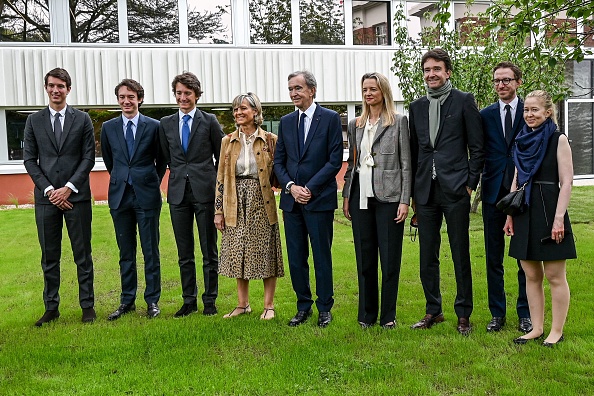
Mr. Arnault, 74, currently the world’s richest person, has spent decades grooming his children to run LVMH. He drilled them in mathematics growing up and brought them along on business trips and negotiations. Today, Mr. Arnault is tightening the family’s grip on LVMH, parachuting his children into senior roles and empowering them to one day take over the luxury empire.

In elevating his children, however, Mr. Arnault has also amplified a long-running dilemma: Who will succeed him as chief executive and chairman of the world’s biggest luxury conglomerate? Mr. Arnault built LVMH, valued at $480 billion, by hunting rival luxury firms for corporate takeovers while also nurturing generations of fashion designers. That combination of killer instinct and finesse is why his rivals call him the “wolf in cashmere.”

His eldest child, Delphine Arnault, 48, appeared to many in the fashion world to pull ahead of the pack in January when her father made her chief executive of Christian Dior, the second-largest brand in the group. Paris was also buzzing weeks earlier when her brother Antoine Arnault, 45, became CEO of the listed company that holds the family’s stake in LVMH.

Nipping at their heels are the three sons from Mr. Arnault’s second marriage. Alexandre Arnault, 30, is the executive vice president of Tiffany & Co., with a high-powered network that includes Jay-Z and Twitter co-founder Jack Dorsey. Frédéric Arnault, 28, runs the Tag Heuer watch brand, while 24-year-old Jean Arnault is director of marketing and development at Louis Vuitton’s watches division. All three studied at top engineering schools, a qualification their father has called crucial to his own success.

Mr. Arnault has given no indication whom he will choose as his successor, saying only that it will be based on merit. When asked about the matter in January at a presentation of LVMH’s annual results, he drew a parallel between his recent decision to raise the retirement age of LVMH’s chairman and CEO to 80 and French President Emmanuel Macron’s contentious push to raise France’s retirement age to 64.

“As to succession, you may also have noticed that the retirement age—which is very much in vogue—has been extended,” he said.

With his children looking on from the front row, Mr. Arnault quipped that he could use some free time to hone his skills at tennis, his favourite sport. “The last time I played with Roger Federer, I think I won one point in a single set. Maybe I could do a bit better than that,” he said.

Mr. Arnault pulled ahead of Tesla CEO Elon Musk late last year as the wealthiest person on the planet, according to the Bloomberg Billionaires Index. His wealth was $208 billion on April 19, according to the index.

For decades, Mr. Arnault has run the company with top lieutenants such as Sidney Toledano, who led Christian Dior, and Michael Burke, chief of his biggest brand, Louis Vuitton.

Mr. Burke, 66, stepped down from Louis Vuitton in January to be with his wife before she died from cancer. Mr. Toledano, 71, is expected to give up his role running a stable of the group’s fashion brands, including Celine, Loewe and Marc Jacobs, in the coming months.

Both played key roles in mentoring Mr. Arnault’s children. He tends to pair them with executives who keep an eye on their performance. He will then ask, Mr. Toledano said, “about some of their character traits, or if there’s a need for a little correction.”

Delphine Arnault worked for 12 years at Dior under Mr. Toledano. She then joined Louis Vuitton in 2013, paired with Mr. Burke, who has long worked at her father’s side. Speaking at a farewell tribute for Mr. Burke in January, according to people present, she said it was “impossible to recall precisely my first memory of you. That’s quite logical after all because I’ve known you since I was born.”

Days later, Ms. Arnault attended Dior’s fashion show in Paris as she prepared to take over as the brand’s chief executive. She has an uncanny resemblance to her father, possessing his genteel manners, high forehead and a frame that is tall and slender.

She went backstage, where she offered an assessment of the handbags that had just gone down the runway. Glossy materials, she said, were making a comeback. The collection, she said, was “very elegant. A bit romantic.”

Mr. Toledano looked on like a proud dad. “She survived the Toledano-Michael tandem,” he said. “She’s vaccinated now. She’s received the two doses.”

Mr. Arnault hardly ever speaks about succession in public. People close to him say it has been on his mind for decades.

In 2003, he made a hospital visit to his close friend and tennis partner Jean-Luc Lagardère, who had undergone a hip operation, the people said. Mr. Lagardère was one of France’s most respected businessmen, having built an empire that included missile-maker Matra and publisher Hachette.

Two days later, Mr. Lagardère slipped into a coma after developing an infection, and died shortly thereafter. The executive, who was 75, hadn’t adequately prepared his succession. In the years that followed, his son Arnaud gradually sold off or relinquished what his father had built.

Mr. Arnault recently took steps to tighten his family’s grip on LVMH and pass it on.

In December he transformed Agache, the private holding company that ultimately controls LVMH, into a commandite, a French corporate structure that resembles a limited partnership and allows its controlling shareholder to wield significant power with a relatively small holding.

He also created a second entity, Agache Commandite SAS, that is owned by his five children, each with a 20% stake, according to France’s stock market regulator. The new company is empowered to take over the running of Agache and effectively end Mr. Arnault’s leadership of the company. Major decisions, such as dissolving Agache, require unanimous approval from his children.

The new company has a rotating two-year chairmanship among the children, who can’t sell their shares in it for 30 years without unanimous board approval. Once that period lapses, only direct descendants of the elder Mr. Arnault will be able to hold the shares.

One businessman who has known Mr. Arnault for decades compared the situation to Jean-Paul Sartre’s play “No Exit,” where the main characters are locked in a room together for eternity as punishment.

Mr. Toledano said he was confident the Arnault children can work through any disagreements because their father taught them from a young age to put the interests of the company first. “For now, they all get on great,” he said.

The children all consider themselves siblings and don’t refer to one another as a half brother or half sister, according to people familiar with their relationship. They are careful not to create any appearance of rivalry or conflict, these people said, adding that the five would never discuss or joke about who was best at something like tennis or piano—their father wouldn’t stand for it.

Mr. Arnault is “above all a pragmatic man,” Mr. Toledano said. “You have to choose whoever is best at a given point in time considering the challenges. It’s what he does with his managers, his advisers, and I think it’s what he’ll do with his children.”

It isn’t a given that LVMH’s future leader will be one of Mr. Arnault’s children, according to Mr. Toledano. “At no moment did he tell me, ‘I must prepare my children for my succession,’” he said.

Bernard Arnault was born in 1949 in Roubaix, near the Belgian border. His father, Jean Arnault, was a manufacturer and owner of the civil engineering company Ferret-Savinel.

He excelled at school and earned a spot at the Ecole Polytechnique, a highly selective engineering and science school that has shaped the elite since the French Revolution. Napoleon Bonaparte turned Polytechnique into the military academy it remains to this day.

Mr. Arnault and the 312 other students in his class would wake at 7 a.m. to a bugle and a flag-raising. He learned to march wearing the bicorne hat of the Napoleonic era that students don each year as they proceed down the Champs-Élysées in the Bastille Day parade.

Mr. Arnault recalled in a book of interviews with a French journalist how his education at Polytechnique helped lay the foundations for his conquest of the fashion world. “It is above all a program that gives you a rational mindset, which allows you to analyse a situation or a problem very quickly,” he wrote, adding that LVMH makes a point of recruiting young talent from the school.

Antoine Arnault was more blunt about his father’s esteem for the school. In an interview with Le Monde, the contents of which were confirmed by a spokesman, the eldest son recalled how hard it was to tell his father he wasn’t Polytechnique material. Neither he nor his sister attended the school.

“For him, only Polytechnique counts,” he added.

Mr. Arnault had Antoine and Delphine with his first wife, Anne Dewavrin. As a young father, he took a rigorous approach to his children’s education. They recount how he would call them into his office and drill them on math exercises in between business meetings.

Mr. Arnault moved his family to New York in the early 1980s after the Socialist leader François Mitterrand was elected president of France and vowed to tax the rich heavily. He spent two years in the U.S. building the business he had taken over from his father.

Returning to France in 1984, Mr. Arnault made his first move into the luxury business, gaining control of a textile company called Boussac Saint-Frères that was near bankruptcy. Tucked within it was a jewel: Christian Dior.

Dior became the archetype of Mr. Arnault’s budding empire. The haute couture house had redefined womenswear in the mid-20th century with the “new look” dress, and Mr. Arnault aimed to emphasise that fashion pedigree through aggressive expansion.

He sent Delphine in her early 20s to work at the namesake fashion house of John Galliano, a star designer who was also creative director of Dior. Mr. Toledano then took her under his wing at Dior. The executive recalled huddling with Delphine and her father before making the pivotal decision to fire Mr. Galliano after he was filmed making antisemitic remarks.

Mr. Arnault divorced in 1990 and later that year met Hélène Mercier, a Canadian concert pianist, at a friend’s house. Driving her home, Mr. Arnault told her about his struggles learning to play a collection of études by Frédéric Chopin. When they met again, for tea at Mr. Arnault’s, she asked him to play Chopin for her.

“He was shaking all over with stage fright but seemed determined to go all the way,” she recalled in her autobiography. “I felt that Bernard was suffering, that he was doing violence to himself to move me.”

The couple married and had three boys. People close to the family say Mrs. Mercier-Arnault applied the same drive to parenting that made her a famous pianist. She pushed her boys in music and in school, waking them at dawn to rehearse and study.

Mr. Arnault also threw himself into their studies. Mr. Toledano recalled a flight he took with Mr. Arnault back to Paris after a particularly gruelling trip to Asia. Mr. Arnault, operating on just a few hours’ sleep, pulled out a mathematics textbook and began to study. One of his younger sons was about to take the entrance exam to Polytechnique.

“I need to refresh my memory,” he told Mr. Toledano.

Alexandre Arnault applied to Polytechnique for undergraduate studies but didn’t make the cut. He was later accepted at the school for a master’s-degree program.

At LVMH, he quickly established himself as someone with his father’s ear. When he suggested buying German luggage maker Rimowa, his father told him the brand’s family owners didn’t want to sell. Alexandre wrote to the Rimowa family’s patriarch and traveled to meet with him, according to LVMH executives.

LVMH bought the company in 2017, and Mr. Arnault installed Alexandre as CEO. He gave the brand a makeover by forging collaborations with streetwear-savvy designers. One collection had the Supreme logo emblazoned on luggage. Another had a clear case designed by Virgil Abloh for his Off-White brand.

Mr. Arnault then sent Alexandre to help shake up Tiffany & Co., acquired in 2021 for $15.8 billion. Known for its engagement rings, the jeweler has struggled to gain traction with younger shoppers. Alexandre spearheaded a collaboration between Tiffany and Nike Inc. to make $400 Nike Air Force 1 shoes in all-black leather with a swoosh the color of Tiffany’s classic blue jewelry boxes. Ads proclaiming the brand was “Not your mother’s Tiffany” were plastered across the U.S.

The moves ruffled fashion executives who worried he was tarnishing a prestigious luxury brand. “Why on earth would Tiffany want to move away from that to become just another streetwear brand is beyond me,” said Ana Andjelic, former chief brand officer at Banana Republic.

Mr. Arnault’s two youngest children have hewed most closely to their father’s career track. Both attended a Jesuit high school, where they took literature classes taught by Brigitte Macron before she became the first lady of France.

Frédéric Arnault trained in classical piano and excelled at tennis. He was accepted at Polytechnique, where he took the same courses as his father. He then co-founded an electronic-payments startup, which he sold 18 months later.

In 2018, the elder Mr. Arnault recruited Stéphane Bianchi, an executive who had groomed an heir of the Yves Rocher cosmetics company, to lead LVMH’s watches business. Mr. Bianchi said Mr. Arnault told him from the start to work closely with Frédéric, who at the time was driving TAG Heuer’s digital strategy. Two years later, Mr. Bianchi made him CEO of the brand.

“My father, of course, gives me advice, but he also gives me a lot of freedom,” Frédéric said in an interview. In meetings, he has his father’s tendency to let others do the talking while he studies them, according to Mr. Toledano.

“He looks at you and he absorbs you. Sometimes he lets you talk for 10 minutes while he just absorbs,” he said.

Frédéric has a close relationship with his younger brother Jean, according to people close to them, helping to cultivate the 24-year-old’s fascination with the watch world. Jean went to the Massachusetts Institute of Technology to study financial mathematics. He then earned a master’s degree in mechanical engineering from Imperial College London, writing his thesis on the Tag Heuer carbon balance spring, a component of its watches.

He now works at Louis Vuitton’s watches division, spending much of his time at its factory in Switzerland. In March, he announced plans to relaunch the Gérald Genta brand with the support of the watchmaker’s widow.

In recent years, Mr. Arnault has tapped his children for advice on some of the more delicate issues facing his company. As inflation began to bite last year, fuelling public anger over wealth inequality, Mr. Arnault was worried the public outrage would ripple toward their family and LVMH, according to people close to him.

He went to his eldest son, Antoine, who had been pushing him to communicate more openly with the public about LVMH’s operations, the people said. Antoine suggested LVMH launch an ad campaign publicizing how much the company paid in French taxes last year and the number of jobs it created, the people said. His father took the advice.

This year, Mr. Macron triggered massive street protests with his plan to raise France’s retirement age. Photos of Mr. Arnault began appearing on “wanted” posters at the demonstrations, and protesters stormed into the lobby of LVMH’s headquarters, waving flares and flags. In the days that followed, Mr. Arnault began running his ad campaign in Libération and other leftist newspapers.

The luxury titan also asked his children for advice on how to handle the departure of Mr. Burke from Louis Vuitton, according to people familiar with the matter.

Mr. Burke, who remains an adviser to Mr. Arnault, built Louis Vuitton into a brand with $20 billion in annual sales while navigating personal tragedy. Virgil Abloh, the brand’s creative director for menswear, was diagnosed with cancer around the same time Mr. Burke’s wife, Brigitte, received a cancer diagnosis.

Brigitte Burke and Mr. Abloh bonded over their experience in the months leading up to the designer’s death in November 2021. The designer was a trend-setter in the fashion world. Brigitte was known for bringing employees together for meals.

“She did the cooking. I did the serving,” Mr. Burke said.

Mr. Burke needed to be at his wife’s side before she died in February. Mr. Arnault decided Pietro Beccari, who was CEO of Dior, would take over at Louis Vuitton. Delphine Arnault would become the new chief of Dior.

In late January, Louis Vuitton employees gathered at the Louvre, where the brand had just held its menswear show, for a private tribute to Mr. Burke.

“I’m very touched to be here,” Delphine Arnault told the group, according to people present, as her father and Mr. Burke looked on. One of her earliest memories, she said, was of Mr. Burke’s mustache. She showed them a photo of a young Mr. Burke in the 1980s, adding: “We’ve all learned so much by your side.”



Related Stories

RISE Global acts as the national economic platform to reinforce confidence at speed and scale, demonstrate Dubai’s collective market strength and translate D33 into investable opportunity. In other words, where the entire country speaks with one voice to global capital.

Egypt’s annual urban inflation rose to 14.9% in July, up from 14.3% in June, according to CAPMAS. While urban food and beverage prices fell 0.6% month-on-month, they remained 8.0% higher than a year earlier, highlighting persistent inflationary pressures despite signs of easing in monthly food costs.

Gold miners are emerging as a compelling way to navigate market uncertainty, with analysts pointing to strong cash flows, attractive valuations and rising profit margins. As gold prices stabilize above US$4,000 an ounce, mining stocks could offer investors both downside protection and long-term upside.

Related Stories
Money
The Investment Case for Space
Money
UAE and Saudi Arabia lead MENA outbound investment activity in H1 2026
Money
Qatar National Bank taps Asia for $2bln loan
The Investment Case for Space

Space42’s first-half results, with revenue up 15% and satellite-to-phone services on standard devices targeted for commercial rollout by the end of 2026, are the kind most space companies globally can’t show, and that’s what makes the regional story worth a closer look

Thu, Aug 13, 2026 2 min

Most listed space companies around the world are still burning cash in pursuit of the dream, so it says something that Space42, the Middle East’s flagship space firm just reported a USD$6.3 billion contracted backlog and more than USD$1.1 billion in the bank. Space42’s first-half results, with revenue up 15% and satellite-to-phone services on standard devices targeted for commercial rollout by the end of 2026, are the kind most space companies globally can’t show, and that’s what makes the regional story worth a closer look according to Josh Gilbert, Lead Analyst at etoro. 

SpaceX’s first result as a listed company showed revenue of USD$7.8 billion, up 92% on a year ago, yet the company still lost more than USD$500 million and spent an extraordinary USD$18 billion on capex in a single quarter. The shares fell despite beating expectations, and that reaction says plenty about whom investors have patience for, because markets this year have been rewarding companies that can show cash coming back and punishing those that only spend it. 

Space still makes up a small sliver of portfolios, although SpaceX as the poster child has likely changed that. Valuations are the sticking point for space companies, because most are spending aggressively ahead of profits and only a handful trade on a meaningful earnings multiple, so traditional metrics won’t tell you much. What they miss is how fast the picture can change, because in this sector one big contract or breakthrough can rewrite earnings expectations within a couple of quarters.  

That’s exactly why the model in this region stands out. Contracts that run 15 years or more with a government counterparty are almost unheard of in this industry, and they give investors something the rest of the sector can’t, which is knowing where the revenue comes from years in advance. Space still gets talked about as tomorrow’s story, but the technology already sits behind navigation, telecommunications, logistics and agriculture. It’s the companies monetizing it that are young. This is where the comparison to AI firms fits: with heavy investment meeting enormous growth expectations, space companies are just a few years behind where the leading AI names are now. 

Investors should judge these companies the same way they’d judge any other business, on free cash flow, backlog and margins, because launch headlines grab attention but tell you very little about who actually makes money. This is a sector with a long way to run, and the companies worth backing will be the ones proving it in the numbers, not on the launchpad. 

MOST POPULAR

Parts for iPhones to cost more owing to surging demand from AI companies.

The sports-car maker delivered 279,449 cars last year, down from 310,718 in 2024.

UAE and Saudi Arabia lead MENA outbound investment activity in H1 2026

The UAE and Saudi Arabia led MENA’s outbound investment in H1 2026, completing 119 deals worth $25.5 billion, according to EY. Overall, the region recorded 390 M&A deals worth $46.7 billion, while the UAE remained the top destination for inbound investment.

Tue, Aug 11, 2026 < 1 min

The UAE and Saudi Arabia remained the Middle East and North Africa (MENA) region’s most active outbound investors in the first half of 2026, according to global consultancy EY.

Outbound investment remained resilient, with 119 deals worth $25.5 billion completed during the first half of this year, the consultancy said in its MENA M&A Insights report.

Major transactions included Dubai Aerospace Enterprise’s acquisition of Macquarie AirFinance for $7 billion, and Saudi Electronic Gaming Holding Company’s acquisition of Shanghai Moonton Technology for $6 billion.

Domestic deal value reached $16 billion – more than four times the value recorded in the first half of 2026 compared to the same period last year – driven by several large transactions across real estate, power and utilities and technology.

However, merger and acquisition (M&A) deals in MENA fell in the first half of 2026 due to geopolitical developments. The region recorded 390 M&A deals worth $46.7 billion in the first half of 2026, compared to 434 deals worth $58.8 billion a year ago.

May and June accounted for 61% of Q2 2026 deal volume and 79% of deal value. Large transactions valued above $500 million contributed nearly three-quarters of total deal value between March and June.

The UAE continued to lead as MENA’s preferred destination for inbound investment, supported by its diversified economy and business-friendly regulatory environment.

Sovereigns such as the UAE’s Abu Dhabi Investment Authority and Mubadala, as well as Saudi Arabia’s Public Investment Fund, continued to play a pivotal role in shaping M&A activity across the region, the report said.

MOST POPULAR

Parts for iPhones to cost more owing to surging demand from AI companies.

Following the successful launch of its Palais Collection, MAISON de SABRÉ has unveiled a new modular handbag system offering more than 720 styling combinations.

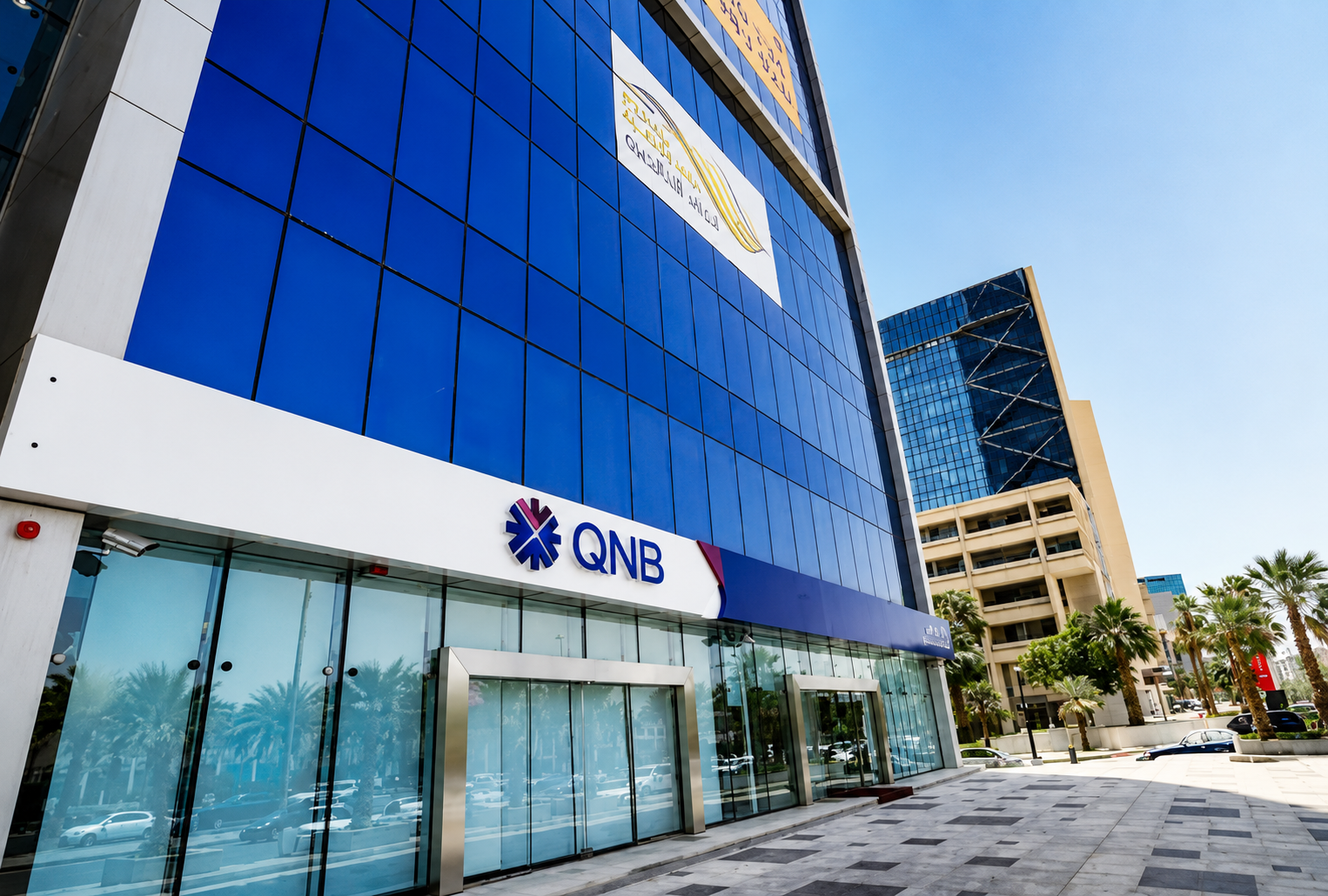
Qatar National Bank taps Asia for $2bln loan

Qatar National Bank (QNB) is seeking to raise a $2 billion five-year senior unsecured term loan in the Asian market, according to LSEG’s Loan Connector. The facility, priced at 75 basis points over compounded SOFR, will refinance a $2 billion loan completed in 2023, with signing expected in September.

Tue, Aug 11, 2026 < 1 min

Qatar National Bank (QNB) has returned to the Asian loan market to raise a $2 billion five-year senior unsecured term loan, less than a year after securing a smaller facility, according to LSEG’s Loan Connector.

DBS Bank, HSBC, Industrial and Commercial Bank of China, Mizuho Bank and Standard Chartered have been mandated as lead arrangers and bookrunners for the bullet facility, which carries a margin of 75bp over compounded SOFR.

Mandated lead arrangers committing $200 million or more will receive an upfront fee of 90bp, while lead arrangers providing between $125 million and $199 million will earn 80bp.

Arrangers contributing $75 million to $124 million are offered 70bp, managers committing $50 million to $74 million will receive 60bp, and participants with smaller commitments are entitled to a fee of 55bp.

An additional 5bp early-bird fee is available to lenders that commit by August 28.

A virtual bank meeting is scheduled for August 17, with commitments due by September 11 and signing expected on September 23.

The proceeds will be used to refinance a $2 billion three-year loan completed in October 2023.

QNB’s last syndicated loan was a $1.5 billion five-year facility raised in October 2025 and was priced at 60bp over SOFR.

Qatar’s largest bank by market capitalisation, QNB is rated Aa2/A /A (Moody’s/S&P/Fitch).

MOST POPULAR

Many of the most-important events have slipped from our collective memories. But their impacts live on.

New research suggests that bonuses make employees feel more like a mere cog in a wheel.

The Global Platform for Investment Capital and The Future of Urban Development

RISE Global acts as the national economic platform to reinforce confidence at speed and scale, demonstrate Dubai’s collective market strength and translate D33 into investable opportunity. In other words, where the entire country speaks with one voice to global capital.

Mon, Aug 10, 2026 2 min

RISE Global is the global platform for investment capital and the future of urban development. RISE Global acts as the national economic platform to reinforce confidence at speed and scale, demonstrate Dubai’s collective market strength and translate D33 into investable opportunity.  In other words, where the entire country speaks with one voice to global capital.

📅 Dates: 13-14 Oct 2026
📍 Location: Dubai World Trade Centre, Dubai, UAE

💡 Why attend?

  • 5,000+ visitors
  • 250+ global investors
  • 100+ world-class speakers
  • 40+ countries represented
  • 2 immersive stages: Main & Industry Stages
  • 1 Global Real Estate Investment Summit [Access with delegate pass only]
  • Dedicated Investor Programme
  • Dedicated Bespoke Meetings Programme & Concierge Team
  • Keynotes, panels, investment forums & networking lounges

Join us in Dubai World Trade Centre, for RISE Global from 13 – 14 October 2026. RISE Global is the global platform for investment capital and the future of urban development. RISE Global acts as the national economic platform to reinforce confidence at speed and scale, demonstrate Dubai’s collective market strength and translate D33 into investable opportunity. In other words, where the entire country speaks with one voice to global capital. The UAE projects one credible global story of strength, resilience, delivery and long-term “investability”.

What is the impact of RISE Global?

RISE Global deepens relationships with sovereign funds, global institutions and developers that invest in Dubai, advocate for its market and support UAE organisations internationally. RISE Global builds a qualified, year-round pipeline connecting Dubai projects with the capital capable of sustaining Dubai’s next growth. RISE Global translates next-generation real estate, infrastructure, hospitality, logistics, data-centre and sustainable-city ambition into tangible investment and partnership opportunity.

This powerful and strategic platform for the real estate ecosystem to converge to define the cities of tomorrow. RISE Global is where the world’s real estate and infrastructure government leaders, institutional investors, forward-thinking architects and designers, innovators and industry powerhouses come together to forge the future of urban development. With $15T+ in AUM represented, 5,000+ high-profile leaders, 1,000+ bilateral meetings, 250+ global institutional investors and 100+ world-class speakers from 40+ countries, RISE is the #1 platform for driving global capital investment forward.

The time is now: total commitment will show the world the collective strength, depth and resilience of the UAE. Be part of this transformative event and witness the future of urban development unfold.

Be part of the future of urban development, register now.

MOST POPULAR

Many of the most-important events have slipped from our collective memories. But their impacts live on.

Paine Schwartz joins BERO as a new investor as the year-old company seeks to triple sales.

Egypt’s annual urban consumer price inflation quickens to 14.9%

Egypt’s annual urban inflation rose to 14.9% in July, up from 14.3% in June, according to CAPMAS. While urban food and beverage prices fell 0.6% month-on-month, they remained 8.0% higher than a year earlier, highlighting persistent inflationary pressures despite signs of easing in monthly food costs.

Mon, Aug 10, 2026 < 1 min

Egypt’s annual urban consumer inflation accelerated to 14.9% in July from 14.3% in June, state statistics agency CAPMAS said.

* Nationwide annual inflation rose 13.0% in July compared with July 2025.

* Urban food and beverage prices fell 0.6% month-on-month in July, but were 8.0% higher than a year earlier.

* Nationwide, the all-items index rose 0.1% from June, with food and beverages slipping 0.1% month-on-month.

* Rural annual inflation reached 11.2% in July, with rural food and beverages up 7.8% year-on-year.

* Thirteen analysts polled by Reuters between July 29 and August 6 had forecast a range of 14.6% to 16.3%.

MOST POPULAR

Many of the most-important events have slipped from our collective memories. But their impacts live on.

Two coming 2027 models – the first of the “Neue Klasse” cars coming to the U.S. early next year – have been revealed.

Why These Bargain Stocks Can Outshine Gold

Gold miners are emerging as a compelling way to navigate market uncertainty, with analysts pointing to strong cash flows, attractive valuations and rising profit margins. As gold prices stabilize above US$4,000 an ounce, mining stocks could offer investors both downside protection and long-term upside.

By Paul R. La Monica
Thu, Aug 6, 2026 3 min

Gold is one of the market’s go-to hedges in rocky times. Don’t forget that gold miners’ stocks are too.

The stock market’s gains in 2026 belie the rocky macroeconomic picture: elevated inflation, heightened geopolitical tensions, and jitters about the artificial-intelligence trade. That backdrop, in theory, should be the time for gold to shine. Instead, the price of the yellow metal has tumbled more than 5% so far, after last year’s blistering 65% rally. In part, the U.S. dollar’s recovery has stymied gold, which benefited from the greenback’s weakness in 2025.

Even with the precious metal’s recent weakness, gold mining stocks could be the best way to profit from this year’s uncertainty.

Gold miners “are a valuable hedge against macro risks that would likely be damaging for equities,” BCA Research’s Noah Weisberger and Rishabh Shah wrote this week.

Concerns about the Federal Reserve’s next moves to tackle inflation, the increasingly crowded AI trade, and steep valuations for tech stocks are just some of the drivers that could help gold’s price get on even footing— and lead to even bigger gains for miner stocks.

These stocks’ prices tend to outpace gold’s moves, because the companies have fixed operational costs. So when gold’s price rallies, their profit margins soar, and vice versa. For instance, the VanEck Gold Miners GDX +7.39% exchange-traded fund has fallen 11% this year as the metal has slumped.

Now, gold’s price just needs to stabilize to help miners’ stocks take off, and that seems to be happening. The precious metal has recently found support above the $4,000 level, and has stuck in a narrow range since the end of June. But its price rose ever so slightly in July, ending a four-month losing streak for the metal. Technical analysis also suggests that gold is due for a comeback.

Barron’s recently wrote that the pullbacks for both gold miners and the metal itself are overdone. Senior technical analyst Doug Busch noted that the VanEck ETF is on the “verge of a breakout” and has the potential to hit $11o in early 2027, up more than 40% from its current price.

Gold miners also have more than their role as a market hedge going for them. Their fundamentals are solid, too, says Chris Mancini, portfolio co-manager of the Gabelli Gold Fund.

“Precious metals miners are generating substantial amounts of free cash flow given profit margins of over $2,000 per ounce, and are returning this cash to shareholders through buybacks and dividends,” he said in an email.

“Buying the miners is a cheap way to get exposure to the price of gold,” he added. His fund owns Newmont NEM +6.71%, a Barron’s stock pick last year, and Agnico Eagle Mines as top holdings, as well as miners Northern Star Resources, Endeavour Mining, and Kinross Gold K+8.59%.

Miners are better businesses than they used to be, the BCA team added.

“Capex is more disciplined, margins are high and rising…and they are largely independent of the AI story,” Weisberger, BCA’s head of equities, and Shah, a senior analyst, wrote.

That last part is key. AI is disrupting the software industry and many other services and information-oriented businesses, and investors have piled into AI stocks. But ChatGPT, Claude, Grok, and other large-language models aren’t going to replace the need to mine for metals.

“Equity portfolios can benefit from exposure to quality that is uncorrelated to AI risk, and gold miners fit the bill,” the BCA team said.

They recommend that investors buy the VanEck Gold Miners ETF, which owns top miners such as Agnico, Barrick Mining ABX +7.24%, and Newmont.

An important bonus for big gold miners’ stocks is that their valuations are attractive after the gold’s pullback, too. The VanEck ETF is now trading at just a little more than nine times next year’s earnings estimates. That’s a big discount to its five-year average price-to-earnings ratio of 14, according to FactSet.

What’s more, the ETF is currently valued at a more than 50% discount to the S&P 500 SPX -0.17%, which is trading for about 19 times earnings estimates for 2027. Mining stocks have typically traded at just a 25% discount to the broader market over the past five years. So there is significant upside for the group if valuations move back toward normal levels.

One factor that complicates mining stocks as a market hedge, of course, is if stocks bounce back, which has been the case so far in August.

But both the market and economic outlooks remain cloudy, and investors remain nervous about the Fed’s next moves and AI stocks. Gold miners should do just fine, even if the anxious mood on Wall Street persists.

MOST POPULAR

The sports-car maker delivered 279,449 cars last year, down from 310,718 in 2024.

Chris Dixon, a partner who led the charge, says he has a ‘very long-term horizon’

Europe’s Premier FX, Crypto & Fintech Event – Wiki Finance Expo Cyprus 2026 is Coming to Limassol This November!

Limassol will host WIKIEXPO CYPRUS 2026 on 6 November 2026, bringing together more than 5,000 professionals, 50+ speakers, and 50+ exhibitors from over 30 countries. The event will spotlight the latest trends in forex, fintech, payments, crypto, and AI, offering a platform for industry leaders, innovators, and investors to explore emerging technologies, share insights, and build strategic partnerships.

Tue, Aug 4, 2026 3 min

Mark your calendars for WIKIEXPO CYPRUS 2026, taking place on November 6, 2026 at the prestigious Parklane, a Luxury Collection Resort & Spa. As one of Europe’s most influential gatherings for the foreign exchange and fintech services industry, the event is set to welcome over 5,000 professionals, 50+ distinguished speakers, and 50+ exhibitors from more than 30 countries.

This year’s expo places a strategic focus on the core pillars that drive today’s financial markets, with dedicated tracks on:

  • Foreign Exchange & Liquidity Solutions – Institutional FX, prime brokerage, liquidity aggregation, and risk management
  • Regulatory & Compliance Frameworks – Navigating MiCA, CySEC regulations, AML/KYC, and cross-border licensing
  • Next-Generation Payments – Cross-border remittance, digital wallets, instant settlement, and merchant services
  • Platform Building & Brokerage Technology – Trading platforms (MT4/5, cTrader, proprietary), white-label solutions, CRM, and infrastructure providers
  • Fintech Service Providers – B2B technology vendors, data analytics, AI-driven trading tools, and compliance automation
  • Crypto & DeFi – On-chain liquidity, tokenized assets, smart contract-based settlement, and the convergence of crypto with traditional FX
  • AI in Finance – AI-powered trading algorithms, predictive analytics, fraud detection, and regulatory technology (RegTech)

Set in the heart of Cyprus – a global hub for forex brokers, payment processors, and regulatory technology firms – this expo offers an unrivalled platform for service providers, brokers, IBs, liquidity providers, payment gateways, and platform vendors to connect, showcase innovations, and forge cross-border partnerships. Backed by CySEC’s stringent oversight and EU-wide passporting privileges, this jurisdiction empowers firms to scale operations across the European Economic Area, all while staying ahead of the crypto and AI waves reshaping the industry.

Attendees will gain actionable insights through keynote addresses, panel debates, fireside chats, and dedicated networking sessions, all designed to address the real-world challenges and opportunities facing the FX, fintech, and digital asset ecosystem.

“Cyprus has long been recognized as a gateway between Europe, Asia, and Africa, with a robust regulatory environment and a thriving community of financial technology providers,” said Loki So, COO of WikiEXPO. “Our Cyprus edition is uniquely tailored to the FX, liquidity, payments, and platform-building sectors – but we also recognize that crypto and AI are no longer optional. We aim to bring together the entire value chain of service providers – from traditional brokers to cutting-edge DeFi protocols and AI-driven analytics firms – under one roof to drive responsible innovation and sustainable growth in this dynamic region.”

How to Participate:

The Only Official Free Registration Link:

https://www.wikiexpo.com/Cyprus/2026/en/?c=7iil3INU

Sponsorship & Exhibiting Opportunities:
Secure a prime booth or exclusive sponsorship package – ideal for liquidity providers, trading platform vendors, payment solution companies, regulatory tech firms, Web3 infrastructure projects, and AI fintech startups.
Contact Name: Loki So
Email Address: loki@wikiexpo.com
Telegram: https://t.me/Loki_wikiexpo_coo

LinkedIn ID: https://www.linkedin.com/in/loki-so-33826318a/

About WikiEXPO

WikiEXPO is a global hub for financial innovation, uniting visionaries and leaders in fintech, forex, and crypto industries. With a worldwide community of over two million followers, our iconic summits are held in global capitals including Dubai, Hong Kong, Cyprus, Bangkok, Singapore, Sydney, South Africa, and beyond. From cutting-edge startups to industry giants, we connect the brightest minds. After six years of rapid development, WikiEXPO has become one of the world’s largest and most influential event platforms in the forex, fintech, and digital asset space.

Past Speakers at WikiEXPO (selected):

  • Dominic Williams – Founder & Chief Scientist, DFINITY Foundation
  • Evan Auyang Chi-chun – Group President, Animoca Brands
  • Justin Sun – Founder, TRON; Member, HTX Global Advisory Board
  • Reeve Collins – Co-Founder, Tether
  • Cynthia Wu – Founding Partner and CCO, BIT
  • Livio Weng – CEO & Executive Director, Bitfire
  • Kevin Lee – CCO, Gate
  • Mario Nawfal – CEO, IBC Group
  • Yiannos Ashiotis – Board Chairman – Revolut Digital Assets Europe
  • John Riggins – Partner, BTC Inc
  • Loretta Joseph – Policy Consultant, The Commonwealth; Chairman, ADFSAC
  • Vít Jedlička, President, Free Republic of Liberland
  • Bugra Celik – Director, Digital Assets | Global Private Banking & Wealth, HSBC
  • Hassan Ahmed – Country Director, Coinbase Singapore

We look forward to welcoming you to Limassol this November – where the FX, fintech, and crypto communities converge to shape the future of finance!

MOST POPULAR

Parts for iPhones to cost more owing to surging demand from AI companies.

Americans now think they need at least $1.25 million for retirement, a 20% increase from a year ago, according to a survey by Northwestern Mutual

Saudi Non-oil Sector Expands as New Orders Rise

Saudi Arabia’s non-oil private sector continued to expand, marking a fourth straight month of growth despite a slight slowdown. Strong domestic demand supported business activity, while regional tensions and higher freight costs weighed on exports. Businesses remain optimistic that solid economic fundamentals and diversification efforts will sustain growth in the months ahead.

Tue, Aug 4, 2026 < 1 min

Saudi Arabia’s non-oil private sector growth eased slightly in July but remained in expansion territory for a fourth consecutive month, supported by rising order volumes despite a decline in export demand, a business survey showed.

The Riyad Bank Saudi Arabia Purchasing Managers’ Index registered 53.1 in July, down marginally from 53.3 in June, but holding well above the neutral threshold of 50.

Nearly 19% of firms reported an increase in output, compared with only 4% that saw a decline. New order volumes supported growth though the pace eased from June.

Regional conflict weighed on export orders. “Export orders declined for the fifth consecutive month as elevated freight costs and regional tensions weighed on international trade, although the pace of contraction eased compared with previous months,” the report said.

Input cost inflation eased to a four-month low but remained sharp relative to historical trends.

Companies continued to pass higher costs on to customers, leading to another sharp rise in output prices, though the increase was slightly softer than in June.

Staff expenses climbed at the strongest rate in five months, reflecting salary increases in response to inflationary pressures.

“The sustained expansion in domestic demand, resilient business activity and improving supply side conditions reinforce our expectation that Saudi Arabia’s non-oil economy will maintain solid growth momentum through the second half of the year, supported by strong underlying economic fundamentals and continued progress in economic diversification,” said Naif Al-Ghaith, Chief Economist at Riyad Bank

Non-oil private sector firms added jobs in July, but well below the levels seen in early 2026.

Looking ahead, business confidence for the year ahead softened from June’s five-month peak, with just 8% of non-oil private sector firms expecting output to grow.

MOST POPULAR

Parts for iPhones to cost more owing to surging demand from AI companies.

Interior designer Thomas Hamel on where it goes wrong in so many homes.

Arab Bank H1 profit soars to $571m on higher fee income

Arab Bank Group reported a 7% increase in net profit to $571 million in the first half of 2026, supported by higher fee and commission income. The lender also expanded its balance sheet, with total assets rising to $80.3 billion and customer deposits reaching $58.8 billion.

Mon, Aug 3, 2026 2 min

Jordan-based Arab Bank Group has reported solid results for the first half of 2026 which rose to $571 million, up 7% over last year’s figure of $535.3 million, as the growth in fee and commission income helped offset a challenging regional and global operating environment.

Announcing the results the six-months period ended June 30, 2026, Arab Bank said the Group maintained its strong capital base with a total equity of $13.5 billion.

Its total assets increased 7% to $80.3 billion, while loans grew 6% to $42.1 billion.

The customer deposits rose 6% to $58.8 billion, while total equity stood at $13.5 billion.

On the solid results, Chairman Sabih Masri said the Group’s sustained positive performance in the first half achieved despite continuing regional and global uncertainty, reflects the strength of the bank’s strategy and the soundness of its fundamentals.

Masri said the bank continues to monitor regional development with vigilance and discipline, managing risk proactively while preserving the strength of its balance sheet and delivering solid, sustainable returns to shareholders.

He pointed out that the lender continued to monitor geopolitical developments closely while maintaining disciplined risk management and a strong balance sheet.

The bank, he said, was expanding its presence in key markets, including the resumption of operations in Syria, the launch of an Islamic banking window in Algeria and the continued development of its franchise in Iraq.

It is also strengthening its wealth management business through its Swiss unit, he added.

CEO Randa Sadik said revenue increased 3% in the first half, supported by strong growth in non-funded income, contributing to the increase in net profit.

The bank’s balance sheet continued to expand, reflecting its focus on financial strength and sustainable growth, she stated.

“The Group has maintained solid balance sheet growth of 7%, reflecting its ongoing focus on financial strength and sustainable growth. This performance underscores the Group’s commitment to delivering consistent value and supporting long-term business objectives,” she added.

MOST POPULAR

The sports-car maker delivered 279,449 cars last year, down from 310,718 in 2024.

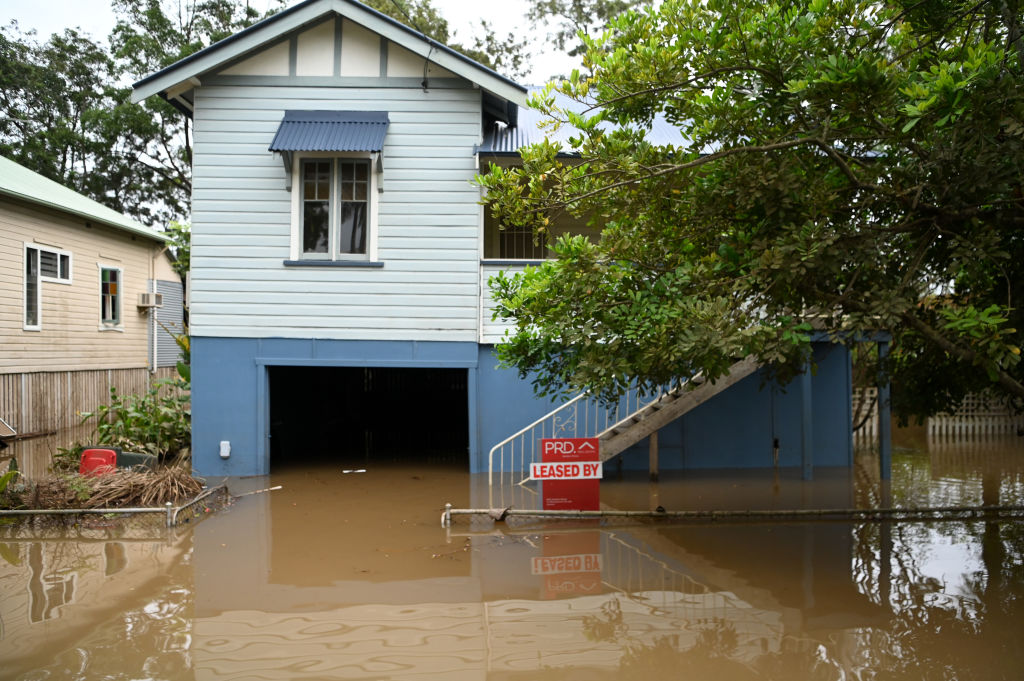
Following the devastation of recent flooding, experts are urging government intervention to drive the cessation of building in areas at risk.

The Middle East’s Top 10 Finance Influencers 2026

Zero income tax. No capital gains. Golden Visa pathways for investors. The UAE’s financial architecture is unlike anywhere else on earth.
The creators are navigating this ecosystem for millions of followers across the Gulf.

Thu, Jul 30, 2026 5 min

The financial questions being asked in Dubai and Doha are unlike those being asked anywhere else. Zero income tax. No capital gains levy. A Golden Visa scheme that is reshaping who chooses the Gulf as a permanent financial base. A crypto regulatory framework more coherent than most Western equivalents. DIFC and QFC sitting at the exact midpoint between the European and Asian trading day, managing capital from more than two hundred nationalities. The finance creators who navigate this environment for audiences of millions are not explaining a generic financial system. They are mapping one of the most deliberately advantaged economic architectures on earth.

This is not a ranking of the most followed accounts in the Middle East. It is a ranking of the voices most useful to the people actually living and building wealth in Dubai and Doha — expats encountering a tax-free salary for the first time, GCC nationals navigating Islamic finance requirements alongside global investment options, and international entrepreneurs who chose the Gulf specifically for what its financial structure makes possible.

Dubai and Doha’s finance creators serve the most internationally complex financial demographic in the world. No generic personal finance content has ever been sufficient for this audience.

1. Ahmed Sanad – @a.sanad.a · Investing & Financial Education, UAE

Ahmed Sanad is one of the UAE’s most recognizable investment educators, creating Arabic-first content around stock markets, long-term investing and Shariah-compliant wealth building. His videos simplify complex financial concepts, making investing more accessible to younger audiences across the Gulf. His audience represents a growing segment of first-time investors actively participating in the UAE’s expanding capital markets.


2. CA Anamika Rana @ca_anamikarana · Finance & Tax Education, UAE

CA Anamika Rana combines accounting expertise with practical financial education, covering investing, taxation, global markets and personal finance through accessible digital content. As a chartered accountant, she focuses on helping professionals and entrepreneurs make informed financial decisions. Her audience includes business owners, expatriates and professionals navigating financial planning in the UAE. 

3. Kartik Iyer – @financial.wingman · Personal Finance & Investing, UAE

Kartik Iyer creates educational content focused on investing, wealth creation and financial literacy, translating complex financial principles into straightforward advice for everyday investors. His background as a CFA Charterholder adds credibility to content covering markets, portfolios and long-term investing. His audience largely consists of young professionals beginning their investment journey across the UAE.

4. Sophia Bhatti @sophiabwealth · Wealth Management, UAE

Sophia Bhatti shares insights into wealth management, investment strategy and long-term financial planning, drawing on years of experience advising high-net-worth individuals and families. Her content focuses on preserving and growing wealth rather than short-term market trends. Her audience includes affluent professionals, business owners and investors seeking sophisticated financial advice.

5. Keren Bobker – @financialuae · Personal Finance, UAE

Keren Bobker has become one of the UAE’s most trusted voices in personal finance through years of financial advisory work and regular commentary on household money management. Her content addresses budgeting, retirement planning, debt management and broader financial wellbeing. Her audience spans working professionals, families and expatriates seeking practical financial guidance tailored to life in the UAE.

6. Sandeep Jadwani@sandeep_investmentadvisor · Investment Advisory, UAE

Sandeep Jadwani produces content centered on investment strategy, portfolio management and market trends, leveraging decades of experience in financial advisory services. His commentary frequently explores macroeconomic developments and their implications for investors. His audience includes experienced investors, executives and wealth-conscious professionals throughout the UAE.

7. William Jones – @will_investment_advisor · Investing & Wealth Creation, UAE

William Jones focuses on helping individuals build long-term wealth through disciplined investing and financial education. His content covers investment principles, financial independence and strategies for creating sustainable wealth over time. His audience primarily consists of professionals and aspiring investors looking to strengthen their financial future.

8. Wali Khan – @wali_2k · Personal Finance, UAE

Wali Khan creates educational content designed for younger professionals, covering budgeting, investing, productivity and financial discipline. His approachable style makes personal finance more accessible for audiences beginning their wealth-building journey. His community reflects a digitally native generation increasingly focused on financial independence and smarter money management.

9. Maria Jameel – @investmentwithmj · Investment & Wealth, UAE

Maria Jameel shares investment-focused content centered on wealth creation, financial opportunities and long-term portfolio growth. Her educational approach encourages individuals to make informed financial decisions while exploring different investment strategies. Her audience includes aspiring investors, entrepreneurs and professionals interested in expanding their investment knowledge.

10. Luiz Claudio – @iamcryptoguy · Crypto & Macro Investing, UAE

Luiz Claudio creates content exploring cryptocurrency markets alongside broader macroeconomic and investment trends. Drawing on more than 15 years of finance experience, he explains digital assets within the wider context of global investing rather than treating crypto as a standalone market. His audience includes technology-focused investors and individuals following alternative asset classes across the UAE.

The finance content ecosystem serving Dubai and Doha has matured significantly — and unevenly. The best creators have evolved from lifestyle-adjacent business commentary into genuine financial education: specific to jurisdiction, calibrated for a financially sophisticated international audience, and consequential for the real decisions their followers make. Kanebridge News ME covers the same territory editorially. These are the ten voices whose audiences it should be in conversation with.

MOST POPULAR

Two coming 2027 models – the first of the “Neue Klasse” cars coming to the U.S. early next year – have been revealed.

The Victorian capital’s top-grossing transactions.

89% of Central Banks Expect Higher Gold Reserves as the Correction Masks a Record Shift in Global Demand

Gold recovered above the US$4,000 mark after last week’s pullback, but analysts say the correction is masking a deeper shift in global demand. While short-term investors have reduced exposure, central banks and long-term buyers—particularly in China—continue to increase their gold holdings, reinforcing gold’s role as a strategic reserve asset.

Thu, Jul 23, 2026 2 min

Gold has climbed back above the psychologically important US$4,000 level after briefly falling below it last week. While prices remain modestly lower year-to-date and around 25% below January’s record high, the recent correction masks a significant shift in who is selling and who is buying, according to Nagham Hassan, Market Analyst at etoro.

“The recent weakness in gold has been driven primarily by changing interest rate expectations rather than a deterioration in the long-term investment case,” said Hassan. “Higher US real yields and a stronger dollar have weighed on prices, prompting selling from Western investors and futures traders. At the same time, central banks and long-term buyers, particularly in China, have continued accumulating physical gold.”

According to the World Gold Council, global gold ETFs have returned to net outflows, while COMEX open interest has fallen to its lowest level since 2009, highlighting reduced speculative positioning in the market.

However, official demand remains robust. The People’s Bank of China added 15 tonnes of gold in June, marking its largest monthly purchase since October 2023 and extending its buying streak to 20 consecutive months, taking official holdings to 2,346 tonnes.

The World Gold Council’s 2026 Central Bank Survey further reinforces this trend. Nearly 89% of reserve managers expect global central bank gold reserves to increase over the next year, while a record 45% plan to increase their own holdings. Gold has now overtaken US Treasuries as a share of global official reserves, with almost three-quarters of surveyed central banks expecting the US dollar’s share of reserves to continue declining over the next five years.

“This tells us that the de-dollarisation trend remains firmly in place,” Hassan added. “While short-term traders have reduced exposure, long-term institutional buyers continue viewing gold as a strategic reserve asset.”

China signals a growing focus on physical gold

Recent developments in China also point to a changing market structure. Several major Chinese banks, including ICBC, have announced they will discontinue retail paper and leveraged gold trading on the Shanghai Gold Exchange after 24 July 2026, while leaving physical gold ownership unaffected.

“Taken alongside Hong Kong’s continued expansion of physical vault capacity, these developments suggest an increasing emphasis on physical ownership rather than paper exposure,” Hassan explained.

Investor behaviour within China is also evolving. Chinese equity ETFs have experienced larger outflows than gold ETFs, while the Huaan Yifu Gold ETF has become China’s largest exchange-traded fund, overtaking the CSI 300 ETF for the first time.

Technical picture remains mixed

For active traders, Hassan notes that gold remains in a corrective phase.

“Gold continues to trade below a declining trendline while forming lower highs. The immediate support zone lies between US$3,958 and US$3,896. Holding this range could support a rebound, while a sustained break below would expose stronger support around US$3,513.”

On the upside, she says the first key resistance remains the descending trendline, followed by the 200-day moving average near US$4,493, which would need to be reclaimed to improve the medium-term outlook.

Long-term demand remains intact

Despite near-term volatility, Hassan believes the underlying structural story for gold remains positive.

“The current correction reflects changing expectations around interest rates more than changing conviction in gold itself. While Western investors have reduced exposure, central banks continue accumulating physical bullion at record levels, and Chinese investors are increasingly favouring physical ownership. The composition of gold buyers is changing, and that shift could prove more important than today’s price movements.”

MOST POPULAR

Two coming 2027 models – the first of the “Neue Klasse” cars coming to the U.S. early next year – have been revealed.

An influx of people could calm future volatility.

Kuwait’s annual inflation rises 2.19% in June

Kuwait’s annual inflation rate rose 2.19% in June, driven by higher prices for food, transport, healthcare, education, clothing, and other consumer goods, according to official data. Food and beverages saw the largest increase at 5.55%, while miscellaneous goods and services climbed 5.8%.

Tue, Jul 21, 2026 < 1 min

Kuwait’s consumer price index (CPI), a key measure of inflation, increased by 2.19% year-on-year at the end of June, driven by higher prices across several main expenditure groups, official data showed on Monday.

The Central Statistical Bureau (CSB) said the annual inflation rate was mainly attributed to increases in the prices of food, healthcare, clothing, education, and miscellaneous goods and services.

According to the data, carried by KUNA, the food and beverages group recorded the highest annual increase, rising 5.55% compared with June 2025, while tobacco and cigarette prices remained unchanged.

The clothing and footwear index rose 0.89% year-on-year, while housing services increased 0.16%. Prices for household furnishings and maintenance climbed 1.11%, and the healthcare index advanced 1.03%.

The transport group posted a notable annual increase of 4.83%, while communications prices rose 1.03%. Recreation and culture recorded a 1.13% increase, and education prices were up 1.02%.

The CSB added that restaurant and hotel prices increased by 0.22% annually, while miscellaneous goods and services registered a 5.8% rise.

MOST POPULAR

Paine Schwartz joins BERO as a new investor as the year-old company seeks to triple sales.

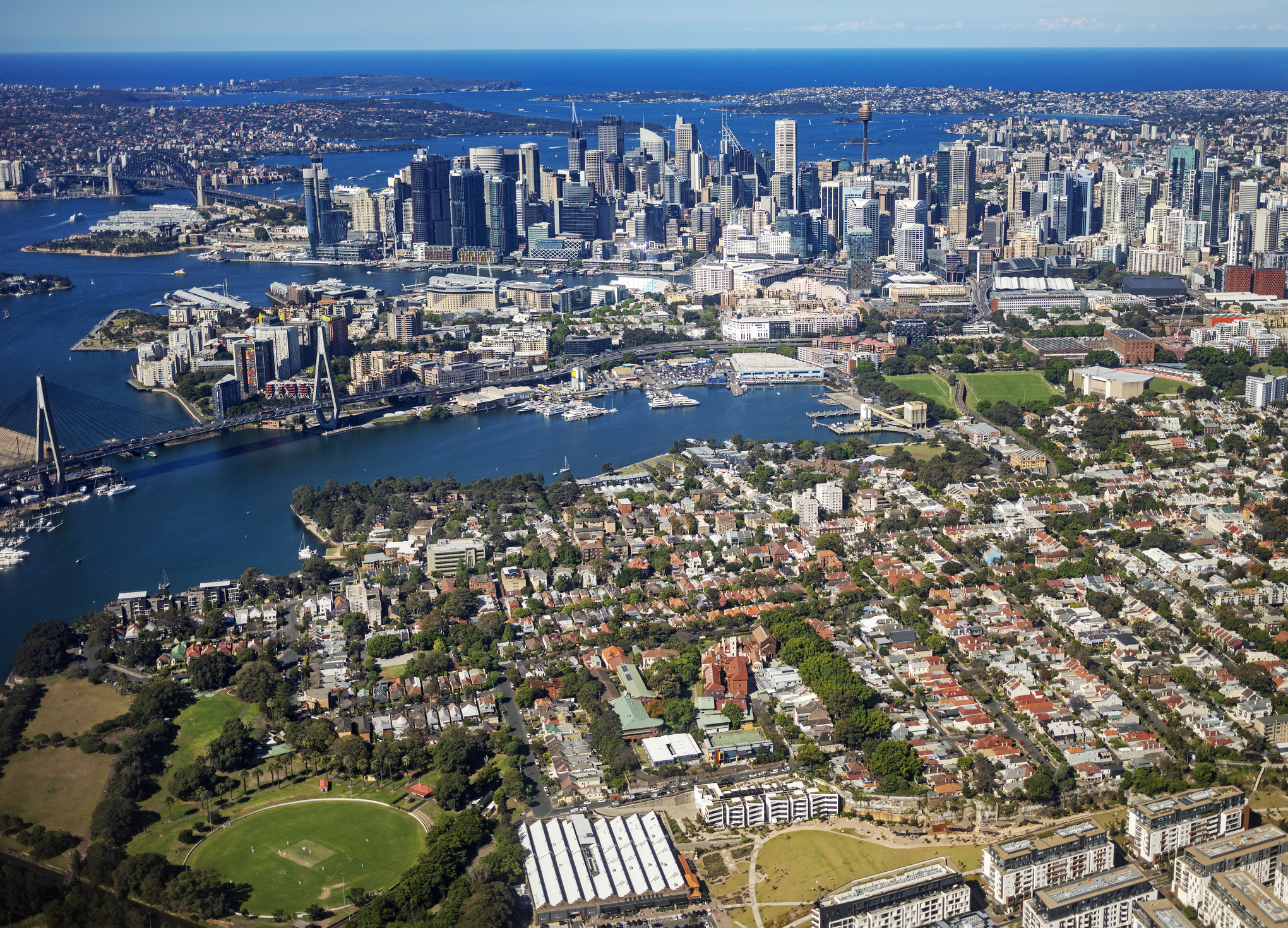
Sydney city skyline with inner suburbs of Glebe and Pyrmont, Australia, aerial photography

Predicted increases in value signals strength in local property market.

Q2 Earnings Deliver, But Markets Are Looking Beyond the Numbers

Second-quarter earnings are beating expectations at one of the fastest rates in years, with major banks leading the way. But as markets set a higher bar, company outlooks are proving just as important as financial results. While strong guidance is rewarding stocks, cautious forecasts from companies like Citigroup and IBM have triggered sharp market reactions, highlighting a growing focus on future growth over past performance.

Mon, Jul 20, 2026 2 min

The second-quarter earnings season has begun with expectations at their highest level in years. Analysts expect S&P 500 profits to grow around 23.6% from a year ago. What makes that unusual is that analysts normally trim their forecasts as a quarter unfolds. This time they raised them, and more companies issued upbeat guidance than at any point in a decade.

The early results are clearing that bar. Nearly nine in ten of the first companies to report have beaten their earnings forecasts. FactSet’s model, based on how reporting seasons typically unfold, suggests actual growth could land near 29%, the strongest since late 2021.

Nagham Hassan, Market Analyst at eToro, said: “This earnings season is showing that beating estimates alone is no longer enough. Expectations have been raised significantly, meaning investors are placing far greater weight on what management says about the quarters ahead. Markets are increasingly rewarding confidence and future growth, rather than simply strong historical results.”

The banks opened the season strongly. JPMorgan, Bank of America, Wells Fargo, Citigroup and Goldman Sachs all beat estimates, with Goldman delivering the strongest surprise. Trading revenues benefited from heightened market volatility following geopolitical tensions in the Middle East, while investment banking continued to gain momentum amid record levels of merger and acquisition activity. Softer-than-expected US inflation data also supported investor sentiment, helping shares of Goldman Sachs and JPMorgan move higher following their results.

Citigroup, however, highlighted how sensitive markets have become to forward guidance. Despite posting its strongest quarterly revenue in a decade and comfortably beating expectations, the stock declined after management maintained its full-year profitability target of 10–11%, despite already generating a 13% return on equity during the quarter.

“Citigroup’s reaction demonstrates that guidance is now driving share price performance more than the earnings beat itself. When expectations are already high, investors need reassurance that strong performance can continue.”

IBM illustrated the same theme from the opposite direction. The company narrowly missed expectations in its preliminary results and saw its shares fall sharply after management said customers had accelerated hardware purchases ahead of expected price increases, leaving less spending available for its mainframe business.

The impact extended well beyond IBM. Shares of Accenture, Salesforce, ServiceNow and Adobe also came under pressure as investors questioned whether higher spending on hardware could begin weighing on enterprise software budgets. While some of those stocks recovered part of their losses, the market is still assessing whether the weakness reflects a company-specific issue or a broader shift in technology spending.

Looking ahead, the energy sector is expected to deliver the strongest earnings growth this quarter, supported by oil prices remaining above last year’s levels. Technology is forecast to follow, driven largely by semiconductor companies. Meanwhile, the Magnificent Seven are still expected to outpace the broader market, although by a much narrower margin than in previous quarters, contributing to increased investor interest in sectors such as financials and healthcare.

“The busiest weeks of earnings season are still ahead, but the early pattern is already clear. Companies need to do more than outperform forecasts—they need to convince investors that momentum will continue. In this environment, outlooks are proving just as important as the numbers themselves.”

MOST POPULAR

Parts for iPhones to cost more owing to surging demand from AI companies.

5 MOST EXPENSIVE PROPERTIES OF 2021

The largest single-dwelling sales of the calendar year.

IMF says UAE economy remains resilient despite regional tensions

The IMF has praised the UAE’s economic resilience following its latest consultation visit, highlighting the country’s strong financial system, effective policy response, and ability to withstand regional geopolitical challenges. The Fund also commended the UAE’s banking sector, fiscal strength, and proactive measures that continue to support economic stability and investor confidence.

Mon, Jul 20, 2026 3 min

The International Monetary Fund (IMF) staff team concluded its visit to the UAE, which took place from 7th to 16th July 2026.

The visit included discussions on the latest economic and financial developments, the future outlook, and the policy priorities of the relevant authorities, as well as preparations for the 2026 Article IV Consultation Mission.

Khaled Mohamed Balama, Governor of the Central Bank of the UAE (CBUAE) and Governor for the UAE at the IMF, emphasised the importance of the consultations in strengthening communication, exchanging views on the latest economic and financial developments in the UAE, and discussing priorities of mutual interest during the meeting His Excellency chaired with the IMF staff team.

Balama said, “These consultations provide an important platform for strengthening our existing cooperation with the IMF and exchanging views on the latest developments and future priorities. We also value the close cooperation among the relevant entities in the UAE and remain committed to reinforcing monetary and financial stability, while strengthening the financial system’s preparedness and capacity to keep pace with the regional and global changes and developments. The positive outcomes of the visit reaffirm the resilience of the UAE economy and the soundness of its financial sector.”

The IMF staff team commended the notable resilience demonstrated by the UAE economy amid geopolitical developments in the Middle East, supported by sound economic fundamentals, ample buffers, in addition to swift response and targeted support measures.

Said Bakhache, Head of the IMF staff team, said, “The UAE economy has demonstrated significant resilience amid the geopolitical conflict in the Middle East. Sound fundamentals, ample policy buffers, advanced preparedness, and a swift policy response have contained the overall impact of the shock. The authorities’ timely and well-targeted support measures have helped preserve financial stability, safeguard essential supply chains, support affected sectors and households, and sustain market confidence, underscoring the UAE’s institutional capacity to navigate a major external shock.”

The staff team confirmed that the UAE banking sector maintains strong levels of capital and liquidity, with credit continuing to grow, supported by the robust financial positions established by banks ahead of the regional developments.

The staff team also highlighted the role of the CBUAE’s “Proactive Financial Institution Resilience Package”, launched in mid-March, in supporting financial sector stability, enhancing the preparedness of financial institutions, and enabling them to continue their operations and deliver services efficiently.

The staff team noted that the resilience of trade, aviation and logistics activities, together with the continued strength of domestic demand, supported economic activity and limit the impact of regional developments. The staff team also expects the fiscal balance to remain in surplus, supported by higher oil prices, a forward-looking approach to budgeting and strong policymaking, while low levels of public debt provide ample fiscal space.

The CBUAE led the national working group responsible for the visit, managed strategic coordination with federal and local entities, and prepared the work programme.

In preparation for the visit, the CBUAE organised a workshop for the relevant entities, during which the objectives of the consultations were presented, thereby enhancing the entities’ preparedness and ensuring coordinated participation.

The staff team’s visit to the CBUAE also included a tour of the Cybersecurity Operations Centre, where it was briefed on the CBUAE’s cybersecurity framework and the mechanisms used to leverage artificial intelligence to enhance operational efficiency, support risk management and develop institutional capabilities.

At the conclusion of the visit, Khaled Mohamed Balama chaired the closing meeting of the staff team, during which the key outcomes of the meetings were reviewed and the latest developments were discussed.

He directed that the existing cooperation with the IMF be continued, coordination among national entities be strengthened, and the outcomes of the visit to support the strength and competitiveness of the UAE’s economic and financial ecosystem.

MOST POPULAR

Two coming 2027 models – the first of the “Neue Klasse” cars coming to the U.S. early next year – have been revealed.

The market is forced to confront the impact of COVID lockdowns.

Wall Street Traders Are Having Their Best Year Ever

Wall Street’s biggest banks are on track for record trading revenues in 2026, fueled by booming investor activity, surging AI-driven markets, and record stock trading volumes. JPMorgan, Goldman Sachs, Morgan Stanley, Bank of America, and Citigroup could collectively generate around $180 billion in trading revenue if the current pace continues.

By Ben Glickman and Krystal Hur
Thu, Jul 16, 2026 4 min

Investors can’t stop piling more money into stock-market bets. Wall Street is making a killing on it.

JPMorgan Chase JPM 1.17%increase; Goldman Sachs GS 1.06%increase; and the other three biggest banks on Wall Street are on pace to have their best trading years ever, after a second-quarter boom in activity.

In the past, such gargantuan hauls for trading desks have been a sign of turmoil in the markets. For several banks, the previous record-trading year was 2009, when the market was going haywire.

This time around, stocks are near all-time highs, volumes are up and individuals can’t get enough action, even as wars and artificial-intelligence exuberance keep investors on their toes. Massive hedge funds, from quant firms to multimanager giants, trade at rapid clips, as do individuals who have crowded into ever more high-octane fare such as short-dated options and turbocharged exchange-traded funds. Even the president has accounts making thousands of trades a quarter.

Together, JPMorgan, Goldman, Morgan StanleyBank of America and Citigroup are on track to log some $180 billion in trading revenue in 2026 if they continue at their current pace, according to a Wall Street Journal analysis.

“Clearly markets revenues in general have been quite elevated and strong for some time,” JPMorgan CFO Jeremy Barnum told analysts. “The market is clearly extremely risk-on, and we’re kind of takers of that.”

Others on the street have benefited, too. Citadel Securities, a large market maker, brought in a record $4.3 billion in trading revenue in the first quarter. The company saw record average daily volumes of stocks traded by individual investors in May and June, with volumes more than double levels seen in 2024, according to Scott Rubner, head of equity and equity derivatives strategy at Citadel Securities.

And BlackRock, the world’s biggest asset manager, gathered another $192 billion in assets during the last three months, bringing it to a record $15 trillion, as its clients pour funds into investing.

“I’m very optimistic on the outlook for global markets,” CEO Larry Fink said.

For the big banks, trading was the standout even in a banner start to the year. Second-quarter revenue from markets was up about 38% for the group of the biggest banks from a year earlier; it increased 33% at Bank of America, 54% at Goldman Sachs and 35% at JPMorgan.

Banks’ clients appeared especially interested in stock bets, where the group’s revenue shot up 71% from a year ago. JPMorgan’s equities markets revenue was up 86%, while Goldman’s was up 72%.

“Everything is good and equity trading is off the charts,” wrote Oppenheimer analyst Chris Kotowski.

The figures put Goldman Sachs and Citigroup on track to surpass their previous annual records for trading revenue for the first time since just after the financial crisis.

Shares of Goldman, Morgan Stanley and Bank of America each hit all-time highs this week, as did their benchmark index, the KBW Nasdaq Bank Index. And JPMorgan is close to becoming the first U.S. bank to surpass $1 trillion in market value.

The banks are benefiting from a marketwide surge as their trading desks facilitate buying and selling of stocks, bonds, commodities and foreign currencies on behalf of clients, earning a fee in the process.

U.S. average daily trading volumes of options and equities reached records of around 73 million contracts and 20 billion shares, respectively, during the second quarter, according to Jackson Gutenplan, market structure research analyst at Bloomberg Intelligence.

There have been plenty of reasons for investors to keep trading. The AI frenzy has helped the S&P 500 index notch 24 record closes this year. The initial public offering of SpaceX, the biggest IPO ever, saw explosive demand from investors, while volumes of options tied to SpaceX broke records within hours of their debut. Strong earnings growth and a resilient economy have kept everyday Americans in the stock market and off the sidelines.

Executives and analysts say that institutional clients are now constantly repositioning their portfolios reacting to major geopolitical events and dramatic market volatility, seeking to cash in on big gains and protect themselves from a potential drop. A fervor for AI stocks and related industries has also been a boon.

Goldman’s CFO Denis Coleman pointed to elevated market dispersion, or the divergence between the performance of individual stocks. Single-stock volatility recently rose to levels not seen since the end stages of the dot-com bubble in the 1990s, spurred by violent swings in tech stocks such as Micron Technology and Advanced Micro Devices, according to analysts at Bank of America Global Research.

While moves in stock indexes have been relatively calm, trading has been more frenzied at the single-stock level, an environment that has led clients to seek help in managing their portfolios, Coleman said on the company’s earnings call on Tuesday.

Brian Moynihan, Bank of America CEO, attributed the surge in stock-trading revenues to the AI boom, including an increase in activity in Asian markets. “A lot of it over the last 12 months has been the buildup of AI, especially outside the United States, and the activity of those markets picking up,” he said Tuesday on CNBC.

Banks get vanishingly small margins on each trade, and they have been continuing to compress in recent years—meaning desks now are pushing to increase volumes in order to boost revenue.

Banks have also been extending more loans to trading clients so that they can make bigger bets.

Goldman Sachs reported that equities financing revenue was up 91% in the second quarter from the prior year, outpacing its business facilitating trades for clients and setting a quarterly record. JPMorgan said it dedicated more of its balance sheet to financing equity trades.

Corrections & Amplifications

Bank of America’s trading revenue rose 33% in the second quarter from a year ago, while the group of five big banks saw a roughly 38% increase. An earlier version of this article incorrectly said Bank of America’s revenue rose 64%, leading the whole group to rise by about 42%.

MOST POPULAR

New research suggests that bonuses make employees feel more like a mere cog in a wheel.

5 Luxury Brisbane Apartments

Inside the Queensland capital’s most elevated residences.

0
    Your Cart
    Your cart is emptyReturn to Shop