



The AI Boom Is Coming for Apple’s Profit Margins
Parts for iPhones to cost more owing to surging demand from AI companies.
Apple has dominated the electronics supply chain for years. No more.
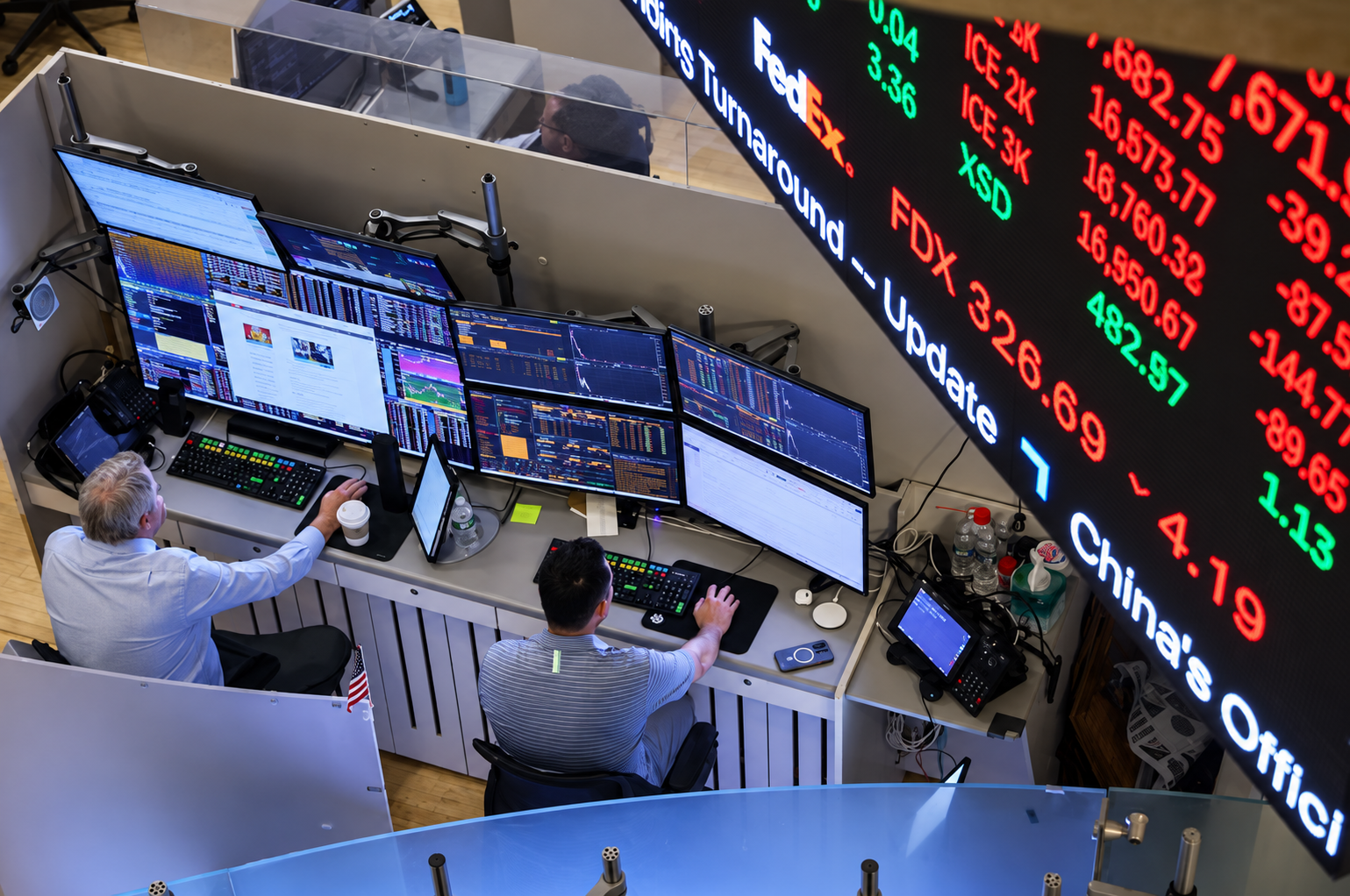
Artificial-intelligence companies are writing huge checks for chips, memory, specialised glass fibre and more, and they have begun to out-duel Apple in the race to secure components.
Suppliers accustomed to catering to Apple’s every whim are gaining the leverage to demand that the iPhone maker pay more.
Apple’s normally generous profit margins will face pressure this year, analysts say, and consumers could eventually feel the hit.
Chief Executive Tim Cook mentioned the problem in a Thursday earnings call, saying Apple was seeing constraints in its chip supplies and that memory prices were increasing significantly.
Those comments appeared to weigh on Apple shares, which traded flat despite blowout iPhone sales and record company profit.
“Apple is getting squeezed for sure,” said Sravan Kundojjala, who analyses the industry for research firm SemiAnalysis.
AI chip leader Nvidia recently became the largest customer of Taiwan Semiconductor Manufacturing , or TSMC, Nvidia Chief Executive Jensen Huang said on a podcast.
Apple had been TSMC’s biggest customer by a wide margin for years. TSMC is the world’s leading manufacturer of advanced chips for AI servers, smartphones and other computing devices.
Spokesmen for Apple and TSMC declined to comment.
The big computers that handle AI tasks don’t look like the smartphones consumers own, but many companies supply components for both. In particular, memory chips are in short supply as companies such as OpenAI, Alphabet’s Google, Meta , Microsoft and others collectively spend hundreds of billions of dollars to build AI computing capacity.
“The rate of increase in the price of memory is unprecedented,” said Mike Howard , an analyst for research firm TechInsights.
That applies both to the flash memory chips that store photos and videos, called NAND, as well as the memory used to run apps quickly, called DRAM.
By the end of this year, the price of DRAM will quadruple from 2023 levels, and NAND will more than triple, estimates TechInsights.
Howard estimates that Apple could pay $57 more for the two types of memory that go into the base-model iPhone 18 due this fall compared with the base model iPhone 17 currently on sale. For a device that retails for $799, that would be a big hit to profit margins.
Apple’s purchasing power and expertise in designing advanced electronics long made it an unrivaled Goliath among the Asian companies that make most of the iPhone’s parts and assemble the device.
Apple spends billions of dollars a year on NAND, for instance, according to people familiar with the figures, likely making it the single biggest buyer globally. Suppliers flocked to win Apple’s business, hoping to leverage its know-how and prestige to attract other customers.
These days, however, “the companies now pushing the boundaries of human‑scale engineering are the ones like Nvidia,” said Ming-chi Kuo, an analyst with TF International Securities.
Demand for AI hardware is poised to keep growing rapidly. Apple’s spending growth is modest in comparison with what is being spent to fill up AI data centers, even though it is breaking records with huge sales of the iPhone 17.
Samsung Electronics and SK Hynix are raising the price of a type of DRAM chip for Apple, according to people familiar with Apple’s supply chain.
Big AI companies pay generously and are willing to lock in supply and make upfront payments, giving the South Korean chip makers leverage against the iPhone maker.
Apple signs long-term contracts for memory, but it has used its heft to squeeze suppliers.
Its contracts have empowered it to negotiate prices as often as weekly, and to even refuse to buy any memory from a supplier if Apple didn’t view the price as favorable, according to people familiar with its memory purchases.
To boost leverage with suppliers, Apple even began stocking more inventory of memory. That was atypical for Cook, who normally cuts inventory to the bone to maximize Apple’s cash flow.
Apple is fighting not only for current deliveries but also for the attention of engineers at suppliers.
Glass scientists who worked on developing the smoothest and lightest smartphone displays are now also spending time on specialised glass for packaging advanced AI processing chips, according to industry executives.
Makers of sensors and other gizmos inside the iPhone are winning new business from AI companies such as OpenAI that are developing their own hardware.
Still, suppliers said they were far from giving up on business with Apple. Working with Apple is a form of education, they said, because it remains one of the most demanding and disciplined customers in the industry.
TSMC, the Taiwanese chip manufacturer, has built successive generations of its most advanced chips with Apple as its lead customer, relying on the big predictable demand for iPhones.
Now that TSMC is doing more business with Nvidia and other AI companies, people with knowledge of the chip supply chain said Apple was exploring whether some lower-end processors could be made by someone other than TSMC.
One of Apple’s biggest profit-spinners is selling extra memory for far more than the memory chips cost the company.
Last fall Apple discontinued the iPhone Pro model with 128 gigabytes of storage.
Customers who want that model must now start at 256 gigabytes and pay $100 more—the type of move that could be repeated this year to help Apple offset higher costs, wrote Craig Moffett, an analyst at Moffett Nathanson, in an investor note.
However, Apple isn’t expected to raise the price of its next iPhone models over similarly equipped iPhone 17s, said Kuo, the analyst.
News Corp, owner of The Wall Street Journal, has a commercial agreement to supply news through Apple services.
Fitch Ratings warned that ongoing regional conflict are increasing pressure on Middle East credit ratings, disrupting supply chains and raising economic risks across the GCC. While no issuer downgrades have been recorded so far, several ratings have been placed on negative watch regarding several sectors.
Qatar Investment Authority (QIA) has joined as an anchor investor in the capital increase of Greece’s Public Power Corporation (PPC), reinforcing its strategy of investing in long-term infrastructure and energy transition opportunities. The oversubscribed offering raised €4.25 billion and supports PPC’s expansion across renewable energy, grid modernization, and data center development in Southeastern Europe.
Stablecoins are increasingly being positioned as the future of digital payments, promising faster and more efficient transactions than traditional banking systems. But as governments move to regulate the sector and bring crypto further into the mainstream, concerns remain over financial stability, market fragmentation, and the risks tied to privately issued digital money. With adoption growing globally, the debate is shifting from whether stablecoins will survive to how they can be integrated safely into the broader financial system.
The AI-driven chip rally still has room to run, according to analysts, with companies such as Nvidia, AMD, Broadcom, Taiwan Semiconductor, and Micron positioned to benefit from surging demand for AI infrastructure. While concerns over valuations and market exuberance persist, growing investment in AI data centers and the rise of AI agents are expected to support long-term growth across the semiconductor sector.
Chip stocks used to be the gritty part of the tech complex. In trading patterns and profit margins, they had more in common with cyclical commodities than software. But as with so many things, artificial intelligence changed everything. Almost overnight, chips became the accelerant for the technology—and the market.
Supply constraints compounded the excitement. During one stretch this spring, the PHLX Semiconductor Sector Index, or SOX, rose for 18 straight days, for a gain of 47%. The index is up 80% since March 30, leading to worries about a new dot-com-style bubble with chips looking like the 2026 version of fiberoptic stocks.
Indeed, the gains have been indiscriminate. While Nvidia is up 30%, low-margin chip makers like On Semiconductor and STMicroelectronics have each risen 122%.
These stocks trade at huge multiples of earnings, way above historical trends, while Nvidia looks cheap by any historical measure.
“The multiples cannot all be accurate,” Gavin Baker, chief investment officer of Atreides Management, says of the wide range of price/earnings ratios across the AI landscape. “You have memory makers at low- to mid-single-digit P/Es, you have Nvidia at a low P/E, you have other accelerator companies at reasonable multiples. And then most everything else—power, cooling, optical, and semi-cap equipment—are at dramatically higher multiples.”
The disconnect sets up an opportunity for investors. As the market corrects its math, the quality names should outperform. Investors should focus on Advanced Micro Devices, Broadcom, Taiwan Semiconductor Manufacturing, and, yes, $5 trillion Nvidia.
In the world of semiconductors, quality means having technological advantages that are durable and enable better products and high gross margins. Quality also means having nimble executives who can identify and react to changes in a fast-moving environment. Think Nvidia’s Jensen Huang and Broadcom’s Hock Tan. The quality focus becomes more important as subsidized Chinese manufacturers increase the supply of chips made using older technologies.
All indications point to accelerating demand for AI computing. This year, the five so-called hyperscalers— Microsoft, Amazon.com, Google parent Alphabet, Meta Platforms, and Oracle —could combine to spend over three-quarters of a trillion dollars on AI data centers.
Even after its massive expenditures, Microsoft recently said its cloud-computing capacity was so constrained that it had to forsake external cloud sales to run its own operations.
But the demand trend is shifting, and investors need to pay attention to the nuances.
Early in the AI boom, growth was tied to training new models, a slow, resource-intensive process. Now workloads are moving toward running those models, a process known as inference.
The inference trend is being supercharged by the rise of AI agents, software that can use AI models to complete a complex series of tasks from a simple conversational prompt. Agents chew through computing at a rate no person could match. If predictions are correct, it won’t be too long before they outnumber humans on enterprise networks.
Nvidia already won the battle for training, but inference opens the door to new competition. Moreover, agents are software and run on traditional server central processing units, or CPUs, which should also see increasing demand in the coming years.
Even AI can’t change the fundamentally cyclical nature of semiconductors, but it can—and will—lengthen the cycle. Right now, anyone close to the AI supply chain will tell you that the industry is nowhere close to satisfying demand. That’s why Micron Technology has seen its forward P/E multiple expand from an industrial-like single-digit figure. It’s still undervalued. So are the shares of Nvidia, AMD, Broadcom, and Taiwan Semi.
Relative to expected earnings growth over the next two years, all five stocks trade at a PEG, or price-to-earnings growth ratio, of less than 0.6 times. By comparison, the S&P 500 index fetches a two-year PEG of 1.
All five companies are pillars of the new economy—ones that have lasting value and staying power, even as the momentum inevitably fades from the broader chip trade.
Nvidia has been developing hardware and software tools for AI computing for nearly two decades, giving it the pole position when generative AI caught fire. Adjusted earnings per share have grown from 33 cents in fiscal 2023 to $4.77 in fiscal 2026, which ended in January. Over the next two years—a critical period in the AI transition—Wall Street analysts expect Nvidia’s EPS to hit $12.37, giving the stock a P/E of 17 times.
Nvidia’s graphics processing unit chips, or GPUs, are the workhorses of AI computing, and they’re the company’s main source of sales. Just as important, though, is the company’s two-decade focus on AI bottlenecks.
Following the successful launch of its Palais Collection, MAISON de SABRÉ has unveiled a new modular handbag system offering more than 720 styling combinations.
Many of the most-important events have slipped from our collective memories. But their impacts live on.
With US$40 million already committed, the Global Talent Fund is attracting investor attention with a strategy focused on building globally scalable consumer brands alongside high-profile talent.
A new investment fund targeting celebrity-founded consumer brands has secured US$40 million in commitments and is rapidly approaching its US$50 million fundraising target, signalling growing investor appetite for alternative opportunities beyond traditional asset classes.
The Global Talent Fund, which has a maximum raise of US$100 million, focuses on building and investing in consumer businesses alongside celebrities, athletes, and influential personalities who play an active role as co-founders rather than simply endorsing products.
The strategy is based on the belief that changes in consumer behaviour, particularly the rise of social media and digital engagement, have fundamentally altered how brands are built and scaled.
GTF founding partner Jeremy Hunt, who is helping lead the fund\’s strategy, said consumers increasingly feel connected to personalities they follow online and are more willing to support products developed by those individuals.
\”Consumers are searching for content to engage with, and when a celebrity they like or follow takes them on the journey of creating a product or brand, they genuinely feel part of that process,\” he said.
The fund is targeting high-growth consumer sectors including wellness, hydration, beauty and recovery, areas Hunt believes continue to benefit from strong global demand and ongoing innovation.
Rather than backing celebrity endorsement deals, the fund is seeking businesses where talent is deeply involved in product development, brand creation and long-term growth.
According to Hunt, authenticity remains one of the biggest differentiators between successful celebrity-backed brands and those that fail.
\”The consumer can see clearly if someone is simply being paid to promote a product,\” he said. \”The winners are typically the brands where the celebrity has genuinely helped build the business from the ground up.\”
The model has attracted support from several prominent Australian investors and business families, reflecting broader interest in alternative investments with global growth potential.
Hunt said consumer brands offered a level of tangibility that many investors found appealing.
\”Consumer brands are what we touch, feel, smell and taste every day,\” he said. \”Our investors understand the growth potential in the model, but they also want to be part of the journey.\”
The fund\’s rapid progress towards its fundraising target comes amid growing recognition that celebrity influence, when combined with strong commercial execution and scalable business models, can create significant enterprise value.
With several high-profile celebrity-founded businesses generating billion-dollar exits in recent years, supporters of the strategy believe the opportunity remains in its early stages.
Following the successful launch of its Palais Collection, MAISON de SABRÉ has unveiled a new modular handbag system offering more than 720 styling combinations.
New research suggests that bonuses make employees feel more like a mere cog in a wheel.
Major U.S. banks remain upbeat about second-quarter performance despite geopolitical tensions, higher fuel prices, and ongoing disruptions in the Strait of Hormuz. Strong trading, investment banking, lending activity, and rising AI-related investment are helping drive revenue growth, while resilient consumer spending continues to support the sector.
Big banks’ profit engines are humming along even as geopolitics keep threatening to gum up the works.
Several of the nation’s largest lenders this week gave investors updates on how their businesses have fared in the second quarter, and the consensus was overwhelmingly positive.
That is despite blockages in the Strait of Hormuz continuing during the period, and a succession of false starts on Iran peace talks that have whipsawed markets. Higher gasoline prices have started to seep into other parts of the economy, and consumer sentiment has reached all-time lows.
But from where banks sit, dealmaking, trading and lending appear to all be going as planned.
“It’s gung ho,” said JPMorgan Chase Chief Executive Jamie Dimon. “There’s a lot of exuberance out there.”
Dimon said his bank might even slightly outperform the 11% and 10% increase in markets and investment-banking revenue, respectively, that analysts are expecting for the current quarter. Guidance for net interest income, a measure of profit in a bank’s core lending business, is unchanged for the bank, Dimon said.
Wall Street has been raking in bigger profits under President Trump, with uncertainty over his tariffs and other policies driving up market volatility and revenue on trading desks. Dealmaking has also sprung back to life, generating more fees for investment-banking divisions.
Banks are also benefiting from the mad dash by companies to invest in infrastructure and technology related to artificial intelligence, executives said.
Goldman Sachs President John Waldron told investors that merger-and-acquisition volume was on track to be near or break the record set in 2021, and that the volume of initial public offerings was up about 80% so far this year. Waldron added Goldman was working on large infrastructure financings that would rank among the biggest transactions involving the bank.
Wall Street has been fixated on the coming IPO of Elon Musk’s SpaceX, which is expected to generate hundreds of millions in fees with a valuation north of $1.5 trillion. Also on the horizon are public-market debuts for artificial-intelligence behemoths Anthropic and OpenAI, at similarly eye-catching valuations.
Consumer spending appears to be holding up, too, despite souring sentiment.
Bank of America CEO Brian Moynihan said his bank is seeing consumers continuing to spend, including on travel and restaurants, despite dealing with higher gas prices. He said the company expects second-quarter sales and trading revenue to be up about 15% from the same quarter last year.
“Things are still extremely, extremely strong,” said Wells Fargo CEO Charlie Scharf, referring to consumers. “It’s really hard to find pockets of weakness in the actual results, put aside surveys of how people are feeling for a second.”
Scharf said loan growth was outperforming expectations from the start of the year. Wells Fargo’s markets and investment-banking revenue were both expected to increase by percentages in the midteens from a year earlier, he said.
Many of the most-important events have slipped from our collective memories. But their impacts live on.
Paine Schwartz joins BERO as a new investor as the year-old company seeks to triple sales.
Fitch Ratings warned that ongoing regional conflict are increasing pressure on Middle East credit ratings, disrupting supply chains and raising economic risks across the GCC. While no issuer downgrades have been recorded so far, several ratings have been placed on negative watch regarding several sectors.
The war and effective closure of the Strait of Hormuz have disrupted economic activity, but the negative rating actions for Middle East issuers for the March-April period were limited to outlook revisions and placements on the Rating Watch, stated a new report from Fitch Ratings.
The Middle East has been subject to heightened uncertainty and disruption since end-February, due largely to the war. There have been no Middle East issuer downgrades since end-February, but Fitch has placed several ratings on Rating Watch Negative and revised some Outlooks to Negative from Stable, or to Stable from Positive.
These actions point to the persistence of significant risks around the war that, if crystallized, could lead to broader rating downgrades.
The effective closure of Hormuz has led to supply chain disruptions. These have been exacerbated by damage to Qatar’s LNG infrastructure and volatile funding conditions in the region, said Fitch in its statement.
Fitch recently revised its 2026 base-case brent oil price assumption to $87/barrel. This is now based on an assumption that the strait will begin reopening around July, extending the closure to about five months, from one to two months expected previously.
Oil prices average about $100/barrel in 2026 under Fitch’s adverse scenario, with Hormuz not returning to near normal flows until later in Q3 or possibly early Q4. The scenario highlighted material risks to several sectors in the Gulf Cooperation Council (GCC), including airlines, hotels, chemicals and homebuilders.
The ability of hydrocarbon producers to increase revenue and margins due to higher prices is conditional on their independence from Hormuz.
The ratings of 85% of GCC banks and of many corporate government-related entities in the region rely on sovereign support. These ratings are therefore likely to move in tandem with the Issuer Default Ratings of the relevant sovereigns.
Following the successful launch of its Palais Collection, MAISON de SABRÉ has unveiled a new modular handbag system offering more than 720 styling combinations.
Two coming 2027 models – the first of the “Neue Klasse” cars coming to the U.S. early next year – have been revealed.
Qatar Investment Authority (QIA) has joined as an anchor investor in the capital increase of Greece’s Public Power Corporation (PPC), reinforcing its strategy of investing in long-term infrastructure and energy transition opportunities. The oversubscribed offering raised €4.25 billion and supports PPC’s expansion across renewable energy, grid modernization, and data center development in Southeastern Europe.
Qatar Investment Authority (QIA) announced Monday its participation as an anchor investor in the share capital increase of Public Power Corporation S.A. (PPC), the leading integrated energy group across the broader Southeastern Europe, listed on the Athens Stock Exchange.
The offering was multiple times oversubscribed, raising 4.25 billion euro from primary shares and an additional 250 million euro through a secondary placement of treasury shares, priced at 18.63 euro per share.
The share capital increase was supported by cornerstone investments from the Greek state, which subscribed for approximately 1.3 billion euro, and Aeolus Holdings S.a r.l., an entity owned by funds advised by CVC Advisers Greece S.M.S.A. and/or its affiliates, which subscribed for approximately 1.2 billion euro.
The new shares, each with a nominal value of 2.48 euro, attracted significant demand from a number of global, long-term institutional investors as well as K Group Capital Partners, the private equity fund controlled by the Kyriakou family, which has QIA as a strategic partner and focuses on investment activities in Greece.
QIA and K Group Capital Partners, discussed the opportunity for this investment during the recently held Europe Gulf Forum in Greece.
QIA’s participation reflects its strategy of deploying patient, long-term capital into essential infrastructure and businesses well-positioned to benefit from structural trends, including the global energy transition.
As a strategic platform at the forefront of Greece’s energy transition, energy security and infrastructure modernization, PPC is uniquely positioned to lead the energy transition in Southeastern Europe through targeted investments in renewables, flexible generation, distribution network modernization, and data center development.
The investment also reinforces QIA’s broader commitment to Greece as well as expanding the collaboration with K Group Capital Partners.
Many of the most-important events have slipped from our collective memories. But their impacts live on.
Parts for iPhones to cost more owing to surging demand from AI companies.
Stablecoins are increasingly being positioned as the future of digital payments, promising faster and more efficient transactions than traditional banking systems. But as governments move to regulate the sector and bring crypto further into the mainstream, concerns remain over financial stability, market fragmentation, and the risks tied to privately issued digital money. With adoption growing globally, the debate is shifting from whether stablecoins will survive to how they can be integrated safely into the broader financial system.
“Private money” sounds like an oxymoron. Surely the currency on which our economy runs is the epitome of a public good?
In fact, the U.S. has had private money before, in the 1800s. And private money is now making a comeback, in the form of stablecoins: cryptocurrencies intended to maintain a fixed value against the dollar.
To proponents, stablecoins are crypto’s killer app. They will make payments faster and more efficient, especially across borders, than the legacy banking system makes possible.
With that promise, though, comes the risk that this could lead to a financial crisis, much like some past experiments with private money.
Both the Genius Act, signed into law last year, and the Clarity Act now making its way through the Senate, aim to make stablecoins safer and more mainstream. But no legislation can fully remove risk that is intrinsic to the design of stablecoins.
Stablecoin issuers and affiliated platforms are private enterprises driven to increase usage and profit via the assets they hold to back their coins, the “rewards” they pay to users, and the sorts of activity they tolerate.
Of course, profit and risk-taking are core to how all innovation happens, and that’s a good thing. In finance, though, innovation routinely leads to excesses that can lead to a sudden loss of confidence, runs and contagion that spills over to the broader economy.
Money serves several purposes: a store of value, a unit in which to price transactions, and a medium to carry out those transactions. U.S. dollars meet all these criteria. Today, the Federal Reserve controls the issuance of dollars.
But nothing bars private actors from trying to create their own versions of money. Crypto long aspired to be just that. But the first cryptocurrencies such as bitcoin weren’t backed by anything, and thus their value fluctuated wildly.
Stablecoins back themselves with tangible assets such as Treasury bills that can be sold to redeem coins one for one for dollars. CoinMarketCap puts stablecoins outstanding at roughly $300 billion, led by Tether ($190 billion) and Circle ($76 billion).
Stablecoins promised the best of both public and private money: as interchangeable and reliable as dollars but, thanks to the blockchain, faster and cheaper than the dollar-based banking system.
But that promise embodies a contradiction. “Stablecoins attempt to import credibility from public money while operating outside the established settlement system,” Pablo Hernández de Cos, general manager of the Bank for International Settlements, noted in a recent speech.
An essential quality of money is “singleness,” meaning a dollar must always equal a dollar no matter when, where or with whom it is used. Bank deposits are a form of private money, but because banks can borrow from the Federal Reserve to redeem deposits, and dollars move between banks via the Fed, their dollars exhibit singleness.
By contrast stablecoins move through proprietary, fragmented infrastructures. They don’t exhibit singleness. Though coins issued by Tether and Circle are intended to stay fixed to the U.S. dollar, they often deviate from that value, albeit usually by tiny amounts.
Unlike the Fed, stablecoins seek to make a profit. One way is by expanding usage, such as by paying interest, as bank deposits do. The Clarity Act would prohibit payment of deposit-like interest, but permit rewards based on usage.
Historically, crypto has pushed the legal envelope, and may design rewards to mimic interest without violating the law. “I don’t see any reason they’d completely change their tactics and become conservative about interpreting the law when that has not been the pattern thus far,” said Molly White, who writes the Citation Needed newsletter on crypto and technology policy.
Stablecoins also have an incentive to “reach for yield,” that is to back their coins with slightly riskier or less liquid assets with higher returns. But if those assets’ value declines, stablecoins may not be able to maintain par value. Holders could rush to sell or redeem, triggering forced sales of the assets and spillover to other markets, even banks.
Last year’s Genius Act requires stablecoins that cater to Americans be backed with safe, liquid assets such as treasury bills and bank deposits. But Fed governor Michael Barr noted last year the law has loopholes. The bank deposits may be uninsured. The law allows stablecoins to receive money, including foreign money, through “repo” loans, and that could include bitcoin, which El Salvador recognizes as money, Barr noted.
And the law doesn’t cover coins that operate outside the U.S. such as Tether’s main coin, dubbed USDT, though Tether has launched a compliant U.S. coin, USAT.
During the free banking era from 1837 to 1863, banks could issue their own currency. But the system was inefficient, with currency values that fluctuated against each other.
“All states maintained a range of requirements for banks to collateralize their notes, but many proved ineffective; fraud was widespread, and the system was fragmented—banknotes of one bank were often not accepted by other banks outside the local area; bank failures were widespread,” the Andersen Institute for Finance and Economics writes in a report on stablecoins. Nonbanks, such as railroad companies, issued their own currency.
Money-market funds are a type of private money, promising to redeem shares at a dollar each, on demand. But during the global financial crisis, one fund couldn’t honor that value—it “broke the buck”—because it held devalued assets. A broader panic ensued.
Those cases showed how a loss of confidence can cause the volume of private money to contract, amplifying economic stress. Fabio Natalucci, chief executive of the Andersen Institute, notes that is the opposite of public money, which is “elastic”: The Fed expands its supply at times of stress.
Stablecoins are a natural evolution of payments technology, so it makes sense to find a way to integrate them into the economy. That’s what the Genius and Clarity acts attempt to do, which stablecoin advocates hope will encourage adoption.
That really hasn’t panned out yet, though. Japan boasts a “carefully designed regulatory framework” for crypto, but yen-based stablecoins’ market cap is less than 0.01% of dollar coins’, Hernández de Cos noted.
The vast majority of stablecoins are linked to the dollar, and those are largely held outside the U.S., often as a means of skirting laws or capital controls. Stablecoins account for 84% of illicit crypto activity such as sanctions evasion and money laundering, according to Chainalysis. Trading crypto remains the primary use of stablecoins. Today, less than 1% of stablecoin usage is for real-economy payments, a Kansas City Fed study concluded.
Meanwhile, banks are beginning to offer an alternative: “tokenized deposits,” which they think offer the “singleness” of dollars with the benefits of the blockchain.
Banks, of course, have caused their share of crises, which is why over time they became so tightly regulated and integrated with the Fed. Stablecoins may have to follow the same path.
Parts for iPhones to cost more owing to surging demand from AI companies.
The sports-car maker delivered 279,449 cars last year, down from 310,718 in 2024.
EFG Holding reported strong revenue growth during Q1 2026, with revenues rising 18% year-on-year to EGP 6.6 billion, supported by solid performance across investment banking, non-bank financial services, and commercial banking operations. The group also recorded strong momentum in treasury and capital markets activity, while subsidiaries including Valu and Bank NXT delivered notable growth in revenues and profitability despite rising operating costs.
EFG Holding, Cairo-based financial services group, recorded revenues of EGP 6.6 billion ($124.8 million) for the three months ending March 31, 2026, up 18% YoY
Growth was supported by solid performance across its investment banking, non-bank financial services, and commercial banking businesses. Operating profit rose to EGP 2.5 billion, increasing 20% YoY (+37% QoQ), with an operating margin of 38%.
However, net profit fell to EGP 1.0 billion, down 14% YoY. The strong performance was mainly driven by treasury and capital markets activity. Revenues from this segment jumped 84% YoY, helped by foreign exchange gains after the Egyptian pound weakened by about 14% in March.
The investment banking division reported revenues of EGP 3.1 billion, rising 9% YoY. Brokerage activity improved, with revenues increasing 4% YoY to EGP 1.6 billion, while asset management and private equity posted steady growth.
EFG Finance, the group’s non-bank financial arm, reported revenues of EGP 1.6 billion, up 20% YoY. This growth was mainly driven by Valu, the consumer finance platform, where revenues surged 85% YoY to EGP 895 million.
Bank NXT, the group’s commercial banking unit, delivered strong results, with revenues reaching EGP 1.9 billion, up 34% YoY. Net profit at the bank rose 39% YoY to EGP 691 million, supported by strong loan growth. The bank’s loan portfolio increased 52% YoY, while deposits grew 22% YoY, keeping the loan-to-deposit ratio at 63%.
At the same time, costs continued to rise. Operating expenses increased to EGP 4.1 billion, up 16% YoY (-33% QoQ).
Following the successful launch of its Palais Collection, MAISON de SABRÉ has unveiled a new modular handbag system offering more than 720 styling combinations.
Chris Dixon, a partner who led the charge, says he has a ‘very long-term horizon’
Qatar continued to strengthen its position as a regional hub for investment and business after attracting more than 3,290 non-Qatari companies during Q1 2026, marking a 66% increase compared to the same period last year. The country also recorded growth in new commercial registrations, patents, and trademark activity, reflecting rising confidence in Qatar’s economy and its business environment focused on innovation, expansion, and long-term growth.
Qatar attracted more than 3,290 non-Qatari companies during the first quarter (Q1) of 2026, reflecting growing international confidence in the country’s investment environment and economic outlook.
In a post on its X platform, the Ministry of Commerce and Industry (MoCI) released the new data showing strong growth across foreign investment commercial registrations, and intellectual property indicators.
Foreign investment saw substantial growth during the quarter. The post revealed a total of 3,295 non-Qatari companies established operations in the country during Q1 2026, reflecting a 66% increase compared to the first quarter of 2025.
The strong increase in foreign company registrations highlights Qatar’s continued efforts to position itself as a leading regional hub for trade, investment, and commercial expansion.
Qatar’s modern infrastructure, strategic geographic location, and policies are aimed at facilitating international investment and commercial partnerships.
Meanwhile the info graphic shared with the post revealed the new commercial registrations surged by 18.5% to 6,328 in Q1 this year compared to the last year. The Commercial Affairs Sector demonstrated significant progress across its key performance indicators.
The rise reflects growing entrepreneurial activity and increasing confidence in Qatar’s business environment. It also highlights the country’s continued efforts to strengthen the investment climate and support private-sector growth.
The info grapic also showed notable progress in intellectual property protection, an area considered essential for encouraging innovation and attracting investors. A total of 43 copyrights were granted during the quarter, marking a 16% increase compared to Q1 2025.
Trademark registrations also remained strong, with 1,661 trademarks granted during Q1.
One of the most significant increase was recorded in the patents sector. The ministry reported that 145 patents were granted during Q1 2026, representing a remarkable 134% increase over the same period last year. The surge points to growing investment in research, technology, and innovation-driven industries.
The figures send a positive signal about the resilience and competitiveness of Qatar’s economy amid ongoing global economic shifts. With momentum building across multiple sectors, Qatar’s commercial and investment activity will remain strong throughout the remainder of the year.
Many of the most-important events have slipped from our collective memories. But their impacts live on.
Americans now think they need at least $1.25 million for retirement, a 20% increase from a year ago, according to a survey by Northwestern Mutual
Nvidia delivered another blockbuster quarter, beating expectations across revenue, guidance, and data centre growth, yet the market reaction remained surprisingly muted. As the AI boom matures, investors are beginning to look beyond GPUs toward the broader compute stack, including networking and CPUs, where rivals like Intel and AMD are gaining momentum. The message is clear: AI’s growth story is far from over, but the list of winners is starting to expand.
Nvidia has done it again, beating on the top and bottom line and guiding the current quarter well above Wall Street estimates, yet the share price barely moved. That tepid reaction has become the new normal for the world’s most valuable company, and it tells us exactly how high the bar has been set in the AI trade.
According to Josh Gilbert, Lead Analyst, Middle East at eToro: Revenue of USD$81.6 billion was up 85% on the same quarter last year, with the all-important data centre business pulling in USD$75.2 billion, growth of 92%. For a company of this size to still deliver that level of growth is staggering. Guidance for the July quarter came in at around USD$91 billion, comfortably ahead of the USD$87 billion consensus, while management lifted the quarterly dividend to 25 cents from 1 cent and authorised another USD$80 billion in buybacks. The buyback and dividend hike show that Nvidia wants to keep shareholders on side, even as the eye-watering share price gains of recent years become harder to repeat.
The result also showed that Nvidia’s growth story is broadening well beyond GPUs. Networking revenue came in at USD$14.8 billion, comfortably ahead of the USD$12.7 billion the Street was looking for. That’s key, because as AI factories get built out at scale, the networking layer can become a serious growth engine in its own right. At the same time, we’re also seeing the pivot into CPUs, driven by the build-out of agentic AI workloads, the next layer of the AI boom. Nvidia is still in pole position in this AI trade, but Intel and AMD lead the way on CPUs for now, with both stocks more than doubling this year as investors price in the shift. As agentic AI takes off, the value is going to spread across more of the compute stack, not just GPUs.
This result tells us that AI isn’t just a one-year story, it’s a story with many years ahead. The market has grown accustomed to perfection from Nvidia, and although we got that today, much of it was already priced in. The lens investors should be using from here is that the AI boom still has plenty of runway, but the winners’ list is going to get longer.
Many of the most-important events have slipped from our collective memories. But their impacts live on.
Interior designer Thomas Hamel on where it goes wrong in so many homes.
Rising global bond yields and uncertainty around the US Federal Reserve are increasing market volatility, as investors reassess inflation risks, interest rates, and global economic conditions.
Government bond yields are rising across major economies including the US, UK, Europe and Japan, as investors reassess inflation risks amid higher energy prices, geopolitical tensions and growing fiscal pressures.
The move higher in sovereign yields reflects increasing market acceptance that interest rates may remain elevated for longer than previously expected, despite earlier hopes for monetary easing later this year.
Higher yields are also adding pressure to global equity markets, particularly growth and technology sectors, while increasing concerns over borrowing costs for governments and corporations carrying large debt burdens.
Lale Akoner, Global Market Strategist at eToro, said: “Markets are becoming increasingly sensitive to geopolitical risks and inflationary pressures. Rising oil prices and concerns around potential disruption in the Strait of Hormuz are reviving fears that inflation could remain stickier than expected at a time when many central banks were hoping to see further easing in price pressures.”
She added: “Bond markets are signalling that investors should prepare for a more volatile environment in the second half of the year, where elevated borrowing costs and uncertainty around monetary policy are likely to remain key themes.”
At the same time, investors are closely watching developments at the US Federal Reserve, as Kevin Warsh moves closer to potentially succeeding Jerome Powell as Fed Chair when Powell’s term ends on Friday.
According to Akoner, markets may be oversimplifying the implications of a potential Warsh-led Federal Reserve by viewing it purely through a hawkish-versus-dovish lens.
“A Warsh Fed would not necessarily represent a major tightening shock or a return to ultra-loose monetary policy,” she said. “Instead, it could signal a shift toward a more market-driven approach, relying less on balance sheet expansion and forward guidance, and more on market pricing, private capital and economic fundamentals.”
Such a shift could gradually reduce the Fed’s balance sheet and place greater responsibility on private banks and investors to absorb liquidity and government debt issuance.
For investors, this may create clearer distinctions between market winners and losers. Shorter-dated bonds could benefit from potential rate cuts once energy-related inflation pressures ease, while longer-term bonds may face continued pressure if inflation concerns and government borrowing keep yields elevated.
Financials, banks, insurers, asset managers and cyclical value sectors could stand to benefit from this environment, while speculative growth stocks, heavily indebted companies and weaker high-yield borrowers may face greater market scrutiny.
“Ultimately, a Warsh Fed could reshape how risk is priced across markets,” Akoner said. “That would likely leave investors more exposed to volatility and place a greater premium on quality, diversification and active positioning.”
The rise in global yields, combined with uncertainty over the future direction of US monetary policy, is expected to remain a key driver of investor sentiment and market performance through the remainder of the year.
Parts for iPhones to cost more owing to surging demand from AI companies.
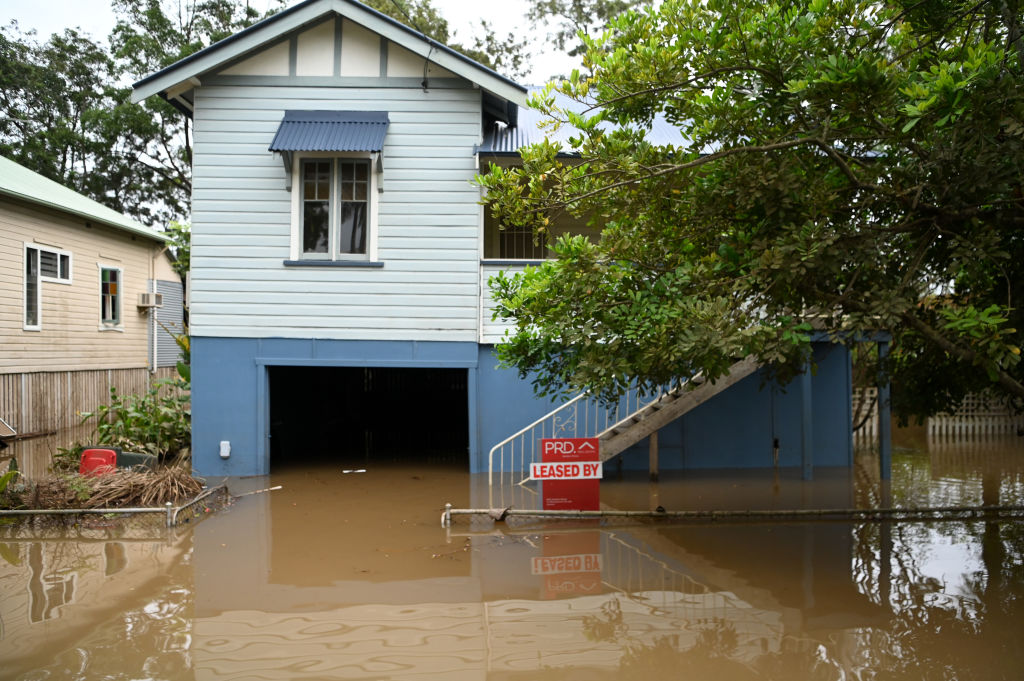
Following the devastation of recent flooding, experts are urging government intervention to drive the cessation of building in areas at risk.
Kuwait’s Heavy Engineering Industries and Shipbuilding Co. (HEISCO) has renewed a KD14 million ($45.4 million) credit facility agreement with a local bank to support its operational activities, marking the company’s second facility renewal this month following an earlier KD96.06 million agreement. The engineering and shipbuilding firm has also continued expanding its project portfolio in 2026, including securing a $565 million contract from Kuwait Oil Company in April.
The Kuwait-based Heavy Engineering Industries and Shipbuilding Co. (HEISCO) has renewed a 14 million dinars ($45.4 million) credit facilities agreement with a local bank in the Gulf state.
HEISCO said in a bourse filing, the facility will be used to finance the operational activities.
This is the second loan facility renewed by the contractor this month, with the earlier facility amounting to KD 96.06 million.
The engineering and shipbuilding firm has secured a number of contracts in the first half of this year, including one in April from the state-backed Kuwait Oil Company amounting to $565 million.
Many of the most-important events have slipped from our collective memories. But their impacts live on.
Longtime crypto investors are increasingly turning to Zcash, drawn by its privacy-focused features and growing momentum as some become disillusioned with bitcoin’s mainstream evolution.
Bitcoin die-hards think they’ve found the hot new thing.
Some longtime crypto enthusiasts are souring on bitcoin as it goes mainstream, frustrated that it no longer provides the privacy they value. Others are disenchanted with how politicians and celebrities are suddenly embracing bitcoin—or they’re just fed up with the token’s slumping price.
Now, bitcoin’s early evangelists are getting behind another digital token: Zcash.
Tyler and Cameron Winklevoss are among the bitcoin pioneers betting big on the so-called privacy token, which lets users shield their transaction details.
Zcash’s emphasis on anonymity reminds some of crypto’s early days, when privacy was championed as a ticket to personal freedom.
“It feels like bitcoin circa 2013,” said Barry Silbert, founder of Digital Currency Group and Grayscale Investments, which set up the first publicly traded bitcoin fund.
This year, DCG made Zcash one of its largest holdings, according to a person close to the matter. In November, Grayscale told regulators that it plans to convert its Zcash trust into an exchange-traded fund, making it more easily accessible to everyday investors. The move helped supercharge the token’s rally.
Zcash is up about 50% over the past month and 1,140% over the past year. Bitcoin, by comparison, has gained 8% in the past month, and dropped 24% in the past year.
Also driving Zcash’s surge: receding fears that U.S. regulators will take issue with the coin’s privacy features, which some worry could be exploited for ill use. Earlier this year, the Securities and Exchange Commission said it closed a probe into the coin.
Zcash, at $8.9 billion, is a smidgen of the size of bitcoin. And tiny cryptocurrencies have a history of surging and then collapsing, a reason to be wary.
| Bitcoin | Zcash | |
|---|---|---|
| Creator | Unknown | Group of scientists and engineers |
| Year founded | 2009 | 2016 |
| Distinction | Biggest cryptocurrency | Shielded addresses |
| 1-yr price change | down 24% | up 1,140% |
| Market cap | $1.59 trillion | $8.9 billion |
That hasn’t stopped some of bitcoin’s best-known backers from piling in.
The Winklevoss twins said in November that they invested $50 million to help launch Cypherpunk Technologies, a digital-asset treasury company that will hold Zcash.
“This is not some newfangled project that showed up on the scene with a lot of buzzwords and marketing push,” Cameron Winklevoss said in an interview.
Despite its hot new status in cryptoland, Zcash is a decade old.
The token was founded in 2016 by a group of scientists and engineers, including from MIT and Johns Hopkins. It was essentially a copy of bitcoin, but was intended to fix what its founders saw as a privacy flaw.
Like bitcoin, it lets users send or receive funds on a public ledger. The key distinction is that Zcash gives users the option to use shielded addresses, which use encryption to hide sensitive data, such as the sender, receiver and transaction amount.
(Zcash’s name is a nod to its use of zero-knowledge proofs, which allow for transaction verifications without divulging other details.)
Users can generate “viewing keys” to share transaction details with regulators or auditors—but it’s at their discretion.
The feature could give the coin vast commercial potential. Businesses, for instance, might use it to hide sensitive information such as payrolls and supplier relationships.
Proponents say it could also counter the moves of authoritarian governments to use financial surveillance to identify dissidents—a goal tracing back to crypto’s roots.
“Zcash is what bitcoin should be. It’s what bitcoin was originally meant to be,” said Tushar Jain, co-founder of Multicoin Capital, a venture-capital firm that recently built a significant position in Zcash.
Although bitcoin users don’t have to use their real names on the blockchain, its public ledger has made the token increasingly easy to trace. Many blockchain analytics firms help law enforcement decipher “anonymous” transactions and hunt down illicit activity.
For some, the extra layer of privacy that Zcash offers is a red flag.
Authorities worry that terrorists and other malicious actors could use such privacy coins to evade sanctions and commit crimes. Regulators in other countries have prohibited or restricted the listing of privacy coins on licensed exchanges.
Blockchain analysts have noted that terrorist groups so far have largely favored bitcoin and stablecoins, partly because they are easier to trade than privacy coins, which are much smaller in size.
For all the recent excitement around Zcash, the token lacks a feature that helped fuel bitcoin’s mythic status: a mysterious creator.
Unlike Satoshi Nakamoto, one of Zcash’s founders has remained a vocal figure.
Zooko Wilcox-O’Hearn, an American computer-security specialist and cryptographer, served as CEO of Electric Coin Co., which Zcash co-founders formed to develop the coin’s blockchain.
Since stepping down from that role in late 2023, Wilcox-O’Hearn has served as the chief product officer at Shielded Labs, which helps advance Zcash.
In December, he also joined the Winklevoss twins’ Cypherpunk Technologies as a strategic adviser. So far, the Zcash hoarding company has stockpiled more than 300,000 of the tokens.
Cypherpunk’s stock has gained 17% this month but is down 10% for the year. Along with the price of bitcoin, companies that hoard digital tokens have lately lost some of their luster.
New research suggests that bonuses make employees feel more like a mere cog in a wheel.
Workplace disputes are increasingly forcing companies into a tough call: fight allegations or settle to avoid reputational and legal fallout. While many claims are disputed, settlements are often driven by cost, risk, and disruption—especially in an era where AI and social media can rapidly amplify accusations beyond control.
An employee comes forward with embarrassing workplace allegations fraught with legal risks. For company bosses, it presents a thorny dilemma: Fight or pay?
It is a situation JPMorgan Chase JPM -0.70%decrease; red down pointing triangle found itself in weeks before a former banker filed a lawsuit filled with sensational accusations. It offered $1 million to settle his claims that a female colleague had sexually harassed and assaulted him and that co-workers had subjected him to discrimination, The Wall Street Journal reported. The bank has said it investigated the claims and doesn’t believe they have merit.
Though such deals rarely come to light, paying employees to make potential scandals go away isn’t an uncommon practice across corporate America. Companies have long offered settlements to head off litigation or avoid claims that could tarnish their reputations—even if executives conclude the allegations lack merit.
“The vast majority of settlements are business decisions,” said Bill Stein, a Los Angeles-based partner at employment law firm Fisher Phillips, who often works with companies on such matters. Some employers, wanting to avoid the time, expense and headaches of unwanted publicity and litigation, ask: “Can we just make this go away?”
The calculations over when and how much to negotiate have become more complicated now that artificial intelligence and social media can easily amplify such allegations. Often the decision-making involves external law firms, internal investigations and discussions with everyone from human-resources specialists to strategists in crisis public relations, executives and attorneys say.
Internal complaints—about anything from bullying and policy violations to performance issues and workplace violence—are surfacing with increasing frequency, data suggest. Allegations of discrimination, harassment and retaliation rose to 14.7 per 1,000 employees in 2024, up from 6.4 in 2021, according to HR Acuity, a company that helps employers track internal complaints and investigations.
“It happens every day of the week” at large companies, said Janine Yancey, an employment lawyer and founder of HR compliance firm Emtrain.
The decision on whether to offer a payout usually begins with a question: Is there truth to the claims?
Employers will often attempt to quickly investigate the matter, usually by interviewing those involved or pulling emails, texts and chat messages between colleagues on work devices. If companies find the allegations are at least partly substantiated, they are likely to offer a more generous settlement, lawyers and HR executives say.
In other cases, companies might feel the allegations are bunk—but still opt to settle. That can be for any number of reasons. Say a startup is trying to raise new funding, said Fisher Phillips’s Stein. The last thing they might want is to spook investors with a potential lawsuit.
Part of the calculation is the cost of the distraction, Yancey said. “For business executives, your time is money. These conflicts create friction and noise,” she said. The people at the center of the allegations lose sleep, stop eating and often can’t work productively. “It makes more economic sense to pay money and move on. Flat-out,” she said.
Often the employees lodging allegations prefer to settle quietly and move on too, lawyers say. If claims—especially salacious ones—become public, they can dog a person’s career, making it harder to find future jobs.
How much companies are willing to pay can vary widely. For many routine settlements, employers try to offer no more than two years’ compensation, said LeShanda Davis, a senior director of employee relations. But companies weigh many factors when determining amounts, including their degree of fault, the seniority of the people involved, the cost of litigation and the risk someone could generate significant attention with their claims.
“You’re paying for that individual to be an alum, not an adversary,” Davis said.
Some employers prefer to fight and be as public about it as they can. When a lawyer in billionaire Bill Ackman’s family office requested two years’ severance, instead of the three months offered, Ackman turned to social media for advice and affirmation, writing a 2,400-word post on X in April. The lawyer had cited an unsafe workplace, a description Ackman rejected, vowing to “fight this nonsense to the end of the earth.”
For employers, the other complicating factor is that even a settlement might not keep things quiet. A number of states, including California, now bar employers from using nondisclosure agreements to silence workers speaking out about workplace misconduct, including sexual assault, harassment and labor and safety violations.
JPMorgan’s offer to settle with the banker, Chirayu Rana, didn’t keep the claims from going viral. Rana didn’t take the $1 million—which was equivalent to less than two years of his compensation at the bank, the Journal previously reported. Instead, he ultimately went public.
After Rana filed the suit in a New York state court, AI-generated videos of Rana and the female banker quickly proliferated across the internet.
The lawyers for the female colleague, named in the lawsuit as Lorna Hajdini, have said they are entirely made up and that the two never had any sexual relations. An attorney for Rana didn’t respond to a request for comment but has said the truth would come to light in court proceedings. “Whether my client’s civil rights were violated will be determined in a court of law,” attorney Daniel Kaiser said last week.
Employment disputes rarely generate such attention or lurid claims, said Stewart Schwab, a professor at Cornell Law School. Still, the odds of a prelitigation dispute staying quiet are also likely going down in the AI and social-media era.
Now, “if it gets out,” Schwab said, “it really gets out.”
Following the successful launch of its Palais Collection, MAISON de SABRÉ has unveiled a new modular handbag system offering more than 720 styling combinations.
Dubai International Financial Centre (DIFC) reaffirmed the strength and resilience of its ecosystem, with global institutions across banking, insurance, wealth and innovation continuing to back Dubai and the UAE as a long-term growth hub. Despite regional uncertainty, firms are deepening their presence, supported by a stable regulatory framework, strong connectivity, and access to high-growth markets across MEASA.
Dubai International Financial Centre (DIFC) today reaffirmed the strength, resilience and long-term outlook of its ecosystem, as global clients across banking, insurance, wealth and innovation sectors expressed continued confidence in Dubai and the UAE.
Essa Kazim, Governor of DIFC, said: “Over the past few weeks, countries in the Middle East have been navigating a period of regional uncertainty together. During these times, the true strength of DIFC has been our clients and community. What defines us is a shared belief in long-term opportunities that Dubai and the UAE offer to access the 77 markets across the Middle East, Africa and South Asia.
Together, we are building the future of finance and advancing Dubai’s journey towards becoming one of the world’s top four global financial centers.”
Arif Amiri, Chief Executive Officer of DIFC Authority, said: “From global banks to FinTech disruptors, firms operating within DIFC say the current environment has not prompted retreat but rather reinforced the strategic importance of Dubai as a gateway to growth across the region. For many, the current environment serves as a reminder of why they chose DIFC in the first place: a stable and enabling legal and regulated framework, and globally connected platform capable of unlocking future growth.”
Recent milestones reinforce DIFC’s trajectory, including Dubai’s rise to 7th globally in the Global Financial Centres Index in March, which is its highest ever ranking and underscores sustained global confidence in the emirate’s financial ecosystem.
An integral part of the DIFC ecosystem are 290 banks and capital markets firms, including 17 of the world’s 19 global systemically important banks. This reflects the vital role DIFC plays in connecting major players to opportunities in the region and being the bridge between markets in the East and West. Global banking leaders from Citi, Julius Baer and Standard Chartered highlighted DIFC’s critical role as a stable platform connecting international capital with opportunity.
Ebru Pakcan, Middle East & Africa Cluster and Banking Head at Citi, noted: “At a time when geopolitical dynamics are reshaping markets, the ability to deliver cross-border solutions, maintain liquidity, and stay close to clients is critical. DIFC enables Citi to do exactly that. Citi has maintained a continuous presence in the Middle East for over six decades, recognizing its integral role in our global network.”
“Since establishing a presence at DIFC in 2006, we’ve seen the financial hub transform into a strategic platform that connects capital, clients, and opportunities across the Middle East, Africa, and South Asia. From supporting sovereign issuances and corporate funding to enabling efficient treasury and liquidity management, DIFC allows Citi to operate at the center of regional and global capital flows.”
Regis Burger, Head of Middle East & Africa and Chief Executive Officer, Julius Baer (Middle East) Ltd, highlighted: “The UAE has established itself as a leading global financial center and the foundations that underpin that position remain firmly intact. Its connectivity, business-friendly regulatory environment, tax-efficient framework, and world-class infrastructure continue to set it apart and attract investors, entrepreneurs, and institutions from around the world. DIFC has been at the heart of that story.
Julius Baer saw that potential before most. As the oldest organization in DIFC, we were here at its founding, driven by a conviction that this region would emerge as one of the world’s most important centers of wealth creation and a magnet for global capital. That belief has only deepened over two decades of being embedded in this market, across our offices in the UAE, working closely with our clients in creating and preserving their wealth and building relationships across generations.
The region is approaching a historic transfer of nearly $1 trillion in wealth across generations by 2030, and the families navigating that journey require more than financial expertise. As an organization with its own origins as a family business, Julius Baer has been through the entire business transformation cycle and understands what it takes to guide clients and their families through it.
We remain deeply committed to the UAE, the wider region, and to the clients and partners who trust us with their financial futures. That commitment does not waver in periods of uncertainty and it is precisely in these moments that our role as a wealth manager matters the most.”
Rola Abu Manneh, Chief Executive Officer, UAE, Middle East, and Pakistan at Standard Chartered, added: “We have been in the UAE for over 65 years, and DIFC has been our regional home since 2004. Our commitment to the country is firm and unchanged.
The UAE entered this environment from a position of strength, supported by robust balance sheets, strong institutions, and a well-regulated financial system.
Client activity across the UAE reflects continued engagement, with businesses using the UAE as a base to access opportunities across regional and international markets. Through our global network, we connect clients to those opportunities while ensuring continuity of service and access to banking solutions.”
The insurance industry has been growing in DIFC with gross written premiums doubling to over $4.2 billion in the last four years. Insurance leaders are emphasizing DIFC’s role in strengthening risk management capabilities across the region.
Omar Gemei, Senior Executive Officer of Marsh DIFC and Head of Global Placement & Bowring Marsh, India, Middle East & Africa, said: “Dubai has firmly established itself as a leading international hub for the insurance and risk management sector. It brings together insurers, brokers, and risk professionals to support clients facing increasingly complex and interconnected risks, underpinned by a strong understanding of the globally evolving business and regulatory landscape.
DIFC has been a key catalyst in that growth, providing a business-friendly environment that attracts global firms and supports innovation. For the insurance and risk management community, it provides access to regional markets writing global and regional business, reinforced by Dubai’s continued investment in infrastructure, talent, and regulation to further grow the sector.”
Dubai is home to the highest concentration of wealth in any Middle Eastern city and according to Henley & Partners, in 2026, the UAE has so far attracted more millionaires than any other country in the world. This has made DIFC the region’s preferred hub for wealth and asset management, with over 500 firms from the sector choosing to operate from the Centre.
Peter Clark, Chief Executive Officer, Bentley Reid, said: “Bentley Reid has been advising clients for almost fifty years, and over that time, we have successfully navigated diverse economic, market and political uncertainties. The lesson we draw from each of these episodes is that it seldom pays to make knee-jerk reactions or allow short-term turbulence to drive major strategic decisions.
Whilst the firm is a relative newcomer to DIFC, it soon became apparent that the UAE’s economic success has been built on several key fundamentals: its favorable fiscal environment, a pro-business culture, a dynamic and increasingly diverse economy, an exceptional quality of life and deep global connectivity. We are confident that this compelling mix will reassert itself as soon as the regional situation eases, rewarding those with patience and resolve.
The families, entrepreneurs and businesses who typically fare best during uncertain periods are those who focus on the long-term and return to first principles – asking themselves why they committed to a particular jurisdiction and whether those reasons still hold. In the case of Bentley Reid and the DIFC, the answer is an unequivocal yes.
This is reinforced by what we are witnessing on the ground. Very few – if any – in our HNW and UHNW network view current events as an existential threat to Dubai’s trajectory, or to their decision to make the UAE their home. This includes wealthy families planning relocations to the region; few are abandoning those plans, although some are understandably choosing to let the situation settle before finalizing their arrival.
For our part, Bentley Reid came to the DIFC for the long term. What we have seen, both leading up to the conflict and ever since, points to Dubai continuing to offer significant advantages to wealthy families and their advisers. If anything, the current environment reinforces the value of having a trusted and experienced international wealth manager at one’s side. That is exactly what Bentley Reid is here to provide.”
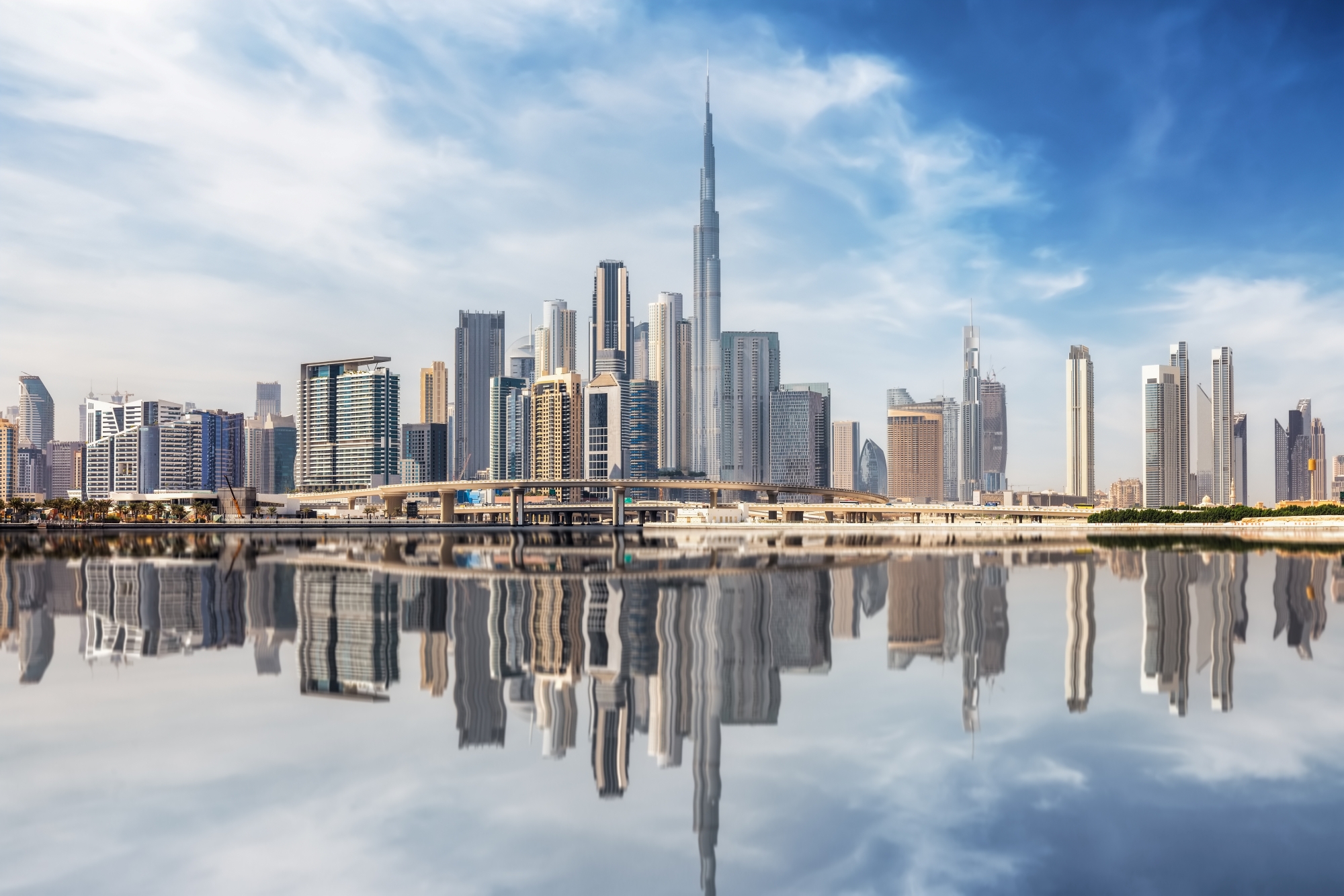
ICICI Prudential Asset Management Company established an office in DIFC in February this year. Nimesh Shah, Managing Director and Chief Executive Officer of ICICI Prudential Asset Management Company highlighted: “Dubai and DIFC are a natural fit for ICICI Prudential AMC’s global ambitions given their strong regulatory ecosystem, global connectivity and access to institutional investors. Our presence here reflects our confidence in India’s long-term growth story and our commitment to building enduring partnerships with global investors seeking India-focused opportunities.”
DIFC continues to be at the leading-edge for developing clear laws, regulations and operating frameworks for the digital assets and FinTech industries.
In 2020, Ripple established their regional headquarters for the Middle East and Africa in DIFC. This month, they announced a further expansion to their presence in the Centre.
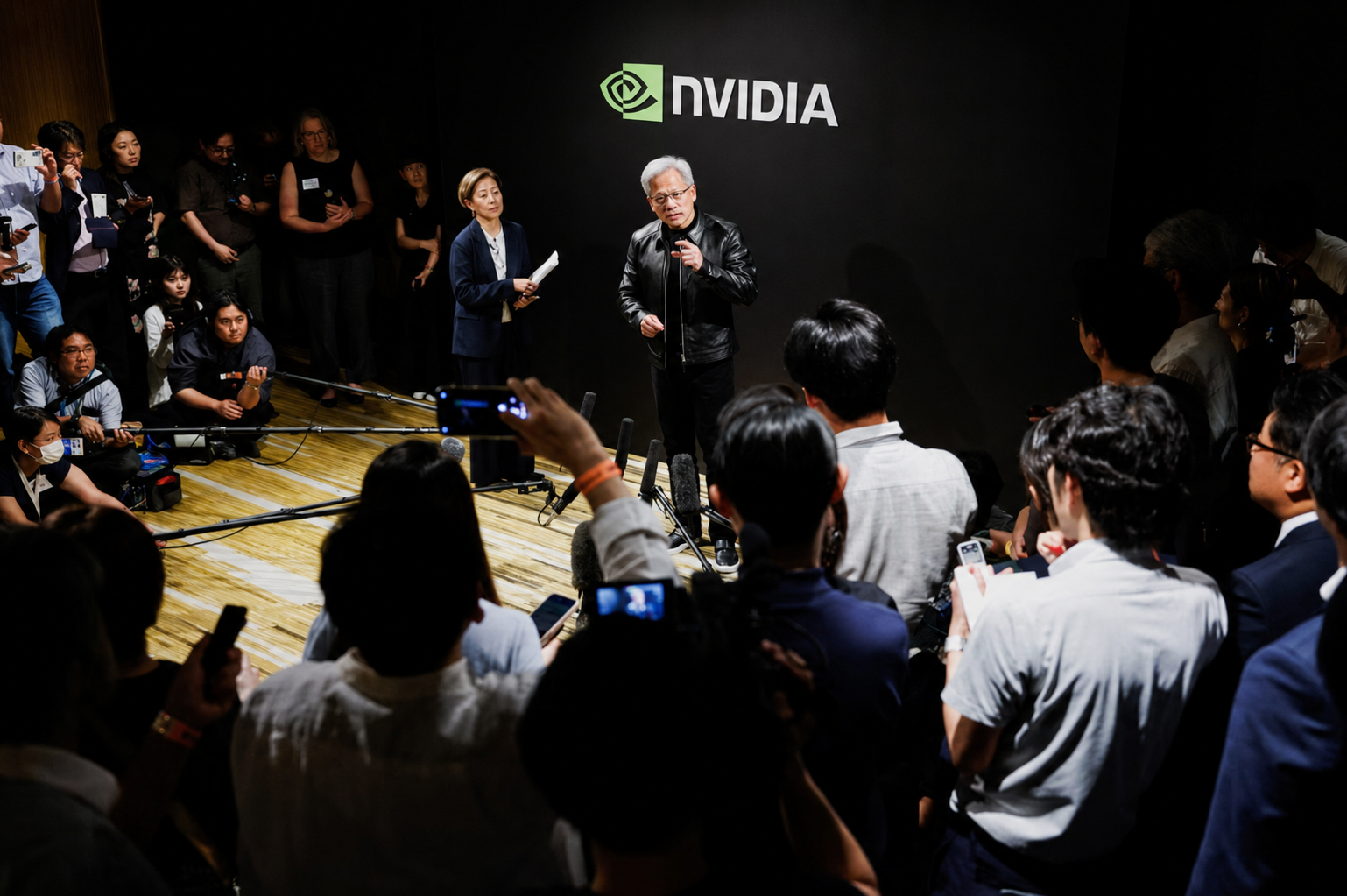
Reece Merrick, Managing Director, Middle East and Africa, Ripple commented: “Ripple established its regional headquarters for the Middle East and Africa in the UAE in 2020. Since then, we have substantially grown our presence, expanding our team, signing new clients and forging innovative partnerships, to meet growing demand for digital assets infrastructure. During this time, we’ve also witnessed first-hand how much the country has strengthened its position as a global financial hub.

This doesn’t happen without a strong foundation, and the UAE provides exactly that: a forward-looking market underpinned by clear and progressive regulation that has reinforced its position as one of the leading global centers for our industry.
The local authorities have played a central role in establishing the UAE as one of the world’s leading hubs for digital assets. The clarity and ambition of the regulatory frameworks that have been put in place, combined with a mature financial ecosystem and access to institutional capital, gives companies the confidence to lay solid foundations here. That is a hard thing to build, and the UAE has achieved it, setting a benchmark not just for the wider region, but globally.”
Stake has been using its DIFC presence to develop innovative PropTech solutions, recognizing the importance of the real estate industry to the UAE. Manar Mahmassani, Co-Founder & Co-CEO, Stake commented: “Stake was born in Dubai in 2021, when global uncertainty was at its peak. Today we are the largest fractional investment platform in the world because we started here.
“When we launched Stake, choosing to set up in DIFC was a no-brainer. It wasn’t just about operating in the most credible financial jurisdiction in the region. As a start-up, DIFC gave us exactly what we needed: a launch pad and a plug-and-play co-working environment that was bustling with innovation. The address, the infrastructure, the retail and F&B, the caliber of professionals in every corner, and the proximity to our regulator, the DFSA – DIFC offered us as founders and our teams a work-play lifestyle that is genuinely second to none.
“For a FinTech like Stake, building the future of real estate investment demands regulatory clarity, access to world-class capital partners, and a standard of governance that global investors recognize instantly. DIFC delivers all three, and it has been one of the most important accelerants of our growth.”
The payments industry is significant in the UAE and Taptap Send has been using Dubai to develop their offering. Michael Faye, Chief Executive Officer at Taptap Send added: “DIFC has been a genuine home for our team, our relationships, and our ambition. It has built something rare: a world-class environment where ambitious FinTech companies can access deep talent, global connectivity, and an infrastructure that leads international standards. For Taptap Send, the UAE is exactly the right base from which to do it, connecting underserved communities to the global financial system from one of the world’s great international hubs. That ambition mirrors our own, and I can’t imagine a better place to pursue it.”
The collective voice of global financial institutions, insurers, asset managers and future-focused innovators reinforces DIFC’s position as a resilient, trusted and forward-looking financial ecosystem. Despite a complex global backdrop, firms continue to deepen their presence, guided by confidence in the Centre’s internationally credible legal and regulatory environment, global connectivity and long-term growth prospects.
As momentum builds across traditional and emerging sectors alike, DIFC remains central to enabling capital flows, fostering innovation and supporting sustainable economic expansion, further cementing Dubai’s standing as a leading global financial hub.
Paine Schwartz joins BERO as a new investor as the year-old company seeks to triple sales.
In times of heightened uncertainty, investing shifts from prediction to resilience. With geopolitical risks impacting confidence, energy prices, and global growth, the focus turns to liquid, high-quality assets built to withstand multiple scenarios. As volatility rises and dispersion widens, diversification, strong fixed income positioning, and portfolio flexibility become essential to navigating an increasingly complex market environment.
At times of intensified uncertainty and dispersion like today, investing becomes less about forecasting and more about favouring more liquid, high quality assets that can be resilient across a variety of scenarios.
Global growth has been more resilient than expected despite growing divergence below the surface. What has changed is the addition of a major new source of risk: the conflict in the Middle East. If this proves to be a short-term disruption, as markets are currently pricing, then the baseline outlook still assumes moderate global growth. However, a prolonged disruption would pose more significant challenges and increase global recession risks.
Geopolitical risks tend to transmit to the economy through changes to consumer and business confidence, financial conditions, and – most importantly today – energy prices. The Strait of Hormuz, a critical waterway for oil and energy shipments, remains effectively blocked. Similar to Russia’s invasion of Ukraine in 2022, this threatens to spark a global energy supply shock.
Unlike in 2025, when divergent trends left global growth broadly unchanged, the Middle East conflict is likely to be stagflationary, lifting inflation while hurting growth. We see four main transmission channels: higher energy and food prices; disrupted supply chains and trade flows; tighter financial conditions; and lower business and consumer confidence.
Negative oil supply shocks are inflationary for all economies, while growth effects will differ. Higher energy prices are stagflationary for net oil importers – transferring income abroad through more expensive energy imports while reducing household real (inflation-adjusted) income and business real profit – and expansionary for net oil exporters.
Within developed markets, Europe, the U.K., and Japan are energy importers and face larger downside growth risks. Canada and Australia should benefit from their net energy export status. Two decades of shale production increases have turned the U.S. from a net energy importer to a slight exporter. However, the U.S. is still a large economy with an energy sector as opposed to a commodity economy. Since energy is an important input into all goods it imports, the U.S. will likely still behave as a net energy importer to some extent.

The risk of higher inflation alongside lower growth puts central banks in a tricky spot. Conventionally, central banks tend to look through supply shocks, especially in economies that are net energy importers. After the elevated post-pandemic inflation period, however, central banks will be closely focused on the risk that a large supply shock could lead to more persistent pressures as inflation expectations and wages also adjust higher.
Yet economies are in much different positions than they were in 2022. At that time, the world was still dealing with pandemic-related pent-up demand, and governments had injected trillions of dollars into the private sector. The result was a large demand shock on top of a large supply shock. Labor markets were also extremely tight, driving both nominal wages and prices higher.
Today, by contrast, fiscal policy is tight across many regions as elevated post-pandemic sovereign debt forces restraint. Labor markets are much looser. Monetary policy is already neutral to slightly restrictive across most developed market economies.
As a result, economies are much more likely to adjust to the current shock through lower real incomes, weaker nominal wage adjustments, and greater recessionary risks.
This is not an environment set up to reward bold forecasts or narrow bets. Instead, today’s conditions favour more liquid, high quality portfolios built to weather shifts in market sentiment and a range of potential outcomes.
Resilient headline growth alongside widening dispersion strengthens the case for high quality fixed income. Starting yields are much higher today than in 2022, providing cushion against inflationary tail scenarios and strengthening the role of bonds as both a return generator and a hedge against downside risks.
Markets rarely price geopolitical risk well. When there is a global shock, portfolio liquidity can allow investors to take advantage of market inefficiencies and valuation gaps that arise. As volatility rises and dispersion widens, the ability to manage downside risk and redeploy capital as conditions evolve matters more than trying to capture incremental yield by forfeiting liquidity.
High quality bonds once again play a meaningful role in portfolios and look attractive across a variety of economic scenarios. For portfolios that have drifted heavily toward equities, this is a practical moment to consider rebalancing. Yields across more liquid fixed income remain attractive, laying a solid foundation for market-driven income and return.
We prefer a modest overweight to duration and more balanced curve exposure, as yields look attractive across a range of maturities.
The case for global diversification remains strong. Differences across countries are widening, creating both risks and opportunities.
Looking across the continuum of public and private credit today, we see the greatest value in areas including U.S. agency mortgage-backed securities (MBS), investment grade issuers with stable, predictable cash flows, and high quality securitized credit.
Currency positioning matters more in this environment, particularly given the growing divergence between energy exporters and importers. Inflation-sensitive assets also deserve a more deliberate role in portfolios today. Commodities, real assets, and Treasury Inflation Protected Securities (TIPS) can help hedge real-world purchasing power and diversify returns when traditional asset relationships become less reliable. These exposures may help improve portfolio resilience.
This is a market that rewards preparation for an uncertain set of outcomes. Higher yields, wider dispersion, and greater volatility create a favourable backdrop for active management when portfolios are built with liquidity and flexibility in mind.
For investors, this is a moment to consider recentring portfolios toward fixed income, to use global diversification and inflation tools intentionally, to treat liquidity as an asset, and to emphasise quality and resilience in the face of layered uncertainty.
Parts for iPhones to cost more owing to surging demand from AI companies.