






Education as Nation-Building: Lessons from Asia for the Future of Learning in the Gulf
Education is no longer just a social imperative — it is a strategic engine of national growth. In an exclusive interview with Professor John Lee Chi-Kin, President of The Education University of Hong Kong (EdUHK) and UNESCO Chair in Regional Education Development and Lifelong Learning, Kanebridge News Middle East explores how Hong Kong’s education-led development model has sustained long-term competitiveness — and what Oman and the UAE can learn as they accelerate their knowledge-economy ambitions.
 6 min
6 min
In an era defined by digital disruption, economic diversification, and rapid technological change, education is no longer a social service alone—it is a national growth strategy. The experience of Hong Kong and broader Asia illustrates how aligning education systems with economic transitions can sustain long-term competitiveness and resilience. As Oman and the UAE accelerate their knowledge-economy ambitions, the question is not whether to reform education, but how to strategically align it with national development goals while preserving cultural identity and ethical purpose.
Hong Kong’s trajectory offers a compelling case study of how education-led development can evolve alongside economic transformation—moving from manufacturing to finance, and now to innovation-driven digital economies. Its approach underscores a broader lesson: sustainable growth depends not only on producing skills for today’s market, but on cultivating adaptable, ethical talent capable of navigating tomorrow’s uncertainties.
Kanebridge News Middle East speaks exclusively with Professor John Lee Chi-Kin, President of The Education University of Hong Kong (EdUHK)and UNESCO Chair in Regional Education Development and Lifelong Learning.
From Hong Kong’s experience, what role has education-led development played in sustaining long-term economic growth?
Hong Kong’s trajectory shows that sustained growth can come through continuously aligning education with each stage of economic transition. In the manufacturing era, for example, the system prioritised skilled workers; as the city evolved into an international financial and services hub, universities cultivated a work force for professions; and now, in the digital era, the focus has shifted again towards ethical innovators who can harness technology responsibly. This adaptability has been central to sustaining growth and resilience and it is based on the recognition of identifying key knowledge skills and values over time.
At the institutional level, teacher education and values formation are treated as strategic levers rather than administrative functions. EdUHK’s mission embeds lifelong learning, research, and community impact into teaching, ensuring graduates are not only technically competent but also socially responsible. Recent reforms—such as restructuring degrees to broaden competencies—demonstrate how education can simultaneously meet evolving social and economic demands and nurture character, producing talent that sustains competitiveness beyond short-term skills.

What key lessons can Oman and the UAE draw from Asia’s approach to aligning education systems with national development goals?
Asia’s experience shows that education has been prioritised as a strategic pillar of development, not merely a response to labour market gaps. Long-term reforms integrate science, innovation, and values education, creating stability even during economic shocks.
A second lesson is the professionalisation of teacher education. Institutions like EdUHK invest in rigorous preparation, research-informed practice, and community engagement, ensuring classrooms produce both academic excellence and responsible citizens.
Finally, curriculum innovation must be fused with ethics. Asian universities are embedding AI literacy and digital skills while ensuring that innovation remains human-centred. EdUHK’s Education Futures agenda illustrates how future skills can be integrated without losing moral purpose—an approach that holds relevance not only for the Middle East but also education systems worldwide.
How has industry–academia collaboration contributed to Hong Kong’s competitiveness, and how can this be replicated in the Gulf?
Hong Kong’s universities cultivate direct links with classrooms and employers through dialogue, internships and co-designed curricula. EdUHK convenes employers and alumni to align programmes with sector needs, expand work-based learning and update postgraduate offerings in fields such as AI in education, governance and environmental stewardship. These platforms help translate research into practice and keep talent development responsive, which strengthens competitiveness.
The collaborative approach extends to joint research funding and capacity building with overseas partners, showing how shared projects can build ecosystems rather than one off exchanges. When partnerships are embedded in teaching, research and student development, they generate reciprocal impact instead of symbolic agreements.
In the Gulf, universities are already advancing promising forms of collaboration. UAEU’s Science and Innovation Park, for instance, connects academia with industry through start-ups and joint projects, while other institutions have convened forums that bring government, employers, and educators together to co-design solutions. Programmes are also being updated to align with emerging technologies and shifting employment patterns. These efforts show that collaboration is not only possible but actively underway, offering valuable opportunities for shared learning across regions.
Rather than suggesting replication, we see opportunities for mutual learning. Hong Kong’s experience underscores the value of institutionalising regular forums, co-funded research calls, and structured work placements, while Gulf universities are pioneering interdisciplinary platforms that Hong Kong can also learn from. By sharing practices and adapting them to local contexts, both regions can strengthen competitiveness while maintaining academic standards and social values.
How important is lifelong learning and reskilling in future-proofing economies like Oman and the UAE?
Lifelong learning is indispensable for economies undergoing diversification and digitalisation. The challenge is not only producing graduates but ensuring citizens remain adaptable across careers as industries evolve. EdUHK’s mission explicitly commits to lifelong learning, with research and professional development designed to strengthen workforce resilience.
At the system level, reskilling cushions societies against volatility. When policy, teacher development, and curriculum coherence align, individuals can unlearn outdated knowledge and acquire new competencies without destabilising institutions. This is especially critical in the AI era, where continuous upskilling must be paired with ethical reflection.
As UNESCO Chair in Regional Education Development and Lifelong Learning, I have the privilege of accessing global insights and applying these to local and regional contexts. This role reinforces the importance of lifelong learning as a universal priority—ensuring that education systems not only prepare graduates for their first careers but also sustain their capacity to adapt, reskill, and contribute meaningfully throughout life.
Equally important is inclusion. Lifelong learning must extend beyond elite groups through open resources and community engagement supporting skills programmes for all members of the community.
What balance should policymakers strike between global education models and local cultural contexts?
Reform works best when global practices are adapted rather than imported. Asian experience shows that cultural narratives and civic identity can improve teaching and encourage people to embrace learning.
Respect for teacher professionalism and moral education has been paired with modern research and technology integration, producing systems that are globally competitive yet locally grounded.
Universities also play a bridging role. EdUHK’s vision stresses collaboration across regions while maintaining ethical responsibility and social care as core values. That institutional stance helps translate global insights into curricula that honour local values, histories and community needs.
Overall, the balance is to benchmark globally while remaining culturally sensitive to local values. This means building programmes that meet international standards, while embedding values education and local priorities so graduates are both globally competent and locally committed.

How can universities act as drivers of innovation and entrepreneurship, beyond traditional teaching roles?
Universities drive innovation when they organise around interdisciplinary research, policy engagement and talent incubation. EdUHK has created interdisciplinary academies that connect educational development with applied policy and future-oriented research, moving ideas from scholarship to application.
Entrepreneurial mindsets are cultivated through programme redesign and recognition of invention, showing that even education-focused institutions can contribute to wider innovation ecosystems. Translational projects in AI, pedagogy, and governance illustrate how targeted research can generate applied solutions.
Finally, universities extend impact through capacity-building partnerships abroad, multiplying know-how and creating markets for innovation. Sustained, reciprocal collaborations generate human capital and applied solutions that endure beyond individual cohorts.
How can education systems better prepare students for AI, digital transformation and knowledge-based economies?
Preparation begins with structured AI literacy for both educators and students, supported by responsible-use frameworks. EdUHK’s 6-P approach—covering planning, prompting, previewing producing, peer-reviewing, and reflective portfolio building—ensures AI enhances inquiry and creativity while keeping human judgement central.
Systems should also foster partnerships linking AI research with classroom practice. EdUHK convenes forums and collaborates globally to accelerate diffusion of evidence-informed practice.
Curriculum renewal must integrate technical fluency with ethics and civic purpose. By embedding computational thinking, interdisciplinary study, and wellbeing safeguards, education systems can produce graduates who thrive in knowledge economies while remaining socially responsible.
Looking ahead, what strategic education priorities should Oman & the UAE focus on over the next decade?
Looking ahead, education systems across the region – including Oman and the UAE – can prioritise three interconnected areas.
First, learner-centred teacher education reform. The most resilient systems are those that invest deeply in teachers—through rigorous preparation, continuous professional development, and clear career pathways. When teachers are treated as partners in reform, they become the bridge aligning pedagogy, technology, and values.
Second, industry–university ecosystems. Stronger collaboration between academia and employers—through joint research grants, recurring forums, and credit-bearing work-integrated learning—creates innovation pipelines that diversify economies and keep talent development responsive to real-world needs.
Third, AI readiness with ethics. As digital transformation accelerates, classroom frameworks must embed responsible use and reflective learning. Supporting educators through professional training and cross-border exchanges ensures technology enhances equity rather than widening gaps.
These priorities are part of a global agenda for future-proofing education. By aligning them with national strategies, economies in the Middle East and beyond can ensure reforms serve long-term development goals while preparing citizens to thrive in knowledge-driven societies.

Phantom Arabesque, commissioned by Private Office Dubai, reinterprets traditional mashrabiya latticework through a newly patented five-year laser-engraving process — extending the language of contemporary craft while honoring Middle Eastern heritage.

Parmigiani Fleurier introduces the TONDA PF Micro-Rotor in Agave Blue, a refined expression of contemporary Haute Horlogerie rooted in restraint and balance. Available in stainless steel and rose gold, the new models unite architectural clarity, subtle colour, and quiet mechanical sophistication.

A Kaspersky global survey shows that 92% of people in the UAE believe digitalization will reshape family life over the next decade, with AI, virtual experiences, and smart technologies becoming central to how families connect. Respondents expect AI bedtime stories, digital pets, virtual celebrations, VR vacations, and even home robots to increasingly shape shared family activities.
With the 2026 Winter Olympics underway, Kaspersky warns fans to watch out for scams involving fake tickets, counterfeit merchandise and bogus streaming sites. Experts urge fans to buy only from official platforms, avoid suspicious deals and verify sources before entering payment details.
2 min
The 2026 Winter Olympic Games are in full swing, captivating sports fans worldwide. However, the Games also serve as an opportunity for scammers to strike with different kinds of cyber fraud. Kaspersky has identified some of the key scams targeting fans right now – these are centered on fake tickets, merchandise and streaming access.
Ticket fraud
Fake ticket schemes rank among the most damaging scams hitting sports fans. With sports venues drawing huge crowds, attackers push bogus “tickets” through phishing sites that mimic official sellers to harvest payment info. Official sources stress that tickets are sold exclusively through the authorized Olympics platform, and third-party brokers or resale sites (outside any official resale channel) are fraudulent.
Bogus merchandise traps
Fans rushing to buy authentic sports competition items – clothes, souvenirs or event-specific collectibles – are prime targets. Attackers launch multiple counterfeit online shops that may use official logos, post convincing photos and fabricate glowing reviews to appear legitimate. Victims pay, then get nothing – or have their card details stolen for later fraud.
Fake streaming offers
Attackers create deceptive websites imitating broadcasters, promising “cheap,” “exclusive,” or even “free” ways to catch winter competition events live – from snowboard cross to curling finals. Users pay input card details expecting instant access, only to lose their money and expose financial data for theft or redirects to more scams when they hit “play.”
“While global competitions bring together people from different countries for the ultimate sports festival, they also draw fraudsters eager to cash in on the hype. Whether through phony ticket portals, imitation merchandise sites or bogus streaming links, these schemes are designed to look completely genuine. The best defense for sports fans is to pause, double-check every source and stick strictly to official, trusted channels before entering any personal or payment information,” notes Anton Yatsenko, web content expert at Kaspersky.
Here are the key ways to protect yourself during sports competitions:
- Purchase tickets exclusively from official channels. Skip any third-party sellers and always confirm via the official competition website.
- Stick to legitimate streaming services and trusted broadcasters. Verify HTTPS security, check reviews and never submit payment info on unverified or pop-up sites.
- Be cautious with merchandise vendors, avoid deals on “exclusive” or heavily discounted competition-branded items from unknown shops – they often deliver fakes, nothing at all or steal your details. Buy only from confirmed official stores or partner retailers.
- Don’t click on unsolicited emails, social media posts, texts or ads offering free tickets, cheap streams, special giveaways, or “urgent” competition updates.
- Rely on a trusted security tool like Kaspersky Premium, which actively blocks dangerous websites, phishing attempts, malicious ads and card-skimming scripts in real time to safeguard your information.

Paine Schwartz joins BERO as a new investor as the year-old company seeks to triple sales.

Parts for iPhones to cost more owing to surging demand from AI companies.
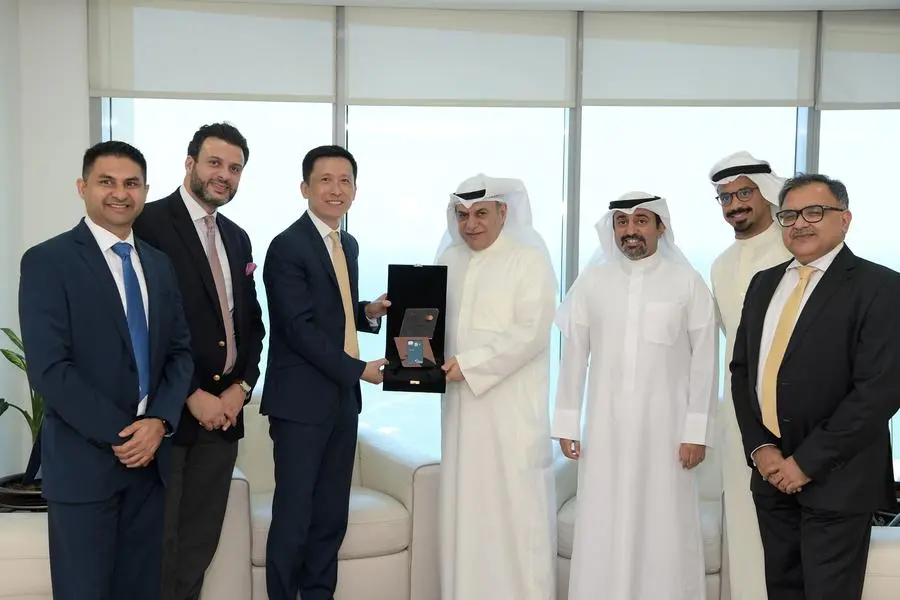

Saudi Modon has signed six agreements worth SAR1.03bn ($274m) to boost industrial growth in Sudair. The investments span pipe manufacturing, pharmaceuticals, engineering industries and logistics — strengthening supply chains and advancing Saudi Arabia’s National Industrial Strategy.
2 min
Saudi Authority for Industrial Cities and Technology Zones (Modon) signed six industrial, investment and logistics agreements with the total investments worth over SAR1.03 billion ($274 million).
The deal, inked with leading players in the industrial and logistics sectors, will cover localization of pipe manufacturing, boosting national supply chain readiness as well as downstream industries and will involve total area spanning over 671,000 sq m.
These agreements are aimed at supporting sustainable industrial growth and enhancing local content in line with the objectives of the National Industrial Strategy.
The signings took place in the presence of Bandar Alkhorayef, the Minister of Industry and Mineral Resources and Chairman of the Board of Directors of Modon, during his visit to Sudair Industrial and Business City.
Among the new agreements, Modon has signed an industrial contract with Jindal Saw and Buhur Altavision, investing over SAR562 million across 540,000 sq m for the localization of pipe manufacturing, bolstering downstream industries as well as national supply chain readiness.
It also signed a pharmaceutical contract with STADA Saudi Arabia investing SAR366 million across 23,000 sq m to localize human-use pharmaceutical production, supporting the Kingdom’s pharmaceutical security goals.
Supporting specialized industries, an industrial contract was signed with Mubadara Engineering Company, investing SAR50 million across more than 100,000 sq m for the local production of vessels for liquefied and compressed gases.
Safety Science Medical Company also signed a SAR40 million agreement over 8,400 square meters to localize pharmaceutical manufacturing, enhancing local industry integration.
In human capacity development, Modon partnered with Al Majmaah Chamber of Commerce to invest SAR15.9 million in a state-of-the-art training center aimed at developing specialized national competencies for the industrial sector.
The agreements concluded with a Memorandum of Understanding (MoU) with AGEX Company to provide shared logistics transportation services in Sudair Industrial and Business City, improving service quality for investors and contributing to a more efficient industrial ecosystem.
Many of the most-important events have slipped from our collective memories. But their impacts live on.
The sports-car maker delivered 279,449 cars last year, down from 310,718 in 2024.

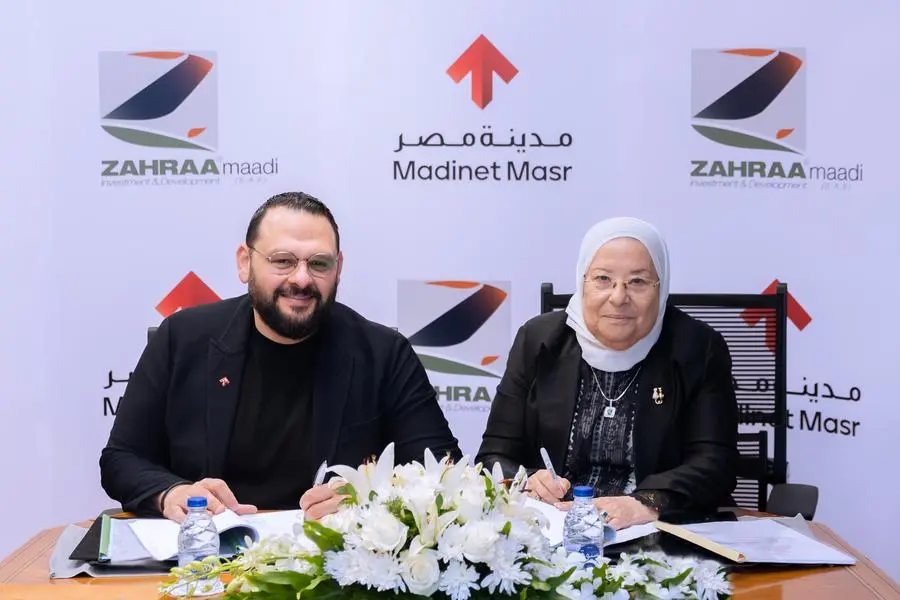
Solidrange closes a $2.4M Seed round led by Sharaka Capital to accelerate its AI-powered GRC and cybersecurity awareness platforms. The Saudi-based startup will use the funding to expand regionally, advance product development, and strengthen institutional cyber resilience in alignment with Vision 2030.
2 min
Solidrange, the Saudi-based cybersecurity startup specializing in AI-powered Governance, Risk, and Compliance (GRC) automation and cybersecurity awareness solutions, has announced the successful closure of a USD 2.4 million Seed funding round. The round was led by Sharaka Capital, with participation from Sadu Capital, SEEDRA Ventures, and Tali Ventures, the investment arm of stc (Saudi Telecom Company).
The funding will support Solidrange’s next growth phase, including accelerating its regional expansion, advancing product and technical development, and expanding the use of artificial intelligence across its platforms. Solidrange’s solutions directly support the Kingdom’s national cybersecurity objectives and align closely with Saudi Vision 2030, strengthening institutional resilience, compliance maturity, and human-centric cyber defense capabilities.
Founded in 2023 and headquartered in Riyadh, Solidrange is led by Jamal M. Labani, CEO and Co-Founder, and has rapidly established itself as one of Saudi Arabia’s emerging cybersecurity champions. The company currently serves more than 50 enterprise customers, including key government entities, publicly listed companies, and organizations across the public and private sectors.
Abdulelah Al-Owayyid from Sharaka Capital said “Solidrange has demonstrated outstanding execution in building innovative enterprise-grade platforms that address some of the most critical challenges organizations face today, particularly in governance, risk, compliance, and cybersecurity awareness. This investment will help the company accelerate growth, expand its offerings, and advance its strategic roadmap in a way that meaningfully contributes to Saudi Arabia’s cybersecurity ecosystem.”
Solidrange’s growth reflects increasing demand across the Kingdom for locally built, regulation-ready cybersecurity solutions that reduce operational complexity while strengthening organizational readiness. The company has also deployed its platforms to support several regulatory and oversight bodies in Saudi Arabia, underscoring the trust placed in its technology and its alignment with national frameworks and compliance requirements.
Jamal M. Labani, CEO and Co-Founder of Solidrange, commented “This investment is a strong endorsement of our vision and leadership to modernize governance, risk, and compliance practices through Saudi-built platforms that meet global standards. As cyber threats increasingly exploit human behavior and operational gaps, our focus on AI-driven automation and human risk management enables organizations to strengthen resilience while simplifying compliance. We are proud to support Saudi Arabia’s Vision 2030 ambitions by helping institutions build sustainable, future-ready cybersecurity foundations and empower locally developed content to compete internationally.”
Solidrange’s suite of advanced platforms includes two flagship platforms designed to address both systemic and human-driven cybersecurity risks with the highest standards of protection and compliance in line with regulatory requirements in KSA.
Its EasyCompliance platform is comprehensive GRC automation platform that automates and streamlines governance, risk, and compliance management processes, simplifies internal audits, strengthens policy and control management, and connects all departments through a unified workflow, thereby enhancing transparency, accountability, and efficiency at optimal cost.
Additionally, its Awareness10 platform is an integrated AI-powered cybersecurity awareness solution that combines interactive training with phishing attack simulations to assess employee readiness against cyber threats, test response behavior, identify human vulnerabilities, and deliver targeted and practical mitigation strategies.
With cyber resilience now a national priority across the GCC, Solidrange aims to become the leading regional provider of GRC and cybersecurity awareness solutions, enabling organizations of all sizes to reduce human-driven cyber risk, simplify compliance, and ensure seamless business continuity in an increasingly complex threat environment.
Paine Schwartz joins BERO as a new investor as the year-old company seeks to triple sales.

Chris Dixon, a partner who led the charge, says he has a ‘very long-term horizon’



Phantom Arabesque, commissioned by Private Office Dubai, reinterprets traditional mashrabiya latticework through a newly patented five-year laser-engraving process — extending the language of contemporary craft while honoring Middle Eastern heritage.
3 min- First-ever laser-engraved Rolls-Royce bonnet: a technique five years in the making
- One-of-one commission by Private Office Dubai honors Middle East’s cultural legacy
- Inspired by mashrabiya latticework, a feature of traditional Arabian architecture
- Gallery marquetry artwork mirrors geometric mashrabiya patterns
- Mashrabiya design recurs as hand-painted, embroidered and illuminated motifs
Rolls-Royce Motor Cars continuously seeks to extend the vocabulary of contemporary craft, developing new techniques and materials to interpret time-honored forms that resonate across generations and cultures. Phantom Arabesque speaks to that ambition, exploring Middle Eastern architectural heritage through a newly patented laser-engraving technique, developed at the Home of Rolls-Royce.
Curated by Rolls-Royce Motor Cars Private Office Dubai, one of five invitation-only commissioning hubs in key global luxury destinations around the world, this one-of-one Phantom Extended celebrates the forms and geometry of traditional mashrabiya latticework – a defining feature of traditional houses, palaces and courtyards throughout the Middle East. The mashrabiya pattern is reinterpreted in various ways: as the first laser-engraved bonnet ever created for a Rolls-Royce, as an intricate Blackwood and Bolivar marquetry Gallery artwork, and as a suite of Bespoke motifs subtly placed throughout the motor car.
ARCHITECTURAL INSPIRATION
In an architectural setting, mashrabiya is built using intricately carved wooden screens that create privacy, allowing those inside to look out without being seen. The latticework also encourages airflow, providing natural cooling for the building’s interior. Decorative, functional and perfectly attuned to the region’s climate, these geometric forms are a hallmark of regional craftsmanship and architectural identity.
“Mashrabiya is one of the Middle East’s best-known and most enduring design languages. For Phantom Arabesque, we were inspired not only by its beauty but also by the privacy, light and airflow it creates. Our aim was to interpret these qualities in ways that feel both culturally rooted and unmistakably Rolls-Royce,” Michelle Lusby, Bespoke Lead Designer, Private Office Dubai
LASER ENGRAVING: A NEW CRAFT FORM BY ROLLS-ROYCE
Phantom Arabesque is the first Rolls-Royce in history to be graced with a fully laser-engraved bonnet. This newly patented technique is the result of a five-year development programme led by the marque’s Exterior Surface Centre. It draws inspiration from the Italian sgraffito technique – the artistic practice of revealing contrasting layers of colour by precisely removing upper surfaces. Five years of experimentation, testing and calibration were required to perfect a process capable of delivering the depth, clarity and consistency demanded by Rolls-Royce artisans.
To achieve the effect, the bonnet is first painted in a darker colour, then sealed beneath multiple layers of clear coat before a lighter top layer is applied. The geometric mashrabiya pattern is then engraved to a depth of just 145–190 microns into the uppermost surface, revealing the darker tone beneath. The result is a richly textured, three-dimensional surface that catches the light and invites exploration: a pattern intended to be discovered by both the eye and the hand.
Each of the engraved areas is meticulously hand-sanded to ensure an even, sculptural finish. By integrating the pattern within the paint itself rather than applying it on top, this method achieves an exceptional level of refinement and durability, while variations in laser velocity and intensity create subtle visual shifts as light moves across the surface. The project brought together the full expertise of the Exterior Surface Centre, with every team contributing to the development of this new craft form.
“Laser engraving allows us to create a surface that is both technically precise and visually alive. Developing this patented process required years of experimentation by the entire team. Phantom Arabesque is the first expression of a technique that opens entirely new creative possibilities for future clients,” Tobias Sicheneder, General Manager, Exterior Surface Centre
Phantom Arabesque is presented in a Bespoke two-tone finish, with the main body in Diamond Black and the upper surfaces in contrasting Silver. The same colour is used for the single hand-painted Short Coachline, which is elevated with a mashrabiya motif. The exterior is further enhanced with an illuminated Pantheon grille, set within a Dark Chrome surround and complemented by an uplit Spirit of Ecstasy figurine, as well as 22-inch part-polished alloy wheels.
INTERIOR: A STUDY IN COOL RESTRAINT
Phantom Arabesque’s interior centrepiece is presented within the Gallery, which runs the full width of the front fascia. An intricate Bespoke marquetry artwork crafted from Blackwood and Black Bolivar wood echoes the mashrabiya design cues and is subtly elevated with an offset clock presented in a complementary dark colourway.
The interior suite is finished in serene Selby Grey and Black leathers with Black seat piping and carpets, elevated by contrasting Black mashrabiya motifs embroidered on the front and rear headrests. Mesmerising Starlight Doors are trimmed with Selby Grey piping and Black contrast stitching. Illuminated treadplates bearing a cross-section of the bonnet engraving motif complete this landmark commission.
Rolls-Royce Phantom Arabesque was delivered to the commissioning client from the Middle East, taking its prominent place within their collection.
The sports-car maker delivered 279,449 cars last year, down from 310,718 in 2024.

Americans now think they need at least $1.25 million for retirement, a 20% increase from a year ago, according to a survey by Northwestern Mutual


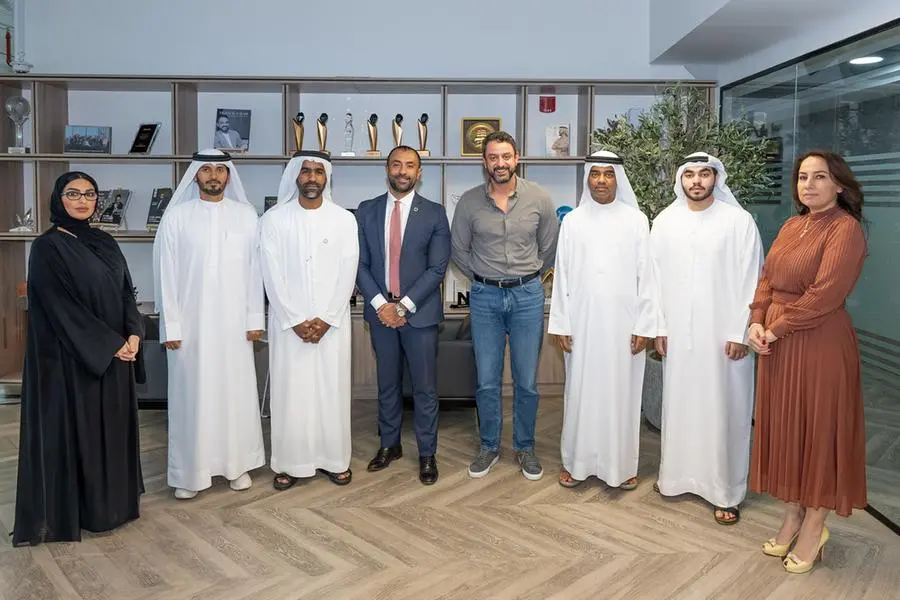
Parmigiani Fleurier introduces the TONDA PF Micro-Rotor in Agave Blue, a refined expression of contemporary Haute Horlogerie rooted in restraint and balance. Available in stainless steel and rose gold, the new models unite architectural clarity, subtle colour, and quiet mechanical sophistication.
2 min


Launched in 2021, the TONDA PF collection marked a defining moment for Parmigiani Fleurier and immediately established itself as a refined expression of contemporary Haute Horlogerie.
Praised for its sophistication and understatement, the collection articulated a clear vision of private luxury: discreet, personal and enduring.
The TONDA PF language is defined by architectural clarity: balanced volumes, controlled proportions and a disciplined reduction to the essential. Nothing is ornamental. Nothing is superfluous. This rigour allows the collection to remain contemporary without chasing novelty, echoing the evolution of modern elegance itself.
Today, the TONDA PF Micro-Rotor is introduced in Agave Blue through two distinct models: one crafted in stainless steel, the other in rose gold. Two interpretations. One philosophy.
AGAVE BLUE A COLOUR SHAPED BY NUANCE
Agave Blue is a tone that resists immediacy. Situated between mineral blue, vegetal green and soft grey, it is drawn from nature and refined through observation rather than effect.
Responsive to light and movement, the color reveals subtle shifts throughout the day, never static, never decorative. Like a carefully chosen fabric or a resolved interior palette, it reveals its depth gradually, rewarding attention over time.
At Parmigiani Fleurier, color is treated as a material layered, calibrated and precise. Agave Blue becomes part of a broader chromatic language, patiently developed, where each shade reinforces the collection’s identity.
STEEL AND ROSE GOLD – TWO EXPRESSIONS, ONE LANGUAGE
The Agave Blue dial finds two distinct material expressions. In stainless steel, the watch conveys clarity and restraint, emphasizing its architectural precision and contemporary purity. In rose gold, warmth and tactility are introduced, enriching the watch’s presence while preserving its essential balance. The distinction is not one of hierarchy, but of sensibility; two temperaments articulated through material, united by the same design discipline.
A RECOGNIZABLE DESIGN IDENTITY
Part of the TONDA PF’s appeal lies in its immediate legibility to the trained eye. The hand-guilloché dial, engraved with the signature Grain d’Orge motif, interacts delicately with light. The finely knurled bezel provides a tactile counterpoint, while applied indices and the discreet PF medallion on the crown complete a coherent visual grammar. These elements are not decorative signatures, but markers of identity; quietly distinctive, never ostentatious.
THE MICRO-ROTOR SILENT MECHANICAL INTELLIGENCE
One of the foundation pieces of the collection, the TONDA PF Micro-Rotor has progressively evolved towards greater formal purity. Originally conceived with a date display, it was later revisited without it allowing the dial to express its proportions, textures and chromatic depth with complete clarity.
At its heart, the micro-rotor seamlessly integrated into the movement enables exceptional slenderness while preserving automatic autonomy. Mechanical sophistication is resolved internally, maintaining the purity of the dial and the fluidity of the case. Despite its refined profile, the watch retains the confidence and resilience expected of a contemporary luxury sports timepiece combining elegance, ergonomics and everyday ease.
A CULTIVATED FORM OF PRIVATE LUXURY
The TONDA PF Micro-Rotor Agave Blue is not designed for a broad audience, but for individuals who understand that contemporary luxury lies in discernment: in objects that are internally coherent, culturally grounded, and capable of accompanying life without losing their identity.
With the TONDA PF Micro-Rotor Agave Blue, Parmigiani Fleurier continues to refine a singular vision of contemporary Haute Horlogerie one where purism enhances sophistication, color articulates identity, and watchmaking remains inseparable from culture.
Paine Schwartz joins BERO as a new investor as the year-old company seeks to triple sales.

Interior designer Thomas Hamel on where it goes wrong in so many homes.



A Kaspersky global survey shows that 92% of people in the UAE believe digitalization will reshape family life over the next decade, with AI, virtual experiences, and smart technologies becoming central to how families connect. Respondents expect AI bedtime stories, digital pets, virtual celebrations, VR vacations, and even home robots to increasingly shape shared family activities.
2 minAccording to a global survey conducted by Kaspersky’s market research center, an overwhelming 92% of people in the United Arab Emirates believe that digitalization will fundamentally reshape shared family activities over the next decade. From everyday routines to major milestones, technology is expected to play an increasingly central role in how families connect.
More than half of respondents (53%) expect AI-powered bedtime stories to become a normal part of daily life. At the same time, with 33% of UAE families anticipating that children may choose digital pets over real ones, it seems that ‘man’s best friend’ just received its first upgrade.
This shift extends beyond the home. Some 65% predict that family celebrations will migrate to video calls as the norm rather than the exception, while 41% can imagine family vacations taking place entirely in virtual reality. Nearly half (48%) also foresee home robots evolving from household tools into fully-fledged members of the family.
Calls for vigilance
While acknowledging AI’s potential to enrich family life, Kaspersky has also urged vigilance in response to its findings. The research, conducted in November 2025, surveyed 3,000 people across 15 countries, including the UAE and Saudi Arabia.
The company advises parents to choose services with strong privacy policies that avoid unnecessary storage or misuse of children’s data and voice interactions, while enhancing control through digital parenting assistants such as Kaspersky Safe Kids to manage content access and balance screen time.
Kaspersky also recommends that parents immediately change default passwords, regularly update device firmware, and segment their home networks. For added protection, Kaspersky Premium with a Smart Home Monitor provides 24/7 scanning of users’ home Wi-Fi networks, displaying a full list of connected devices—including device type, Operating System, and IP address—and issuing alerts whenever a new or unknown device connects.
“The accelerating pace of technology is not fragmenting the family but redefining its shared spaces,” said Seifallah Jedidi, Head of Consumer Channel for META at Kaspersky. “The future, as seen by the global majority, is one where digital and physical experiences blend to create new forms of togetherness, from a grandparent joining a birthday party via hologram to a child caring for a digital pet with a sibling across the globe.”
“The challenge and opportunity lie in building secure digital environments with intention, ensuring they are safe, respectful, and ultimately, tools that bring us closer,” he added.
Paine Schwartz joins BERO as a new investor as the year-old company seeks to triple sales.

Following the devastation of recent flooding, experts are urging government intervention to drive the cessation of building in areas at risk.



From AI-driven automation and smart factories to industrial IoT and robotics, Saudi Arabia is redefining manufacturing under Vision 2030—bringing cybersecurity, supply chain resilience, data governance, and workforce readiness to the forefront. These priorities take center stage at the 31st Edition of the Saudi Manufacturing Show 2026, where industry leaders will explore real-world case studies, advanced technologies, and strategies shaping the Kingdom’s manufacturing future.
3 min
Saudi Arabia’s manufacturing sector is entering a pivotal phase of transformation, driven by rapid advancements in smart factory technologies, AI-led automation, industrial IoT, robotics, and data-driven operations—all aligned with the Kingdom’s Vision 2030 goals. These innovations are reshaping how factories produce, optimize, and scale, reflecting Saudi Arabia’s ambition to build a globally competitive, technologically advanced, and future-ready industrial ecosystem. Simultaneously, this accelerated shift brings new priorities to the forefront, including cybersecurity for interconnected factories, strong data governance, resilient supply chains, and a highly skilled workforce capable of operating next-generation manufacturing systems.
Case Study: Advancing Smart Manufacturing in Saudi Arabia
A major Saudi-based manufacturing enterprise implemented a strategic Industry 4.0 transformation to improve operational efficiency, reduce downtime, and enhance supply chain resilience in alignment with Vision 2030 industrial objectives. Facing increasing global competition and legacy production constraints, the organization introduced a phased smart manufacturing roadmap across its facilities.
IoT-enabled sensors and industrial data platforms were deployed across production lines, providing real time visibility into equipment performance, energy usage, inventory flow, and quality metrics. AI-driven predictive maintenance significantly reduced unplanned downtime and improved asset utilization, while automation and robotics standardized repetitive tasks and accelerated production cycles.
A hybrid cloud and edge computing architecture supported low-latency shop-floor data processing and improved coordination between engineering, operations, and quality teams. Industrial cybersecurity controls were strengthened, alongside a workforce upskilling initiative focused on automation, digital maintenance, and smart manufacturing analytics.
This transformation reflects the rapid advancement of Saudi Arabia’s manufacturing sector—progress that will be highlighted at the 31st Edition of the Future Industry Summit – Saudi Arabia 2026, where leaders will gather to explore advanced technologies and shape the future of manufacturing across the Kingdom.
Event Overview:
The 31st Edition of the Saudi Manufacturing Show 2026 will bring together leading industry visionaries, manufacturing innovators, and technology strategists to explore the Kingdom’s rapidly evolving industrial landscape. With focused discussions on smart factories, AI-driven automation, industrial IoT, robotics integration, supply chain digitization, and next-generation production excellence, the conference will deliver actionable insights and real-world strategies to accelerate manufacturing transformation across Saudi Arabia.
- Date: 12th February 2026
- Time: 9:00 AM – 5:00 PM
- Location: Riyadh Marriott Hotel, Riyadh, Saudi Arabia
Strategic Partners:
- The Saudi Manufacturing Show 2026 is proud to have the support of Invest Saudi as its Strategic Partner, reinforcing the event’s mission to advance industrial growth, attract global innovation, and strengthen the Kingdom’s position as a leading hub for manufacturing excellence under Vision 2030.
- The event is also supported by the Saudi Arabia Centre for the Fourth Industrial Revolution (C4IR Saudi Arabia) as a Strategic Partner, underscoring a shared commitment to accelerating Industry 4.0 adoption, fostering advanced manufacturing technologies, and driving digital transformation across the Kingdom’s industrial ecosystem in line with Vision 2030.
Meet the Visionaries:
This edition of the Saudi Manufacturing Show will feature some of the Kingdom’s most influential industrial and technology leaders, who will share their expertise on smart manufacturing, supply chain transformation, advanced production technologies, and the future of Saudi Arabia’s industrial ecosystem. Below are a few of the distinguished speakers joining us at the 31st Edition of the Saudi Manufacturing Show 2026 — along with many more renowned experts, policymakers, and industry innovators:
- Khalid AlKhousan: General Manager of Metallic Industries Development, Ministry of Industry and Mineral Resources Kingdom of Saudi Arabia
- Howard Wu: Executive Director of International Investments, Innovation & Manufacturing, Oxagon NEOM Kingdom of Saudi Arabia
- Khaled Al-Hajeri: Vice President – Building Materials, National Industrial Development Center (NIDC) Kingdom of Saudi Arabia
- Musaed AlShammari: Cyber Operations Director, Ministry of Communications & Information Technology Kingdom of Saudi Arabia
- Ahmed Ghazal: Vice President of Engineering & Projects, Saudi Aramco Base Oil Company (Luberef) Kingdom of Saudi Arabia
Key Topics to Be Covered:
- Industry 4.0 Integration: AI, robotics & automation for next-gen manufacturing.
- Sustainable Manufacturing: Clean energy adoption & green production models.
- Industrial Workforce Development: Enabling job creation & advanced skills.
- AI-Driven Smart Factories: Real-time insights, process optimization & efficiency.
- Digital Sustainability: Reducing waste, improving energy use through tech.
- AI in Warehousing & Procurement: Practical automation for operations.
- Smart Factory Cybersecurity: Securing interconnected industrial systems.
- Big Data & IoT: Enhancing visibility & operational control.
- Digital Twins: Predictive simulation for performance optimization.
- Predictive Maintenance: Reducing downtime with AI-driven insights.
- Autonomous Robotics: Automating complex, high-precision tasks.
- AI in Supply Chain Optimization: Improving agility & responsiveness.
Register here.
Parts for iPhones to cost more owing to surging demand from AI companies.




Web Summit Qatar continues to build momentum on Day 3, drawing more than 30,000 founders, investors, policymakers, and tech leaders to Doha for four days of innovation, networking, and global collaboration. With sessions spanning AI, fintech, health, government, energy, and startup growth, the summit reinforces its position as the Middle East’s leading platform for ideas, investment, and future-shaping technology.
2 min
Web Summit Qatar has firmly established itself as the Middle East’s premier technology and innovation event, and Day 3 kicks off with energy and momentum. Now in its third edition, the summit has attracted more than 30,000 attendees — founders, investors, policymakers, technologists and industry leaders — to Doha Exhibition and Convention Center (DECC) for four days of cutting-edge content, networking and collaboration.
What to Expect on Day 3
After two days packed with high-impact sessions on AI, startup growth and emerging technologies, Day 3 brings another diverse lineup of talks, workshops and discussions drawn from Web Summit Qatar’s 14 content tracks. These include everything from AI and fintech to health innovation, government tech and sports tech — each designed to help delegates explore future trends and practical applications across industries.
The official schedule for February 3 features a mix of keynotes and breakout sessions focused on real-world tech challenges and opportunities. Topics range from startup culture and market entry strategies to aviation innovation — all contributing to Web Summit’s goal of connecting people, ideas and capital.
Tracks Driving the Conversation
Web Summit Qatar’s content is organized into 14 specialized tracks that reflect the biggest themes in tech and innovation today. These include, among others:
- AI Summit – Exploring how artificial intelligence is reshaping products, industries and societies
- Fintech Summit – Dialogue on digital payments, regulation and financial innovation
- New Energy Summit – Insights into energy transitions and sustainability
- Startup University – Practical guidance on fundraising, scaling and longevity
- Health Summit – Advances in health tech and care delivery
- Sport Summit – The evolving intersection of tech, performance and elite athletics
- Government Summit – Policy, innovation and public sector transformation
- Growth Summit – Leadership, resilience and strategic expansion
Each track amplifies conversations that matter — from shaping future economies to improving quality of life through technology.
A Global Stage for Ideas and Impact
Web Summit Qatar is more than a conference — it’s a global platform for partnerships and investment, bringing together more than 1,600 startups, 400+ speakers and hundreds of investors and international media. The summit supports founders and innovators on the path from concept to scaling success, while also spotlighting Qatar’s ambition to become a regional hub for innovation and entrepreneurship.
Looking Ahead
As the summit heads into its final day, delegates can expect continued opportunities for networking, deal-making, and deep dives into the technologies shaping the future — from advanced AI systems to digital government frameworks and beyond.
Whether you’re here to learn, launch, invest or connect, Day 3 of Web Summit Qatar solidifies its reputation as a must-attend event for global innovators and visionaries.
The sports-car maker delivered 279,449 cars last year, down from 310,718 in 2024.



GrowCarbon has launched a real-time, AI-powered environmental intelligence platform in the Middle East, enabling cities and developers to continuously measure trees, air quality, and carbon performance without relying on manual field surveys.
< 1 min
Many of the most-important events have slipped from our collective memories. But their impacts live on.


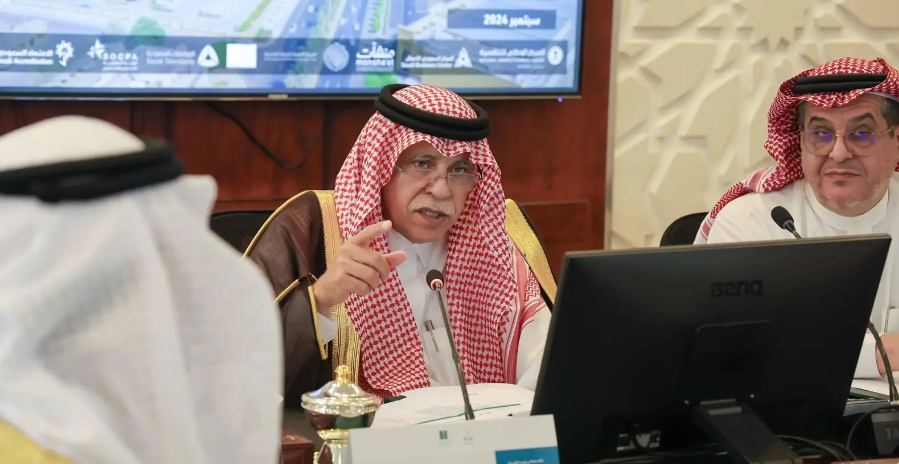
The 44th Edition of the Digital Transformation Summit – Saudi Arabia 2026 will bring together senior industry leaders, visionary technologists, and digital transformation strategists to explore the Kingdom’s accelerating digital evolution.
3 min
Saudi Arabia is undergoing a defining phase in its digital transformation journey, powered by rapid advancements in AI adoption, cloud modernization, smart governance, and large-scale digitization under Vision 2030. These efforts are reshaping how enterprises and public sector institutions operate, innovate, and scale which is reflecting the Kingdom’s strategic ambition to build a hyper-connected, competitive, and future-ready digital economy. Simultaneously, this accelerated growth brings critical priorities to the forefront, including strengthening cybersecurity frameworks, ensuring robust data governance, modernizing digital infrastructure, and developing a highly skilled national workforce capable of sustaining long-term innovation.
Case Study: Powering Smart Infrastructure Through Data-Driven Transformation in Saudi Arabia
A leading Saudi technology and infrastructure enterprise embarked on a large-scale digital transformation to support Vision 2030’s goal of building smarter, more connected cities. With data flowing from smart infrastructure, digital services, and connected systems, the organization needed a unified platform to turn information into actionable insight.
A centralized data and analytics platform was implemented to bring together data from IoT systems, operational platforms, and citizen services into a single source of truth. This enabled real-time visibility across infrastructure, performance, and service delivery.
Advanced analytics and AI were used to optimize traffic movement, energy usage, asset performance, and service demand, allowing the organization to anticipate needs, reduce downtime, and improve overall efficiency. Automated data pipelines and analytics-driven workflows also accelerated operations and improved decision-making across teams.
To ensure long-term impact, a comprehensive data and digital enablement program equipped employees to work confidently with analytics, AI, and modern data platforms.
This transformation highlights how Saudi Arabia’s innovation leaders are using data and AI to power next generation smart infrastructure- an evolution that will be explored at the 44th Edition of the Enterprise Tech Summit – Saudi Arabia 2026.
Event Overview
The 44th Edition of the Digital Transformation Summit – Saudi Arabia 2026 will bring together senior industry leaders, visionary technologists, and digital transformation strategists to explore the Kingdom’s accelerating digital evolution. With insightful discussions on AI adoption, cloud modernization, cybersecurity resilience, advanced data management, and digital-first enterprise models, the summit will highlight actionable frameworks, real-world transformation successes, and opportunities for strategic collaboration across sectors.
- Date: 11th February 2026
- Time: 9:00 AM – 5:00 PM
- Location: Riyadh Marriott Hotel, Riyadh, Saudi Arabia
Strategic Partner
The Digital Transformation Summit – Saudi Arabia 2026 is proud to have the support of the Arab Federation for Digital Economy as its Strategic Partner, reinforcing the event’s mission to advance regional digital growth and strengthen collaboration across the Middle East’s evolving digital ecosystem.
Meet the Visionaries
This edition of the summit will feature some of Saudi Arabia’s most influential technology leaders, who will share their expertise on innovation, data-driven transformation, security, and the future of digital enterprises. Here are a few of the distinguished speakers joining us at DTS Saudi Arabia 2026, along with many more renowned experts and industry pioneers:
- Dr. Nasser Alamri: Director General of Information Technology (CIO), Institute of Public Administration (IPA)
- Dr. Khaled Alqahtani: Executive Director of Data and Statistics NEOM
- Thenayan AlThenayan: Executive Vice President – Digital ACWA Power
- Abdullah Badahdah: Executive Director of Information Technology, Riyadh Chamber of Commerce & Industry
Key Topics to Be Covered
Attendees will explore Saudi Arabia’s most critical digital priorities through focused discussions, including:
- CEO’s AI & Digital Growth Blueprint: Strategy, culture, and leadership alignment.
- C-Suite ROI Playbook: Turning digital and AI investments into measurable business value.
- Legacy Modernization: Breaking bottlenecks and enabling scalable transformation.
- Cybersecurity Reinvented: Zero Trust, AI-driven defense, and emerging quantum threats.
- Smart IT Procurement: Trends, pitfalls, and strategies for smarter, value-driven vendor choices.
- Future of AI & Digital Trust: Navigating next-gen AI, data governance, and digital ethics.
- The CIO’s Priorities: Building scalable platforms that accelerate enterprise-wide growth.
Register here.
Paine Schwartz joins BERO as a new investor as the year-old company seeks to triple sales.


AWS is powering the ENTERTAINER’s transformation into an AI-driven lifestyle companion, as the platform marks 25 years by launching H.A.P.I.™, a bilingual Gen AI assistant that personalizes offers, planning, and support across its mobile app using Amazon Bedrock.
2 min
Amazon Web Services, Inc. (AWS), an Amazon.com, Inc. company, is powering the next generation of digital lifestyle experiences through a transformative collaboration with the ENTERTAINER, the region’s leading global lifestyle savings app. As the company celebrates its 25th anniversary, the ENTERTAINER is upgrading its mobile platform through AWS cloud and generative AI (Gen AI) services, evolving from a traditional Buy One Get One Free savings app into an AI-driven lifestyle companion that personalizes and enhances user experiences.
The revamped mobile app experience debuts H.A.P.I.TM, a bilingual conversational Gen AI assistant powered by Amazon Bedrock. This hyper-personalized companion engages users in natural conversations in both English and Arabic, transforming how customers discover exclusive offers, plan activities, and receive real-time support.
Through natural conversation, H.A.P.I.TM handles open-ended queries by understanding user intent and providing personalized recommendations. Whether planning a family brunch or seeking daily activities, it creates custom itineraries with relevant offers while automating routine inquiries, allowing customer service teams to focus on matters requiring human empathy. This delivers both efficient automated support and meaningful human interaction when needed.
Powering these intelligent interactions, H.A.P.I. TM orchestrates four specialized AI assistants built on Amazon Bedrock, a comprehensive, secure, and flexible platform for building Gen AI applications and agents. These AI assistants work together to enhance customer experience by handling complex user requests: a planner assistant that organizes detailed itineraries for customers seeking inspiration, a search assistant that retrieves relevant information on offers and merchants, a knowledge assistant that instantly answers FAQs from the ENTERTAINER’s knowledge base , and an escalation assistant that seamlessly routes complex inquiries to human customer service teams.
To accelerate response times, the backend infrastructure is modernized with an enhanced Amazon OpenSearch cluster, leveraging conversational AI, semantic search, and vector capabilities to deliver faster, more accurate results for both search and knowledge assistants. The system integrates with Amazon Personalize for tailored offers and uses Amazon Bedrock Guardrails to ensure customer service interactions remain safe and relevant.
“We are thrilled to work with the ENTERTAINER as they celebrate a 25-year legacy by reinventing their customer experience through Gen AI,” said Chris Erasmus, General Manager, UAE, rest of Middle East and North Africa at AWS.
“The ENTERTAINER is a prime example of a company making significant investments in AI through AWS’s Gen AI capabilities to drive real business impact and enhance customer experience. Through H.A.P.I. TM, powered by Amazon Bedrock, they’re pioneering a more intuitive and engaging digital experience, redefining what’s possible in the lifestyle and loyalty space.”
“For 25 years, the ENTERTAINER has provided unbeatable value and memorable experiences to our members,” said Donna Benton, Founder & CEO of the ENTERTAINER. “We look forward to the next chapter of our vision in becoming an even more indispensable part of our customers’ daily lives, leveraging the transformational power of AI to elevate the ENTERTAINER experience.”
“Our collaboration with AWS allows us to make this vision a reality. H.A.P.I. TM is at the heart of our evolution, combining the best and most relevant offers with a smart, intuitive lifestyle companion. We are utilizing the power of Gen AI to anticipate our customers’ needs and deliver a level of personalization that is unmatched in the market.”
The launch of this AI-powered platform marks the beginning of a new era in personalized lifestyle services, where technology integrates with daily life to deliver enhanced value and convenience.
The ENTERTAINER’s reinvented AI-powered mobile app experience is available across its operating markets in the Middle East, Africa and Asia, including the UAE, Saudi Arabia, Qatar, Bahrain, Oman, Kuwait and Singapore.
Paine Schwartz joins BERO as a new investor as the year-old company seeks to triple sales.


Many of the most-important events have slipped from our collective memories. But their impacts live on.
7 min
After roughly 85 years of television in American homes, viewers have collectively shared historical triumphs and unthinkable tragedies, from Neil Armstrong’s moonwalk in 1969 to the 9/11 terrorist attacks in 2001.
But lesser-known events in the world of television have also reshaped America’s cultural landscape in lasting ways.
From redefining suppertime to digitising games to symbolising sex, drugs and rock ’n’ roll, here are six examples of TV’s impact on the American psyche.
1950: Birth of the couch potato
In the late 1930s and early 1940s, television sets marched into American living rooms.
But like the venerable radios they replaced, TVs were incredibly inconvenient. Many viewers had to actually stand up and walk across the room just to change the channel.
In 1950, Zenith Radio addressed this gross shortcoming with its release of a remote control, albeit one with a long cord and only two buttons—one to change channels and the other to power the TV on and off. Zenith aptly dubbed its remote Lazy Bones.
Taking lazy to the next level, Swanson & Sons in 1953 introduced TV dinners, convenient bake-and-eat frozen meals in aluminum trays.
Clearly, suppertime had moved to the sofa, because in 1954, the first full year of production, Swanson sold 10 million TV dinners. We were becoming a nation of “couch potatoes.”
Of course, nobody knew it at the time because the term couch potato didn’t exist yet.
In 1976, a man named Tom Iacino called his friend’s house and flippantly asked the person who answered the phone if he could speak to “the couch potato.”
Another friend, cartoonist Robert Armstrong, later heard about the mocking moniker and went on to trademark it (with Iacino’s permission).
Armstrong co-wrote “The Official Couch Potato Handbook: A Guide to Prolonged Television Viewing,” and the term couch potato entered the nation’s vocabulary.
Sept. 9, 1950: Forced laughter
The name Hank McCune may be lost to history, but his short-lived television sitcom will forever be remembered for its chuckles, chortles, giggles and guffaws. All of it canned.
Woven throughout the show’s jokes and sight gags was a laugh track—a first in American television—to “sweeten” the material and cue viewers at home when something was funny.
Countless other shows went on to use the technique, with Charlie Douglass soon becoming the undisputed “master of laughter.”
Douglass, formerly a technical director for various live shows, incorporated prerecorded laughter into shows that were filmed both with and without studio audiences.
To do this, Douglass built what he called the “Laff Box” and operated it somewhat like an organ. The upper keys were pressed to combine different types of laughter, from titters to belly laughs, and the foot pedals controlled the timing and duration of the laughter.
TV Guide published a two-part series on the Laff Box in 1966 in which industry executives explained why they went for the easy laffs: “Live audiences in from the street are tense and nervous and you don’t get their true reactions,” explained producer Don McGuire.
Arthur Julian, a writer on “F Troop,” noted that “real audiences sound phonier than the laugh track. Sometimes they freeze up and act unnatural.”
Today, television shows have mostly done away with laugh tracks. But Douglass still gets the last laugh—even though he died in 2003.
A recent study confirmed what previous research has already determined: Laugh tracks get people to laugh. In 2021, researchers concluded that a laugh track “may socially facilitate viewers’ responses and succeed in increasing the perceived humor and enjoyability of a television comedic sitcom.”
1959: Fired for being Black
At his first job in TV in 1959, Max Robinson was a voice without a face. As he delivered the latest headlines on WTOV in Portsmouth, Va., viewers at home merely saw a slide that read “News” on their TV screens.
Then one day before his broadcast, Robinson instructed the cameraman to remove the slide.
“I thought it would be good for all my folks and friends to see me rather than this dumb ‘News’ sign up there. Vanity got the better of me,” Robinson told the Washington Post in 1988.
When the slide was removed, viewers at home discovered that Robinson was Black.
The next day, the owner called him and apologetically fired him, Robinson told the Post. “He’d gotten these calls from some irate whites who’d found out that one of ‘those people’ was working there,” Robinson said.
Nonetheless, even though he lost his job, Robinson made history as the first African-American nightly news television anchor.
After his WTOV stint, Robinson went on to report the news and sit in the anchor’s chair at various stations until his big break came on July 10, 1978. ABC-TV premiered “World News Tonight” with three anchors: Frank Reynolds, Peter Jennings and Max Robinson.
Despite his success, Robinson continued to decry what he saw as racial inequities in both the media and in media coverage.
In a 1981 address at Smith College, he called the news media “a crooked mirror” through which “white America views itself,” the New York Times reported. “Only by talking about racism, by taking a professional risk, will I take myself out of the mean, racist trap all Black Americans find themselves in.”
Robinson was one of the founders of the National Association of Black Journalists and advocated for the cause until his death in 1988.
Oct. 18, 1979: A flood of BUDs
To encourage the expansion of satellite TV, the FCC voted to drop its costly and complicated licensing requirement for owning a satellite dish.
Now, cable and premium channels could more readily install giant satellite dishes to transmit and receive signals.
But the rule change also meant that Joe Schmo could install a behemoth satellite dish in his backyard and scoop up signals from cable and premium channels—all without having to pay monthly subscription fees.
Even so, Joe Schmo soon learned that saving money came at a price: All the neighbours hated him.
Some early models of the satellite dishes measured 16 feet in diameter, and hundreds of thousands of them sprouted up across the country. Technically, they were referred to as C-band satellite dishes after the range of wireless frequencies they received.
But they were better known throughout neighbourhoods as BUDs, or Big Ugly Dishes.
BUDs could capture premium programming at no cost because initially the analog-TV signals weren’t encrypted by broadcasters.
Still, even if homeowners got free programming, the upfront costs of buying and installing a satellite dish ran into hundreds, if not thousands, of dollars.
The backyard BUDs shot up just as cable and satellite programming was just getting off the ground. Home Box Office was a pioneer on both fronts.
In 1972 it was the first pay-cable network, and in 1975, it became the first TV network to transmit programming via satellite.
Ted Turner in 1976 turned WTCG, a small, independent TV station into a national cable network and later rebranded it WTBS, for Turner Broadcasting System.
Other networks that were early to the cable game include the Entertainment and Sports Programming Network (ESPN) in 1979, and Music Television—MTV—in 1981.
In 1986, broadcasters began scrambling their signals in hopes of nipping their losses in the BUDs.
Some companies, including HBO, said homeowners could continue to use their backyard dishes, but in order for them to work, they would have to also buy a $395 descrambler and pay monthly subscription fee.
Needless to say, as more channels encrypted their signals, BUD sales withered.
1972: A whole new game in town
In September 1972, the world’s first home video game console made its debut, giving the words “What’s on TV?” a literal new meaning.
Named the Magnavox Odyssey, the console setup included translucent overlays that players stuck on the TV screen to create colourful game boards, such as table tennis, roulette and haunted house.
The underlying gaming technology itself was crude by today’s standards: Three white dots and a vertical line on a black background. Two of the dots were manipulated by players using hand-held controllers, the third by the system itself.
The console had dials that adjusted the placement of the vertical line and the speed of one of the dots.
With six game cartridges and plastic overlays, the Odyssey setup offered 12 different games when it first retailed for $100—or about $770 in today’s dollars.
While rudimentary, the Odyssey broke a barrier in the world of television. It changed the medium from a passive activity with a scripted outcome into an interactive pursuit controlled by users at home.
Today, the U.S. ranks No. 1 in the world videogame market, with revenue projected to exceed $140 billion in 2025, according to Statista Market Insights.
That figure includes the creation, publishing, distribution and monetization of PC, mobile and online games, as well as spending on related hardware and accessories. China holds the No. 2 spot, with a projected $137.8 billion in revenue in 2025.
1970s: Rock stars vs. TV sets
In the late 1960s, a peculiar new synergy emerged between rock ’n’ roll music and television: Put a rock star in a hotel room with a TV, and the TV wouldn’t come out alive.
Many in the music world trace the genesis of this phenomenon to Keith Moon, who was legendary both as a drummer for the Who and for trashing hotel rooms, including TVs.
A 1972 film recording documents Keith Richards of the Rolling Stones and saxophonist Bobby Keys throwing a TV off the 10th-floor balcony of Continental Hyatt House Los Angeles.
In the recording, one of them is kindly heard saying, “Let’s make sure there ain’t nobody down there,” before dropping the TV.
Not to be outdone, members of Led Zeppelin threw televisions from the windows of Seattle’s Edgewater Hotel into the waters of Elliot Bay.
The Brits weren’t the only bad boys. While visiting Asheville, N.C., for a show in July 1975, Elvis Presley reportedly shot to death the TV set in his motel room because the vertical hold setting wasn’t working properly, according to local historian Jon Elliston.
It didn’t take long for trashing hotel property to become a hallmark of the rock ’n’ roll mythology, with television sets seemingly taking the brunt of the abuse.
Still, destroying them was an expensive thrill, since the band was expected to reimburse hotels for the ravaged TVs and other damage to the rooms when checking out.
It could also be dangerous. After a night of heavy drinking, Black Sabbath’s former frontman Ozzy Osbourne and guitarist Zakk Wylde hurled a TV out of a sixth-floor window at the Four Seasons in Prague
Wylde, who recalled the incident in a 2024 interview, said it happened after Osbourne mentioned that he had never done it before.
Describing the TV drop in a 2019 interview, which has been edited for TV, Osbourne said, “I ripped the window open, picked it up and threw it out of the BLEEP window. It landed on the floor and BLEEP exploded. It went like a bomb. Little did I know that there was a guy smoking a cigarette, and I shudder to think if that had hit him on the head. I would have killed him stone BLEEP dead.”
Osbourne, who famously bit the head off a bat that was tossed onto the stage at a concert in Iowa (he said later he thought it was fake), died in July of 2025 of a heart attack at age 76.
On the opposite end of the safety scale: Guitarist Kelley Deal of the Breeders and Nirvana’s Krist Novoselic.
On tour in the early 1990s, the two musicians decided to toss a TV out of a hotel window, Deal told the Guardian.
Novoselic “called down to the front desk, got permission, paid for the TV and asked security to make sure nobody was below. This is the kind of sweet band they were. Then we shoved it through the window. It was fun, but the funniest bit was all the planning and anticipation.”
Today, rock ’n’ roll is past its heyday, and many icons of the genre are fading as well. But legends still have a soft spot for the old days.
Asked about artificial intelligence creeping into music, rocker Joe Walsh dismissed concerns in a 2023 video clip, saying: AI “can’t destroy a hotel room.
It can’t throw a TV off the fifth floor into the pool and get it right in the middle. When AI knows how to destroy a hotel room, then I’ll pay attention to it.”
Parts for iPhones to cost more owing to surging demand from AI companies.



A deal to sell TikTok’s U.S. business to a new investor-led joint venture has been approved, marking the end of a years-long regulatory saga. The newly formed entity will see ByteDance retain a minority stake, while U.S. user data will be managed and protected through Oracle’s cloud under enhanced privacy and cybersecurity oversight.
< 1 min
A deal between the U.S. and China to sell TikTok’s U.S. business to a consortium of investors has been approved.
TikTok announced on Thursday night that the TikTok USDS Joint Venture LLC has been established. This was expected as CEO Shou Zi Chew told employees in a memo in December about the plans to create the joint venture after President Donald Trump signed an executive order in September that paved a way to make the deal possible.
The joint venture has three managing investors, which include Oracle, Silver Lake, and MGX. Each of those firms will hold 15% in the new entity. Some of the other investors include the Dell Family Office, which is the investment firm of Dell Technologies CEO Michael Dell; Vastmere Strategic Investments, an affiliate of Susquehanna International Group; and Alpha Wave Partners.
ByteDance will retain a 19.9% stake of the joint venture.
This deal puts an end to what’s been a multiyear saga for TikTok and its American users.
Former President Joe Biden signed the TikTok ban, otherwise known as the Protecting Americans from Foreign Adversary Controlled Applications Act, into law in 2024. Government officials looked to address concerns the Chinese-owned social-media platform was collecting user data and posed a risk to national security. TikTok has denied this.
In an effort to keep TikTok around despite the national security concerns, Trump signed several different executive orders that delayed the date TikTok had to divest itself. Trump’s current support for the platform is a switch from his first term in office, when he advocated for the app to be banned.
TikTok said on Thursday that U.S. user data will be protected by the joint venture in Oracle’s cloud. The joint venture will operate a comprehensive data privacy and cybersecurity program that is audited and certified by third party cybersecurity experts, TikTok said.
The sports-car maker delivered 279,449 cars last year, down from 310,718 in 2024.




MG Motor has been named Official Automotive Partner for the 2026 and 2027 Dubai Marathon, supporting one of the region’s most iconic sporting events with a fleet of hybrid and electric vehicles. The partnership underscores MG’s focus on performance, efficiency, and innovation, while reinforcing its growing role in lifestyle-led initiatives that promote active and inclusive communities across the UAE.
2 min
MG Motor has been appointed as Official Automotive Partner for the 2026 and 2027 editions of the Dubai Marathon, bringing one of the Middle East’s best-selling car brands together with the oldest and fastest international marathon in the region.
As part of the partnership, MG will provide a dedicated fleet of support vehicles to support race operations, logistics, and event infrastructure, including the race’s lead car. The fleet will feature the new MG HS Hybrid+ SUV alongside the fully electric Cyberster roadster, showcasing MG Motor’s evolving portfolio of efficient hybrid and electric vehicles.
Chosen for its exceptional endurance and operational efficiency, the MG HS Hybrid+ delivers a driving range of up to 1,287 km, making it ideally suited to the demands of a world-class marathon. Its advanced hybrid powertrain and intelligent energy management system ensure smooth, low-consumption performance throughout extended race-day use, from leading runners to supporting event logistics, while regenerative braking and refined ride comfort support long-duration, real-world driving.
Taking place on February 1, the 2026 Dubai Marathon will mark the 25th anniversary of the iconic race — the first in the region to achieve World Athletics Gold Label status. The event is expected to welcome around 20,000 runners from across the globe, competing in three race distances: 4 km, 10 km, and the full 42.195 km marathon.
Junaid Bukhari, Marketing Director of MG Motor Middle East, said: “The Dubai Marathon provides a powerful platform to connect MG Motor with a diverse, forward-looking community that values movement, resilience, and everyday performance. Through this partnership, we are able to showcase how our vehicles are designed to support real-world journeys while reinforcing MG’s growing role in lifestyle-led initiatives that promote active, inclusive communities across the UAE.”
Since its regional launch in 2015, MG has rapidly grown to become one of the top five best-selling automotive manufacturers in the GCC. The company sold over 70,000 vehicles last year and is present in 12 markets across the MENA region. Across the UAE, MG operates six showrooms – in Abu Dhabi, Al Ain, Dubai, Fujairah, Ras Al Khaimah and Sharjah – and six service centers.
MG Motor’s growing new energy portfolio highlights the brand’s focus on advanced powertrain technologies and real-world usability. Alongside the MG HS Hybrid+, the fully electric Cyberster showcases MG’s performance-oriented electric capabilities, combining zero-emissions driving with striking design and engaging dynamics. Complementing this is the MG 8 PHEV, which pairs plug-in hybrid efficiency with long-distance practicality, offering a class-leading driving range of up to 1,655 km through intelligent energy management and advanced battery technology. Together, these models underline MG Motor’s commitment to innovation, electrification, and delivering high-performance, efficient mobility solutions tailored to modern drivers.
A key pillar of MG’s customer proposition is its focus on ownership confidence, supported by a comprehensive manufacturer warranty offering of up to six years or 200,000 km on eligible models, subject to market terms and conditions. Complementing this, MG continues to invest in aftersales infrastructure across the region, including a dedicated regional training centre in the UAE and two regional spare parts warehouses, contributing to strong parts availability levels across its dealer network.
Parts for iPhones to cost more owing to surging demand from AI companies.



Kaspersky warns that cyber threats continued to intensify across retail and e-commerce in 2025, with ransomware, phishing, and web-based attacks hitting millions of users. As AI-driven shopping tools expand in 2026, experts stress that stronger cybersecurity and data privacy measures will be critical to protect both consumers and businesses.
4 min
In 2025, the retail and e-commerce sector continued to face intense pressure from cybercriminals. According to Kaspersky data, 14,41%* of users in the retail sector encountered web-based threats, while 22,20% were affected by on-device attacks.
Ransomware remains a serious concern for the industry. Last year, 8,25% of retail and e-commerce companies experienced ransomware incidents, and the number of unique B2B users in the sector affected by ransomware detections rose by 152% compared to 2023, signaling a sharp escalation in targeted attacks.
Phishing also continues to be a major threat vector. Kaspersky identified 6.7 million phishing attacks targeting users of online stores, delivery services, and payment systems in 2025. More than half of these attacks (50,58%) were aimed specifically at online stores, underscoring cybercriminals’ focus on e-commerce platforms as high-value targets for fraud and data theft.
A look at 2025 cybersecurity for retail & e-commerce: trends and what happened
A stealer with a taste for pizza delivery. Shopping and food ordering via mobile apps are routine user behaviors. However, 2025 demonstrated that even downloading a seemingly legitimate app from an official app store does not guarantee safety, nor does it ensure that user data and financial credentials will not be compromised.
Ransomware detections in the B2B sector increased due to a single dominant actor. The number of unique users in the Retail & E-commerce sector who encountered ransomware detections increased by 152% in 2025 compared to 2023 (Nov 2024 – Oct 2025 vs. Nov 2022 – Oct 2023). The most significant growth occurred during the 2024-2025 period and is largely attributable to the rapid spread of the Trojan-Ransom.Win32.Dcryptor family, which became highly prevalent across the retail and e-commerce sector in some of the analyzed markets. This malware is a trojanized ransomware variant that leverages the legitimate DiskCryptor utility to encrypt disk partitions on victim systems.
Phishing activity in the online retail segment stood out. Despite being a long-established attack technique, phishing remains highly prevalent in the context of online purchasing. From November 2024 through to October 2025, Kaspersky products blocked 6,651,955 attempts to access phishing links targeting users of online stores, payment systems, and delivery services. Of these attempts, 50.58% targeted online shoppers, 27.3% impersonated payment systems, and 22.12% targeted users of delivery companies.
Sales seasons continue to do the work for attackers. Seasonal peaks in online shopping consistently provide attackers with predictable opportunities to scale user-focused attacks. Periods of heightened promotional activity lower user vigilance and allow familiar phishing and spam scenarios to blend into legitimate marketing traffic, increasing their overall effectiveness.
Predictions: what retail & e-commerce cybersecurity might face in 2026
Chatbots are likely to become a common product discovery tool across online marketplaces. Unlike traditional search, conversational interfaces encourage users to share more detailed, natural-language requests, revealing preferences, constraints, and contextual information. This shift expands the privacy attack surface, as platforms accumulate richer user profiles through chat interactions. As a result, chatbot logs may become as sensitive as transactional data, increasing the risks of over-collection, misuse, or exposure of personal information.
“Search itself is changing, including how people look for products online. In 2025, there was a gradual shift from simple keyword queries to more conversational and visual ways of finding what to buy. As these models rely on broader user input, careful handling of the data involved will remain an important consideration for maintaining user trust,” – comments Anna Larkina, Web data and privacy analysis expert at Kaspersky.
Changes in taxes and trade rules might be exploited in online fraud. Modifications in taxes, import duties, and cross-border trade rules are likely to be used as lures in phishing campaigns and fraudulent online stores, promoting unrealistically cheap offers or claims of avoided fees. As pricing and fee rules continue to evolve across markets, it may lower vigilance, increasing the effectiveness of such schemes, particularly against small and mid-sized retailers.
AI-powered shopping assistants are expected to increasingly operate outside retail platforms, embedding themselves into browsers, mobile apps, and third-party services. While designed to simplify navigation and price discovery, these tools shift data collection beyond the retailer’s perimeter, creating new and less visible privacy risks. To function effectively, external AI shopping agents require continuous access to user behavior, including browsing activity, search intent, location context and product interactions across multiple sites. This enables the aggregation of detailed behavioral profiles outside the direct control of both users and retail platforms, increasing the risks of over-collection, opaque data usage, and unintended exposure.
Image-based product search might become a new challenge in privacy risks. Previously, the main privacy concern around user images in e-commerce was limited to photos voluntarily shared in product reviews. However, image-based product search is expected to make photo uploads a routine part of the shopping experience across major retail platforms. While this feature improves product discovery, it also increases the risk of unintended exposure of personal data. User-submitted images may contain faces, home environments, or sensitive details, such as names, phone numbers, or addresses visible on shipping labels or packaging, making secure processing, data minimization, and limited retention critical requirements for retailers.
The full retail and e-commerce report is available by link.
Kaspersky experts recommend the following to keep safe:
- Guard your privacy with smart tools. Be cautious about what you share and avoid uploading personal images or details in queries. Your interactions help build a profile used for ads and service improvements.
- Verify senders and links. Don’t trust discounts or order notifications from emails or messages. Always double-check the sender’s address and manually type the store’s website URL into your browser instead of clicking on any links you receive.
- Research the store before buying. If you’re shopping at a new or unfamiliar online store, take a moment to check its legitimacy: look for customer reviews, ensure the website address is spelled correctly, and confirm that the site pages look professional and polished.
- Monitor your card transactions regularly. Fraudulent charges can slip through unnoticed. Make it a habit (e.g., once a week) to log into your online banking or mobile app to review all recent transactions. If you spot anything suspicious, block your card and contact your bank immediately.
- Adopt a proactive security approach to protect against malware and data theft. Use reliable cybersecurity software like Kaspersky Premium to prevent infections and scan your device regularly. If you discover an infected app, remove it immediately and do not reinstall it until a confirmed, clean update is released. Complement this by managing sensitive data securely: avoid storing passwords or recovery phrases in your photo gallery or notes; instead, use a dedicated, trusted password software such as Kaspersky Password Manager.
For retail & e-commerce organizations we recommend:
- Protect corporate infrastructure against a wide range of threats, including phishing and ransomware. Use solutions from the Kaspersky Next product line that provide real-time protection, threat visibility, investigation and advanced response capabilities. If a company lacks cybersecurity workers, it can adopt managed security services such as Kaspersky Managed Detection and Response (MDR) and / or Incident Response that covers the entire incident management cycle – from threat identification to continuous protection and remediation.
Parts for iPhones to cost more owing to surging demand from AI companies.

Alexandre de Betak and his wife are focusing on their most personal project yet.