







Skyscanner Reveals Growing Staycation Interest Among Saudi Travelers
Skyscanner data shows a surge in domestic travel across Saudi Arabia this summer, with Jeddah, Riyadh, Abha, Dammam, and Madinah topping searches—highlighting staycations as a growing trend driven by family-friendly, cultural, and leisure offerings.
 2 min
2 min
As the summer season comes to an end, Saudi Arabia has seen a significant shift in travel patterns with domestic travel on the rise, supported by strong demand for cultural, entertainment, and family-friendly offerings across the Kingdom.
According to data released by Skyscanner, Jeddah was the most searched destination for trips in July and August, followed by the capital Riyadh. Completing the top five are Abha, Dammam and Madinah, as Saudi travelers increasingly chose to explore the Kingdom’s attractions.
Today, Jeddah is a popular choice with the Red Sea coastline, festivals, and new leisure offerings attracting families while Riyadh remains a leading hub, driven by mega events, shopping, and dining experiences. Abha is an ideal location for nature escapes during the peak heat while Dammam is also appealing with its accessible location a popular weekend getaway.
Furthermore, search volumes for domestic travel rose significantly during June, with the week ending 30th June recording the month’s highest search traffic – a 205.3% Week on Week (WoW) increase.
Hotel stays were also popular. Mecca was the top searched destination for stays between June and August, followed by Jeddah, Madinah and Riyadh. Average night rates for domestic hotel stays stayed competitive starting from SAR 460. Cheaper than Egypt (from SAR 501) and Turkey (from SAR 663), staycations were an appealing choice for families and younger travelers seeking value and convenience.
Ayoub El Mamoun, Travel Expert at Skyscanner, said: “This summer reinforced Saudi Arabia’s status as one of the region’s most exciting tourism markets. The strong trend towards local travel reflects growing confidence in the Kingdom’s tourism infrastructure and highlights how travelers are finding more value in local experiences. From Riyadh to Jeddah, Saudi travelers have shown a preference to stay in the Kingdom and enjoy a perfect summer getaway.”
With Vision 2030 driving investments in hospitality, culture, and entertainment, the tourism sector is also a fundamental pillar of its strategy.
According to the World Tourism Barometer Report, published by UN Tourism, the Kingdom recorded a 102% increase in international tourist arrivals in the first quarter of 2025, compared to 2019, and Saudi Arabia’s domestic tourism is expected to continue its upward trend, positioning itself as a leading regional and international hub in the years to come.
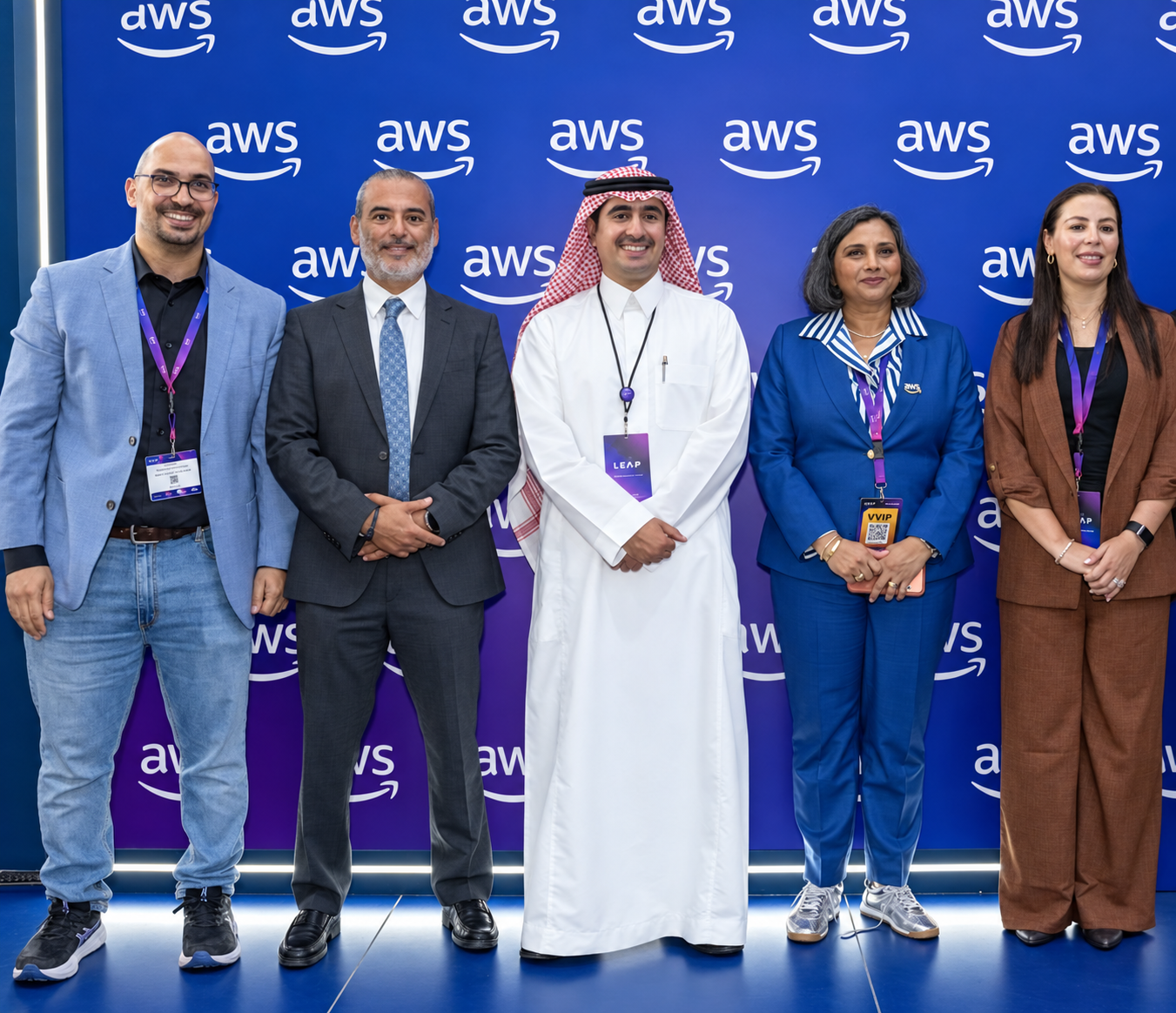
ZainTECH and AWS have joined forces to accelerate cloud adoption and AI-led innovation across Saudi Arabia, supporting the Kingdom’s Vision 2030 goals.
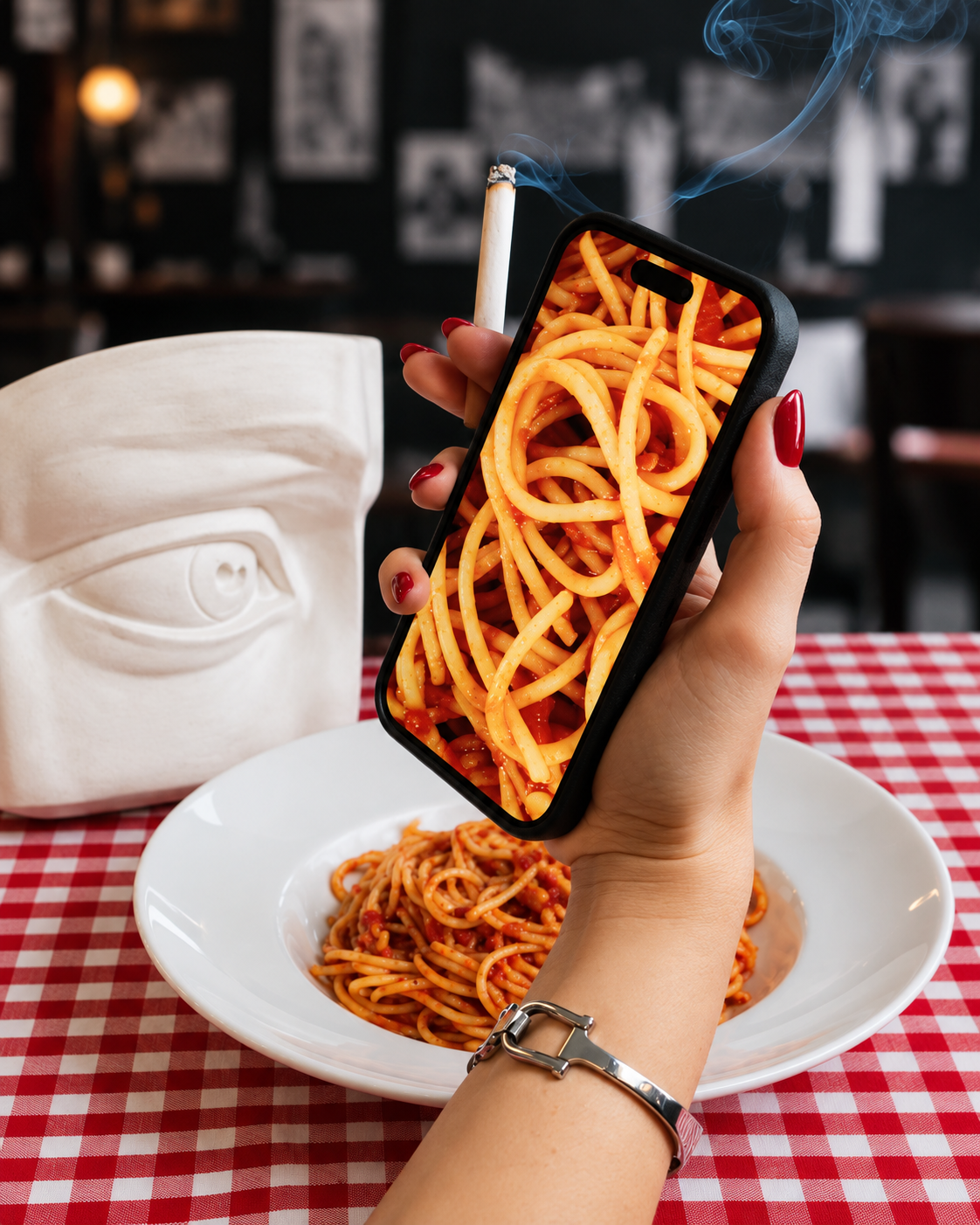
Restaurants are pushing back against phone-filled dining with lockable pouches, screen-free policies and playful challenges—helping guests put down their devices and reconnect over a meal.
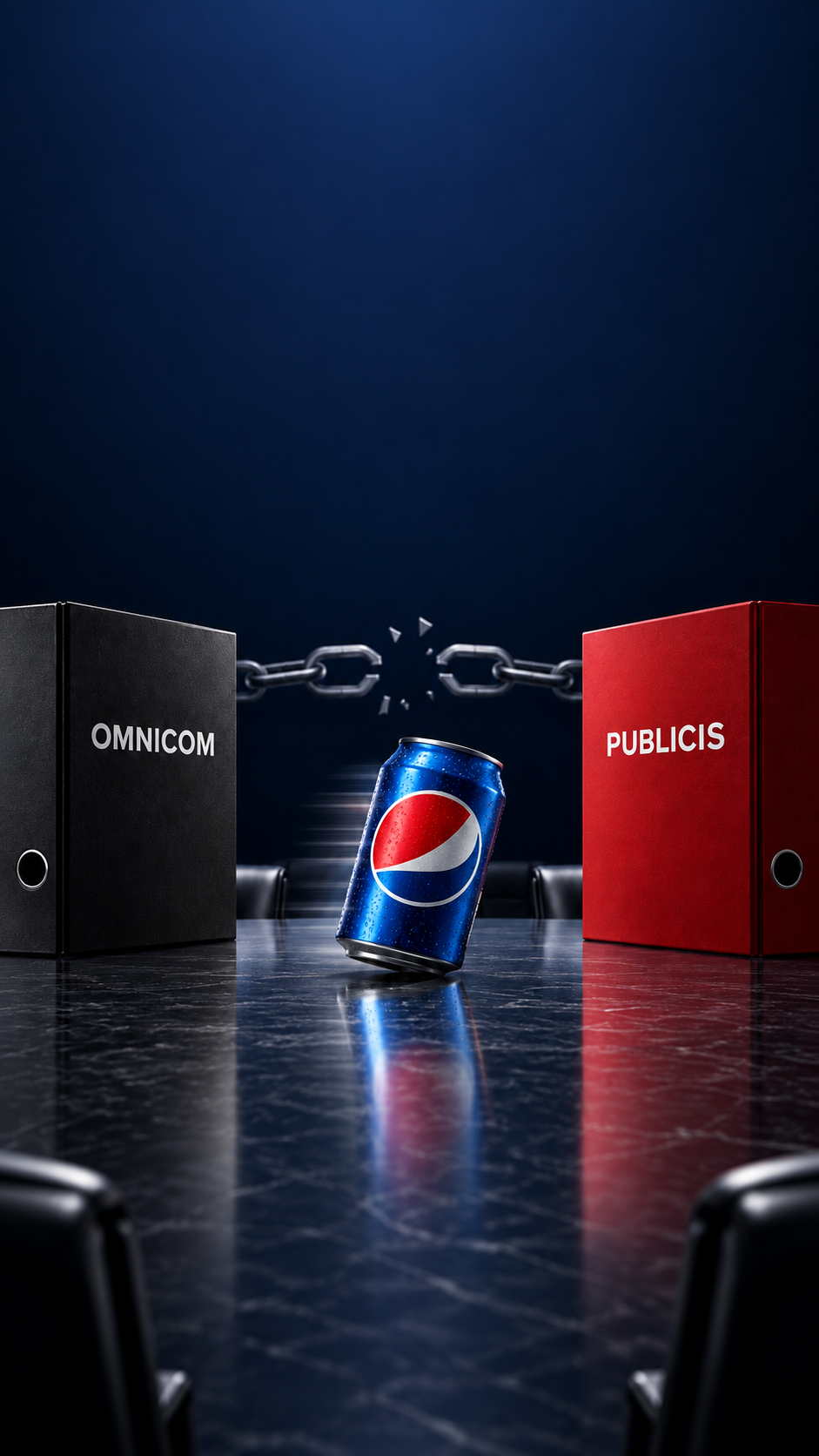
Omnicom is reviewing what went wrong after losing PepsiCo’s global media account to Publicis, ending a partnership of more than 25 years.
The 2027 Formula 1 calendar has been revealed, featuring 24 Grands Prix across 22 countries, the return of Portugal and Türkiye, and an expanded program of 10 Sprint events.
3 min
The Fédération Internationale de l’Automobile and Formula One Management have announced, following approval by the World Motor Sport Council, the 2027 FIA Formula One World Championship calendar, featuring 24 Grands Prix across 22 countries and 10 Sprint events.
Pre-season testing will take place in Bahrain from 24–27 February before the Championship returns there for the first race, followed by Saudi Arabia.
The calendar then moves to Australia, Japan, and China, followed by the Miami and Canadian Grands Prix. The European leg includes Formula 1’s return to Portugal in June, after Monaco, with Türkiye rejoining the calendar in October between Azerbaijan and Singapore.
The closing phase of the season features races in Austin, Mexico City, São Paulo, and Las Vegas, before the final two rounds in Qatar and Abu Dhabi.
Bringing together historic venues and major global destinations across five continents, the 2027 calendar reflects Formula 1’s continued growth as a global sport and entertainment platform while supporting its long-term sustainability goals through a more efficient geographical flow of events across the season.
Due to the continued success and strong demand for the format, the number of Sprint events has increased from six to ten for 2027, delivering even more competitive action across the season for fans, promoters, broadcasters, and partners.
Bahrain, Australia, Japan, Monaco, and Abu Dhabi will host Sprint events for the first time, with fans set to enjoy two thrilling qualifying sessions in Monaco as the drivers show their world class skill and precision on the narrow streets of Monte Carlo. Sprint events will also return to Montréal, Silverstone, Monza, São Paulo, and Lusail.
Mohammed Ben Sulayem, President of the FIA, said: “The 2027 FIA Formula One World Championship calendar is a strong reflection of the global appeal and continued growth of our sport. With twenty-four Grands Prix across five continents, the return of Portugal and Türkiye, and the opportunity for an expanded Sprint program, the calendar combines tradition, innovation, and fan engagement while maintaining the highest sporting standards.
“I would like to thank Formula One Management, the promoters, the national sporting authorities, the FIA officials and volunteers and all our stakeholders for their collaboration and commitment. Together, we continue to strengthen the FIA Formula One World Championship and deliver an exceptional season for competitors and fans around the world.”
Stefano Domenicali, President and CEO of Formula 1, said: “The 2027 calendar brings together some of the most iconic circuits and vibrant cities in the world, creating an incredible stage for another unforgettable season of Formula 1. We are thrilled to welcome Portugal and Türkiye to the championship and to expand Sprint racing to ten events, giving our fans even more intensity, drama, and the wheel-to-wheel action that make our sport so special.
“Formula 1 continues to go from strength-to-strength, attracting new audiences around the globe. Week after week, the world’s greatest drivers will battle on some of the most challenging tracks in motorsport, supported by F1’s outstanding teams, world-class manufacturers, and global partners.
“Together, they create a spectacle unlike anything else in sport. As we continue this remarkable journey of growth, I want to thank our fans around the world as their passion drives everything we do.
“I want to thank The President of the FIA, Mohammed Ben Sulayem, and the FIA, our teams and drivers, promoters, partners, sponsors, and host cities for their continued commitment and support and we recognize the extraordinary dedication of the volunteers, marshals, and officials whose hard work makes every Grand Prix possible.
“We are incredibly excited to see this calendar come to life and to deliver another season packed with unforgettable moments, fierce competition, and world-class entertainment for our fans across the globe.”
Following the successful launch of its Palais Collection, MAISON de SABRÉ has unveiled a new modular handbag system offering more than 720 styling combinations.
Two coming 2027 models – the first of the “Neue Klasse” cars coming to the U.S. early next year – have been revealed.
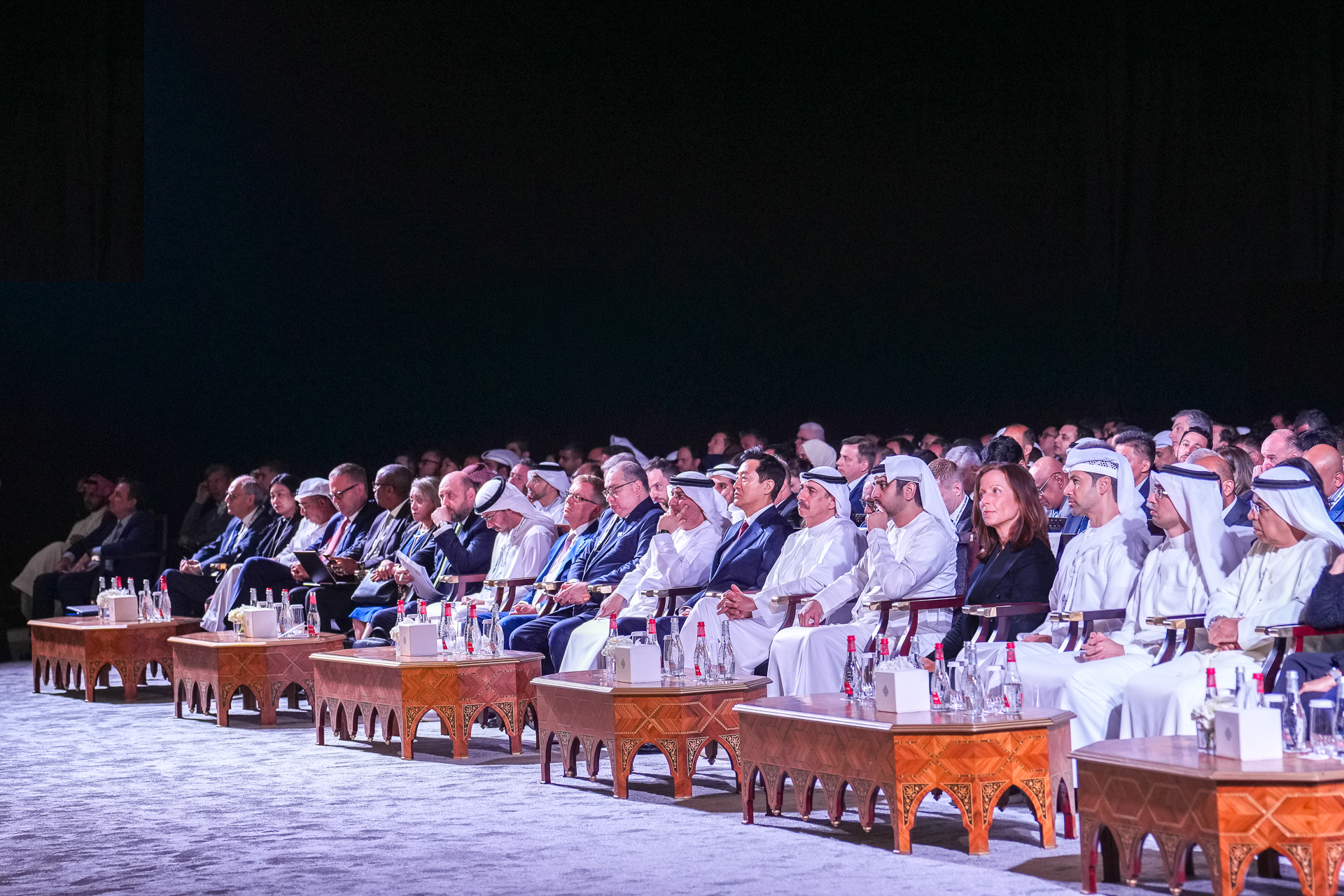
Could fears of an AI apocalypse be distracting us from the dangers already here? Experts debate whether regulation should focus on speculative existential threats or present-day harms, including cyberattacks, weapons and unsafe autonomous agents.
5 min
There is ample and alarming evidence that artificial intelligence can help humans do bad things, such as committing cyberattacks, building weapons and even killing themselves or others. The Hugging Face hacking episode—and a growing list of others by poorly constrained swarms of agents—indicate just how powerful and potentially dangerous AI has quickly become.
Yet many inside the U.S. AI industry insist far worse is coming, on account of the imminent arrival of AI with superhuman and self-improving abilities.
Plenty of experts, including many who study AI harms for a living, are skeptical. The so-called doomers’ assertion that AI might decide to wipe out all of humanity—or even “just” topple human civilization—is contingent on it achieving a pace of development not yet seen.
And if the assumptions behind this global-doomsday scenario are wrong, it could lead us to curb or regulate AI in ways that don’t address its real harms.
At the center of this debate is the claim that current AI systems might take over the job of training their next versions, a process called “recursive self-improvement.” Think of it like evolution on steroids—billions of years happening at light speed within vast AI supercomputers. Anthropic Chief Executive Dario Amodei recently proposed a global agreement to slow down the pace of releasing new AI models, with the goal of delaying the arrival of recursive self-improvement.
“I don’t think we’re anywhere near ‘artificial general intelligence,’” says Melanie Mitchell, a professor at the nonprofit research group Santa Fe Institute who studies AI. She said AI is making impressive strides but thinks claims by engineers that they’ve achieved recursive self-improvement don’t stand up to scrutiny.
She is hardly alone. A recent paper by two dozen academics at Princeton, Stanford and other institutions found that even the most cutting-edge AIs are incapable of doing the original research required to advance the AI frontier.
Two of the authors involved in that paper also threw cold water on the idea that the Hugging Face swarm hack by OpenAI agents occurred because of a breakthrough in intelligence. The attack succeeded primarily because of a lack of basic technical guardrails, not an unmanageable explosion in AI capability, they wrote.
Yann LeCun, former chief AI scientist at Meta, posted that this analysis was “a welcome dose of sanity in an otherwise insane debate.”
OpenAI and Anthropic didn’t respond to several requests for comment.
The people who disagree with the doomers still consider AI to be dangerous, and point out that such systems don’t have to be particularly capable to be powerful. Some argue that AI should undergo regular evaluation by outsiders and that the companies that make it should be held responsible when their systems do harm. AI should also be treated the same as airplanes and elevators, and should be designed to do the least harm possible, they say.
“If you believe that technology is powerful enough to create novel, dangerous viruses, or to essentially take over the whole planet for some reason, then it must also be strong enough to create cures for cancer, to cure aging, to fix socio-economic or political problems,” says Christopher Canal, CEO of EquiStamp, a company that helps companies and governments evaluate AIs.
AI has shown an ability to rapidly advance because it is matching the abilities of humans who are constantly feeding it their knowledge. Sometimes it can recombine that knowledge and exceed what people have been capable of, through a kind of post-training known as reinforcement learning, as we’ve seen in mathematics.
Today’s LLMs are “models of knowledge” rather than actually intelligent, wrote Yi Ma, professor of AI at Hong Kong University.
Researchers at universities and commercial AI research labs in China wrote in a recent paper that autonomous, self-improving AI is likely to be a long way off, due to the sheer number of breakthroughs required. They also argue that humans will probably remain in the loop, supervising that process—and gating how fast it can occur.
Vals AI, a company that evaluates today’s AI models, maintains an RSI Index that benchmarks whether models can “do the research that builds the next model.” So far, no publicly released model is even close.
Yet Rayan Krishnan, CEO of Vals AI, says his team projects models will exceed humans’ ability to improve the next generation of AIs by August 2027, or sooner, and at that point could start building their successors all on their own.
“Once we get to recursive self-improvement, the fear is that all bets are off,” he says. “You could end up with a ‘fast takeoff’ situation, where the models quickly acquire skills and eclipse humans across every possible domain.”
In a reply to the resignation tweet heard round the world from Jacob Coxon, another Anthropic engineer declared his belief that those odds were at least 10% over the next decade. Many others in the industry chimed in to say they thought the percentage was even higher.
Some who argue the end is nigh say they calculate their personal p(doom) based on a chain of conditional probabilities—a bit like the Drake equation for calculating the likelihood of intelligent alien life. Since all those probabilities are based on speculation, estimates range from 0% to nearly 100%. Many land around 10%.
“The weird thing is that if you go back and look at the predictions on this over the last 10 years or more, it’s always been 10%—it’s just a nice round number,” says Mitchell. “I think it’s all vibes, and there’s no actual evidence or calculation.”
One argument against worrying about superintelligent AI is that the world is full of unlikely humanity-ending disasters, and trying to avert them all can make it impossible to prioritize, says Canal.
This has led AI experts and the policymakers who listen to them to propose remedies that don’t get at its real and present dangers.
AI companies’ proposals to “pace the frontier” aren’t addressing the problem in the right way, argues Stuart Russell, a computer-science professor at the University of California, Berkeley, and the president of the International Association for Safe and Ethical Artificial Intelligence.
“It’s like saying we’re driving toward the cliff at 60 miles per hour and we’re going to drive toward it at 40 miles per hour instead, and everything will be OK,” he says.
Russell and his peers have proposed that AI companies should have to meet the same standards that govern other areas of everyday life, from air travel and buildings to food and drugs. They highlight the “behavioral red lines” AI should not be allowed to cross. Breaking into other computer systems, stealing information or advising terrorists on how to build biological weapons are all illegal for a human to do, and should be illegal for companies’ AIs as well, he argues.
The challenge for AI companies in such a proposal, he adds, is that it would be a de facto ban on today’s advanced AI systems, since the companies behind them don’t know how to make them respect such boundaries all of the time.
Others have proposed something like the Food and Drug Administration, but for AI, but setting up a new agency has so far been a nonstarter in Congress. And some prominent voices in tech have said such a structure would give up America’s AI edge to China.
Given the bipartisan groundswell of support for curbing AI companies and their creations, however, that may soon change.
“The tech industry has had this mantra for decades that regulation is bad,” says Russell. “They don’t accept the liability for any harm, and they hide behind free speech. That, I think, has to change.”
Following the successful launch of its Palais Collection, MAISON de SABRÉ has unveiled a new modular handbag system offering more than 720 styling combinations.

New research suggests that bonuses make employees feel more like a mere cog in a wheel.
The last-minute bottle of wine may no longer be enough. From artisan treats and fine linens to seasonal flowers, the best host gifts are small, practical and chosen with genuine thought.
4 min
Conventional wisdom is that if you are invited to someone’s home—or on their yacht or plane—you should thank them with a host gift. Exceptions can include casual get-togethers with close friends or occasions when you’re expressly asked not to.
The best gifts appear effortless, but are chosen with immense consideration. A bottle of wine bought en route to the party, the old standby for many, is no longer one of them.
When choosing a gift, it’s helpful to follow certain parameters: nothing too ostentatious, too hefty or too idiosyncratic in design. At the same time, thinking outside the box can show a deeper level of thoughtfulness. Here’s how to pull it off.
Keep gifts relatively small
Thom Bettridge, an editor and writer in New York, has a rule of thumb: he only buys gifts that are smaller than a breadbox, to minimize the space that they take up in hosts’ homes. He likes thoughtfully designed playing cards or cookies from a specialty bakery.


Imported sea salt also passes the breadbox test. It’s a gift that Los Angeles fashion designer Zoe Latta often gives to friends. She said fancy salt is always well received because it’s an elevated version of an everyday staple that most people use.
Another small gift—a favorite of Salima Boufelfel, a founder of vintage clothing stores in New York, Paris and Tucson, Ariz.—is Santa Maria Novella’s scented pomegranate, a terracotta vessel that smells like and resembles the fruit. “It scents closets and laundry rooms,” she said.


Don’t assume a host has everything
Part of being a good guest, according to Bettridge, ”is understanding subtle helpfulness.”
When New York City Ballet principal dancer Unity Phelan is invited on a group trip to someone’s home, she and her husband try to stop at a nearby market or farm stand to buy a bounty of fruit and vegetables that everyone can enjoy throughout the stay.

Even if your host seems to have it all, that isn’t a reason to forgo bringing a gift. “People think that ultrahigh net-worth people are buying everything and they are not,” said Kelly Bensimon, the model-turned-reality-TV-star-turned-real-estate-agent.
Thoughtful knickknacks are something that people of any social status can appreciate, Bensimon added. She likes giving dish towels made of fine European linen, which she often gets at Clic, the French homewares boutique with locations in California, New York City, the Hamptons and St. Barts.
Avoid strong aesthetics
“You want to find things that will blend in,” said Latta, the fashion designer. Clear glassware that can be easily mixed with a host’s other cups is a good option, she said.
Fresh flowers, another old standby, endure as a suitable host gift—if you get them from a local florist, not a corner store, and go with seasonal varieties. For a cleaner look, Kaelen Haworth, the owner of a luxury-clothing store in Toronto, likes choosing flowers in a single color or type, not an assortment.


If you’re going with flowers, sometimes it’s better to send them after the fact—for instance, if you’re invited on a private plane. Zachary Weiss, a writer in New York, likes to send orchids to his hosts well after landing. “It comes down to practicality,” he said.
Have a stash at the ready
It’s easy to leave gift-buying to the last minute. Stockpiling some trinkets will help you avoid the scramble.
When she’s not giving flowers, Haworth likes to give skin care—specifically from independent brands or products from other countries, which she buys in bulk when she travels. “I went to Greece and bought 15 bottles of a sunscreen they don’t have in the U.S.”


Sometimes, life gets in the way and grabbing wine might be the only alternative to showing up empty-handed. If you’re invited somewhere with your significant other, do as New York ceramist Shane Gabier does and get two bottles of wine—a gesture more generous than showing up with just one.
Following the successful launch of its Palais Collection, MAISON de SABRÉ has unveiled a new modular handbag system offering more than 720 styling combinations.

Parts for iPhones to cost more owing to surging demand from AI companies.

ZainTECH and AWS have joined forces to accelerate cloud adoption and AI-led innovation across Saudi Arabia, supporting the Kingdom’s Vision 2030 goals.
2 minZainTECH, the digital solutions arm of Zain Group, has signed a multi-year strategic collaboration agreement with Amazon Web Services (AWS), to support organizations across Saudi Arabia in accelerating cloud adoption, modernization and AI-led innovation.
The collaboration, which will help to accelerate customer engagement and adoption of AWS cloud and AI services across the Kingdom, comes at an important stage in Saudi Arabia’s digital transformation journey. Organizations across government, financial services, energy and healthcare are modernizing their technology environments and increasing investment in cloud, data and AI. Under the collaboration agreement, ZainTECH experts will support organizations in adopting AWS solutions, strengthening their security and compliance readiness, and exploring new AWS Cloud-enabled use cases and opportunities.
“Saudi Arabia is entering an important new phase of cloud adoption, with local cloud infrastructure creating new possibilities for organizations across the Kingdom,” said Andrew Hanna, Chief Executive Officer of ZainTECH. “Our multi-year strategic collaboration with AWS strengthens our ability to support customers at this pivotal stage. With ZainTECH’s regional expertise, we can help organizations prepare their environments, address security and data residency requirements, and accelerate the development of new solutions across cloud, data and AI.”
The strategic collaboration builds on ZainTECH’s established cloud capabilities and regional presence across the Middle East, supporting its mission to enable organizations to become Digital, Intelligent and Resilient. The company serves more than 1,600 organizations across eight countries and has more than 850 technology professionals, with expertise spanning cloud, cybersecurity, data and AI, digital solutions and managed services. This regional scale and technical expertise enable ZainTECH to help organizations modernize their environments, strengthen resilience and build the capabilities needed to innovate in a rapidly evolving technology landscape.
The collaboration supports Saudi Arabia’s broader digital transformation agenda and Vision 2030 objectives by helping organizations use cloud technologies to enhance agility, strengthen resilience and accelerate innovation. Through its collaboration with AWS, ZainTECH will continue working with organizations across the Kingdom to unlock new opportunities enabled by cloud, data, AI and other emerging technologies.
Following the successful launch of its Palais Collection, MAISON de SABRÉ has unveiled a new modular handbag system offering more than 720 styling combinations.
Many of the most-important events have slipped from our collective memories. But their impacts live on.
Restaurants are pushing back against phone-filled dining with lockable pouches, screen-free policies and playful challenges—helping guests put down their devices and reconnect over a meal.
4 minIt wasn’t all that long ago that restaurants and bars around the country were dappled in the glow of cigarettes. Those days are over, but diners haven’t stopped lighting up—now it’s just with the blinding OLED gleam from their phones.
My seven-year run as a bartender started in the BlackBerry era and ended a few years after the birth of the iPhone. Back then, phone interruptions were mostly relegated to a few stray pings. If someone picked up a phone, it was usually only to say “Can I call you back?”
Today, phones are as common in a table-setting as napkins and silverware. If diners themselves aren’t pulling them out to check messages and social media, they’re likely in the background as others record Instagram videos or make FaceTime calls.
Many restaurants and patrons alike are pushing back against the shift that has turned collegial, communal spaces into places to watch TikTok while you eat. Here’s what some are doing—and what we can learn from them.
The phone lockup
Antagonist, a cocktail bar in Charlotte, N.C., is pretty antagonistic about phones. Upon entry, each customer receives a lockable Yondr pouch—the same bag some schools use to store students’ phones—that can only be opened by the staff.
“The main goal of our whole concept here really isn’t to burden anybody or take away their property,” Adam Horner, Antagonist’s general manager, said. “It’s essentially just to bring back a little slice of human connection that we all feel has been lost with technology.”

Even if your dinner destination doesn’t have the same rules, you can still borrow the basic idea. Keep your phone somewhere inconvenient or even mildly inaccessible: in your coat pocket, for instance, or your purse.
While Horner admits some patrons have arched an eyebrow at Antagonist’s policy, the benefit of having a place where people can be part of an organic social scene has far outweighed the potential loss of customers, he said. “I strongly encourage people to give it a chance, and sometimes they don’t and they go somewhere else.”
The airplane approach
The Edge, a local spot in Manhattan’s Harlem neighborhood, is a bit less rigid about phones. There’s no ban on them, but the restaurant doesn’t offer internet access. A sign at its bar reads: “No Wi-Fi. No Screens. Connect With Each Other.”
The directive is meant to encourage “stepping away from the digital and being present in the moment,” said Justine Masters, who owns The Edge with her sister Juliet.

Another way anyone with a smartphone can separate themselves from the internet: turn on Airplane mode. It may sound obvious, but it’s a simple and effective way to minimize phone-induced distractions while dining out.
The screen-free competition
For those wanting to break the grip of a bad habit, one tactic is to replace it with another better-for-you thrill. That’s the strategy behind the fast-food chain Chick-fil-A’s “cellphone coops.”
At a number of locations, diners can request a coop—a cardboard box—where they can put their phones while they eat. The goal is get groups to make it through an entire meal without checking their phones, with free ice cream as a reward. The coops even feature conversation prompts for the table.
You don’t need a cardboard coop to emulate the competition elsewhere—and if ice cream isn’t enough of a draw, treat the person who goes longest without using their phone to a free drink. Or make the loser pay the tip.
The point is to create rituals that result in discipline and, slowly, new habits.
What we gain from no-phone dining
The ubiquity of phones has not only eroded our manners, but also lessened the joys of bar and dining culture. One of Chris Hall’s favorite watering holes is The Saloon in Washington, D.C., a community-orientated beer bar with no televisions and a blanket ban on all phone use.
For him, it’s a bulwark against a bar culture that has become “very insular and not very fun.” He added that, over the years, he’s made at least a dozen friends at The Saloon. “You can talk to strangers in this place.”
Tina Vaughn and Chip Smith, the husband-and-wife owners of Eulalie, an upscale cloth-napkin bistro in Tribeca, also forbid phone use at their restaurant.

The policy is spelled out on a sign in the entryway and on the restaurant’s handwritten menus. Vaughn sees it as a way to help patrons combat the pressure to always be available.
“People want an excuse. They’re dying for someone to say, ‘You can get off that. It’s OK,’ ” she said. “The phone has become less a tool and more of a stress bomb, I feel, for so many.”
Following the successful launch of its Palais Collection, MAISON de SABRÉ has unveiled a new modular handbag system offering more than 720 styling combinations.

Paine Schwartz joins BERO as a new investor as the year-old company seeks to triple sales.
Omnicom is reviewing what went wrong after losing PepsiCo’s global media account to Publicis, ending a partnership of more than 25 years.
3 minOmnicom’s CFO is still trying to get his head around what went wrong. It’s been a little over a week since the holdco lost one of its longest running clients to Publicis. He called the loss “disappointing” and “unfortunate.” Now, he and the rest of the C-suite are doing a post-mortem to figure out why it happened.
Speaking at the Goldman Sachs’ Communacopia and Technology Conference earlier today, Phil Angelastro gave a sobering take on PepsiCo’s decision to walk away after more than 25 years.
“The Pepsi situation is an unfortunate one,” he said. “It’s certainly a disappointment from our perspective — you cannot sugarcoat it.”
The comments all but confirm that this move blindsided Omnicom’s execs. Holdco bosses like Angelastro usually see this kind of switch coming. Sources with knowledge of the matter said his team didn’t, and has spent the past week trying to work out why. Why would PepsiCo after all those years walk away from Omnicom without even giving it the chance to fight for it? Speculation has been rife. Was it because PepsiCo’s CMO had a relationship with Publicis in a previous role? Or maybe the advertiser simply wasn’t impressed with whatever Omnicom was pitching in the wake of the IPG acquisition.
Whatever the reason, Omnicom will want it nailed down fast.
“We are doing a detailed kind of deconstruction of how it happened and what we should have been doing differently to prevent it from happening,” Angelastro said at the conference. “We are not completed with that process but we are going to learn some lessons from this, and certainly we are going to take them very seriously.”
In short, he said the holdco isn’t looking for excuses during this analysis. The aim, Angelastro continued, is to do a root cause analysis so that we can improve the business and our processes going forward.” That matters most for holding onto what’s left of the PepsiCo relationship since Omnicom still handles the company’s PR, creative and some sports marketing.
It could also help the holdco get ahead of other CMOs who might be watching PepsiCo’s move and wondering if they should follow suit. Those clients will want to know what happened and whether it changes anything for them. Needless to say Angelastro has some tough questions in the weeks ahead.
“We don’t think it’s going to have a significant impact on the business going forward when we get to 2027 and our expectations,” the ad exec said. “There is still quite a bit of time between now and ‘27 and we will be aggressively pursuing new business as we always do.”
His confidence lines up with the numbers, even if the underlying figures come from outside estimates rather than Omnicom’s own disclosures. According to ComVergence, PepsiCo’s core global media spend sits at roughly $1.8 billion. Madison and Wall estimates Omnicom’s actual fee revenue from that business at closer to $100 million, a fraction of the headline figure, against a company running a 21% EBITA margin. That’s an abosrbale hit on the holdco’s bottom line based on the numbers available. The exposure that is harder to model is reputational – more than 25 years with a client, Apple, Renault-Nissan, McDonald’s and several others all running on the same kind of long, unreviewed relationship Omnicom just watched come apart.
Whether that means Omnicom goes after Coca-Cola’s media business, which is now in play following Publicis’ decision to relinquish its North America media account and back out of contesting the rest of it after the PepsiCo deal remains to be seen. If it is, Angelastro offered scant detail.
“We value the relationship [with PepsiCo] but certainly there will be a little but more flexibility in terms of what we pursue in the future.”
Following the successful launch of its Palais Collection, MAISON de SABRÉ has unveiled a new modular handbag system offering more than 720 styling combinations.
The sports-car maker delivered 279,449 cars last year, down from 310,718 in 2024.
Apple’s first foldable, the $1,999 iPhone Duo, combines an iPhone and iPad Mini experience—but its size, weight and price come with compromises.
4 min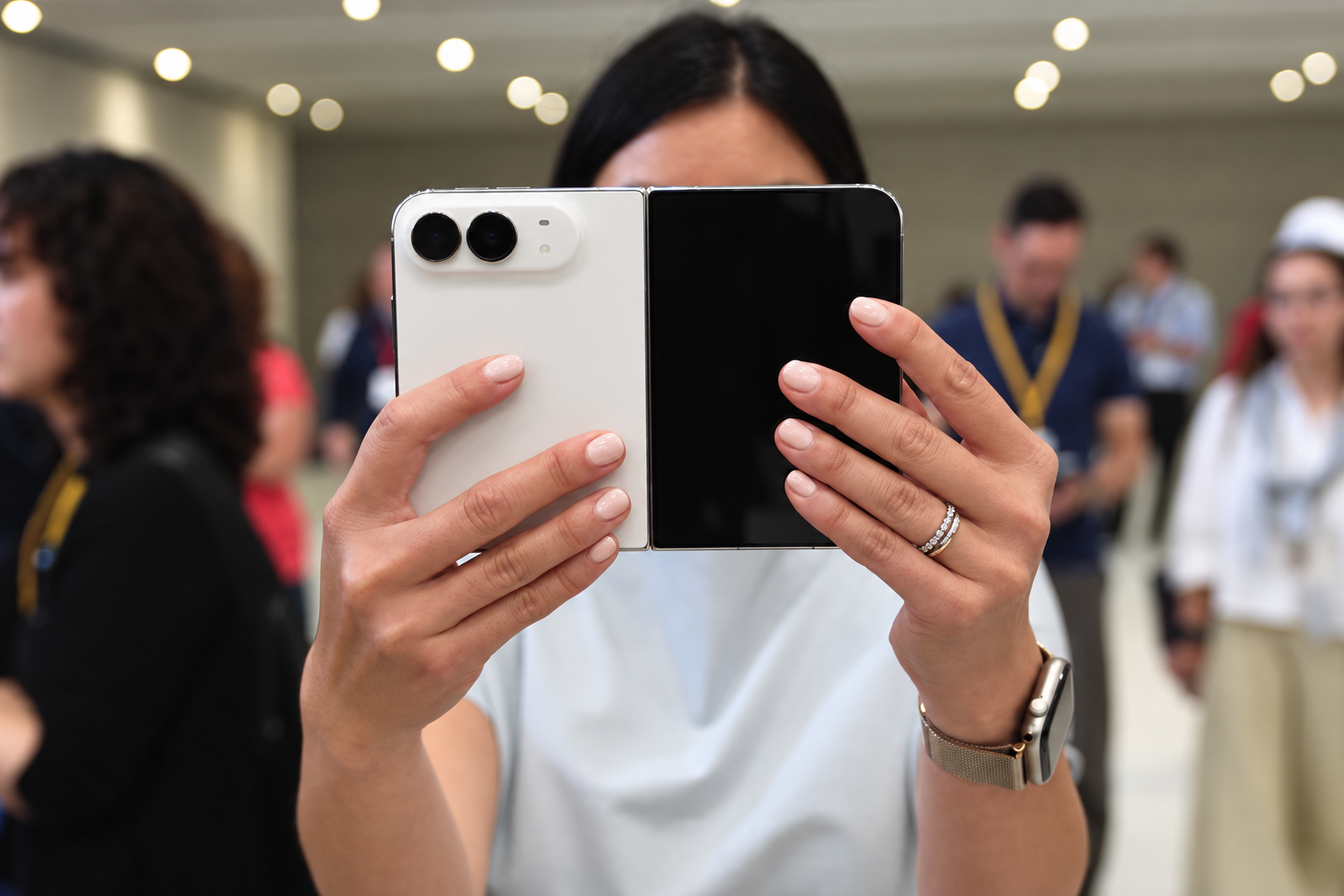
As I watched a Netflix show on Apple’s first foldable, the iPhone Duo, I had two surprising thoughts.
The first: Maybe I don’t need my iPad Mini anymore.
The second: Uh oh, am I about to spend $1,999 on a phone?
I didn’t think folding phones were for me. I’ve been testing Android versions from Samsung and Google since 2019, and those early editions came with too much screen and too many compromises.
Fast forward seven years, and the technology has come a long way. Apple—in its very Apple way—has also come up with some hardware and software trickery to make up for some shortcomings of the basic design. My desire for a folding phone before today was zero. After today, it’s a lot more than zero.
I’m not ready to recommend the Duo, which ships on Oct. 23, just yet. Not until I am able to test it more fully, so be on the lookout for that review in a few weeks. But from what I experienced at Apple Park on Wednesday, I could actually picture myself using this new half-phone, half-tablet hybrid.
Crease camouflage


For months, I’ve been using Samsung’s Galaxy Z Fold 8, a similarly squat, passport-shaped foldable that opens up to a larger screen. It’s impressively thin and can easily fit into the infuriatingly tiny pockets in women’s pants and dresses. Samsung did a lot of work to minimize the crease—the dip between the two halves of the big interior display—but it’s still clearly there.
When I held the iPhone Duo open, the crease was barely visible. As I slid my finger across the display, I could feel it, but it’s more subtle than Samsung’s. Most of the time, the screen looked as flat and smooth as the one on an iPad.
Apple employed both software and hardware techniques to camouflage the crease. The matte surface of the interior 7.6-inch screen minimizes reflections to hide it. (Samsung’s Fold 8 screen is shiny.)
And as you begin to open or close the iPhone Duo, the interface shifts the controls and content away from the center crease. If, say, you’re watching a video on the outer screen, you can open the Duo to switch to the bigger display within. A black fade marks the transition. You don’t see the video full screen until the phone is completely flat.
Heavy handed

My second observation was that, when the Duo is closed, in phone mode, it was harder to use one-handed than I expected.
In the keynote trailer and press release, Apple touted how thin the Duo is. It’s marketed as the thinnest iPhone ever—when open.
But it’s actually thicker and heavier than most of its Android competitors. The Duo weighs 254 grams, and is 11.3 millimeters thick when closed. The Samsung Galaxy Fold 8 is just 201 grams, with a thickness of 9.7 millimeters. Google’s Pixel 11 Pro Fold is 239 grams and 10.1 millimeters.
Because the Duo is also wider than a standard iPhone, I found it quite a challenge to type.
I admit, I do have smaller-than-average hands. So I consulted my colleague Rolfe Winkler, who has a larger grip. He agreed the Duo feels big.
Apple rearranged the interface on the outer screen so it looks different than traditional iPhones. The dock and control center are off to the right to be more reachable. Committing to the Duo as your main device will require adjustments in your handling. You will have to learn a new way to use and type.
Work and play

My most surprising takeaway? I feel a pull toward this device.
I always thought that combining an iPhone and an iPad would mean bigger compromises. The battery life is about the same as the 18 Pro (up to 24 hours of “regular use” on a single charge), though I’ll need to verify that in my real-world testing. And it’s also as durable, with the same IP68 dust- and water-resistance rating as the rest of the iPhone lineup.
There are trade-offs, for sure. Trying out the camera, I immediately missed the 8X zoom in my Pro model. The Duo has just 2X zoom, which wouldn’t cut it for the dozens of pictures I take of my kid every day.
But the dual screens unlock new photo functionality. You can see what your shot looks like from the outside screen. As someone who has tried tirelessly to self-direct a family photo—or a spouse—I am very eager to try this out more.
Foldables, I initially thought, were for classic mobile-warrior jet-setter types, who never sit at a desk and are always on calls. For that crowd, the Duo can run two apps side-by-side.
Me, I’m more of a bed binge-watcher and ebook reader. That’s what my beloved iPad Mini is for.
Watching videos on the Duo is a nice experience—nice enough that you forget the screen is 0.7 inches smaller than the iPad Mini’s. The main screen is also a 4:3 aspect ratio. Very similar, by the way, to the IMAX edition of the Odyssey.
Because I wasn’t able to snag a ticket to one of the sold-out screenings, I will be watching Christopher Nolan’s version of Homer’s epic on the Duo, just as the director intended. (Just kidding! Sort of.)
The Duo costs $800 more than an iPhone 18 Pro, and I’m not sure I want to spend that premium on a first-generation Apple device. But I’m not ruling out the idea that a Duo might one day be in my future. Stay tuned for my full review.
Following the successful launch of its Palais Collection, MAISON de SABRÉ has unveiled a new modular handbag system offering more than 720 styling combinations.

Chris Dixon, a partner who led the charge, says he has a ‘very long-term horizon’
Bachir Ice Cream has teamed up with Hello Kitty for a playful limited-edition collaboration featuring exclusive packaging and collectible merchandise, available across the UAE from 7 September to 31 October 2026.
2 min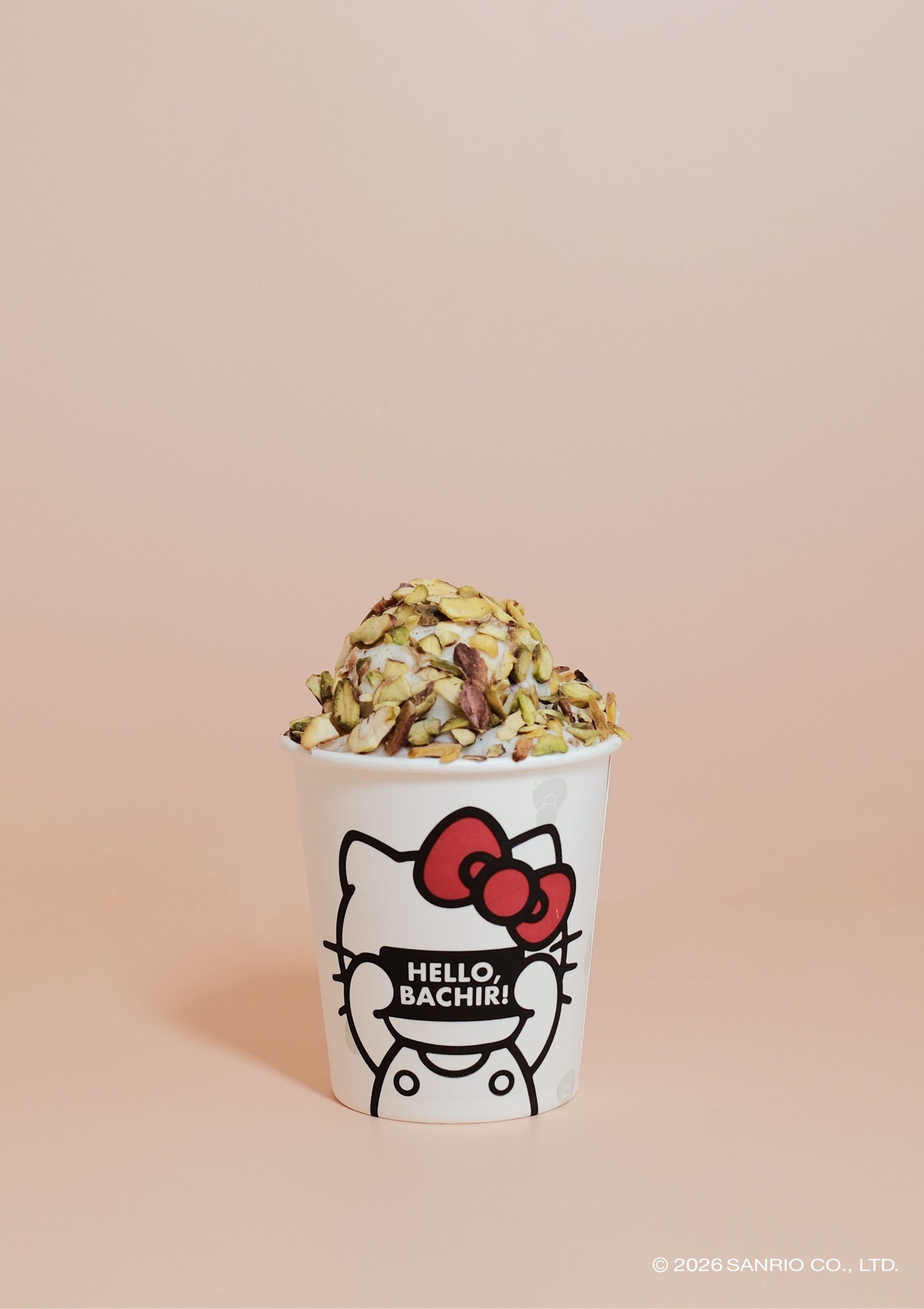
Two much-loved icons are coming together as Bachir Ice Cream teams up with Hello Kitty for a playful, limited-edition collaboration launching across the UAE.
Available from 7 September to 31 October 2026, the collaboration brings Hello Kitty’s instantly recognizable aesthetic to Bachir’s colorful ice cream experience through exclusive co-branded packaging and a range of collectible merchandise.
Founded in the Lebanese mountain town of Bikfaya in 1936, Bachir Ice Cream has built a following across generations for its handcrafted Lebanese ice cream and traditional recipes. Its signature creation is Ashta ice cream, a creamy combination of milk cream with delicate notes of rose and orange blossom, generously rolled in roasted pistachios.
Guests can also enjoy Bachir’s famous Mshakkal, or multi-layered scoop, which brings together up to eight different flavors in a single cone or cup. The colorful creation can be layered with flavors ranging from classic Ashta and pistachio to indulgent chocolate and fruits, before being finished with Bachir’s signature pistachio dip.
Throughout the campaign, Bachir’s ice cream will be served in exclusive Hello Kitty x Bachir Ice Cream packaging, transforming every order into a fun, limited-edition experience for fans to enjoy, photograph and collect. The packaging also includes co-branded boxes for their new launch of Ice Cream tubs.
Alongside the special packaging, an exclusive range of Hello Kitty x Bachir Ice Cream merchandise will also be available, including:
- Tote Bags
- White & Black T-shirts
- Keychains
- Stickers
The collaboration will be available at all Bachir Ice Cream locations in Dubai and Sharjah, with delivery available across Abu Dhabi, Dubai, and Sharjah.
Whether stopping by for a signature pistachio-covered Ashta scoop, building a colorful multi-layered cone or ordering a sweet treat of cakes and tubs from home, Hello Kitty fans and ice cream lovers can experience the collaboration wherever they are, for a limited time only.
WHAT:
Hello Kitty x Bachir Ice Cream limited-edition collaboration, featuring exclusive co-branded packaging and collectible merchandise.
WHEN:
7 September–31 October 2026
WHERE:
- City Walk, Al Wasl, Dubai
- City Centre Mirdif, First Level, Dubai
- Galleria Mall, Al Barsha 2, Dubai
- AlJada, Sharjah
DELIVERY:
Available across Abu Dhabi, Dubai, and Sharjah.
Following the successful launch of its Palais Collection, MAISON de SABRÉ has unveiled a new modular handbag system offering more than 720 styling combinations.

Americans now think they need at least $1.25 million for retirement, a 20% increase from a year ago, according to a survey by Northwestern Mutual
Apple’s September 9 launch will spotlight its first foldable iPhone, the rollout of Siri AI and new CEO John Ternus’s vision for the company’s next era.
2 min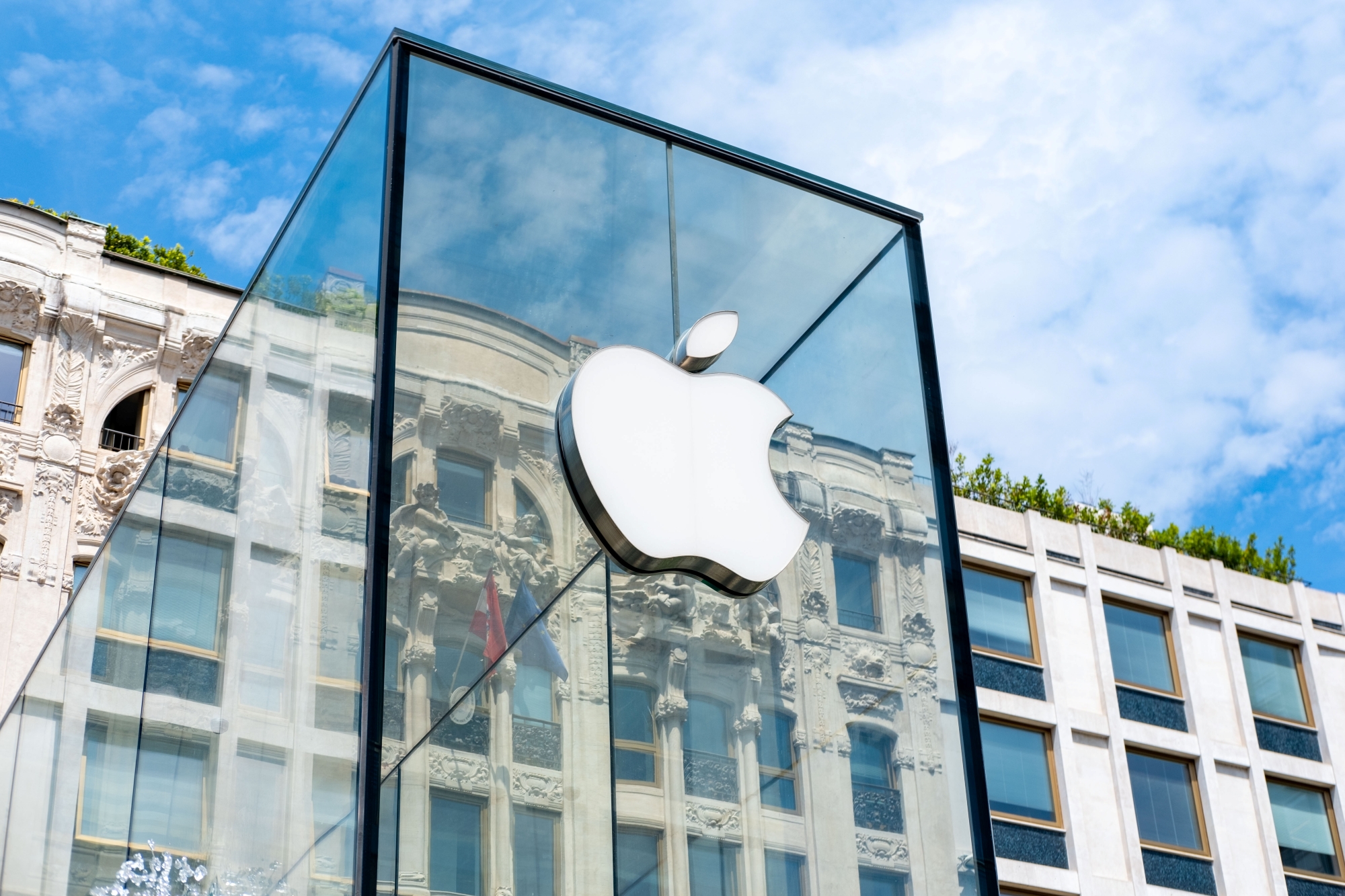
Apple will take the stage on September 9 for what is expected to be its biggest product launch in years—and its first under new Chief Executive John Ternus, who succeeded Tim Cook last week.
The company is expected to unveil its first foldable iPhone, alongside the full rollout of Siri AI and a broader push into smart-home devices. According to Josh Gilbert, Lead Market Analyst at etoro, the event will put both of Ternus’s immediate challenges—revitalising Apple’s hardware portfolio and strengthening its position in artificial intelligence—firmly in the spotlight.
“The foldable iPhone is the one to watch. Launching a foldable device at a premium price will test whether Apple can still convince consumers to pay more for a genuinely new iPhone. That matters because the iPhone continues to generate just over half of Apple’s revenue, accounting for USD 210 billion of the USD 416 billion the company recorded in its last financial year.
“Beyond the foldable, Apple’s future product pipeline is reported to include AirPods with cameras, smart glasses, a tabletop robot for the home and a touchscreen MacBook. If Cook’s decade was defined by services, Ternus’s tenure looks set to focus more heavily on devices.
“The strategy appears to be centred on bringing more Apple products into more rooms, which may explain why the board chose a hardware engineer to lead the company rather than an executive primarily associated with AI.”
Gilbert noted that the rollout of Siri AI will be the event’s other major focus, particularly as investors look for signs that Apple can close the gap with competing AI platforms.
“Apple is expected to deploy Siri AI at scale this month as a more direct competitor to leading chatbots. The longer-term ambition could be to charge for the service or generate revenue through third-party applications integrated into the platform.
“This will be closely watched by the market because Siri has spent the past decade developing a reputation for not always doing what users ask. One of the key questions is whether the upgraded assistant will launch with a subscription fee or remain free. If it is offered at no cost, Apple will initially have to absorb the significant expense of operating the service without a direct revenue stream.
“Investors have not been impressed by Apple’s limited progress in AI over recent years. However, the company has been written off for arriving late to major technology trends many times before, and those calls have usually proven premature.”
Apple’s share-price performance around previous product launches also provides a note of caution. In four of the last five September iPhone events, Apple shares declined during the two weeks leading up to the launch. In three of those cases, the shares continued to fall afterwards.
“This year feels slightly different, with a new CEO and the prospect of a genuinely new product rather than another incremental upgrade. However, Apple shares have already rallied 21% this year and are trading at approximately 35 times forward earnings, leaving little room for disappointment.
“Investors will be hoping the event delivers enough substance to avoid another case of buying the rumour and selling the news.”
Following the successful launch of its Palais Collection, MAISON de SABRÉ has unveiled a new modular handbag system offering more than 720 styling combinations.
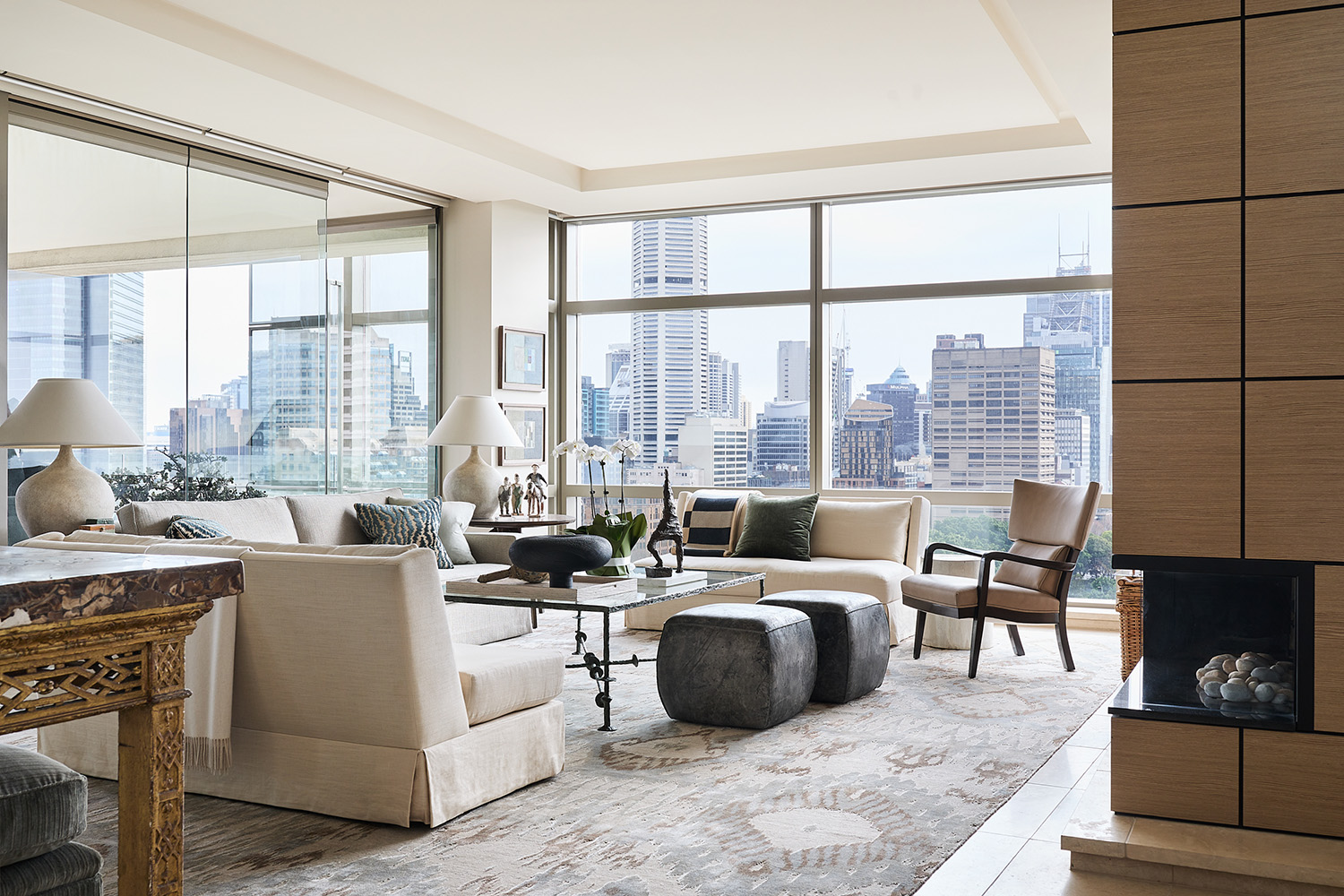
Interior designer Thomas Hamel on where it goes wrong in so many homes.
Vida Aljada has officially opened in Sharjah, marking the Vida brand’s debut in the emirate. The five-star lifestyle hotel features 175 rooms and suites, serviced apartments, residences, dining concepts and wellness facilities.
3 min
Emaar Hospitality Group today officially opened Vida Aljada, marking the arrival of the Vida Hotels & Resorts brand in Sharjah and introducing a five-star lifestyle destination in the heart of Aljada, developed by Arada.
The opening marks an important step in the continued growth of Emaar Hospitality Group’s lifestyle portfolio, while bringing Vida’s approach to contemporary hospitality to a new emirate. The official opening was celebrated with a ribbon-cutting ceremony attended by senior representatives from Emaar Hospitality Group and Arada, alongside guests, partners, media and industry stakeholders.
Set in the heart of Aljada, Vida Aljada brings a fresh energy to Sharjah, with its location placing guests just three minutes from University City and Sharjah Airport Free Zone, and 15 minutes from Dubai International Airport and Sharjah Corniche. The hotel is close to Sharjah’s key cultural, educational and business hubs while offering its own setting for guests to stay, meet, dine, relax and spend time together.
Commenting on the opening, Hakan Keskin, Head of Hospitality at Emaar Hospitality Group, said:
“The opening of Vida Aljada represents an important milestone for Emaar Hospitality Group as we bring the Vida brand to Sharjah for the first time. We are pleased to introduce a hotel that reflects the character of Vida while responding to the evolving needs of the emirate. With its focus on contemporary design, dining, wellbeing and flexible spaces for business and leisure, Vida Aljada brings together the different ways our guests live, work and connect today.”
Vida Aljada features 175 rooms and suites, including Deluxe King and Twin rooms, Premier Suites and a 305-square-metre Penthouse Suite. The property also includes one-, two- and three-bedroom serviced apartments designed for extended stays, alongside one-, two- and three-bedroom residences that bring a contemporary, design-led approach to longer-term living.
Across the property, Vida’s focus on contemporary design and considered spaces creates an environment that is relaxed and connected. The accommodation is complemented by spaces for dining, wellness, family time, meetings and socialising, allowing guests to shape their experience around what they need from their stay.
Dining and social spaces
Food and beverage form an important part of the Vida Aljada experience, with four concepts offering different settings throughout the day.
Origins provides all-day dining, while Stage2 offers a café setting for coffee, casual meetings and time to unwind. True Slice brings pizza to the property, and Flo offers poolside bites, refreshing beverages and crafted mocktails alongside the outdoor terrace.
Space to relax, recharge and play
Wellness and leisure facilities include spa treatment rooms, a relaxation lounge, a 24/7 fitness centre, main swimming pool, dedicated kids’ pools, poolside offerings and an outdoor terrace.
For younger guests, the Qix Club Play Area features creative activities and an indoor imagination space for children aged four to 12, giving families an additional space to play, explore and spend time together.
The hotel also caters to business travellers and local professionals with meeting rooms, breakout space and a multifunction venue, providing flexible settings for meetings, events and collaboration.
The hotel also supports a more sustainable guest experience through paperless features, including digital in-room controls that allow guests to manage requests such as “Do Not Disturb” and housekeeping at the touch of a button, reducing the need for printed door signs and paper notices.
Amit Arora, Chief Operating Officer at Arada Hospitality and Entertainment, said: “At Arada, we believe that the communities we create should give people access to everything they need to live well, all within reach. Vida Aljada is a great example of that belief, bringing exceptional hospitality, dining, wellness and social spaces into the heart of one of the UAE’s most dynamic communities. In addition, Vida Aljada has a quality of design and experience that reflects the very best of what Emaar Hospitality Group stands for.”
Following the successful launch of its Palais Collection, MAISON de SABRÉ has unveiled a new modular handbag system offering more than 720 styling combinations.

Following the devastation of recent flooding, experts are urging government intervention to drive the cessation of building in areas at risk.
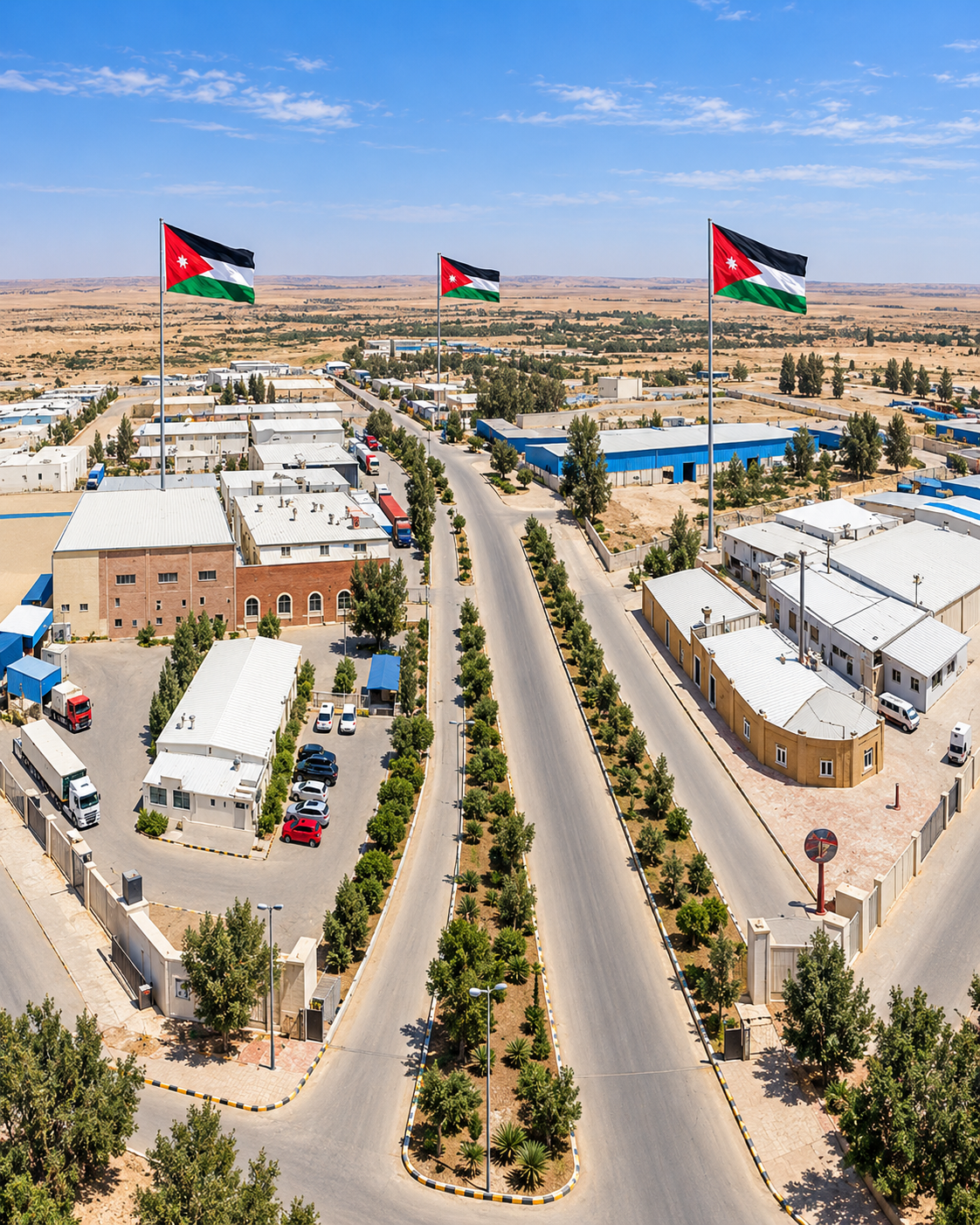
From Emirati dates and camel milk to an ambitious vision for regional food security, Rashtions is redefining what a homegrown nutrition brand can become.
7 min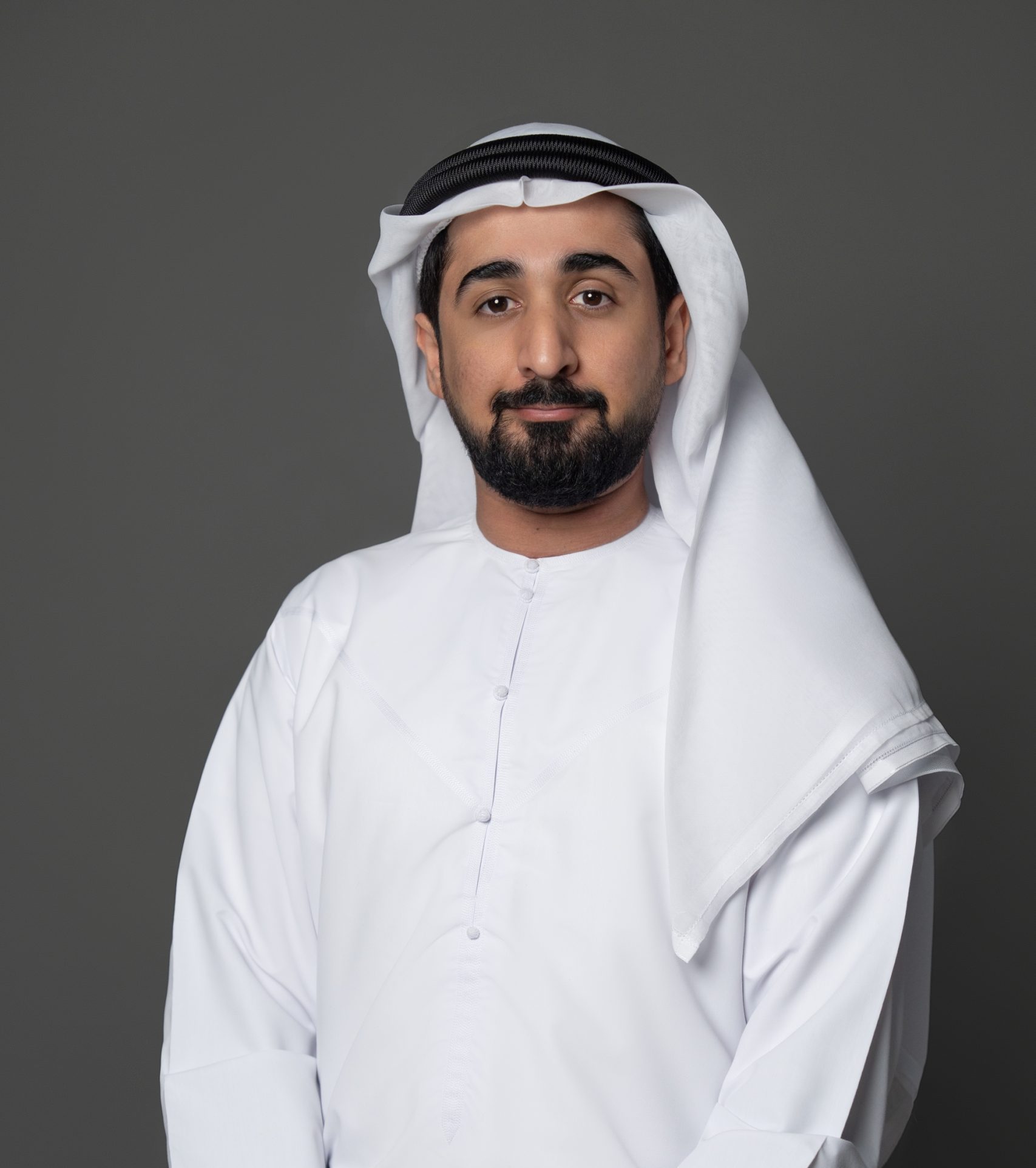
Built around the UAE’s most traditional ingredients, Rashtions is reimagining nutrition through premium, high-protein truffles made with dates and camel milk. Designed as a flexible alternative to conventional protein bars, each glass jar contains 20 grams of protein in individually portioned bites that can be enjoyed throughout the day.
Yet behind the product lies a much larger ambition. Founded through research into humanitarian food systems and regional food resilience, Rashtions aims to strengthen local production capabilities and reduce dependence on imported food. From developing its own formulas and machinery to pursuing in-house protein production, the Emirati company is working towards a future in which the UAE can produce more of the food it needs from within.
For readers discovering Rashtions for the first time, how would you describe the company and the mission behind it?
Rashtions makes premium date and camel milk truffles, with 20 grams of protein in every glass jar.
I designed it as a more flexible alternative to the protein bar. Have a piece in the morning, another after the gym, one as a treat during the day. You don’t have to tear open a bar and commit to the whole thing.
But the bigger mission goes beyond snacks. We want to insource as much of the food system as possible into the UAE by sourcing more ingredients locally and, eventually, producing our own protein in-house.
Before launching Rashtions, what was your background, and what inspired you to build a nutrition company?
On paper, I came from accounting and family office investment work. In reality, my passion was always startups and solving hard problems.
Rashtions started with a single question: how do I feed an entire country from the inside?
When I researched what we could realistically produce in the desert, the answer kept coming back to two things we already had: dates and milk. So, I developed a nutrition bite from those ingredients, originally with the idea of helping feed people in under resourced regions.
Eventually I realized I didn’t want to spend years navigating humanitarian organizations to get the product into the world. So, I started selling it the ordinary way, through distributors, and that’s how the commercial business was born.
Rashtions began through research into humanitarian food systems and food resilience. Can you tell us about that journey?
I didn’t start by studying existing humanitarian food products. I started by putting the product in front of real people and reshaping it around how they actually eat.
One thing stuck with me. I noticed children filling up on potatoes because they were cheap and satisfying. And because they were full, they skipped the nutritionally balanced food being distributed by the food aid programs. The potatoes weren’t just a side dish; they were quietly displacing proper nutrition.
That taught me a lesson I’ve never forgotten: nutrition on paper means nothing. You have to understand what people already eat, when they eat it, and what they’ll genuinely accept.
At what point did you realise there was a commercial opportunity and not just a research idea?
Outside a pizza shop in a mall, of all places.
There was a long line, and we sold around 200 boxes without a single dirham of advertising. Watching people choose our product while waiting for pizza. That was the moment I knew this could work commercially, not just as research.
Why was it important to build the business around traditional Emirati ingredients such as dates and camel milk?
Two reasons: quantity and tradition.
Dates and milk are ingredients we’ve produced and understood in this region for generations. If the long-term goal is producing food locally at scale, it only makes sense to start with what already grows here.
And they’re part of who we are. Our culture, our history. The product has a real connection to the UAE. It isn’t borrowed from somewhere else.
Many people associate healthy food with imported superfoods. Why do local ingredients deserve the same recognition?
Because people here already know these ingredients intimately. We know what’s in them, where they come from, and that they’re premium.
Khalas dates are prized for their taste and quality, and they cost noticeably more than ordinary dates. Camel milk is considered one of the finest ingredients in the region.
These aren’t ingredients that need to dress up as imported superfoods. They were premium long before that word existed.
What were the biggest challenges in transforming traditional ingredients into premium, high-protein snacks?
Inventing the preservative and developing our date fibre isolate, by far.
Originally, I used ground date seeds as the coating. The shelf life didn’t improve, and the seeds were brutally hard. Even with strict procedures, they kept breaking my machines. The drying process burned through electricity, the material had to be strained again and again, and even after all of that, one tiny hard grain could still be strong enough to chip a tooth.
That’s what pushed me to develop a date fiber isolate instead.
To make the first prototype, I needed a centrifuge I didn’t have. So, I modified a washing machine. I changed the motor speed and rebuilt the filtration system until it could produce what I needed. Not glamorous, but it worked.
How much research and product development went into creating the current Rashtions range?
About two and a half years, all in.
The formula alone took a year and a half. It was tested on shelves, at exhibitions, with real customers, and through repeated shelf life trials. The machinery took another year, because much of the production process had to be developed or modified by hand.
We only reached what I’d call the final version around March or April of this year.
As an Emirati entrepreneur, what were some of the biggest challenges you faced while building Rashtions?
Creating an entirely new formula and production process without the funding or research departments of a Mars or a Hershey’s.
Everything had to be approached rigorously, almost academically, but then proven in real life, on real shelves, with real customers.
The biggest lesson? Shelf life is not the same as quality life. A product can remain technically safe to eat while becoming dry, hard, and unpleasant. I wasn’t just trying to make the product survive on a shelf. I had to make sure it still tasted premium on the last day of its shelf life, not just the first.
Why was local manufacturing such an important part of your strategy?
Because I wanted everything to come from here.
The vision was always to build the capability to mass-produce food inside the UAE. I had no interest in creating a ‘local’ brand that quietly outsourced its ingredients, formula, machinery, and manufacturing to other countries.
The real value isn’t the brand. It’s the knowledge and production capability we’re building on the ground.
The UAE is increasingly positioning itself as a hub for food innovation. How do you see the country’s food ecosystem evolving over the next decade?
I think we’re heading toward a genuine fight between startups and the multinational giants.
Small companies will use artificial intelligence to develop formulas, design machinery, and build difficult production lines from small prototypes, competing at a level that used to require an entire corporate R&D division.
The large companies will still have deeper pockets. But AI is about to make small companies far faster and far more capable than anyone expects.
What role can startups play in strengthening regional food security?
Startups can pioneer better ways to grow food, especially through hydroponics and aquaponics.
Right now these systems cover only a fraction of the vegetables we’d need, so there’s enormous room to improve. And the same thinking can later extend to chicken, meat, and fish. For instance, startups developing new feed formulations that make local production dramatically more efficient.
Sustainability has become a major focus in the food industry. How does Rashtions approach sustainability beyond simply using local ingredients?
Our next step is developing protein production lines capable of supplying the UAE and the wider region at scale.
From there, Rashtions can be mass-produced and tailored to the nutritional requirements of different countries and populations. The end goal is a continuous food supply large enough to genuinely help feed nations.
For me, sustainability isn’t about packaging. It’s about being able to keep producing food locally without depending entirely on other countries.
What food trends do you believe are overhyped, and which ones will genuinely shape the future?
Protein bars are overhyped. Most of them taste bad and are loaded with chemicals. And honestly, once I open a bar, I don’t always want to finish it.
That’s exactly why Rashtions comes as individual bites in a jar. Eat one or two, close the lid, come back later.
Protein products will keep growing as a category. But they have to taste better and become more convenient. That’s where the real future is.
Looking ahead, what innovations do you expect will redefine healthy eating over the next five to ten years?
I don’t think dried foods will ever fully take the spotlight.
To redefine healthy eating, you have to follow the youth. Young people follow trends. If a healthy product isn’t trending, it will never become the definition of healthy eating. Fresher, faster products will matter more and more.
Have you ever eaten potato chips straight out of the oven? They taste like a different food. Rashtions is the same. It tastes far better fresh off the production line. I genuinely believe there’s a market for short shelf life versions made for customers who care more about freshness than storage. And that idea applies to far more food companies than just ours.
What is one misconception about healthy nutrition that you would like to change?
Two, actually. An organic certification doesn’t mean everything without the certificate isn’t organic. And adding protein to something doesn’t automatically make it healthy.
What advice would you give aspiring entrepreneurs looking to build purpose-driven businesses?
I would encourage aspiring entrepreneurs to start with a problem, not a product. The strongest businesses are often built by solving a real challenge that people genuinely care about.
Stay curious, do the research, and don’t be afraid to question conventional thinking. Purpose gives you the resilience to keep going when things become difficult, but purpose alone isn’t enough – you also need to build something people truly value.
If you can combine a meaningful mission with a sustainable business model, you’ll create a company that has the potential to make a lasting impact.
Finally, what is next for Rashtions?
First, expansion into new markets.
Then more products and flavours, including cereal Rashtions and new truffle varieties.
After that comes the big one: building our own protein production line, so we can create more protein products, ingredients, and flavours entirely in-house.
And the final stage is food security itself: using everything we’ve built to produce food at scale, supplied continuously across the UAE and the wider region. That was the founding question, and it’s still the destination.
Following the successful launch of its Palais Collection, MAISON de SABRÉ has unveiled a new modular handbag system offering more than 720 styling combinations.

The Future Schools Summit returns to Dubai on 29–30 September 2026, bringing education leaders and industry experts together to explore the future of learning environments.
< 1 min
The Future Schools Summit is a dedicated platform bringing together education leaders, school operators, government representatives, developers, architects, consultants, technology providers and other key stakeholders involved in shaping the future of schools and learning environments across the region.
As education continues to evolve, schools are being challenged to respond to changing student needs, new learning models, emerging technologies and increasing expectations around sustainability, wellbeing and the design of learning spaces. The summit provides a focused environment to examine these developments and the practical strategies required to create future-ready schools.
The event will explore key areas including school design and development, learning environments, education technology, AI and digital transformation, sustainability, smart campuses, student wellbeing, operational efficiency and the evolving role of schools in the wider community.
Through a combination of industry presentations, expert discussions and networking opportunities, the Future Schools Summit will provide attendees with insights into the approaches, technologies and ideas influencing the next generation of educational environments.
Taking place on 29-30 September 2026 at Mövenpick Grand Al Bustan Hotel, Dubai, the summit will connect professionals from across the education ecosystem to exchange knowledge, discuss current challenges and explore opportunities for collaboration.
Future Schools Summit
29-30 September 2026 | Mövenpick Grand Al Bustan Hotel, Dubai
Following the successful launch of its Palais Collection, MAISON de SABRÉ has unveiled a new modular handbag system offering more than 720 styling combinations.

Randy Boyagoda’s new novel, “Lords of Serendipity,” delivers a biting satire of cheating, politics and dysfunction across modern universities.
5 min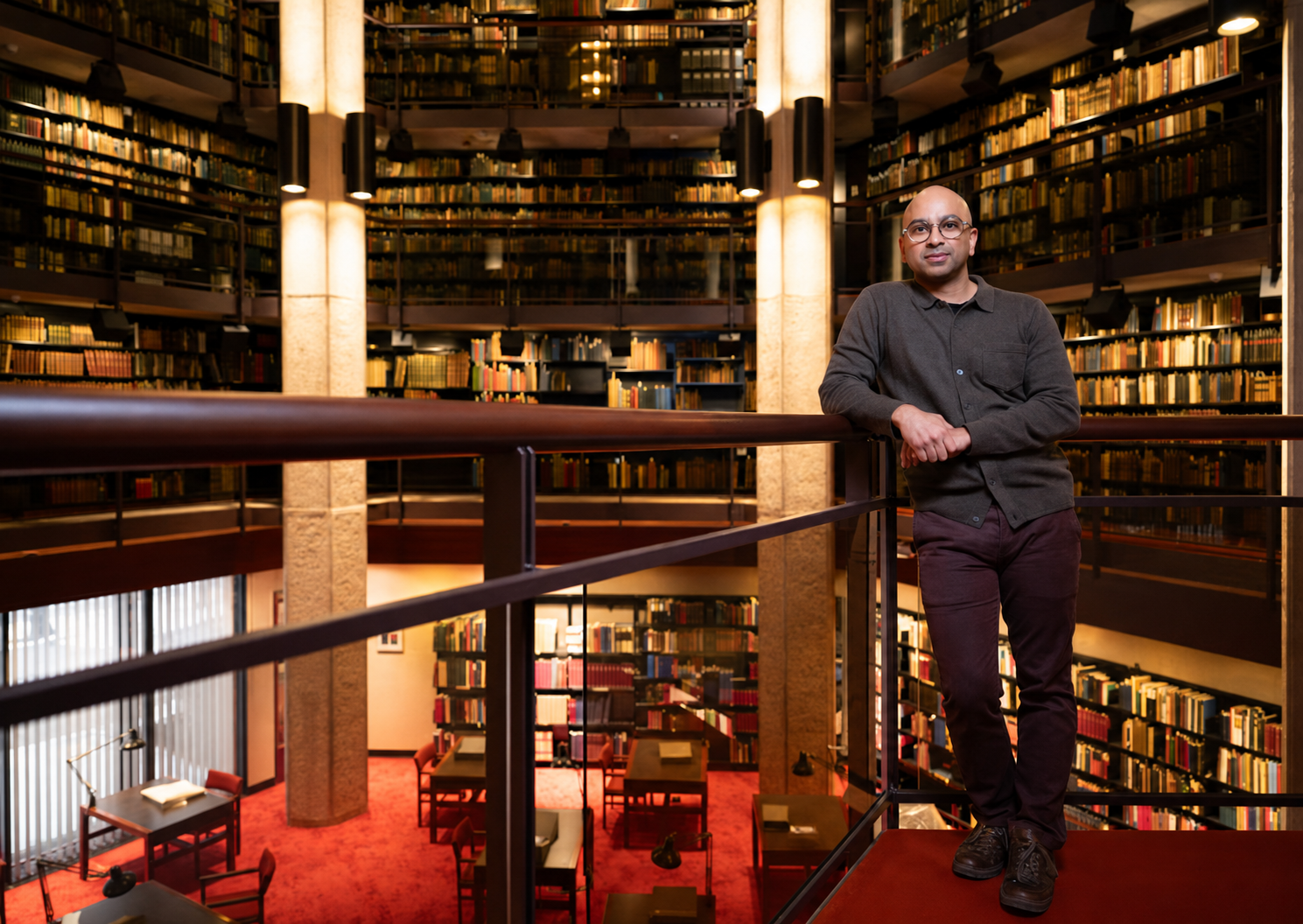
Administrative cowardice. Rampant cheating. The soaking and scamming of undergrads and grad students. Performative wokeism. Intensifying competition for international tuition dollars from an expansive China.
These are either the latest dire headlines about American higher ed or the myriad subplots of “Lords of Serendipity,” an ambitious new novel by Randy Boyagoda. Unlike most campus fiction, its scope extends well beyond the cloister of the liberal arts classroom to whammy the entire university system, from its financial model to its function within a globalized economy. Along the way, it skewers its lightning-rod targets with a precision too sharp to be considered entirely fictional.
That its author is not only well-versed in satire, having written four other novels in the genre, but is also a professor of English at the University of Toronto and an experienced college administrator, further blurs the lines between comic fiction and brutal fact. It’s the kind of no-holds-barred book only a consummate insider would know to write—but only one who is also conveniently outside the American university system could get away with writing.
“This is someone who’s got the inside dope on what can go on at universities, especially with international students, and what kind of con games are going on,” said Margaret Atwood, a friend and fellow Torontonian.
The novel, like Boyagoda himself, is often very funny—even as the dilemmas its characters face read as tragedy. Its cast includes the bickering members of a Sri Lankan hotel cleaner’s family, insecure American freshmen, dead-end third-tier college professors and their highflying Ivy League counterparts and dispirited university functionaries. An old-fashioned Dickensian tale, it sweeps across continents and campuses, from a classic liberal-arts college to a stand-in for Harvard University to an urban technical school to the dilapidated buildings of a state-run university in Sri Lanka.
“I’m a joyful person,” Boyagoda said in an interview, though he prefers to see his outlook on academia as “hopeful” rather than optimistic. He smiles and laughs frequently. He bikes everywhere. He derives energy from his students and from his four daughters, ages 14 to 20. They help him and his American wife, Anna, also an educator, care for Boyagoda’s father, an immigrant from Sri Lanka who has dementia and lives with the family.

The germ of the novel came to Boyagoda during the pandemic, when he was serving as a vice-dean. An urban legend was circulating about a statistics grad student selling passing grades to international students. The cheating scheme itself may well have been apocryphal, but it felt tantalizingly plausible.
“As a novelist, it stayed with me,” Boyagoda said. “Who would sell grades for a stats course? Why would someone buy grades? What’s motivating them? Why wouldn’t the university be doing something about it?” What he didn’t want to do, he explained, was write “another novel about a creative writing professor and his drama with students.”
In addition to writing novels—the first of which was a finalist for Canada’s prestigious Giller Prize; he’s written eight books in total—Boyagoda teaches literature full-time. For his students next semester, kids raised in a purportedly “post-literature era,” he’s assigning three 700-page novels, he noted mischievously, books by George Eliot, Ralph Ellison and Kiran Desai.
On RateMyProfessors, students remark on Boyagoda’s heavy assignments, tough grading and distaste for cellphones, but also hail his “comedy.” When alerted to these reviews, Boyagoda laughed. “Guilty as charged,” he said.
“Randy’s one of those people in academia who is very well educated but doesn’t have an ounce of superiority about him,” said John Irving, who frequently guest lectures in Boyagoda’s classroom. “It’s amazing to see how willing students are to talk in his classrooms, how little afraid they feel of being mocked or put down—he gets complete candor out of them.”
Negotiating competing interests seems to come naturally to him. Like many college campuses, after the Oct. 7 Hamas attack on Israel, the University of Toronto was embroiled in protests, encampments and discord; part of the school’s response was to convene a working group on civil discourse. Boyagoda was put in charge, serving for two years. It’s the kind of thankless task many professors would flee from, but Boyagoda relished the prospect and thinks the group, which is ongoing, made progress.
He has since pivoted to another formidable academic concern: the waning prestige of the humanities. In July, Boyagoda became the director of the Jackman Humanities Institute and special advisor on the humanities to the dean of arts and science. This fall, he is starting a series of gatherings he calls the Dead Book Club. (Dead writers feature heavily among his favorites: St. Augustine, Dante, William Faulkner, Evelyn Waugh, Saul Bellow.)
“The goal is to encourage students to read for its own sake and have conversation for its own sake,” Boyagoda said. “The importance of the humanities will be revealed to those who participate.”

“Lords of Serendipity,” which publishes next week, reflects Boyagoda’s commitment to the pursuit of knowledge: “I’m supposed to say I learn more from my students than they do from me, but no,” Boyagoda said. “I enjoy sharing my excitement and joy about literature and ideas. There are these moments when you are teaching and you can see someone’s face change because they didn’t know something and then they did. That moment when you’re actually watch someone enlarge themselves is deeply satisfying.”
In literary circles, Boyagoda is often referred to as a Catholic novelist, a description he embraces. “A novelist willing to give shape and voice to contemporary religious experience is needed,” Boyagoda said. “I understand myself as a Catholic novelist, provided that I’m not only a Catholic novelist, I’m also a South Asian novelist and I’m a Canadian novelist. I don’t want to be captive to one label.”
His characters, he said, are subjected to what he calls “Graham Greene character situations.”
“They are trying to do good in a fallen world and realize the most they can do is less harm than someone else would do in that same role,” he explained. “They have to accept they are complicit in something that provides some good thing to others. It’s a very Graham Greene way of thinking about sacrifice.”
The campus green they inhabit is a febrile zone in which lofty ideals and cynicism regularly collide. It’s a place where a traditional holiday college celebration is now an occasion for political protest. Kids freely police one another inside and out of the classroom with social media their constant, ready weapon of choice. International students, knowing their family’s financial futures hinge on their degrees, operate in terror of failure and deportation.
Early readers of the book include Gary Shteyngart and Junot Diaz, both of whom have taught at universities and written comic novels. They each contacted Boyagoda midway through to say, in essence, “You nailed it.”
As biting as “Lords of Serendipity” can be, Boyagoda’s faith in higher education remains undaunted.
“It’s absurd that we live in societies that make the decision to take people between the ages of 18 and 22, when they are most physically capable of contributing to our nations and communities, and tell them, ‘Go away for four years, and read and learn and have conversations,’” he said. “I want students to be aware of what an incredible privilege that is.”
Corrections & Amplifications
Randy Boyagoda is a special advisor on the humanities to the dean of arts and science at the University of Toronto. An earlier version of this article incorrectly said he is a special adviser to the dean of humanities. (Corrected on Sept. 2)
Following the successful launch of its Palais Collection, MAISON de SABRÉ has unveiled a new modular handbag system offering more than 720 styling combinations.

SHEIN’s Hong Kong IPO wiped a $4.4 billion obligation from its books, but the fast-fashion giant still faces a payout of up to $3.5 billion to early investors.
3 min
Companies typically go public to raise money to supercharge growth. Fast-fashion giant Shein has another motivation.
The company’s initial public offering in Hong Kong this week is allowing it to avoid paying out billions to early investors.
If Shein hadn’t sold shares by the end of the year, the company would have been required to fork out nearly $4.4 billion in cash to holders of its convertible redeemable preferred shares. With the IPO, the $17.3 billion in preferred shares was converted to ordinary equity, and that obligation was wiped off the books.
But Shein was still on the hook for another payment. Holders of those preferred shares were entitled to a payout of billions more, in part because the company’s valuation has fallen from its peak. That payout came to nearly $3.5 billion in cash, according to regulatory filings.
The retailer on Monday priced its shares at 48.56 Hong Kong dollars each, equivalent to about $6.20 and near the middle of the range of HK$47.60 and HK$49.50 it provided last week.
The company pressed ahead with its IPO despite slowing growth and regulatory headwinds in the U.S. and European Union. Shein priced its IPO at a valuation of around $26 billion, roughly a quarter of the $98.2 billion valuation it achieved in a funding round in 2022.
Shein started selling its wares in the U.S. around 2012 and shot to popularity during the pandemic when more people shopped online. Its supply-chain prowess and vast range of styles at affordable prices made the brand a favorite among many U.S. consumers. It showed other retailers, including Amazon.com, that consumers were willing to wait more than a week for their online purchases to be delivered—if the price was right. But rivals soon emerged, such as Temu, which sells more products apart from apparel.

Shein’s business model of selling massive amounts of cheap goods lost some of its shine as more countries started imposing tariffs on small packages. The U.S. removed a trade exemption that allowed packages valued at or below $800 to enter the country duty-free, and the EU has introduced a €3 (about $3.50) customs duty on imports of low-value parcels.
Shein has worked toward its IPO for years, and the looming $4.4 billion obligation wasn’t the only reason it went public. But the threat of the big payout on Dec. 31 was certainly a part of its reason to press ahead, said Jianggan Li, founder and chief executive of Momentum Works, a research advisory firm based in Singapore.
“Complete the listing before then,” said Li, “and a very large liability comes off the balance sheet.”
While that liability will now be off its books with a successful IPO, Shein said it was saddled with another bill: the roughly $3.5 billion it owed its early investors upon going public.
That amount includes $1.3 billion that Shein had to pay several late-stage pre-IPO investors who had been guaranteed a cash payout at an 8% or 12% annual return, and up to $2.2 billion in compensation for the fall in the company’s valuation in the period after they made their investments. The $2.2 billion was a projection based on the lower end of the offer price range, or HK$47.60 per share, so the total bill will likely be smaller than $3.5 billion. The exact amount has yet to be disclosed by the company.
Notably, the amount it owes investors is more than the roughly $1.7 billion the company raised in the IPO. The company said it was paying the funds to its investors out of cash it has on hand.
The investors entitled to the payments include entities linked to HSG, formerly known as Sequoia China, Boyu Capital, Tiger Global, General Atlantic, Thrive Capital and others.
“What the IPO really does here is resolve the capital-structure overhang,” Li said. “It gives investors liquidity, terminates those preferred-share rights and cleans up obligations created when Shein raised money at much higher valuations.”
Shein could have kicked the can down the road by renegotiating terms with its investors, he said: “Shein is not taking the cheapest way out of its old financing obligations. It is taking the cleaner way out.”
Following the successful launch of its Palais Collection, MAISON de SABRÉ has unveiled a new modular handbag system offering more than 720 styling combinations.
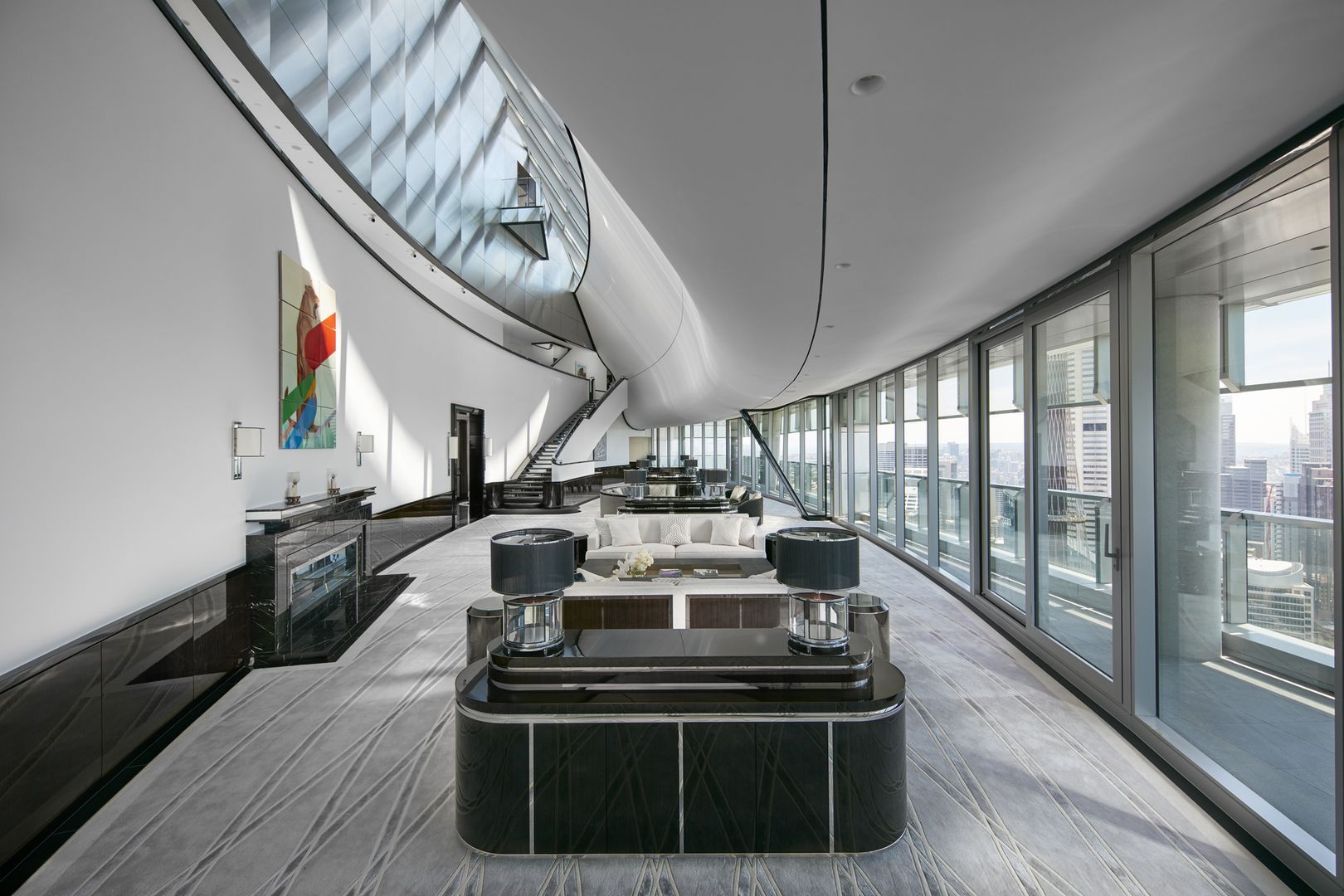
AWS will launch its first Saudi Arabia Cloud Region in December 2026, backed by a planned $5.3 billion investment. Its expanded partnership with HUMAIN will also strengthen the Kingdom’s cloud and AI capabilities in line with Vision 2030.
3 min
Amazon Web Services (AWS) has announced at LEAP in Riyadh that its first AWS Cloud Infrastructure Region in the Kingdom of Saudi Arabia is on track to launch in December 2026.
Together with HUMAIN, a Public Investment Fund–owned company, AWS will also make up to 50 megawatts (MW) of capacity available in Saudi Arabia’s first AI Zone by 2028 as part of an expanded strategic collaboration. AWS is HUMAIN’s preferred AI partner, driving AI innovation across the Kingdom and globally. The AI Zone capacity will include AWS’s Trainium chips and the latest NVIDIA AI infrastructure for customers to run AI training and inference workloads.
Increased cloud and AI capacity is key to growing the Kingdom’s AI leadership and supporting public and private sector organizations to build a future-ready economy in line with Saudi Arabia’s Vision 2030. HUMAIN’s ALLAM Arabic large language model will soon be available through Amazon Bedrock, so customers can securely access advanced Arabic-language AI capabilities through a fully managed generative AI platform. The expanded collaboration also includes the availability of HUMAIN Fabric, HUMAIN’s AI-native data infrastructure and platform component of the HUMAIN ONE generative AI operating system, via AWS Marketplace.
With the new Region, developers, startups, and enterprises will have greater choice for running their applications and serving end users from data centers located in Saudi Arabia. All AWS Regions are sovereign-by-design, formalized under the AWS Digital Sovereignty Pledge commitment to offering customers the most advanced sovereignty controls and features available in the cloud.
“Saudi Arabia is home to some of the most ambitious and inventive builders, from startups and enterprises reimagining industries to public sector organizations deploying AI at scale, and the new AWS Region in the country will help them to continue to innovate,” said Matt Garman, CEO of AWS. “The launch of our new Region and our partnership with HUMAIN will deliver the full-stack cloud and AI infrastructure to help power new industries, create jobs, and accelerate the goals of Vision 2030.”
“Saudi Arabia is building the computing power needed for the Intelligence Age and strengthening its position as a global computing partner. The launch of AWS’s new Region and its expanded partnership with HUMAIN will help accelerate AI innovation, enable new industries, and advance the goals of Saudi Vision 2030.” said His Excellency Engineer Abdullah Alswaha, Kingdom of Saudi Arabia Minister of Communications and Information Technology.
The Region, first announced in March 2024, represents more than $5.3 billion (19.88 billion Saudi riyal) in planned cloud infrastructure investment. This launch will expand the AWS Global Infrastructure to 40 Regions worldwide.
According to an IDC report commissioned by AWS, AI will contribute an estimated $130 billion to Saudi Arabia’s economy by 2030. The new Region will help accelerate this potential by empowering organizations to innovate faster and operate more cost-efficiently, while providing access to leading AI services like Amazon Bedrock.
Investing in Saudi Arabia’s AI-Powered Future
Saudi organizations including Abdul Latif Jameel, Almosafer, stc Group, Red Bull Mobile, and AWS Partners like ZainTECH, Accenture, and Tamkeen, will be running AI workloads on AWS. stc Group, a major digital and telecommunications provider, has announced a strategic collaboration with AWS to accelerate the adoption of cloud and AI services in Saudi Arabia, while ZainTECH, a regional integrated digital solutions provider, has signed a multi-year agreement to help organizations adopt AWS solutions and strengthen their security and compliance readiness.
Building Saudi Arabia’s Digital Workforce
Beyond infrastructure, AWS is making a significant investment in Saudi Arabia’s workforce development. The Amazon Academy, launched with the Ministry of Communications and Information Technology (MCIT), provides free training in cloud computing, AI, logistics, and retail, aiming to train over 100,000 Saudi citizens for digital careers. AWS has also partnered with 11 higher education institutions in Saudi Arabia, and is training up to 10,000 women through the AWS Saudi Arabia Women’s Skills Initiative at no charge.
Across the Middle East, North Africa, and Turkey, AWS commits to reaching two million citizens with AI and cloud training by 2030 and has already served more than 680K individuals to date. Additionally, AWS is establishing two innovation centers in Saudi Arabia to provide technical mentorship and training to startups and entrepreneurs across the Region.
Following the successful launch of its Palais Collection, MAISON de SABRÉ has unveiled a new modular handbag system offering more than 720 styling combinations.